Watch It! There Are Thorns in Those Roses

Watch It! There Are Thorns in Those Roses

My mother woke me very early one morning on my fourth or fifth birthday. Men were waiting downstairs to wallpaper and paint. This was my birthday present—new wallpaper. I had to quickly dress and stay out of my room until they were finished at the end of the day.

“C’mon, we’ll get your sisters and go visit Joanne!”

It may have been that day or another that my mother took my two sisters and I to see her youngest sister, Joanne, who was in the Maryland countryside about an hour from our home in Washington. Joanne was 10 years younger than my mother so she would have been about 20. She attended Georgetown Visitation high school and junior college with the Smith girls who lived at an 18th century Maryland estate, Mt. Airy. During her school breaks Joanne stayed with the Smiths and in mid-June they would have been lounging around the pool with their cigarettes and tanning lotion.

We all got our hair washed and were set out in the sunshine to dry while my mother, Joanne and the Smith girls painted their nails, gossiped and laughed over beer in the estate’s coach house.

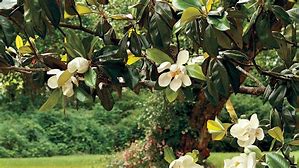
My mother directed me to sit in an oversized lounge chair near the shade of a mighty Southern Magnolia.

“Lay down there, Regan,” she said, “Don’t get up until your hair is dry.”

The old-growth evergreen burst with sturdy white flowers that looked like folded linen, sweet-smelling like the Smith girls. This is the first time I remember birds flying in and out of tree branches. The sun fell through the breeze into the dark fleshy leaves and lulled me into a meditative reverie that I can easily reconstruct whenever I’m under a summer tree or feel the whiff of magnolias or their cousin gardenias drift past me.

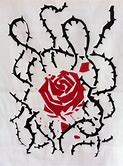
At the close of day we returned home and I ran upstairs to my new room. Everything was covered in red roses—the walls, the ceiling, the bedspread and pillows. It was the best birthday present I’ve ever received and indeed, the only one I can remember as a child.

My sisters and I were born one after another in the Naval Academy Hospital in Annapolis where we lived in the years immediately following World War II. After myth father left the Navy, we moved to a red brick colonial on Fox Hall Road in Washington and my father started his first job as a labor lawyer for John L. Lewis, founder of the United Mine Workers. They held the same liberal political views but Lewis, a devout, moralistic Mormon and my father, in the early stage of his alcoholism had battling temperaments. 
By the time I was in the first grade, the job, the house and the rose-filled room had all gone south.

My father picked up work in law firms and corporations throughout the Midwest, and my family started moving around the country with him.
So Fly Mother

There’s no North Star to navigate me through today’s rapidly expanding and changing vernacular. I’ll bet my parents felt this and probably theirs before them. In my early teens I used the word “cool” in a conversation with my mother. I forget everything about that conversation except she snapped.

“Stop using that word. You sound like a degenerate beatnik.”

Oh. My. GoD. That’s exactly what I wanted to be. I’ve used cool ever since to describe things I like, assuming whatever I like falls into the universal “cool” column.

“Awesome” took the place of cool in the public square when I wasn’t looking. I’m mildly annoyed at the overuse of awesome but at least people use it close to its true meaning, unlike cool which confounds us with all its meanings: aloof, care-free, chill, funky, and in the case of Barack Obama—sophisticated, elegant and unflappable.

The Webopedia has a comprehensive list of texting language. ROFL means rolling on floor laughing. LMK means let me know. And my favorite, STFU means shut the fuck up which is teetering on the cliff of overuse in the aftermath of the painful November 2016 election and the reign of the twittering emperor.

Nothing stumps me more than hip hop language. Until recently I thought hip hop and its musical sister, rap, glorified pimps, whores, violence, drug dealing and guns. But I’ve met writers in the hip hop world who are neither gangsters nor malevolent. I see a world of hip hop creatives whose first thought every morning is to write. it. down. Like rock ’n’ roll before it, hip hop is a creative outlet for young people who are on to us, who use poetry, music, fashion, video and street art to proclaim their intolerance of our white privilege.

The words though are tough. I get the word homie, meaning a good friend as if from the neighborhood or home. “Hoe” a diminutive form of whore is used as a general insult, much like bitch. But, it’s elevated to a type of red badge of courage for poet Britteney Black Rose Kapri who titled her book Black Queer Hoe. I like it but as a former barfly who sold herself for Rolling Rock, I can’t bring myself to use it—yet. For that matter as a former drug addict I bristle at the use of the word dope as a substitute for cool, as in the HBO series, Two Dope Queens.

Recently I participated in an intergenerational poetry workshop taught by Kevin Coval, Chicago’s Hip Hop Chronicler. Kevin MC’d a performance of us workshoppers and our poems at Lookingglass Theater. He introduced me as “so fly”, and I immediately thought of Super Fly. The slang “fly” dates back farther than the 1971 movie though. In my teens I heard “fly” in 1920’s African American Fast Talkin’ Blues on old scratchy 78 RPM records. It was someone like Blind Lemon Jefferson or Lead Belly who used the word fly to describe a stylish, snappy, sophisticated woman. My 1960’s beatnik-wannabe friends and I never adopted fly in place of cool because it sounded too black.

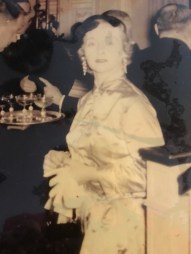
BOCn5vf4SLqbLC+5R+QVewThey all called my mother cool behind her back not because she dressed in black turtlenecks like a degenerate beatnik but because with her acid tongue and casual elegance she let them drink beer in her living room and laughed at all their jokes.

I accept Kevin’s compliment with gratitude, but I will never be as fly as my mother was.

Don’t Fret—Luxury Apartments Coming Soon

My friend Amy and I have mutual loves—among them are birds and art (also Democrats and anti-Trump jokes). So I clicked yes! to her text inviting me to Chicago Truborn Gallery’s Fight or Flight exhibit of bird art. Pulling up outside we ogled fresh art painted on the old three-story brick facade—birds and animals in purple, blue and yellow painted as if they are moving in and out of the building’s windows. Inside, famous street artists whose names I’d never heard had constrained themselves to canvas and board to fit the first-floor walls with their bird creations.

22310703_1630760636988511_8400410418200409597_n.jpg
For opening day other street artists had contributed small examples of their work to a Truborn fundraising raffle. We bought raffle tickets, wrote down our particulars and dropped them in jars. I put all five of my tickets in one jar by a work labeled “Don’t Fret.”

“Who is this artist?” I asked the gallery curator. “I’ve seen this work someplace.”

“That’s Don’t Fret. He’s very famous. He has work all over the world. Elusive, shy.”

“Don’t Fret? That’s his name?”

“Yes. Don’t Fret.”

‘What’s his real name?”

“Don’t Fret.”

As it happens, I tell myself “don’t fret” all the time. It’s my way of staying present—halting past and future thoughts that bring on worried pain. I often text “don’t fret” to friends instead of “don’t worry.”  “Don’t fret” is less demanding. Worry malingers, like a spooky old hook-nose relative looking over our shoulders marking every wrong decision, every wrong move. Fret, on the other hand hard-stops at its very sound. It has no shelf life. “Don’t fret” lightens the load for those of us who may be worried that we worry.

A few weeks after our trip to Truborn (and a memorable lunch at Hoosier Mama Pies across Chicago Avenue), Amy messaged me that I won the raffle for the Don’t Fret.

“Huh? No one contacted me. Where’d you see that?”

She saw it on Instagram. I post photos on Instagram but I willfully bypass notifications on social media so I missed it. Thinking it was too good to be true, I decided to not fret and put it out of my mind. About a month later Truborn contacted me directly.

I woke to rain the day I’d arranged to fetch my prize but even on a cloudless day the artwork would have been unwieldy on the bus. I imposed on a friend to drive me to Truborn for the 3’x4’ wooden box—open in the back and a pedestrian street scene on the front. The artist painted a lone white guy with a backpack galumphing along the sidewalk passing in front of an oversized sign on a brick building. Grade-school lettering on the sign reads “Coming Soon Luxury Apartments! Premium Retail Space! Shiny Metal Buildings!” 

I imagine this is Don’t Fret’s whack at gentrification but these days signs promoting “Luxury  Apartments” appear on buildings in every Chicago neighborhood, every zip code. It’s nondescript, a throwaway, less than meaningless, annoying even. To me it’s an ode to the ignored and unread signs along our way from here to there. 

When I disentangled the art from the protection of my raincoat in the lobby of my building, Noel the doorman, whose real job is photographer, jumped out from behind the counter.

“You have a Don’t Fret! Where’d you get that? I’ve been trying to catch that guy in action for years.”

“What? Where have you seen his art?”

“It’s around. I’ve got lots of pictures of it. But not him. You’re so lucky to have that. It’s worth a lot of money.”

Don’t fret, Noel. You’ll catch him eventually. It’s a sign.

IMG_0165.jpg

Hooligans in the Temple

Hooligans in the Temple

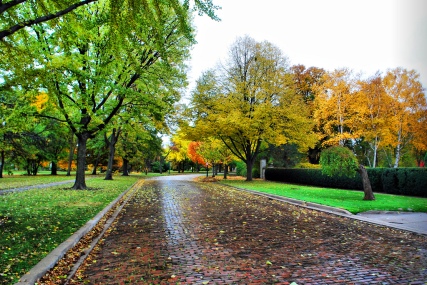
Standing in the driveway at 1000 Michigan Avenue in Wilmette, where we had lived for about a month, I posed with my tennis racket and ball while Erin snapped my picture with our family’s 1958 Kodak Brownie 127. We were playing in front of the garage doors on the west side of the house, an architectural oddity built into the side of the cliff overlooking Lake Michigan. The sun overhead lobbed burning sunbeams at my squinty-eyed face. Over my shoulder drooping into the curvy flagstone stairway leading down to our front door an overgrown lilac tree emitted a deep purple mid-June fragrance I’ve never forgotten. A robin strung together a complex trill from the upper branches of the evergreens that hugged the short driveway. My mother, not a naturalist in any sense of the word, somehow knew to teach Erin and me to recognize a robin’s song and the scent of lilacs.

We threw our rackets into our bike baskets, squeezed balls into the pockets of our Bermuda shorts and pedaled down red-bricked Michigan Avenue to our tennis lessons at

4035095366_c65a5df4af_b
Red Brick Road Michigan Avenue Wilmette

Gillson Park. Erin, a year younger, always aced her lessons and I always muddled through mine. We were both athletic enough but Erin outdid me in tennis. I was proud of her, and jealous.

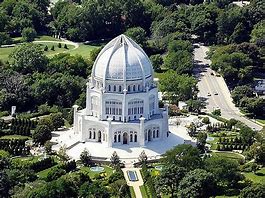
Before heading home we rode over to Sheridan Road to the Bahia Temple. It had been open only a few years but neighborhood rumors said the big white Temple would soon be closed to the public. We laid our bikes in the greenish-blue lawn, climbed the white stairs and nonchalantly strolled around the outside. All the white doors were open but we saw no one. The stillness unnerved us. Holy. No chairs or pews sat in the white circular sanctuary. We pulled away from the white marble floor and creeped up three flights of white stairs to the white balcony. We peeked into the hush of the white holy. It was a long way down. I held a tennis ball over the white railing and looked at Erin. Her wide open face said,”let it go.” The ball fell into the white center of the sacred white floor. We froze. No one appeared. Then Erin dropped her tennis ball over the balcony. We crouched down and listened for the echoing plunk-a-plunk, then tore down the stairs and out to our bikes without looking back.

Halfway home we laughed so hard we fell into the thick grass by the side of the road. We got up and pedaled as fast as we could looking over our shoulders all the way home. We stashed our bikes in the garage as if they were evidence, and kept the secret between us until school started in the fall. Feeling invincible, we bragged about the tennis balls in the Temple to our classmates. Our crime, never exposed to adults-in-charge, fell into my ever-increasing life-bucket labeled “what I got away with.”


How I Do Without Hate

As a reward for living through every day since November 8, 2016, I look to Haagen Dazs Dulce de Leche. Each day I try to do without hate. But I judge each day’s news as the worst thing I ever heard. Every. Single. Day. A bit of solace comes briefly through a pint of ice cream.

Doing without ice cream when the emotional alarms clang requires me to Hold myself tight for fear my limbs, my tongue, my head will whirly-gig out of control and irreparably damage my spirit-mind, not to mention my friendships. The Hold relaxes briefly with one simple pint. And then I do without until the wind gusts the whirly-gig back into motion.

Holding myself together generates an inward turn I take without looking both ways. I involuntarily drive straight to the core where I look for Jesus. From 2003-2011 I worked in Cook County government with a lively crew where the listening was easy. I belonged there, with cultures other than mine. God manifested himself through black and brown christs who spoke of Him: Have a Blest Day, Stay Prayerful, Jesus Loves You. Whenever the bosses above dumped demons into my serenity, Big Jim appeared and quietly laid a copy of a page from the Bible on my desk with a comforting Jesus quote circled in red. John 8:10 I am the light of the world. Whoever follows me won’t walk in darkness but will have the light of life.

The Catholic nuns gave me Jesus in grade school. He walked beside me like an imaginary floppy-eared bunny. As a newly-formed adult I moved from certainty about God and his Son to doubt. Preachers told me to welcome doubt, to throw certainty out with the th-6evening garbage, that doubting God strengthens faith. And it did. Until I started doing my own version of God. I built a periodic table of spiritual elements with blocks of God-info such as heaven and hell don’t exist and Jesus’ Resurrection is simply a symbol of renewed life. Trouble is, I silently scorned those who didn’t believe as I did. When I first met my co-workers I held a colonizing view of their beliefs. Over time my religious formulas fell in the trash heap. As slave descendants, they daily transformed their passed-down spiritual trauma into “I believe.”
Now in my own spiritual trauma I yearn for the comforting words of Big Jim and Shunice, for them to assure me Jesus loves us, all of us, including the remnants of the November 8, 2016 tragedy. I look for faith in my post-work world but Jesus is subtly tucked in for the night. My white-only community seems embarrassed, even ashamed to mention His name.

Well, I miss Him, miss talking about Him, miss Him talking to me through the kindness
and courage of my old work friends. A pint of ice cream doesn’t fill the void but it will do to keep the whirly-gig still until the Floppy-Eared Bunny wakes me in the morning.

Prostitutes and Protein: My Father’s Anti-Social Diet

Prostitutes and Protein: My Father’s Anti-Social Diet

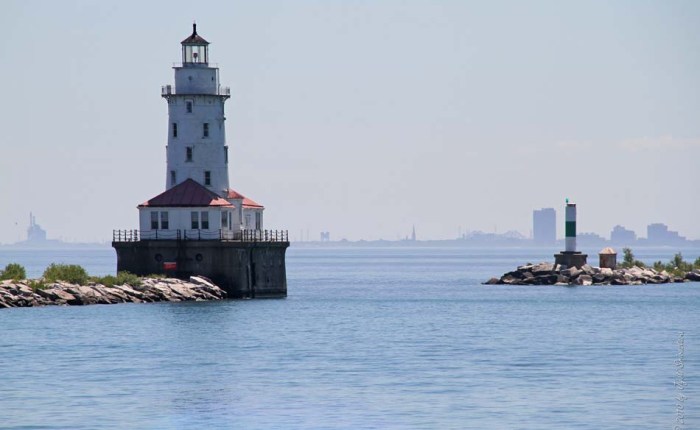
From Lake Point Tower’s third floor 3-acre resident-only garden, I peered through my binoculars out past Navy Pier to the Harbor Lighthouse by the locks at the mouth of the Chicago River. My father’s latest girlfriend pitter-pattered up beside me in her high-heeled sandals and gossamer brown bikini and said, “I fucked someone out there once.” My father, clad in Gucci swimming trunks, was striking a favorite yoga pose—standing th-4on his head within sight of all the bathers and sun worshipers around the pool. I sensed, in that instant, that this, my favorite spot in all Chicago, would be tainted for the rest of my life.


He prided himself on choosing a reformed prostitute matriculating at the University of Chicago to move in with him. We were both around 33 and I was celebrating the yearly anniversary of my last drink at AA meetings. She celebrated her reformation announcing milestones like,“It’s been 90 days since my last trick.” They had a few things in common including their food intake which they discussed constantly. Avid devotees of the Dr. Atkins Diet, they packed their 57th floor fridge with a lot of white protein—cottage cheese, plain yogurt, eggs, chicken and tuna salad and sugar-free Vernor’s ginger ale. They disdained calorie counting (though she kept a chart) and instead tracked protein grams and carbohydrates.

In the early 1980’s Dr. Atkins’ high-protein low-carbohydrate diet bubbled up everywhere in Alcoholics Anonymous. My father cornered newcomers and hammered a Dr. Atkins wedge into their soggy brains as he handed over his phone number and said, “Call me anytime.” Whenever he saw someone at an AA meeting holding a donut he’d explain that a no-sugar low-carb diet keeps the blood sugar regulated and in turn, reduces the craving for alcohol. Beginners were known to eat all-protein tuna fish right out of the can to follow his dictates.

The grocery store on the second floor had a deli counter with a superior version of my favorite food, cole slaw. After the day on the terrace, I purchased a pint each of cole slaw and tuna fish salad, rode up to their apartment and faced the former prostitute in the kitchen.

“Don’t let your father see you eating that cole slaw. It’s loaded with carbs.”

I’m pretty sure I knew cole slaw was not loaded with carbs, but she scared me so much I hid the offensive food in the closet until I left for home.

The kitchen counter groaned with the makings for a maniacal high protein drink. The bartender-grade electric mixer stood over pricey containers from Sherwyn’s Health Foods. Powdered desiccated liver, brewer’s yeast, magnesium, Vitamin C and flax seed were carefully measured and poured into the glass jar with liquid amino acids,

th-1
Liquid Lecithin

sunflower oil and liquid lecithin, a brown substance that could lubricate a car. The concoction reached digestive jubilation when blended together with ice cubes and water.

She, like those before and after her, looted the towels when she split, but left the kitchen counter intact. He binged on coffee Haagen-Das for a few days before resuming his sociopathic eating habits.

The Day I Was Posted to the White House

The Secretary of Education in the Bill Clinton Administration hired me as his Director of Scheduling and Advance based on one simple fact—I was from Chicago. An honorable and wily statesman, Richard Riley assumed experience in Chicago politics gave me a certain expertise: I’d be able to withstand  the numerous hoodoo scheduling proposals that plagued his staff, particularly those from White House advisor and fellow Chicagoan, Rahm Emmanuel.

The lobbyist for Siemens International contacted me frequently inviting Riley to visit the company’s innovative partnership in Lake Mary, Florida. Siemens provided on-the-job training for students at the Lake Mary high school. The program exemplified Clinton’s school-to-work policy, so I put it on a list of possible events for the Secretary.

In the fall of 1995, Rahm, Assistant to the President for Political Affairs, decided a big flashy event  would be the perfect way to highlight Clinton’s School-to-Work Opportunities Act before the 1996 reelection campaign. He asked Secretary Riley for suggestions. Riley consulted me and we chose Siemens/Lake Mary.

Since I’d be organizing and managing all the details for the President’s visit to Lake Mary, I was immediately posted to the White House Scheduling Office. I tiptoed into my first day on the job as if I’d wake a sleeping giant who’d shout, “You don’t belong here!”

Within the first few hours at my desk in the White House, I received a call from a colleague at the Department of Education. He’d uncovered some unseemly intelligence: Siemens collaborated with the Hitler regime.

Uh-oh.

I immediately reported this to the President’s Scheduler. She hastily called a meeting of decision-makers and sent me with others to an afternoon meeting with Deputy Chief of Staff Harold Ickes and Rahm. These two were known for hurling f-bombs right at your face before you even sat down (“who the fuck are you?”). The fray of Chicago politics conditioned me for profanity, but these brawlers took it to another level. They were famous for not only sparring with each other but also lobbing the most obscene and demeaning sucker punches at ringside innocents.

Rumors were rampant that each of them offered outsiders access to the President in exchange for campaign contributions. My Nazi information put the Lake Mary event in jeopardy and in turn, meant a lost opportunity for big cash from Siemens.

The meeting participants rat-a-tatted around the room on the pros and cons of going or not going. Their only concern: what would the press report? My lips involuntarily clamped shut and quivered. Participation in this conversation would have been like throwing myself in the ring with Muhammad Ali.

I finally busted out, “They had a factory at Auschwitz.”

Heads turned and I felt dragon eyes spit fire in my face. My cheeks ignited.

“Are you saying we shouldn’t go?”

th-1
White House West Wing

I knew my answer would either shorten or prolong my envious seat in a White House office.

“I’m saying Siemens helped fund the Nazi party and later used prisoners to work in their factory inside Auschwitz.”

And so ended my 8-hour post in the West Wing of the White House.

Impressionists Impression

Impressionists Impression

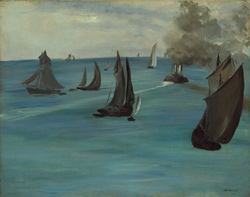
Kicking up the milky stairs we head to the second floor, Gallery 201, 19th Century French Impressionists. We shimmy and shiver onto the planked floor, shh! Into high ceilings we rendezvous with my Impressionists. I show them off to you as if they are my own. Here’s the Renoir fruit bowl and there’s Manet’s train station. Oh! and the Degas dancers and Monet’s gardens.

81535
Édouard Manet
French, 1832-1883
Steamboat Leaving Boulogne, 1864

You stagger at what to look at next, having studied but never seen the flabbergast of beauty before you. I suck in my cheeks in a quiet whistle to the tune of the hush in the gallery, swaying with silent vibrations.

And I whisper to you, “These are real.”

Don’t Call Me Senior

Don’t Call Me Senior

Don’t call me senior. I’m old. This is what old is, looks like, sounds like. My old may not smell like your granny. My old moves slow. Stand aside. Wait for me. Hold the door.

My old eats cooked vegetables. So take me to that restaurant. My old says f**k too, so give me that freedom. My old is curious and just because I can’t remember your name doesn’t mean I can’t hear you.fullsizeoutput_2967.jpeg

Oh, and sometimes I can’t hear you.

My old needs your company. They just told me loneliness kills. I already knew that.

My old loves to ride the bus, to look out, to see the changes on Clark Street from Chinatown to Rogers Park. My old likes change. Did you hear I didn’t?

My old feels close to heaven—like how much closer can I get? Like, can I get closer without moving into the next day, or the next week, or the next minute?

Yeah, so don’t call me senior. I’m just old.

Heaven or Hell on Suicide Hill

Heaven or Hell on Suicide Hill

Willmette, Illinois 1950sth-4

The only non-Catholics I knew as a child were our babysitters. I always felt sorry for them knowing they were headed straight to hell when they died. In 1956 we rented a four bedroom tudor built into the cliff on Lake Michigan in Wilmette, Illinois, having moved from a month-long stay in a downtown Chicago hotel where we landed after our eviction from Clayton, Missouri. To the east, the view of the lake was obscured by an over-propagated evergreen garden leading a quarter mile down to a rusty wire gate that opened to the beach. My mother hired seventeen-year old twins to watch my sisters and me on the beach so she’d not have to dress for the day and be our lifeguard. And those twins came with boyfriends—who had boats. The teenagers taught me to waterski and by the end of the summer I had my feet sloshing around in the rubber boots of a slalom, skiing far out into the lake, so unmoored at the edge of the world that I often forgot to let go of the tow rope when we we came back to shore for the drop-off. None of them were Catholic and I silently mourned for their souls, asking God why He’d be sending them to hell when they obviously didn’t deserve it. After all, they had shown me where heaven is.

Sitting at the foot of my parents bed one day, I saw a television commercial for the opening of Old Orchard Shopping Center in the next town over.

“Where’s Skokie?” I asked my mother.

“That’s where all the Jews live,” she answered.

At 10 years old, I didn’t know there were Jews alive in the world. I wanted to ask my mother how Jews were living near us and not in Jerusalem where they lived at the time of Jesus. She detested answering my questions and would have accused me of stupidity, a criticism I already couldn’t stand, so I sat back and wondered if Skokie was, in fact, hell.

When winter arrived in Wilmette I could hardly contain myself. The only thing separating me from the sledding hill next door was a mammoth pile of snow huddled around evergreen growth and a chain link fence next to our house. All the girls and all the boys, all ages and all sizes came to slide down Suicide Hill. Firemen hosed it at least once a day turning soft snow into cold hard ice. Traditional sleds, too dangerous for the slippery terrain were cast off—piled up in a Flexible Flyer junkyard off to the side at the top of the mountain. Flat cardboard slabs were the most valuable commodity. I shredded straight down on the cardboard, sitting down at first, then up on my feet. Eventually we, the first snowboarders, traded our cardboard for our boots and slid downhill on our feet.

Girls and boys had equal status on Suicide Hill. There were no rules, no lifeguards, no snowguards no unofficial guards. We all raced down the slope expecting no prize, bumping each other off into snowpiles like soccer balls, soaring like heavenly rockets.  Winter stuck in our noses, but our fevered bodies rollicked in unfastened coats flapping in the wind. Medics and parents came to bandage limbs and scrapes. Ambulances carted broken bones off to Evanston Hospital. Exhaust smoke obscured our vision of cars double parked on Michigan Street where parents yelled Let’s Go!

And when the stars came out we went to No Man’s Land for hot chocolate where I eyed my non-competing competitors. We belonged together, heaven or hell.