I open the drawer to a pile of dead bodies—naked GI Joe and his headless pal, Ken, with his pants around his knees. Small plastic green soldiers had been flung willy-nilly into the drawer’s mass grave. Their weapons, swords and shields, were buried with them, 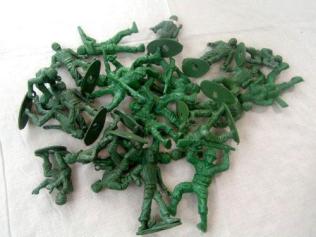 just like their human predecessors in the ancient world. I had not opened my low-slung coffee table drawers since my grandchildren stopped overnighting several years ago. I kept them in tact as a mini-shrine to time standing still.
How I yearn for those little boys to come flying through the door one more time, go straight to the coffee table, plop down on the floor and do battle on the table top with their action figures.
In another drawer I discover my granddaughter’s mini stuffed bear dressed like Betsy Ross, her hat half chewed up by one of my now-dead Scotties; a tiny red plastic car from Monopoly Junior; and, three red plastic cups in the shape of Shriners’ hats. I reach to the back of the drawer and feel around for the little monkey that goes with the cups. All three grandchildren loved this old-fashioned shell game. They set the three hats on the table top, hid the monkey under one and spirited the hats round and round, in and out. I would guess which hat hid the monkey. I always got it wrong. One of them would jump 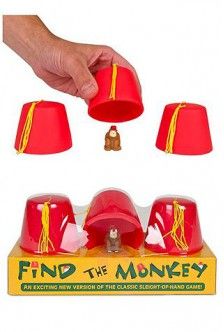 in to help me, their old grandmother with her limited sense of place. Another would whisper, “pick the left one” knowing the hat on the left was empty. They thought juking me was hilarious. I did too, but for different reasons—my delight was simpler: I loved hearing them laugh.
Perhaps the shell-game scammers on the L trains started with the Shriner monkeys when they were kids. Chicago visitors huddle with their suitcases on the O’Hare Blue Line, get sucked in, throw their dollars down, win once, then lose over and over. The scammer fools them like my grandchildren fooled me. And they all laugh too.
I clean out the drawers and throw all the bits and pieces of remembered joy down the garbage chute. I disinfect the coffee table as if it were a crime scene. This is what we do, after all. Clean things out. Throw them away. To have space for more stuff. I don’t need more space though. If I can’t hang it on the wall, wear it or stuff it into my bookcase, out it goes. So now I have two empty compartments in my small apartment I’ve no use for. Oh, I could store little Christmas ornaments there, but I already have a place for those. One drawer is a perfect place for the two TV remote controllers I all of a sudden need. But I’d never remember I put them there.
I really wish I’d saved that monkey shell game.
For now, these drawers of time past remain empty.


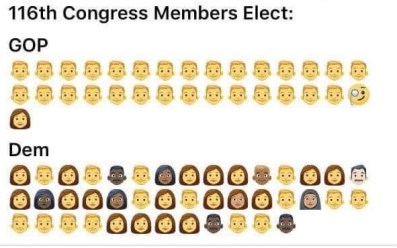 elected a 32-year old black woman nurse, a country that elected a Sudanese Muslim immigrant woman who wears a head covering, a country that elected two Native American women for the first time in history, a country that elected a married-with-children gay governor, a country where a lesbian became a conservative state’s attorney general. My country will have 102 Democratic and Republican women in the House in January, 12 women in the Senate and 9 women governors. In my country, a record forty-four percent of employers offered employees paid time off to vote.
 fluffy white dog on the third floor.
 Gary had no barber, we had we had to go downtown to the city, i.e., Gary (population of East Gary was 6500, Gary was 100,000).
 called, you quickly went to the barber and sat down in his chair. The barber asked you what kind of haircut you wanted: a Baldy (where the barber took off all your hair) or an Inchy (where the barber set his electric shears to cut hair 1 inch above the skull). Either haircut could be done in 45 seconds. Combs and scissors were not used. I think the barbers worked on commission and became millionaires.
 our kind and generous relative, Ann—sisters and brothers, cousins, 2nd cousins,1st cousins once removed, spouses, partners and all their small children. Our casual salutations were loving and genuine but often cut short.

 motionless in the shopping cart transfixed by a seagull preening in the sun at the top of a lamppost. A few years later, John and I were sitting on the sunny side of Navy Pier, taking a lunch break after whiffling around first-grader attractions in the Children’s Museum. Sparrows started hopping around our table and John surrendered his bagful of beloved McDonald’s fries to the birds. Crouching down on the pavement stretching his arm as far as it would go with a soggy cold fry dangling between his thumb and finger he tried to get the birds to eat from his hand. The outstretched arm tired and weakened so he propped it up with his other arm and went for at least a half hour.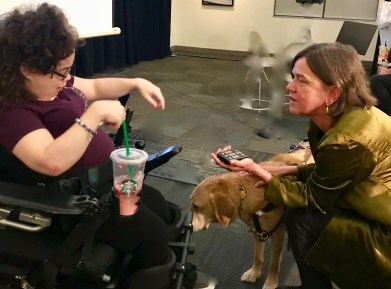
 Regan Burke