Is Scott Galloway out of Touch?

FeaturedIs Scott Galloway out of Touch?

For the first time in my life, I attended a Sunday service at a Unitarian Universalist Church, to see Chicago’s mayor, Brandon Johnson, in dialog with the pastor. I was curious to hear what this progressive Black mayor had to say to a progressive Northside (White) church.

The pastor began the service with an announcement.

“The Unitarian Universalist Church was established by and for people who do not believe in hell.”

“Whaat?” I was so startled I hardly heard the rest of the preamble. I don’t believe in hell. No one I know believes in hell. But I’ve never heard nor would I ever expect to hear such good news from any church pulpit. 

But wait, there’s more good news! The “UU’s” reject original sin, believe in a God who loves and redeems all human beings, and trains congregants in social justice work. These are my beliefs too.

The bias I’ve had against the Unitarian Universalist Church stems from old thinking that Unitarianism is a heretical religion because they don’t display a cross. Where did I get that crap? Since I’ve been attending a Presbyterian Church for over 45 years, it must have slipped into my head when I was half asleep some Sunday morning. 

Speaking of old ideas, on Friday, December 5, podcaster Scott Galloway responded to a young man who asked:

“How do I get more involved in politics?”

Galloway said “… because young people don’t vote, old people keep voting themselves more money, right? $40 billion child tax credit gets ripped out of the infrastructure bill, but the $120 billion cost of living adjustment for Social Security flies right through.

…our old people have figured out a way to vote themselves more money, and the fact that people under the age of 18 don’t vote, the budget reflects values, and our values are that we don’t really love our children.”*

This is a typical Scott Galloway motivator: money. He will happily reveal how much he’s worth and how he manipulated the modern system to get there. But his statement pitting the young against the old using the antiquated idea that we old citizens are sapping federal dollars from the young shows a decided lack of sophistication and reality. 

First of all, we want young people to succeed. We were young Pete Buttigieg’s biggest voting bloc, long before he announced his Gray New Deal in Iowa 2020. We vote for SNAP and child tax credits. We volunteer at food kitchens, tutor at public schools, babysit our grandchildren and are worried about ours, yours and future generations.

Secondly, we pay. We will pay the government $202.90 a month in 2026 for Medicare Part B, which covers doctor’s visits. That’s a 9.7 percent increase from 2025. We count on the Social Security Cost of Living Adjustment (COLA) to offset that Medicare increase. But in 2026, the Social Security COLA is only a 2.8 percent increase, posing a hardship for Social Security recipients who live check to check in this era of (non) affordability.

Third, don’t we all know that the way young people get involved in politics is to volunteer? What? Is that just a Chicago thing?

After 40 years, curiosity brought me, 79 years old, to an unexpected new idea about the Unitarian Universalist Church. 

Let’s hope Scott Galloway, 61years old, becomes curious enough to come to a new idea about how the real world works.

______________

You can find Scott Galloway’s email address here:

*The Prof G Pod with Scott Galloway: How to Get Involved in Politics, How Scott Galloway Writes, and How He Follows the News, Dec 5, 2025https://podcasts.apple.com/us/podcast/how-to-get-involved-in-politics-how-scott-galloway/id1498802610?i=1000739823645&r=196.38 This material may be protected by copyright.

Chicagoans: People of the Water

FeaturedChicagoans: People of the Water

Chicago is a water town. Lake Michigan and the sky above are our watermarks, the invisible identifier embedded in the soul of anyone who lives here for more than a year, or so. We are built around the lakeshore, the river banks, the canals, the bridges. Oh those bridges! For the next two to three years, three downtown bridges over the Chicago River are closed for repair. I know the river. I know those bridges. Whenever I’m a passenger in a car headed toward the Chicago River, I, a non-driver, turn into a navigational virtuoso.

“Turn left on La Salle Street! Now! Go to Jackson and make a right. Yes, Jackson.”

I’m insufferable. And always right.

Once you’ve lived anywhere in Chicago with even the thinnest view of the lake or the river, you can never go back, never not have water in your sights. Magical is an inadequate adjective. It’s cellular. What must it have been like for those who settled this land we call Chicago? Did a wild black and blue sky moving over Lake Michigan shout danger to our native ancestors? On windy days, did the lake and river together kick up such a fuss that the confluence was unnavigable? Were their beliefs tied to a cellular connection between the water, the land, the ancestors? Dare we imagine that those first peoples inseminated future generations, yes us, with a cellular connection to the water? 

My favorite visitors are those whose excitement about the Chicago Harbor Lock exceeds mine. The Lock is at the confluence of the Chicago River and Lake Michigan. It is part of multiple locks and dams that allow water from Lake Michigan to flow inland, toward the mighty Mississippi. Chicago devised reversing the flow of the river in the 1900s to send our sewage downstream, away from our beloved lake. Lucky for us. Unlucky for St. Louis. 

Boats and cargo ships moving from the river to the lake first enter the lock and tie up. Like a water elevator, the water raises or lowers to meet the level of the lake. I’ve been on tourist boats waiting in line on either side for tankers and cargo boats to get through the Lock. Thousands of Chicagoans live in high-rises with floor to ceiling windows where they can pull up their work desk and chair and watch the Lock all day long as they work from home. What a great city. This water town.

In mid-September, Customs and Border Patrol (CBP) agents were dispatched to Chicago as part of the Trump Administration’s ICE operation to arrest illegal immigrants with criminal records. They announced themselves by cruising up and down our cherished Chicago River, in and out of tour boats and kayaks. Some were masked. All were uniformed. All were armed with semi-automatic long guns. How did such an invasion get through the Lock?

Since that absurd melodramatic entrance into our city, the CBP has cruised into neighborhoods in military vehicles, springing into action to terrorize Chicagoans, citizens and non-citizens. 

Chicago responded with multiple layers of volunteer rapid response teams covering every scenario of civic and private life. New and old activists carry whistles to alert neighbors of CPD/ICE presence on our streets. Neighborhood school patrols walk children to school.

The Customs and Border Patrol floated into Chicago with 250 agents. There’s reason to believe that number is reduced to 100 for the winter. One of their most horrific tools, tear gas, doesn’t work in cold weather. They’ve gone off to warmer climes for training — to figure out how to deal with the likes of Chicagoans. Reportedly they will be back a thousand fold in the spring.

Oh these blue-minded Chicagoans.

These people of the water.

Will be ready.
______________

“Yet once you’ve come to be part of this particular patch, you’ll never love another. Like loving a woman with a broken nose, you may well find lovelier lovelies. But never a lovely so real.”― Nelson Algren

Broadview: Silent Resistance

FeaturedBroadview: Silent Resistance

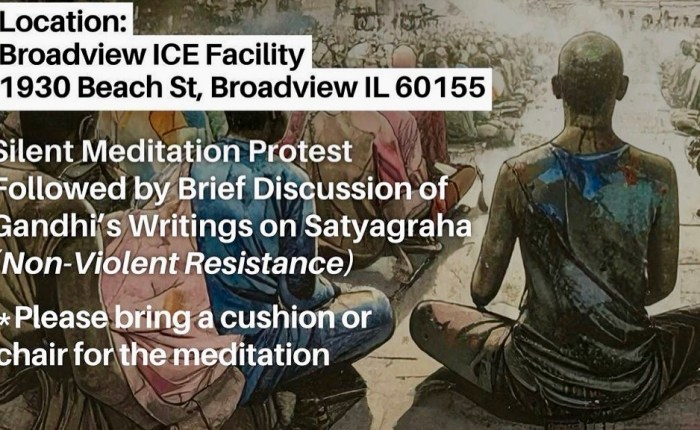
The announcement of a “Peace is our Protest” silent meditation hit my incoming a few weeks ago. I asked my Zoom meditation group to join me at The Broadview ICE Detention Center outside Chicago.

“I thought you were joking!” Rita said afterwards. 

And why wouldn’t she think it was a joke? Since the start of the Trump Administration’s Operation Midway Blitz in late 2025, Broadview has been newsworthy. Masked men in military costumes with automatic weapons shoot protesters in the head with pepper balls that explode into disabling chemicals. Demonstrators have been wrestled to the ground, zip-tied and arrested. Who in our group of graying meditators with varying degrees of mobility and vitality would be going someplace like that?

Well, Abigail and I did go. It was an easy drive. We arrived early. There were a few people already settled on their meditation mats, facing west. We set our lawn chairs down behind them. All was quiet. Two noisy protesters yelled out from time to time but experienced meditators treat ambient noise as neutral thoughts, not sound. We followed their piety and remained unstirred. Silent. Eyes closed. Forty-five minutes passed. A gong sounded. We stretched. 

“Look behind us,” Abigail whispered.

Over my shoulder I caught sight of about two hundred people. Sitting. Quietly. These valorous contemplatives came in behind us and squatted so softly we had no idea they were even there.

“I tried silent protesting and it never works!” A noisy bystander on a bike screamed at us. 

No one responded. No one felt compelled to yell back, argue, persuade. We remained silent. 

An unnamed man read a passage from Gandhi on non-violent resistance. We then folded our chairs and walked softheartedly to the car. As I passed by an Illinois State Trooper, he locked eyes with mine and said, “Thank you for coming.”

Broadview, an immigration processing center constructed in the 1970s, is a spit from the interstate highway leading to downtown Chicago. For thirteen years, a vigil at Broadview has been organized by the Interfaith Community for Detained Immigrants. Every Friday morning, Sisters of Mercy Pat Murphy and JoAnn Persch have led peacekeepers in prayer for detainees, some of whom are in transit to other facilities or are awaiting deportation.

“We are brothers and sisters, and it doesn’t make any difference the color of our skin or our religion or the country we come from,” Sister Murphy says, “we believe in one human being to another, a theology of presence.”

At the silent meditation protest we neither asked for nor received answers. No conclusions. No changes. No one needed to be there. We came to be present. A living theology of presence. I call this God. Others call it something else — the universe, spiritual essence, nature, mindfulness, other God names.

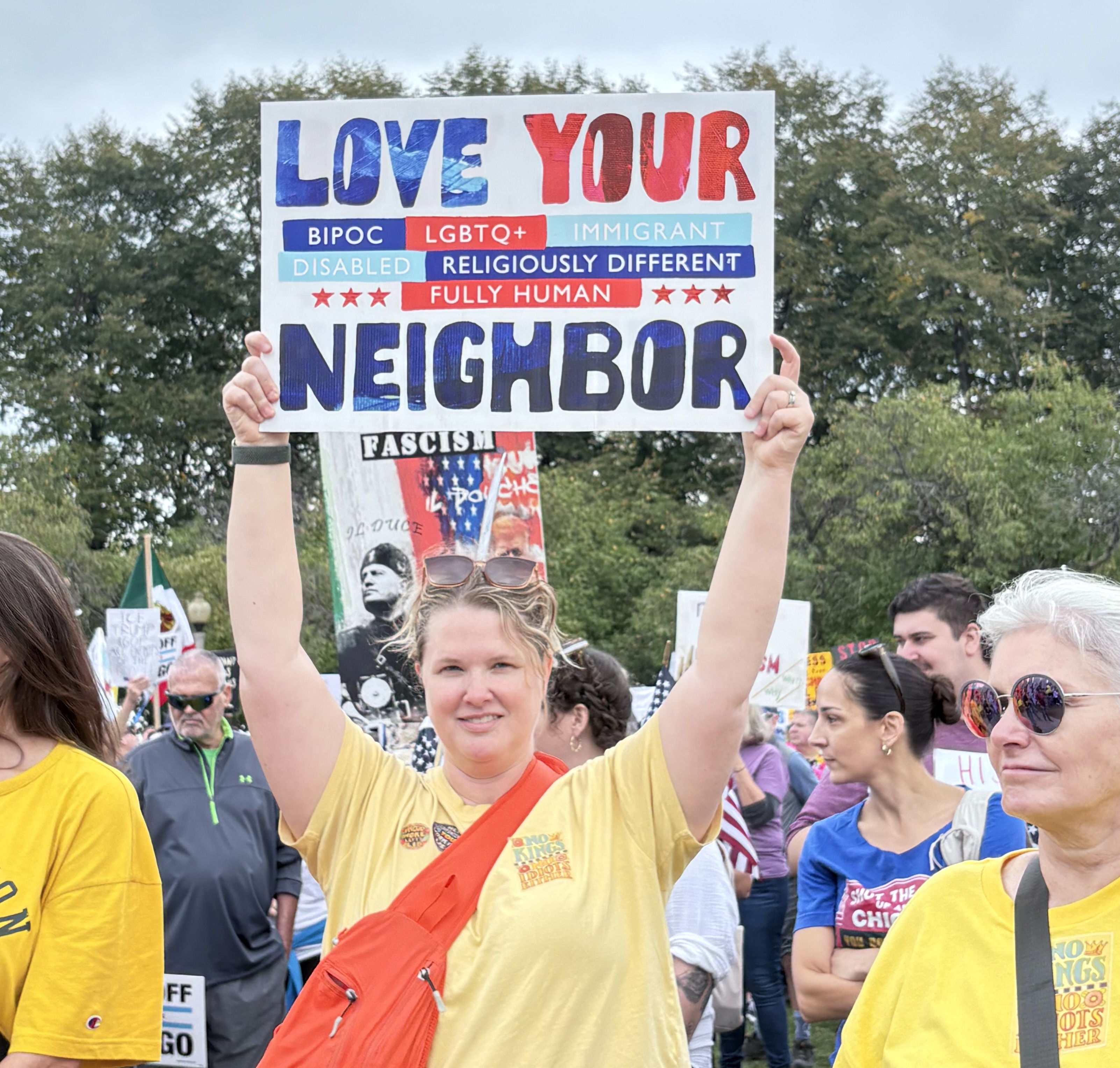
A week later the whole world watched millions peacefully protest at No Kings’ rallies. In Chicago, I walked all around the Butler Field rally in Grant Park and saw very few hateful slogans on signs. I’ve never seen such a noble protest. We marched up Michigan Avenue converging with streams of others walking from the south and west carrying woke messages.

Love not hate.

Faith Over Fear. 

Love Your Neighbor.

The Woodstock Nation. Long may it last.

___________________________________________________

Satyāgraha, from Sanskrit: “holding firmly to truth”, is a particular form of nonviolent resistance or civil resistance. The term was coined and developed by Mahatma Gandhi (1869–1948). Gandhi proposed a series of rules to follow in a resistance campaign:

  1. Harbor no anger.
  2. Suffer the anger of the opponent.
  3. Never retaliate to assaults or punishment, but do not submit, out of fear of punishment or assault, to an order given in anger.
  4. Voluntarily submit to arrest or confiscation of your own property.
  5. If you are a trustee of property, defend that property (non-violently) from confiscation with your life.
  6. Do not curse or swear.
  7. Do not insult the opponent.
  8. Neither salute nor insult the flag of your opponent or your opponent’s leaders.
  9. If anyone attempts to insult or assault your opponent, defend your opponent (non-violently) with your life.
  10. As a prisoner, behave courteously and obey prison regulations (except any that are contrary to self-respect).
  11. As a prisoner, do not ask for special favorable treatment.
  12. As a prisoner, do not fast in an attempt to gain conveniences whose deprivation does not involve any injury to your self-respect.
  13. Joyfully obey the orders of the leaders of the civil disobedience action. 

Is That a Rat?

FeaturedIs That a Rat?

Summer 2025 came to its 80 degree sunny end on September 22 at 1:19 pm. The autumnal equinox. About that time, the gardener at a building near Whole Foods was exchanging old for new in sidewalk planters. The red summer geraniums and green ferns were dug up, tossed out and replaced with lavender chrysanthemums and those curious purple cabbages. A potted plant gardener myself, I was glued to the gardener’s performance as I walked slowly by with Elsa. Two robust rats promptly jumped out of a planter onto the sidewalk so close I think they grazed my shoes (ew!) before scurrying off. Elsa’s rat-catcher terrier pedigree neglected to alert us. She was unfazed, didn’t flinch. Me? I screamed bloody murder. The gardener laughed. I suppose gardeners meet rats in the city all the time.

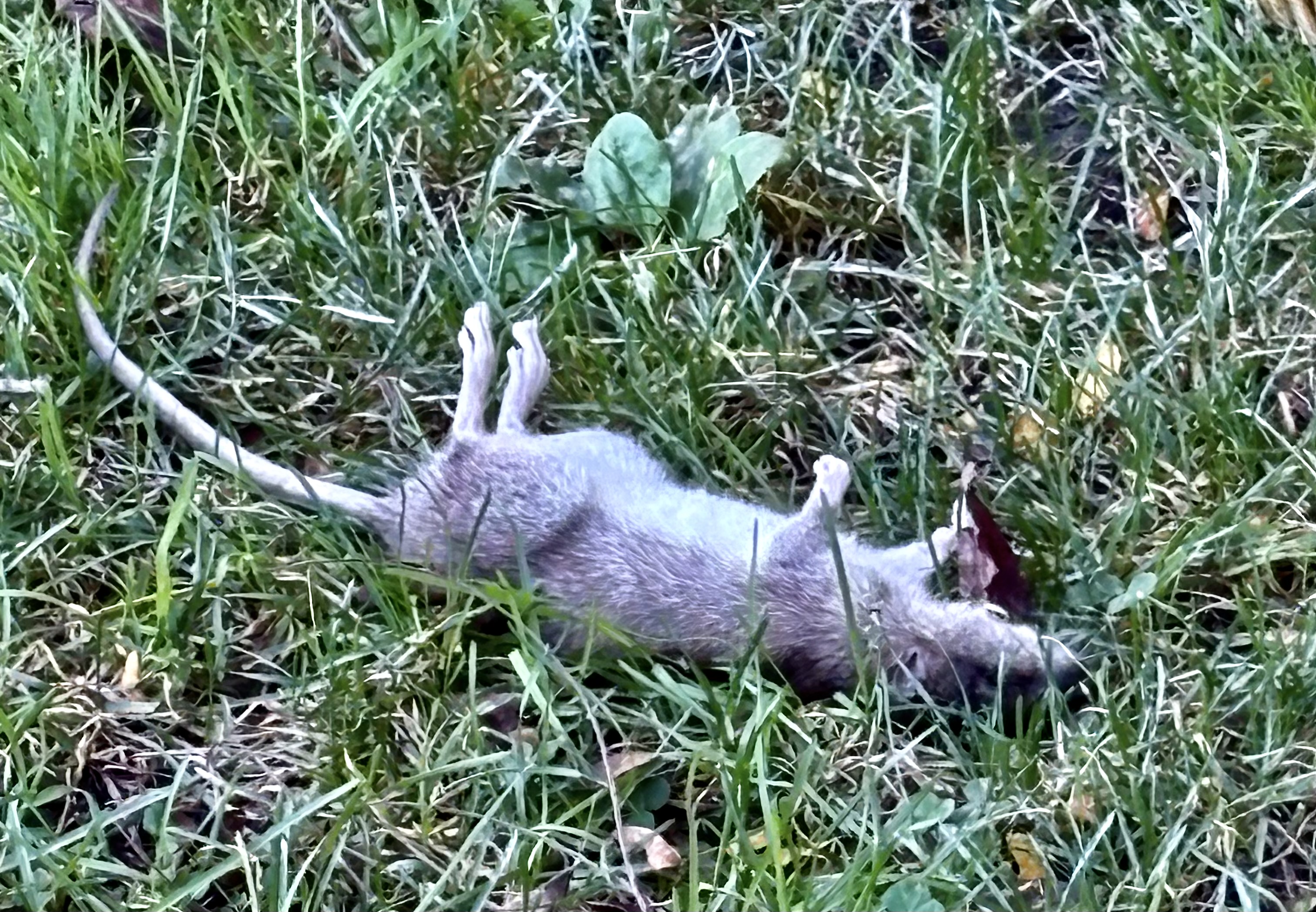
Later in the day, on our evening walk, I almost stepped on a DEAD RAT in the park, throwing terror into my dog-walking daydream.  

Dear god, what is going on?  A rat epidemic? Do rats still carry the plague? Rabies? Do we have vaccines for them? Trump would say don’t get those shots. Drink bleach. Take Intermectin. Isn’t that for parasites in pigs?

Oh, not again. Can’t I have just a few peaceful moments at the end of summer without that guy slamming into my thinking? 

Back in a voluntary meditative state to help ward off evil thoughts, I sat on a bench keeping vigil over the DEAD RAT to warn other dog owners. 

“Hey, yoo-hoo!” I shouted.

“Yes?”

“Watch out for the DEAD RAT over there by the hydrangeas!”

Ralph the dog was off his leash and just about ready to get a noseful of DEAD RAT. Ralph is a frisky German Shepherd with his senses still in tact. He smells a DEAD RAT a mile away. His grateful owner waved at me as he hurried over to pull Ralph away from the DEAD RAT.

Elsa, still unfazed, never uses her senses. She pretends her sniffer doesn’t work so she doesn’t have to chase squirrels. Her ears perk up when her name is mentioned but no other sound seems to register. And her eyes? Who knows what comes through those cloudy old pupils. Since she’ll eat anything, it’s dubious whether or not she still has a sense of taste. She had no sense of the nearby DEAD RAT.

But spatial awareness? Elsa has that in spades. She always knows where her little white body is in relationship to me. She is by my side, unleashed, whether we’re walking along a garden path or in wide open spaces.

In other words, she’s the perfect dog. 

As long as she doesn’t cozy up to a DEAD RAT.

Winter Rabbits in the City

FeaturedWinter Rabbits in the City

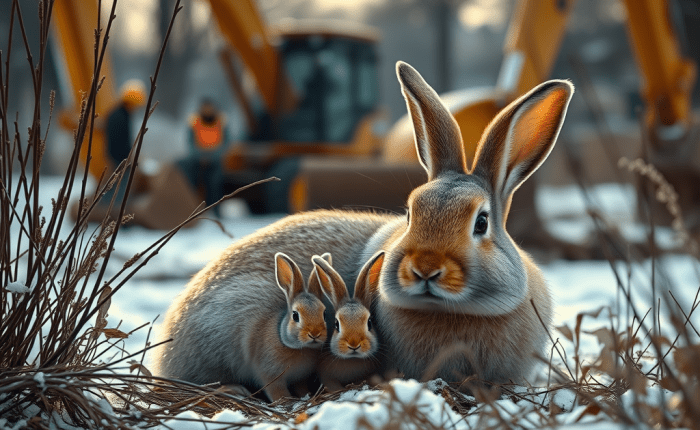
Rabbits are born and live out their stories in the same patch their entire lives. The lineage of the fat rabbit I see in the spring may have begun sixty-seven generations back, when the park was first established. After a month or so of observing her in April, she allows me the honor of seeing her two small cottontails, the next generation. They’re never in sight for long before they scurry away to the low brush.

My dog Elsa has old eyes. They may catch the bunnies on the run. Yet, her little legs tire as soon as the furries stop moving. Neither can her thinning olfactory glands sniff out their burrows. I’m pretty sure the rabbits are on to her as they don’t go far. All to say, the wildlife in the little city park seems safe.

Except it isn’t.

On a chilly November morning, I approached the far side of the park with Elsa. I wondered if the rabbits had burrowed in for the winter. I glanced over to the street side of the park to see gardeners unloading a backhoe from their truck. They wasted no time starting that thing up and ramming through the waist-high boxwood hedge to the middle of the garden, ripping out vegetation where the rabbits live.

“Hey! Stop!”

With Elsa at my heels, I  barged through the boxwood on my side of the park, flailing my arms. I was about to jump in front of the moving machinery. The driver stopped. His companion came to me.

“What about the bunnies?” I shouted.

“No English!” he shrugged.

“The rabbits! The rabbits! They live there!”

He laughed at me and signaled to the backhoe driver to keep going. They were having a ball.

That was it. I had no choice in the matter. The feral gardeners yanked all the underbrush, faded lilies and droopy irises. They removed the clumpy hostas that cover wild animals and the prairie asters that catch goldfinches and warblers. The backhoe dug holes for six newly planted baby trees. 

December is here now. Arborists removed honey locusts and hackberries that no one realized were distressed. The winter trellis of bare branches is spare. Above and below the wide open space leaves no comfort. No place to hide. The left-behind soft brown and grey prairie grass, goldenrod and hydrangea are fallow and forlorn.

But all will be lovely in the spring. And the ancestral rabbits will return. 

Whenever one of my dogs died I experienced profound grief that turned to sadness, for a time. A season of sadness. These days, sadness lasts longer. It’s not because my dog died but because so much is out of my control, like the displaced rabbits. I pray not for the sadness to leave me, but to manage to live with it. I have a sense many seasons of sadness are afoot. All may not be lovely this spring.

I wish I had saved those bunnies.

Doomsday Prophecies: From Lindsey to Trump’s NAR Influence

Doomsday Prophecies: From Lindsey to Trump’s NAR Influence

In the early 1970s the doomsday prophecies in Hal Lindsey’s The Late Great Planet Earth, stoked my Toms River, New Jersey, Christian fundamentalist cult. Little did I know that the prophesies of the cult religion of my youth would come true through a new religious movement, the National Apostolic Reformation (NAR). Fifty years later.

Based on his interpretations of the Book of Revelations, Hal Lindsey connected end-of-the-world Biblical prophecies to current events. In his view, Satan’s plans to form a one-world government and religion were triggered by the establishment of the state of Israel and the World Council of Churches—both in 1948. 

Converts, like me, of the 1970s Jesus movement, still flash-backing to acid trips, saw signs of the end times around every corner. In our small church community, anti-globalism was our protest because Satan was using the banks to form a global economy. We boycotted the Bank of America. We refused to use credit cards. We wrote letters condemning the birth of the European Union. An increase in the divorce rate, recreational drugs, new technology, the gasoline shortage, religious ecumenism. All these signaled the diabolic end of the world, the coming of the Antichrist, or some kind of unearthly vision that terrified vulnerable young comfort-seekers.

I left the Christian cult after sobering up in Alcoholics Anonymous, divorcing an abusive husband, and moving 1,500 miles away from the scene. 

Starting in the 1980’s, unbeknownst to me, Christian fundamentalism slowly morphed into the New Apostolic Reformation. The prime NAR chronicler, Matthew D. Taylor, describes the NAR’s leadership as a “spiritual oligarchy” of apostles and prophets. Apparently God has told NAR adherents that Donald Trump is their spiritual leader. You’ll have to figure that one out for yourself, but the results are obvious. 

The NAR apostles and prophets tell Trump his job is to “advance God’s earthly kingdom so Christ can return.” Advancing the earthly kingdom is outlined in Project 2025. The elimination of abortion and women’s rights; same-sex marriage and gay rights; dismantling USAID as a stand against globalism—all the shockers in the first year of Trump 2.0 are advancing the earthly kingdom.

Venezuela is the biggest shocker so far, at least for me. Fifty years ago I learned that the Book of Revelations prophesied God would make the United States, Russia and China the world’s three spheres of influence. The United States would get the entire Western Hemisphere. Russia gets its region, and Europe. China gets all of Asia, India, Africa. This is the umbrella of national sovereignty, the opposite of international integration and the seeds of anti-globalization.

A radio broadcaster startled me on Saturday morning, January 3, with the news that the US invaded Venezuela. The long-forgotten voice of myself as a 25-year-old Jesus Freak bellowed, “Uh. Oh. Wake up. It’s happening.” 

Donald Trump, in a 2017 speech to the Joint Congress, announced he was not the President of the world. Instead, he stated, he was the President of America. These words sent a signal to anti-globalists and end-times prophets around the world.  It was a declaration that the US will once again dominate the Western Hemisphere. Vladimir Putin confidante Alexander Dugin, heard the call and issued a statement that traditionalism had won, globalism lost. 
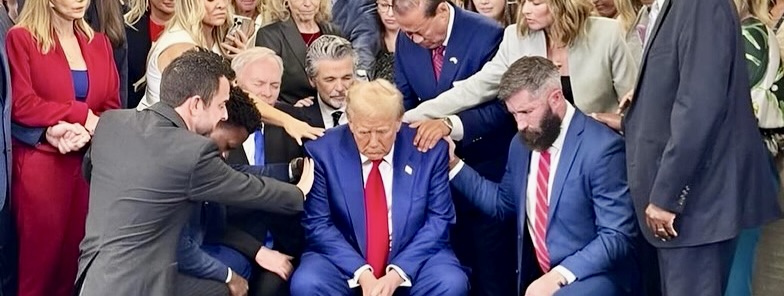
Anthropologists say pandemic uncertainty, virtual reality, environmental issues, old-age anxiety, border disputes, memory disorder, and gender trouble put society in a self-protective liminal state, a state betwixt and between. Perhaps these unsettling markers ushered in Donald Trump as the leader of the new world order. Now that we’ve fallen over the threshold, what do we do?

I don’t know. 

But holy shit. 

Wake up. 

It’s happening.

Dead Dogs

Dead Dogs

The cat jumped from the cabinet behind the Christmas tree onto the back of the couch and slinked over to perch behind the woman sitting across from me. 

“Watch out! The cat’s behind you,” a nearby party-goer warned.

“Oh that’s ok. I like cats,” said the guest in proper guise.

Staring down the resident pet, I drifted off to a time long ago when I was in the same position as the proper guest. When I turned to greet the host’s cat  (a stupid-human gesture), she swatted me in the face, claws out.

The Christmas party conversation turned to pets.

“Do you have any pets?” I was asked.

“Oh yes, I have a Westie.”

I love my dog and I talk to her a lot, but I don’t talk about her much. My mother, Agnes, hated people who anthropomorphized their pets. Really hated them. My feelings aren’t as strong but I have the genes—an aversion to pet talk.

It turns out Agnes was onto something. As long ago as the 1870s Charles Darwin criticized the natural tendency to ascribe humanlike attributes to non-human animals. His pitch was for humans to show as much interest to the natural world of insects and plants as we do to our pets. In doing so, he opened the forbidden subject of anthropomorphism. Darwin’s England was ground zero for the upper classes treating their pets like children or stand-ins for friends. Since then, many scientific abstracts and PhD theses have tried to punctuate the negative consequences of anthropomorphism: over-spending on human-like clothes, feeding pets non-compatible human food, beautifying dogs with toxic cologne, nail polish, breath freshener and worst of all, expecting non-human animals to have human emotions.

I suspect Agnes was more drawn to anthropomorphism than her sophistication would allow. Her sobering suggestion that trees are worth adoration are probably my earliest spiritual experience of our life together. Another was her reverence in quietly revealing the nesting robin’s eggs outside the bathroom window. But she’d never stand for conversations about them. In her world, if you didn’t present a funny story based on serious articles from the New York Times or Time Magazine, you were an out and out bore. Her ghost leads me to the Never-Trumper’s Bulwark podcasts, whose tagline reads “a few laughs to wash down the crazy.”

There’s a trail of dead dogs nipping at my aging heels. I threw this into the mix at the Christmas party in order to join the pet talk.

“Do you dream about dogs from your past?” Someone asked of no one in particular.

“All my dead dogs are present,” I blurted out. 

It’s a goofy thing to say, like I’m a Buddhist or Spiritualist or the crazy white-hair in the corner with her Diet Coke. Other than my dog Henry, who talked to me during the Covid shutdown, I’ve always thought of my pets as nothing more than animals (forgetting that I, too, am an animal). No fancy garments, doggy day care or prepared meals. But as dead pals, they are sentient. Here. They may be the beings between the here and the hereafter, waiting to guide me to wherever that is. I hope so.

I’ll need protection to escape the cruel and the crazy running my country.

Knock On Wood

Knock On Wood

The activist community that confronted ICE in Chicago has quieted down for the winter since ICE commander Gregory Bovino hightailed it out of town with 100 of his 200 military combatants. Southern activists report that ICE is wreaking havoc on the streets of New Orleans and other Gulf Coast towns while training the 10,000 newly-enrolled ICE recruits. In the Upper Midwest, we’re like mama bears and cubs in hibernation. We’re squirreling away our esprit to ready ourselves for the war we expect ICE to launch over the threshold in the spring.

Oh, there are cadres of fresh revolutionaries protesting against high property taxes at winterized town halls. Indivisible and other groups are keeping the newly activated engaged with Happy Hours, Coffee Hours and Sound Baths. And eager canvassers are stepping out in the cold to knock on doors for their favorite state and local candidates.

llinois’ 2026 primary is March 17. In times past, a St. Patrick’s Day election meant a big turnout at the polls. Can you guess why? Yeah, a lot of people took the day off for the parade and voted afterwards. But Illinois Governor Pritzker has told us that Bovino and his returning troops may try to disrupt our elections. What does that mean?

No one has a clue.

Amidst all this dread of the future present, I received an unexpected message about my life story that put the worries of the world on the back burner. In 2020 Tortoise Books Chicago published a memoir I’d written thanks to the encouragement of friends. 

A few years after I retired I attended a poetry reading at the Museum of Contemporary Art. Shuffling up to Poet/Author/Moviemaker Kevin Coval, I disclosed, “I wish I could write”. 

“Everyone can write. Everyone has stories to tell,” Kevin responded. “Come Saturday afternoon to the writing class. It’s free.”

Kevin and the others welcomed me, a much older student, into the upper room of significant creatives. One day he introduced me as “one of our writers,” and a bolt-of-lightning zipped around my bones. 

Beth Finke, memoir writing teacher extraordinaire, praised my weekly essays while x’ing out the “weak” verbs and extraneous paragraphs. Writing expended a lot of brain energy and I often gave up from exhaustion. Then Beth would assign an energizing prompt like, “the tune you most remember from childhood” (Elvis’ Hound Dog). Poor thing had to listen to every detail of every step in the long saga of getting my book published.

Vivienne, an accomplice in many adventures, insisted I write a book so she could make a movie about my life. This seemed preposterous, but slipped into the maybe compartment when she wrote, produced and directed her full-length feature, “Dare to be Wild” (Netflix). It still seemed preposterous because as a friend asked me recently, “Is your life that interesting?” No. Yet, Kevin Coval attests every life is interesting.

The unexpected news I received this week puts the idea of a production, based on my book, on the front burner, in the cards, out front, on center stage, in the spotlight, on the radar, on a winning streak, ahead of the game, beating the odds, nailing it, on fire.

Knock. On. Wood.

Texas Goodness

Texas Goodness

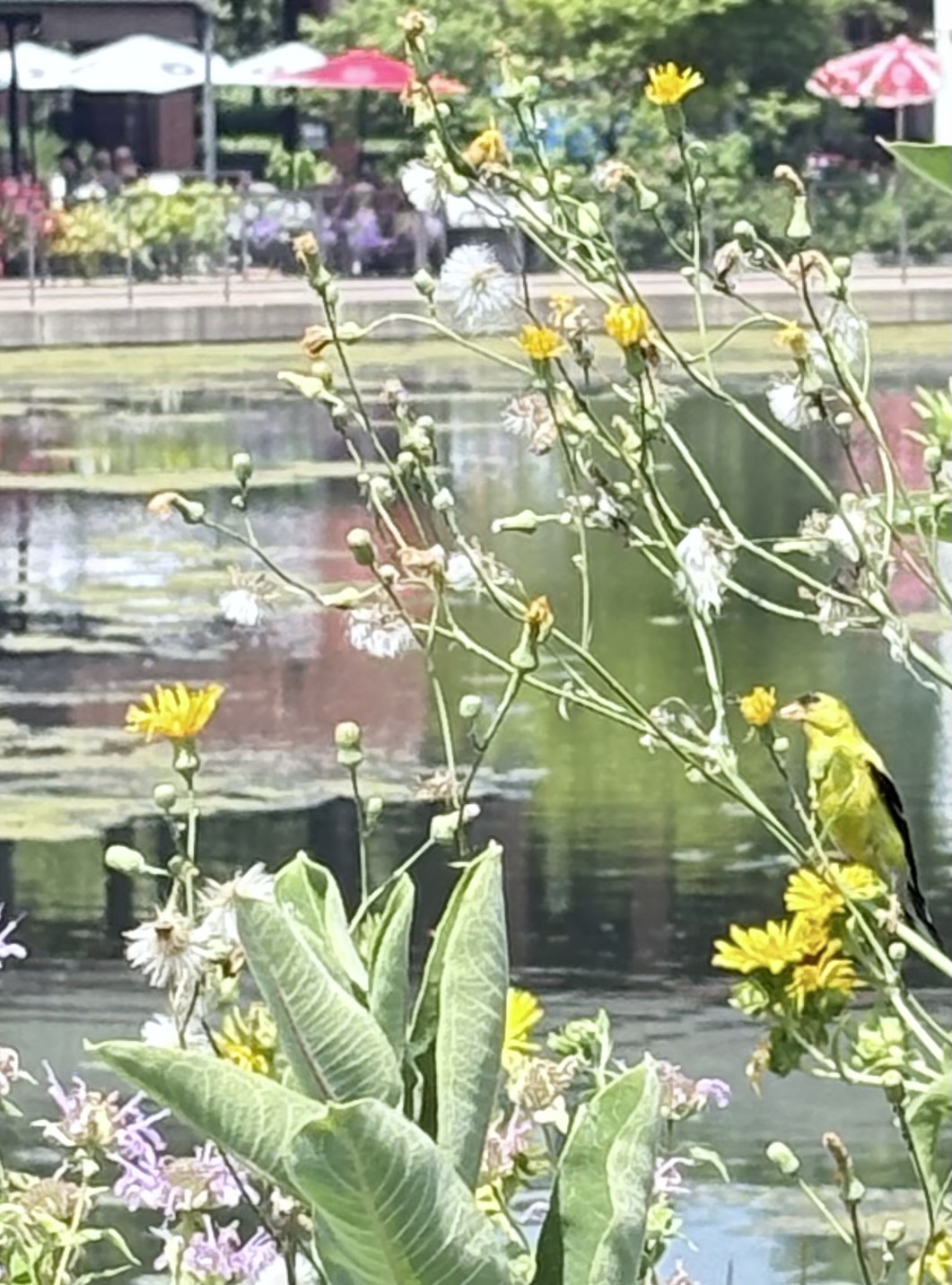
Something fluttered around me, as if I’d stepped into a web of butterflies. But I hadn’t. Butterflies were off in the distance. On the Nature Boardwalk surrounding the marshy South Pond in Lincoln Park I was soaking in the August-blooming bubblegum-colored big-flowered swamp mallows. And there on a daisy branch sat a goldfinch. And another, on a farther branch. Hidden in the yellow coneflowers were a few more, pecking at seeds. Goldfinches had entered my airspace as they headed for the wild prairie flowers at the swamp’s edge. Goodness nurturing goodness.  

My held-breath whispered, “You know, Regan, God did not have to give us the goldfinch.” At that moment, as others before it, I believed in God. The previous morning, fearing all goodness had vanished from the earth, I assumed God, like the butterflies, had flittered off in the distance, out of sight, out of the picture.

I lost my faith in goodness for the umpteenth time the day President Trump told Texas Governor Greg Abbott to redistrict Texas in order to gain five more gerrymandered Republican Congressional seats. Americans, who vote with their pockets, are realizing everything they buy to survive in this world since Trump became President has skyrocketed. Because of that, commentators suggest Trump is afraid we’ll all vote against his MAGA party in the 2026 mid-term elections yielding more Democrats in Congress. Cynics say Trump needs more Republicans in Congress in case he declares an “election emergency” and tells Congress to appoint him for another term. 

No one need explain redistricting to me. In the 1980s I worked in the Illinois legislature where computerized gerrymandering was invented in the basement. Drawing legislative lines to benefit Democratic incumbents was de riguer, not just acceptable, but expected. No one uttered the word gerrymander then. Today, Illinoisans are surprised to hear Republicans scoffing that their state takes the cake on gerrymandering. The secret is out.

Republican Governor Abbott yielded to Trump’s demand. He introduced a newly drawn map with the five added Republican Congressional seats to the Texas legislature. The Democratic Texas lawmakers promptly left the state. The Texas legislature needs those Democrats in the Austin capital to make up the necessary quorum to vote on that map. 

And those Texas Freedom Fighters, as they’re described at Jesse Jackson’s Rainbow PUSH Coalition, are housed in a high-security hotel outside of Chicago. They’ve had bomb scares and death threats. They cannot move around without security. I can’t think of a lower hell than being far from home stowed away in an exurb hotel with no end in sight.

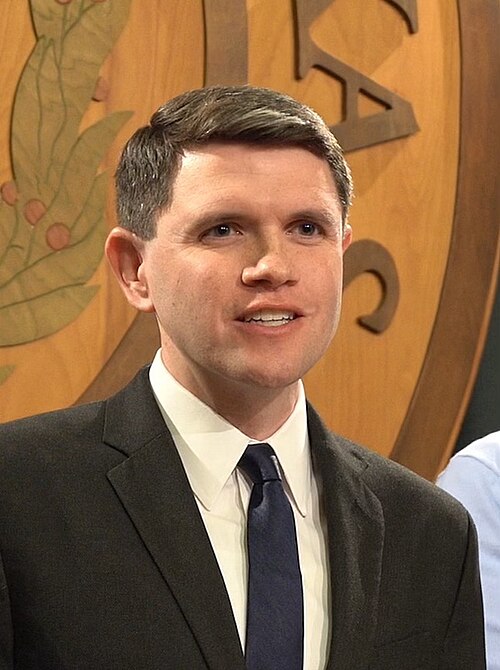
One of the exiled Texans, James Talarico from Austin, attends a Christian seminary to ground himself in the fight against White Christian Nationalism that’s roiling the Texas legislature. A nurturing goodness, he speaks of hope and love and responsibility to the United States.

These Texans, these democracy heroes, are saving us from the worst of gut-wrenching trumpism. When the day comes to proclaim their victory, let’s stroll around the Nature Boardwalk among the goldfinches, daisies and butterflies, nurturing goodness. 

Maybe then God will come back into the picture.

More about James Talarico

Contribute to the Texas Democrats

Magpie Wedding Guests

Magpie Wedding Guests

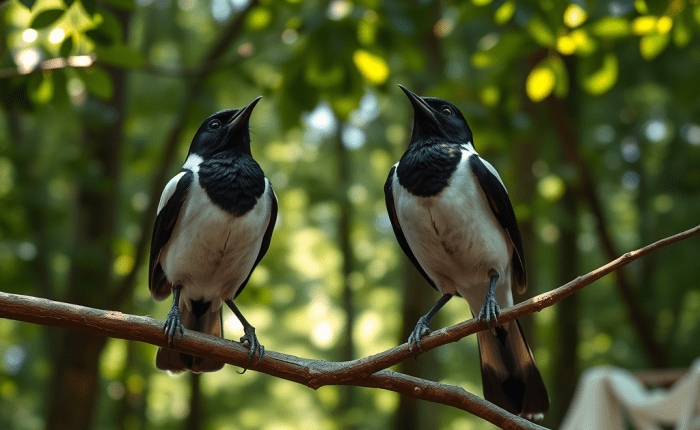
The Merlin app in my iPhone reported two singing Magpies above the deck built into the trees surrounding the wedding. Standing at the rail with my 19-year old grandson, we looked to the sounds — to one side of the dense forest, then to the other.

“We should be able to see them,” I said. “They’re the size of a crow, with white bellies and flashy black wings.” 

The Merlin Bird-ID developed by the Cornell Lab of Ornithology, identifies birds by their song. It works like this: I open the app, Merlin tells me the name of the bird it hears, and I look for that bird. I’m satisfied, thrilled actually, with knowing who they are even if I don’t spot them.

We were in Salt Lake City for Kirby and Nate Green’s wedding. My granddaughter. I had walked around my hotel neighborhood earlier looking for birds. Many North American birds, like the Magpie, never come over to my side of the Mississippi River in Chicago. They stay out West. On my morning walk, I spotted only the ubiquitous house sparrow.

Magpies! Known as the world’s most intelligent animal, they are in the equally-smart crow family. Magpies have even been observed mimicking human speech. Trying to spot the Magpies on the on the deck, I thought of a time I visited Los Olivos, California. 

In the garden of a gift shop, I noticed a gregarious Magpie couple roosting on a shed.

“Look them in the eye!” 

The proprietor instructed me to interact with the birds because of my exaggerated curiosity. My friend, Cappi Quigley, tried unsuccessfully to lure me away to the California artists’ original wares displayed around the garden.

“They are wild pets,” the owner explained. “They’ll follow you, protect you. Lock onto their eyes and you will not be forgotten.”

We drove out of Los Olivos five miles up Figueroa Mountain Road to Michael Jackson’s Neverland Ranch for a look-see. MJ had been dead for about two years then. We managed to snap each other’s photos in front of Neverland’s iron gates, just as the guard shooed us away.

Two Magpies yacked and magged at us the whole time from low hanging olive trees. They had followed us up from Los Olivos and all the way back to town, swooping down on the car and yelling, as if they were warning us away from Michael Jackson’s ranch.

Folklorists report that Native Americans believe the sight of a single Magpie brings bad luck. But a pair of Magpies, as heard in the trees above the wedding, brings joy. I heard the Magpies again as Kirby and Nate exchanged their vows. There is a world where we might believe that those two Magpies have found their way from the trees above the wedding to Kirby and Nate’s backyard. And that the Magpies will roost on the shed, bringing joy to Kirby and Nate’s lives together as long as they live. 

Fritz Edelstein on ‘Let it Be’

Fritz Edelstein on ‘Let it Be’

Guest Blogger Fritz Edelstein, Principal at Public Private Action, was the Director of Constituent Services in the U.S. Department of Education where we became friends during the Bill Clinton administration. Fritz lives in Park City, Utah, and for many years he produced the “Fritzwire” newsletter.

Let it Be by Fritz Edelstein:

“Let It Be,” one of The Beatles’ most iconic songs, is often seen as a poignant farewell to the band’s incredible journey. Written by Paul McCartney, it was released as a single in 1970 and became the title track of their final studio album. The song carries a timeless message of hope, resilience, and acceptance, making it a beacon of comfort for listeners across generations.

Moved by the dream, McCartney turned his feelings into music. The lyrics reflect his mother’s comforting presence, with lines like “When I find myself in times of trouble, Mother Mary comes to me, speaking words of wisdom: Let it be.”While some interpreted the song as having religious undertones, McCartney clarified that “Mother Mary” referred to his own mother, whose memory brought him peace during a difficult time.

Musically, “Let It Be” is both simple and profound. The gentle piano melody and soulful vocal delivery create a sense of serenity, while the gospel-inspired arrangement adds emotional depth. The song’s climactic guitar solo, played by George Harrison, gives it a stirring, cathartic energy. This combination of elements underscores the song’s universal message: even in times of uncertainty, there is solace in acceptance and hope.

The release of “Let It Be” coincided with the official breakup of The Beatles, giving the song additional weight. For fans, it felt like a farewell gift from the band—a reminder to cherish the good moments and embrace change with grace. The song’s themes of resilience and faith resonated deeply, particularly during the social and political upheavals of the late 1960s and early 1970s.

Over the years, “Let It Be” has become a cultural touchstone, often played during moments of collective reflection or mourning. Its message transcends its origins, offering comfort in times of personal or global crises. For McCartney, the song remains one of his most personal creations, rooted in the memory of his mother’s wisdom and love.

As The Beatles’ final single before their disbandment, “Let It Be” serves as both a farewell and a timeless message of hope. It reminds us that even in the face of loss or uncertainty, there is peace to be found in letting go and trusting the passage of time.

___________________________

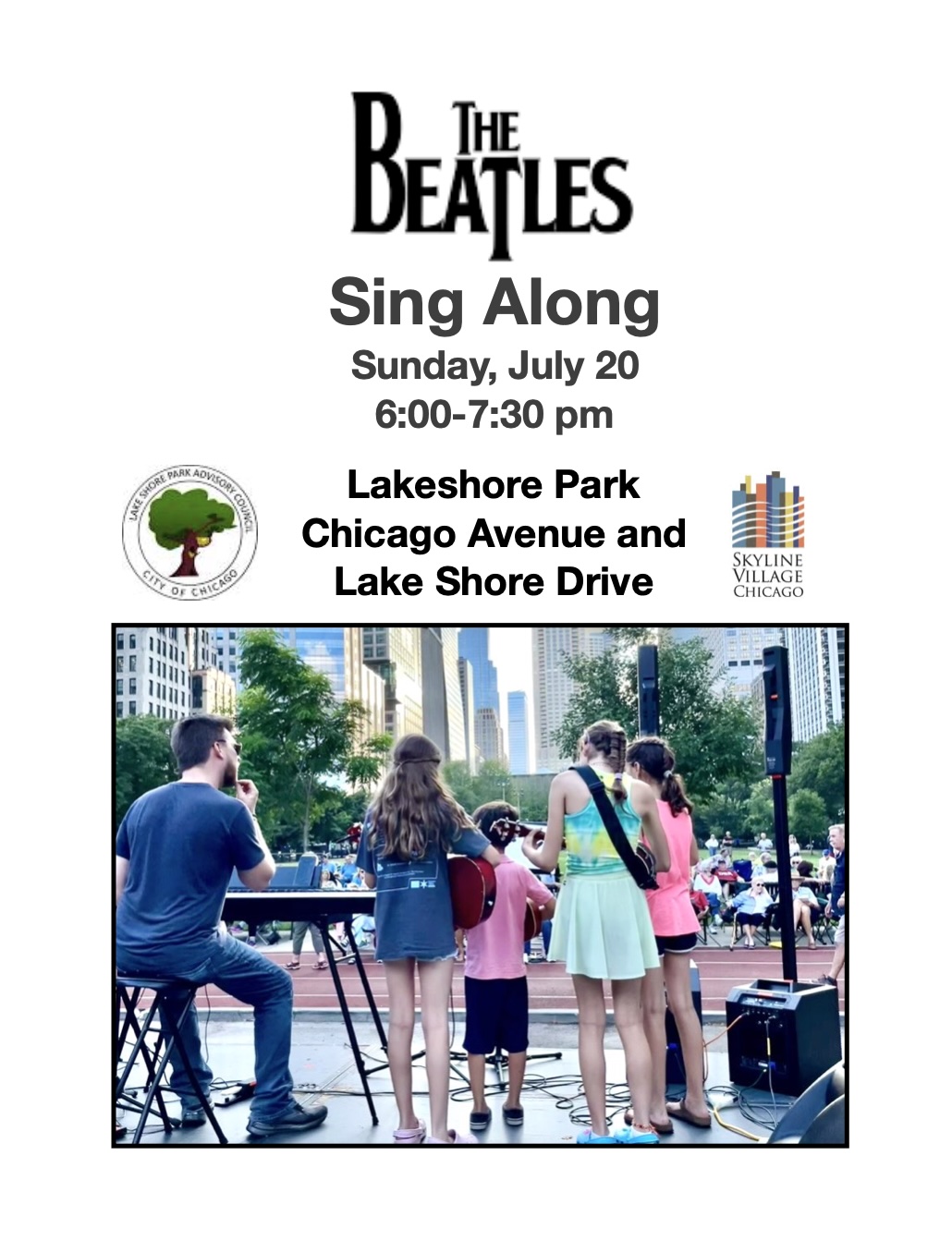
Join us in Chicago on July 20 to sing ‘Let it Be’ and 17 other Beatles tunes. It’s always the best event of the summer.