Broadview: Silent Resistance

FeaturedBroadview: Silent Resistance

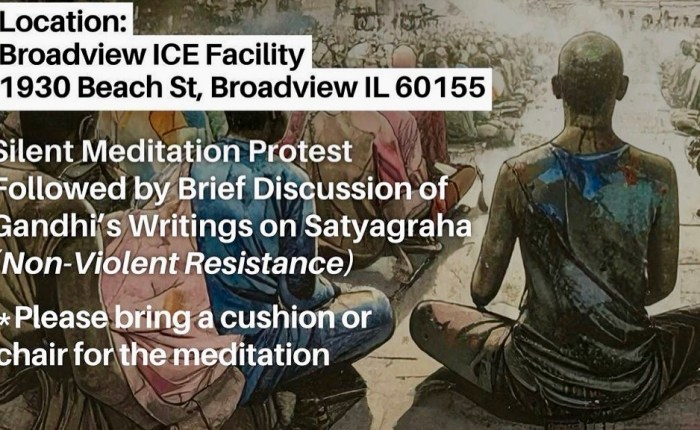
The announcement of a “Peace is our Protest” silent meditation hit my incoming a few weeks ago. I asked my Zoom meditation group to join me at The Broadview ICE Detention Center outside Chicago.

“I thought you were joking!” Rita said afterwards. 

And why wouldn’t she think it was a joke? Since the start of the Trump Administration’s Operation Midway Blitz in late 2025, Broadview has been newsworthy. Masked men in military costumes with automatic weapons shoot protesters in the head with pepper balls that explode into disabling chemicals. Demonstrators have been wrestled to the ground, zip-tied and arrested. Who in our group of graying meditators with varying degrees of mobility and vitality would be going someplace like that?

Well, Abigail and I did go. It was an easy drive. We arrived early. There were a few people already settled on their meditation mats, facing west. We set our lawn chairs down behind them. All was quiet. Two noisy protesters yelled out from time to time but experienced meditators treat ambient noise as neutral thoughts, not sound. We followed their piety and remained unstirred. Silent. Eyes closed. Forty-five minutes passed. A gong sounded. We stretched. 

“Look behind us,” Abigail whispered.

Over my shoulder I caught sight of about two hundred people. Sitting. Quietly. These valorous contemplatives came in behind us and squatted so softly we had no idea they were even there.

“I tried silent protesting and it never works!” A noisy bystander on a bike screamed at us. 

No one responded. No one felt compelled to yell back, argue, persuade. We remained silent. 

An unnamed man read a passage from Gandhi on non-violent resistance. We then folded our chairs and walked softheartedly to the car. As I passed by an Illinois State Trooper, he locked eyes with mine and said, “Thank you for coming.”

Broadview, an immigration processing center constructed in the 1970s, is a spit from the interstate highway leading to downtown Chicago. For thirteen years, a vigil at Broadview has been organized by the Interfaith Community for Detained Immigrants. Every Friday morning, Sisters of Mercy Pat Murphy and JoAnn Persch have led peacekeepers in prayer for detainees, some of whom are in transit to other facilities or are awaiting deportation.

“We are brothers and sisters, and it doesn’t make any difference the color of our skin or our religion or the country we come from,” Sister Murphy says, “we believe in one human being to another, a theology of presence.”

At the silent meditation protest we neither asked for nor received answers. No conclusions. No changes. No one needed to be there. We came to be present. A living theology of presence. I call this God. Others call it something else — the universe, spiritual essence, nature, mindfulness, other God names.

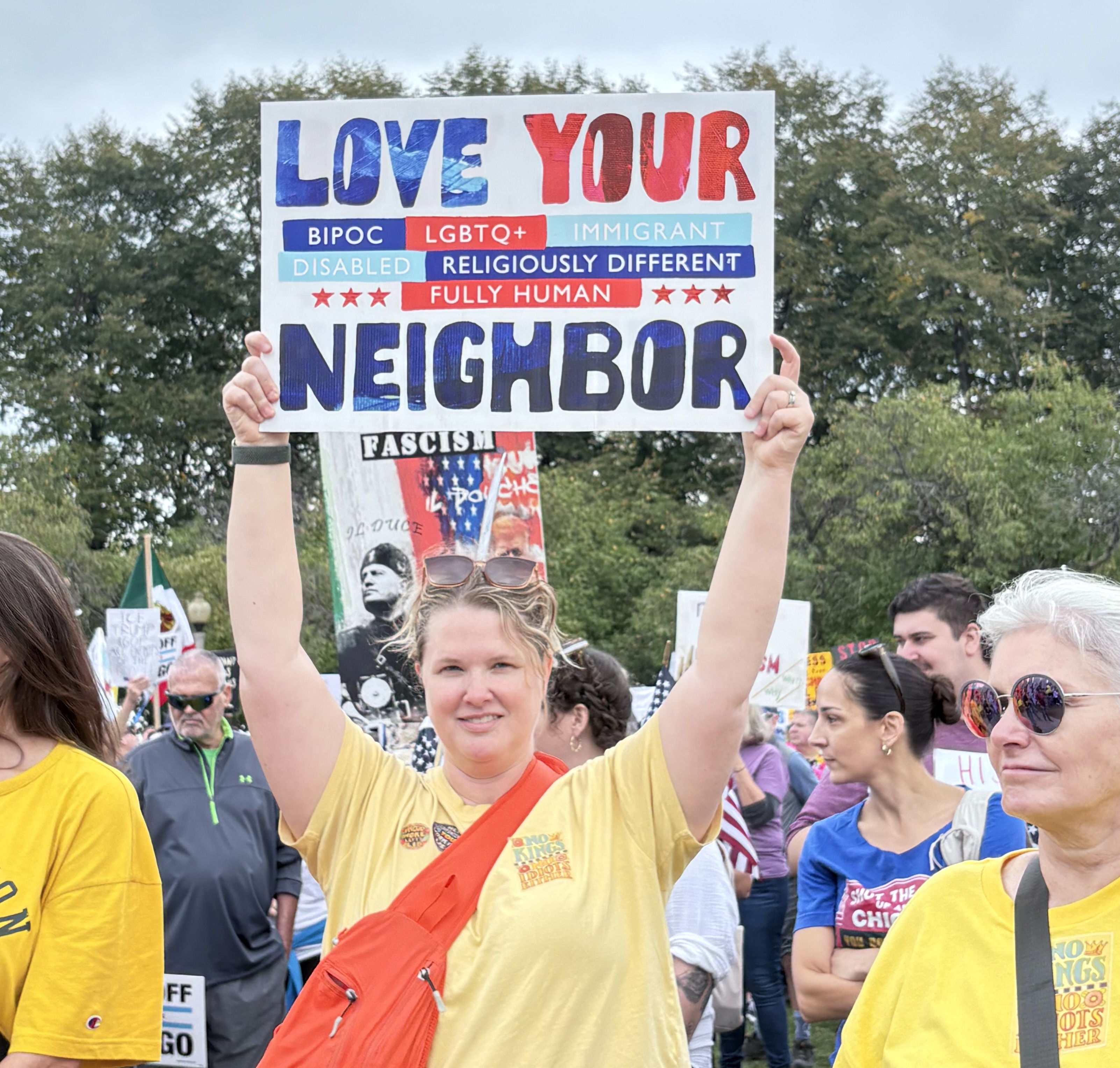
A week later the whole world watched millions peacefully protest at No Kings’ rallies. In Chicago, I walked all around the Butler Field rally in Grant Park and saw very few hateful slogans on signs. I’ve never seen such a noble protest. We marched up Michigan Avenue converging with streams of others walking from the south and west carrying woke messages.

Love not hate.

Faith Over Fear. 

Love Your Neighbor.

The Woodstock Nation. Long may it last.

___________________________________________________

Satyāgraha, from Sanskrit: “holding firmly to truth”, is a particular form of nonviolent resistance or civil resistance. The term was coined and developed by Mahatma Gandhi (1869–1948). Gandhi proposed a series of rules to follow in a resistance campaign:

  1. Harbor no anger.
  2. Suffer the anger of the opponent.
  3. Never retaliate to assaults or punishment, but do not submit, out of fear of punishment or assault, to an order given in anger.
  4. Voluntarily submit to arrest or confiscation of your own property.
  5. If you are a trustee of property, defend that property (non-violently) from confiscation with your life.
  6. Do not curse or swear.
  7. Do not insult the opponent.
  8. Neither salute nor insult the flag of your opponent or your opponent’s leaders.
  9. If anyone attempts to insult or assault your opponent, defend your opponent (non-violently) with your life.
  10. As a prisoner, behave courteously and obey prison regulations (except any that are contrary to self-respect).
  11. As a prisoner, do not ask for special favorable treatment.
  12. As a prisoner, do not fast in an attempt to gain conveniences whose deprivation does not involve any injury to your self-respect.
  13. Joyfully obey the orders of the leaders of the civil disobedience action. 

Is That a Rat?

FeaturedIs That a Rat?

Summer 2025 came to its 80 degree sunny end on September 22 at 1:19 pm. The autumnal equinox. About that time, the gardener at a building near Whole Foods was exchanging old for new in sidewalk planters. The red summer geraniums and green ferns were dug up, tossed out and replaced with lavender chrysanthemums and those curious purple cabbages. A potted plant gardener myself, I was glued to the gardener’s performance as I walked slowly by with Elsa. Two robust rats promptly jumped out of a planter onto the sidewalk so close I think they grazed my shoes (ew!) before scurrying off. Elsa’s rat-catcher terrier pedigree neglected to alert us. She was unfazed, didn’t flinch. Me? I screamed bloody murder. The gardener laughed. I suppose gardeners meet rats in the city all the time.

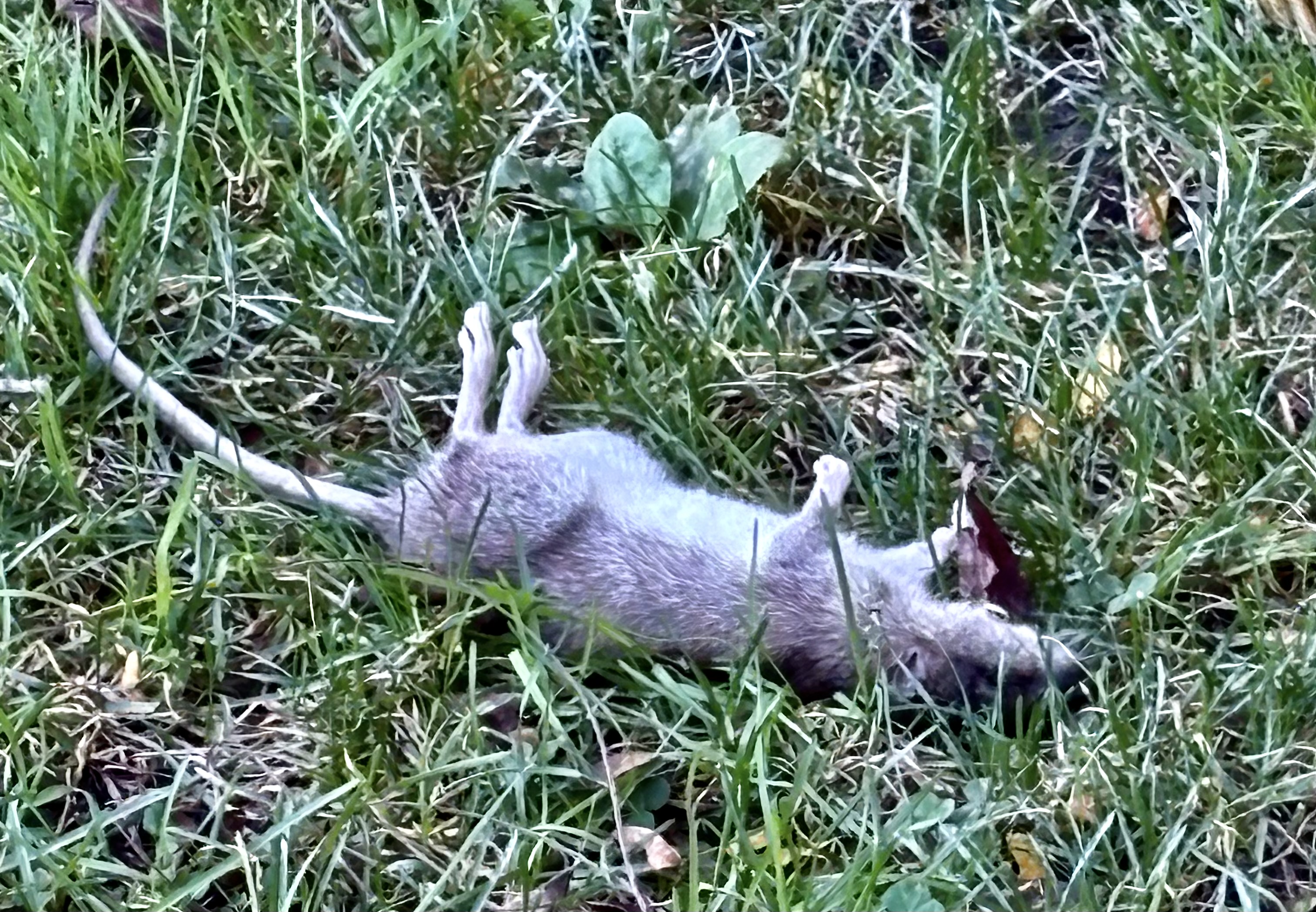
Later in the day, on our evening walk, I almost stepped on a DEAD RAT in the park, throwing terror into my dog-walking daydream.  

Dear god, what is going on?  A rat epidemic? Do rats still carry the plague? Rabies? Do we have vaccines for them? Trump would say don’t get those shots. Drink bleach. Take Intermectin. Isn’t that for parasites in pigs?

Oh, not again. Can’t I have just a few peaceful moments at the end of summer without that guy slamming into my thinking? 

Back in a voluntary meditative state to help ward off evil thoughts, I sat on a bench keeping vigil over the DEAD RAT to warn other dog owners. 

“Hey, yoo-hoo!” I shouted.

“Yes?”

“Watch out for the DEAD RAT over there by the hydrangeas!”

Ralph the dog was off his leash and just about ready to get a noseful of DEAD RAT. Ralph is a frisky German Shepherd with his senses still in tact. He smells a DEAD RAT a mile away. His grateful owner waved at me as he hurried over to pull Ralph away from the DEAD RAT.

Elsa, still unfazed, never uses her senses. She pretends her sniffer doesn’t work so she doesn’t have to chase squirrels. Her ears perk up when her name is mentioned but no other sound seems to register. And her eyes? Who knows what comes through those cloudy old pupils. Since she’ll eat anything, it’s dubious whether or not she still has a sense of taste. She had no sense of the nearby DEAD RAT.

But spatial awareness? Elsa has that in spades. She always knows where her little white body is in relationship to me. She is by my side, unleashed, whether we’re walking along a garden path or in wide open spaces.

In other words, she’s the perfect dog. 

As long as she doesn’t cozy up to a DEAD RAT.

The Peace of Non Closure

The Peace of Non Closure

A new concept popped up at the outset of a recent anti-racist training session. Among the familiar “courageous-conversation” ground rules, the leader added, “We commit to non-closure. (pause) Right?”

Whoa, really? My fellow attendees all yes’d the speaker as if they knew this already. I thought I must have ignored an inboxed message, or, in my long season of retirement, missed another new corporate buzz word. Non-closure.

On the brink of Juneteenth, the half-day session promised to address the backlash to Diversity, Equity and Inclusion programs and policies. That morning all of nature said yes! to Chicago. I wanted to say yes! too, and take a long walk in the park with my dog. Instead, I reluctantly ambled over to the dingy conference room in a church basement near my home. Anti-racism churned inside me and I had no organized outlet. I was curious to see if there was anything new.  Answers.

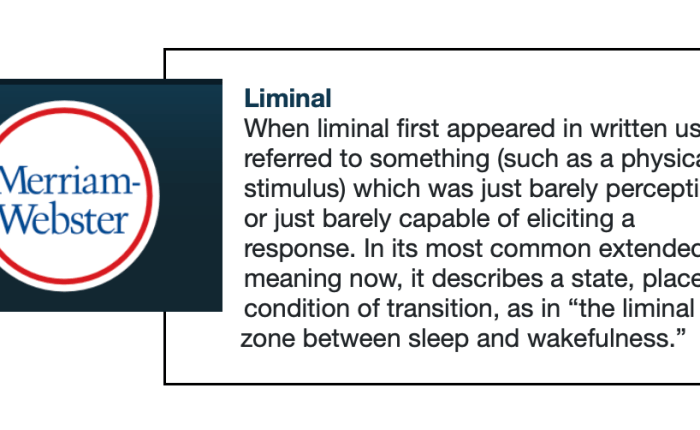
But here I was, swallowing a commitment to non-closure. No answers, no conclusions, no plans, no fantasies of what might be. Of the numerous anti-racism trainings I’ve attended since the murder of George Floyd this may be the first time I recognized that it’s safe to be in that liminal space of unknowing, of ambiguity. There would be no meaning-making, no sense-making, no closure.

Facilitators from Crossroads, an antiracism training organization, gathered us together, not to tell us what they know, but to find out what we know. They see, feel, but even more, they sense, not just a political backlash in anti-racism work but, an active softening in community and personal commitment. 

The air is leaking out of the tires.

This week Donald Trump and I had birthdays. We’re the same age. Several friends asked me how I planned to celebrate.

“I don’t really celebrate my birthday.”

“Why not?” Asked my favorite poet.

I had no answer. 

He asked about my writing.

“I’ve been thinking lately I may not write anymore.”

“Why?” He asked.

Another why question. And no good answer. Is that a failing? No answer? Does it mean I’m not sufficiently self-reflective?

Liminal, from the Latin, “threshold” puts time and space betwixt and between. On liminal days, birthdays dangle off the edge of time. The past no longer haunts me, the future no longer calls me. I neither wait nor wonder. Indeed, birthdays are liminal days.

Anthropologists say that memory disorder, pandemic uncertainty, authoritarianism, virtual reality, border disputes, old-age anxiety, environmental issues, and gender trouble put society in a self-protective liminal state. Whew! Thank you God. This beloved gift  allows me to live on the threshold where social norms, like answering the question “why” or reading every damn email are temporarily suspended. 

In the ninth grade, when I was consumed with past and future popularity by any means, I was inconveniently tormented with one living and one dead poet: T.S. Eliot and Alfred Lord Tennyson. A lot has been written about the spiritual liminality, the non-closure of their work. It’s only now (or is it?) that I see why these vexing lines captured me:

Tennyson’s Ulysses:
Yet all experience is an arch wherethro' 
Gleams that untravell'd world whose margin fades 
For ever and forever when I move.
TS Eliot’s Four Quartets:
Time past and time future
What might have been and what has been
Point to one end, which is always present
.

Cold Wars

Cold Wars

The 2019 Polar Vortex slid down from the North Pole, threatening to lock Chicago into subzero stillness. I prepared for the warring cold by teeing up the entire 18-hour series of The Marvelous Mrs. Mazel. Then I threw stale bread crumbs onto my balcony to nourish the house sparrows, finches, and chickadees before they huddled together in eaves and cracked soffits to wait it out. I shuttered in and Dapped all the little crevices around the balcony door that were spritzing air into my not-so-insulated living room. That was the extent of my preparation for the coldest two days ever recorded in Chicago.

Day one brought minus 23 degrees. I woke to a thick film of silver ice covering all the windows. The ice curtain obscured the humanity moving around behind the windows across the street and any fool pedestrian walking in the feels-like-minus 40.

My binge-watching was interrupted mid-morning by a thrashing whomp, whomp whomp on the concealed balcony. I inched toward a clearing in the frosty glass.

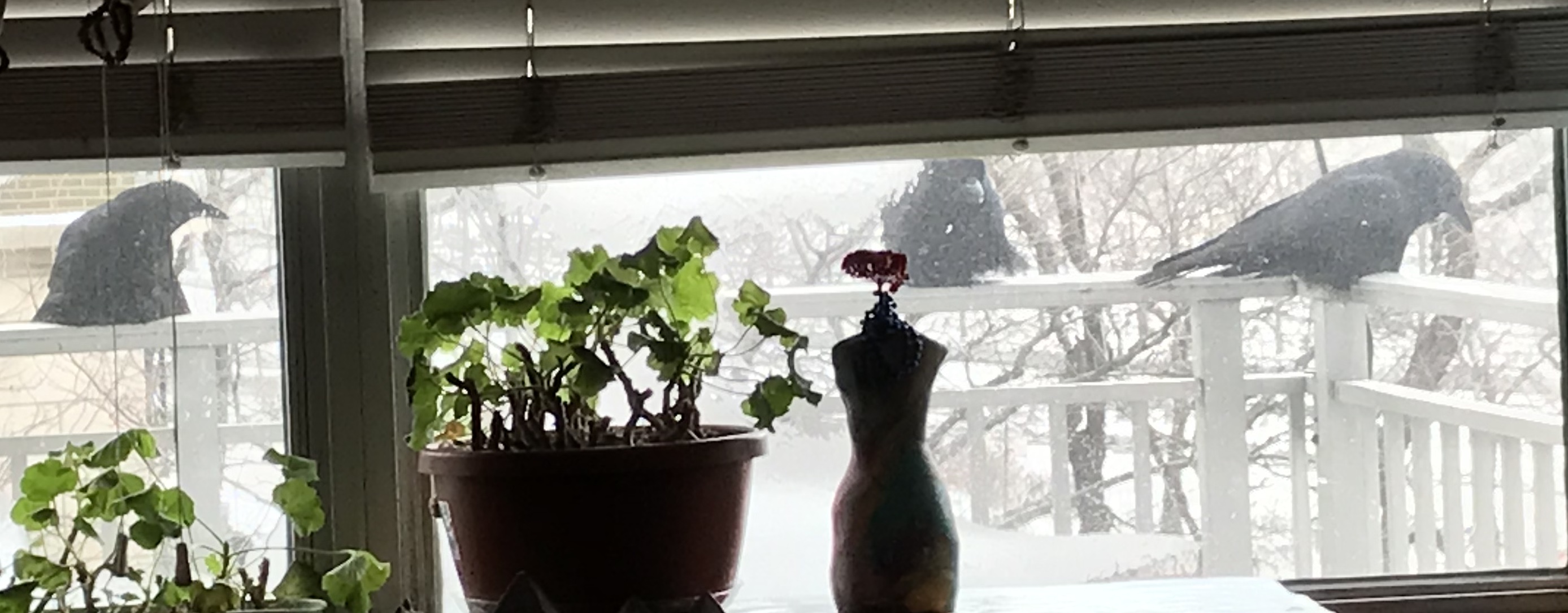
A murder of crows had come to forage.

The much-studied American Black Crow might be the most intelligent animal other than primates. They hide their food and come back for it. If a crow looks you in the eye, she will remember you, follow you down the street, and caw at you for attention like a wild pet. 

On day two, the temperature was 21 degrees below. The ice wall on my windows melted enough for a small lookout. I abandoned Mrs. Mazel and placed a chair well away from the clearing to observe the crows without startling them. They first landed in late morning. A mighty set of black wings fluttered a plumped-up body onto the balcony railing, and the rest followed—a family of five dipping to the balcony floor for leftovers. They flew off and came back. Again. And again. And again. I remained still throughout, trying to lock eyes with the birds. In the afternoon, the weather broke and allowed the dog and me to walk outside—under the watchful eyes of noisy new friends.

The first cold days of 2023 were predicted for the weekend after Thanksgiving. Though nowhere near the 2019 plunge, 30-degree temperatures heightened awareness of asylum-seeking families living on cardboard slabs outside police stations. I sought diversion through another favorite TV series, Julia.

The TV automatically tuned in CNN, though, where there was live coverage of the hostages being released from Gaza. A mysterious and curious need for every scrap of information gripped me. Who are they? What are their stories? Where are they going? I saw six women over the age of 70. One 85-year-old was helped onto a bus. I winced, feeling my own arthritic pain. Four children appeared—ages 2, 4, 5, and 9. I squinted to see if they were clutching teddy bears.

After watching for two tearful days, unrelenting shivers overcame me. And when I took the dog for a walk, that murder of crows cawed to us from the barren trees.

Is This Funny?

Is This Funny?

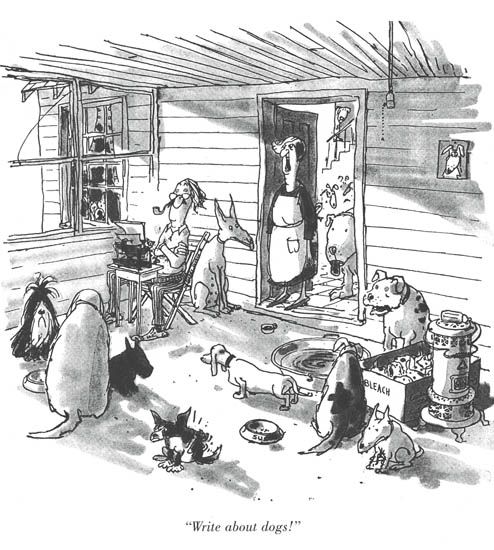
George Booth, the New Yorker cartoonist who died in November 2022, once created the funniest cartoon in memory. First of all, Booth’s silly line drawings were and remain funny enough–they don’t need captions. But the one I so love is a man sitting at his typewriter on a dilapidated porch wistfully smoking a pipe. Nine or ten dogs of different sizes and shapes laze around. There’s a bulbless socket hanging from the ceiling. His wife stands in the doorway. Caption: “Write about dogs!”

Ok. Ok. It’s not the funniest cartoon to you. But for me, a dog owner and a writer, it’s hilarious.

Obviously, the cartoon man has shouted, ‘What should I write about?’  ‘Write about dogs’ is a funny way of saying ‘write what you know’, writing’s first principle. Even fiction holds truths. Funny conversations and tales of goofy adventures are all around, like the dogs in Booth’s cartoon. I hesitate to write them because I don’t want my blog-reading friends to know how amusing their lives are to me. And what if the writing isn’t funny?

This summer I attended a free Comedy Writing Workshop taught by a professional, very intuitive, improv comedian. We didn’t have to pretend to be a tree or a bologna sandwich, though that would’ve been a kick; we simply pretended we were at job interviews and went back & forth with questions and answers. We could have answered any old way, and indeed creativity was encouraged, but everyone in this group seemed to answer like their jobs were on the line for real. And they. were not. funny.

Me? I said I was fired from my last job because I attempted to kill my husband with a stapler when he came to the office for a surprise lunch. Funny? I thought so, but no one laughed. Perhaps I actually look or sound like a murderer.

The comedy teacher smartened up to this over-55 group right away. She tailored the two-hour class to the cognition level of the twelve students she had before her. And still, no one was funny.

A friend of mine who’d recently been examined for dementia gave permission to the memory doctor to ask me how my friend had changed. Without hesitation, I answered, “She’s really funny but it’s taking her longer to get the punch line.”

Is this part of it? Aging, I mean.

Most researchers I skimmed agree that age-related cognitive decline contributes to difficulty with “humor comprehension”. The list of symptoms includes:

  • An inability to understand satire
  • A childlike sense of humor or enjoyment of slapstick comedy
  • Laughing at things that are not particularly funny, such as a dog barking
  • Taking jokes literally
  • Making inappropriate comments about strangers in public

George Booth created his last New Yorker cartoon ten months before he died from complications of dementia at 96. The cartoon cover is a goofy white dog glancing at a clock. Is that funny? A dog checking the time? 

If not, George and I share the same demented symptom of chuckling at things that aren’t particularly funny

.

On the Road to the OB

On the Road to the OB

Thornton Wilder’s The Bridge of San Luis Rey appeared on the list of required reading in my high school. One book a month. Stephen Crane’s Red Badge of Courage. Zora Neale Hurston’s Their Eyes Were Watching God. John Steinbeck’s Of Mice and Men.

Mark Twain emerged as the only fun author. Other equally lofty and more disturbing classics were listed. Dostoevsky’s Crime and Punishment, the inevitable adolescent eye-opener, marks my first trip into the world of an anguishing conscience. I became personally familiar with that angst as I fully fledged. My favorite was and still is Dickens’ Great Expectations. But Thornton Wilder? His book had more presence and greater standing in my hollow, blossoming thoughts.

Thornton Wilder had lived in my neck of the woods near the Jersey Shore during or after his Princeton years. No one knew exactly. His old farmhouse stood on a v-shaped wooded lot on the road to the Ocean Bay Diner. The “OB” was a popular teenage hangout for those who had cars or, in my case, those with friends who had cars.

Every time we passed it, someone would say, “that’s where Thornton Wilder lived” as if it was his ancestral home. Until I read his 1975 obituary, I thought he grew up in that house at the intersection of Ocean and Beaver Dam Roads. Driving past it once, the smartest girl I knew piped up from the back seat, “He wrote The Bridge of San Luis Rey there.”

Don’t take that as gospel. I have no idea where he wrote it. And I have no idea what I thought when I read it the first time. Except this: I wanted to write like him. I admit the fact that passing by the house where he may have written it gave weight to my desire.

“Did you ever read The Bridge of San Luis Rey?” Veronica asked me last year. Her book group read it.

“Oh yeah, in high school.”

“Do you remember any of it?”

When I confessed I didn’t, she suggested I pick it up again. Months passed before the Kindle version loaded in. Settling into another one of my many pandemic iPad slouches, I finally clicked into it.

Immediately my old muse ignited anew. Here’s why I wanted to write like Thornton Wilder. The bridge in the title is a centuries old Inca rope crossing in mountainous Peru. Wilder hadn’t been to Peru when he wrote it. At age fifteen I could easily picture myself creating stories about places I’d never been, based on descriptions in the Encyclopedia Britannica or travel brochures.

Wilder concocted fables of the five people who died when the bridge collapsed. I could develop that skill. I told good stories.

Or at least good lies.

But oh, the writing. Was I capable of dreaming up sentences like “It is on this visit to the theater that further matter hangs.” ? I thought so then. And perhaps it would be so now, had I started earlier than age sixty-five!

Writing Family Secrets

When I began memoir writing I had no intention of chronicling my family’s drinking, or mine, for that matter. I wrote because my new doctor led a program in expressive writing. He said writing would cure my chronic pain. He was the last stop on an exhaustive trip that was going nowhere, so I took a chance. He was right.

As a kid, I was singled out to write the all-school letters; thank you notes to the local bakery for Christmas cookies and expressions of sympathy to teachers who had a death in the family. Once I wrote a note in French to the French teacher congratulating her on retirement. Every year I’d write an official letter to the president inviting him to visit our school.

When my sixth-grade class was assigned to write about our Thanksgiving vacation, I wrote that my family’s leftovers were wrapped in aluminum foil and stored in the refrigerator where they’d stay until the smell got so bad someone would finally throw out the rotten food. Until I retired, that was the only time I wrote anything revealing about my family.

But looking back now, I’m starting to understand why so much of my memoir-writing includes stories about alcoholism. Bonnie Carlson, author of the novel Radical Acceptance, says retirement liberated her to be open about her recovery from alcoholism; she didn’t have to worry about the stigma at work.The stigma of alcoholism at work never worried me, but retirement did free me to write fearlessly about consequential decisions resulting from alcoholism and mental illness. Shame broke like a water balloon all over my writing, and dissipated into my own edited words. I’ve dared readers to accept the chaos of my family’s alcoholic life. More than that, I’ve added my own voice to the truth-telling writers of recovery whose stories help explode the stigma.

Frank McCourt’s powerful language forces us to relive his impoverished and loveless childhood in Angela’s Ashes. It’s quite a feat to write about his alcoholic father with forgiving humor. Pete Hamill in A Drinking Life, Mary Carr in The Liar’s Club and Tobias Wolff in This Boy’s Life all give us stories of violent alcoholic behavior that make me wonder how they ever managed to get out alive, much less write about it.

“Write what you know” is attributed to Mark Twain. But I could quote all my school teachers saying it. I’ve always known it doesn’t mean to write descriptions of my school 9EC7F9F3-1257-4DA2-9AD7-FD17975A7022_4_5005_croom or home or even all the gory details about my parent’s drinking. It means to write that I wished my mother was more like I-Love-Lucy or that on most mornings I put my finger under her nose to test for life.
Writing like that was forbidden when I was a child, as were any vocal or facial expressions of the fear, the self-pity, the distress. Those emotions settled in my soft tissue and came out to physically torment me in my fifties.

James W. Pennebaker, the pioneer of writing therapy, hitches recovery from the health aftershocks of secrets to expressive writing. Expressive writing reveals feelings through events, memories, objects, or people. It’s not so much what happened as how you feel about what happened or is happening. It’s that all-important question we hate to hear from a therapist, “how did that make you feel?”

Eyeballing your feelings in your own writing can be unpredictably gut punching. It’s a fast-acting treatment though, this bibiliotherapy, a painkiller and a healer.

Blest Be The Ties That Bind

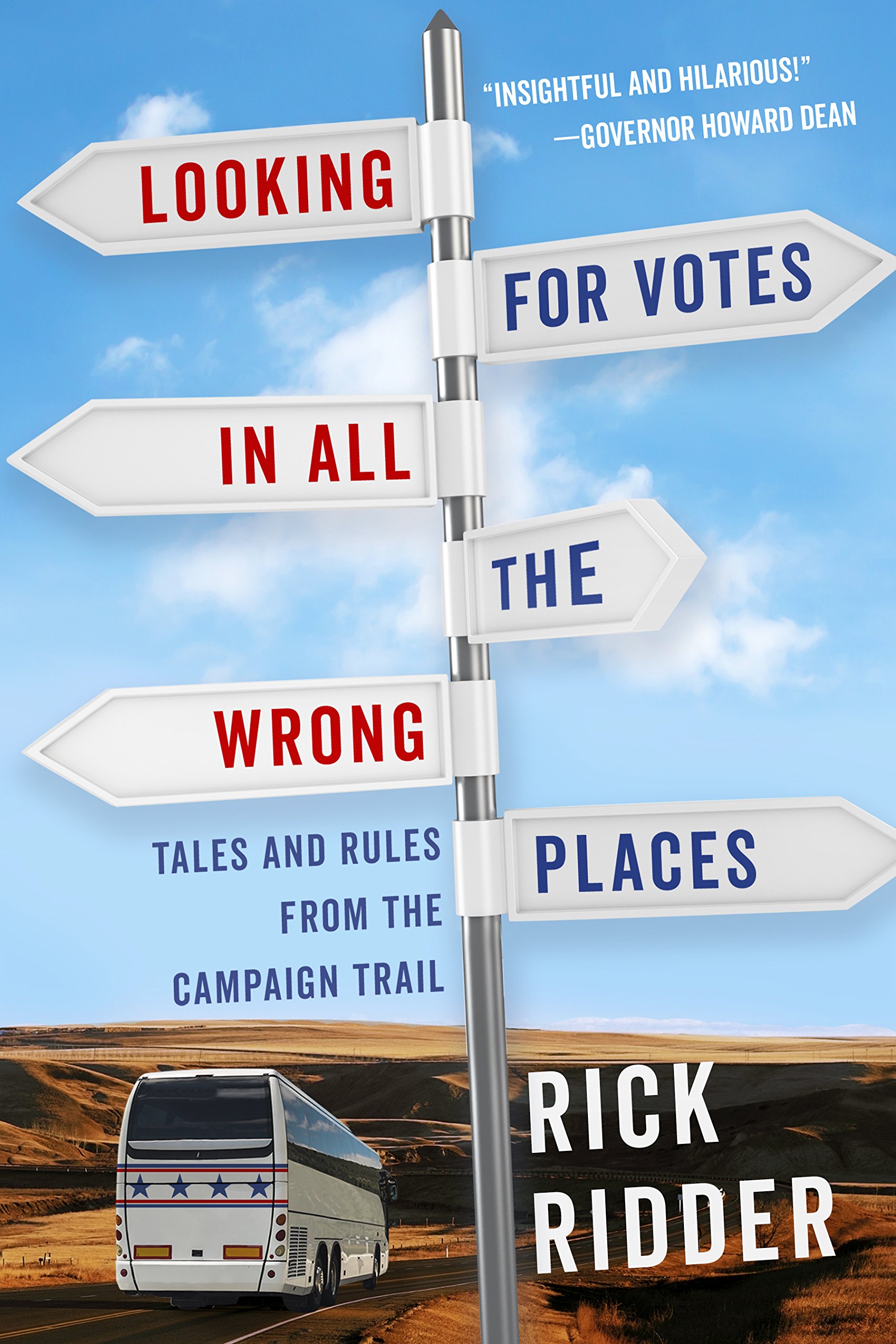
I haven’t seen Rick Ridder in years but loved reading his 2016 book, Looking for Votes in All the Wrong Places. I bought it to add to his sales numbers, support him in my own 81JbkJ1jA8Lsmall way. We both survived the 1980s Gary Hart presidential campaigns. So when it comes to making room on the shelves for other sympathy books, the ties that bind keep Rick’s book in place.

My built-in bookshelf clings to the entire southern wall of my small living-dining room. It’s stuffed. Books, old Vanity Fairs, photos, souvenirs, dog sculptures, used conference binders, scrabble, dominoes, a small portable heater and my writing notebooks all collide on the faded white sagging shelves. 

When the time comes to rack the newer books, stockpiled on all the flat surfaces in my living space, I painstakingly pull the old prisoners from their slots on the shelves. They sit on the floor for hours, days, weeks, awaiting sentencing. I stare at the titles. Agonize over their fate. I wish then, more than at any other time in the hours before twilight, for a piece of someone to discuss the disposition of the hoard and share in my decision-making.

“What about this one? Remember this? Dimitir by William Peter Blatty. Mark suggested it when I told him Blatty named the girl in The Exorcist after me. Did I read it? Should I save it?” 

“Oh, then there’s: Age Doesn’t Matter Unless You’re a Cheese. Jeanette gave me that when I turned 70. Maybe there’s something in it I can use for my writing.”

“Oh yeah. Listen to this. Ram Dass: ‘I used to have a sign over my computer that read OLD DOGS CAN LEARN NEW TRICKS, but lately I ask myself how many more new tricks I want to learn—isn’t it better to be outdated.’”

“Outdated! Is that how I should think of these old darlings?”

Oh, I tried long ago to get help with this salvage operation. It broke down, however, when I plunged into the stories behind my keepsake books. No matter how good a friend I netted, my stories bored in the telling and the telling and the telling. I sit alone now on a stool wheeling around the wreckage from title to title. 

“These? Oh no, must save Ian Rankin, my favorite mystery author. Oh, c’mon, Regan. It’s not as if they’re going in the garbage. Put them on the bookshelves in the laundry room. Someone’s bound to enjoy them before they get carted off to the used book sale at the Newberry Library.”

“Ok, these can go—two books by David Ellis. Oh, well, maybe. He’s the lawyer-turned-mystery-writer who prosecuted Rod Blagojevich. A good lawyer. And a good writer.”

“Richard North Patterson’s, Exile, needs to go. It’s old and smells. Musty. But I’m so grateful that it helped me understand the Israel-Palestine mess. Maybe I’ll read it again.”

Loneliness has its price. Out of this last 24-book pile-up, only one goes to the graveyard: The Complete Book of Food Counts.

A People’s History of Chicago

kevin-coval-peoples-history-chicago

Chicago poet Kevin Coval came to a luncheon of forty older adults in the Gold Coast to read from his new book, A People’s History of Chicago. This was not Kevin’s usual audience, which is young, disaffected and enlightened high school kids from the neighborhoods. After his reading, he passed out small notebooks and pencils and asked us to write a list of what you see when you walk out your front door. Then he gave us 8 minutes to write a poem.

Kevin is the Artistic Director at Young Chicago Authors, an ongoing free workshop that meets every Saturday at Milwaukee and Division. He invited all of us to the workshop, saying “we need you.”

And so the next Saturday I climbed to the 2nd floor high-ceilinged room of bare brick walls and planked floors. Twenty chairs were arranged in a circle in the middle of the room and loose, unlined sheets of paper and pencils were in a box in the middle of the circle. This is not just organization, it’s respect.

Poet-teacher Jose Guadalupe Oliverez sat on a chair in the circle and as people emerged from the staircase, he motioned to them to join him. He asked us to state our first names, age and our high schools. A group of 16-year-olds from Crane High School and their spoken-word coach, a 19 yr old poet from Calumet City, a 16 year old Lincoln Parker home from boarding school and a 20 year old jewelry maker made up the group. I apologized, “I’m Regan and I’m old. Thank you for letting me sit in.” Jose prompted us to write lists, reading various poems for inspiration about truth and lying. He gave us 8 minutes to write. At the end, each of us recited one poem.
_____________
Lying

I get on the bus
See a cohort
Where you goin?
To the March at Trump.

You go girl, he says
thinking I’m alive in pursuit of justice

Am I? I dress for the day
with buttons and banners
Tell others I’ll see you there!
Notify on Twitter and FaceBook

Then go downtown and what?
I tell others it works
to be in the number, to yell
This is What Democracy Looks Like

I write letters, make calls, send emails
Proclaiming the what and why
but then in silent spaces
I doubt.

Does my voice matter?
I tell others theirs does, mine does.

I doubt.
Will it get better?
for me
or you
or them
or us

Am I acting, lying?
What about the rest of ‘em?
Are we all just hoping, acting, lying?
_______________

Hot and weak at the bus stop I was thinking about the racism-felt poems I’d just heard from the young poets. A woman in a McDonald’s uniform came along complaining, “Where the fuck is the bus?” She asked if I had been to the new Division Street Target and before I answered, she added, “I can’t go there. They tore down my home to build it.”

I beseeched God, “when will it ever end?”

What Is My Work, You Ask?

What Is My Work, You Ask?


1962. My work is to stop laughing like a nervous little girl and start smiling like an unflappable young lady in the coffee shop on the Asbury Park boardwalk. To turn away from the seagulls fighting over dead fish on the beach and write “pancakes” and “bacon” on my notepad. To pay attention to the old telling the story of the 1934 wreck of the cruise ship SS Morro Castle on the beach. To save money for tickets to Joan Baez and Bob Dylan at the Asbury Park Convention Hall.

1967. My work is to read Dr. Benjamin Spock’s Baby and Child Care and apply its 51hjigsfuol-_sx309_bo1204203200_commandments to week-old smiles, cries in the night, a nine-month old sprinter and a child who eats only chicken. My work is to stand my ground in the whirlwind advice from mothers, aunts and grandmothers. To learn to ride a baby on the back of my bicycle. To animate words as I point to clouds, trees and cars as if I’ve never seen these things before in my life.

1976. My work is to bypass the door to the secluded basement with its graveyard of empty vodka bottles. To surrender to my new single-motherness. To trust my untrustworthy father and move from a sandy Jersey Shore cottage to a downtown Chicago highrise. My work is to know this is the best plan for a nine-year-old boy’s future happiness.

1982. My work is to dress up in business clothes, act smarter than I am, eavesdrop on everyone’s conversations in a boiler room full of political operatives, ask stupid questions and digest enough information to schedule Nancy Stevenson in places that help win votes for her husband’s campaign for governor.

1990. My work is to be a motherless child. To lament the loss of my uterus and ovaries, and, my boyfriend. To escape to Paris and London with my twelve-year old niece. To atone for all my past sins.To feign self-confidence while running the Illinois Democratic Party.

1993. My work is to take Prozac on the way to Washington to join the management class of the Clinton Administration. To imagine I have power and to hide humiliation when I’m exposed. My work is to honor the ruling class. To recognize they are human. To protect myself from evil-doers and self-promoters. My work is to mourn the loss of naiveté.

2006. My work is to shield myself and others from Cook County Government officials who believe if you are happy at your job you’re not working hard enough. To cherish those I lead for what they are today and not for what they will be tomorrow. To protect them from those who refuse to know their names.

2017. My work is to record how far my shadow falls behind me. To tell the truth about myself and trust God with where the words go and what they do when they get there. My work is to proclaim the US Constitution guarantees me the freedom to assemble publicly and express myself openly without retribution. My work is to say I love America and when the saints go marching in, oh! how I want to be in that number.

Inspired by “An Address to My Fellow Faculty,” by A. Papatya Bucak, from brevitymag.com