Oppenheimer & Jesus

Oppenheimer & Jesus

This is one of many stories I’ve written about the origin of my existential and nameless fears. As much as I try to analyze a deeper reason for the fears, the stories end up all the same, with a few updates. They seem to write themselves.

______________________________________________________________

In 1949, the Soviet Union started the Cold War by detonating its first atomic bomb, blockading Berlin, and pushing its way into Poland and Eastern Europe. The voices I heard swirling above my head at cocktail hour in our Washington, D.C. home implied the Russians were coming for us. 

Poor old Robert Oppenheimer. The father of the atomic bomb wanted nuclear weapons banned after President Truman used A-bombs to murder 180,000 Japanese civilians in 1945. Oppenheimer helped design an air defense of the United States against atomic attacks from the Russians through the National Civil Defense Administration. Common folk wisdom said only cockroaches would survive a nuclear attack. Nevertheless, Oppenheimer’s design required all school teachers to conduct impromptu air raid drills. When teachers shouted an impromptu Drop! us kids jumped out of our seats, crawled under our desks, fell over our knees, and covered our heads. The nuns added the instruction to recite Hail Marys aloud while on the floor. 

Holy Mary, Mother of God, pray for us sinners, now and at the hour of our death. Amen.

At seven years old, I didn’t understand the difference between a drill and the real event. I went to my death every time I huddled under that desk. But, I was not. afraid. to die. 

This is it, I’d pray, “I’m going to be with Jesus.”

I believed Mother Mary would grab me in her arms like she did baby Jesus and take me to heaven. Why did they pray to avoid such ecstasy? What were they so afraid of?

By the time third grade rolled around, I got used to not dying under the desk. Images of children who lived after their exposure to the atomic bombs in Hiroshima and Nagasaki appeared on our small black-and-white television. I feared that there were worse things than death. 

Our Catholic school teachers taught that Communists who ruled Mother Russia prohibited the celebration of the Mass. So we had to pray for Russia while fearing she’d annihilate us at any minute. In those days, at home, my two sisters and I made our own breakfasts and school lunches because my mother’s alcohol intake rendered her unconscious in the mornings. We often gathered around her bed, trying to figure out if she was alive. Holy Mary, Mother of God. One of us would place a finger under her nostrils to feel her breath until, with one exhale, she’d confirm that at least one of our fears was unfounded. 

Those early fears seeded my memory and have inoculated me against the mau-mauing of present-day alarmists, naysayers, and fear-mongers who sermonize about the death of our democracy. Yeah-but’ers and tsk-tsk’ers are relentless in efforts to convince me the country is hopelessly overrun with insurrectionists, sexual predators, corrupt politicians and gun-toting scofflaws.

And what if these are apocalyptic times? So what? So were the 1950s, the 1960s, and 1970s.

Mother Mary may be out of commission these days, but I still dream of being with Jesus.

Forsaken Christmas

Forsaken Christmas

The first movie I saw on Christmas Day was To Kill A Mockingbird in 1962. Since I suffered from an endless holiday hangover, little of the story stuck in my saturated brain. As a high school freshman, when I was still afraid to fail, I’d read and reported on To Kill A Mockingbird. Until Mockingbird, I hadn’t seen a movie created from a book I’d read. Fortunately, the film is still so popular it’s come and gone enough times on TV for me to watch it again. And again.

A Christmas Day movie-going tradition began, sometimes with friends, sometimes alone. At first December 25th movie releases offered an escape from uncomfortable family time. Before I got sober in 1976, mandatory holiday gatherings handed out one big gift-wrapped box of shame. Movie people count on family escapees, I suppose. Some of the best movies have been released on Christmas Day: The Sting, Catch Me If You Can, Broadcast News, Sherlock Holmes, and Tombstone. 

Every Sunday when my son was a toddler, he’d nap as his father studied, and I’d go to the movies. When he was old enough, we went to the movies together, especially on Christmas Day after the divorces, when it was just the two of us. When he was seventeen, he convinced me to see Talking Heads’ 1984 concert film, “Stop Making Sense.”  

“I don’t like punk rock,” I said.

“It’s not punk. It’s different. You’ll like it,” he convinced me.

He had his own band at the time and knew his music, so I trusted him. He was right. I blasted the “Stop Making Sense” cassette on my car radio until the tape wore thin.

When movie buddy Marca Bristo was alive and in town, we couldn’t wait to get to the first showing of the Christmas Day releases before she returned home to her family dinner. We’d usually discuss the movie over after-theater coffee, but on Christmas Day, coffee shops closed, so we’d sit in the quiet theater afterward, mulling the pros and cons. Marca died in September 2019. The Christmas releases that year included Little Women, 1917, and It’s a Beautiful Day in the Neighborhood. I chose Just Mercy, which tells the true story of defense attorney Bryan Stevenson and his client, a black man falsely accused of murder. A powerful advocate for people with disabilities, Marca would have chosen the same. 

Movie theaters closed for a while at the beginning of the Covid pandemic in 2020. I’m so wary of catching Covid and all manner of infectious diseases that I’ve not been in a movie theater since Christmas 2019. It’s tempting to see the re-make of The Color Purple, which will open this year on December 25. But every time I’m in a coffee shop or at a public event and someone sneezes or blows their nose, low-level panic attacks. Reclining in a multi-plex next to strangers for two or three hours’ worth of entertainment is out of the question. 

I’ll wait for Netflix. 

Cold Wars

Cold Wars

The 2019 Polar Vortex slid down from the North Pole, threatening to lock Chicago into subzero stillness. I prepared for the warring cold by teeing up the entire 18-hour series of The Marvelous Mrs. Mazel. Then I threw stale bread crumbs onto my balcony to nourish the house sparrows, finches, and chickadees before they huddled together in eaves and cracked soffits to wait it out. I shuttered in and Dapped all the little crevices around the balcony door that were spritzing air into my not-so-insulated living room. That was the extent of my preparation for the coldest two days ever recorded in Chicago.

Day one brought minus 23 degrees. I woke to a thick film of silver ice covering all the windows. The ice curtain obscured the humanity moving around behind the windows across the street and any fool pedestrian walking in the feels-like-minus 40.

My binge-watching was interrupted mid-morning by a thrashing whomp, whomp whomp on the concealed balcony. I inched toward a clearing in the frosty glass.

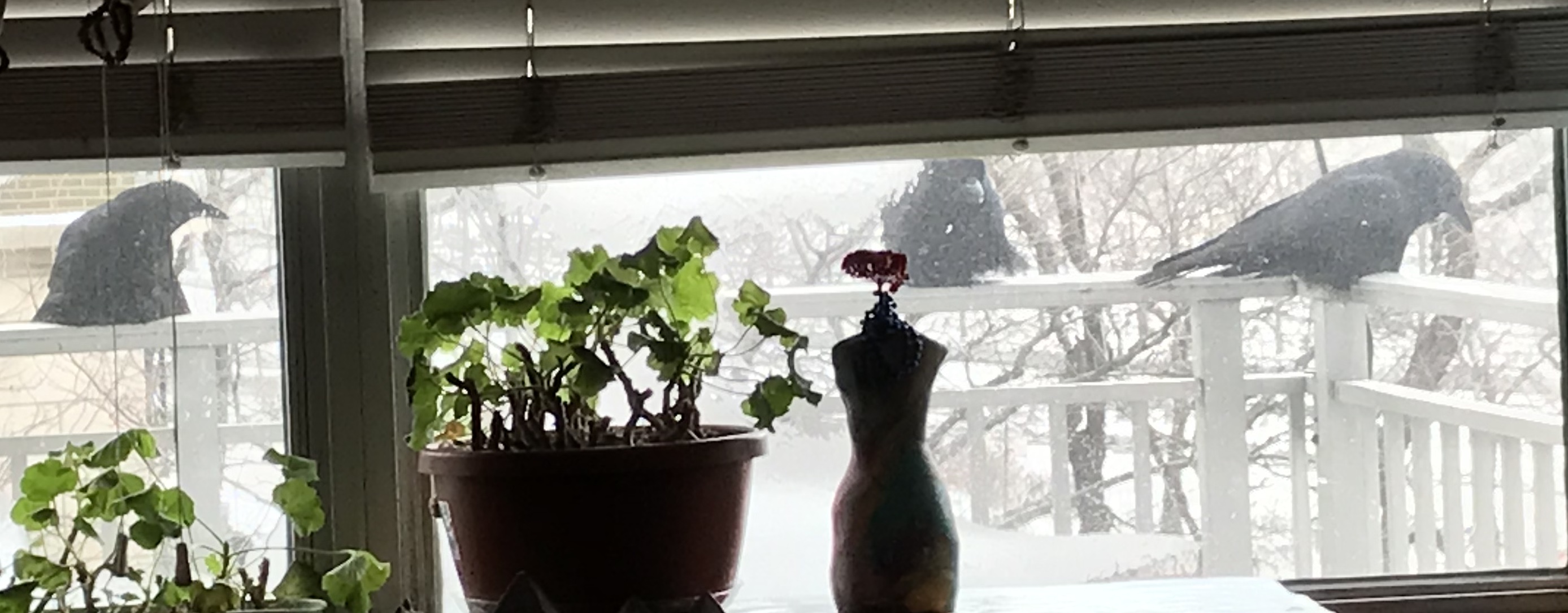
A murder of crows had come to forage.

The much-studied American Black Crow might be the most intelligent animal other than primates. They hide their food and come back for it. If a crow looks you in the eye, she will remember you, follow you down the street, and caw at you for attention like a wild pet. 

On day two, the temperature was 21 degrees below. The ice wall on my windows melted enough for a small lookout. I abandoned Mrs. Mazel and placed a chair well away from the clearing to observe the crows without startling them. They first landed in late morning. A mighty set of black wings fluttered a plumped-up body onto the balcony railing, and the rest followed—a family of five dipping to the balcony floor for leftovers. They flew off and came back. Again. And again. And again. I remained still throughout, trying to lock eyes with the birds. In the afternoon, the weather broke and allowed the dog and me to walk outside—under the watchful eyes of noisy new friends.

The first cold days of 2023 were predicted for the weekend after Thanksgiving. Though nowhere near the 2019 plunge, 30-degree temperatures heightened awareness of asylum-seeking families living on cardboard slabs outside police stations. I sought diversion through another favorite TV series, Julia.

The TV automatically tuned in CNN, though, where there was live coverage of the hostages being released from Gaza. A mysterious and curious need for every scrap of information gripped me. Who are they? What are their stories? Where are they going? I saw six women over the age of 70. One 85-year-old was helped onto a bus. I winced, feeling my own arthritic pain. Four children appeared—ages 2, 4, 5, and 9. I squinted to see if they were clutching teddy bears.

After watching for two tearful days, unrelenting shivers overcame me. And when I took the dog for a walk, that murder of crows cawed to us from the barren trees.

Near Miss

Near Miss

Some years ago, Cappi Quigley fetched me at the Nashville Airport to spend Thanksgiving weekend with her daughters and their families. She wore black to offset one of her imaginative, color-drenched, wow necklaces.

“Before we go to the house, we must stop at an art gallery downtown,” she said.

That was Cappi. She loved sharing our mutual folk art obsession. 

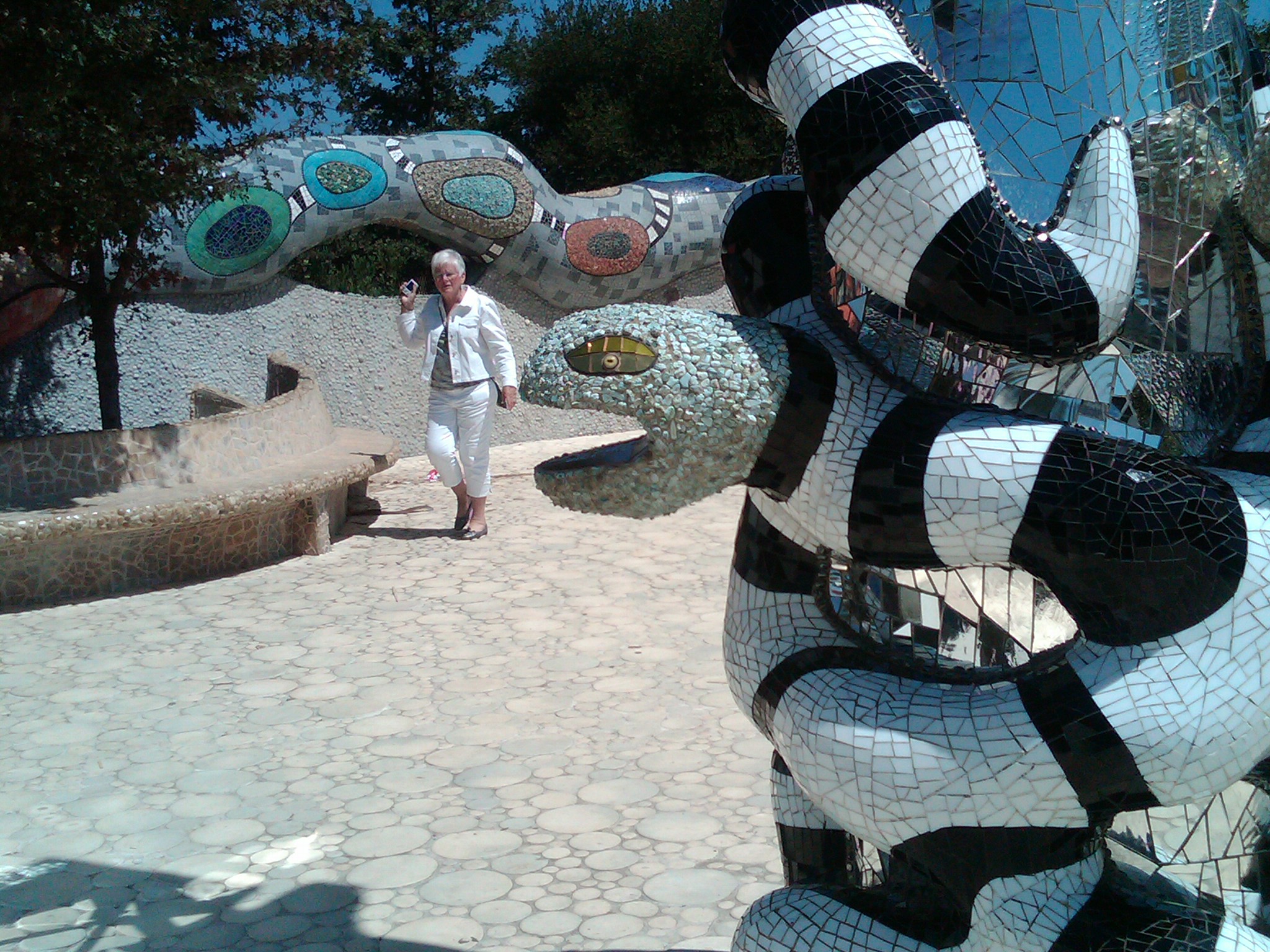
Cappi was visiting me in Chicago when feminist artist Niki de Saint Phalle’s whimsical, large-scale kaleidoscope animals, monsters, and figures were exhibited outside the Garfield Park Conservatory. She made her way to the west side on her own to see “the Niki.” And then couldn’t wait to take me there on the green line. 

We had similar tastes in most everything. Whenever I visited her in California, we ate from the ripened fields around San Luis Obispo. On one visit, we dined for a week on nothing but fresh-picked strawberries and avocadoes.

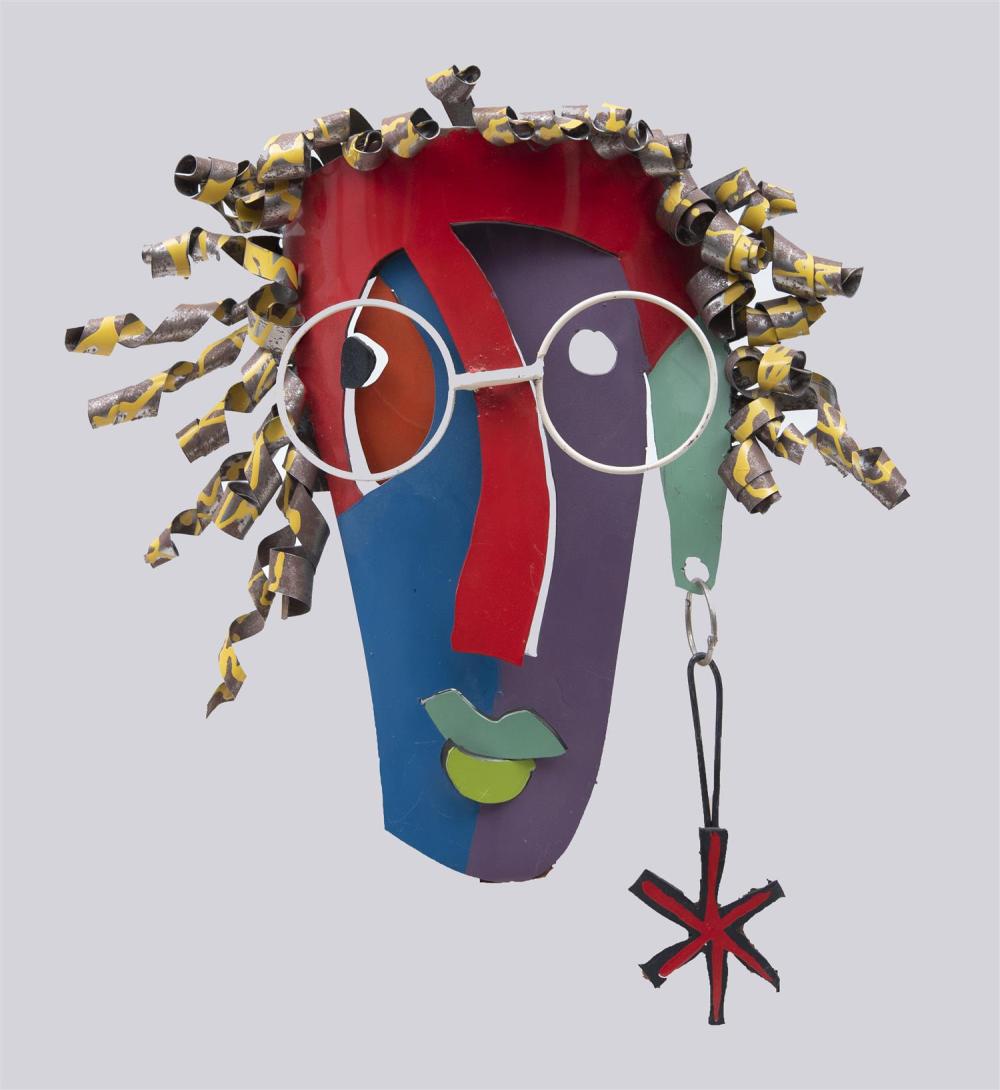
Cappi hurried me through the large, tantalizing rooms at the Nashville Arts Company to the attached warehouse in the back. The floor and walls were full of metal sculptures of every size and dimension. Each one painted in rainbow colors. There were playful metal masks with flowers springing off their hats, some waving flags, some with large eyeglasses, and some holding birds. One wall was filled with life-size avant-garde metal guitars. On the floor, an arrangement of Picasso-type chairs sat around a mesmerizing metal table. 

The Arts Company in Nashville represented Brother Mel Meyer, a Marionist monk from St. Louis. Some of each of his creations were on display: metal sculptures, watercolors, stained glass, acrylic on canvas, handmade paper, and textiles. I cherish my Brother Mel metal wall sculpture of a woman with big red glasses, which I bought on the spot. Cappi and I bonded anew over our love and awe for Brother Mel. She subsequently visited his gallery and workshop in St. Louis. Brother Mel was well represented in her Central Coast home.

Brother Mel Meyer, St. Louis 20th Century

We got on the road in a state of hyperconsciousness. Tennessee red maples and golden ginkgoes illumined our spirits. Fireplace pine spritzed the air. Aware of the weekend schedule, we quickened our pace down West End Avenue. Out of nowhere and without warning, an ancient oak tree silently uprooted, toppled over, and bounced down, laying itself out across the road in front of us. The front of the car rested in leafy branches. 

I’m not sure how many times we screamed, ‘Oh my god,’ or when we stopped shaking. Without words, we exchanged seats. I backed up, turned around, and drove home. Throughout the weekend, we failed to get an attentive audience for the story of our near miss. Only Cappi and I could know we’d been spirited into a new dimension of living.

Niki de Saint Phalle died in 2002, around the time Cappi and I swooned over her work. We mourned for Brother Mel Meyer in 2013. Cappi Quigley joined them in September 2023. They all left us their own technicolor visions of Paradise.

How lucky we are.

Mikado Pintado

Mikado Pintado

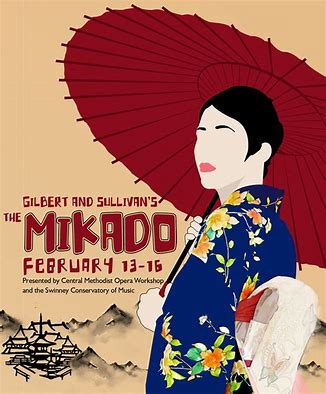
At the Convent of the Sacred Heart in 1958, Mother Cleary announced at the weekly school assembly the name of the annual school play. She was uncharacteristically gleeful.

“Gilbert & Sullivan’s The Mikado will be this year’s play. We’ll start auditions next week. The entire school will take part. It will be a real pageant!”

The “convent” was a community of nuns and a Catholic girls’ school for grades five through twelve in a pastoral Chicago suburb. The nun’s surnames Riley, Doyle, O’Brien, and McCarthy would lead outsiders to think the order of the Religious of the Sacred Heart of Mary has its roots in Ireland. Not so. The order originated in France. Wealthy Irish families paid to have their well-educated daughters live and teach as “Madams” of the Sacred Heart, as they were known colloquially. 

On hearing the news of The Mikado, we in the lower grades looked at each other with a shrugged Huh? The high schoolers cheered. Full of musicians, music lovers, budding drama queens, or future dramatists, the upper grades knew their Gilbert & Sullivan.

Gilbert & Sullivan wrote their 1885 comic opera as a satire on Victorian mores, culture, and government. The plot of The Mikado is the operatic old stand-by of an adolescent boy and girl trapped in forbidden love. The forbidden in this opera is a law against flirting. Some like to think Gilbert & Sullivan used the ridiculous plot to mock England’s law against homosexuality.

The late 1880s British society, the Victorian era, is known for its sexual prudishness. As an eighth-grader in the 1950s, I doubt I knew the word “Victorian” was synonymous with hypocritical sexual repression. Do you suppose those crafty Sacred Heart nuns were trying to get some subliminal point across to their mostly virginal students?

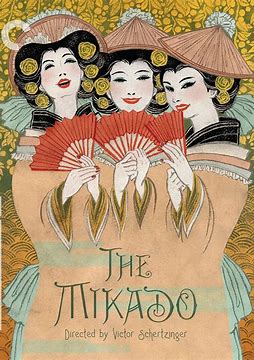
Those in the know at school aroused curious excitement about the play, the music, the staging, and the costumes. Oh, the costumes. The Mikado is a fake Japanese story, and the buzz about the songs, the kimonos, the make-up, and those hairdos filled my dreams with whirling color.  

In Catholic schools, everyone sings in the choir throughout the year’s many feast days. When it came to my turn to audition, I had high hopes of landing a dramatic singing part. I had no idea I couldn’t carry a tune. My seventh-grade sister and I were called together to audition with Mother Cleary. 

“Oh, girls, we have the perfect parts for you! You will be dressed as mackerels and stand as sentries on either side of the stage for the entire play! Isn’t that exciting? You’ll be visible the whole time!”

“Mackerels? You mean fish?” I asked.

“Yes, yes, yes! Don’t worry; you aren’t required to attend all the rehearsals—just the last few. Mother O’Brien will contact you about your costumes.”

“I won’t be singing?”

“Oh no, dear. That isn’t a part for you.”

“Thank you, Mother.” No matter how dispirited I felt, I knew manners were required. Pretending to be grateful was more virtuous than expressing true feelings.

Our costumes were colorful green felt tunics with blue and grey scales stitched in rows around the entire body. A fin and fishtail were sewn to the back, not that it mattered since only the front was visible on stage. I loved my costume. Mother O’Brien fitted it just right. But the fish head? It was a gigantic papier-mâché exaggeration of a mackerel head with slits for us to look out. We had to wiggle into our heads in the wings and be led to our spots at each edge of the stage. The smell of fresh white paste never dissipated inside the mackerel head. 

We held silver staffs fastened to oversized cardboard hatchets. The mackerels were also executioners.

As executioner mackerels, we stood sentry throughout the play —  a constant reminder to the audience that The Mikado is about death. Self-decapitation, being buried alive, and boiling in oil are all described in The Mikado as humorous ways to die if caught flirting. Death is funny. 

I suppose for nuns cloistered in their habits, satire about death allowed them a fun escape from the reality of staring at a bleeding dead man on the cross at daily matins. My thoughts have turned to death every day before and since The Mikado because of that same bleeding dead man on the cross. But the play permitted me to laugh at death, and myself, for that matter.

As for Gilbert & Sullivan, I feel nauseous whenever I hear The Mikado’s “Pretty Little Maidens.” I suffer from a subconscious sixty-five-year-old humiliation that I buried while standing on that stage for hours, holding a weapon meant to decapitate. 

Funny or not.

The Gift of Wisdom

The Gift of Wisdom

When my dog died of liver cancer, I thought it was my fault. Why, you ask? Because I didn’t keep him from eating sidewalk nasties. What the hell? Did I think I was that God I no longer believe in? You know, the God who causes pain and suffering?

Victim-blaming runs deep with me. I’m good at it. Whether I blame myself for dead dogs, misfortune, and health problems or I blame others for theirs, the first thought upon hearing bad news is, what did I do wrong? What did they do wrong? When a friend told me she was hospitalized for an irregular heartbeat, my reaction was, “How does that happen?” Implying she did something to cause it.

Before the pandemic, in my downtown Chicago neighborhood, thugs drove around casing out pedestrians, jumping out of cars, knocking vulnerable people to the ground, and stealing their belongings. My neighbor reported getting mugged in broad daylight while walking her dog. My reaction? 

“Why weren’t you wearing that whistle I gave you?” As if she could have done anything to stop three teenage boys from shoving her up against a brick wall and ripping into her clothes to find her iPhone. 

At community meetings, police officers gave primers on how to protect yourself. Among the suggestions was to attach a colorful whistle to your coat, not necessarily to use, but as a deterrent. I had a few bright red whistles from RAINN.org, the national anti-sexual assault advocacy group, so I called and asked for more. 

“We don’t have those anymore. Our survivors thought they were a sign of victim-blaming.”

Whoa, I didn’t see that coming. I get it, though. Victims of sexual assault are hyper-aware of all the ways society, either by word or by thought, says, “That’s what you get for wearing those clothes or walking on that street at 3:00 a.m. or not wearing a whistle visible to your attacker.“

Over twenty-five years ago, I became a victim of fibromyalgia, a mysterious inflammation of the tissues connecting the muscles to the bones. That’s not the exact definition. I use that description because it’s easy for me to visualize. Contrary to all medical knowledge, I have a notion that if I can visualize it, I can heal it. I get relief with meditation, movement, and writing, but there’s no cure, no healing. I think I can fix it because I blame myself for causing it.

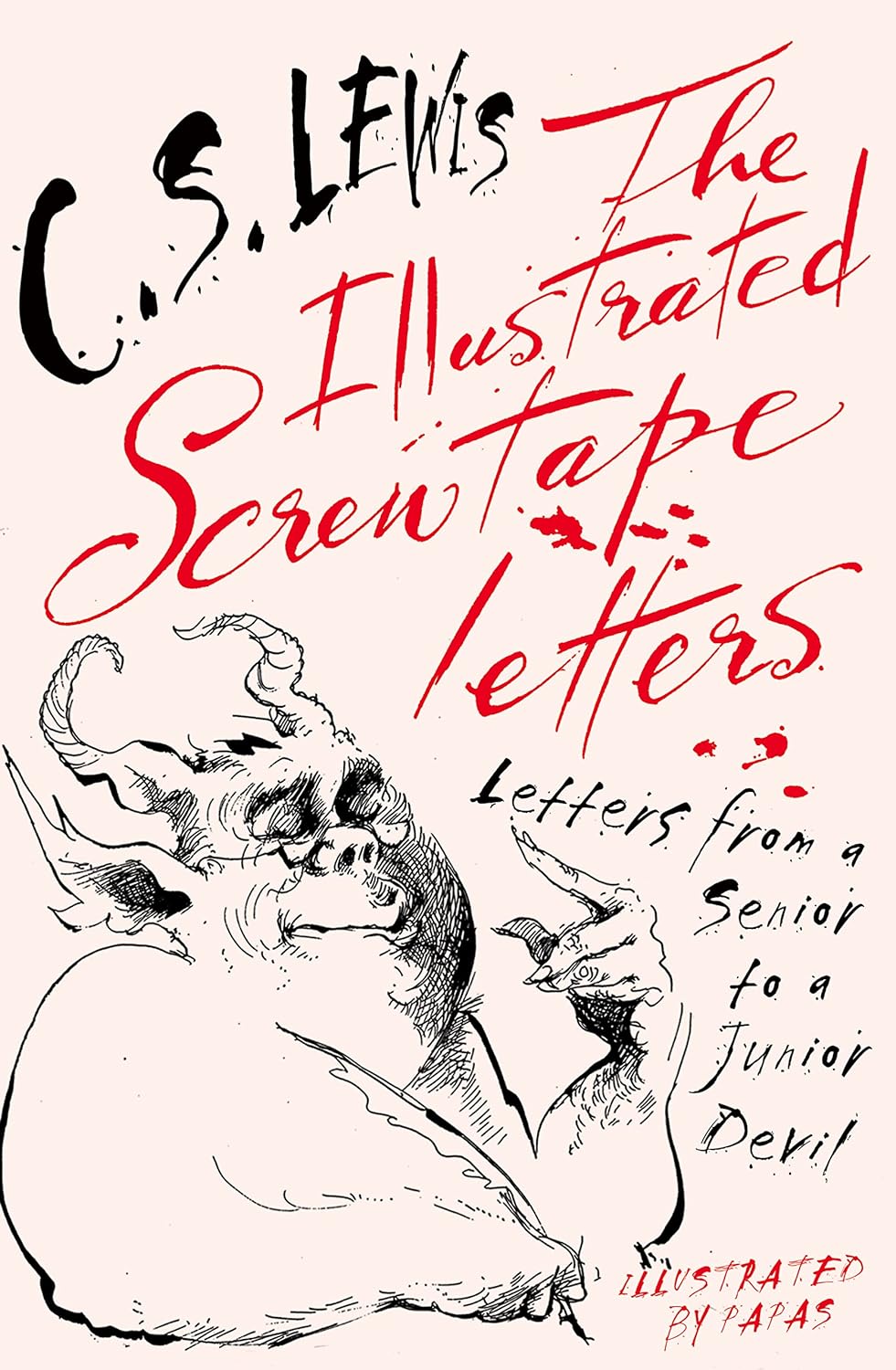
Deep down, or really just below the surface, I cannot accept the randomness of bad things happening to good people. I want reasons and meanings—some way to help me control the fear that I’m next. This psychology is my Screwtape, the Tempter leading me into madness. Dr. Google tells me it’s a natural phenomenon. I’m committed to seeking a way forward through virtuous self-care. But that, too, is Screwtape tempting me into believing I alone can fix it.

Living untethered to reasons and meanings is like George Clooney detaching himself in the movie “Gravity” to save Sandra Bullock. It requires courage received only through grace.

County Fair

County Fair

Boosters say the Taste of Chicago is the world’s largest food festival. The world’s largest!

It’s usually held around the Fourth of July. This year, with the newly-scheduled NASCAR race taking up the festival space over Independence Day weekend, the city moved the Taste of Chicago to less touristy September 9-10.

The quaint idea of having Chicago restaurants give people a “taste” of their signature dishes appealed to the legacy-obsessed Mayor Jane Byrne in 1980. She predicted there’d be about 100,000 people showing up on the two blocks of closed-off Michigan Avenue during the three-day festival.

On the first day of the first “Taste,” my thirteen-year-old son and I waded into the sidewalk crowd at the Ohio Street entrance, heading toward the Michigan Avenue bridge. Our nostrils itched with anticipation as each aroma swirled around us until the crowd thickened to an immovable throng. Signs for hamburgers, Chinese dumplings, deep-dish pizza, and sushi were in sight, but the food was out of reach. We all moved in a slow flow of claustrophobic, sweaty goo, trying to break loose.

“Thanks, Jane,” shouted my son.

And a roaring chant rose from the street like the fumes of the smoldering barbeque ribs: Thanks, Jane! Thanks, Jane! Thanks, Jane!

Chanting turned to laughter by the time we disentangled ourselves over the bridge at Wacker Drive. And really, it was hilarious. A crowd of 250,000 showed up. Jane had blocked off streets for the Taste next to downtown office buildings with only two openings in and out.

The following year, the Taste spread out at the edge of Grant Park. My son and I stuffed ourselves with various restaurant pizzas but avoided Greek, Chinese, and Thai food. Neither of us had elevated taste buds at that point in our lives.

Chicago moved the Taste farther into spacious Grant Park in 2023. The ornate 1927 Buckingham Fountain backdropped every photo. Food tasting required an adventurous spirit and a healthy gut. I ran into Lorraine, staring at the sign over the stand selling deep-fried Oreos, crab rangoon, and fried rice. We strolled past little and big hands clutching funnel cakes, rib tips, and Seoul tacos in dinky paper bowls—a hot Cheeto burger sold for sixteen dollars. The longest lines queued up at Harold’s Chicken and Badou Senegalese Cuisine. We sniffed out Chicago Doghouse to chow down on our favorite hot dog, but my throat clogged with the invisible flying grease of deep-fried Twinkies. I couldn’t do it.

“Try a “Beyond Meat” burger,” Lorraine said.

Nope.

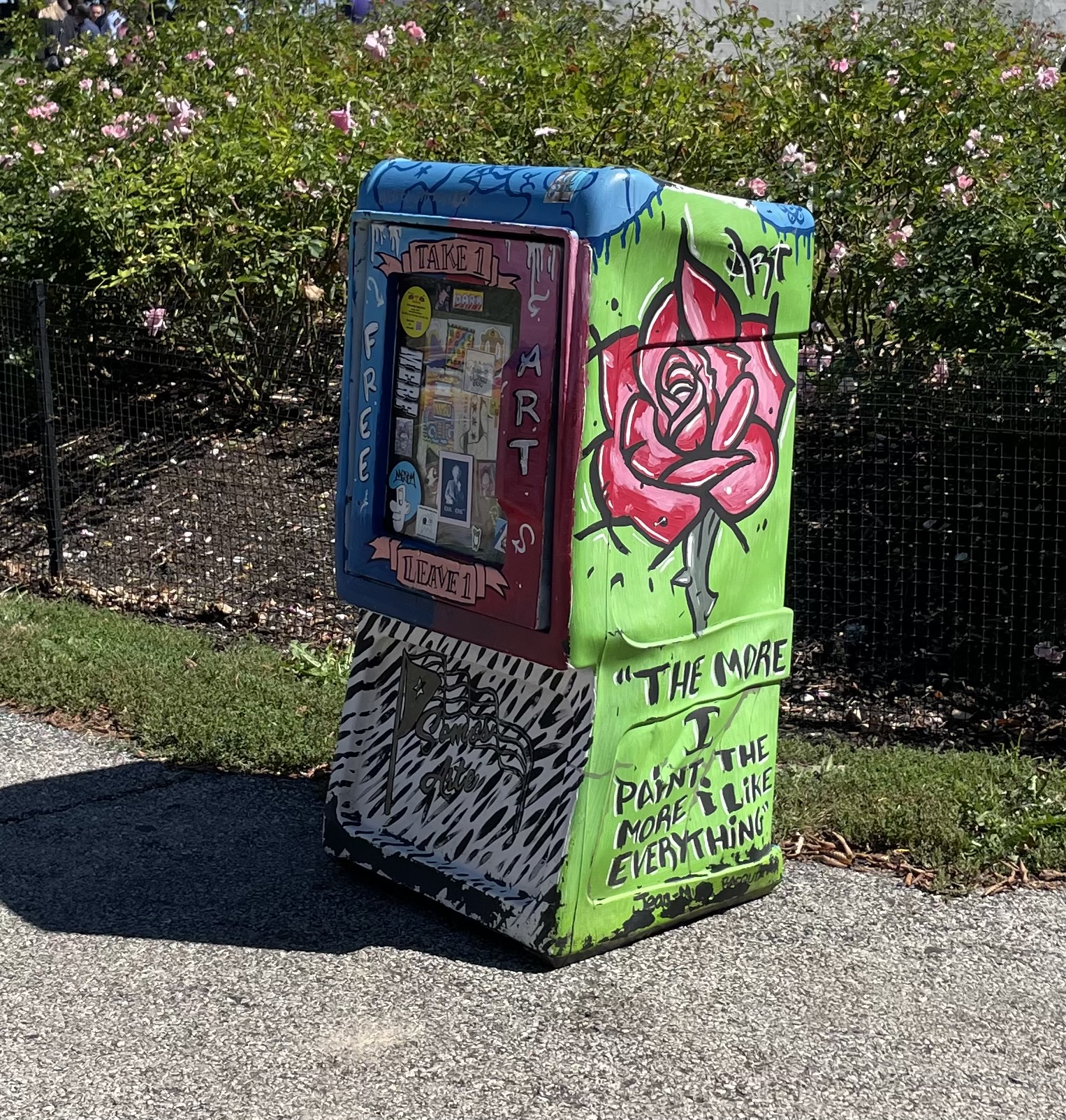
“The More I paint the more I like everything” Artist unknown. Grant Park Rose Garden, Taste of Chicago 2023

Blow-up slides, band stages, and a karaoke contest all spread out among the well-gardened rose bushes and the native hibiscus. Lorraine joined hundreds of line dancers under the “Summer Dance” tent. This was indeed Chicago’s very own county fair.

My son has developed far more sophisticated eating habits in the forty-three years since the first Taste of Chicago. This year, he would have coaxed me into tasting unfamiliar foods or, at the very least, eating a hot dog. As it was, I walked home hungry.

I wish we’d gone together.

Jobs I Could Never Do

Jobs I Could Never Do

Every spring at Walsingham Academy, Sister Walter Mary selected a few students to prepare Catholic children for their First Holy Communion. The children were patients at the local mental institution, Eastern State Hospital in Williamsburg, Virginia. I have no idea why there were young children locked up in an insane asylum. We were trained to teach these pre-Ritalin six-, seven-, and eight-year-olds to memorize answers to preposterous questions such as “Why did God make me?” from the Baltimore Catechism. 

Eastern State Mental Hospital, Williamsburg, Virginia

It was pre-HIPPA 1963. We received basic training in mental illness. A hospital attendant walked us teenage tutors through the children’s wards, pointing out caged paranoid schizophrenics, psychopaths, and catatonics in their soiled grey tunics. Some children sprang at the chain-link fences, grabbing us and screaming obscenities. We didn’t teach this group. Our students lived in cozy dormitories and wore regular clothes. 

Eastern State—the oldest psychiatric facility in the country—had been founded on the forward-thinking concept that insanity was an emotional disorder, not an aberrant behavioral condition. Treatment included exercise and social activities. Catholic parents treasured the outside instruction their little ones received. I’m not sure how much my first-grader learned because all she wanted to do was sit next to me and play with my hair. I helped her into her white veil and gloves and took her to nearby St. Bede’s, where she made her First Holy Communion with the local children. I met her parents at the church. I never saw them again, never learned her diagnosis, or if she ever left the institution.

A few years later, I worked an overnight shift at the Point Pleasant Nursing Home in New Jersey.  My job was to straighten up—put games like Monopoly, bingo, and chess in their boxes and wiggle them into overstuffed cabinets. I wrote down missing pieces of each game so the next shift could look for them in patients’ hiding spots—pockets, drawers, purses.

A completed jigsaw puzzle of an Impressionist painting lay on its box cover under a window. I put the pieces back in the box and stuffed them into the cabinet with art supplies, books, and magazines. Before my shift ended, a patient wandered into the day room. She stopped at the space where the completed jigsaw had been and looked at me, panic-stricken. She grabbed my hair in a flash, shrieked I stole her art, and smacked me in the face. By the time the nurse reached us, we were both screaming. 

In dementia, my mother, Agnes, carried an ever-present small clutch purse. At that same nursing home, the nurses gave her their old lipsticks because the click-clacking sound as she rifled in her bag calmed her down. 

The day she died, I visited the nursing home and thanked the staff for giving my mother what I couldn’t: a proper confinement of love and respect to keep her from wandering around and terrifying her fellow creatures. Only then did I ache for the parents of the Eastern State girl I’d met twenty-five years earlier.

Back to school

Back to school

By the time I’d left the eighth grade, I’d attended thirteen schools. Dealing with all those changes led to the development of uncanny protean skills, including the art of answering questions before they were asked. For instance, my mother, Agnes, an ace at avoiding small talk, taught me:

“When you meet new people say, ‘My name is Regan. It’s from Shakespeare and it means queen in Gaelic’, so you won’t have to answer all their questions.”

This tactic thwarted the name questions on the first day of any new school, especially since my grade school classmates didn’t know what the heck I was talking about. 

Word Daily, coughed up “protean” the other day, a word seen once in every 16,000 pages you might read. I never use it, though I completely click with the namesake origin, Proteus. He was a Greek sea god who knew all things, past, present, and future. Recognized as a shepherd of sea creatures, he slept among the seals and otters, which, save for the smell, appeals to the phantasms leftover from my childhood mermaid dreams.

Proteus escaped those seeking his knowledge by changing his shape to avoid answering questions. In modern parlance, not a shape-shifter, but rather someone flexible and adaptable, is protean.

Proteus sleeps with the seals. Artist: N.C. Wyeth

In the lower grades, adapting to mean-girl culture, I inevitably and reluctantly had to announce, “I repeated first grade because I was sick; then I skipped second grade.” This answered the question of why I couldn’t add or subtract. If I had remained in that first-grade school, my parenthetical nickname would have been “The Repeat” all the way to the eighth grade. The Repeats were few but well-known. We bonded with knowing glances passing silently in the hallways. 

We were Catholics. My sisters and I attended parish schools, wore parish uniforms. There was never a back-to-school ritual in our house because we never went back to a school we had been to before. The beginning of each new school year was a fresh start. 

In Terre Haute we rode our bikes; in St. Louis the school bus. In downtown Indianapolis, we caught a public bus crammed with garlic-breathed commuters. In the Chicago suburbs, a school bus, my mother’s station wagon, bicycles, and walking, all brought us each year to a new building, a new neighborhood. 

I never learned how to predict the future like Proteus (though a spiritualist on LSD once told me I had the gift of prophecy). Predicting what the next parish would be was never in the cards—it was always a mystery. My ears didn’t reach high enough to hear my parents deliberating the matter. But I could easily predict we’d be in a different school for the next grade. For better or worse, we all exhibited protean traits: flexible and adaptable. 

Early on, knowing stuff came to be my raison d’être. I became and remain an insufferable know-it-all. Geographic stability has diminished the necessity for protean mental agility of late. 

But protean knowledge? It continues to inoculate me from ever being called any version of “The Repeat”. 

Lessons Learned: God

Lessons Learned: God

First Grade—Third Grade

God is a white man with a white beard and white flowing hair, sometimes holding white stone tablets, later to be revealed as the Ten Commandments. Then He has a son, Jesus, and simultaneously is Jesus. Jesus’ mother, Mary, and God aren’t married. Then God becomes a ghost, the Holy Ghost. Then He’s all three. Three persons in one God.

All people who were ever born are sinners who can never redeem themselves. But God gives Jesus to Catholics for salvation from their sins. Only Catholics have access to Jesus. They go to heaven when they die, thanks to Jesus dying on the cross for their sins. Everyone else goes to hell.

Lesson: Everyone is bad and God only likes Catholics.

Fourth Grade—Sixth Grade

God created Adam and Eve in His likeness and placed them in Paradise, a tropical garden with no predators or stinging bugs, and all the animals, flowers, and fruit in the world. God forbade them to eat apples from the Tree of Knowledge, but they wanted to be like God, to have His knowledge, so they ate the apples. He got mad and threw them out of Paradise. They had to fend for themselves—grow their food, make their clothes, and pay attention to God.

Adam and Eve had two sons, Cain and Abel. God seemed to like Abel better. Cain got jealous and killed Abel. God punished Cain by throwing him out of his hometown into the desert.

Lesson: Avoid God.

Seventh Grade—Eighth Grade

Jews and Romans alike feared Jesus for riling up the citizenry against their oppressive power structures. The Roman king of Jerusalem sentenced Jesus to a brutal crucifixion. Even though He was a Jew, the Jews didn’t come to his defense.

When Jesus’ followers went to the tomb to see His dead body, Jesus was gone. God resurrected Jesus, body, and soul to live forever. This is what happens to Catholics. They live forever. In Paradise.

“Tiger, Tiger, Burning bright, 
In the forests of the night,
What immortal hand or eye
Could frame thy fearful symmetry.”

Lesson: I want to be a nun.

Ninth Grade

Using my leaky Esterbrook fountain pen,  I write “How can God make evil” in the margin of my English literature textbook next to William Blake’s first stanza of “The Tiger”.  

Lesson: God is confusing.

Teenage—Twenties 

I look for the heavenly in alcohol, drugs, and men. I see God. Then I don’t. 

Lesson: There is no God.

Thirties—Sixties

There is a Higher Power. Maybe God. Maybe Jesus. Maybe the Holy Spirit. Maybe Buddha. Not a Catholic. Not even a Christian.

Lesson: Keep looking.

Seventh Decade

Casting off the lifelong mantle of sinner; I’m finally hip to the knowledge no one is born bad. God does not create evil and Jesus didn’t die to save me—God doesn’t need atonement from me or Jesus. There’s no heaven. No hell. Resurrection may be so. At the end, perhaps time and space will simply let go of me and I’ll wander an endless field of puppies, aka, Paradise.

Lesson: I’m OK.