
Tyrone bragged that his friend brought a gun to school. In the six months I’d known him he’d told me a few tales, like he and his little brother went to Winter Wonderland at Navy Pier. He didn’t have a little brother, but I often held my confrontational tongue with him in an effort to give him space to be himself. I thought if I earned his trust, eventually he’d stop trying to beguile me with fanciful stories.
He was my seven year-old charge in a weekly volunteer tutoring program. During our first getting-to-know-you session we followed a Q & A script developed by the program administrators. We both had dogs. He had a baby sister. I had grandchildren. He went to a school on Chicago’s west side. I was not sure who mothered him. He mentioned an aunt and a grandmother. He proudly mentioned his father. He wasn’t explicit, and looked away in silence when I pressed for details, what does he do? I eased off to save him from having to think up a story. And really, I didn’t want to know.
The tutoring session consists of helping kids with their homework, creating art projects and playing board games. Tyrone didn’t need help with homework. I guided him while he wrote down answers to math problems and filled in words in sentences. He never got anything wrong, and I praised him for being so smart. I helped him put his homework neatly in his backpack. When I started to reach in and straighten other things in his backpack, he balked at that intrusion. He often hid a football or basketball in there and feared others would see. I surmised he was prohibited from bringing balls to school, and he thought they may be forbidden at tutoring as well. Maybe he was afraid for other reasons.
When I quizzed him about the details of the gun, he said he saw it in his friend’s backpack, that his friend found it in th e backyard and that it had bullets in it. I asked if he told his teacher. “No! He’s my best friend!”
Research finds youth from risk-filled backgrounds who successfully transition to the adult world of employment and good citizenship have had the consistent presence of a caring adult. Tutoring programs give kids this opportunity. As a first-time tutor, I attended orientation where consistency and trust were emphasized.
I connected with Tyrone in summer camp. Some kids would point to volunteers and brag, “That’s my tutor!” Having no information about what a tutor is, Tyrone asked me to be his tutor. Yes, I committed to years-long care and support of Tyrone beginning that fall.
I doubted Tyrone’s tale about the gun, but gun-in-school carries weight. I couldn’t bear it alone. I consulted with a supervisor. She knew Tyrone’s caregiver.
“I’ll take care of it,” she said.
The next week he came to tutoring with his sidestep story: his friend brought gum to school. When next I arrived for duty, Tyrone was absent. I knew he’d not return. He dropped out of tutoring and so did I.
Was I right in reporting Tyrone’s story? I doubted myself for months. I switched my volunteering from one-on-one tutoring to leading groups of first graders in meditation. A supervisor caught me in the hall one evening and casually mentioned the gun was no tale.
Tyrone’s friend had walked into first grade with a loaded hand gun in his backpack.


 The day of the fight, I raged around the house rattling anything in my path when I discovered the husband had walked out with our joint checkbook. He was going to drain the account. I climbed into my 1963 Volkswagen bus and headed to the bank. There he was in the strip mall parking lot slinking into his 1970 Ford Mustang. I floored my van and slammed right into the back of his Mustang. He tore out down the two-lane highway. I pursued him, crashing into him every time he slowed down.
 no damage to me or my vehicle. I turned around and drove the speed limit home, parked my van, went inside and fell into bed, believing I had killed him. I slipped into a deep sleep relieved from the cares of all the world.
 My favorite place is anywhere there are trees.

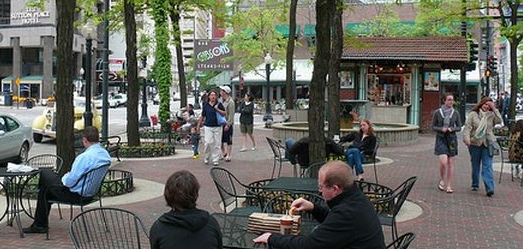
 What’s this? We never ordered a CT scan.”
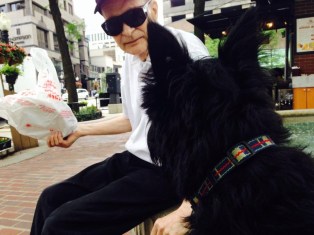 Here comes a German Shepherd tethered to a small athletic woman. Great. I’ll have to hold Ozzy tight. I wish he’d stop trying to defend me from big dogs.
 “Oh yeah?” says the blonde, “What about you?”
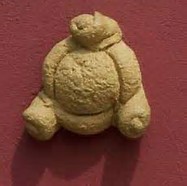 clay castle. Looking atop the turret one sees huge cement eggs. The exterior walls are peppered with what foreigners think are baked dinner rolls, but Catalonians know the scatological Dali created the organic sculptures to resemble excrement pies. The aphrodisiacs inside include Dali’s surrealistic art, holograms, a vintage inter
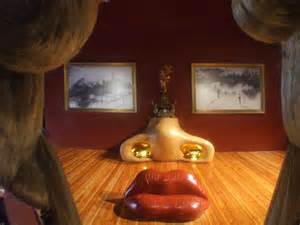 active Cadillac and his crypt. We frittered away longer than planned and in the end found Secretary Riley and his wife, “Tunky”, resting in the Mae West living room.
 thirst dragged us to a round table full of tea roses and peonies overlooking the dry Spanish countryside. Yes, yes! We agreed to start with plates of Iberian ham. The shared plates would dish up seafood croquettes; rice with sea cucumbers, rabbit and sausage; clams with candied tomato & lemon grass. The chef had prepared fresh Catalan custard for dessert.
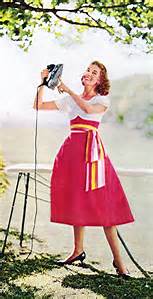 rose up, then moved to another spot, re-dampening the towel when it dried out. Her eyes winced at the uprising of clean hot steam. The acrid smell of damp cotton or wool down below flared her nostrils. As she conquered the wrinkles at hand her furrowed malcontented brow smoothed out. Agnes’ younger sister, Joanne, after a few bourbons always eulogized her with, “Your mother loved to iron.”
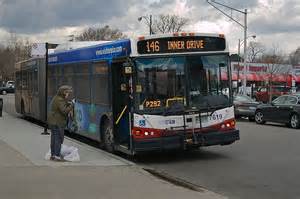 I made the 146 bus after a quick run and put my Ventra card on the reader. It did not beep so I tried it several times. The driver said that I had an 85 cents negative balance. I apologized and said that I only had a ten and a twenty. She said I needed to get off the bus. I started to leave and this guy shouted, “Don’t, you do not have to get off the bus. I am calling the CTA.” “She can’t throw an elderly person off the bus due to lack of funds.” People were staring at us and I decided to get off. I ran across the street to my garage and took some quarters out of my car. I ran back to the bus stop as the other 146 bus had arrived. I put the quarters in the money holder. I looked up and saw the people from the first bus getting on. The bus driver said, “What’s happening?” “Th
 e bus behind me is empty.”
 1991 I abruptly left Chicago for Arkansas to work as Clinton’s campaign scheduler, a grueling job that required 24/7 attention. One cold January night Clinton and his entourage, George Stephanopoulos and Bruce Lindsey, returned to Little Rock in a small private jet from all-important New Hampshire. I met the plane on the dark, deserted tarmac to give Clinton his next day’s schedule. He descended the jet’s stairs with a big smile, came directly at me, grabbed my coat and ran his hands up and down my long furry lapels. “Nice coat, Regan,” he whispered.