Not Dead Yet

Not Dead Yet

(written for Skyline Village Chicago March-April 2024 newsletter)

Robert Kramer, 74, talking to students at the University of Southern California: “You have far more at stake in changing how we approach aging than I do. You are far more likely, statistically, to live past 100 than I am. If you don’t change society’s attitudes about aging, you will be condemned to lead the last third of your life in social, economic, and cultural irrelevance.”  

A KFF News article,  Do We Simply Not Care About Old People? lays out the blatant disregard for our citizen elders, citing covid-19 statistics.

Around 900,000 older adults have died of covid-19 to date, accounting for 3 of every 4 Americans who have perished in the pandemic. In the last week of 2023 and the first two weeks of 2024 alone, 4,810 people 65 and older lost their lives to covid — a group that would fill more than 10 large airliners.

Yet, where is the outrage? Experts in the field of aging from around the country all agree ageism has always existed, but the pandemic elevated an intense, hostile prejudice against us.

“The implied message to older adults is: ‘Your time has passed, give up your seat at the table, stop consuming resources, fall in line,’” said Anne Montgomery, 65, of the National Committee to Preserve Social Security and Medicare. She says that baby boomers can “rewrite and flip that script if we want to, and if we work to change systems that embody the values of a deeply ageist society.”

In the years I’ve tried to advocate against ageism, I’ve heard everything from “I’m 80 years old, and I’ve never experienced ageism” to “Ageism? What’s that — not admitting how old you are?”

Gay rights leader Harvey Milk famously said in the 1970s, “Come out to your parents.” He knew, and he was right, that if people got to know gay people (can I say “queer” now?), their bias toward them would diminish.

Anti-ageism advocates say, “integrate, don’t separate.” The best way to overcome the ageist stigma is for the people who are stigmatizing you to get to know you. Don’t put “old” in the closet. Go out. Speak out. Be old.

Chicago has separated the old from the rest of the population — in housing, in social groups, in churches, and in health care. “They” don’t see us. ‘They” look through us. We defend ourselves by saying: I wrote a book! I walked the Camino! I volunteer! I have wisdom! I babysit! Walk dogs! Ride my bike!

Reminding people that we are still here, part of the human experience, walking through life like everyone else at any other age, is the best way to flip that script, not by bragging about our credentials but by our visible presence. And when we can’t hear or when our brain energy gets depleted at 3:00 in the afternoon, we ask people to speak up, and we excuse ourselves to take a nap. 

We’re old. Say it. Be it. It’s OK.

What’s Love Got To Do With It?

What’s Love Got To Do With It?

On February 15, 1976, I drove my red Toyota ten miles west from my Toms River, New Jersey, home to a small church meeting in Whiting.  I’d not had a drink for twenty-four hours. My head was pounding. I shook and shivered and sweated. I sat down but had one foot out the door.

Toms River shoulders the Atlantic Ocean. Most of life there happens near the ocean, its inlets, and brackish rivers. Whiting, known for the now-closed Nature’s Rest Nudist Colony, sits on unceded Leni Lenape land at the northern edge of New Jersey’s Pine Barrens. It’s a defunct railroad town surrounded by scrub pines, that dreary little tree that never grows more than eighteen feet because of the sandy soil. No one goes there.

I drove to Whiting to a meeting of Alcoholics Anonymous because I wanted to be anonymous and not run into anyone I knew. I had an overwhelming urge to announce out loud to strangers that I was going to kill myself with vodka.

An active adult community, Crestwood Village, had risen up near Whiting. The eight men and women at the AA meeting were over fifty years old, which was a turn-off for me at twenty-nine. But I was banging on the bottom and had nothing to lose. I thought I’d spill the beans there and bug out for the liquor store on my way home.

The group of eight centered the AA meeting around me and how I could stay sober. They figured out a schedule of who could follow me home that night and stay with me for the next few days. Each day, a different soul appeared on my doorstep to feed me, talk to me, answer the dreaded phone, and connect me to an AA group in my neighborhood. Their messages were the same: you’re sick, we were sick, too. Drink water. Eat chocolate. Go to AA. They trusted me with shocking truths about their lives before sobriety. 

They traveled well beyond their small community in the Pine Barrens and re-arranged their comfortable lives to help a suffering alcoholic. The obsession to relieve my misery with booze lifted after about seven days. Each of them called every day for a month.

I never drank again. After a few months, I sold my house, gave away the dog, left an estranged husband, packed up my son and houseplants, and drove to Chicago.

I was a dead soul before I met that group of kind and loving saints in New Jersey’s outback. Every minute of every day, I thought only of drinking and not drinking.

In the forty-eight years since, I’ve met many people who have asked for help. I share the same love that was offered to me that first week. In very few cases, people have stayed sober themselves. Most have disappeared, died, or gotten pissed off and moved on. 

Love saved me. That’s all I can wish for others.

Happy Valentine’s Day.

.

Sharks and Snakes At the Movies

Sharks and Snakes At the Movies

One summer in the early 1960s, my mother walked the beach near our Sea Girt, New Jersey home. A shark came into the calm shallow of the Atlantic and chomped off the leg of a man wading right in front of her. 

Another that week. And another. Grisly accounts and sightings of man-eating “great whites” all along the central Jersey coast appeared daily in the Asbury Park Press. Lifeguards stood high on their stands and whistled us out of the surf repeatedly at any sign of a dorsal fin. The summer was terrifying. 

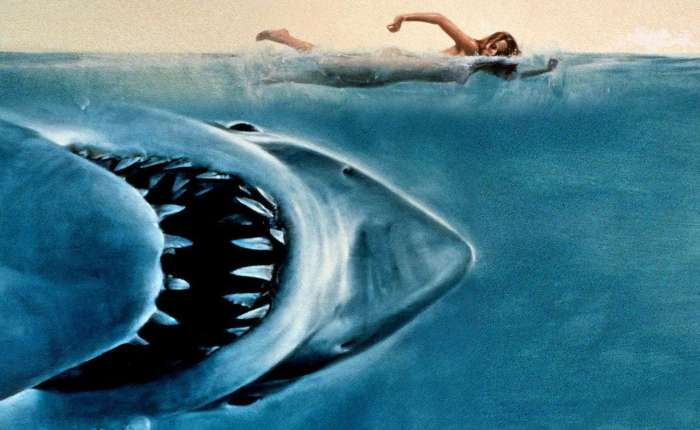
When Peter Benchley’s 1974 novel, Jaws, appeared on the paperback rack, my mother snatched it up, read it, and passed it on. She and everyone else at the Jersey Shore convinced themselves that Benchley, who lived in New Jersey, based the book on our summer shark attacks. 

What a book. After eyeing that famous book cover, my seven-year-old son, Joe, became interested in and eventually obsessed with sharks. Having read in Dr. Spock that I shouldn’t tell my child frightening stories, like the crucifixion of Jesus, I kept the Jaws story from him. 

The movie Jaws was released the following year. I refused to watch it, much less expose it to my eight-year-old. His sleep was already interrupted by nightmares after getting hit with a pitched baseball at Little League. 

At age nine,Joe announced that Jaws was at the neighborhood theater on Dollar Day and begged me to take him. The near-empty theater was spooky. I held both hands over my eyes for most of the show .

“You can open your eyes now,” Joe said.

I did, just as the shark was ripping apart a girl on her raft.

“Oh my god! I’m going to puke! I thought you said it was ok!”

We laughed so hard we could hardly hear the movie. Thus began those funny years when boys learn there’s a big payoff in pranking their parents.

When Raiders of the Lost Ark came out in 1981, we lived in Chicago. 

“Is it about Noah’s Ark?” I asked Joe.

“No. The Ark of the Covenant. You know, where the Ten Commandments are.”

Dragging him to Sunday school all those years had paid off.

We ran to the 1,400-seat Esquire Theater on Oak Street. The only tickets left were upfront. Right there, on the front row, the entire wall before me slithered and hissed as Harrison Ford was lowered into a hypnotic pit of 10,000 snakes. 

I shut my eyes. 

“OK to look now,” Joe whispered.

And again, I got fooled into watching the creepiest part of the movie, where Indiana Jones is staring down a hooded cobra.

Raiders is set in 1936 and follows Indiana Jones vying with Nazi Germans to recover the invaluable long-lost Ark of the Covenant. Some have interpreted it as Steven Spielberg’s creation to slam the Nazis for the Holocaust. But to me, it’s a hilarious, breathless adventure, made memorably funnier by the prank of my fourteen-year-old movie companion.

And a memorable relief from how I view Nazis today. 

Oppenheimer & Jesus

Oppenheimer & Jesus

This is one of many stories I’ve written about the origin of my existential and nameless fears. As much as I try to analyze a deeper reason for the fears, the stories end up all the same, with a few updates. They seem to write themselves.

______________________________________________________________

In 1949, the Soviet Union started the Cold War by detonating its first atomic bomb, blockading Berlin, and pushing its way into Poland and Eastern Europe. The voices I heard swirling above my head at cocktail hour in our Washington, D.C. home implied the Russians were coming for us. 

Poor old Robert Oppenheimer. The father of the atomic bomb wanted nuclear weapons banned after President Truman used A-bombs to murder 180,000 Japanese civilians in 1945. Oppenheimer helped design an air defense of the United States against atomic attacks from the Russians through the National Civil Defense Administration. Common folk wisdom said only cockroaches would survive a nuclear attack. Nevertheless, Oppenheimer’s design required all school teachers to conduct impromptu air raid drills. When teachers shouted an impromptu Drop! us kids jumped out of our seats, crawled under our desks, fell over our knees, and covered our heads. The nuns added the instruction to recite Hail Marys aloud while on the floor. 

Holy Mary, Mother of God, pray for us sinners, now and at the hour of our death. Amen.

At seven years old, I didn’t understand the difference between a drill and the real event. I went to my death every time I huddled under that desk. But, I was not. afraid. to die. 

This is it, I’d pray, “I’m going to be with Jesus.”

I believed Mother Mary would grab me in her arms like she did baby Jesus and take me to heaven. Why did they pray to avoid such ecstasy? What were they so afraid of?

By the time third grade rolled around, I got used to not dying under the desk. Images of children who lived after their exposure to the atomic bombs in Hiroshima and Nagasaki appeared on our small black-and-white television. I feared that there were worse things than death. 

Our Catholic school teachers taught that Communists who ruled Mother Russia prohibited the celebration of the Mass. So we had to pray for Russia while fearing she’d annihilate us at any minute. In those days, at home, my two sisters and I made our own breakfasts and school lunches because my mother’s alcohol intake rendered her unconscious in the mornings. We often gathered around her bed, trying to figure out if she was alive. Holy Mary, Mother of God. One of us would place a finger under her nostrils to feel her breath until, with one exhale, she’d confirm that at least one of our fears was unfounded. 

Those early fears seeded my memory and have inoculated me against the mau-mauing of present-day alarmists, naysayers, and fear-mongers who sermonize about the death of our democracy. Yeah-but’ers and tsk-tsk’ers are relentless in efforts to convince me the country is hopelessly overrun with insurrectionists, sexual predators, corrupt politicians and gun-toting scofflaws.

And what if these are apocalyptic times? So what? So were the 1950s, the 1960s, and 1970s.

Mother Mary may be out of commission these days, but I still dream of being with Jesus.

Forsaken Christmas

Forsaken Christmas

The first movie I saw on Christmas Day was To Kill A Mockingbird in 1962. Since I suffered from an endless holiday hangover, little of the story stuck in my saturated brain. As a high school freshman, when I was still afraid to fail, I’d read and reported on To Kill A Mockingbird. Until Mockingbird, I hadn’t seen a movie created from a book I’d read. Fortunately, the film is still so popular it’s come and gone enough times on TV for me to watch it again. And again.

A Christmas Day movie-going tradition began, sometimes with friends, sometimes alone. At first December 25th movie releases offered an escape from uncomfortable family time. Before I got sober in 1976, mandatory holiday gatherings handed out one big gift-wrapped box of shame. Movie people count on family escapees, I suppose. Some of the best movies have been released on Christmas Day: The Sting, Catch Me If You Can, Broadcast News, Sherlock Holmes, and Tombstone. 

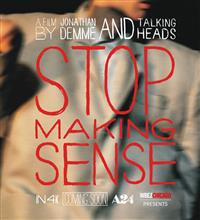
Every Sunday when my son was a toddler, he’d nap as his father studied, and I’d go to the movies. When he was old enough, we went to the movies together, especially on Christmas Day after the divorces, when it was just the two of us. When he was seventeen, he convinced me to see Talking Heads’ 1984 concert film, “Stop Making Sense.”  

“I don’t like punk rock,” I said.

“It’s not punk. It’s different. You’ll like it,” he convinced me.

He had his own band at the time and knew his music, so I trusted him. He was right. I blasted the “Stop Making Sense” cassette on my car radio until the tape wore thin.

When movie buddy Marca Bristo was alive and in town, we couldn’t wait to get to the first showing of the Christmas Day releases before she returned home to her family dinner. We’d usually discuss the movie over after-theater coffee, but on Christmas Day, coffee shops closed, so we’d sit in the quiet theater afterward, mulling the pros and cons. Marca died in September 2019. The Christmas releases that year included Little Women, 1917, and It’s a Beautiful Day in the Neighborhood. I chose Just Mercy, which tells the true story of defense attorney Bryan Stevenson and his client, a black man falsely accused of murder. A powerful advocate for people with disabilities, Marca would have chosen the same. 

Movie theaters closed for a while at the beginning of the Covid pandemic in 2020. I’m so wary of catching Covid and all manner of infectious diseases that I’ve not been in a movie theater since Christmas 2019. It’s tempting to see the re-make of The Color Purple, which will open this year on December 25. But every time I’m in a coffee shop or at a public event and someone sneezes or blows their nose, low-level panic attacks. Reclining in a multi-plex next to strangers for two or three hours’ worth of entertainment is out of the question. 

I’ll wait for Netflix. 

Near Miss

Near Miss

Some years ago, Cappi Quigley fetched me at the Nashville Airport to spend Thanksgiving weekend with her daughters and their families. She wore black to offset one of her imaginative, color-drenched, wow necklaces.

“Before we go to the house, we must stop at an art gallery downtown,” she said.

That was Cappi. She loved sharing our mutual folk art obsession. 

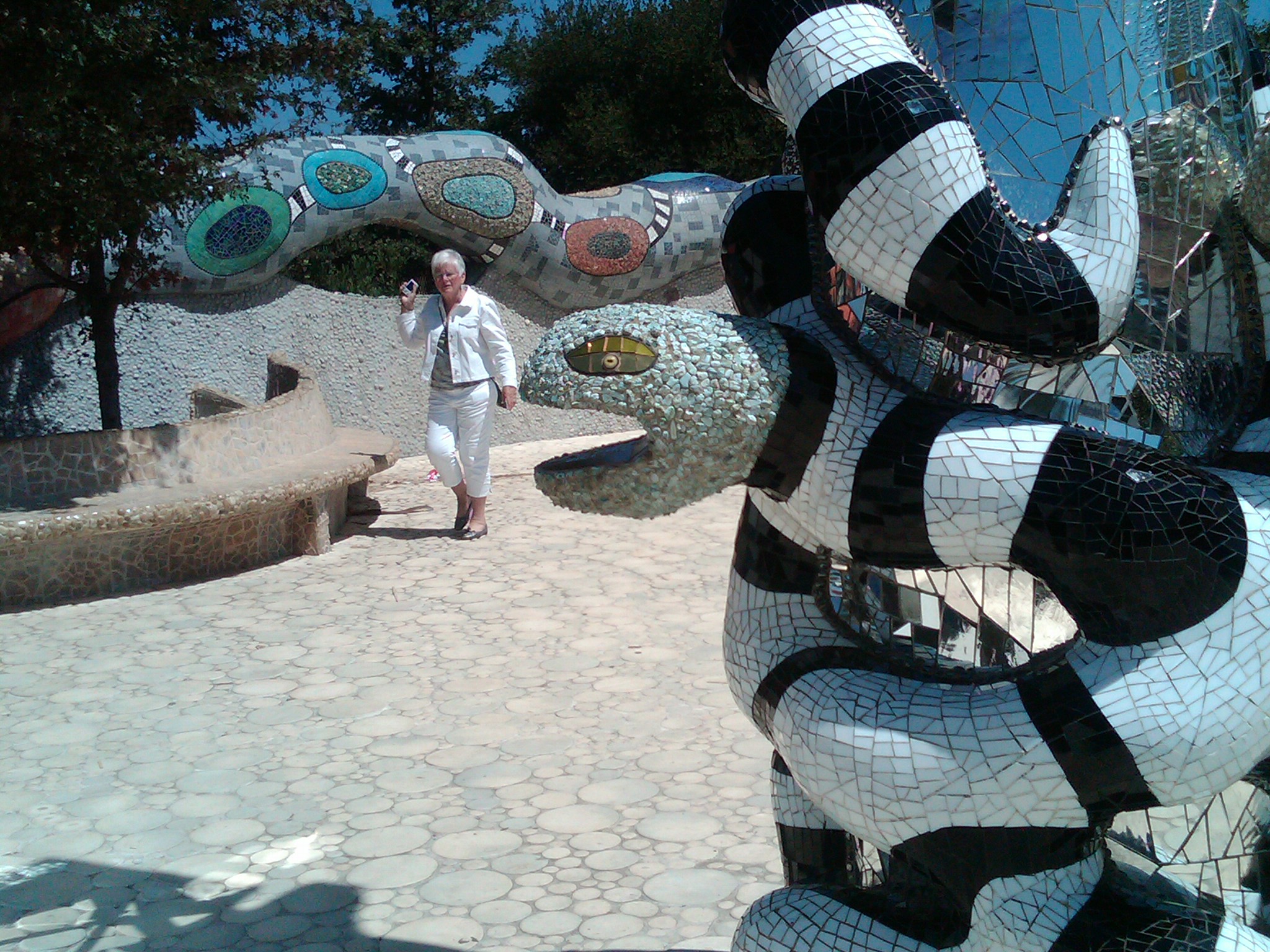
Cappi was visiting me in Chicago when feminist artist Niki de Saint Phalle’s whimsical, large-scale kaleidoscope animals, monsters, and figures were exhibited outside the Garfield Park Conservatory. She made her way to the west side on her own to see “the Niki.” And then couldn’t wait to take me there on the green line. 

We had similar tastes in most everything. Whenever I visited her in California, we ate from the ripened fields around San Luis Obispo. On one visit, we dined for a week on nothing but fresh-picked strawberries and avocadoes.

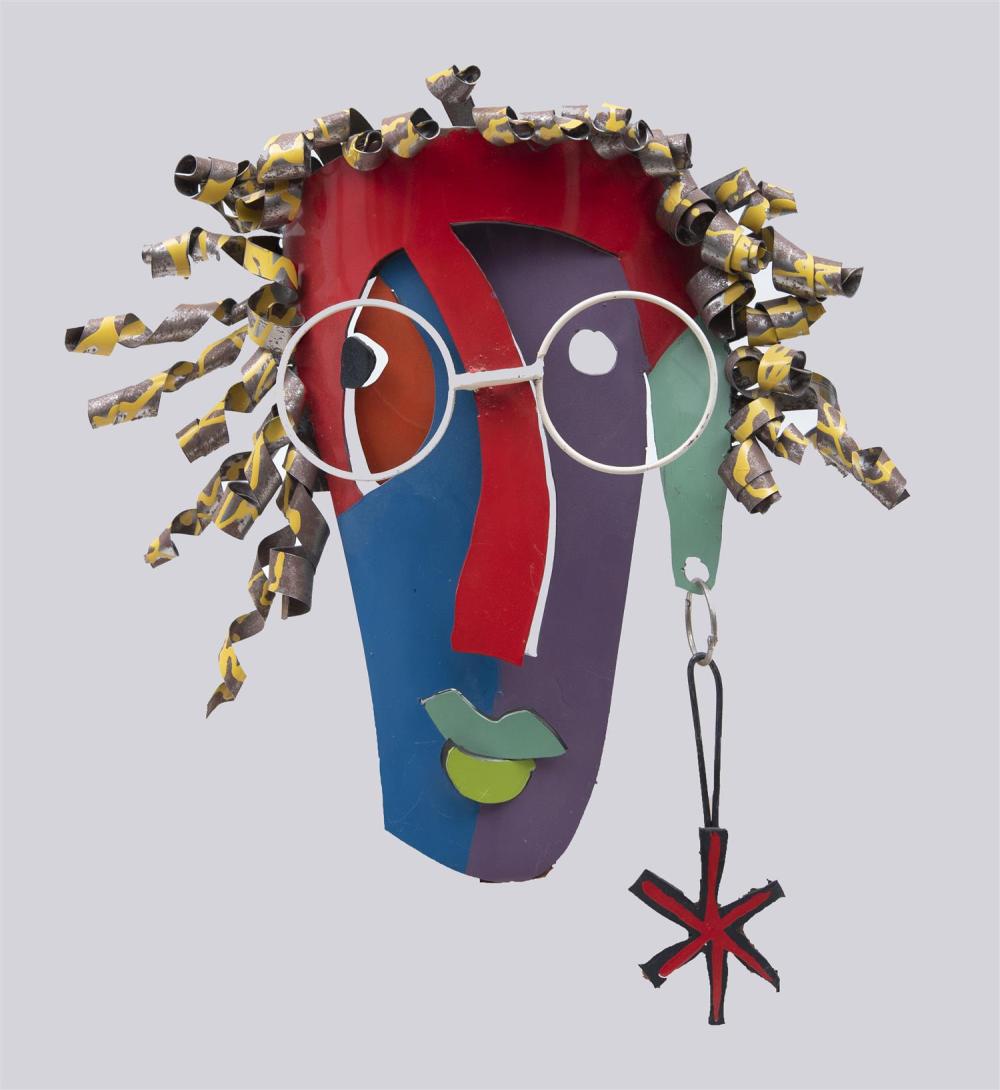
Cappi hurried me through the large, tantalizing rooms at the Nashville Arts Company to the attached warehouse in the back. The floor and walls were full of metal sculptures of every size and dimension. Each one painted in rainbow colors. There were playful metal masks with flowers springing off their hats, some waving flags, some with large eyeglasses, and some holding birds. One wall was filled with life-size avant-garde metal guitars. On the floor, an arrangement of Picasso-type chairs sat around a mesmerizing metal table. 

The Arts Company in Nashville represented Brother Mel Meyer, a Marionist monk from St. Louis. Some of each of his creations were on display: metal sculptures, watercolors, stained glass, acrylic on canvas, handmade paper, and textiles. I cherish my Brother Mel metal wall sculpture of a woman with big red glasses, which I bought on the spot. Cappi and I bonded anew over our love and awe for Brother Mel. She subsequently visited his gallery and workshop in St. Louis. Brother Mel was well represented in her Central Coast home.

Brother Mel Meyer, St. Louis 20th Century

We got on the road in a state of hyperconsciousness. Tennessee red maples and golden ginkgoes illumined our spirits. Fireplace pine spritzed the air. Aware of the weekend schedule, we quickened our pace down West End Avenue. Out of nowhere and without warning, an ancient oak tree silently uprooted, toppled over, and bounced down, laying itself out across the road in front of us. The front of the car rested in leafy branches. 

I’m not sure how many times we screamed, ‘Oh my god,’ or when we stopped shaking. Without words, we exchanged seats. I backed up, turned around, and drove home. Throughout the weekend, we failed to get an attentive audience for the story of our near miss. Only Cappi and I could know we’d been spirited into a new dimension of living.

Niki de Saint Phalle died in 2002, around the time Cappi and I swooned over her work. We mourned for Brother Mel Meyer in 2013. Cappi Quigley joined them in September 2023. They all left us their own technicolor visions of Paradise.

How lucky we are.

Joys and Sorrows of a Colonoscopy

Joys and Sorrows of a Colonoscopy

The morning after my last colonoscopy, I stood in line at Starbucks to satisfy a sudden obsession for a flat white, not my usual coffee drink. A familiar tune came through the surround sound subwoofers. My toes began tapping involuntarily until the song’s words remembered my voice from long, long ago and softly fell freely from my lips.

Thunder only happens when it’s raining

Players only love you when they’re playing.

Dreams. Stevie Nicks. I imagined myself wiggling my hips and flailing my arms—an unwise move for a not-so-sure-footed roly-poly 77-year-old.

Feldenkrais teacher Deborah Darr says, “Imagine you’re doing the movements you can’t physically do.” She taught me that imagination can so deeply engage the mind that the body feels like it’s moving when it’s not. So, on my way home from Starbucks, I imagined myself line-dancing down the street humming Dreams.

By the time I got home, I was physically exhausted. I clicked into a meeting of Alcoholics Anonymous on Zoom. I’ve been attending AA meetings for over 50 years and often ho-hum to myself, “I’ve heard this story already…nothing new,” even if I’ve never seen the speaker before in my life. On this day, I zeroed in on the story so wholly that I felt every cheap drink, every disgusting hangover, every regrettable hook-up, and every sickening word of his drunken story. When he talked about getting sober, my stomach balled up, remembering the agony of those early days of sobriety with uncontrollable sweaty shakes and tears. The love he felt from fellow sober alcoholics and for his family sticking with him filled me, too. Love and gratitude seeped into my every pore. 

The growing ball in my stomach erupted at the emotional and physical powerlessness, and I ran to the bathroom and puked. 

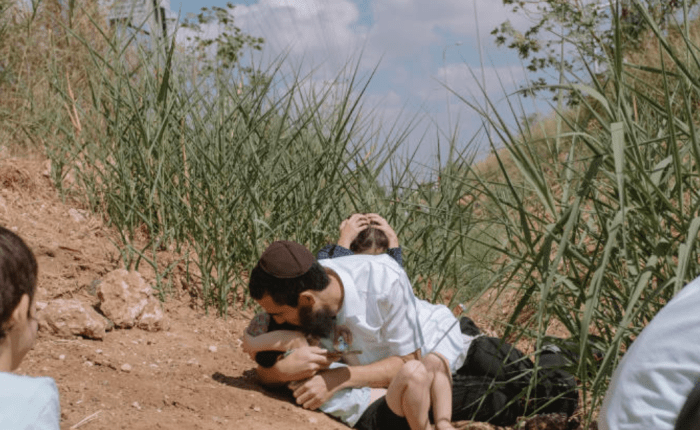
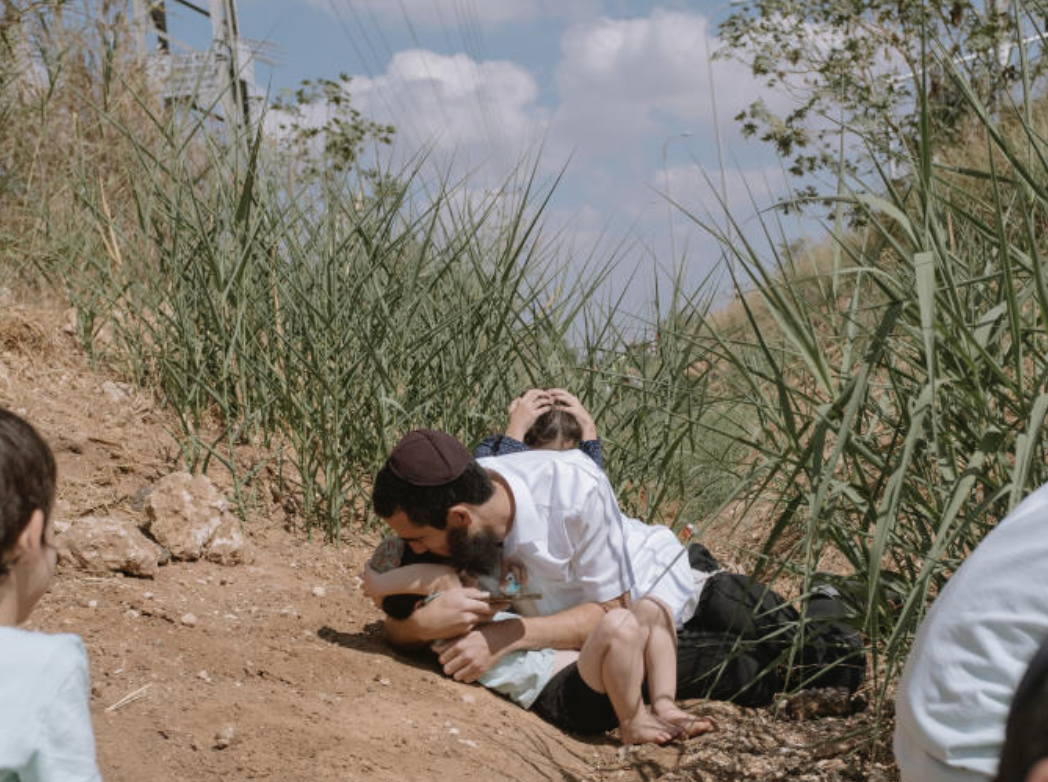
(AP Photo/Dor Kedmi)ASSOCIATED PRESS

Seeking distraction, I turned on the TV. Hamas terrorists had tunneled under the Gaza-Israel border a few days before and riddled Jewish babies with bullets. News outlets had taken a few days to get the images to us. I wept watching the photos and videos, hearing children crying out for their mothers, watching helpless fathers, and reporters describing families on the move. Displaced. Terrified. Confused. Grieving.

I reached in my purse for the forgotten mound of papers handed to me as I left  the “colonoscopy suite.” Was I supposed to read them sooner? I don’t know. But I saw why I was so giddy, twirly, and happy in the morning and so emotionally flattened later. Fentanyl. The doctor shot fentanyl in my arm before snipping a bit of chitterling from my innards. Fentanyl is so powerful that I forgot biopsy results were coming my way.

The doctor sent me a note within a few days. “All clear,” he wrote.

Just one veinful of fentanyl laid down a new neuro path in my brain, allowing the deepest of joys and sorrows. Since then, if I’m tuned in, boundless joy arises from the hope of alcoholic stories—and bottomless sorrow from images of bloodied children being carried to unsafe safety.

Click: Stevie Nicks sings Dreams

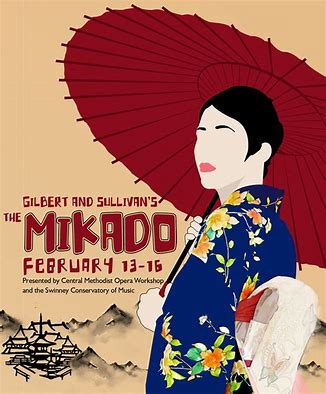
Mikado Pintado

Mikado Pintado

At the Convent of the Sacred Heart in 1958, Mother Cleary announced at the weekly school assembly the name of the annual school play. She was uncharacteristically gleeful.

“Gilbert & Sullivan’s The Mikado will be this year’s play. We’ll start auditions next week. The entire school will take part. It will be a real pageant!”

The “convent” was a community of nuns and a Catholic girls’ school for grades five through twelve in a pastoral Chicago suburb. The nun’s surnames Riley, Doyle, O’Brien, and McCarthy would lead outsiders to think the order of the Religious of the Sacred Heart of Mary has its roots in Ireland. Not so. The order originated in France. Wealthy Irish families paid to have their well-educated daughters live and teach as “Madams” of the Sacred Heart, as they were known colloquially. 

On hearing the news of The Mikado, we in the lower grades looked at each other with a shrugged Huh? The high schoolers cheered. Full of musicians, music lovers, budding drama queens, or future dramatists, the upper grades knew their Gilbert & Sullivan.

Gilbert & Sullivan wrote their 1885 comic opera as a satire on Victorian mores, culture, and government. The plot of The Mikado is the operatic old stand-by of an adolescent boy and girl trapped in forbidden love. The forbidden in this opera is a law against flirting. Some like to think Gilbert & Sullivan used the ridiculous plot to mock England’s law against homosexuality.

The late 1880s British society, the Victorian era, is known for its sexual prudishness. As an eighth-grader in the 1950s, I doubt I knew the word “Victorian” was synonymous with hypocritical sexual repression. Do you suppose those crafty Sacred Heart nuns were trying to get some subliminal point across to their mostly virginal students?

Those in the know at school aroused curious excitement about the play, the music, the staging, and the costumes. Oh, the costumes. The Mikado is a fake Japanese story, and the buzz about the songs, the kimonos, the make-up, and those hairdos filled my dreams with whirling color.  

In Catholic schools, everyone sings in the choir throughout the year’s many feast days. When it came to my turn to audition, I had high hopes of landing a dramatic singing part. I had no idea I couldn’t carry a tune. My seventh-grade sister and I were called together to audition with Mother Cleary. 

“Oh, girls, we have the perfect parts for you! You will be dressed as mackerels and stand as sentries on either side of the stage for the entire play! Isn’t that exciting? You’ll be visible the whole time!”

“Mackerels? You mean fish?” I asked.

“Yes, yes, yes! Don’t worry; you aren’t required to attend all the rehearsals—just the last few. Mother O’Brien will contact you about your costumes.”

“I won’t be singing?”

“Oh no, dear. That isn’t a part for you.”

“Thank you, Mother.” No matter how dispirited I felt, I knew manners were required. Pretending to be grateful was more virtuous than expressing true feelings.

Our costumes were colorful green felt tunics with blue and grey scales stitched in rows around the entire body. A fin and fishtail were sewn to the back, not that it mattered since only the front was visible on stage. I loved my costume. Mother O’Brien fitted it just right. But the fish head? It was a gigantic papier-mâché exaggeration of a mackerel head with slits for us to look out. We had to wiggle into our heads in the wings and be led to our spots at each edge of the stage. The smell of fresh white paste never dissipated inside the mackerel head. 

We held silver staffs fastened to oversized cardboard hatchets. The mackerels were also executioners.

As executioner mackerels, we stood sentry throughout the play —  a constant reminder to the audience that The Mikado is about death. Self-decapitation, being buried alive, and boiling in oil are all described in The Mikado as humorous ways to die if caught flirting. Death is funny. 

I suppose for nuns cloistered in their habits, satire about death allowed them a fun escape from the reality of staring at a bleeding dead man on the cross at daily matins. My thoughts have turned to death every day before and since The Mikado because of that same bleeding dead man on the cross. But the play permitted me to laugh at death, and myself, for that matter.

As for Gilbert & Sullivan, I feel nauseous whenever I hear The Mikado’s “Pretty Little Maidens.” I suffer from a subconscious sixty-five-year-old humiliation that I buried while standing on that stage for hours, holding a weapon meant to decapitate. 

Funny or not.

County Fair

County Fair

Boosters say the Taste of Chicago is the world’s largest food festival. The world’s largest!

It’s usually held around the Fourth of July. This year, with the newly-scheduled NASCAR race taking up the festival space over Independence Day weekend, the city moved the Taste of Chicago to less touristy September 9-10.

The quaint idea of having Chicago restaurants give people a “taste” of their signature dishes appealed to the legacy-obsessed Mayor Jane Byrne in 1980. She predicted there’d be about 100,000 people showing up on the two blocks of closed-off Michigan Avenue during the three-day festival.

On the first day of the first “Taste,” my thirteen-year-old son and I waded into the sidewalk crowd at the Ohio Street entrance, heading toward the Michigan Avenue bridge. Our nostrils itched with anticipation as each aroma swirled around us until the crowd thickened to an immovable throng. Signs for hamburgers, Chinese dumplings, deep-dish pizza, and sushi were in sight, but the food was out of reach. We all moved in a slow flow of claustrophobic, sweaty goo, trying to break loose.

“Thanks, Jane,” shouted my son.

And a roaring chant rose from the street like the fumes of the smoldering barbeque ribs: Thanks, Jane! Thanks, Jane! Thanks, Jane!

Chanting turned to laughter by the time we disentangled ourselves over the bridge at Wacker Drive. And really, it was hilarious. A crowd of 250,000 showed up. Jane had blocked off streets for the Taste next to downtown office buildings with only two openings in and out.

The following year, the Taste spread out at the edge of Grant Park. My son and I stuffed ourselves with various restaurant pizzas but avoided Greek, Chinese, and Thai food. Neither of us had elevated taste buds at that point in our lives.

Chicago moved the Taste farther into spacious Grant Park in 2023. The ornate 1927 Buckingham Fountain backdropped every photo. Food tasting required an adventurous spirit and a healthy gut. I ran into Lorraine, staring at the sign over the stand selling deep-fried Oreos, crab rangoon, and fried rice. We strolled past little and big hands clutching funnel cakes, rib tips, and Seoul tacos in dinky paper bowls—a hot Cheeto burger sold for sixteen dollars. The longest lines queued up at Harold’s Chicken and Badou Senegalese Cuisine. We sniffed out Chicago Doghouse to chow down on our favorite hot dog, but my throat clogged with the invisible flying grease of deep-fried Twinkies. I couldn’t do it.

“Try a “Beyond Meat” burger,” Lorraine said.

Nope.

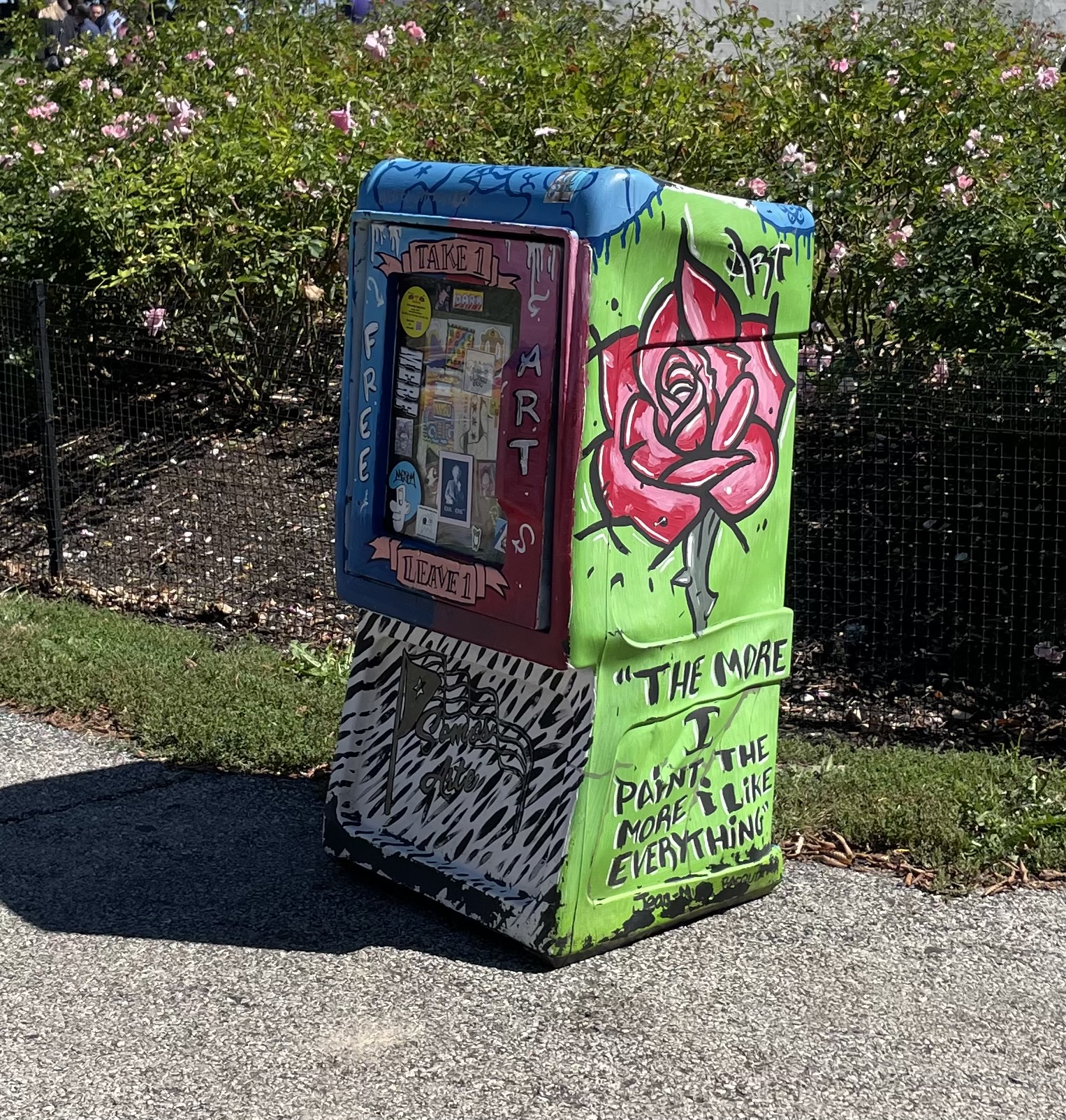
“The More I paint the more I like everything” Artist unknown. Grant Park Rose Garden, Taste of Chicago 2023

Blow-up slides, band stages, and a karaoke contest all spread out among the well-gardened rose bushes and the native hibiscus. Lorraine joined hundreds of line dancers under the “Summer Dance” tent. This was indeed Chicago’s very own county fair.

My son has developed far more sophisticated eating habits in the forty-three years since the first Taste of Chicago. This year, he would have coaxed me into tasting unfamiliar foods or, at the very least, eating a hot dog. As it was, I walked home hungry.

I wish we’d gone together.

Jobs I Could Never Do

Jobs I Could Never Do

Every spring at Walsingham Academy, Sister Walter Mary selected a few students to prepare Catholic children for their First Holy Communion. The children were patients at the local mental institution, Eastern State Hospital in Williamsburg, Virginia. I have no idea why there were young children locked up in an insane asylum. We were trained to teach these pre-Ritalin six-, seven-, and eight-year-olds to memorize answers to preposterous questions such as “Why did God make me?” from the Baltimore Catechism. 

Eastern State Mental Hospital, Williamsburg, Virginia

It was pre-HIPPA 1963. We received basic training in mental illness. A hospital attendant walked us teenage tutors through the children’s wards, pointing out caged paranoid schizophrenics, psychopaths, and catatonics in their soiled grey tunics. Some children sprang at the chain-link fences, grabbing us and screaming obscenities. We didn’t teach this group. Our students lived in cozy dormitories and wore regular clothes. 

Eastern State—the oldest psychiatric facility in the country—had been founded on the forward-thinking concept that insanity was an emotional disorder, not an aberrant behavioral condition. Treatment included exercise and social activities. Catholic parents treasured the outside instruction their little ones received. I’m not sure how much my first-grader learned because all she wanted to do was sit next to me and play with my hair. I helped her into her white veil and gloves and took her to nearby St. Bede’s, where she made her First Holy Communion with the local children. I met her parents at the church. I never saw them again, never learned her diagnosis, or if she ever left the institution.

A few years later, I worked an overnight shift at the Point Pleasant Nursing Home in New Jersey.  My job was to straighten up—put games like Monopoly, bingo, and chess in their boxes and wiggle them into overstuffed cabinets. I wrote down missing pieces of each game so the next shift could look for them in patients’ hiding spots—pockets, drawers, purses.

A completed jigsaw puzzle of an Impressionist painting lay on its box cover under a window. I put the pieces back in the box and stuffed them into the cabinet with art supplies, books, and magazines. Before my shift ended, a patient wandered into the day room. She stopped at the space where the completed jigsaw had been and looked at me, panic-stricken. She grabbed my hair in a flash, shrieked I stole her art, and smacked me in the face. By the time the nurse reached us, we were both screaming. 

In dementia, my mother, Agnes, carried an ever-present small clutch purse. At that same nursing home, the nurses gave her their old lipsticks because the click-clacking sound as she rifled in her bag calmed her down. 

The day she died, I visited the nursing home and thanked the staff for giving my mother what I couldn’t: a proper confinement of love and respect to keep her from wandering around and terrifying her fellow creatures. Only then did I ache for the parents of the Eastern State girl I’d met twenty-five years earlier.