Ancestral Tree Worship and Carl Jung

Ancestral Tree Worship and Carl Jung
A crow caws in the gingko tree on the corner. The rising sun shines through the outdoor tree branches. Their shadows dapple my bedroom walls.

I wake early to catch the glory of each day’s wall art, to meditate with the trees in their seasons. Outside, Ozzy the dog and I stop long enough under the gingko tree to allow its fanning leaves to breathe a fresh day into our early morning walk.

th-1My favorite place is anywhere there are trees.

I love them for all the usual reasons: pretty, green, shade. The deciding factor on my condo purchase 15 years ago was the swaying branches outside the wall-to-wall windows. My home is on the 3rd floor of a 20-story high-rise overlooking Lake Michigan. When I first saw the place, the three ash trees in the parkway had reached a height equal to the 4th floor.

It was like living in a treehouse.th-3

Last year the City of Chicago’s Forestry crews euthanized my treehouse. The ashes were slowly killing themselves by feeding Emerald Ash Borers, those exotic hungry beetles from Asia. I mourn my ash trees. I thought they were immortal.

My mother, Agnes, taught me the pragmatism of trees. Stacy was born 11 years after me, and Agnes insisted I walk my baby sister around on sunny days. Her constant reminder stays with me, “Be sure you stop under the trees so the baby can see the shadows swaying.”

“Women should always have babies in the beginning of summer,” Agnes often said, “in case they are colicky, they will be soothed by leaves swaying in the trees.” She muttered “idiot” under her breath anytime another mother announced the birth of a baby in any month other than early summer.

And indeed, three of her four babies were born in May, June and July. She pretended she planned it that way.

My one and only baby, Joe, was born in May. His 1st summer was spent on his back under the trees outside in a baby carriage. Inside, he spent his time in a crib under a window of trees, syncopating his first gurgles with the sound of leaves rubbing together in the breeze.

Agnes was right about nature’s tranquilizer for infants, but she never claimed it worked for adults. She wouldn’t have been caught dead contributing such unsophisticated, sappy remedies to adult conversations. Her tranquilizers were beer and scotch and later, valium. She spent some of the last years of her life demented from these potions and gazing at the trees in verdant Vermont.604909-44011-10

Trees soothe me anywhere, in any season. Joe absorbs tree balm while minding his wooded property. Carl Jung tells us Agnes simply passed on the inheritance – the collective unconscious of Irish tree worship that supposes tree fairies live in high branches watching over us. My mother’s life was rooted in addiction that mimicked a life-sucking aphid. Yet, she uttered words that gave me and my son our love for trees, a priceless, ancient, tranquilizing inheritance.

IN MY MIND AT THE VIAGRA TRIANGLE BY REGAN BURKE

IN MY MIND AT THE VIAGRA TRIANGLE BY REGAN BURKE

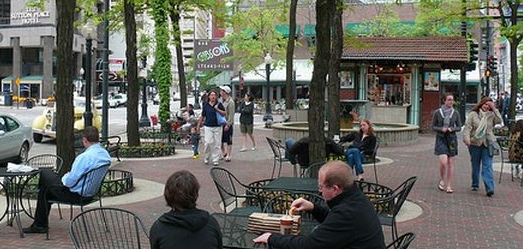
They call it Viagra Triangle because old men gather on benches lining the sidewalks to ogle young women. It’s Mariano Park, at the confluence of State and Rush Streets in Chicago. The shaded, pie-shape park is surrounded by a hotel, a 57-story condominium and successful late-night restaurants.

I sit near the 100-year-old fountain with my Scottish Terrier, Ozzy. A young couple at a table next to me punch away on their cell phones. He’s dread-locked wearing jeans and a factory-faded t-shirt. She’s sandaled in a dated, longer-in-the-back orange dress; over-dyed black hair, sunglasses.

“Look! stock market’s up,” she says. “Dude, I should’ve bought that when you told me. 1237041_439591126154325_771983775_nWhat’s this? We never ordered a CT scan.”

She opens her laptop. “Look at this. It’s right there. How did they miss that in radiology?” Returning to her phone, she reads, “Dan says, ‘I remember now. I saw that on the X-ray and asked for a CT.’ That radiologist is a dumbass. He’s gonna be in big trouble.”

He nods. “Remember? We asked the patient about this?”

I wonder if they work at nearby Northwestern Hospital and if I know the poor patient.

An oversized white truck turns the corner at Rush and Bellevue. Big black letters on the side say, “We Buy Houses. Cash. Call 847… “. Do they mean they buy the contents of the houses and haul them away in that truck?

14903_701500873252390_6713285813608226359_nHere comes a German Shepherd tethered to a small athletic woman. Great. I’ll have to hold Ozzy tight. I wish he’d stop trying to defend me from big dogs.

“Is your dog friendly?” she asks with her gentle giant sniffing around.

“Sometimes,” I say. Ozzy growls and tries to wriggle to the ground. “Yours?”

“Oh yes. We got him for protection but he doesn’t even bark.”

“Protection from what?”

“Oh you know, intruders.”

Intruders? I don’t ask. I wonder if it’s experience or paranoia that motivates her. Ozzy springs off my lap and gets a sniff of the German before shifting his attention to an encroaching pigeon. I slacken the leash. Ozzy lunges. The pigeon flutters up and the German Shepherd crouches in fear. Jeez. They must have moved in from the suburbs.

Two young women in high heels and sleeveless, skin-tight dresses approach carrying Starbucks cups. They sit; the blonde crosses her long, bare legs sideways and leans back in the chair. They light up. An old man chomping on a cigar shouts from a nearby bench. “YOU CAN’T SMOKE HERE.”

“Oh yeah?” says the blonde, “What about you?”

“Mine’s not lit,” he says.

“Mind your own business,” she says.

“It is my business. YOU CAN’T SMOKE HERE.”

“Where’s the sign?” she says.

The brunette changes the subject. “When’s the new coffee shop opening?”

“Oh that,” he says. “Who knows? Fourth of July maybe. It’s pathetic. They’re turning the park into a yuppy Gold Coast hang-out.”

“I’m glad they’re cleaning the place up,” she says.

“Don’t leave your butts on the ground,” he says.

IN ANOTHER MIND AT THE VIAGRA TRIANGLE

The news isn’t so bad – just a little emphysema. Not bad for 75 years of hard living. “Okay, okay,” I told the doc. “I’ll stop smoking cigars.” Two hours and I’m finally outta there. It’s still nice out. I think I’ll walk over to the park and rest in the shade for a while.

Oh now look what’s happened. Why didn’t they start fixing up the coffee stand sooner. Now everyone is sitting outside with a mound of old green tarp spoiling the view. They never do anything right around here.

At least the benches are out. It looks like they got new tables and chairs. Humph. Not enough of them. What are those things over by the fountain, Adirondack chairs? In the middle of the city? Man, are they out of place. These people don’t know what the hell they’re doing.

I’m glad Ruth didn’t live to see this. She’d hate her favorite little park getting all gentrified. We used to sit right over there on Friday nights with the Bellevue neighbors. We laughed at everyone’s stories from their week at work and mulled over who was going where over the weekend. Everyone relied on Ruth to bring the newspaper’s list of events. And she was the one who spotted famous people walking by. God, I remember the night she eyed Reggie Jackson strolling around Rush Street with a big white girl on his arm. That must have been the summer of 1980 when the Yankees were here playing the White Sox. Ruth really loved the Sox.

This bench is new. Comfortable though. I’m going to chew on my cigar for a while. No, doc, I’m not going to light it. I just like the feel of it in the corner of my mouth. Yeah, it gets a little soggy and the juice from the tobacco seeps between my teeth back to my throat. But this can’t hurt anything. It’s the smoking, right? The damage to the lungs. Emphysema. I wonder if that’s as bad as lung cancer. Naw. The doc never said I’d die from emphysema. Anyway, I’m not lighting up.

Look at these two babes. What’s with those shoes? How can they walk on this old brick sidewalk in high heels? Ruth used to wear high heels. She gave them to the Salvation Army
when her arthritis got bad. I wonder if anyone ever bought them? She had great legs.

Oh shit, they’re sitting right in front of me and lighting up. I can’t stand it. I’m dying to light my cigar. Their smoke is too much. “Hey, you can’t smoke here!”

1005890_10151648151400606_1631618218_n“Oh yeah?” says the blonde, “What about you?”

“Mine’s not lit.”

“Mind your own business,” she says.

“It is my business. YOU CAN’T SMOKE HERE.”

“Where’s the sign?” she says.

The brunette wants to know when the new coffee shop is opening.

“That yuppie joint? Who knows? Fourth of July maybe. It’s pathetic. They should’ve done it before it got nice out.”

“I’m glad they’re cleaning the place up,” she says.

“Yeah. Hey, can I have a light?”

 

The Big Lie: Catholic Hell

The Big Lie: Catholic Hell

In every one of the thirteen grade schools I attended in the 1950’s, Catholic nuns taught me about Heaven and Hell, including the nugget that Heaven was only for Catholics, but there was no guarantee I’d go there. From the age of six I knew if I, as a Catholic, died with a “mortal” sin on my soul, I’d go to Hell, or perhaps Purgatory, the halfway house to Heaven.

This teaching dwelled in the official Catholic textbook for American children used from 1885 to the late 1960s, the Baltimore Catechism. Theth-2 Catholic Church denied that physical Heaven, Hell and Purgatory are part of Church doctrine, long before the Pope declared in 1999 that heaven and hell were “primarily eternal states of consciousness more than geographical places of later reward and punishment”. But that turnaround came after these medieval lies were grafted onto sapling children like me.

The only non-Catholics I knew as a child were our babysitters. I always felt sorry for them because they were headed straight to Hell when they died. In 1957 when I saw a TV ad for Old Orchard Shopping Center, I asked my mother, “where’s Skokie?” “That’s where all the Jews live,” she answered. At 11 years old, I didn’t know there were Jews alive in the world. I thought they were all burning in Hell.

I’ve come to believe that my own personal heaven and hell do exist. I visit hell whenever I relive the last time I got sober forty years ago, or when I regret insensitive words I spoke five minutes ago. And heaven appears when my 10-year-old grandson texts me photos of his lizard.

At the suggestion of my fellow seeker Terry, I crammed into the O’Hare Hilton with 1,000 other souls one weekend in 2012 for a retreat, “Transforming the World through Meditation” with Franciscan Richard Rohr and Benedictine Laurence Freeman, two men I’d never heard of. I had started meditating a few months prior in a Buddhist group and asked Terry if she knew any Christian meditation groups.

In addressing heaven and hell, Rohr said the ego prefers winners and losers. He offhandedly mused that if Jesus descended into hell, as it says in Church doctrine, than there is no more hell because, ”Hell cannot exist in the light of God.” I lost my breath, sprung out of my seat and staggered to the door for air.  A volunteer brought me a chair and water. “Raised Catholic?” I nodded yes. “Yeah, this happens a lot.”

If my subterranean soul had known all my life that I wouldn’t go to Hell for attempting suicide or stealing pens from the office, if I had known all non-Catholics were not doomed to go to Hell; I would have been a better friend to Jesus. I didn’t know my nature was adolescent, fertilized with dead ideas about Hell, sprouting false judgements on myself and everyone I knew.

Uncovering the lie is heaven indeed.

“Get Off the Bus” by Annette Bacon

“Get Off the Bus”  by Annette Bacon

Get Off the Bus

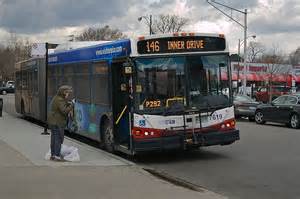
th-1I made the 146 bus after a quick run and put my Ventra card on the reader. It did not beep so I tried it several times. The driver said that I had an 85 cents negative balance. I apologized and said that I only had a ten and a twenty. She said I needed to get off the bus. I started to leave and this guy shouted, “Don’t, you do not have to get off the bus. I am calling the CTA.” “She can’t throw an elderly person off the bus due to lack of funds.” People were staring at us and I decided to get off. I ran across the street to my garage and took some quarters out of my car. I ran back to the bus stop as the other 146 bus had arrived. I put the quarters in the money holder. I looked up and saw the people from the first bus getting on. The bus driver said, “What’s happening?” “Thth-3e bus behind me is empty.”
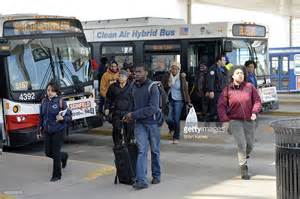
The same guy that was yelling on the other bus said, “I’ll tell you what happened, the other bus driver threw this elderly woman off the bus and that is against the law, so I called the CTA. And there she is!” He was pointing right at me. I cringed again and tried to pretend I was reading. The same guy called a friend and said the whole story again so loud I could hardly stand it. He ended the phone call with,“And I told the CTA I want this bus driver relieved of her duties. She did not have her badge on either!” I panicked. Someone was getting fired due to me? The woman was probably a single mom with four kids. When we arrived at my stop on Michigan Avenue, I jumped off and ran into the Fourth Presbyterian Church sanctuary. I said a prayer for this woman and asked God not to let her get fired.

As I went up the stairs of the church, I could feel my blood pressure was up and I felt like I was flying. On the second floor I walked into Buchanan Chapel and tried to calm myself. I couldn’t decide if I should call the CTA and identify myself as the “elderly woman”. Then I could ask them not to fire her. The system was so huge I knew this would not make sense. They would think I was deranged. Meditation was the answer. Afterwards I took my “elderly woman” body up the elevator to my memoir writing class at the church’s Center for Life and Learning.

In the Attics of My Life, Jerry Garcia Lives

In the Attics of My Life, Jerry Garcia Lives

I worked in politics my whole life, always hoping for the perfect politician. The world view I dreamed up included good people who ultimately acted in the best interest of the whole.  Bill Clinton could have been my hero. I loved his rallying cry in the 1992 campaign, “personal responsibility.”

But I had doubts. Could I work for a candidate who was pro capital punishment and unsure of his view on abortion? Those were two issues I thought every Democrat knew to be against and for.

The “personal responsibility” message won me over. In th-11991 I abruptly left Chicago for Arkansas to work as Clinton’s campaign scheduler, a grueling job that required 24/7 attention. One cold January night Clinton and his entourage, George Stephanopoulos and Bruce Lindsey, returned to Little Rock in a small private jet from all-important New Hampshire. I met the plane on the dark, deserted tarmac to give Clinton his next day’s schedule. He descended the jet’s stairs with a big smile, came directly at me, grabbed my coat and ran his hands up and down my long furry lapels. “Nice coat, Regan,” he whispered.
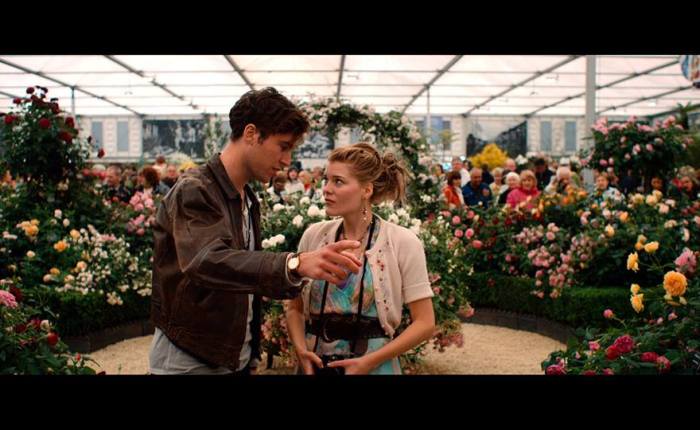
This encounter may be the reason I love Bill Clinton.

When he won, I relocated to Washington to work in his administration. I moved into the first floor condo of an 1880 townhouse on Church Street in DuPont Circle. In 1994 he passed a crime bill I thought went too far. Next he signed NAFTA, an agreement opposed by every Democrat I respected. Both policy shifts were spearheaded by White House insider, Rahm Emmanuel, who decidedly did not have the public good at the forefront of his self-serving mind. But Clinton loved him. Dissatisfaction settled in the space between my bones and muscled me awake at 3 o’clock in the morning for the next seven years.

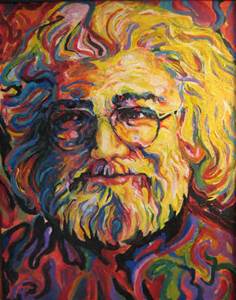
In the still of an August morning in 1995 NPR told me Jerry Garcia died. I collapsed on the bathroom floor weeping over the death of something I couldn’t put words to. At 49-years-old my idealism had come to an end: my false world of everlasting good died with Jerry Garcia. Reality glared back at me in the mirror as I brushed my hair, seeing for the first time a wrinkled face and rubbery neck. I dressed in a soft yellow, flowery cotton frock and pinned a silk flower in my hair, ready for the grieving day.

My dog Voter squirmed away from my extra long hug and I went out the door to my old friend, Keith Lesnick waiting to drive us to work. As soon as I got in the car tears spilled out. He asked about the sadness, and I slobbered out a few words, “Jerry Garcia signed into rehab last night,” I said. “He died in his sleep.” Keith waited a few respectful minutes, and then, with one simple sentence, he opened a new, naked reality that included the unspoken caveat of don’t take yourself too seriously.

He said, “well, it’s not as if it’s Aretha Franklin.”

Immortality, Interrupted: Lake Forest Eviction

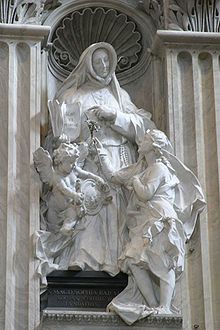
220px-Barat-PereMy lawyering father would make a barrel of flimflam cash, move our family to a gilt-edged neighborhood and drink it all up within a year. He would sneak away on a business trip and a few weeks later my mother would wake my two sisters and I in the middle of the night, pack us into the car and drive to another state, another town, another gilt-edged neighborhood.

In seventh grade I entered my 11th school since I started first grade in 1952, the Academy of  Sacred Heart in Lake Forest, Illinois. I intended to shine in all subjects, especially my nemesis arithmetic, no matter what was happening at home. Experience warned me I didn’t have much time until the next midnight move so I crammed my head with Latin conjugations, algorithms, periodic tables, Romeo and Juliet, diagrammed sentences, the French revolution and the Gospel of Mark. At the end of the year the Mater Admirabilis Award (Mother Most Admired, another name for Mary), an Oscar-like trophy would be bestowed on an eighth-grader for her excellence in academics, sports, religious and civic activities. Her name would be engraved on a bronze plate and permanently fixed next to the previous winners. I prayed everyday for God to keep me in that school through the eighth grade so I could win that prize.

Sacred Heart nuns had been in Chicago since the 1860’s. Bishop Anthony O’Regan brought them from France to open a school at Rush and Illinois Streets, a mile from where I live now. They taught women leadership in society rather than social graces and homemaking. O’Regan moved the school to pastoral Lake Forest when hotels, saloons and brothels flooded the Rush Street neighborhood.

A hundred years later, French still permeated our activities. “Congé” (holiday) was a surprise day when schoolwork was suddenly replaced by a day of fun such as playing Cache Cache, a version of hide-and-seek. Congé ended with “Goûter” (to taste), a roomful of refreshments celebrating the winners of the day’s games. This joie de vivre coupled with the nuns’ love of God appealed to my awakening soul.

My teachers gradually increased my extra credit assignments to include tutoring, public speaking and sports. By the end of the 8th grade everyone knew my name would be forever on display in the trophy cabinet.

In the school bus on the way home from an ordinary day in early May, I thanked God for Sacred Heart and my soon-to-be immortality. The bus driver pulled into our driveway and slammed on the brakes. Furniture, clothes, pots and pans, bicycles – everything we owned clogged the pavement.

I told my sisters to stay on the bus, as if something dangerous was happening, until I saw my mother sitting on the couch with my 3-year-old sister Stacy. I needed to save her from a reality I didn’t understand. A sheriff blocked the front door. We were not allowed to enter. A family friend arrived to drive us to a downtown Rush Street hotel. A week later I was in another school, another town, another state.


Film School with Vivienne

Film School with Vivienne


The elevator opened to a lit-up scene of human statues in the closed-for-business City Hall lobby.

“Cut! Close that elevator door!”

I slinked back into the elevator, up to the 4th floor Elections Department and flew to the telephone in my office where, in the Saturday morning quiet, I had just finished the 1993 voter registration plan.

I called my high-rise neighbor, Vivienne de Courcy. “You have to come down here right now!”

“Ach. Can’t possibly. Bogged down. Writing,” said Vivienne, a frustrated 9-5 insurance lawyer who spent Saturdays grinding out movie scripts.

“You must — they’re shooting a movie in the lobby. We can get access with my I.D.”  Vivienne and I loved sifting through the credits at the end of movies trying to figure out what everyone did, but we’d never been on a movie set.

Chicago’s City Hall squats on one city block with doors at Randolph, LaSalle, Washington, and Clark Streets. I hurried to the Washington Street side of the building down the stairs to the lobby. Flyers were posted in the stairwell: Lobby Closed Saturday Noon for Filming of The Fugitive. When did they put those up?

I ran down the hallway, shoved open the polished brass doors and caught my uninhibited, garrulous sidekick swinging her long legs out of a taxi on Washington Street.

Vivienne’s knockout looks never suffered from uncombed hair and no make-up. Flinging her camel-hair cape over her shoulder she shivered in the March wind, grabbed my arm and skipped inside. I muttered quick instructions: don’t embarrass me, don’t say a word, don’t make me laugh, do not get me in trouble.

Crew Only signs sat on food tables along the corridor. Perched at the table near the rotunda we hawk-eyed bowls of popcorn. Vivienne whispered her intuitive movie-credits knowledge. That’s the Director. Production Assistant. There’s the Script Supervisor. Which one is the Grip? Dunno.

A crew member gestured to the popcorn, assuming we were extras. Vivienne helped herself. What? Don’t do that!

And then, Action! Harrison Ford came running down the circa-1911 polished marble staircase across the wide rotunda zig-zagging through the crowd of extras I had witnessed by the elevators. Cut! He walked back upstairs. Action! He came running down again chased by Tommy Lee Jones.

Oh my god, he’s coming this way. “Vivienne! Say something!” Harrison Ford sauntered over to munch popcorn. I shoved Vivienne toward him. He said hello and she asked him how he liked Chicago.

“Is that an Irish accent?”

“’Tis.”

“How do YOU like Chicago?”

“I love it.”

“Well, I love popcorn.”  He smiled and strolled away.

My starstruck legs wobbled. Back at my side with a handful of popcorn, Vivienne shimmered. Turning toward the exit we faced crew and extras gathered for the catered lunch behind us.

“Are you two extras? What’s that I.D. around your neck?”

We skedaddled down the hallway, fluttered out the doors and whooped it up all the way home.


Vivienne de Courcy’s first feature length movie. “Dare to be Wild” is premiering at the Palm Beach Film Festival in April, 2016. She currently resides in Ireland and London.

Take My Breath Away: Love of Art

Take My Breath Away: Love of Art

Neatly arranged parchment sleeves hid small prints that slipped out and overwhelmed me like guests at a surprise party. The New York Metropolitan Museum of Art responded to my 7th grade request by sending a thick envelope with sacred works by Titian, Bosch, Jacometto, Raphael, Durer and Fra Angelico. As I gingerly sifted through this unexpected bounty, I gasped with awe and gratitude-grateful that God had given me such a gift and awe for beauty I had never before known.

IMG_1076 (1)Mother Ann Cleary at the Academy of the Sacred Heart in suburban Chicago set the class to writing a description of a classic painting including information about the artist and personal impressions of the artwork. In my 1959 mailing to the Met I simply re-stated the assignment and asked for help. I suppose the name of my school prompted the curator at the other end of my letter to choose representations of New Testament stories. That was the year I won the all-school prize for best writing.

After this intoxicating initiation into the eye-popping wonders of art I thirsted for more. I read the back section of Time Magazine every week for news on the art world and scoured the library for books on lives of the artists. I was prohibited from hanging anything on the rented walls of my bedroom so I made square cardboard boxes and pasted works of art on each side. I strung-up the art boxes from the overhead light, curtain rods, door hinges – any place where I could gaze at my magazine-clipped reproductions.

My first art purchase was a print of Picasso’s Boy with Pipe. It shared wall space with art posters from places I visited – a Roger Brown from the 1985 Navy Pier Art Expo, a Toulouse Lautrec from an Art Institute exhibition. In the 1990’s my job required frequent travel around the US and overseas. To protect myself from on-the-road temptations I stole free time and scurried through backstreet art galleries and street markets. I brought home img_0678suitcase-compatible originals such as a small clay maquette of an Easter Island head by Oslo artist Marian Heyerdahl, Thor’s daughter. In 1997 I signed on to EBay. Within hours I was hooked on outsider folk art, bidding on heart-stopping works like a multi-colored turtle made from a hubcap.

Love of art freed me from the inclination to decorate my home for the approval of
others. In my petite apartment the walls are crammed with oils, pastels, watercolors, shadow boxes, metal sculptures, retablos and ceramic tiles. There is so little unadorned wall space that I string up paintings from the curtain rods in my wall-to-wall windows. An oil of Johnny Depp as the Madhatter by Chicago artist Anne Brandt blocks the curiosity of neighboring eyes.

George Carlin once said “life is not measured by the number of breaths we take, but by those moments that take our breath away.” By that standard I surpassed my quota long ago.