First Impressions of Bill Clinton

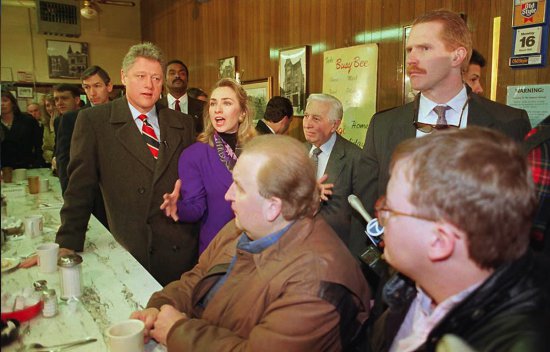
In August 1991, twelve Democratic leaders and influencers, were seated in leather armchairs at a walnut oval table in a small dining room at one of downtown Chicago’s private clubs. I was the only woman. When Governor Bill Clinton entered the room, his th-2tall navy-suited body seemed to shift the atmosphere, moving the dust molecules away from him and clearing the air as he moved. He gave a hardy salutation and proceeded to introduce himself to each person while he circumnavigated the room, one-by-one. I was halfway around the table, and when he reached me I stood and looked up to his bemused rosy face, full of laugh lines. He had a big red nose, like Santa Claus. As I tried to introduce myself, he interrupted me by saying he knew who I was— the Executive Director of the state Democratic Party. He asked if I knew my name was the same as one of King Lear’s daughters. “Yes,” I said, “My name came from her.” He leaned over and whispered let’s keep that between us since she wasn’t such a great character. And just like that we had a best-buddies pact.
He finished working the room, told us why he was thinking of running for president, and asked us to support him. He never sat down.

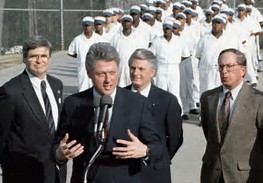
A few weeks later, Bill and Hillary entered a crowded 2nd-floor meeting room in a Chicago hotel with about 50 curious political activists who gathered to meet them for the first time. He neither ushered her in ahead of him as a well-mannered (albeit chauvinistic) gentleman nor did he make her walk behind him as an ill-mannered boor. Democratic presidential candidate Bill Clinton (L)
Side-by-side they came to us. We all jumped to our feet and cheered before he even said hello, before he shook one hand. It was two months before he announced his candidacy for President. His nascent message stressing personal responsibility for welfare recipients echoed what I’d learned in Alcoholics Anonymous — to acknowledge that I am responsible for the choices I make in my own life. Later in his presidency I despised his welfare reform policy but for now this seemingly spiritual insight vaulted my commitment to a new height. This was my guy.

The first week in October, one of Clinton’s many Chicago friends asked me to join him in driving Bill Clinton to Midway Airport. We’d been at a 100-person meet-and-greet where Clinton learned I was moving to Little Rock to work on his campaign. He looked back at me in the car and asked what my boss said when I told him I was quitting my job. My boss hoped I’d change my mind, so I told Clinton he wasn’t happy.  Clinton picked up the car phone, called my boss, thanked him for letting me have this opportunity of a lifetime and said he was happy to have me on board. He ended the call by inviting my boss to bring his family down to the Governor’s mansion for a weekend. In the back seat I imagined throwing my arms around his neck and kissing the top of his ever-loving head.

I was in Little Rock by the end of the week.

Ozzy the Arhat by Regan Burke


Do the dead always visit us in the morning? I wake up listening for the click-clacking tap-dancing, rat-a-tat across my hardened floors. Ozzy had well-padded soles, wide feet and solid toenails meant to root out rats and badgers from their earthen dens. No Scottie-level potted plants ever made it past the first day, neither inside nor on my third-floor balcony. His diggers instinctively, fanatically worked their way into the soil to get to something, anything that proved his worth, duty done. Satisfied with nothing more than a dirty nose and paws, he gave me a message: don’t worry, I’ll protect you from any danger, man or beast.

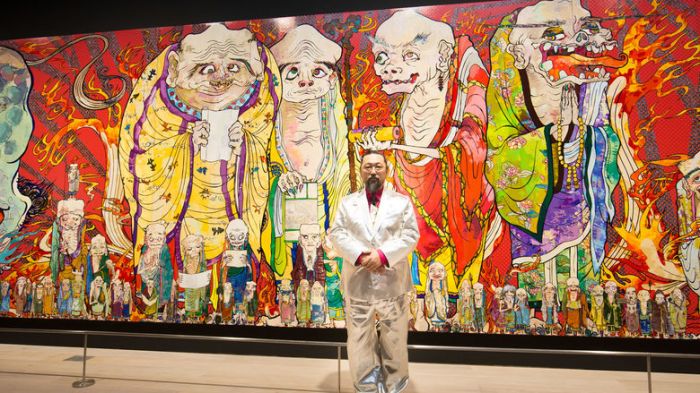
At the Takashi Murakami exhibit in Chicago’s Museum of Contemporary Art, I wondered aloud to my 20-year-old grandson, CJ Kelly, why the artist painted so many colorful frogs at the feet of the arhats. CJ mindfully revealed those are the arhats’ toenails, not frogs. Ah, toenails. Murakami’s arhats are Buddhist spirits who hesitate between two worlds, the physical and the not, to comfort suffering earthly beings. His bulbous toenails are a tribute to the noble path of those enlightened ones whose feet are moving them through their death and decay. The parade of toenails is Murakami’s day-glo gratitude for arhats who stop along the way to ease our sorrows.

Murakami called his Chicago exhibit, The Octopus Eats His Own Leg, based on an ancient Japanese adage that an octopus eats its own decrepit limb to save itself from death rot. A new leg grows back, the octopus is healed and lives a long and healthy life.

In the exhibit, the 33-foot-long painting, 100 Arhats, has 1,000 intricately painted toenails. I misinterpreted the toe protectors, thought they were frogs. After all, how could toenails mean so much to anyone but me? I harbor an unspoken repulsion of human toenails. Summer sandals expose these keratin plates sitting atop ugly toes that hardly ever match each other—some curled under, some straight, some turned outward, some inward—all on the same foot.  Toenails are often fungus-rotted discolored thick globs that women hide with colorful paint instead of covering with cool shoes. God clearly missed the boat in his design of the human toe apparatus.

But Ozzy’s coal-black, perfectly formed, hardy toenails witchy-curled out of his all-business paws, ever-ready for the hunt, the prowl. At rest, his legs stretched out before him showing off his toenails as if he’d just had a pedicure.

His body turned in on him overnight. Like the octopus, his system ate up his dying kidneys and liver but left a beleaguered heart that had to be put to rest. I now have my own arhat who will walk me through the sound of silent, unseen toenails until the hard margins at the edges of grief fade into the path.

murakami_portrait
Takashi Murakami in front of his epic work “The 500 Arhats.” (Courtesy MCA Chicago)


Hazmat Blues by Regan Burke

One hundred and seventy days into the Trump Administration I flew to Washington DC for the annual board meeting of the national anti-sexual violence organization, RAINN.org, (Rape, Abuse, Incest National Network). Lively meals with DC relatives, the board meeting and coffee afterwards with old political cronies were old-shoe comfortable and safe, though conversations periodically broke into expressions of danger. This is, after all, the nation’s company town, Trump’s ground zero.

I arrived at the Washington National Airport an hour early for the non-stop flight home to Chicago. Packed with fellow travelers, pop-up phone and sunglass vendors, fast food and maintenance workers and airline personnel, the terminal sizzled. I managed to nudge a stool into a space at a long table rigged with outlets and nose-dived into the computer-news rabbit hole: click, Trump crashed a wedding at one of his resorts, click to an old story about a sinkhole in front of Mar-a-Lago, click to a twitter storm of jokes about draining the swamp.

Annoying conversations buzzed my ears about a hazmat incident at the control tower. Click! a local TV station reports fumes from roof construction at the Leesburg, Virginia control tower has shut down all flights for 4 airports around DC. Click. Is Steve Bannon, the President’s sneaky architect of distraction, trying to terrorize awaiting airline travelers?  Or did he sabotage the timetable to turn the screw on some disagreeable Administration insider?

The announcement came. “…we don’t know when flights will continue, we’ll update you as soon as we know.” It was 10:00 pm when I learned my flight was cancelled until the next morning. The United gatekeeper told us all the hotels were booked for 50 miles around and that maintenance crews would be handing out blankets for those who’d be sleeping in the airport.  No problem, I’d just contact one of the five people I know in DC and ask to lay my aching bones down on a couch. Click. Click. All five were non-responsive. Travelers were staking out their spots on the floor. In front of the gatekeeper I pleaded, “I just cannot sleep on the floor. I’m old and have arthritis. Is there no other solution?”

He shook his head.

“How much would it cost to get to the nearest hotel?”

“Sixty miles away? About $100.”

“Oh no. Are you giving vouchers for cabs?”

“No”

I was dragging my carry-on away from any hope of a reprieve, doomed to slumping to the floor by Dunkin Donuts, when a young man pressed something in my hand.

“Please let me help you. Take this.”

A $100 bill. Before I could thank him, my FaceBook message lit up with a query from Dan Murphy whom I hadn’t seen in 10 years: Click. “FB is telling me you are nearby! Can I see you?”

And right then, I was no longer afraid to die.

Click.

Click.

Click.

The Race Midpoint That Never Ends by Dave Schanding

The sign reads 35th St exit 1 mile.  Southbound Lake Shore Drive has been closed to allow for the Soldier Field 10-mile run to use this novel running surface.  The runners have navigated through this turn-around point.  Now we walkers are approaching the half-way point of the race.

In Spring, 2011, Kevin and Dave decided to improve their stamina.  They set their initial sites on the Hot Chocolate Run, 9.3 miles from Grant Park to the United Center and back.  After its successful completion, they sign up for the Soldier Field 10-mile run.  The novelty of this race is completing the run on the 50-yard line at Soldier Field.  What Bear fan could pass up this opportunity?

Dave has discovered that walking in a race is a bit different than sauntering down Michigan Av.  Participants are required to average 4mph, or a 15-minute mile.  Most of us typically walk 2.5-3mph.  As Dave nears the turn-around point, his son, Kevin, waves from the northbound path.  Kevin has done a combination of jogging and walking.  Dave checks his left knee with its titanium insert—no more running after the knee replacement the prior year.

In Dave’s driving mind, 1 mile to the exit at 35th Street should be reached in a minute.  When one is on an expressway, a mile takes a minute.  After that minute, Dave doesn’t feel any closer to the exit.  His body reminds him that he’s not driving today.  Dave looks around and sees ‘the bus.’  Race organizers have paid a pretty penny to have the city shut down Lake Shore Drive, and they are strictly enforcing the 15-minute mile race standard.  ‘The bus’ picks up stragglers and returns them to the starting line, without accolades and without the race medal.  Fortunately, the bus is a good half-mile away—Dave is a little ahead of schedule thus far.

He notices the next 1/10-mile marker.  Each marker should be passed every 6 seconds—10 markers per mile, one minute per mile.  That 5/10-mile marker remains annoyingly fixed in Dave’s sights.

Dave maintains a steady pace, staying a little ahead of the 15-minute-per-mile.  He is joined by many weekend warriors.  There are folks of all ages that seem to think they can run 10 miles but instead have to make frequent stops.  It’s the tortoise and the hare all over again. Some folks are actually wearing dress shoes or flip-flops.  Dave’s feet ache just thinking about going 10 miles in that footwear.

5 minutes have gone by and that 35th St exit sign looms just as far in the distance as it did 5 minutes ago.  Not really, but it feels like it.

After 15 minutes, the crowd reaches the exit ramp.  Another revelation.  Dave’s mind is in driving mode again.  One zips down an exit ramp only worrying about whether to turn left or right at the end.  But Dave is still walking.  He wonders if he will have to move into the left-turn lane to legally stay in the race. The exit ramp is interminable.  He’ll have plenty of time to figure out which lane to get into.

Dave finishes the race a couple of minutes before the 2 ½ hour time limit.  He goes into sprint mode for the final 200 yards, including that magical run on soldier field.  His sprinting self-image is dashed as he reviews the photo-for-purchase that shows a lumbering 60+ y/o fellow rather than an athletic 30 y/o.  Kevin finished 15 minutes earlier and the father and son team take a couple of pictures of themselves on the field.  They proudly wear their medals through the park and cab ride home.  They are feeling every mile, but they’ve made it.

D&K finish at soldier field 05262012

If You Can’t Stand the Heat, Don’t Come to My Place

When friends from out of town ask to visit, they know they’ll be sleeping on a pull-out couch. No one seems to mind. But in the summertime, when I inform them I have no air conditioning and no screens, few believe me. The original in-the-wall air conditioner in my 1959 condo conked out in 2006. Replacing it would require ripping up and rewiringth-1 the wall and I’ve never had the inclination to do so. Neither can I bring myself to replace the broken dishwasher or stove.

Hot spells can be oppressive, even claustrophobic. When heat envelops me, I sweat, swell up, get dizzy. At times I feel like I’m going to faint. The failure of my body to adjust disrupts my circadian rhythm and agitates my sleep cycle. To cool off, I sleep with my windows open for the nighttime breeze from Lake Michigan which means on weekends I hear 2:00 am passersby mixing it up from the bars down the street and cars and motorcycles gunning it on my corner. North Lake Shore Drive makes an “S” curve at Oak Street Beach right outside my building and the occasional emergency siren wakes me as it hones in on late night crashes.

Summer sleep can be exasperating. I rise with the sun at dawn because my blinds are open all the time to catch the changing light and moving clouds. Oh, there are some — I’ve run out of wall space, so I hang paintings and dangle sculptures from drapery rods in front of partially closed blinds.

When I was about 10 years old, I occasionally slept outside in the summer on a porch with no screens. Mosquitoes didn’t bother me there. But when I slept inside, the bloodsuckers buzzed my ears until they found a juicy spot to prick my skin. I figured this was because mosquitoes come inside through the screens and can’t get out. I vowed to get rid of all the screens as soon as I had control over my own surroundings. And so I did. th-3Some visitors are afraid of the mosquito-borne West Nile Virus so they spray gobs of poisonous DEET all over themselves. I’m as afraid of West Nile as I am of getting hit by a bus. Bugs fly in. Bugs fly out. Mosquitoes, moths, flies, bees, wasps — they come in, take a look around and go out.
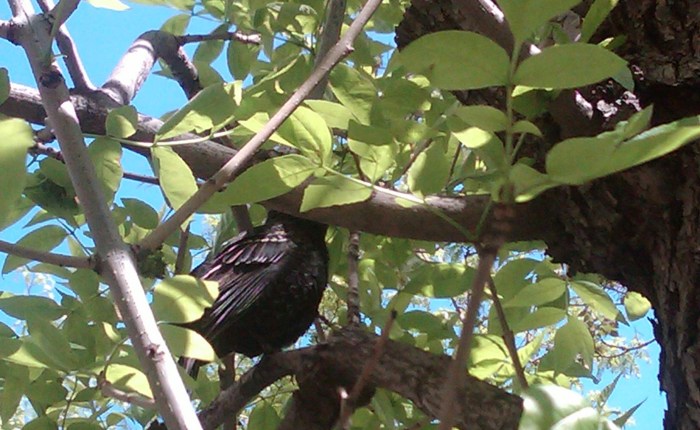
An occasional sparrow or pigeon may fly in too, but they find their way out once Ozzy the dog wakes up and gets wind of them. City life with all the windows open, nature buzzing around, birds chirping, cars honking, buses burping, lake breezes, the sound of rain on the trees – all of it fills me with joie de vivre. I wouldn’t live any other way.

So, if you’re nostalgic for life before air conditioning, come to my place. You’ll be cooled and calmed by slow-whirring fans and iced lemonade.


Conquering High Rise Nature

Conquering High Rise Nature

I threw down the Sunday Real Estate section, flew out the door and sped toward the city to catch the last minutes of the 1-3 pm Open House in a Lake Shore Drive condominium. View of Lake Michigan, one-bedroom, 900 square feet, 24-hour doorman, close to everything, dogs allowed, balcony.

Balcony? During the hour drive to downtown Chicago from temporary quarters in my son’s suburban home, I fantasized sitting on the as-yet-unseen balcony overlooking the Lake, tending my garden.

“I’ll take it,” I said to the agent as I moved across the living room of the third-floor apartment and saw old-growth trees fully dressed in their summer clothes. Outside the wall-to-wall windows a flickering in the trees revealed a red-headed house finch flitting from limb to limb. And then, there was the balcony.

Before light bulbs, blinds or a shower curtain, I bought clay pots and flowering plants for my new home. Young lime-green sweet potato vines and purple morning glories would grow up hugging each other, curling around the railings, stretching toward the sun, competing for space on the top rail, then spilling over the top, and finally hanging down in a graceful cascade of tangled color.

I laid the pots of soil on the balcony overnight to let the dirt cure before planting, leaving the door open – inviting the overnight breeze to bring on a soft sleep. In the morning I strolled into the living room to find dirt tracked all over the floor. My terrier, Usher—legs splayed out on the balcony floor, muddy nose, dirty paws—held his head high with half-closed eyes basking in the light wind. What do you suppose dogs think? Was he grateful IOzzy Gardening 5-4-12 gave him the opportunity to dig up our new backyard?

Off to Home Depot I went for another bag of soil and over-the-railing brackets to hold the pots up and away from those ancient canine instincts. I planted and watered. Perfect.

My north-facing home juts out just enough on a curve of Lake Shore Drive to have a tree-filled lake view. In fact only the trees stand between my balcony and the North Pole – no buildings, no mountain ranges, not much to break the full force of prevailing winds barreling down the Great Lakes, slamming into my building and battering the sweet potato vines and morning glories. They didn’t last the week.

For three years I tried all manner of perennials and annuals praying for wind resistance. The gardeners at Gethsemane Garden Center finally told me I was in a losing battle. Abandoning the outdoor garden, I still delighted in my tree-filled panoramic view full of IMG_1778sparrows, chickadees and one squirrel that sat on a parallel branch, squeaking and shaking his tail, tormenting the dog.

Eventually the emerald ash borer brought down most of the old trees, allowing more
light to fall on the indoor geraniums that are spread across the window sills and bloom all year. Conquering nature in a high-rise requires unwavering love of God’s creatures and a solid commitment to the game.

A Gucci-Loving Spiritual Seeker Gets It in est

In the late 1970’s, my father attended the Erhard Seminar Training, est, a large-group self-awareness retreat founded by modern-day American guru, Werner Erhard, and known today as The Landmark Forum.

After 15 years of estrangement, I became re-acquainted with my father in 1975 when I had overdosed on drugs and alcohol at twenty-four. He visited me in a New Jersey psychiatric institution to tell me about his own downfall and recovery from alcoholism.

A year later, I took my 9-year-old son Joe for his first visit to his grandfather’s home in Chicago’s Lake Point Tower. He ran his coal-mining business from a 6th floor office overlooking Navy Pier, and lived on the 57th floor with a girlfriend whose name I’ve forgotten.

I found comfort in our common interests. We attended AA meetings together, ate according to Dr. Atkins, and searched for meaning in the writings of American buddhists Alan Watts and Ram Dass. Over the years, his Kool-Aid obsession with the est Training led him to attend more exclusive retreats, outdoor survival excursions and seminars that would have led to his becoming an est Trainer himself. He relentlessly pursued fellow AAers, the doormen, his girlfriends, passers-by, my sisters and me to hop on the est bandwagon.

Joe loved and admired his athletic, yoga-practicing, Gucci-loafered, new-age grandfather. After my two failed marriages, I thought my father would make a good role model so we moved to Chicago. Before long, I capitulated and went to the est Training. The Trainer coerced me into confronting all the bad decisions I’d made in my life, which tore my soul to shreds and kept it tattered for years afterwards. I helplessly allowed my father to enroll Joe in the Training at age 14, and silently cheered when Joe walked out the first hour of the 60-hour course.

With est’s emphasis on the Self, my father drifted far away from his Jesuit-educated God-centered roots. His spiritual life ballooned into a reliance on his interpretation of the “god within” — that we are all our own gods and are capable of directing our own lives with no outside help. He preached at AA meetings to accept ourselves as we are in the present with no thought of what we’ve done in the past or what we will become in the future. People in AA tell me to this day his greatest influence on them was his constant reminder that no human power could relieve their alcoholism, that dependence on a higher power was essential to recovery. I never knew anyone to challenge him on his illogical, conflicting philosophies.

In October,1979, Pope John Paul II waved to my father as he flew by his 57th floor living room window in an open-door helicopter, his white robes flapping. The Pope landed in Grant Park to perform an outdoor Mass for 200,000 congregants. We watched the ritual on television and my father claimed that day as his reawakening to Catholicism. He didn’t return to Sunday Mass until the est organization dissolved in 1984. About that time I started noticing a slow disintegration in his character. His live-in girlfriends changed more frequently; he concocted fraudulent business deals, pitted my sisters and I against each other, sold his business and exaggerated his wealth.

In the end, he acted like he was his own god, unencumbered by moral obligations or the consequences of his actions. Perhaps he was like that all along.

Disabled List by Sharon Silverman

Senior Citizen, Elder, Geezer, Golden Ager –I’m one of them but still feel about 45 – well, maybe 50.  Birth certificates, crows’ feet, and neck wrinkles don’t lie.  I’m 72.

Way back when I was 55, I learned how to ride a Honda CB350. I rode it roundtrip from Sydney to Brisbane.  “So there AARP!  Keep your magazine!”   Back then, I was deep in a long distance relationship – Chicago to Sydney is definitely LONG DISTANCE. No aches and pains.  No fears or hesitations to try anything new. I ignored voices warning of motorbike accidents or the possible ramifications of unprotected sex.  Well, I did worry about that one.   Should I have trusted my Australian lover during those long periods of separation?

Fast forward ten years.  I don’t feel old, but at this certain age Medicare premiums are proof to the contrary.  Only my healthcare providers need know.  I’m having the time of my life!

A new love appears.   I am now 66 and still “young”.   How many 66 year olds find a new love?  “AARP, you can keep that card and those discounts for old people.”

Traveling the world, starting my own consulting practice, horseback riding with my grandson, skiing down a black diamond ski slope – is this what an old Geezer does?  I couldn’t really be 66 years old.

Fast forward six more years.  WAIT! What is that ache in my knee?  It seems to be getting worse.  Sometimes, I have to stop walking altogether and rest.  Other times I can’t continue at all.  Walks in the woods to see the autumn colors are no longer appealing. Even my beloved bike riding is at risk.  Each turn of the wheel brings stabs to my knee. I’m now on the disabled list.

My friends are having knees and hips replaced.  Maybe it’s my turn.  Repeated consultations show I do have a knee problem, but it’s not yet “bone on bone”.  I guess that’s good.  Try physical therapy, take an Aleve.  You aren’t a candidate for knee replacement.”

Previous bouts with physical therapy never really helped, so I’m doubtful.  Even so, I discover Pam, physical therapist extraordinaire, and start regular treatment sessions.  Voila – after many months, my knee is about 90%.  Good enough for me, for walking in the woods again, and for traipsing through Italy with my grandson where we walked more than five miles daily for two weeks this past summer!

Still I’m reminded that disabilities may develop at any time.  My recurring urinary tract infections have now morphed into “overactive bladder”.   I can’t live through those stinging symptoms and the ever frequent urge to void.   Can this be fixed?  Find another specialist – a uro-gynecologist.  Who knew there was such a specialty?  At first I wonder if this means he’s from Europe or maybe his fees are in euros.  I tell him, I don’t want to go through every day thinking about my crotch?”  “Of course, he answers, only adolescent boys want to do that!”  I found the right doctor!

My overactive bladder is now resting.  Knee pain has abated.  Celebrex, Norvasc, Zocor, and baby aspirin help me stay healthy and keep off that dreaded “disabled list”.


This is What Happens When You Opt-In

Looking out my third floor window as I tap words into my MacBook Air, I see three crows bounce from bare tree limbs to the ground and back — caw, caw, cawing at each other about their breakfast. The internet once told me if you look a crow in the eye, it will 12196091_952754094793732_8173525927943455115_n-1remember you for three years. Momentarily anthropomorphizing these superior animals, I connect to them telepathically. Thank you Mr. and Mrs. Crow for visiting me this morning. This connection more than compensates for those mornings when their caw, caw, cawing wakes me earlier than I’d wish.

All of a sudden, something pops up in the corner of my screen: “White House forced to reverse course on Trump’s golfing.” I instantly break off my birdwatching and open the link to this urgent story. I don’t dislike golf, but I’m not interested either. However, since the tragedy of 11/8, I involuntarily relinquish my time to so-called breaking news. I click and read. The next thing I know a little box appears with a photo of a pair of shoes I covet. Hmmm, I wonder if those are on sale. I click.

Pope Francis calls these commercial intrusions “opprobrium of savage capitalism.” Yikes. I’m ashamed. But still I click.

When I retired in 2011, I left behind a well-serviced computer and an outstanding modern invention, the Blackberry cell phone. On my own, I wasted time and money trying to replace these gadgets of convenience. Mourning the loss of IT department expertise, I succumbed to the sales pitches of Sprint, AT&T and T-Mobile, gobbling up three different mobile phones within six months. The first one, an android, made sparkling photos. It accidentally slipped through my fingers into Lincoln Park’s South Pond as I leaned over to click a photo of a turtle sunning on a rock. For my second cell phone I decided to forego the camera and try a much less costly flip phone. Alas, my thick Irish fingers couldn’t navigate the buttons. The well-trained manager at T-Mobile suggested an iPhone and showed me how easy it was to use, how cheap it would be on a monthly payment plan and how all the information stored in the cloud downloaded (or is it uploaded?) into the phone.

Acquiring a computer was simpler. I knew without an ever-ready IT department, I had to thbuy an Apple since it was the only brand with a store on Michigan Avenue, which I equate, rightly or wrongly, with quality. And it has a walk-in IT department.

After a prolonged learning curve, I have enough knowledge to use my gadgets for news, restaurant suggestions, bus schedules, appointment reminders and a depository for my writing, rants and raves. I maintain an online community of friends, enemies, strangers, relatives, and acquaintances, larger than I could ever handle offline.

Well, Reader, it’s time to brake for breakfast. But first I must read two articles that just extralargepopped up:  “Is a ‘deep state’ subverting the presidency?” and “Bald Eagle Population Booming In Chicago.”

What Is My Work, You Ask?

What Is My Work, You Ask?


1962. My work is to stop laughing like a nervous little girl and start smiling like an unflappable young lady in the coffee shop on the Asbury Park boardwalk. To turn away from the seagulls fighting over dead fish on the beach and write “pancakes” and “bacon” on my notepad. To pay attention to the old telling the story of the 1934 wreck of the cruise ship SS Morro Castle on the beach. To save money for tickets to Joan Baez and Bob Dylan at the Asbury Park Convention Hall.

1967. My work is to read Dr. Benjamin Spock’s Baby and Child Care and apply its 51hjigsfuol-_sx309_bo1204203200_commandments to week-old smiles, cries in the night, a nine-month old sprinter and a child who eats only chicken. My work is to stand my ground in the whirlwind advice from mothers, aunts and grandmothers. To learn to ride a baby on the back of my bicycle. To animate words as I point to clouds, trees and cars as if I’ve never seen these things before in my life.

1976. My work is to bypass the door to the secluded basement with its graveyard of empty vodka bottles. To surrender to my new single-motherness. To trust my untrustworthy father and move from a sandy Jersey Shore cottage to a downtown Chicago highrise. My work is to know this is the best plan for a nine-year-old boy’s future happiness.

1982. My work is to dress up in business clothes, act smarter than I am, eavesdrop on everyone’s conversations in a boiler room full of political operatives, ask stupid questions and digest enough information to schedule Nancy Stevenson in places that help win votes for her husband’s campaign for governor.

1990. My work is to be a motherless child. To lament the loss of my uterus and ovaries, and, my boyfriend. To escape to Paris and London with my twelve-year old niece. To atone for all my past sins.To feign self-confidence while running the Illinois Democratic Party.

1993. My work is to take Prozac on the way to Washington to join the management class of the Clinton Administration. To imagine I have power and to hide humiliation when I’m exposed. My work is to honor the ruling class. To recognize they are human. To protect myself from evil-doers and self-promoters. My work is to mourn the loss of naiveté.

2006. My work is to shield myself and others from Cook County Government officials who believe if you are happy at your job you’re not working hard enough. To cherish those I lead for what they are today and not for what they will be tomorrow. To protect them from those who refuse to know their names.

2017. My work is to record how far my shadow falls behind me. To tell the truth about myself and trust God with where the words go and what they do when they get there. My work is to proclaim the US Constitution guarantees me the freedom to assemble publicly and express myself openly without retribution. My work is to say I love America and when the saints go marching in, oh! how I want to be in that number.

Inspired by “An Address to My Fellow Faculty,” by A. Papatya Bucak, from brevitymag.com