Anonymous Prayers

Father Long asks to meet on the wrap-around porch of the 19th century worn-out resort hotel in Spring Lake, NJ. I just left my husband and live at my mother’s house with my two-year-old boy. Assuming he wants to force feed me unwanted marriage counseling, I hang an emblematic roach clip on an anti-establishment leather string around my 22-year old neck to compound my defiant hippie ensemble. He talks about my marijuana use.

Give it up for your mother’s sake.

Are you talkin’ to her about givin’ up drinking for my sake?

He once had a job as the disciplinarian of an inner-city Catholic boys school. Realizing I’m no match for him, I make a fast exit scrambling out of the painted-wood rocking chair as I hear over my shoulder.

I’ll pray for you.

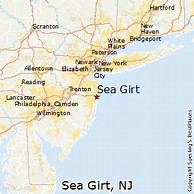
My mother’s cousin, Jesuit Arthur Long Jr. spends a few weeks every year near Sea Girt where I live during my spiritually-sick adolescence and young adulthood. This summer his vacation on the edge of the Atlantic Ocean is interrupted by my mother’s cry for help—help for me, her addict. Her lips never part for the word pray nor do her thoughts ever enter the prayer realm. How drunk must she have been to ask for help from her cousin, a soldier of God?

I wonder if Father gets dispatched to other wayward children sprung from his very wayward relatives. 

A few years later I make it to Alcoholics Anonymous and after six months sober I’m the speaker at a large meeting in Montclair, one of Manhattan’s bedroom communities. I talk about my inability to stop drinking, stop smoking pot, stop consuming illicit drugs, until I get to AA. I’m happy to be sober and tear up at gratitude for my father who brought me into the Fellowship. My father sobered up five years before me in Town’s Hospital Manhattan and started his sustained abstinence in meetings on the Upper East side during the time I was dying, way out there in some other dimension. We hadn’t seen each other for five years before he arrived at the public mental institution I overdosed into at 24 years old. He suggested I go to the AA meeting on the grounds.

After my six-months-sober talk at the Montclair meeting, a petite pearly lady stands back from a line of well-wishers before approaching me.

I pray for you everyday.

What? Do I know you?

I go to meetings in New York with your father. We helped him when he went to see you unknownin the hospital, told him what to say, to just share his story, what it was like, what happened and what it’s like now, and suggest you go to meetings—like we do with any

other alcoholic. A lot of us have been praying for you for a long time.

And here I am.

Thank You Alcoholic Writers

After my first few writing sessions in Beth Finke’s Memoir Writing Class, I asked her why there weren’t more stories about alcoholism. It seemed I was the only one reporting on this particular form of family madness in our weekly writing group. Beth assured me that alcoholism has been a common theme in several of her memoir writing classes over the years.

Ok, so that helped, to know that I’m not the only one. As an alcoholic myself who grew up with two alcoholic parents, I always start from a position of feeling like I don’t belong, like I’m too different to belong. The stigma of alcoholism and addiction doesn’t help. I’ve been sober for 42 years and I still feel like it’s a shameful condition, even after years of knowing it’s a medical condition, a mind-body disease.

Last week Beth sent me an essay by author Leslie Schwartz whose latest memoir is about her relapse and jail time. She writes, “In my case, addiction and the mental illness that 51MsewjwbIL._AC_US218_ 2
follows has been one source of my creativity for a long time. I was able to use my experience of relapse and its devastating outcomes – I nearly lost my life – as fodder for my memoir The Lost Chapters: Finding Recovery and Renewal One Book at a Time.”

Leslie spent her 37-day jail time immersed in reading the work of fellow writers who suffered from alcoholism/addiction (Raymond Carver, Sylvia Plath, Virginia Wolff). She studied the recent research about the link between mental illness and creativity by Nancy Andreasen and Kay Redfield Jamison. Plenty has been written about expressive writing as a form of release from mood disorders—James Pennebaker, Dr. Howard Schubiner and others. Indeed, the Fourth Step of Alcoholics Anonymous’ 12 steps suggests writing a “searching and fearless moral inventory” as a way to shake the yoke of guilt and shame. It works. After writing a few Fourth Steps, I continue to write memoirs to be free from the chronic pain of fibromyalgia as prescribed by Chicago doctor John Stracks. It works for that too.

I love that Leslie Schwartz uses the words “addiction” and “mental illness” interchangeability in her essay.  “When I write, I feel sane,” she writes. “When I don’t write, I am lost.”

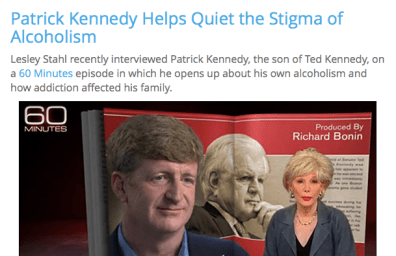
We desperately need addiction/alcoholism and mental illness to be thought of in new ways. Senator Ted Kennedy’s son Patrick (the one who very publicly slammed his car into the U. S. Capitol under the influence), founded the Kennedy Forum in an effort to wipe out the stigma of alcoholism and mental health. By promoting the medical evidence verifying that alcoholism/addiction/mental illness are brain disorders, the Kennedy Forum hopes to reduce the shame induced by the stigma that keeps alcoholics/addicts from getting help, keeps teens from telling their parents, keeps employees from using their medical insurance for rehab. I’ve been sober since 1976 and it seems to me that the stigma is worse than it was 40 years ago. How do we break this? One way is for people in recovery programs like AA to stop acting like they are in a secret society and to open their meetings to those who are simply searching for information on how it works. Another way is for writers like Leslie Schwartz, Anne Lamott, Mary Karr and Brene Brown to keep writing their stories so people like me feel free to write ours.


Watch It! There Are Thorns in Those Roses

Watch It! There Are Thorns in Those Roses

My mother woke me very early one morning on my fourth or fifth birthday. Men were waiting downstairs to wallpaper and paint. This was my birthday present—new wallpaper. I had to quickly dress and stay out of my room until they were finished at the end of the day.

“C’mon, we’ll get your sisters and go visit Joanne!”

It may have been that day or another that my mother took my two sisters and I to see her youngest sister, Joanne, who was in the Maryland countryside about an hour from our home in Washington. Joanne was 10 years younger than my mother so she would have been about 20. She attended Georgetown Visitation high school and junior college with the Smith girls who lived at an 18th century Maryland estate, Mt. Airy. During her school breaks Joanne stayed with the Smiths and in mid-June they would have been lounging around the pool with their cigarettes and tanning lotion.

We all got our hair washed and were set out in the sunshine to dry while my mother, Joanne and the Smith girls painted their nails, gossiped and laughed over beer in the estate’s coach house.

My mother directed me to sit in an oversized lounge chair near the shade of a mighty Southern Magnolia.

“Lay down there, Regan,” she said, “Don’t get up until your hair is dry.”

The old-growth evergreen burst with sturdy white flowers that looked like folded linen, sweet-smelling like the Smith girls. This is the first time I remember birds flying in and out of tree branches. The sun fell through the breeze into the dark fleshy leaves and lulled me into a meditative reverie that I can easily reconstruct whenever I’m under a summer tree or feel the whiff of magnolias or their cousin gardenias drift past me.

At the close of day we returned home and I ran upstairs to my new room. Everything was covered in red roses—the walls, the ceiling, the bedspread and pillows. It was the best birthday present I’ve ever received and indeed, the only one I can remember as a child.

My sisters and I were born one after another in the Naval Academy Hospital in Annapolis where we lived in the years immediately following World War II. After myth father left the Navy, we moved to a red brick colonial on Fox Hall Road in Washington and my father started his first job as a labor lawyer for John L. Lewis, founder of the United Mine Workers. They held the same liberal political views but Lewis, a devout, moralistic Mormon and my father, in the early stage of his alcoholism had battling temperaments. 
By the time I was in the first grade, the job, the house and the rose-filled room had all gone south.

My father picked up work in law firms and corporations throughout the Midwest, and my family started moving around the country with him.

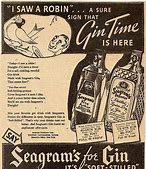
Don’t You Know? We Don’t Drink Gin in the Winter!

We don’t drink gin in the winter, she said when I came home drunk. As if I knew this. As if there was a difference in what I drank when I was just fooling around with my friends, just having fun, just looking at Jim and just trying to feel something I read about in the book in the drugstore.

The northeast winter had its grey, bone-chill beer, scotch and wine. But why no gin? When I said this later he said you’re so white.

And it took a lot of gin in the winter for me to finally get it.

th-1

Journey to Paradise

JFK was still alive the September I drove with my father in his white Cadillac Eldorado down the pike from our temporary home in Washington, DC to boarding school in Williamsburg, Virginia. My head overflowed with questions. Will they have a television? What will I do after school? How will I wash my clothes? I dared not ask my father for fear he’d mock my questioning of such mundane matters. In his silence I could hear him say, “They’re nuns. They take care of people. Stop worrying.” I wasn’t worrying, just wondering. In spoken language between us, different words seemed to have the same meaning—wonder and worry, driving and speeding, drinking and drunk.

Unfamiliar signs became our talking points.

“Look there’s Fredericksburg. Did something historic happen there?”

He told me it’s a Civil War town. 10,000 slaves ran away from the plantations there and joined the Union Army.

Slaves? I had never been in a place where slaves had lived. Monticello. Is that Jefferson’s home?

I’m not sure how much I knew of Civil War history or American history as I was entering my junior year in high school, but clearly the road signs along the highways in Virginia had awakened some schooling. Petersburg and Appomattox. My premature view of life misinformed me that places I read about in history books, like these, no longer existed.

Until then, I had lived my whole life at sea level—the flatlands at northeastern Illinois’ Lake Michigan and the New Jersey seashore. The Virginia road climbed up and down between wavelengths of blue and green, tree-lined hills with wide verdant medians. My mother used to call me a nature-lover. I guess she was right. The scenery captivated me, as if we were driving through the Garden of Eden. I imagined Paradise at the end of our journey.

“What’s the Blue Ridge Parkway?”

My father loved to drive and he’d already been on Skyline Drive, the main road through Shenandoah National Park on the Blue Ridge Parkway. Our route to Williamsburg didn’t bring us near there. Thirty years later, remembering my father’s description of the misty Blue Ridge Mountains and the hills rolling down to the Shanandoah River, I drove there myself.

At Richmond we turned southeast toward the Norfolk Naval Base, Hampton Roads and Williamsburg. I was leaving no one behind. My mother, sisters, cousins and friends lived in another place, another time with their wild summers and grey winters. A vagabond life brought me to live at Walsingham Academy run by the Sisters of Mercy, the school that housed girls from mothers who didn’t mother and fathers who didn’t father—girls who had ulcers and girls who dyed their hair.

We turned onto Jamestown Road toward my new assignment. Fear tightened my grip on reality. Had he told the Mother Superior I had mononucleosis? Got drunk? Swore? Didn’t believe in God? Had an ectopic pregnancy? Did he even know I was tired all the time, and lost? I feared and I hoped they’d care for my soul.

The Reunion by Regan Burke

In the locked ward of the Marlboro Psychiatric Hospital in Monmouth County, New Jersey, I was withdrawing from my demons – cheap wine, LSD, amphetamines and marijuana – when my long-absent father appeared before me. I was 24 years old. The last time I’d seen him, the week before I was to enter Monmouth College, I’d knocked on the door of his mid-town Manhattan apartment seeking money to pay my first year’s tuition. He was drunk, wrapped tight in a dirty blue bathrobe. He wrote me a check, then stopped payment before I could get to the Admissions Office in Long Branch, an hour down the Garden State Parkway.

Fresh out of a straight-jacket, I had no clothes or shoes of my own, having arrived at the public madhouse in an ambulance after a drug overdose. I wore a short-sleeved baggy muslin dress from the institutional collection designed and made by the permanent residents.

“You have a visitor,” the nurse said before escorting me from my cell-like room to the end of the hallway into a clean and airy space she called the Day Room. There were windows along the wall opposite the door, starting maybe six feet up from the floor and reaching the ceiling. For the first time I realized my confinement was subterranean.

My father turned toward me. His brown felt fedora, soft brimmed with a hand-creased crown, topped his elegant duds: white open-necked shirt, tweed sports jacket, gabardine trousers and cordovan wing-tips. A miasma of feelings engulfed me. I feared him. I missed him. I loved him. I hated him.

Why didn’t she say it was my father? I had no idea how to talk to him, or anyone else for that matter. My body shook and rattled as I searched for some kind of appropriate words. I knew only hippy language.

“Hey, man. Far out. You’re here. I’m a little strung out.”

He told me his story of recovery from alcoholism. He loved the effect from his first teenage beer. After that, once he picked up the first drink he binged until he was forced to stop. He had been in and out of jail for getting in fights, drunken driving and cashing bad checks. He couldn’t hold a job. In the end, he holed up in the New York apartment drinking quarts of scotch round the clock until an old friend knocked on his door.

“Had enough, Burke?”

After years of trying on his own, these bewitching words got him to open the door and allow a few men from Alcoholics Anonymous to enter his life. The obsession to drink lifted. “A miracle,” he called it.

He told me about an AA meeting at the hospital. He didn’t suggest I go, didn’t offer to take me, didn’t tell whoever was charged with moving me around my current existence. He just laid the words down. And then he left. He never removed his hat.

About 25 years into my own recovery — admitting defeat, examining resentments, practicing forgiveness, making amends and consciously increasing a spiritual life — that reunion with my father came back to me. I now know supernatural love and courage drove him to bestow his abundant legacy, the gift of sobriety.

Suffering the Consequences

Suffering the Consequences

In late summer 1962, I ran away from home; away from my mother, away from my three sisters, and away from our year-round Jersey Shore beach house. My mother had left my father a few years before, after we were evicted from a mid-century-modern in the Chicago suburbs.

I loved moving close to the Atlantic Ocean but not even the beloved beach down the block could keep me from escaping from my mother’s uncontrollable, screeching, violent rampages. I fled to my father, two hours away in Manhattan. He’d moved there to be close to us and to try, once again, to stay sober. My mother suspended her hatred long enough to allow a few visits between us, but when he moved into a new girlfriend’s suite in the Delmonico Hotel on Park Avenue, my mother cut off all communication with him.

When I arrived, he checked me into my own hotel room, across the hall from his and the girlfriend’s suite. I enrolled in the sophomore class at Marymount Fifth Avenue Catholic girls school, where I became fast friends with another girl who lived in a hotel—her father managed the Waldorf-Astoria. I was no stranger to hotel living. My family had lived in the Meridian Hotel in Indianapolis for a year when my parents were drinking round-the-clock and couldn’t pull it together to find a family home. At 8-years-old, I had learned to run a tab for grilled cheese sandwiches and Coca-Colas in the hotel coffee shop. I relied on the doorman to report my whereabouts to my parents when I went out to play, since they weren’t always available to ask permission. I loved that part.

In early December at the Delmonico, I woke to a fiery, closed throat and vice-gripping headache. I went by ambulance to the emergency room of New York Presbyterian Hospital and was diagnosed with mononucleosis, hepatitis and migraine. The doctor explained that mononucleosis is called the kissing disease because it’s transmitted by mouth. Oh shit. Shame ran in my veins alongside the debilitating virus. I was afraid everyone would find out I was kissing a lot of boys and having sex.

Treatment included nausea-producing morphine injections and steroids. To heal my inflamed liver I lay flat on my back for 30 days— through Christmas and New Year’s. Classmates from Marymount brought homework; friends from the Jersey Shore sneaked in beer; my Boston boyfriend came with a stuffed Wiley Coyote; a case of Reese’s Peanut Butter Cups showed up from my cousin,Therese. My mother never visited nor called.

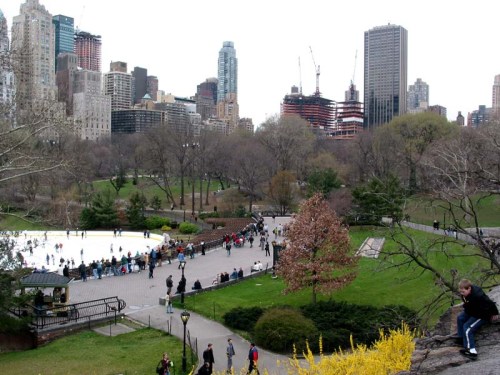
Central-Park-New-York-city-NY-6While I was in  the hospital my father rented a furnished 3-bedroom apartment

overlooking the Wollman Skating Rink in Central Park. Prolonged bedrest in the new home led to my recovery. The compulsory homework necessary for me to move on to my junior year slipped from my hands and onto the floor as I slept off my diseases. I returned to school after four months and failed that year with a final average grade of a humiliating 34.

The Russians: What’s the Worst That Could Happen?

The Russians: What’s the Worst That Could Happen?

I was three years old in 1949 when the Soviet Union started the Cold War by detonating their first atomic bomb, blockading Berlin and pushing their way into Poland and Eastern Europe. The voices I heard swirling above my toddler head at cocktail hour told me the Russians wanted to rule the world and they were coming for us.

By the time I entered the first grade in 1952, the US government had created the National Civil Defense Administration and devised a plan to protect people from incoming A-bombs. Teachers were required to conduct air raid drills, shouting, “Drop!” and school children dropped under their desks, fell over their knees and covered their heads. The nuns at my schools added the instruction to recite Hail Marys aloud while on the floor. Holy Mary, Mother of God, pray for us sinners, now and at the hour of our death. Amen. 

As first, second and third graders, my two sisters and I made our own breakfasts and school lunches because my mother’s alcohol intake rendered her unconscious in the mornings. We often gathered around her bed trying to figure out if she was alive. Holy Mary, Mother of God… One of us would place a finger under her nostrils to feel her breath until, with one exhale, she confirmed the worst that could happen hadn’t—and we’d be off to knock on neighbors’ doors scrounging rides to school.

At seven, I didn’t understand the difference between a drill and the real event so I went to my death every time I huddled under that desk. “This is it,” I’d pray, “this is the day I’m going to see Jesus.” I believed Mary would grab me in her arms like she did baby Jesus and take me to heaven. Why did we practice so desperately to avoid such ecstasy?

By the time third grade rolled around, I got used to not dying under the desk. Images of children who lived after their exposure to the atomic bombs in Hiroshima and Nagasaki appeared on our small black and white television and I began to realize why those air raid drills were so ominous — there were worse things than death.

Our parochial school teachers taught us Communists were going to hell because they prevented Catholics from going to Mass, which was one of the worst things that could ever happen. Words from the TV news — Stalin, USSR, Iron Curtain, the Red Army, the Berlin Airlift, NATO, the CIA — put worry on my parents’ faces and terrified me.

Throughout my childhood, I had reasons to think the worst was going to happen every day. But the worst never happened and over time these early worst-that-could-happen fears immunized me against pessimistic eruptions the way a bout of the measles inoculates against future outbreaks of inflamed skin . For instance, my mother’s alcoholic dementia killed her at 70, but it was not the worst thing to happen, rather relief to her and to those around her.

Today’s words —Trump, FBI, emoluments, North Korea, hacking, Putin, charter schools and my old friend Russia — needle me with foreboding, but history is on my side. After all, what’s the worst that could happen?

A Gucci-Loving Spiritual Seeker Gets It in est

In the late 1970’s, my father attended the Erhard Seminar Training, est, a large-group self-awareness retreat founded by modern-day American guru, Werner Erhard, and known today as The Landmark Forum.

After 15 years of estrangement, I became re-acquainted with my father in 1975 when I had overdosed on drugs and alcohol at twenty-four. He visited me in a New Jersey psychiatric institution to tell me about his own downfall and recovery from alcoholism.

A year later, I took my 9-year-old son Joe for his first visit to his grandfather’s home in Chicago’s Lake Point Tower. He ran his coal-mining business from a 6th floor office overlooking Navy Pier, and lived on the 57th floor with a girlfriend whose name I’ve forgotten.

I found comfort in our common interests. We attended AA meetings together, ate according to Dr. Atkins, and searched for meaning in the writings of American buddhists Alan Watts and Ram Dass. Over the years, his Kool-Aid obsession with the est Training led him to attend more exclusive retreats, outdoor survival excursions and seminars that would have led to his becoming an est Trainer himself. He relentlessly pursued fellow AAers, the doormen, his girlfriends, passers-by, my sisters and me to hop on the est bandwagon.

Joe loved and admired his athletic, yoga-practicing, Gucci-loafered, new-age grandfather. After my two failed marriages, I thought my father would make a good role model so we moved to Chicago. Before long, I capitulated and went to the est Training. The Trainer coerced me into confronting all the bad decisions I’d made in my life, which tore my soul to shreds and kept it tattered for years afterwards. I helplessly allowed my father to enroll Joe in the Training at age 14, and silently cheered when Joe walked out the first hour of the 60-hour course.

With est’s emphasis on the Self, my father drifted far away from his Jesuit-educated God-centered roots. His spiritual life ballooned into a reliance on his interpretation of the “god within” — that we are all our own gods and are capable of directing our own lives with no outside help. He preached at AA meetings to accept ourselves as we are in the present with no thought of what we’ve done in the past or what we will become in the future. People in AA tell me to this day his greatest influence on them was his constant reminder that no human power could relieve their alcoholism, that dependence on a higher power was essential to recovery. I never knew anyone to challenge him on his illogical, conflicting philosophies.

In October,1979, Pope John Paul II waved to my father as he flew by his 57th floor living room window in an open-door helicopter, his white robes flapping. The Pope landed in Grant Park to perform an outdoor Mass for 200,000 congregants. We watched the ritual on television and my father claimed that day as his reawakening to Catholicism. He didn’t return to Sunday Mass until the est organization dissolved in 1984. About that time I started noticing a slow disintegration in his character. His live-in girlfriends changed more frequently; he concocted fraudulent business deals, pitted my sisters and I against each other, sold his business and exaggerated his wealth.

In the end, he acted like he was his own god, unencumbered by moral obligations or the consequences of his actions. Perhaps he was like that all along.

Irish DNA: Inheriting A Stigma

Irish DNA seems to have a gene actively predisposed to alcoholism though there’s no scientific evidence that it’s hereditary.

The first ugly secret in my family is that my twenty-three year old mother, Agnes Donnelly Ryan Burke, was drunk in the Georgetown Inn in Washington with my father at the time her mother died. She wasn’t located until the next day. Later that year my parents were married in Key West where my father, Bill, flew reconnaissance planes across the Florida Straits to Cuba. Their married life began with Bill spending two weeks in the brig after a drunken brawl over Agnes.

Alcohol addiction begins with an immature reaction to the emotional and physical pain of adverse childhood and young adult experiences. When and why did Agnes and Bill cross over from heavy drinking to alcohol disease? Bill’s mother died when he was three so he had early trauma. Agnes was prescribed Guinness Stout when she was twelve for anemia so she had early permission. Their chaotic, calamitous alcoholic marriage intruded on the childhoods of my three sisters and me but as far as I know we are not all alcoholics. We all manifest common characteristics of growing up in an alcoholic home: fear of emotions, conflict avoidance, perfectionism, compulsive behavior, depression, melodrama, overreaction to change, and the denial of all these traits and their connection to alcoholism.

In the forty-one years I’ve been in Alcoholics Anonymous, there have been ongoing, persistent discussions, “Is it hereditary? Is it a disease?” Since the1900’s the language describing alcoholism has screamed out to the non-addicted populace, WE CAN’T HELP IT. The world has been given plenty of messages to enable it to accept us alcoholics as normal people with medical problems. Currently, the community that studies these questions is
untitledpromulgating the idea that addiction is a biological disorder from a dysfunctional brain – not inherited and certainly not a moral failing.

This past year I had coffee after church with a new acquaintance. In swapping little tales about ourselves she told me she had a match.com date who told her he was in AA. “Isn’t that disgusting?” she said. I abruptly excused myself saying I had forgotten to walk my dog and had to run right home.

Alcoholism was shameful before I was born, shameful in my family growing up, shameful in myself, and shameful now. All the work that has gone into trying to change negative thinking against alcoholics has not shifted the stigma one iota. Two million recovering alcoholics still sneak off to life-changing, life-saving AA meetings, keeping their recovery a shameful secret.

Agnes died of alcoholic brain syndrome (wet brain) when she was seventy. Bill joined AA when he was forty-five and stayed sober for 35 years until he died. He was proud to be part of a recovery community and thrived by helping others. But he never felt as though he quite measured up to the world outside of the AA fellowship. He wasn’t secretive about his alcoholism, nonetheless, the stigma hounded him until the end.