2016: Rachel Jackson and Hillary Clinton – Slander Will Wound but Will Not Dishonor

2016: Rachel Jackson and Hillary Clinton – Slander Will Wound but Will Not Dishonor

th-2
Oh, my dear Rachel Jackson — 188 years after the brutal campaign between your husband Andrew and John Quincy Adams, the citizens fear the republic will not survive the brutal campaign of 2016 for the 45th President of the United States.

The two candidates are Republican Donald Trump, a known philanderer, tax cheat and a liar; and Hillary Clinton, the first woman nominated by the Democratic Party, the same party formed by your husband in 1824.

th-4
2016 voters mistrust Hillary Clinton. Statisticians show she distorts the truth 28% of the time, compared to Trump’s lying 70% of the time. However, the public fixates on Republican propaganda that pounces on her daily for mishandling classified material when she was Secretary of State. Yes, Rachel, we have had three women Secretaries of State since women won the right to vote in 1919.

This lack of voter confidence is not the hallmark of the 2016 campaign, however.

Throughout his campaign, Trump has proclaimed Hillary and other women incompetent, liars, corrupt, pigs, fat and flawed. Trump runs beauty pageants and builds hotels. He’s been plagued by women publicly accusing him of unlawful touching. He calls them liars and shifts the conversation to stories of our 42nd President’s sex scandals. Our 42nd President, Bill Clinton, is Hillary’s husband. Trump excoriates Hillary for enabling her husband’s extramarital affairs, then he turns around and calls for Hillary’s aide de camp to be dismissed because the aide’s husband exposed himself to a series of women. Trump says the aide’s marriage to a “major sleaze” makes her a security risk.

America in 2016 is collectively depressed by the deluge of vulgarity. Voters clamor for more issues yet soak up the scurrilous, all the while exclaiming the United States will never regain her honor.

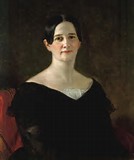
You know how this feels, my dear Rachel. The Hermitage, your beloved Nashville plantation, restored for visitors, serves up details of your death. When you married Andrew Jackson, your violently jealous first husband published a news article that you were never divorced, knowing that he lied to you about filing your divorce papers. He accused you of adultery and bigamy. Your new husband Andrew, a lawyer, rectified the situation and you remarried him legally. All this humiliation was heaped upon you before you were twenty-three years old.

Andrew Jackson fought wars and politicked around the country for the next forty years leaving you at home to manage the 1000-acre family farm. Your work kept you from the day-long carriage ride to town until the day you had to shop for your Inaugural Ball gown. It was only then, in your Nashville hotel lobby, after Andrew Jackson won the election, that you came across a campaign pamphlet accusing Andrew of adultery and running off with you, another man’s wife.  And you accused of bigamy.

Weakened by stress, depression and shame, you returned to the Hermitage and died, buried in your Inaugural ball gown. Our 7th President began his term in profound grief without you at his side.

thWell, Rachel, I want you to know the government peacefully transferred power from John Quincy Adams to Andrew Jackson and Old Hickory scripted your tombstone, “A being so gentle and so virtuous – slander might wound but could not dishonor.”



On the eve of the election, our country’s history is small comfort to the downtrodden, but they will soon hope again because slander might wound the United States but it will not dishonor her.

Casper the Holy Ghost

Casper the Holy Ghost

The Holy Ghost appeared to me in the first grade on the day our Catholic school nun taught our class about the three persons of the Trinity.  My shimmying skin signified Casper the Friendly Ghost had floated into our classroom with his new, deeper nature as the Holy Ghost’s doppelgänger. A 1950’s cartoon character, the bubbly, happy, peaceable Casper tried desperately to befriend humans because his fellow ghosts were too sinister.But the poor guy terrified most people even though his spirit was warm-hearted and affable. Now he was one of the persons of God. And I needed Him.

My original first grade at Stone Ridge Academy of the Sacred Heart in Washington DC was interrupted by illness. I didn’t learn about the Holy Ghost until I got to my next first grade in a parochial school in Terre Haute Indiana. I was happy to repeat the first grade so I could be with my younger sister and best friend, Erin.

Third-gader Mara, my older sister, teased me relentlessly about flunking first grade in front of her friends – and what would have been my friends if she hadn’t poisoned them against me. I prayed that my one new friend, Casper the Holy Ghost,would scare Mara away from tormenting me.

I never had any trouble with the Trinity. Catholics bless themselves by making the sign of the cross, tapping the head, heart and each shoulder, while reciting “In the Name of the Father, the Son and the Holy Ghost.” The concept of the Trinity was and is still simple – three persons in one, just like a cross. For the life of me I don’t know why theologians are always trying to explain it. Perhaps they didn’t have Casper to guide them in the first grade.
I dressed as Casper at Halloween –  many kids still do. My mother wasn’t the least bit interested in dabbling in children’s holidays, much less making costumes. But my Casper costume was a cinch. As long as I didn’t cut holes for my eyes, she let me drape a white sheet over my head and Erin, in her hobo costume, led me around trick-or-treating. Mara, in her I Love Lucy outfit, ridiculed us surrounded by her pack of friends.

th-5

I started collecting Casper the Friendly Ghost comic books in 1952 when I was six. By the time I was ten I had them stacked up alongside Superman comics in my closet. One day I came home from playing baseball and Mara had thrown away my comic book collection. She said it was time for me to grow up. The slick odor of those mistreated keepsakes haunted me for a time but the quivering feeling of Casper’s friendship and protection eventually evaporated.

th-6
About that time Catholics started using Holy Spirit instead of Holy Ghost. The only image I had of the Holy Spirit was an inanimate white dove hanging open-winged over statues of Jesus. He certainly didn’t look like he needed friends. I slinked away from the Holy Ghost until years later when He fell into my own spirit and turned my old fear of Mara into forgiveness. She’s still scary. But not to me.

Another Mother for Peace

Another Mother for Peace
anothermothersunflowerlogo
Another Mother for Peace poster

In 1968, Jim Kelly and I moved to Lansing, Michigan with our toddler son. While Kelly studied for his Masters of Social Work at Michigan State, one-year-old Joe and I marched with the national anti-war organization “Another Mother for Peace” to protest cereal companies that advertised during violent cartoons on Saturday morning TV.

We returned to Belmar, New Jersey, at the end of the school year and moved into an old Victorian beach house where Kelly painted the exterior in lieu of rent. At the end of the summer, we moved in with Kelly’s parents while he sought employment. Built-in babysitters allowed us to frequent our favorite saloon, McCann’s Tavern. In autumn, 1969, I got word that the Vietnam Moratorium Committee was planning what would be the largest antiwar protest in United States history. il_570xn-259808473

I set about convincing our drinking group at McCann’s to drive the four hours to the March on Washington. Ramparts Magazine had taught me everything I needed to know about the War. This publication gave birth to my congenital anti-war condition with stories such as an expose about a Michigan State University group that worked in Vietnam as a front for the CIA.

In McCann’s we debated off and on about driving to the nation’s capital in the dead of night. Even though everyone just wanted to drink and have a few laughs, I kept it up. “Forty-five thousand American troops have died in the past two years. If we don’t end the war your military deferments will be rescinded and you’ll all get drafted into the Army.”

That did it.

Two carloads of us drove off at McCann’s last call. Since I had lived in Washington as a teenager for a few months with my father, I drove the lead car, pretending I knew the directions.

When we arrived, yellow school buses were parking bumper to bumper around the White House so President Nixon wouldn’t see the protesters. We headed to a Jersey Shore friend’s place near DuPont Circle to sober up and eat. Reeking of coffee and cigarettes, our speed-freak friend had been up all night working in a restaurant but he hitched on to our party and created an all-out breakfast banquet. They all fell asleep. I dropped a diet pill and took off for the Lincoln Memorial.th-7

Peter, Paul and Mary and Arlo Guthrie belted out tunes between speeches from anti-war Senators Eugene McCarthy and George McGovern. Peace hero Dr. Benjamin Spock, whose book on baby care taught me how to be an engaged mother, told us half million idealists that we were all noble. Pete Seeger led the crowd in the singing of John Lennon’s “Give Peace a Chance.” I have loved sing-alongs ever since.

Back at the crash pad I hustled my friends outside to join the protesters marching toward DuPont Circle. We all got tear-gassed, screamed for mercy, helped each other to our cars and tore out of town.

The war ended six years later.

No one got drafted.

Agnes’ Drunken Stew

Agnes’ Drunken Stew

After she left my father, my mother made valiant efforts to sit her four daughters down to dinner every night. We never ate before eight o’clock unless we were at someone else’s house. Agnes Donnelly Ryan Burke was very continental and thought it ignoble to eat before the evening news was over. Most of her recipes, clipped from the th-10New York Times, required long simmering or baking times to suit her cocktail hour, which often lasted until nine o’clock. I didn’t mind eating late because I rode my bike around town with the neighborhood boys after their dinners and before mine. I did my homework while watching the late news and The Tonight Show with Agnes.

       Agnes’ beef stew was extravagant. She would not permit anyone to call it Irish stew because, “Everyone knows the Irish have lousy taste and can’t cook.” Neither would she admit that it was really her version of the Times’ Boeuf Bourguignon. Her process would begin with a cast iron frying pan for searing the two-inch cubed sirloin pieces in hot bacon fat. She’d remove the meat and clean the frying pan to sauté the sliced onions, mushrooms and carrots in butter. The two most important ingredients, the th-8hard-to-find dried bay laurel leaves and the bottle of red wine, were added to the meat and vegetables along with salt, pepper, thyme, allspice and garlic cloves. All of this simmered in the Revere Ware stock pot while Agnes sat in her favorite spot onth-9 the couch with her Scotch Old Fashioned to watch the news. 

       When the saucy aroma started permeating the house around seven o’clock she’d stir the pot, turn off the stove and return to the living room to visit with her boyfriend, Harry, and various teenage boys who’d stop in with their illegal six-packs of beer to impress us all with their funny stories. About half-past eight she’d skim the fat off the ragout, heat it up, add thickener and a few more ounces of wine, and we’d all sit down to dinner.

       I can’t remember how old I was when Agnes started cooking with wine. It became fashionable in the 1950s long before Julia Child’s TV show–probably after the war. I overheard Agnes extolling the virtues of cooking with wine “rather than cheap cooking sherry” on long-distance telephone conversations with her sisters as they swapped recipes. She added wine to chile con carne, shrimp newburg, gravy, beef stroganoff and spaghetti sauce. As we got older, she added more and more wine. No one complained except the occasional guest who had not been as inculcated in fine dining as my sisters and I.

      After I moved from Agnes’ home I used her recipes but had to resort to the th-11economical “cheap cooking sherry” for my own family. The more I used, the better the food tasted. I gave up cooking with sherry when I joined Alcoholics Anonymous at age 29. Soon thereafter I gave up cooking altogether. I’ve been chasing after my mother’s cooking ever since. 

Vampire Portrait

Vampire Portrait

The portrait represented my not-surprisingly-sad six-year-old self. People told me as far back as I can remember that I looked sad. Some would even ask why I looked so sad. How does a small child answer such a question?

The oil painting, a three-by-four foot gothic with a gilded oil-rubbed frame looked like an antique. I have a vague recollection of my mother taking my two sisters and I to the artist’s home in Washington, DC, where we had moved for a few years after World War II. We all sat for separate portraits. Mine was the only one the artist completed before my father ran out of money. The artist gave them all to my mother nonetheless and it was one more reason for me to feel superior to my two sisters – my portrait was the best.

I was painted from the waist up seated in a mahogany armchair. Dressed in black velvet with a rounded white lace collar, I held a doll similar to the one my father gave me when I had to stay home from school with the mumps. He bought her in the gift shop of the hotel where we lived when we were evicted from our home. The painting’s forest green background mimicked the dark green velvet of the doll’s coat.

Our family moved around the Midwest for many years before my mother left my father in 1960 – Terre Haute and Indianapolis, St. Louis and Clayton, Chicago and Lake Forest. Those childhood portraits made it through all the evictions, storages and moving vans until I finally got married and my mother gave me my portrait. I hauled it through my own two marriages, divorces and geography. Wherever I hung it, someone inevitably asked who was that sad little girl. I once wanted to rid myself of it when a friend said, “It’s your heirloom.” And so I brought it to a new home in Chicago, where I returned after a stint in Washington, DC during the Bill Clinton years.

My home of 15 years is the first condominium where I’ve had a storage locker. I don’t have a lot of storage items. I figure if you can’t wear it, sit on it, or hang it on the wall, there’s no point in keeping it. For a few years my sad childhood likeness laid in darkness in the basement next to some pictures of my grandchildren and a large suitcase.

Then one day, I needed the suitcase for a two-week trip to San Sebastian, Spain with my California friend Cappi Quigley. I thought I’d bring the portrait upstairs while retrieving the luggage. I couldn’t find the keys to the locker’s padlock so I asked Marcel the building engineer to meet me in the lobby with a bolt cutter. We descended to the basement where Marcel unlocked the steel door to Locker Room B. We located the locker assigned to my condo unit.

The padlock was gone and so were all the contents of the locker.

Sweet Paradise: Harbour Island

Sweet Paradise: Harbour Island

The slow slide and bump after our plane landed at the North Eleuthera International Airport told me we’d slid off the runway. I froze in my window seat seeing the tropical brush below. The full plane exploded in happy applause. We were safe.

“Don’t worry”, yelled the pilot, “this happens all the time. The sand blows onto the runway.” He backed up onto the tarmac, and the door of the plane opened to a rush of fragrance. Roses? Coconut? Ginger?

“That’s frangipani,“ said the flight attendant, “you’ll smell it everywhere.”
The low wide-leaf vegetation we drove through on the 50-mile-an-hour, ten-minute taxi ride sounded like we were driving through a cornfield. At the dock the aroma of wet gaseous pulp permeated the air from the surrounding mangrove trees. Gasoline and oil from the idling water taxis stirred up into the tropical air. Fellow passengers and I boarded the small canopied motorboat with our suitcases full of clothes we’d never use.

We sped off toward Dunmore Town, the only tgovt_dockown on Harbour Island. Saltwater sprayed our welcoming faces and dried out our pollution-soaked nostrils. The sun heated, then soothed the top of my head, melting my restlessness.

Flowery shirts on happy-faced Bahamians greeted us on the crowded oversized cement dock. I announced to the gathering on the dock that I was going to Sunsets and was directed to Otis, the driver for all visitors to Sunsets. The 2-mile drive from town on a low sandy road through high vegetation evoked adventure. Otis talked all the way in an accent I had never before heard.

I had just run out on a job as the campaign manager for a dying cause. I’d been at a loss as to how to keep the campaign afloat with only one other paid staffer. Feeling depressed, disappointed in myself and physically weak, I complained to my cousin Therese who told me to join her, her husband and two children in their vacation house in the Bahamas.

Sunsets, a 3-bedroom cottage with windows all around looked westward onto the bay between Harbour Island and Eleuthera. I claimed my room, unpacked, and waited the few days for the family to arrive. I  read James Michener’s Caribbean while lounging in a hammock between two rubber trees. Snorkeling in the undulating salty turquoise water under a cloudless sky, I kept a slow pace with the barracuda, sea turtles, starfish, octopus – hyper-aware of every movement, every flutter, every splash.th-3

The day Therese and her family arrived I went for a long walk on the pink sandy beach, ate fresh avocados, papayas and mangoes and fell asleep with my book on the terrace overlooking the bay.  An unearthly, ominous pounding from the driveway of the cottage woke me up.  I rushed around back and found three-year-old Melissa jumping up and down on the roof of their car. She screamed, “There’s my cousin Regan!”. Sweet paradise, I was a happy camper.

My Secret Years

My Secret Years

The Secret Years by Regan Burke

It’s been 40 years since I left the marriage. I had been sober for almost a year, he for three. We met in Alcoholics Anonymous. I was a hippie and he had been in the Army during the Korean War. We told ourselves we’d bridge our generational, cultural and intellectual divide with love. I brought my delightful six-year-old son, Joe, into the marriage.

A small group of spiritual seekers in AA brought us to a cozy bible study that recruited
prospective believers to a Sunday service replete with emotional, old-fashioned hymns. I made deep friendships there. Kind and accepting fellowship was new to me. I’d grown up thinking sarcastic banter and raging all-night arguments with ever-present booze qualified as chit-chat. My addiction got off to an early start as the legal drinking age was not adhered to in my family.

When I got sober, I hungered for a new family with a clear consistent recipe for living. I easily succumbed to the succor of an evangelical Christian cult. This authoritarian, bible-thumping church required women to submit to their husbands – even when the husbands battered the wives. I returned every time to a husband who tried to smack me into the kind of wife he saw in his neighborhood growing up. I craved God’s love through the approval of the church elders but I had a wild, willful, rule-breaking past that was hard to tame, no matter how hard my husband tried. To this day, the congenial backslapping that people use to emphasize the punchline of their stories, can trigger in me a subconscious fight-or-flight response.

th-1The day of the fight, I raged around the house rattling anything in my path when I discovered the husband had walked out with our joint checkbook. He was going to drain the account. I climbed into my 1963 Volkswagen bus and headed to the bank. There he was in the strip mall parking lot slinking into his 1970 Ford Mustang. I floored my van and slammed right into the back of his Mustang. He tore out down the two-lane highway. I pursued him, crashing into him every time he slowed down.

Eventually I was able to get up enough steam to bulldoze him off the road and cram him into a tree. The impact forced all the doors in the van to fly open, but otherwise there wasth-2 no damage to me or my vehicle. I turned around and drove the speed limit home, parked my van, went inside and fell into bed, believing I had killed him. I slipped into a deep sleep relieved from the cares of all the world.

I was awakened by two elders from the church. The husband escaped unharmed.They had spoken to the police, vouched for my good character and vowed to admit me to a mental institution immediately. No charges were filed. I spent three months in the Christian Health Care Center in Wyckoff, NJ. My son Joe stayed with a church family. The marriage lasted another two years.

Ancestral Tree Worship and Carl Jung

Ancestral Tree Worship and Carl Jung
A crow caws in the gingko tree on the corner. The rising sun shines through the outdoor tree branches. Their shadows dapple my bedroom walls.

I wake early to catch the glory of each day’s wall art, to meditate with the trees in their seasons. Outside, Ozzy the dog and I stop long enough under the gingko tree to allow its fanning leaves to breathe a fresh day into our early morning walk.

th-1My favorite place is anywhere there are trees.

I love them for all the usual reasons: pretty, green, shade. The deciding factor on my condo purchase 15 years ago was the swaying branches outside the wall-to-wall windows. My home is on the 3rd floor of a 20-story high-rise overlooking Lake Michigan. When I first saw the place, the three ash trees in the parkway had reached a height equal to the 4th floor.

It was like living in a treehouse.th-3

Last year the City of Chicago’s Forestry crews euthanized my treehouse. The ashes were slowly killing themselves by feeding Emerald Ash Borers, those exotic hungry beetles from Asia. I mourn my ash trees. I thought they were immortal.

My mother, Agnes, taught me the pragmatism of trees. Stacy was born 11 years after me, and Agnes insisted I walk my baby sister around on sunny days. Her constant reminder stays with me, “Be sure you stop under the trees so the baby can see the shadows swaying.”

“Women should always have babies in the beginning of summer,” Agnes often said, “in case they are colicky, they will be soothed by leaves swaying in the trees.” She muttered “idiot” under her breath anytime another mother announced the birth of a baby in any month other than early summer.

And indeed, three of her four babies were born in May, June and July. She pretended she planned it that way.

My one and only baby, Joe, was born in May. His 1st summer was spent on his back under the trees outside in a baby carriage. Inside, he spent his time in a crib under a window of trees, syncopating his first gurgles with the sound of leaves rubbing together in the breeze.

Agnes was right about nature’s tranquilizer for infants, but she never claimed it worked for adults. She wouldn’t have been caught dead contributing such unsophisticated, sappy remedies to adult conversations. Her tranquilizers were beer and scotch and later, valium. She spent some of the last years of her life demented from these potions and gazing at the trees in verdant Vermont.604909-44011-10

Trees soothe me anywhere, in any season. Joe absorbs tree balm while minding his wooded property. Carl Jung tells us Agnes simply passed on the inheritance – the collective unconscious of Irish tree worship that supposes tree fairies live in high branches watching over us. My mother’s life was rooted in addiction that mimicked a life-sucking aphid. Yet, she uttered words that gave me and my son our love for trees, a priceless, ancient, tranquilizing inheritance.

IN MY MIND AT THE VIAGRA TRIANGLE BY REGAN BURKE

IN MY MIND AT THE VIAGRA TRIANGLE BY REGAN BURKE

They call it Viagra Triangle because old men gather on benches lining the sidewalks to ogle young women. It’s Mariano Park, at the confluence of State and Rush Streets in Chicago. The shaded, pie-shape park is surrounded by a hotel, a 57-story condominium and successful late-night restaurants.

I sit near the 100-year-old fountain with my Scottish Terrier, Ozzy. A young couple at a table next to me punch away on their cell phones. He’s dread-locked wearing jeans and a factory-faded t-shirt. She’s sandaled in a dated, longer-in-the-back orange dress; over-dyed black hair, sunglasses.

“Look! stock market’s up,” she says. “Dude, I should’ve bought that when you told me. 1237041_439591126154325_771983775_nWhat’s this? We never ordered a CT scan.”

She opens her laptop. “Look at this. It’s right there. How did they miss that in radiology?” Returning to her phone, she reads, “Dan says, ‘I remember now. I saw that on the X-ray and asked for a CT.’ That radiologist is a dumbass. He’s gonna be in big trouble.”

He nods. “Remember? We asked the patient about this?”

I wonder if they work at nearby Northwestern Hospital and if I know the poor patient.

An oversized white truck turns the corner at Rush and Bellevue. Big black letters on the side say, “We Buy Houses. Cash. Call 847… “. Do they mean they buy the contents of the houses and haul them away in that truck?

14903_701500873252390_6713285813608226359_nHere comes a German Shepherd tethered to a small athletic woman. Great. I’ll have to hold Ozzy tight. I wish he’d stop trying to defend me from big dogs.

“Is your dog friendly?” she asks with her gentle giant sniffing around.

“Sometimes,” I say. Ozzy growls and tries to wriggle to the ground. “Yours?”

“Oh yes. We got him for protection but he doesn’t even bark.”

“Protection from what?”

“Oh you know, intruders.”

Intruders? I don’t ask. I wonder if it’s experience or paranoia that motivates her. Ozzy springs off my lap and gets a sniff of the German before shifting his attention to an encroaching pigeon. I slacken the leash. Ozzy lunges. The pigeon flutters up and the German Shepherd crouches in fear. Jeez. They must have moved in from the suburbs.

Two young women in high heels and sleeveless, skin-tight dresses approach carrying Starbucks cups. They sit; the blonde crosses her long, bare legs sideways and leans back in the chair. They light up. An old man chomping on a cigar shouts from a nearby bench. “YOU CAN’T SMOKE HERE.”

“Oh yeah?” says the blonde, “What about you?”

“Mine’s not lit,” he says.

“Mind your own business,” she says.

“It is my business. YOU CAN’T SMOKE HERE.”

“Where’s the sign?” she says.

The brunette changes the subject. “When’s the new coffee shop opening?”

“Oh that,” he says. “Who knows? Fourth of July maybe. It’s pathetic. They’re turning the park into a yuppy Gold Coast hang-out.”

“I’m glad they’re cleaning the place up,” she says.

“Don’t leave your butts on the ground,” he says.

IN ANOTHER MIND AT THE VIAGRA TRIANGLE

The news isn’t so bad – just a little emphysema. Not bad for 75 years of hard living. “Okay, okay,” I told the doc. “I’ll stop smoking cigars.” Two hours and I’m finally outta there. It’s still nice out. I think I’ll walk over to the park and rest in the shade for a while.

Oh now look what’s happened. Why didn’t they start fixing up the coffee stand sooner. Now everyone is sitting outside with a mound of old green tarp spoiling the view. They never do anything right around here.

At least the benches are out. It looks like they got new tables and chairs. Humph. Not enough of them. What are those things over by the fountain, Adirondack chairs? In the middle of the city? Man, are they out of place. These people don’t know what the hell they’re doing.

I’m glad Ruth didn’t live to see this. She’d hate her favorite little park getting all gentrified. We used to sit right over there on Friday nights with the Bellevue neighbors. We laughed at everyone’s stories from their week at work and mulled over who was going where over the weekend. Everyone relied on Ruth to bring the newspaper’s list of events. And she was the one who spotted famous people walking by. God, I remember the night she eyed Reggie Jackson strolling around Rush Street with a big white girl on his arm. That must have been the summer of 1980 when the Yankees were here playing the White Sox. Ruth really loved the Sox.

This bench is new. Comfortable though. I’m going to chew on my cigar for a while. No, doc, I’m not going to light it. I just like the feel of it in the corner of my mouth. Yeah, it gets a little soggy and the juice from the tobacco seeps between my teeth back to my throat. But this can’t hurt anything. It’s the smoking, right? The damage to the lungs. Emphysema. I wonder if that’s as bad as lung cancer. Naw. The doc never said I’d die from emphysema. Anyway, I’m not lighting up.

Look at these two babes. What’s with those shoes? How can they walk on this old brick sidewalk in high heels? Ruth used to wear high heels. She gave them to the Salvation Army
when her arthritis got bad. I wonder if anyone ever bought them? She had great legs.

Oh shit, they’re sitting right in front of me and lighting up. I can’t stand it. I’m dying to light my cigar. Their smoke is too much. “Hey, you can’t smoke here!”

1005890_10151648151400606_1631618218_n“Oh yeah?” says the blonde, “What about you?”

“Mine’s not lit.”

“Mind your own business,” she says.

“It is my business. YOU CAN’T SMOKE HERE.”

“Where’s the sign?” she says.

The brunette wants to know when the new coffee shop is opening.

“That yuppie joint? Who knows? Fourth of July maybe. It’s pathetic. They should’ve done it before it got nice out.”

“I’m glad they’re cleaning the place up,” she says.

“Yeah. Hey, can I have a light?”


Gastronomical Paradise, Almost, in Dali’s Spain

Gastronomical Paradise, Almost, in Dali’s Spain

by Regan Burke

As we reached for the Iberian cured ham and tomato bread, we jerked back in our seats when someone shouted “call an ambulance!” Our boss had an asthma attack and we followed him to the Figueres hospital. The restaurant, El Motel, 90 miles north of Barcelona and 40 miles south of the French border inspired the most famous chef in the world, Ferran Adrià to create his restaurant, El Bulli in nearby Cadaques on the Mediterranean Sea.

In the weeks before, my three colleagues and I traveled from our office at the U.S. Department of Education in Washington, D.C. on official business to Barcelona, we vowed to eat at the celebrated El Motel restaurant. I arrived a week before Secretary Richard Riley and his staff to arrange the logistics for the conference events and to find a typical Catalan school for the Secretary to tour. Serendipitously, a principal formally invited the U.S. Secretary of Education to visit her school in the dusty country between Barcelona and Figueres. The children celebrated him with an American musical performance that added hours to our day. With official business out of the way, we headed for the Salvador Dali Museum in Figueres. My colleagues, John Funderburk, Jay Blanchard and David Frank stewed in anticipation of lunch at the table of chef Jaume Subiros.

Dali said of his museum, “The people who come to see it will leave with the sensation of having had a theatrical dream.” At first glance his entrance looks like a quaint three-story red th-4clay castle. Looking atop the turret one sees huge cement eggs. The exterior walls are peppered with what foreigners think are baked dinner rolls, but Catalonians know the scatological Dali created the organic sculptures to resemble excrement pies. The aphrodisiacs inside include Dali’s surrealistic art, holograms, a vintage interthactive Cadillac and his crypt. We frittered away longer than planned and in the end found Secretary Riley and his wife, “Tunky”, resting in the Mae West living room.

Drenched in Dali elixir and blanched by a long day in Catalonia without sustenance we made our way north on the Avenida de Salvador Dali away from the “theatrical dream” and toward the gastronomical paradise of El Motel. The U.S. consulate in Barcelona booked our table and we were greeted with all the ruffles and flourishes of royalty. Low blood sugar and parched228566_1 thirst dragged us to a round table full of tea roses and peonies overlooking the dry Spanish countryside. Yes, yes! We agreed to start with plates of Iberian ham. The shared plates would dish up seafood croquettes; rice with sea cucumbers, rabbit and sausage; clams with candied tomato & lemon grass. The chef had prepared fresh Catalan custard for dessert.

As the Iberian ham was placed before me I looked up in horror to see Secretary Riley turning beet red, struggling to breathe. He recovered overnight in the Figueres hospital. In our Barcelona hotel the following day we were comforted with simple ham and cheese sandwiches before leaving for the airport.