Deut. T-Deut. T-Deut. Deut. Deuteronomy

Deut. T-Deut. T-Deut. Deut. Deuteronomy

Reflection on Deuteronomy?

Every couple of years my church asks me to write something for their Daily Devotions. When the request appeared in my inbox this year, it included the assignment list for the Advent writers. I sent a note to Pastor Rocky, “You get Mark and I get Deuteronomy?”

I’m not sure I have a favorite book in the Old Testament, but I am sure I have a least favorite—Deuteronomy. It has always seemed to me that this book is reserved for scholars; we lay people aren’t supposed to know its secrets.

Deuteronomy 18:15-18: The Lord your God will raise up a prophet like me from your community, from our fellow Israelites. He’s the one you must listen to. That’s exactly what you requested from the Lord your God at Horeb, on the day of the assembly, when you said, “I can’t listen to the Lord my God’s voice any more or look at this great fire any longer. I don’t want to die!” The Lord said to me: What they’ve said is right. I’ll raise up a prophet for them from among their fellow Israelites—one just like you. I’ll put my words in his mouth, and he will tell them everything I command him.

Reflection. There’s no secret in this passage. Moses tells us we are getting what we asked for, someone we can talk to, who knows what it is to love and suffer and be happy and sad. He’ll be human, a Jew and a Prophet, like Moses. And when He comes, we can trust His words because He’ll be speaking for God.

Watch out if you see a prophet coming your way. They’re not foretellers of the future. They are truthtellers of the present, who expose hidden gracelessness. Jesus is God’s Truthteller. He digs into my dry bones and pulls out the person He wants me to be. I want to be that person too. Sometimes. I often hide from the truth—fearing ridicule and silent scorn because my greatest obsession is to be normal and to fit in.

God’s Truthteller came in the form of a sassy teenager recently: “you think you’re so privileged.” she said when my wrinkled old mouth asked for her seat on the bus. God’s Truthteller told me to love her, to be a Christian, to trust Him with her words.

Prayer. Thank you God, for sending me your Truthteller, a baby I can cherish, a man I can believe, and a friend I can trust. Expose the flimflam thoughts I tell myself and give me courage to have a life of truth and grace.

advent-devotions-banner-for-website

See more Daily Devotions from Fourth Presbyterian Church Chicago here.

The 2018 Midterms: The Saints Came Marchin’ In

I Got My Country Back.

Weeks after the January 2017 presidential inauguration and Women’s March, I met with a group of women who look like me—old, white, middle-class—to discuss what we could do to help right our country. We devised a plan based on the Indivisible Handbook: meeting monthly to report on our calls and letters to elected officials stating our opinions about Cabinet secretaries, legislation and impeaching the President. We all decided the most impact we could make was to help turn the Sixth Congressional District blue, ousting six-term incumbent Republican Peter Roskam at the midterm election in 2018.

Cries at 2016 post-election presidential rallies to “lock her up,” a demand to jail Hillary Clinton awakened us to a cruel reality. This America, our country, had turned overnight into a place we’d only seen in movies like Elmer Gantry and footage from 1920’s Ku Klux Klan rallies. Little by little we discovered some of our friends, neighbors and family members had voted for a man who gloried in grabbing women by the genitals and calling immigrants murderers and rapists. At first I wondered how people could be so duped by the Reality Show President. I slowly came to realize not all are fooled. People who look like me actually like his white nationalist agenda. Yep. They like him, a tells-it-like-it-is guy, no matter how crude or criminal. I dismayed.

My enthusiasm, and that of my activist friends, turned pessimistic as we drew closer to the midterm election.

Sean Casten, an environmental scientist and political newcomer, won the Democratic primary for Congress in Illinois’ Sixth Congressional District over five women. The district includes some of Chicago’s wealthiest suburbs. I had never heard of him, knew nothing about him. But he became the object of my strongest desire.

I really wanted him to win.

The day after his November victory an interviewer asked Representative-elect Casten what he attributed his win to. Without hesitation he said, “The women. My sister, my wife, the women who showed up every day in the campaign office, the ones who phoned voters from home and knocked on doors. The women.”

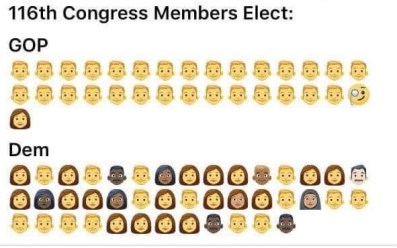
Democrats took 35 seats and counting away from the Republicans in the 2018 midterm elections. And I got my country back. I live in a country where white suburban voters fullsizeoutput_45efelected a 32-year old black woman nurse, a country that elected a Sudanese Muslim immigrant woman who wears a head covering, a country that elected two Native American women for the first time in history, a country that elected a married-with-children gay governor, a country where a lesbian became a conservative state’s attorney general. My country will have 102 Democratic and Republican women in the House in January, 12 women in the Senate and 9 women governors. In my country, a record forty-four percent of employers offered employees paid time off to vote.


In my country, the saints are marching in.

How Will I Know When You Die?

How Will I Know When You Die?

No. No. No.

A friend asked me if I’ve given my son a list of people to call when I die. And right then I felt the future running away with me so fast I could hardly catch my breath.

“No.”

“Why not?”

I told her he’d never do it. “He’d get mad if I even approached the subject.”

“How do you know?”

How do I know? He hardly talks to me as it is, much less about an uncomfortable subject.

“It’s a hard job—to call around to strangers and tell them their friend has died. Think of the responses—the oh-no’s! and the demand for details. No. He wouldn’t do it.”

“Well, how will I find out?” pleaded my friend.

There’s that future again, coaxing me to live in it, whispering that it’s my responsibility to inform my friends when I die.

I’m drawn to a passage in Pascal’s Pensees: “We never keep to the present…we anticipate the future as if we found it too slow in coming and were trying to hurry it up,” He writes about our failure to live in the present, “we think how we are going to arrange things over which we have no control…” So, no. I’m not going to try to control what happens to me after I die, other than keeping my end-of-days papers in order. I’m happier owning this moment and this moment and this moment. I’ll let time future govern itself.

On the Sunday after All Saints Day, November 1, my church recites the names of those members who’ve died the past year. This year there were more people on the list I knew. I mean, I knew them. Not just their names. I knew them. After the service, as I sat alone in my pew listening to the organ postlude, I popped open my iPhone. I read an account about two women who guarded the dead body of one of the synagogue victims in Pittsburgh so that, in keeping with Jewish custom, the person would never be alone. I had descended into the grace of solitude, a still point, wondering if Jews believe the soul lives beyond the body when I heard someone call my name.

“Hi Regan,” came the voice of my pastor, Shannon Kershner. I looked up to see we were the only two people left in the church after the All Saints Service. She had just delivered a sermon on John, 11:35: Jesus wept. It’s the shortest verse in the Bible. Pastor Shannon reminded us Jesus cried over the death of his friend, Lazarus, joining in the collective grief of his community.

“Are you ok?” she asked.

“No,” I answered. “The dead.”

“Yes.”

She knew.


Talk To Me, Dogs

Talk To Me, Dogs

Facebook told me this the other day—that talking to my dog is a sign of intelligence. Whew. I’m glad of that. I talk not only to my dog but to all dogs. Out loud. In public. On the street. I’ve questioned whether their tethered humans might think I’m crazy but I can’t help it. It’s an irresistible impulse, a compulsion, this talking to dogs. And now I know it’s smart.

“Thank you for saying hello to me,” I say to the miniature poodle springing up and down in boyish spirals in the elevator.

“Mac, Mac, come see me,” I yell to Angie’s labradoodle on the sidewalk.

“Henry! Here comes that German Shepherd. Hang tight. Let ‘im sniff. Uh. oh. That scrappy Spitz. Just go ‘round him.”

The word for this is anthropomorphism. Facebook quoted behavioral scientist Nicholas Epley, a University of Chicago anthropomorphism expert. He says that I and others like me are actually showing signs of “intelligent social cognition” in talking to our pets. Because God made us social creatures, we talk to things we love, to be social, to have friends. For thousands of years dogs have adapted as companions to humans. They want to bond with us too, to be a part of the family, to please us. They even want to talk to us, which is why they bark. Dogs evolved from wolves. Wolves howl. They don’t bark.

a291086d016bf1b329b2599ae169a875--king-solomon-arabian-nights
“O people, we have been taught the utterance of birds.” (Quran, 27:16)

Somewhere along the evolutionary highway, dogs learned to bark to communicate with their human packs.

Literature old and new is full of talking animals. Some writings are called fables as in Aesop’s The Hare and The Tortoise, who challenge each other to a race. Some are fairy tales—the big bad wolf misleading a red-caped girl in the woods. Snakes and donkeys converse with humans in the Bible. The Koran says Solomon communicated with birds. How could all these stories be based on non-facts? Surely humans once chitchatted with both household pets and wild animals. 

Henry retired at seven years old as a West Highland Terrier stud. His official registered name was Clipper. My friend, John, drove me to Indiana Amish country to fetch the castoff sire. I sat in the back seat with the dog on the way home so I could talk to him, bond. It was the month I first feared I was slipping into cognitive decline.

“He’s not responding to the name Clipper,” John said. “I’ll bet they never called him that. They just bred him. Why don’t you call him something like Henry?” 

And so I did. All the way home to Chicago. The next morning I hollered, “Henry?” He ran from the next room and jumped in my lap. We’ve been conversing ever since.

I suspect the non-pet owners who find me talking to Henry when the elevator door opens haven’t heard of Dr. Epley’s research. To them, I’m just the batty old pensioner with the th-6fluffy white dog on the third floor. 

But I know better. 

I talk to animals.


Haircuts – by Alan Ganz

Guest blogger Alan Ganz is a retired lawyer and memoirist. He’s a member of the Memoir Writing Class at the Center for Life and Learning at Fourth Presbyterian Church, Chicago. His colorful stories tell us about growing up in East Gary Indiana.

In our grade school years, we had a Zenith radio in our home. Dad, Gary and I listened to one commercial that was frightening. In a deep male voice, the announcer discussed B.O. From his talk, it could almost rise to the level of leprosy. Friends would fall away and people would avoid you. What was it? Body odor. To prevent it, all one had to bathe with Lifebuoy soap.

Dad said we were going to take a bath every Saturday to fight B.O., easier said than done. The problem was hot water. Our furnace was the worst possible. It did not connect to any radiator having hot water or steam. The system was to heat air in the furnace which would supposedly rise and fill heating ducts of our house. The system heated our house as much as an small outdoor campfire. Further, the furnace did not make hot water. Pa finally put a small kerosene heater in the kitchen. Gary and I would put our behinds on the grill to get warm before breakfast.

The solution to the hot water problem was to buy a small furnace 24” x 24” x 24”. It was my job to fire it. I enthusiastically stoked it up with coal until the entire furnace was cherry-red. Before getting into the bathtub, I turned on the hot water faucet from which steam came out of for a minute. Wow could I generate hot water! We did not use Lifebuoy soap because it was slippery and sunk to the bottom of the bath tub. Instead, we used Ivory soap which floated. After our baths, Baba gave us our weekly ration of clean clothes: socks, underwear, jeans and shirts which was our clothing throughout our grammar school days.

However, we paid no attention to our hair length. It reached such proportions that it could compete with the hair of the violin player at the Chicago Symphony Orchestra. At that point, Dad would give an order: “Alan, you and Gary need haircuts. Do it!” We had to obey or get the belt. Dad gave me money for our trolley fare and haircuts. Since East th-5Gary had no barber, we had we had to go downtown to the city, i.e., Gary (population of East Gary was 6500, Gary was 100,000).

Gary and I went to the nearest streetcar stop. It ran to Gary, Indiana, on rails with overhead electric wires powering it. Gary consisted of a large number of square miles which had the streets laid out on the grid system. It was named after Judge Gary, legal counsel to U.S. Steel. The main street was Broadway which ran in a north-south direction until the city limits were reached. The furthest north was the entrance to the U.S. Steel plant. Broadway held the premier stores of Gary: Sears, Goldblatt’s, J.C. Penney and Tom McCann for boys shoes. To ensure a good fit, you put your feet in their X-ray machine! Yes – I still have my toes.

Our objective was to get haircuts at Goldblatt’s. We took the elevator to the fifth floor which was entirely devoted to boys haircuts. A quick glance revealed the Goldblatt’s employees – a cashier and six barbers. We paid the cashier and got a receipt. Instantly, our noses were filled with the foul smell of sweating and an almost unbearable B.O. of the boys.

Our eyes saw 80 to 100 boys of grade school age waiting for haircuts in an orgy of sound and movement. The sound was the boys shouting, screaming, talking, cursing, whistling, singing, belching and farting. Gary and I were well-mannered; we only farted outdoors. The movement consisted of shoving, running, hitting, fighting, scuffling, racing, wrestling and jumping on and off the chairs and couches. It was on par with a serious adult riot. WHY such SOUNDS and MOVEMENT? Answer: No supervising adults to control the raw energy of grade school boys.

Above the voices of the rioting boys were heard the adult voices of the barbers. With the strength and loudness of an Army drill sergeant, they shouted a number. For example, “85!” You would look at our receipt which had a number on it. If your number was th-4called, you quickly went to the barber and sat down in his chair. The barber asked you what kind of haircut you wanted: a Baldy (where the barber took off all your hair) or an Inchy (where the barber set his electric shears to cut hair 1 inch above the skull). Either haircut could be done in 45 seconds. Combs and scissors were not used. I think the barbers worked on commission and became millionaires.

There was also a tragedy on the fifth floor. “26!” bellowed the barber. A boy with the 26 on his receipt hurried to the barber’s chair. The barber, who towered over the sitting boy, looked at his head of hair and yelled, “You have cooties [head lice]! Go home and get rid of them!”

26 was crying with a cascade of tears running down his cheeks. Having been embarrassed, there was only so much a human being can bear. He quickly got out of the chair and ran to the fifth floor elevator, and disappeared.

When the barber shouted “Cooties!”, the riot immediately stopped. The only sound was that of the barbers’ electric shears.

Each boy thought, “Do I have cooties?” Our teacher said you could determine whether or not you had them by running a fine-toothed comb in your hair and then examining the comb. Your eyes would be able to determine if you had cooties. But, I didn’t have my fine-toothed comb with me! To get a haircut or not to get a haircut, that was the question Hell, let’s get the haircut! The riot started again with renewed intensity.

Gary and I finally got our Inchy haircuts, and went home.

The haircuts were on Saturday, so we could play on Sunday. On Monday, Gary and I went to our grade school classes with heads held high. We had no B.O., we had clean clothes, and we had spiffy haircuts. We were the cutting edge of boys’ grade school fashion.


The Once and Future President by Regan Burke

The Once and Future President by Regan Burke

Barreling out of Washington National airport on Friday afternoon, October 5, 2018, my cousin, his wife and I headed south for a family reunion in Charlottesville, Virginia. Leslie, in the back seat kept a close watch on her iPhone messages for news of the controversial vote on Supreme Court nominee Brett Kavanaugh who had been accused of sexual molestation as a teenager. I sat in the passenger seat next to my cousin, Bill, making sure my iPhone didn’t jiggle out of the USB charging port in the console. I’d arrived from Chicago where the verdict of Jason Van Dyke’s murder trial was about to be announced. Van Dyke shot 19-year old Laquan McDonald sixteen times on a southside street in full view of a dashcam. When I left home at 7:00 in the morning police were already positioned on every corner of the Loop anticipating riots in the streets if the jury acquitted Van Dyke.

Messages started lighting up the car halfway down Route 66. All the Senators we thought might vote against Kavanaugh caved. 

Leslie reported from the back seat.

“Collins is a yes.” 

“Flake’s voting for him now.” 

“Manchin is a yes.”

It was like the reading of the dead at a war memorial. Our once hoped-for heroes were dead to us now. Through my gadget came news that the jury came in with a 2nd-degree murder conviction for Jason Van Dyke. Justice prevailed somewhere out there in the middle distance but I was geographically removed from quick-fix relief and drawn into the pall in the car on the Virginia highway. I anticipated a gloomy night in the larger group of our politically-charged and mostly-Democratic relatives. 

In the dusk of warm Virginia horse country two hundred of us gathered on the lawn of th-1our kind and generous relative, Ann—sisters and brothers, cousins, 2nd cousins,1st cousins once removed, spouses, partners and all their small children. Our casual salutations were loving and genuine but often cut short.


“Did you hear Manchin voted yes?”

“I just saw Kavanaugh’s getting sworn in tomorrow.”

During afternoon free time the next day, some of us wound our way up a forested valley road to Monticello, the mountaintop plantation of Founding Father Thomas Jefferson. Up until the 1950s, this father figure came to us a hero, our 3rd President, author of the Declaration of Independence, purchaser of the Louisiana Territory and the guy who sent Lewis and Clark to Oregon by canoe. We began to hear about his slave ownership in 1960s periodicals. All accounts were accompanied by declarations that Jefferson hated slavery and tried to abolish it. So we still had our hero.

Sometime in the 1990s historians uncovered research documenting that even though Virginia had a strong free-slave movement in the early 1800s, Jefferson was not a part of it. He even built a new road to Monticello to hide his slave quarters from visiting abolitionists. We started to doubt our hero-father. 

Then came Sally Hemmings.

In 1998 DNA testing showed Thomas Jefferson fathered his slave’s six children. The Sally Hemmings exhibit at Monticello tells us the relationship started when fourteen-year-old Sally lived in Paris with Jefferson and his daughter. The exhibit rightly asks the question, “Was it rape?” 

Indeed it was. 

And what of our hero now?


monticello
Monticello’s slave quarters


Birds of a Feather

Birds of a Feather

On a ridge near the Fox River John and I soft-footed along the sidewalk stopping here and there for Henry, my terrier, to sniff unfamiliar markers deposited at the base of old-growth trees by squirrels, chipmunks, and, of course, dogs. I asked John the usual grandmotherly questions about school, his grades, homework. Science is his favorite subject and he likes moving from class to class now that he’s in Middle School. He pointed out homes of his school ’s vice-principal, classmates, older kids he knew. He said there are often turkey vultures shuffling around this lawn or that, looking for dead worms and garter snakes. 

“Did you know vultures ride the thermals?” He asked. And I knew what he was thinking—he wishes he could spread his arms like wings and let the thermals airlift him into the sky. I do too. We probably have the same dream.

Further along we saw a robin jumping across the grass.

“I never see robins in the city except in the park,” I said, “do you think that’s the robin singing?” 

“No, that’s a cardinal. In the trees. A robin goes yeep.yeep.yeep. A cardinal goes schwee-eet. schwee-eet,” he said.

When we returned to his house, we headed for the deck off the kitchen. He asked if Henry and I wanted a drink, then disappeared inside for a few minutes. He came back through the door caressing a lizard that stretched from his neck to his waist. 

Catching me staring at the hummingbird feeder dangling from the railing, he said, “We haven’t seen a hummingbird since we put up the feeder. But there are lots of yellow finches flying in and out of the lilac tree.”

I have no clue what 12-year old boys are supposed to know. There was a time when he carried a pocket computer around with him so he could play Mario at every possible moment. After a few years, Mario took a backseat to Minecraft and I thought cyber games would possess him for the rest of his life. So I was thrilled to hear these lessons in bird behavior so confidently plucked from deep within his genetic code.  

I shouldn’t be surprised. As a fledgling, before he could talk but after he’d learned to walk, his mother and I took him to Target. While we loaded bags in the car, John sat 1motionless in the shopping cart transfixed by a seagull preening in the sun at the top of a lamppost. A few years later, John and I were sitting on the sunny side of Navy Pier, taking a lunch break after whiffling around first-grader attractions in the Children’s Museum. Sparrows started hopping around our table and John surrendered his bagful of beloved McDonald’s fries to the birds. Crouching down on the pavement stretching his arm as far as it would go with a soggy cold fry dangling between his thumb and finger he tried to get the birds to eat from his hand. The outstretched arm tired and weakened so he propped it up with his other arm and went for at least a half hour. 

I rue that I see him so infrequently. But I’m comforted by my brood of friends with the same grandmother’s lamentation. Like birds on a wire we gather and chirp about our grandchildren, clucking out their accomplishments, funny remarks and milestones, ending with a feathered sigh.

The Hair Revenant

Such a big deal. The hair.  

“What’s wrong with your hair?” my mother asked every time I saw her until her death when I was forty years old. “Get your hair out of your eyes,” and “Go brush your hair,” were common salutations when I was a child. My hair looked like her hair when she was a child, cut straight and short. Hers was blonde, mine brunette. We had moderately thick hair, not wispy or curly. Hairdressers cooed how they loved cutting my hair because it’s so healthy.

My mother disdained long hair as unfashionable, her tip-off to an inferior human being. She let me cover my short hair in bandanna-type scarves tied at the back of the neck like the picture on the Aunt Jemima Pancake Mix. I loved that picture. Aunt Jemima symbolized what I wanted my mother to be. Happy, warm and always flipping pancakes for breakfast.

Our household of five females acquired a portable hairdryer just in time for me to revamp my hair for high school. The tabletop boxy machine had a four-foot flexible tube that connected to a soft plastic bonnet with holes on the inside. I’d curl chunks of short wet hair around plastic tubes, called rollers, and secure them to my scalp with long metal bobby pins. Then I’d cover my caterpillar-like head with the bonnet, switch on the heat, light up a Marlboro and sit on my bed reading Time Magazine while hot air transformed my pubescent healthy hair. Too loud for listening to the radio, the cranked up hairdryer sounded like I’d plugged into the exhaust end of the vacuum cleaner. The result, supposedly a Jackie Kennedy style bouffant, gave my dehydrated hair the look of a puffy rippled helmet.

I rebelled against the home hairdresser and the bouffant during a beatnik phase when I grew long hair, straight-parted in the middle. I wrote poems, learned folk songs, read Lawrence Ferlinghetti and Albert Camus. I armed myself with facts from Village Voice articles to counterpunch a friend’s parboiled views bubbled up from his father’s membership in the ultra-conservative John Birch Society. We debated in the local sweet shop after school before bicycling to the town cemetery to skateboard.

For my senior yearbook my mother persuaded me I would look sophisticated with a pixie haircut. I wanted to be sophisticated, to go to college and write for the New Yorker. But I became a stoned out alcoholic hippie instead, and let my hair grow long again. 

Coming to my senses, I’ve conceded to medium length hair, give or take, for more than half my life. Once in a while around three o’clock in the morning I wake up in front of the bathroom mirror holding scissors and looking down into a sink rimmed with leavings of healthy grey and white hair.

My Bohemian hairdresser tells me it’s uncommon but not unusual.

“A revenant wants you to cut your hair and has visited you in your sleep.”

Writing the Body with Beth Finke

Last Friday night author Beth Finke and I participated in an event called “Body Language—Reading and Discussions about Writing the Body.”The event was held at Access Living, a non-profit advocacy organization in Chicago that delivers programs and services to people with disabilities.

As a writer in one of Beth’s memoir-writing classes, I’m included in her latest book, Writing Out Loud. The book tells Beth’s story about teaching memoir to older adults, and I gladly accepted the invitation to get on stage with Beth and interview her about her writing and teaching. After introductions, I asked some of the obvious questions most people want to know:

  • What was it like to get fired from your job when you lost your sight?
  • How did you get started leading memoir-writing classes?

The shocker came when I asked, “What other jobs have you had since going blind?” Beth answered by “reading” a passage from her book about auditioning to pose in the nude for an art class. She pulled out a phone-size gadget with her passage teed up, put in earplugs and flipped the switch that talked the words in her ear as she perfectly mouthed these words out loud to the audience:

My robe was still on when I backed up to the table and hitched myself up. Crouching down, I felt the tabletop’s edges to be sure I wouldn’t fall off, then stood up and unbuttoned my robe.

I’d been told to strike six poses, eventually ending up in a reclining position. Had I been able to see that first model do her audition, I might have had a better idea of what was expected. I was suddenly so concerned with coming up with six different poses that I forgot I was naked.

I posed.

The department must have been pretty desperate for models, especially ones middle-aged or older and willing to work mornings. Most models are students who liked sleeping in.

I passed the audition.

Access Living is a leading force in the national disability advocacy community. The audience included people from their extensive list of volunteers, clients, personal assistants, board members and friends. Executive Vice President Jim Charlton even brought students from his classes at the University of Illinois Institute on Disability and Human Development.

Next up after Beth’s interview was a reading from artist Riva Lehrer’s upcoming memoir, Golem Girl. Riva read a riveting account from her magnificently written manuscript about growing up at the Condon School for Crippled Children in Cincinnati. A slide show moved from photo to photo behind her as she read. It showed lovely old black and white yearbook pictures of the school, the students and the teachers.

Riva works at Access Living, is an adjunct professor in Medical Humanities at Northwestern University, and was born with spina bifida. Her paintings focus on physical and cultural representations of hers and others disabilities. Golem Girl will be published by Penguin/Random House next year.

The most startling part of the evening came as questions from the audience started flying. An audience member said she’d read Beth’s book Writing Out Loud and asked if she was writing another. Jessica said she writes, too and asked if Beth ever would start a class for younger people near where she lives, in Skokie. Then, Kapow! Someone asked Riva how she was able to accomplish so much after being ridiculed relentlessly as a child because of her disability.

“I’ve been called crip, gimp, freak, retard, midget, you-name-it,” she acknowledged. “In the Condon school, because we all had something, I felt safe, not so different. Outside of school I was always scared.”

She said that when she first started working alongside so many other people with disabilities at Access Living, she felt safe at work like she always had at school. “I was afraid to go out the door at the end of the workday.” She credited Susan Nussbaum, her friend and colleague at Access Living, for helping her navigate the outside world. “You just have to rely on others.”

fullsizeoutput_3e71
Jessica, Beth Finke and Whitney

Afterwards I walked around the room to chit-chat. When I returned to Beth she was leaning into Jessica showing her how to work the reading gadget so Jessica, who uses a wheelchair and has limited sight, could read her own stories out loud to her own audience.

Just before we left, Beth’s guide dog, Whitney, uncharacteristically stood up and lifted her head high enough for Jessica to pet her.


1968 Democratic Convention, or How I Became an Alcoholic

1968 Democratic Convention, or How I Became an Alcoholic


When my first husband, labeled Madman Murphy by his Princeton colleagues, came to the end of his Sociology degree in 1968, the campus uncharacteristically fire-cracked with small anti-war rallies, civil rights demonstrations and teach-ins on avoiding the draft. I spent all my free time campaigning for the Democratic Presidential peace candidate, Minnesota Senator Eugene McCarthy, in nearby Trenton with our toddler Joe hanging in an Army surplus knapsack on my back. Campus memorial services for Martin Luther King, Jr. ignited nascent embers in the Ivy League gentleman conscience. Bobby Kennedy’s funeral train passed by Princeton Junction on the weekend Madman Murphy graduated. We partied through the summer at the Jersey Shore. Murphy lifeguarded, Baby Joe and I frolicked on the beach, and we delighted in the safety of the light of day.

At night Murphy and I took turns babysitting and joining friends at our favorite watering holes. I started smoking pot and argued with everyone over the Viet Nam war. Jersey Shore barflies had nothing on me, after all, I’d been schooled by Princeton peace activists and Ramparts Magazine.

President Lyndon Johnson did not seek reelection. After Bobby Kennedy’s assassination in June, Eugene McCarthy, the intellectual standard-bearer of peace and justice, was left to shepherd the world toward a Democratic victory in his frenzied campaign for President.

In the summer, I tutored a young cousin in elementary arithmetic and sentence structure. I used my cash to buy stationery and postage stamps and took to writing letters to Bobby Kennedy delegates asking them to vote for McCarthy at the Democratic Convention in Chicago that August. I’d pontificate daily to friends and strangers on the beach and in the bars to test out new reasons to support McCarthy over the late-arriving establishment candidate Senator Hubert Humphrey. I fully expected my work to pay off at the Convention and longed to be at the youth festival planned in my hometown to celebrate McCarthy’s victory.

By the time I joined friends at a neighborhood Jersey Shore saloon to watch the Convention on TV, news accounts of the protests and riots were interrupting coverage of the political speeches inside the Convention Hall. But that didn’t matter to me. Soon all would be well. McCarthy would clinch the nomination and beat Richard Nixon in November. No doubt about it.

The unthinkable startled me out of innocent political bliss. The TV flashed back and forth between white men bullying peace delegates inside and police beating peace activists outside. Mayor Richard J. Daley ordered the police to shoot to kill. People who looked like me were dripping in blood.

th-6
Chicago Mayor Richard J. Daley at 1968 Democratic National Convention

What was happening? Eighty percent of primary voters were anti-war. We won the battle and I was sure we’d beaten back the war machine. The delegates rejected McCarthy and his peace plank, nominated Hubert Humphrey and iced out Democratic activists. 

And me? I added martinis, LSD, mescaline, speed, librium and cocaine to my diet. I could see no future. By the time the next presidential election rolled around in 1972, AA meetings monopolized my time and I did nothing but slap a George McGovern for President bumper sticker on my VW.