Falsely Accused

Falsely Accused

Fresh off a Zoom webinar titled Midwest Reparations, I rushed to my local coffee shop for a takeaway to sip during my upcoming current events group.

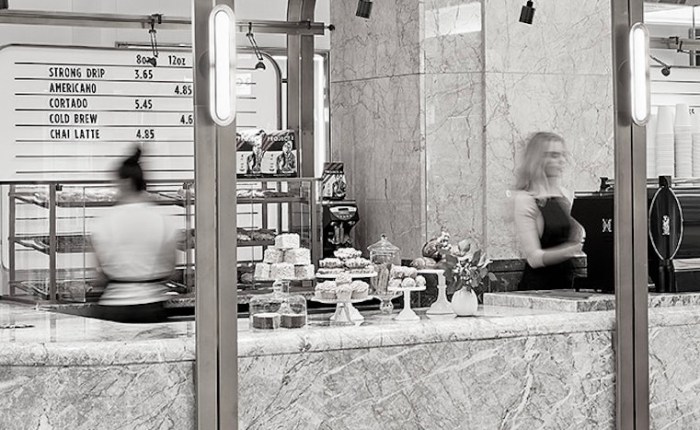
“12-ounce coffee in a 16-ounce cup?” The White barista asked. That’s my usual, with room for cream.

“Yes, please. What are all these new pastries? Chocolate cake? Key lime pie?”

“Yep, they’re new. All from different bakeries” said the barista.

“I’ll be back later with friends. They. Will. Love. These.” I said.

The Blackroots Alliance webinar that morning enlightened me on reparations projects in the Midwest. These are nascent activities reviving the 159-year-old “40 Acres and a Mule” policy for emancipated slaves that was promised and then revoked during Reconstruction. The initial focus of current reparations projects is research to uncover the descendants of enslaved people and how they’ve been impacted. Non-Black allies join at the end of the process when it’s time to distribute funds. Research is conducted by the harmed community, Black Americans, particularly African descendants, who look through the eyes of the tortured generations of chattel slavery. Non-Black Americans cannot be trusted to do this research since they see through a different lens: the eyes of the colonizers, the enslavers, the guardians of the dominant culture.

With this new information,  I was wondering how I, an old White woman, could fit into the reparations movement as I filled my coffee with half and half and rushed over to my current events group.

The group discussed the news of familiar territory: TFG, the former guy, and his latest legal shenanigans, immigration, climate change, gun control, and the ever-evolving White Christian Nationalism. Afterward, a small group sauntered over to the coffee shop where I’d spotted the new pastries. Six of us pulled up around a small table, coats draped over our chairs, rising one by one to fetch our drinks. 

I was the last one to the counter.

“I’m sorry, we can’t serve you.” said the barista.

“What?”

“We can’t serve you. The manager wants to talk to you.”  I joined my friends and announced what happened. The manager appeared and asked to speak to me privately.

“We can’t serve you because there’s been a report of you using a racial slur this morning.”

“What? What racial slur?

“The “N” word.”

“Well, there’s a mistake. I’ve never used that word in my life.’

“You understand we have to investigate when something like this is reported?”

“Wait. Are you accusing me of this?

“We have to investigate. Meanwhile, we cannot serve you.”

“For how long?”

“For the unforeseeable future.”

“You’re kidding. Look at me. I really don’t have an unforeseeable future.”

My friends were incredulous. ‘You? Boy, have they got the wrong person.’ They were ready to mount a protest in front of the building, signs and all.

In the following days, I connected with the company’s Chief Operating Officer. She apologized and emailed me a store voucher for $150. That’s a lot of coffee.

The coffee reparations, however, failed to dispel the lingering notion that I’m not a credible witness to my own story, that I’m not sufficiently worthy to be believed. How can we expect descendants of enslaved Africans to automatically manifest self-worth after enduring generations of false accusations, lynchings, and pressed-down powerlessness? 

We owe them a lot.

Microaggression and Blackbirds

Long ago someone told me pigeons are flying rats and I’ve never bothered to think differently. Pigeons have discovered the bird feeder on my balcony. I shoo them away but they lurk on the ledges of the building across the street and return when they think the coast is clear. A single red-winged black bird, one-fifth the size of a pigeon, will scare a pigeon away from its breakfast on my windowsill.

 Red-winged blackbirds can be aggressive in defending their nests this time of year.

Red-winged blackbirds nest in Chicago parks. The males chase intruders — other males, crows, raptors, and people. I wandered down Michigan Avenue the other day to check on the migrating flock that sets up housekeeping every year in Lake Shore Park. Though I readily observe one or two red-wings at my window, there’s nothing like watching a flock dive-bombing unsuspecting dog walkers who pass under their nests.

On the way, I clutched my bag as I passed the Louis Vuitton store. I funneled myself between the ever-present queue around the store and the narrowing sidewalk. Lines formed outside Louis Vuitton and other high-end stores when Covid Shutdown rules required a limited number of people inside. And for the umpteenth time this year I noticed my silent microaggressive thoughts on Black people. Where do these people get the money for four thousand dollar purses? 

Covid Shutdown coincided with the proliferation of online free programs about white privilege, implicit bias and microaggression. For the first time in my old life I’ve been made aware that my whiteness affords me privileges such as crossing paths with a policeman without fear, a privilege Black people don’t have. I’ve discovered that fear of Black men is an implicit bias that governs where I live, eat, shop and travel. Microaggression is a bit trickier to face. Awareness of clutching my bag as I silently scorn Black people lined up at Louis Vuitton is a start. 

On a recent anti-racist zoom program, I learned about workers in the “informal” or survival economy. These are the bucket boys. The handymen. The loose cigarette sellers.The sex workers. The retail money-launderers. Until recently I thought of informal workers as criminals, and not as resilient, courageous, burdened and traumatized spirits of the survival economy. 

A dapper old pensioner sits in a busy park near my building. I know he’s often short on rent, the way you know these things about the neighborhood. He palms a bill in the hand of every passing informal worker: the Streetwise peddlers, the panhandlers, the street people. He’s the only person I know who still carries cash. I used to think he was not only foolish with his money but that he actually hurt people by providing cash for booze and cigarettes. I now think of him as the buddha, the christ, the manifestation of noble kindness. 

I’m receptive to changing my thinking about people.

But not about those pigeons.

___________________________

‘Nature’s A–holes’ Are Back: Red-Winged Blackbirds Attacking People Along The River As Nesting Season Gets Underway

Microaggression and Blackbirds

Long ago someone told me pigeons are flying rats and I’ve never bothered to think differently. Pigeons have discovered the bird feeder on my balcony. I shoo them away but they lurk on the ledges of the building across the street and return when they think the coast is clear. A single red-winged black bird, one-fifth the size of a pigeon, will scare a pigeon away from its breakfast on my windowsill.

 Red-winged blackbirds can be aggressive in defending their nests this time of year.

Red-winged blackbirds nest in Chicago parks. The males chase intruders — other males, crows, raptors, and people. I wandered down Michigan Avenue the other day to check on the migrating flock that sets up housekeeping every year in Lake Shore Park. Though I readily observe one or two red-wings at my window, there’s nothing like watching a flock dive-bombing unsuspecting dog walkers who pass under their nests.

On the way, I clutched my bag as I passed the Louis Vuitton store. I funneled myself between the ever-present queue around the store and the narrowing sidewalk. Lines formed outside Louis Vuitton and other high-end stores when Covid Shutdown rules required a limited number of people inside. And for the umpteenth time this year I noticed my silent microaggressive thoughts on Black people. Where do these people get the money for four thousand dollar purses? 

Covid Shutdown coincided with the proliferation of online free programs about white privilege, implicit bias and microaggression. For the first time in my old life I’ve been made aware that my whiteness affords me privileges such as crossing paths with a policeman without fear, a privilege Black people don’t have. I’ve discovered that fear of Black men is an implicit bias that governs where I live, eat, shop and travel. Microaggression is a bit trickier to face. Awareness of clutching my bag as I silently scorn Black people lined up at Louis Vuitton is a start. 

On a recent anti-racist zoom program, I learned about workers in the “informal” or survival economy. These are the bucket boys. The handymen. The loose cigarette sellers.The sex workers. The retail money-launderers. Until recently I thought of informal workers as criminals, and not as resilient, courageous, burdened and traumatized spirits of the survival economy. 

A dapper old pensioner sits in a busy park near my building. I know he’s often short on rent, the way you know these things about the neighborhood. He palms a bill in the hand of every passing informal worker: the Streetwise peddlers, the panhandlers, the street people. He’s the only person I know who still carries cash. I used to think he was not only foolish with his money but that he actually hurt people by providing cash for booze and cigarettes. I now think of him as the buddha, the christ, the manifestation of noble kindness. 

I’m receptive to changing my thinking about people.

But not about those pigeons.

___________________________

‘Nature’s A–holes’ Are Back: Red-Winged Blackbirds Attacking People Along The River As Nesting Season Gets Underway

So Fly Mother

There’s no North Star to navigate me through today’s rapidly expanding and changing vernacular. I’ll bet my parents felt this and probably theirs before them. In my early teens I used the word “cool” in a conversation with my mother. I forget everything about that conversation except she snapped.

“Stop using that word. You sound like a degenerate beatnik.”

Oh. My. GoD. That’s exactly what I wanted to be. I’ve used cool ever since to describe things I like, assuming whatever I like falls into the universal “cool” column.

“Awesome” took the place of cool in the public square when I wasn’t looking. I’m mildly annoyed at the overuse of awesome but at least people use it close to its true meaning, unlike cool which confounds us with all its meanings: aloof, care-free, chill, funky, and in the case of Barack Obama—sophisticated, elegant and unflappable.

The Webopedia has a comprehensive list of texting language. ROFL means rolling on floor laughing. LMK means let me know. And my favorite, STFU means shut the fuck up which is teetering on the cliff of overuse in the aftermath of the painful November 2016 election and the reign of the twittering emperor.

Nothing stumps me more than hip hop language. Until recently I thought hip hop and its musical sister, rap, glorified pimps, whores, violence, drug dealing and guns. But I’ve met writers in the hip hop world who are neither gangsters nor malevolent. I see a world of hip hop creatives whose first thought every morning is to write. it. down. Like rock ’n’ roll before it, hip hop is a creative outlet for young people who are on to us, who use poetry, music, fashion, video and street art to proclaim their intolerance of our white privilege.

The words though are tough. I get the word homie, meaning a good friend as if from the neighborhood or home. “Hoe” a diminutive form of whore is used as a general insult, much like bitch. But, it’s elevated to a type of red badge of courage for poet Britteney Black Rose Kapri who titled her book Black Queer Hoe. I like it but as a former barfly who sold herself for Rolling Rock, I can’t bring myself to use it—yet. For that matter as a former drug addict I bristle at the use of the word dope as a substitute for cool, as in the HBO series, Two Dope Queens.

Recently I participated in an intergenerational poetry workshop taught by Kevin Coval, Chicago’s Hip Hop Chronicler. Kevin MC’d a performance of us workshoppers and our poems at Lookingglass Theater. He introduced me as “so fly”, and I immediately thought of Super Fly. The slang “fly” dates back farther than the 1971 movie though. In my teens I heard “fly” in 1920’s African American Fast Talkin’ Blues on old scratchy 78 RPM records. It was someone like Blind Lemon Jefferson or Lead Belly who used the word fly to describe a stylish, snappy, sophisticated woman. My 1960’s beatnik-wannabe friends and I never adopted fly in place of cool because it sounded too black.

BOCn5vf4SLqbLC+5R+QVewThey all called my mother cool behind her back not because she dressed in black turtlenecks like a degenerate beatnik but because with her acid tongue and casual elegance she let them drink beer in her living room and laughed at all their jokes.

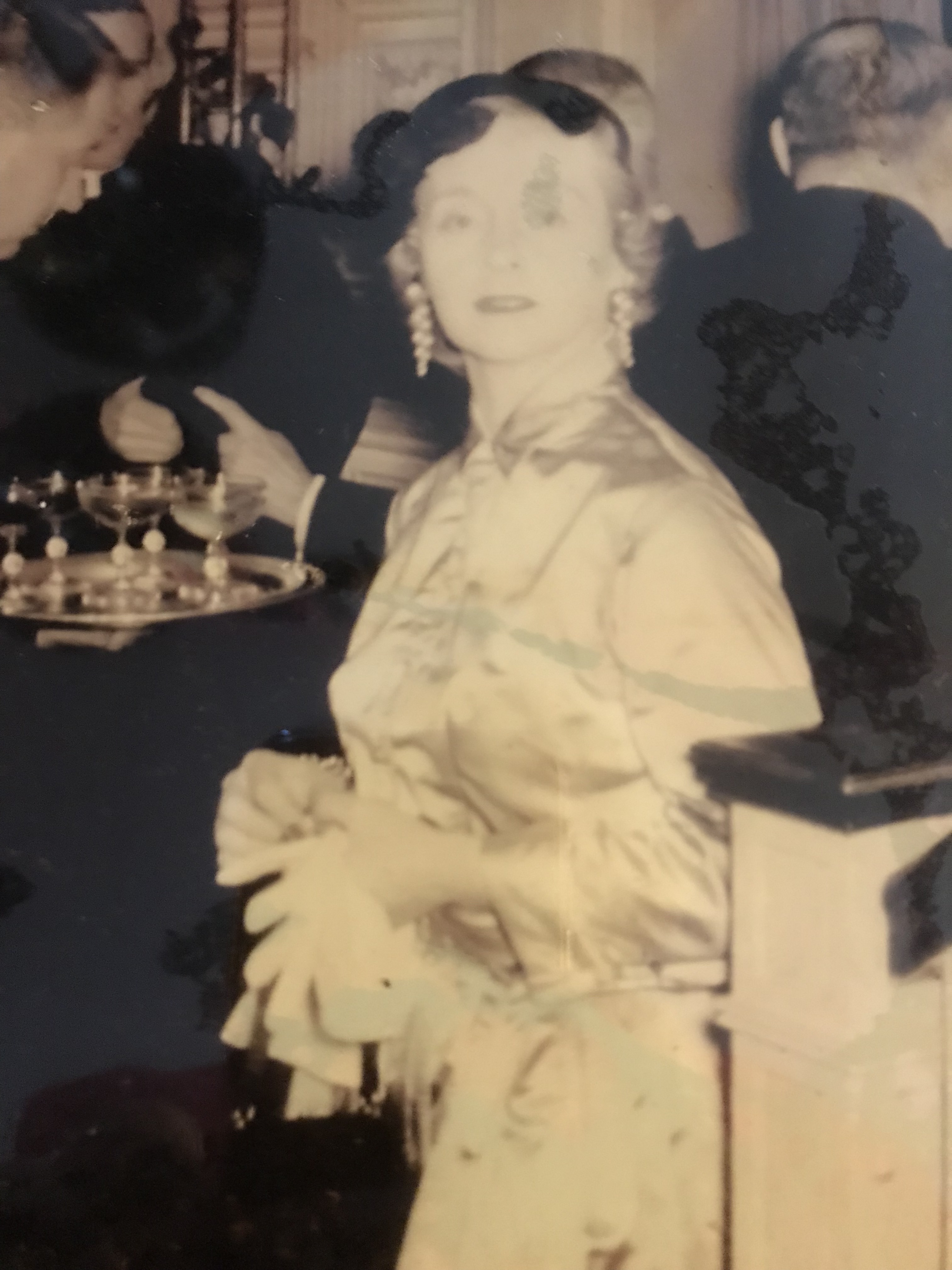
I accept Kevin’s compliment with gratitude, but I will never be as fly as my mother was.