
She came to me at nine years old with an incomplete backstory. No longer a viable breeder after age five or six, the owners kept her way past her financial contribution to the family. She’d delivered two litters a year, about 100 puppies. “We just liked her,” they told me. My inquiry, “I’m an old lady dog-lover, looking for an old-lady dog companion,” hit just the right tone. “You’re an answer to our prayers.” And so I got Elsa.
The day after the attempted assassination of the former president, I hungered for Sunday air. You know, the first day of the week kind of air, where everything starts over. Air that requires nothing. No lofty thoughts, no reflection, no opinions, judgments, or conclusions. Sunday air. I breathe Sunday air when singing a well-known hymn like “It is well with My Soul”.
When peace like a river, attendeth my way
When sorrows like sea billows roll
Whatever my lot
Thou hast taught me to say
It is well, it is well, with my soul
And when the preacher elevates my being with no effort on my part, I breathe in the Sunday air of love.
Sunday air was unattainable at church last week, though. It was not well with my soul. Right off, the preacher prayed “for former President Trump, grateful he did not succumb to political violence. This world is in love with violence, a violence that threatens the best in us, so renew in us a commitment to the Christ, who calls us to turn the other cheek, to love our neighbor, to love our enemies.” On receiving this, I sucked in a big chunk of we’re-gonna-lose and couldn’t seem to exhale.
The sermon choked off any puff of relief— a parable about prayer that meant nothing to me. My diaphragm would have swelled during hymn-singing, but the tunes were unfamiliar yawns.
And so, airless, I vamoosed to the outdoors, home to fetch Elsa for a trip to the park to watch tennis players sweat it out. She was too hot to sniff around the edges and lazed in the shade instead. Until a tennis ball bounced toward her behind the chain link fence. She bolted for it and dug into the wire to try to slay that green fuzzy rodent stunt double. She would have broken her teeth to get to it. A tennis player picked up the ball, a good ball, and tossed it over the fence with big Sunday air to Elsa, who received it with the gusto of a kid catching bubbles. She flaunted her prize using all the primal dog moves that delight dog-loving humans. I never knew she was a ball dog.
Echoing Bill Maher, Bulwark podcaster Tim Miller asked his spirit guide and Managing Editor, Sam Stein:
“Can I say Trump is the luckiest dog on the planet?”
“No! You can’t say that.”
“I can’t?” Asked Miler.
“No! It’s not lucky to be almost assassinated.” Said Stein.
But Elsa. She’s a lucky dog.






 evening garbage, that doubting God strengthens faith. And it did. Until I started doing my own version of God. I built a periodic table of spiritual elements with blocks of God-info such as heaven and hell don’t exist and Jesus’ Resurrection is simply a symbol of renewed life. Trouble is, I silently scorned those who didn’t believe as I did. When I first met my co-workers I held a colonizing view of their beliefs. Over time my religious formulas fell in the trash heap. As slave descendants, they daily transformed their passed-down spiritual trauma into “I believe.”
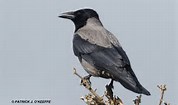 birdwatcher, but enough of a bird lover to know these elegant, regal beauties are not something I see in the trees in or around my home in Chicago.



 and untalented I-Love-Lucy sought love and approval through show business and schemed her way into hapless situations that led to trouble for the couple and their friends, Fred and Ethel Mertz. At the end of each half-hour black-and-white show, I-Love-Lucy was forgiven and everyone hugged. From the age of five through eleven I never missed an episode.
 preposterous schemes, gets himself in trouble and we create punch lines to make ourselves laugh. When TrumpCare passed the House of Representatives, he tweeted, “ObamaCare is dead,” and threw a victory party at the White House. It looked like he actually believed the nascent bill became law. Late-night comics played Schoolhouse
 most of their lives hanging upside down in trees. Their fur houses moths, beetles, cockroaches, fungi and algae. I recently heard about a service that will deliver a sloth to people who want to hug them. Eww. Do they know about the fur? God bless the sloth-huggers who embrace these imperfect funny creatures as I did with I-Love-Lucy.
