What’s Love Got To Do With It?

What’s Love Got To Do With It?

On February 15, 1976, I drove my red Toyota ten miles west from my Toms River, New Jersey, home to a small church meeting in Whiting.  I’d not had a drink for twenty-four hours. My head was pounding. I shook and shivered and sweated. I sat down but had one foot out the door.

Toms River shoulders the Atlantic Ocean. Most of life there happens near the ocean, its inlets, and brackish rivers. Whiting, known for the now-closed Nature’s Rest Nudist Colony, sits on unceded Leni Lenape land at the northern edge of New Jersey’s Pine Barrens. It’s a defunct railroad town surrounded by scrub pines, that dreary little tree that never grows more than eighteen feet because of the sandy soil. No one goes there.

I drove to Whiting to a meeting of Alcoholics Anonymous because I wanted to be anonymous and not run into anyone I knew. I had an overwhelming urge to announce out loud to strangers that I was going to kill myself with vodka.

An active adult community, Crestwood Village, had risen up near Whiting. The eight men and women at the AA meeting were over fifty years old, which was a turn-off for me at twenty-nine. But I was banging on the bottom and had nothing to lose. I thought I’d spill the beans there and bug out for the liquor store on my way home.

The group of eight centered the AA meeting around me and how I could stay sober. They figured out a schedule of who could follow me home that night and stay with me for the next few days. Each day, a different soul appeared on my doorstep to feed me, talk to me, answer the dreaded phone, and connect me to an AA group in my neighborhood. Their messages were the same: you’re sick, we were sick, too. Drink water. Eat chocolate. Go to AA. They trusted me with shocking truths about their lives before sobriety. 

They traveled well beyond their small community in the Pine Barrens and re-arranged their comfortable lives to help a suffering alcoholic. The obsession to relieve my misery with booze lifted after about seven days. Each of them called every day for a month.

I never drank again. After a few months, I sold my house, gave away the dog, left an estranged husband, packed up my son and houseplants, and drove to Chicago.

I was a dead soul before I met that group of kind and loving saints in New Jersey’s outback. Every minute of every day, I thought only of drinking and not drinking.

In the forty-eight years since, I’ve met many people who have asked for help. I share the same love that was offered to me that first week. In very few cases, people have stayed sober themselves. Most have disappeared, died, or gotten pissed off and moved on. 

Love saved me. That’s all I can wish for others.

Happy Valentine’s Day.

.
Killing the January Blues

Killing the January Blues

Early in my sobriety, a therapist told me to volunteer in order to get out of my depression. I almost went for her throat.

“That’s your advice? How can I help anyone when I can hardly get out of bed?”

In Alcoholics Anonymous, we’re told self-centeredness is a common trait that leads to drunkenness; it’s suggested that serving others will help keep us sober. 

“It’s a spiritual principle. Don’t overthink it. Just go help someone.” An AA meeting-goer told me when I was whining about the blues one January.

After years of campaigning by activists, members of Congress, and Coretta Scott King, President Ronald Reagan finally signed a bill creating a  federal holiday in honor of Dr. Martin Luther King, Jr. Observed on the third Monday of January, dear Martin was first celebrated in 1986.

“You don’t have to have a college degree to serve. You don’t have to make your subject and verb agree to serve. You only need a heart full of grace. A soul generated by love.” MLK told us.

Grace is an indulgent gift from the cosmos. A heart full of love sounds too godly for my rebellious nature. For some, it comes naturally. Not for me. I meet many people I don’t want to love or serve. I balk. This is why I must be told to commit to love, commit to serve.  Every day, I’m reminded of the promised rewards: freedom from melancholy and self-pity. The promise is appealing—and attainable.

During the month of January, organizations, politicians, GenXers, and citizen elders all celebrate MLK through service to others. Rush University Medical Center in Chicago offers a few easy opportunities.

  • Celebrate at a hybrid event: “A Lesson from Dr. King: Health Equity is  Everyone’s Business,” on Wednesday, January 17, from 1:00 -2:00 pm. Experts share how to work towards ensuring everyone has access to their highest level of health. Click  here if you’d like more information.
  • Volunteer in person in Chicago distributing 300 meals on Friday, January 19, from 10:30 am to 12:30 pm. Multiple volunteer roles are available (preparers, packers, and drivers). Want to help? Click here for more info.
  • Mentor with the Community Health Mentor Program. Teach first-year graduate students about living with chronic conditions (high blood pressure, diabetes, alcoholism), as well as guide them in becoming patient-centered practitioners. All Community Health Mentor meetings will be on Zoom. Mentors receive up to sixty dollars in gift cards for participating in the training and all three meetings. The meeting dates are Wednesdays, January 24, February 14, and March 20, between 1 pm -6 pm for 60-90 minutes. Click here for more info or email Hannah Weitzman, Program Coordinator, at hannah_weitzman@rush.edu.

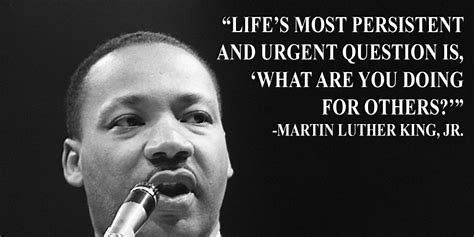
Dispelling my preoccupation with self is a lifelong endeavor. It’s comforting that MLK recognized this is true for many, which is why he gave us all the big quote:

“Life’s most persistent and urgent question is, ‘What are you doing for others?”

Here’s to honoring the legacy. Happy New Year.

The Reunion by Regan Burke

In the locked ward of the Marlboro Psychiatric Hospital in Monmouth County, New Jersey, I was withdrawing from my demons – cheap wine, LSD, amphetamines and marijuana – when my long-absent father appeared before me. I was 24 years old. The last time I’d seen him, the week before I was to enter Monmouth College, I’d knocked on the door of his mid-town Manhattan apartment seeking money to pay my first year’s tuition. He was drunk, wrapped tight in a dirty blue bathrobe. He wrote me a check, then stopped payment before I could get to the Admissions Office in Long Branch, an hour down the Garden State Parkway.

Fresh out of a straight-jacket, I had no clothes or shoes of my own, having arrived at the public madhouse in an ambulance after a drug overdose. I wore a short-sleeved baggy muslin dress from the institutional collection designed and made by the permanent residents.

“You have a visitor,” the nurse said before escorting me from my cell-like room to the end of the hallway into a clean and airy space she called the Day Room. There were windows along the wall opposite the door, starting maybe six feet up from the floor and reaching the ceiling. For the first time I realized my confinement was subterranean.

My father turned toward me. His brown felt fedora, soft brimmed with a hand-creased crown, topped his elegant duds: white open-necked shirt, tweed sports jacket, gabardine trousers and cordovan wing-tips. A miasma of feelings engulfed me. I feared him. I missed him. I loved him. I hated him.

Why didn’t she say it was my father? I had no idea how to talk to him, or anyone else for that matter. My body shook and rattled as I searched for some kind of appropriate words. I knew only hippy language.

“Hey, man. Far out. You’re here. I’m a little strung out.”

He told me his story of recovery from alcoholism. He loved the effect from his first teenage beer. After that, once he picked up the first drink he binged until he was forced to stop. He had been in and out of jail for getting in fights, drunken driving and cashing bad checks. He couldn’t hold a job. In the end, he holed up in the New York apartment drinking quarts of scotch round the clock until an old friend knocked on his door.

“Had enough, Burke?”

After years of trying on his own, these bewitching words got him to open the door and allow a few men from Alcoholics Anonymous to enter his life. The obsession to drink lifted. “A miracle,” he called it.

He told me about an AA meeting at the hospital. He didn’t suggest I go, didn’t offer to take me, didn’t tell whoever was charged with moving me around my current existence. He just laid the words down. And then he left. He never removed his hat.

About 25 years into my own recovery — admitting defeat, examining resentments, practicing forgiveness, making amends and consciously increasing a spiritual life — that reunion with my father came back to me. I now know supernatural love and courage drove him to bestow his abundant legacy, the gift of sobriety.