Love and Hate

Love and Hate

A member of my writing group recited the following essay the other day. I asked permission to post it here because I was moved by how two different Chicagoans address the current influx of migrants.

Conversation on the Bus

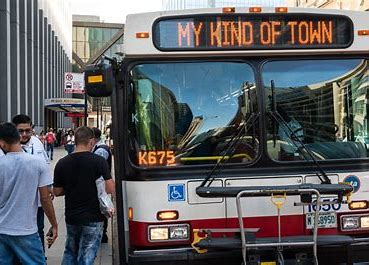
Last week I rode the bus and noticed a migrant family near me.  The mom was pregnant, her youngest son was fussing, and her other son, maybe three years old,  was playing with the window. The father was looking out the window, and the daughter, about ten years old, was sitting next to me. I don’t usually start a conversation on the bus, but she was asking her parents about a bus and their destination. So I said, “Hi, I’m Annette, do you speak English?”  
“A little,” she said. 

“Where are you going? Could I be of help?”

She looked down and said, “I’m not sure.”  

We were quiet, and then I said, “I’m going to my church to a class. Do you go to school?”

She shook her head and said, “We’re new to Chicago.” 

“Oh, welcome. Where are you from?”

“We are from Venezuela.”  

“I hear your country is beautiful. Nice and warm.” 

“Yes, but I miss my grandmother.” 

“Of course,” I said.  “Your English is quite good.”

“Thank you,” she said. “My dad helps me.” I smiled at him. He smiled back. 

Looking at him, I added, “My church supplies clothing and food to immigrants. It opens at nine on Tuesdays and Wednesdays. I’m going there now. “

 As we neared my stop I said, “I wish you the very best. I’m getting off at this stop.”

I bundled up and walked along thinking these were gentle people who needed help and hadn’t done anything wrong.  I wish everyone had a better understanding of their plight. 

People’s problems need a “face” because the mindset changes once you become engaged in conversation with them. I believe most people would want to help, but the housing issue is so severe. I don’t know how to begin to solve the not-in-my-neighborhood problem.

I went to morning prayers and mentioned this encounter to the group and one of them said. “We need to help our homeless first; after all, they are Americans.”

I bit my tongue and simply asked the group to pray for the migrant situation.

Afterward, I talked with my friend Carol. She said, “It’s a complex problem. We desperately need more workers and they’re hard workers.”

“This is a classic social work problem,” I said. “The people on the lowest rung of Maslov’s triangle are fighting for limited resources, and the “scarcity” principle is at work.

The United States has great abundance.  Congress has done nothing about immigration for twenty-five years. The situation in South America, with no democracy and lawlessness, makes this a five times bigger problem than it was. People want to escape.  I certainly would leave my country if my life and my family’s lives were in danger.

A. Baco 1/18/2024
 

Killing the January Blues

Killing the January Blues

Early in my sobriety, a therapist told me to volunteer in order to get out of my depression. I almost went for her throat.

“That’s your advice? How can I help anyone when I can hardly get out of bed?”

In Alcoholics Anonymous, we’re told self-centeredness is a common trait that leads to drunkenness; it’s suggested that serving others will help keep us sober. 

“It’s a spiritual principle. Don’t overthink it. Just go help someone.” An AA meeting-goer told me when I was whining about the blues one January.

After years of campaigning by activists, members of Congress, and Coretta Scott King, President Ronald Reagan finally signed a bill creating a  federal holiday in honor of Dr. Martin Luther King, Jr. Observed on the third Monday of January, dear Martin was first celebrated in 1986.

“You don’t have to have a college degree to serve. You don’t have to make your subject and verb agree to serve. You only need a heart full of grace. A soul generated by love.” MLK told us.

Grace is an indulgent gift from the cosmos. A heart full of love sounds too godly for my rebellious nature. For some, it comes naturally. Not for me. I meet many people I don’t want to love or serve. I balk. This is why I must be told to commit to love, commit to serve.  Every day, I’m reminded of the promised rewards: freedom from melancholy and self-pity. The promise is appealing—and attainable.

During the month of January, organizations, politicians, GenXers, and citizen elders all celebrate MLK through service to others. Rush University Medical Center in Chicago offers a few easy opportunities.

  • Celebrate at a hybrid event: “A Lesson from Dr. King: Health Equity is  Everyone’s Business,” on Wednesday, January 17, from 1:00 -2:00 pm. Experts share how to work towards ensuring everyone has access to their highest level of health. Click  here if you’d like more information.
  • Volunteer in person in Chicago distributing 300 meals on Friday, January 19, from 10:30 am to 12:30 pm. Multiple volunteer roles are available (preparers, packers, and drivers). Want to help? Click here for more info.
  •  Mentor with the Community Health Mentor Program. Teach first-year graduate students about living with chronic conditions (high blood pressure, diabetes, alcoholism), as well as guide them in becoming patient-centered practitioners. All Community Health Mentor meetings will be on Zoom. Mentors receive up to sixty dollars in gift cards for participating in the training and all three meetings. The meeting dates are Wednesdays, January 24, February 14, and March 20, between 1 pm -6 pm for 60-90 minutes. Click here for more info or email Hannah Weitzman, Program Coordinator, at hannah_weitzman@rush.edu.

Dispelling my preoccupation with self is a lifelong endeavor. It’s comforting that MLK recognized this is true for many, which is why he gave us all the big quote:

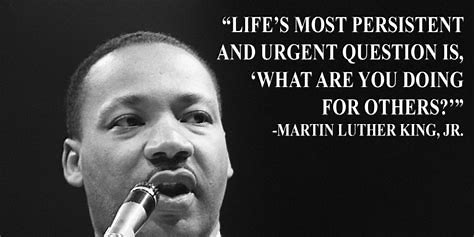
“Life’s most persistent and urgent question is, ‘What are you doing for others?”

Here’s to honoring the legacy. Happy New Year.