Texas Goodness

Texas Goodness

Something fluttered around me, as if I’d stepped into a web of butterflies. But I hadn’t. Butterflies were off in the distance. On the Nature Boardwalk surrounding the marshy South Pond in Lincoln Park I was soaking in the August-blooming bubblegum-colored big-flowered swamp mallows. And there on a daisy branch sat a goldfinch. And another, on a farther branch. Hidden in the yellow coneflowers were a few more, pecking at seeds. Goldfinches had entered my airspace as they headed for the wild prairie flowers at the swamp’s edge. Goodness nurturing goodness.  

My held-breath whispered, “You know, Regan, God did not have to give us the goldfinch.” At that moment, as others before it, I believed in God. The previous morning, fearing all goodness had vanished from the earth, I assumed God, like the butterflies, had flittered off in the distance, out of sight, out of the picture.

I lost my faith in goodness for the umpteenth time the day President Trump told Texas Governor Greg Abbott to redistrict Texas in order to gain five more gerrymandered Republican Congressional seats. Americans, who vote with their pockets, are realizing everything they buy to survive in this world since Trump became President has skyrocketed. Because of that, commentators suggest Trump is afraid we’ll all vote against his MAGA party in the 2026 mid-term elections yielding more Democrats in Congress. Cynics say Trump needs more Republicans in Congress in case he declares an “election emergency” and tells Congress to appoint him for another term. 

No one need explain redistricting to me. In the 1980s I worked in the Illinois legislature where computerized gerrymandering was invented in the basement. Drawing legislative lines to benefit Democratic incumbents was de riguer, not just acceptable, but expected. No one uttered the word gerrymander then. Today, Illinoisans are surprised to hear Republicans scoffing that their state takes the cake on gerrymandering. The secret is out.

Republican Governor Abbott yielded to Trump’s demand. He introduced a newly drawn map with the five added Republican Congressional seats to the Texas legislature. The Democratic Texas lawmakers promptly left the state. The Texas legislature needs those Democrats in the Austin capital to make up the necessary quorum to vote on that map. 

And those Texas Freedom Fighters, as they’re described at Jesse Jackson’s Rainbow PUSH Coalition, are housed in a high-security hotel outside of Chicago. They’ve had bomb scares and death threats. They cannot move around without security. I can’t think of a lower hell than being far from home stowed away in an exurb hotel with no end in sight.

One of the exiled Texans, James Talarico from Austin, attends a Christian seminary to ground himself in the fight against White Christian Nationalism that’s roiling the Texas legislature. A nurturing goodness, he speaks of hope and love and responsibility to the United States.

These Texans, these democracy heroes, are saving us from the worst of gut-wrenching trumpism. When the day comes to proclaim their victory, let’s stroll around the Nature Boardwalk among the goldfinches, daisies and butterflies, nurturing goodness. 

Maybe then God will come back into the picture.
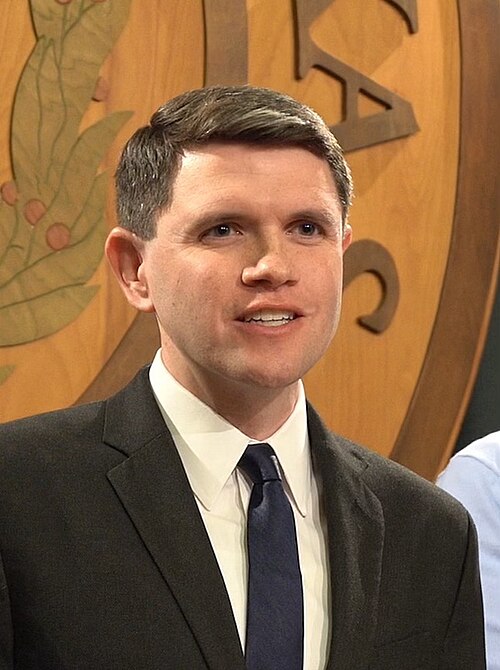
More about James Talarico

Contribute to the Texas Democrats

MLK: “…only when it is dark enough can you see the stars.”

MLK: “…only when it is dark enough can you see the stars.”

On a podcast about grief, artist Laurie Anderson revealed to Anderson Cooper that she felt sad without being sad when her husband, rocker Lou Reed died in 2013. She came to this awareness at a class on the Tibetan Book of the Dead. The teacher, Bob Thurman, said there is no dead. Dead doesn’t exist. He was referring, in part, to post mortem existence.

Different concepts of the afterlife exist in most religions and philosophies. For atheists who believe nothing happens after death, Thurman, a Tibetan Buddhist, teaches there is no nothing. Dead is not nothing.

I’m about as sure of what happens when the body breathes its last as I am of next week’s weather. Oh, I tacitly agree with those who suggest I’ll see my dead dogs again, the same way I concur it’s going to snow tomorrow. Maybe. Maybe not. Surely, dead is not nothing?

On November 22,1963, my mother called from New Jersey to the Catholic boarding school where I was sent to “shape up” in Williamsburg, Virginia. I picked up the black handle dangling from its stretched out cord in the one allowable phone booth for us wayward boarders.

“Kennedy’s been shot.” She said.

I replied, “I know. He’s dead. It’s on the radio.”

There’s a reason my mother called me. She knew, even at seventeen years old that I’d be upset, more like hysterical. Politics had grabbed me as a pre-teenager watching the Vietnam war on TV. By the time Martin Luther King Jr. was assassinated, I, a twenty-two year old hippie, had been to two marches on Washington and written hundreds of letters to Congress and President Johnson. I was in support of the Civil Rights bill, the Voting Rights bill, banning the bomb and against the Vietnam war. Anytime the morning news stirred an injustice I had to fix, I reached for my stash of pre-stamped postcards to fire off messages to Congress. I harangued my friends—at work, in bars, on the beach, at parties—to think and talk like me. They didn’t. I kept going.

MLK’s admonition, “Our lives begin to end the day we become silent about things that matter,” initially whipped me into a frenzy of activism—more letters, more phone calls, more marches, more recruiting. Then in his “Drum Major Instinct,” speech in 1968 he preached to act as a servant, not a savior. It is noble to help just one person, change one person’s viewpoint, get one person to vote. Gradually, I adhered to King’s spirit and put into practice a daily mindfulness mantra:  the worries of the world don’t own me, I don’t own the worries of the world. 

DNA has proven dead is not dead. DNA, our physical manifestation of life itself, apparently lives forever. Anyone who has had a DNA test questions their reported trace variants of first peoples like Neanderthal listed in their results, as if our DNA was there at the beginning, or, before? Some religions teach physical immortality, that our dead bodies will rise (or have risen) to live in Paradise. It begs the question: wherever our raised bodies take up residence, will they have our same DNA?

Martin Luther King’s DNA lives in the generative marrow of his words. I always feel sad, without being sad on this day, his birthday, like Laurie Anderson grieving over Lou Reed. His death forever transitions into the endorphins between my dreams and awareness. He lives in that zero-gravity mirage of my inner life that says:  serve, get out there, be brave, do it, say it.

Yep. Dead is not nothing.


Listen: Laurie Anderson & Anderson Cooper

(updated from 2023 MLK day)

Cold Inaugurations

As an eighth grader I entered segregated St. Mary’s of the Assumption for two months at the end of the school year. My family had come apart in the Chicago suburbs and one of my sisters and I were sent to live with relatives in Upper Marlboro, Maryland. Whites and Blacks mingled at St.Mary’s only on the playground where I pitched in the integrated baseball games.  

On our first Sunday at St. Mary’s Church, my sister and I headed for the back pews. A white man ushered us out of our seats toward the front. Only Blacks sat in the back. The Sunday my mother visited from her temporary home in New Jersey, she pushed the usher aside and sat us all in the back. Her hangovers would not allow suffering through the entire hour of the Mass. She needed a quick exit after the obligatory Eucharist and delighted in integrating the back pew. 

One day St. Mary’s eighth grade class was bussed down the way to Andrews Air Force Base to greet President Dwight D. Eisenhower. Blacks in the back of the bus. Whites in the front. Having so little experience with segregation, I was sure it was wrong but had no idea how to take a stand. I wished my mother had come along to integrate the bus. We waved little American flags at President Eisenhower as he deplaned Air Force One, Blacks lined up on one side, whites on the other. It was 1959.  

Sixteen years later in a sleepy Jersey Shore borough, I read about Jimmy Carter’s campaign for president in Time Magazine. What caught my attention was Carter, as governor, in a surprise to fellow Georgians had denounced racism and segregation. I sent a note to Jimmy Carter, applauded his positions on race and volunteered on his campaign. He sent me a hand written thank you note. 

When we received an invitation to Carter’s Inauguration, there was no question that my then-husband and nine-year old son would head to Washington DC for the January 1977 swearing-in. Sitting high up on bleachers on the shady side of the Capitol, it was as cold as any day I can remember. Twenty-eight degrees with a wind chill to equal fourteen.  


My grandchildren, C.J. and Kirby, were 10 and 12, when we flew from Chicago to brave twenty degrees with 1.8 million others for Barack Obama’s 2009 inauguration. We stood for hours on the frozen ground by the Native American Museum on the Mall. Every once in a while I’d ask my shivering grandchildren if they wanted to go inside. No they didn’t! The clutch of strangers that formed in our section treated us like family—retrieving packs of hand warmers from a far-away tent for the inside of our mittens and boots.

It was sunny. Cold. And glorious.

Obama quoted Founding Father Thomas Paine in his in Inaugural address. 

”Let it be told to the future world … that in the depth of winter,  when nothing but hope and virtue could survive … that the city and the country, alarmed at one common danger, came forth to meet.”


The DOGE and Aging

The DOGE and Aging

Adlai Stevenson III (1930 – 2021) entered the 1982 race for Illinois governor just as I had become unemployed. My only memory of that forsaken job, like all the others, is my shameful obsequiousness to the forgettable male boss. 
 
A journalist friend, Paul Galloway (1934-2009) interceded on my behalf to the Stevenson campaign for a volunteer position. Yes, that was necessary. And still. The sublime expression, “We don’t want nobody nobody sent,” originated in a Chicago ward campaign office. Campaigns still scrutinize volunteers with more than an eye roll. Because of my juice through the local newspaper, people were cautious about what was said around me.

I floundered around the office of Adlai Stevenson’s wife, Nancy, who was usually out campaigning. One day, I had the great fortune to be tagged to drive her to Oak Park for an event. That fluke set off a campaign-long assignment as Nancy’s driver.

Nancy and I regularly stepped into community rooms where older adults were having lunch through the federal Meals on Wheels program. Older women would clasp Nancy’s wrist, pull her ear close to their lips and whisper messages for her to take back to her husband. The Meals on Wheels crowd assumed Adlai III was his father, Adlai II, the governor when most of them were young. Nancy, who had a gentle and keen understanding of aging, let most of them hold this holy untruth. She displayed genuine kindness in her friendly interactions with old people who were in obvious cognitive decline. This helped me admit my own subconscious bias toward the aging. My ageism has changed overtime, especially now that I’m old and experience age discrimination against myself and my friends.

Meals on Wheels is funded through the Older Americans Act Nutrition Program which was permanently authorized by Congress in 1972. The purpose is three-fold: 1) reduce hunger, food insecurity, and malnutrition; 2) promote socialization; 3) promote health and well-being by preventing health-related diseases. The Program is available to adults age 60 years and older. Priority is given to low-income individuals, racial or ethnic minorities, rural communities, those with limited English proficiency, and/or those at risk of institutionalization.

One of our campaign stops was a community space in the neighborhood of Hegewich. It is located on the far south side of Chicago, known as the perfect workingman’s neighborhood. When Chicago’s steel mills shut down in the 1980s, the Polish immigrants who’d settled in Hegewich lost their jobs. They also lost their pensions. People survived on government subsistence and odd jobs.

As Nancy began her round of shaking hands, bobbing up and down to lean over to hear the messages of the elderly, she announced, “You know, my husband, Ad, voted for Meals-on-Wheels when he was a senator in Washington.”

Before she could get out another word, a large woman in the corner who looked like a George Booth cartoon yelled: 

“Yeah? Well, he oughta be here now for the corned beef! ‘Cause it stinks!”

“Well, I’ll be sure to tell Adlai!” Nancy shouted back.

Funding runs out on December 31, 2024 for the Older Americans Act and the Meals on Wheels Program. If Congress doesn’t vote to reauthorize the Act, the Nutrition Program will be at the mercy of Elon Musk and Vivek Ramaswamy’s Department of Government Efficiency (DOGE). And they have vowed to eliminate all programs that have not been reauthorized by Congress.

My guess is neither of them have come to terms with ageism.

Arnold the Bulldog: Politics at the Doorstep

Arnold the Bulldog: Politics at the Doorstep

In Kenosha, at the door of a new white house in a new white neighborhood with curvy streets, low trees and developer-landscaped gardens, I knocked on the storm door, bang, ba-bang, bang. A huge white old English bulldog slid around  the corner from the kitchen to me, the stranger, barking as hard as his docile voice would allow. His owner appeared looking as if she could barely hold him back. 

I shouted through the door, “I love dogs! It’s ok. Can I pet him?”  We all smiled, dog included, and he came out to greet me with a gentle push of his massive short body against my legs.

“Hi, I’m with the Kenosha Democrats. Have you voted yet?”

“No, we’re voting tomorrow.”

“What’s his name?” 

“Arnold.”

“Arnold? Like Schwarzenegger?”

“Yes.” We both cracked up as Arnold dutifully looked one to the other, pleased to hear his name.

“You know, Schwarzenegger just endorsed Kamala Harris.”

Thus, I established my purpose in knocking on her door on a bright white Saturday afternoon.

“I know!” she said. Then she mouthed the words, “I’m voting for her.”

“Oh great,” I said, “”Thank you.”

Canvassers use a handy cell phone app, Minivan, to record voters’ responses. The drop down menu lists Strong Democrat, Lean Democrat, Undecided, Lean Republican and Strong Republican. Since my voter didn’t give it her all, I decided she was a Lean Democrat, punched it in and moved on to the house across the street.

As I came back to the sidewalk,  all of a sudden a white SUV sped out of Arnold’s driveway and stopped in front of me. She rolled down the window and shouted, “I’m for Kamala! Going to vote right now! Good luck!”

I thought back to her open door and realized someone else had been rattling around in the kitchen. A husband? She couldn’t let her husband know she was voting for Kamala Harris?

This gave me hope. I changed her in Minivan to Strong Democrat. Voting Harris.

Perhaps she represented a political ad where Julia Roberts voiced, “in the one place in America where women still have a right to choose, you can vote any way you want, and no one will ever know,” suggesting women can lie to their husbands about their vote. Apparently Fox News went berserk over this ad, as if spouses never lie to each other. 

Today, the day before election day, it hit me how different life will soon be. No matter who wins,  I’ll have no more reason to hope — for the vote, for my candidates, that the country will be at peace, or that democracy survives. It-is-what-it-is acceptance will necessarily move in to care for me.

Saturday afternoon trips from Chicago to Kenosha, stopping in the bustling Democratic headquarters then out to canvass voters will halt. My calves will never forget the two-step entrances to every house in Kenosha County. But memories of coffee and sandwiches at The Buzz Cafe on Sixth Avenue will fade.

The Buzz Cafe Kenosha Wisconsin


I do have something to hope for.

Incoming texts and emails will be reduced to a trickle. 

Schadenfreude Radio

Schadenfreude Radio

The radio. How I love the radio!

Transistor radios first appeared on the shelf behind the cashier at Walgreen’s, alongside the cigarettes, in the 1950s. The purchase price was cheap enough for my mother. I can’t imagine what my life would have been had it not been for the radio. 

In our teens, we lay on the floor, smoking pot and singing to the Beatles on the radio. A friend once mused, “our lives would be more manageable if it weren’t for the radio.” Every half hour DJs stopped spinning records and announced the news. Radio news. It stirred me up for life.

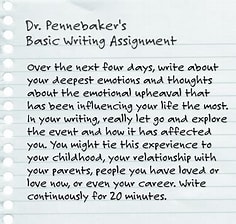
The radio these days is an Amazon Echo. It is set to turn on NPR at 7:00 am in my house these days. On Sundays, I usually ignore a 7:00 am show called Hidden Brain. A neuroscientist interviews interesting enough people, but I just want to hear the news at 8. Recently I put off walking the dog and making coffee when I heard the voice of Dr. James Pennebaker on Hidden Brain. He talked about how people’s language, written and vocal, signals what’s happening inside their heads.

James Pennebaker is a social psychologist at the University of Texas-Austin. He taught me that chronic pain can be healed through expressive writing. His recipe, grounded in scientific research, consists of writing it down. Just write it down. It’s cheap, easy. And it works. My writing teacher Beth Finke and I used to call it bibliotherapy. Pennebaker’s books are sweet old friends. The same goes for Jon Kabat-Zinn’s Full Catastrophe Living, John Sarno’s Healing Back Pain, and Howard Schubiner’s Unlearn Your Pain. Thinking of these now butters my memory with gratitude. I write because these authors taught me words can heal. And, for the most part, they have.

I’m not particularly interested in interpreting the language of my friends. I don’t want to know what’s happening in their noggins as Pennebaker does with his research subjects. No, what’s tasty lately about Pennebaker is what he says about Donald Trump.

He examined Trump interviews from 2015 to 2024 and found a whopping 44% increase in words plated in the past. What’s that mean? Well, usually presidential candidates dish out rhetoric about the future. Pennebaker says Trump whips up such simple words and sentences that he can only be described as “an incredibly simplistic thinker.” 

“I can’t tell you how staggering this is,” he told Stat News. “He does not think in a complex way at all.”

I loved hearing this. And there I was again, glomming on to any tidbit that humiliates and demeans Trump. It’s called schadenfreude. I love that word but ashamed how I delight in its meaning: the experience of pleasure, joy, or self-satisfaction that comes from learning of or witnessing the troubles, failures, pain, suffering, or humiliation of another.” 

Schadenfreude is one of the delicious habits I metabolized, after using Pennebaker’s and others’ writing exercises to relieve chronic pain. Obviously this is not a vice easily kept at bay. Availing myself of some form of spirituality, like meditation, helps. And the writing, of course. 

But for now, it’s back to the radio.

Me & Pete Buttigieg

Me & Pete Buttigieg

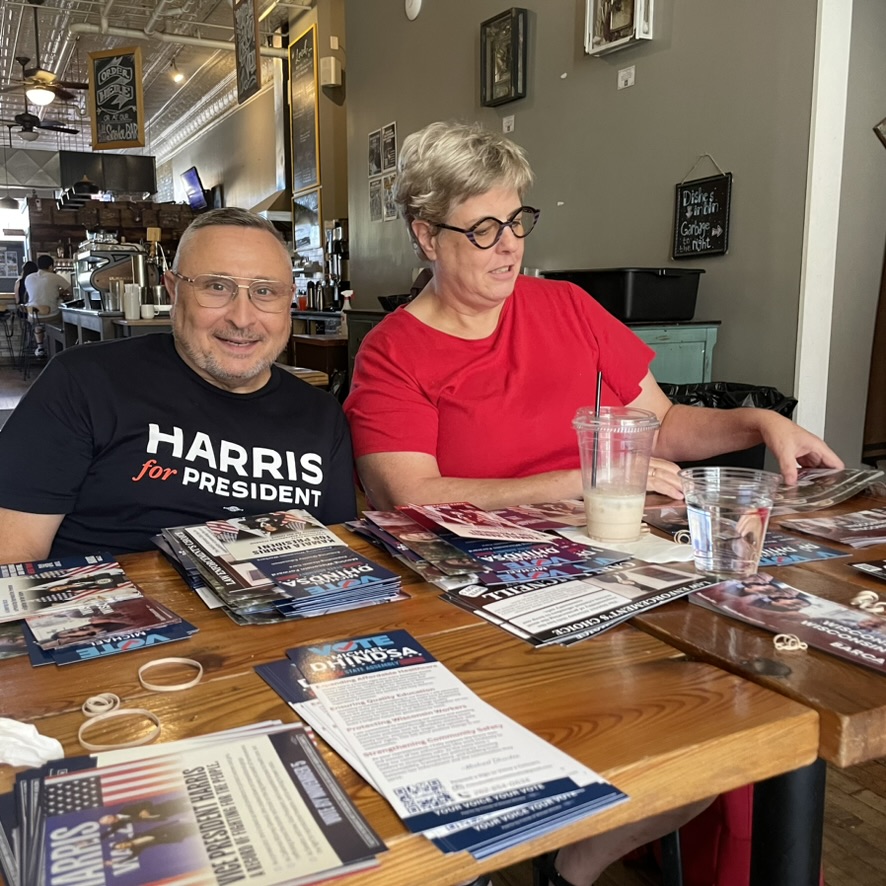
Never have I felt so valued at church as I did last Sunday. Presbyterians I hardly knew tugged at my sleeve or grabbed my elbow or those less buttoned-up screeched in my face — all congratulating me on getting to meet Pete Buttigieg. I’d posted a photo of Pete and me on FaceBook that week. A well-heeled Democratic couple in Chicago’s Lakeview neighborhood scrambled a party together that raised $700,000 for the Presidential campaign of candidate Kamala Harris six days after she chose Governor Tim Walz as her Vice Presidential running mate. A friend bought two tickets he couldn’t use and asked if I’d like to have them.

Gulp. Yes. Yes. Yes. I said. Pete Buttigieg is the most poplar Democrat in the United States. He’s the youngest person ever to serve as US Secretary of Transportation, was the mayor of South Bend, ran for president in 2020, is married with two children and oh, he’s gay. When he kicked off his campaign for President in 2019, I traveled to South Bend with Amy, Peter and Mark in the pouring rain to be at his announcement in the leaky old Studebaker factory. Pete was on Kamala’s short list for Veep, but, well, he’s gay. The US electorate can stretch its collective imagination to accept only one major cultural shift at a time. I guess. Democrats like me are giddy over the historic candidacy of Vice President Kamala Harris, a black woman, running at the top of the ticket. We would have been rapturous if she’d chosen Pete, but honestly, we’re not far from that in her choice of Tim Walz, a funny smart former high school football coach who loves state fairs, teaching, sitting on Congressional committees, governing Minnesota, serving in the National Guard and traveling to China.

I just love campaigns. I love candidates, campaign organizers, campaign volunteers, campaign consultants, campaign buttons, campaign events and campaign offices. My high school held a student-led Democrat-Republican combined mock convention in 1964. I was assigned to be Republican candidate Nelson Rockefeller’s campaign manager. I wrote to Rockefeller’s campaign office in New York requesting his platform in order to write my nominating speech for the mock convention. The campaign responded by sending me free stuff: crates full of campaign buttons, posters, leaflets, scarves, ties, cufflinks, bracelets, position papers, and even a suggested stump speech. I plastered the school with Rockefeller posters and made sure every student had some sort of paraphernalia with “Nelson” on it. The students chanted “Nelson! Nelson!”, I delivered my nominating speech and Rockefeller won the student endorsement by a wide margin. 

I had already been steeped in soda-shop debates rebutting a freshman classmate’s anti-government racist diatribes. I read the boy’s constant companion, the 1958 publication The Blue Book of the John Birch Society ( a precursor to Trumpism and Project 2025) in order to prove him wrong point by point.

In the eighth grade my class was bussed to the airport and given hand-held American flags to wave and cheer as President Dwight Eisenhower deplaned from Air Force One. 

Sixty-five years later, I’m still at it.

Falsely Accused

Falsely Accused

Fresh off a Zoom webinar titled Midwest Reparations, I rushed to my local coffee shop for a takeaway to sip during my upcoming current events group.

“12-ounce coffee in a 16-ounce cup?” The White barista asked. That’s my usual, with room for cream.

“Yes, please. What are all these new pastries? Chocolate cake? Key lime pie?”

“Yep, they’re new. All from different bakeries” said the barista.

“I’ll be back later with friends. They. Will. Love. These.” I said.

The Blackroots Alliance webinar that morning enlightened me on reparations projects in the Midwest. These are nascent activities reviving the 159-year-old “40 Acres and a Mule” policy for emancipated slaves that was promised and then revoked during Reconstruction. The initial focus of current reparations projects is research to uncover the descendants of enslaved people and how they’ve been impacted. Non-Black allies join at the end of the process when it’s time to distribute funds. Research is conducted by the harmed community, Black Americans, particularly African descendants, who look through the eyes of the tortured generations of chattel slavery. Non-Black Americans cannot be trusted to do this research since they see through a different lens: the eyes of the colonizers, the enslavers, the guardians of the dominant culture.

With this new information,  I was wondering how I, an old White woman, could fit into the reparations movement as I filled my coffee with half and half and rushed over to my current events group.

The group discussed the news of familiar territory: TFG, the former guy, and his latest legal shenanigans, immigration, climate change, gun control, and the ever-evolving White Christian Nationalism. Afterward, a small group sauntered over to the coffee shop where I’d spotted the new pastries. Six of us pulled up around a small table, coats draped over our chairs, rising one by one to fetch our drinks. 

I was the last one to the counter.

“I’m sorry, we can’t serve you.” said the barista.

“What?”

“We can’t serve you. The manager wants to talk to you.”  I joined my friends and announced what happened. The manager appeared and asked to speak to me privately.

“We can’t serve you because there’s been a report of you using a racial slur this morning.”

“What? What racial slur?

“The “N” word.”

“Well, there’s a mistake. I’ve never used that word in my life.’

“You understand we have to investigate when something like this is reported?”

“Wait. Are you accusing me of this?

“We have to investigate. Meanwhile, we cannot serve you.”

“For how long?”

“For the unforeseeable future.”

“You’re kidding. Look at me. I really don’t have an unforeseeable future.”

My friends were incredulous. ‘You? Boy, have they got the wrong person.’ They were ready to mount a protest in front of the building, signs and all.

In the following days, I connected with the company’s Chief Operating Officer. She apologized and emailed me a store voucher for $150. That’s a lot of coffee.

The coffee reparations, however, failed to dispel the lingering notion that I’m not a credible witness to my own story, that I’m not sufficiently worthy to be believed. How can we expect descendants of enslaved Africans to automatically manifest self-worth after enduring generations of false accusations, lynchings, and pressed-down powerlessness? 

We owe them a lot.

Love and Hate

Love and Hate

A member of my writing group recited the following essay the other day. I asked permission to post it here because I was moved by how two different Chicagoans address the current influx of migrants.

Conversation on the Bus

Last week I rode the bus and noticed a migrant family near me.  The mom was pregnant, her youngest son was fussing, and her other son, maybe three years old,  was playing with the window. The father was looking out the window, and the daughter, about ten years old, was sitting next to me. I don’t usually start a conversation on the bus, but she was asking her parents about a bus and their destination. So I said, “Hi, I’m Annette, do you speak English?”  

“A little,” she said. 

“Where are you going? Could I be of help?”

She looked down and said, “I’m not sure.”  

We were quiet, and then I said, “I’m going to my church to a class. Do you go to school?”

She shook her head and said, “We’re new to Chicago.” 

“Oh, welcome. Where are you from?”

“We are from Venezuela.”  

“I hear your country is beautiful. Nice and warm.” 

“Yes, but I miss my grandmother.” 

“Of course,” I said.  “Your English is quite good.”

“Thank you,” she said. “My dad helps me.” I smiled at him. He smiled back. 

Looking at him, I added, “My church supplies clothing and food to immigrants. It opens at nine on Tuesdays and Wednesdays. I’m going there now. “

 As we neared my stop I said, “I wish you the very best. I’m getting off at this stop.”

I bundled up and walked along thinking these were gentle people who needed help and hadn’t done anything wrong.  I wish everyone had a better understanding of their plight. 

People’s problems need a “face” because the mindset changes once you become engaged in conversation with them. I believe most people would want to help, but the housing issue is so severe. I don’t know how to begin to solve the not-in-my-neighborhood problem.

I went to morning prayers and mentioned this encounter to the group and one of them said. “We need to help our homeless first; after all, they are Americans.”

I bit my tongue and simply asked the group to pray for the migrant situation.

Afterward, I talked with my friend Carol. She said, “It’s a complex problem. We desperately need more workers and they’re hard workers.”

“This is a classic social work problem,” I said. “The people on the lowest rung of Maslov’s triangle are fighting for limited resources, and the “scarcity” principle is at work.

The United States has great abundance.  Congress has done nothing about immigration for twenty-five years. The situation in South America, with no democracy and lawlessness, makes this a five times bigger problem than it was. People want to escape.  I certainly would leave my country if my life and my family’s lives were in danger.

A. Baco 1/18/2024


Killing the January Blues

Killing the January Blues

Early in my sobriety, a therapist told me to volunteer in order to get out of my depression. I almost went for her throat.

“That’s your advice? How can I help anyone when I can hardly get out of bed?”

In Alcoholics Anonymous, we’re told self-centeredness is a common trait that leads to drunkenness; it’s suggested that serving others will help keep us sober. 

“It’s a spiritual principle. Don’t overthink it. Just go help someone.” An AA meeting-goer told me when I was whining about the blues one January.

After years of campaigning by activists, members of Congress, and Coretta Scott King, President Ronald Reagan finally signed a bill creating a  federal holiday in honor of Dr. Martin Luther King, Jr. Observed on the third Monday of January, dear Martin was first celebrated in 1986.

“You don’t have to have a college degree to serve. You don’t have to make your subject and verb agree to serve. You only need a heart full of grace. A soul generated by love.” MLK told us.

Grace is an indulgent gift from the cosmos. A heart full of love sounds too godly for my rebellious nature. For some, it comes naturally. Not for me. I meet many people I don’t want to love or serve. I balk. This is why I must be told to commit to love, commit to serve.  Every day, I’m reminded of the promised rewards: freedom from melancholy and self-pity. The promise is appealing—and attainable.

During the month of January, organizations, politicians, GenXers, and citizen elders all celebrate MLK through service to others. Rush University Medical Center in Chicago offers a few easy opportunities.

  • Celebrate at a hybrid event: “A Lesson from Dr. King: Health Equity is  Everyone’s Business,” on Wednesday, January 17, from 1:00 -2:00 pm. Experts share how to work towards ensuring everyone has access to their highest level of health. Click  here if you’d like more information.
  • Volunteer in person in Chicago distributing 300 meals on Friday, January 19, from 10:30 am to 12:30 pm. Multiple volunteer roles are available (preparers, packers, and drivers). Want to help? Click here for more info.
  • Mentor with the Community Health Mentor Program. Teach first-year graduate students about living with chronic conditions (high blood pressure, diabetes, alcoholism), as well as guide them in becoming patient-centered practitioners. All Community Health Mentor meetings will be on Zoom. Mentors receive up to sixty dollars in gift cards for participating in the training and all three meetings. The meeting dates are Wednesdays, January 24, February 14, and March 20, between 1 pm -6 pm for 60-90 minutes. Click here for more info or email Hannah Weitzman, Program Coordinator, at hannah_weitzman@rush.edu.

Dispelling my preoccupation with self is a lifelong endeavor. It’s comforting that MLK recognized this is true for many, which is why he gave us all the big quote:

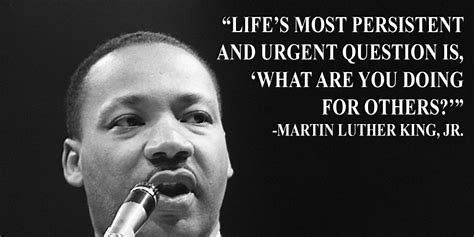
“Life’s most persistent and urgent question is, ‘What are you doing for others?”

Here’s to honoring the legacy. Happy New Year.