Oh no! Parables

A few months ago, I wrote about a preaching at church on the parable of the ten virgins, or bridesmaids as they say in modern versions of the New Testament. In the story, told by Jesus in the gospel of Matthew, the ten women are waiting for the arrival ceremony outside the gates of the wedding venue. Five of them, known as the wise bridesmaids, came prepared with full oil lamps, greeted the wedding party, and they all entered the gates to the feast. The other five, known as the foolish bridesmaids, were out buying lamp oil, took too much time in the shop, and got locked out of the party. The preacher says the oil is a metaphor for hope. Always have a little hope stored up because you never know when God will present herself with the next great opportunity.

I really hate parables. They’ve always made me feel bad about myself. Oil as a metaphor for hope seems a stretch, but it still makes me cringe. In this and all Bible stories, I relate to the foolish ones, the worst person in the story. I’m never ready, always late, and a failure at time management. 

The question arises: why would Jesus, my earliest-remembered friend, use the parables to traumatize me with such heavy doses of self-blame? No wonder people have stopped attending Christian churches.

At the church I attend, the Sunday bulletin at the end of May included this statement: 

This summer, we will take our messages from the stories that Jesus loved to tell: Parables. 

Oh Jeez. That gives me about thirteen Sundays’ worth of sermons to learn and absorb some wider spiritual truths that have eluded me thus far. I have hope that the preacher is up to the task. In his kick-off to the summer pulpit, he talked about the parable of the Sower. Do you know that one? The farmer throws seeds around willy-nilly throughout the land, giving no thought to where they settle. Some seeds settle on rocks, some on thorns. I’ve always considered myself the thorny soul who has choked off God’s seeds through my own self-will. Another parable evoking self-blame.

When I was younger, I used to buy cheap packets of wildflower seeds at Walgreens and toss them around Lincoln Park on my morning run in places that needed a bit of sprucing up. I never bothered cultivating them; I simply hoped a few would spring to life. It was a labor of rebellious love. 

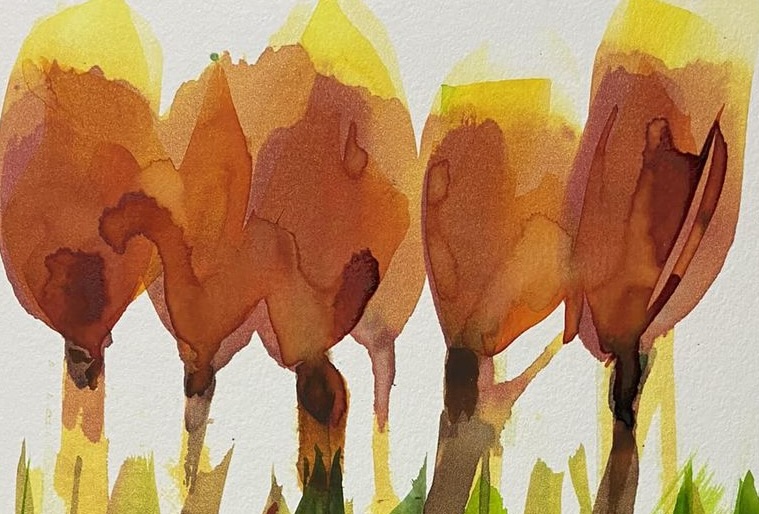
The preacher reminded me of those long-ago spring days. He interprets the seeds as love, God spreading love around. Sometimes, love takes. Sometimes, it doesn’t. But God keeps throwing it out there, just like I kept throwing out seeds of wildflowers. Love is power, says the preacher,  tender power, vulnerable but power nonetheless, capable of changing people. The sighting of Spring’s first tulips makes me happy, no matter how anti-happy I may be. That’s powerful love.

Perhaps a summer of parables will be ok. 

Where Babies Come From

Where Babies Come From

A pamphlet in the back of the church had all the details. The Catholic Marriage Manual.  The title revealed nothing to me about the contents. But the sixth-grade boys knew. At recess, the girls followed them into the church from the playground. I was new and needed to fit in. One of the girls grabbed the booklet, and we all ran out to sit under the shady elm at the edge of the parking lot. She read from the booklet, “the man places his penis inside the woman’s vagina” to make a baby. “Eww!” The girls squealed. And those boys, standing by the corner of the church, pointed at us and laughed.

Image result for  1950s catholic marriage pamphlet To look cool, I desperately wanted to act like I already knew that. But I was so shocked I couldn’t control my facial expressions, and my shaking knees gave way. I could hardly stand up.

I act the same way when I come to some new awareness these days. I blurt out, “What? How come I didn’t know that?”

A boy I wanted to impress once told me Paul McCartney recorded a very high whistle sound in the song “A Day in the Life” so that his pet dog could hear it.

“I knew that,” I said, hoping he was telling the truth and not testing me. Inside my head, I heard, “What? I didn’t know that!”

Being cool was so important that I spent the first half of life pretending I knew more than I did. Over time, in an effort to be authentic, I slowly emerged from that deceptive veil. The lingering consequence of being truthful about myself was that I could no longer swallow my emotions and hide my expressions. 

Recently, a friend and I were rehearsing for a talk that we would present to a White audience on microaggressions. “I don’t see color” is a prevalent White microaggression since it’s a refusal to acknowledge the race-based struggles people endure and the discrimination they face. We discussed the outline, who would address what issue, and how to fill the time if no one asked questions. Then he showed me a video he wanted to use of an Asian woman giving a TED talk on microaggressions. 

“Are there videos by Black people instead?” I asked.

“There are, but White people often hear this material better if it’s from a light-skinned person.”

“Oh, of course,” I said, as if I knew that.

Suddenly, my breathing sped up. I started sweating and swaying in my chair. 

“I have to take a break,” I said.

The awareness that I don’t listen as deeply to Black people as I do to White people filled me with such shame that I almost fainted. 

Life was much easier when I learned where babies come from, jumped up, ran around, and tagged the boys in a game of  Steal the Bacon. On the playground, we were free to be ourselves, boys and girls, Black, Brown, and mostly White kids whooping it up in a simpler world where there were no microaggressions and we didn’t see color. 

Oops.

Killing the January Blues

Killing the January Blues

Early in my sobriety, a therapist told me to volunteer in order to get out of my depression. I almost went for her throat.

“That’s your advice? How can I help anyone when I can hardly get out of bed?”

In Alcoholics Anonymous, we’re told self-centeredness is a common trait that leads to drunkenness; it’s suggested that serving others will help keep us sober. 

“It’s a spiritual principle. Don’t overthink it. Just go help someone.” An AA meeting-goer told me when I was whining about the blues one January.

After years of campaigning by activists, members of Congress, and Coretta Scott King, President Ronald Reagan finally signed a bill creating a  federal holiday in honor of Dr. Martin Luther King, Jr. Observed on the third Monday of January, dear Martin was first celebrated in 1986.

“You don’t have to have a college degree to serve. You don’t have to make your subject and verb agree to serve. You only need a heart full of grace. A soul generated by love.” MLK told us.

Grace is an indulgent gift from the cosmos. A heart full of love sounds too godly for my rebellious nature. For some, it comes naturally. Not for me. I meet many people I don’t want to love or serve. I balk. This is why I must be told to commit to love, commit to serve.  Every day, I’m reminded of the promised rewards: freedom from melancholy and self-pity. The promise is appealing—and attainable.

During the month of January, organizations, politicians, GenXers, and citizen elders all celebrate MLK through service to others. Rush University Medical Center in Chicago offers a few easy opportunities.

  • Celebrate at a hybrid event: “A Lesson from Dr. King: Health Equity is  Everyone’s Business,” on Wednesday, January 17, from 1:00 -2:00 pm. Experts share how to work towards ensuring everyone has access to their highest level of health. Click  here if you’d like more information.
  • Volunteer in person in Chicago distributing 300 meals on Friday, January 19, from 10:30 am to 12:30 pm. Multiple volunteer roles are available (preparers, packers, and drivers). Want to help? Click here for more info.
  • Mentor with the Community Health Mentor Program. Teach first-year graduate students about living with chronic conditions (high blood pressure, diabetes, alcoholism), as well as guide them in becoming patient-centered practitioners. All Community Health Mentor meetings will be on Zoom. Mentors receive up to sixty dollars in gift cards for participating in the training and all three meetings. The meeting dates are Wednesdays, January 24, February 14, and March 20, between 1 pm -6 pm for 60-90 minutes. Click here for more info or email Hannah Weitzman, Program Coordinator, at hannah_weitzman@rush.edu.

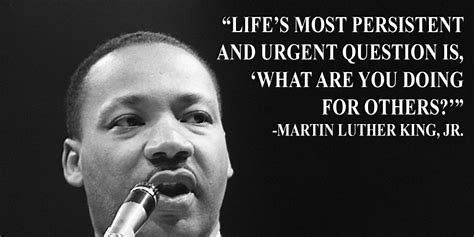
Dispelling my preoccupation with self is a lifelong endeavor. It’s comforting that MLK recognized this is true for many, which is why he gave us all the big quote:

“Life’s most persistent and urgent question is, ‘What are you doing for others?”

Here’s to honoring the legacy. Happy New Year.

Burning Love

Burning Love

One fall afternoon in 1955, all the kids on the block raked their piles of fallen leaves off the lawns and sidewalks and into the street. Heaps of crinkled oak and maple mounded the curbside. The confluence of those sweet smelling deadfalls and autumn breath propelled us to kick up our feet and whoosh our sneakers through the piles. We’d shape more piles with armfuls of fly-aways, throwing half  in the air and half on the mounds.

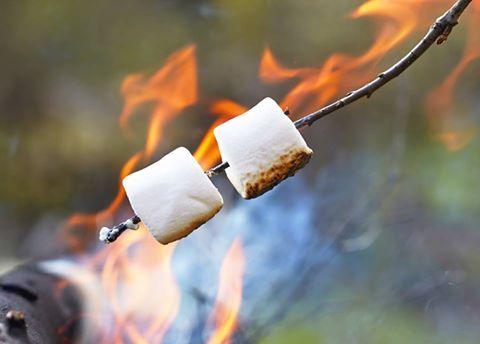
In the evening, the whole block came out. Designated parents set fire to the five foot stacks of leaves, one by one. The kids wiggled hot dogs and marshmallows onto twigs and held them over the flames. We ran back inside to our kitchen, stuffed our charred dogs into buns, plopped mustard on them and ran back to stand around the fire and eat with our neighbors.

I went to sleep late that night comforted by communal joy. Early the next morning I woke up with a hacking cough and sneezing fits. By the afternoon I could hardly breathe. My eyes were so watery I lost focus.

My mother, who had two other children and was pregnant, wasn’t a reliable nurse. Two aspirin and bedrest was her usual answer to any ailment. We rarely saw a doctor.

Once, while sitting on the back steps, she witnessed me fall off my bike and scrape my knee in the driveway. She gulped down a bottle of Budweiser and said, “Don’t expect me to feel sorry for you!”

The morning I woke up hacking and sneezing, she moved my limp nine-year-old body into a second-floor room of my own at the front of the house, closed the curtains and set up a humidifier. No one was allowed in, except her. And the doctor. The verdict? I had an allergic reaction to burning leaves that kicked off a bout of bronchitis.

During the next three weeks my mother brought me Campbell’s soup and apple juice on a tray. She took my temperature twice a day and rubbed Vicks Vapo Rub on my chest and back. She never complained about my unrelenting loud cough. I cried myself to sleep in her arms and called for her in the night. She always came. 

My parents had too much to hide to ever become friends with any of our neighbors, wherever we lived. But one day, from my sick room, I heard her ask a neighbor not to burn any more leaves because I was sick.

I’m still allergic to burning leaves. In fact, I’m allergic to leafing out in the spring and falling leaves in autumn. The sheltered memories of kicking up leaves and smelling them burn evokes both sadness and delight of a community that smelt and felt the rush of the season at the same time in the same way.

But my mother ministering to my sickness is more than a memory. That one brief period taught me all I needed to know about healing love.