Journey to Paradise

JFK was still alive the September I drove with my father in his white Cadillac Eldorado down the pike from our temporary home in Washington, DC to boarding school in Williamsburg, Virginia. My head overflowed with questions. Will they have a television? What will I do after school? How will I wash my clothes? I dared not ask my father for fear he’d mock my questioning of such mundane matters. In his silence I could hear him say, “They’re nuns. They take care of people. Stop worrying.” I wasn’t worrying, just wondering. In spoken language between us, different words seemed to have the same meaning—wonder and worry, driving and speeding, drinking and drunk.

Unfamiliar signs became our talking points.

“Look there’s Fredericksburg. Did something historic happen there?”

He told me it’s a Civil War town. 10,000 slaves ran away from the plantations there and joined the Union Army.

Slaves? I had never been in a place where slaves had lived. Monticello. Is that Jefferson’s home?

I’m not sure how much I knew of Civil War history or American history as I was entering my junior year in high school, but clearly the road signs along the highways in Virginia had awakened some schooling. Petersburg and Appomattox. My premature view of life misinformed me that places I read about in history books, like these, no longer existed.

Until then, I had lived my whole life at sea level—the flatlands at northeastern Illinois’ Lake Michigan and the New Jersey seashore. The Virginia road climbed up and down between wavelengths of blue and green, tree-lined hills with wide verdant medians. My mother used to call me a nature-lover. I guess she was right. The scenery captivated me, as if we were driving through the Garden of Eden. I imagined Paradise at the end of our journey.

“What’s the Blue Ridge Parkway?”

My father loved to drive and he’d already been on Skyline Drive, the main road through Shenandoah National Park on the Blue Ridge Parkway. Our route to Williamsburg didn’t bring us near there. Thirty years later, remembering my father’s description of the misty Blue Ridge Mountains and the hills rolling down to the Shanandoah River, I drove there myself.

At Richmond we turned southeast toward the Norfolk Naval Base, Hampton Roads and Williamsburg. I was leaving no one behind. My mother, sisters, cousins and friends lived in another place, another time with their wild summers and grey winters. A vagabond life brought me to live at Walsingham Academy run by the Sisters of Mercy, the school that housed girls from mothers who didn’t mother and fathers who didn’t father—girls who had ulcers and girls who dyed their hair.

We turned onto Jamestown Road toward my new assignment. Fear tightened my grip on reality. Had he told the Mother Superior I had mononucleosis? Got drunk? Swore? Didn’t believe in God? Had an ectopic pregnancy? Did he even know I was tired all the time, and lost? I feared and I hoped they’d care for my soul.
Suffering the Consequences

Suffering the Consequences

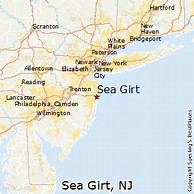
In late summer 1962, I ran away from home; away from my mother, away from my three sisters, and away from our year-round Jersey Shore beach house. My mother had left my father a few years before, after we were evicted from a mid-century-modern in the Chicago suburbs.

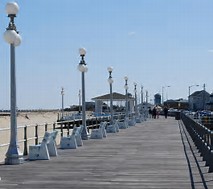
I loved moving close to the Atlantic Ocean but not even the beloved beach down the block could keep me from escaping from my mother’s uncontrollable, screeching, violent rampages. I fled to my father, two hours away in Manhattan. He’d moved there to be close to us and to try, once again, to stay sober. My mother suspended her hatred long enough to allow a few visits between us, but when he moved into a new girlfriend’s suite in the Delmonico Hotel on Park Avenue, my mother cut off all communication with him.

When I arrived, he checked me into my own hotel room, across the hall from his and the girlfriend’s suite. I enrolled in the sophomore class at Marymount Fifth Avenue Catholic girls school, where I became fast friends with another girl who lived in a hotel—her father managed the Waldorf-Astoria. I was no stranger to hotel living. My family had lived in the Meridian Hotel in Indianapolis for a year when my parents were drinking round-the-clock and couldn’t pull it together to find a family home. At 8-years-old, I had learned to run a tab for grilled cheese sandwiches and Coca-Colas in the hotel coffee shop. I relied on the doorman to report my whereabouts to my parents when I went out to play, since they weren’t always available to ask permission. I loved that part.

In early December at the Delmonico, I woke to a fiery, closed throat and vice-gripping headache. I went by ambulance to the emergency room of New York Presbyterian Hospital and was diagnosed with mononucleosis, hepatitis and migraine. The doctor explained that mononucleosis is called the kissing disease because it’s transmitted by mouth. Oh shit. Shame ran in my veins alongside the debilitating virus. I was afraid everyone would find out I was kissing a lot of boys and having sex.

Treatment included nausea-producing morphine injections and steroids. To heal my inflamed liver I lay flat on my back for 30 days— through Christmas and New Year’s. Classmates from Marymount brought homework; friends from the Jersey Shore sneaked in beer; my Boston boyfriend came with a stuffed Wiley Coyote; a case of Reese’s Peanut Butter Cups showed up from my cousin,Therese. My mother never visited nor called.

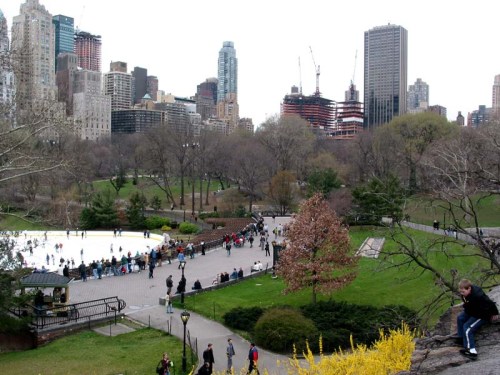
Central-Park-New-York-city-NY-6While I was in  the hospital my father rented a furnished 3-bedroom apartment
overlooking the Wollman Skating Rink in Central Park. Prolonged bedrest in the new home led to my recovery. The compulsory homework necessary for me to move on to my junior year slipped from my hands and onto the floor as I slept off my diseases. I returned to school after four months and failed that year with a final average grade of a humiliating 34.

Before There Were Hippies

Before There Were Hippies

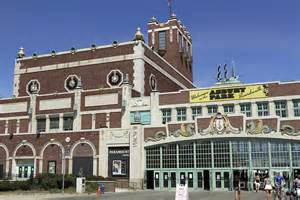
Tom Spencer and I sat in slatted wooden seats on the aisle halfway back from the stage in the Asbury Park Convention Hall at our first concert. The Hall’s open doors and th-1windows allowed the peaceful ocean breeze to float in and around to cool us. It was 1961 and we thought we were the only Joan Baez fans on the entire Jersey Shore.The mesmerizing overflow crowd stunned us.
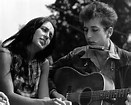
Until then, our only experience at a live performance was the Manasquan High School variety show. We lived in the remains of the 1950’s cultural wasteland where the middle class would never spend time or money on concert-going. Ignorant of concert etiquette, we refrained from singing aloud but mouthed all the words as our folk hero transported us — All My Trials, House of the Rising Sun,10,000 Miles. Just before intermission Joan Baez introduced a friend from Greenwich Village, Bob Dylan. Oh no! I saved my babysitting money to see Joan Baez, not some unknown. Onto the stage came this scruffy little curly-topped blue-jeaned boy who played guitar and sang a solo, “Freight Train Blues”. They sang “Man of Constant Sorrow” and “Pretty Peggy-O” together. Tom, even though his favorite singer was the Godfather of Soul, James Brown, shared my instant joy and devotion to the twangy-voiced Bob Dylan.

thDylan and Baez sang their love for the poetry of those old folk songs. And we shared a love for the singers with strangers from our own land.

That summer, Tom and I had created a hangout in my mother’s garage with an old couch and a rickety TV table for our record player so we could listen to music and drink beer undisturbed during the day when everyone else was at the beach. My mother accepted my summertime retreat since she never used the garage and was happy to be removed from the sounds of folk music, Motown and Elvis. She seemed to like Frank Sinatra and Dean Martin, but she had no real interest in listening to music, not even on the radio.

We saved money from our part-time jobs to buy our 45 rpm records. Tom caddied at the Spring Lake Golf Club. I babysat for the neighbors. He had a crush on my younger sister, Erin, ever since we moved into the Sea Girt house down the street from his in 1959. They dated briefly the previous year but she lost interest and he and I became inseparable friends for one important summer.

One day my mother found us in the garage with empty beer bottles, practicing the Twist and the Mashed Potato. She proclaimed us degenerates and told us to go to the beach. We ignored her and roiled with laughter since being degenerate characterized the beat generation. We were reading A Coney Island of the Mind by Lawrence Ferlinghetti and writing beat poetry. Her proclamation boosted our view of ourselves as beatniks.

The chilly weather and school reopening gradually closed the garage door. Tom’s studies took up his time. And I sought other hideaways where I could drink beer all day and listen to music.