On a podcast about grief, artist Laurie Anderson revealed to Anderson Cooper that she felt sad without being sad when her husband, rocker Lou Reed died in 2013. She came to this awareness at a class on the Tibetan Book of the Dead. The teacher, Bob Thurman, said there is no dead. Dead doesn’t exist. He was referring, in part, to post mortem existence.
Different concepts of the afterlife exist in most religions and philosophies. For atheists who believe nothing happens after death, Thurman, a Tibetan Buddhist, teaches there is no nothing. Dead is not nothing.
I’m about as sure of what happens when the body breathes its last as I am of next week’s weather. Oh, I tacitly agree with those who suggest I’ll see my dead dogs again, the same way I concur it’s going to snow tomorrow. Maybe. Maybe not. Surely, dead is not nothing?
On November 22,1963, my mother called from New Jersey to the Catholic boarding school where I was sent to “shape up” in Williamsburg, Virginia. I picked up the black handle dangling from its stretched out cord in the one allowable phone booth for us wayward boarders.
“Kennedy’s been shot.” She said.
I replied, “I know. He’s dead. It’s on the radio.”
There’s a reason my mother called me. She knew, even at seventeen years old that I’d be upset, more like hysterical. Politics had grabbed me as a pre-teenager watching the Vietnam war on TV. By the time Martin Luther King Jr. was assassinated, I, a twenty-two year old hippie, had been to two marches on Washington and written hundreds of letters to Congress and President Johnson. I was in support of the Civil Rights bill, the Voting Rights bill, banning the bomb and against the Vietnam war. Anytime the morning news stirred an injustice I had to fix, I reached for my stash of pre-stamped postcards to fire off messages to Congress. I harangued my friends—at work, in bars, on the beach, at parties—to think and talk like me. They didn’t. I kept going.
MLK’s admonition, “Our lives begin to end the day we become silent about things that matter,” initially whipped me into a frenzy of activism—more letters, more phone calls, more marches, more recruiting. Then in his “Drum Major Instinct,” speech in 1968 he preached to act as a servant, not a savior. It is noble to help just one person, change one person’s viewpoint, get one person to vote. Gradually, I adhered to King’s spirit and put into practice a daily mindfulness mantra: the worries of the world don’t own me, I don’t own the worries of the world.
DNA has proven dead is not dead. DNA, our physical manifestation of life itself, apparently lives forever. Anyone who has had a DNA test questions their reported trace variants of first peoples like Neanderthal listed in their results, as if our DNA was there at the beginning, or, before? Some religions teach physical immortality, that our dead bodies will rise (or have risen) to live in Paradise. It begs the question: wherever our raised bodies take up residence, will they have our same DNA?
Martin Luther King’s DNA lives in the generative marrow of his words. I always feel sad, without being sad on this day, his birthday, like Laurie Anderson grieving over Lou Reed. His death forever transitions into the endorphins between my dreams and awareness. He lives in that zero-gravity mirage of my inner life that says: serve, get out there, be brave, do it, say it.
Yep. Dead is not nothing.
Listen: Laurie Anderson & Anderson Cooper
(updated from 2023 MLK day)
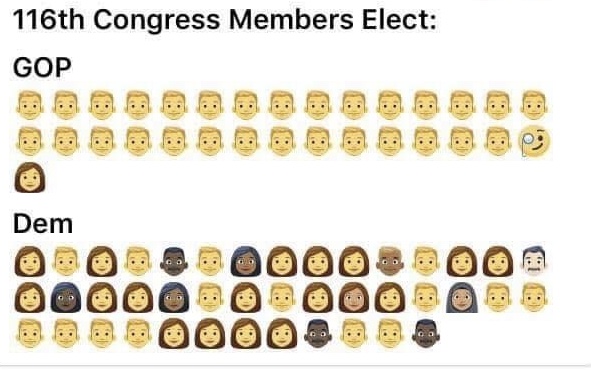 elected a 32-year old black woman nurse, a country that elected a Sudanese Muslim immigrant woman who wears a head covering, a country that elected two Native American women for the first time in history, a country that elected a married-with-children gay governor, a country where a lesbian became a conservative state’s attorney general. My country will have 102 Democratic and Republican women in the House in January, 12 women in the Senate and 9 women governors. In my country, a record forty-four percent of employers offered employees paid time off to vote.
 Regan Burke