Killing the January Blues

Killing the January Blues

Early in my sobriety, a therapist told me to volunteer in order to get out of my depression. I almost went for her throat.

“That’s your advice? How can I help anyone when I can hardly get out of bed?”

In Alcoholics Anonymous, we’re told self-centeredness is a common trait that leads to drunkenness; it’s suggested that serving others will help keep us sober. 

“It’s a spiritual principle. Don’t overthink it. Just go help someone.” An AA meeting-goer told me when I was whining about the blues one January.

After years of campaigning by activists, members of Congress, and Coretta Scott King, President Ronald Reagan finally signed a bill creating a  federal holiday in honor of Dr. Martin Luther King, Jr. Observed on the third Monday of January, dear Martin was first celebrated in 1986.

“You don’t have to have a college degree to serve. You don’t have to make your subject and verb agree to serve. You only need a heart full of grace. A soul generated by love.” MLK told us.

Grace is an indulgent gift from the cosmos. A heart full of love sounds too godly for my rebellious nature. For some, it comes naturally. Not for me. I meet many people I don’t want to love or serve. I balk. This is why I must be told to commit to love, commit to serve.  Every day, I’m reminded of the promised rewards: freedom from melancholy and self-pity. The promise is appealing—and attainable.

During the month of January, organizations, politicians, GenXers, and citizen elders all celebrate MLK through service to others. Rush University Medical Center in Chicago offers a few easy opportunities.

  • Celebrate at a hybrid event: “A Lesson from Dr. King: Health Equity is  Everyone’s Business,” on Wednesday, January 17, from 1:00 -2:00 pm. Experts share how to work towards ensuring everyone has access to their highest level of health. Click  here if you’d like more information.
  • Volunteer in person in Chicago distributing 300 meals on Friday, January 19, from 10:30 am to 12:30 pm. Multiple volunteer roles are available (preparers, packers, and drivers). Want to help? Click here for more info.
  • Mentor with the Community Health Mentor Program. Teach first-year graduate students about living with chronic conditions (high blood pressure, diabetes, alcoholism), as well as guide them in becoming patient-centered practitioners. All Community Health Mentor meetings will be on Zoom. Mentors receive up to sixty dollars in gift cards for participating in the training and all three meetings. The meeting dates are Wednesdays, January 24, February 14, and March 20, between 1 pm -6 pm for 60-90 minutes. Click here for more info or email Hannah Weitzman, Program Coordinator, at hannah_weitzman@rush.edu.

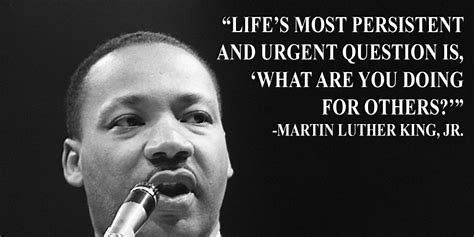
Dispelling my preoccupation with self is a lifelong endeavor. It’s comforting that MLK recognized this is true for many, which is why he gave us all the big quote:

“Life’s most persistent and urgent question is, ‘What are you doing for others?”

Here’s to honoring the legacy. Happy New Year.

Discriminating Housing

Discriminating Housing

Adele, the feminist, challenged our church elders to explain exactly what the Bible passages stating “wives, submit to your husbands,” had to do with 1973 modern America. She steadfastly refused to “wear a head covering” as proscribed in verses familiar to anyone who’s been ensnared by a church that adheres to literal interpretations of the Bible. Adele, my role model for a time, taught me how to live in a conservative Christian extremist community as a sincere provocateur who loved God. It wasn’t easy.

“You should get a real estate license and work with me in that new subdivision,” Adele suggested, knowing wives were discouraged by church elders from working outside the home. I trusted her counsel because she was on her third marriage and knew that financial independence was the first step to freedom from my second bad marriage.

I sat in the makeshift office of the model home in a planned development of half-built single family homes on ⅓-acre parcels in Ocean County, New Jersey, answering phones, staffing open houses, tidying up the office, running errands. Month after month with no salary and no prospects, I persevered, buoyed by Adele’s words,“You only need one sale.”

A couple appeared one day when I was alone in the office. I leapt to my feet, obtained some qualifying information and showed them around. The Princeton University professors picked out their dream house-to-be-built, and I called the Owner of the development to bring a contract. Not only was I going to make a few thousand dollars, but I would be playing a bit part in helping to integrate our all-white community.

I had been a political activist since high school, and at age twenty-seven, I had no evidence to suggest that all of America wasn’t heeding the call of social change and racial integration espoused by John and Robert Kennedy and Martin Luther King, Jr. It just never occurred to me that people thought any other way.

The pro forma Owner arrived in short order with a contract but when faced with the couple doubted that he could provide their choices of tile, or carpet, or kitchen cabinets. I always found him to be too encumbered by his own cunning so nothing about his interaction with this couple seemed unusual. They signed a contract contingent on negotiating for the decor at a later date. The whole project slowed, then halted. Adele claimed the money ran out, thanked me for my sweat equity, then found me a part-time job making stained glass lamps.

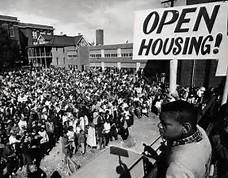
A few months later, I stood at my mailbox reading a legal notice charging me and the Owner with discriminating against the black couple from Princeton. All they wanted was a house near the ocean where they could raise their boys in a good school and send them to Little League. Guilt squeezed my chest with thoughts that I was complicit in killing their dream. “This is Adele’s fault,” I irrationally concluded.Unknown

I sat for a deposition and feared a discrimination law suit would follow me around for the rest of my life. It dragged on for months but never went to court.

I was scoring glass in the workshop when Adele brought me a news article. The NAACP was testing the efficacy of the Fair Housing Act of 1968 by sending couples to white neighborhoods to purchase property.

“See?” she said, “they were shills.”

 Good for them.

Learning & Leaving the Real Estate Business

Learning & Leaving the Real Estate Business

Adele, the feminist, challenged our church elders to explain exactly what the Bible passages stating “wives, submit to your husbands,” had to do with 1973 modern America. She steadfastly refused to “wear a head covering” as proscribed in verses familiar to anyone who’s been ensnared by a church that adheres to literal interpretations of the Bible. Adele, my role model for a time, taught me how to live in a conservative Christian extremist community as a sincere provocateur who loved God. It wasn’t easy.

“You should get a real estate license and work with me in that new subdivision,” Adele suggested, knowing wives were discouraged by church elders from working outside the home. I trusted her counsel because she was on her third marriage and knew that financial independence was the first step to freedom from my second bad marriage.

I sat in the makeshift office of the model home in a planned development of half-built single family homes on ⅓-acre parcels in Ocean County, New Jersey, answering phones, staffing open houses, tidying up the office, running errands. Month after month with no salary and no prospects, I persevered, buoyed by Adele’s words,“You only need one sale.”

A couple appeared one day when I was alone in the office. I leapt to my feet, obtained some qualifying information and showed them around. The Princeton University professors picked out their dream house-to-be-built, and I called the Owner of the development to bring a contract. Not only was I going to make a few thousand dollars, but I would be playing a bit part in helping to integrate our all-white community.

I had been a political activist since high school, and at age 27, I had no evidence to suggest that all of America wasn’t heeding the call of social change and racial integration espoused by John and Robert Kennedy and Martin Luther King, Jr. It just never occurred to me that people thought any other way.

The pro forma Owner arrived in short order with a contract but when faced with the couple doubted that he could provide their choices of tile, or carpet, or kitchen cabinets. I always found him to be too encumbered by his own cunning so nothing about his interaction with this couple seemed unusual. They signed a contract contingent on negotiating for the decor at a later date. The whole project slowed, then halted. Adele claimed the money ran out, thanked me for my sweat equity, then found me a part-time job making stained glass lamps.

A few months later, I stood at my mailbox reading a legal notice charging me and the Owner with discriminating against the black couple from Princeton. All they wanted was a house near the ocean where they could raise their boys in a good school and send them to Little League. Guilt squeezed my chest with thoughts that I was complicit in killing their dream. “This is Adele’s fault,” I irrationally concluded.Unknown

I sat for a deposition and feared a discrimination law suit would follow me around for the rest of my life. It dragged on for months but never went to court.

I was scoring glass in the workshop when Adele brought me a news article. The NAACP was testing the efficacy of the Fair Housing Act of 1968 by sending couples to white neighborhoods to purchase property.

“See?” she said, “they were shills.”

 Good for them.