
First Holy Communion is a right-of-passage ceremony in the Roman Catholic Church where a seven-year-old is initiated into eating the body of Jesus Christ. I learned the elements of the Catholic service, the Mass, with my classmates in the second grade. The priest transforms the bread into Jesus’ body and the wine into Jesus’ blood. The wine, the blood of Jesus, is reserved for the priest. We the people eat paper-thin white tasteless wafers, the body of Jesus. Catholic children all learn that after we make First Communion, it’s expected we’ll eat the body of Christ every week for the rest of our lives.
“Let it dissolve in your mouth,” the nuns instructed, “It’s a sin to chew the body of Christ. And don’t touch it!”
The pomp and ceremony of my First Holy Communion overshadowed any eww!-ness related to eating Jesus’ flesh. Prim little girls wore white crinolined lace dresses, white shoes and socks, white cotton gloves and angelic white veils. Like brides. Squirmy spit-polished boys wore ill-fitting white suits and ties. Children sang a Gregorian chant, Tantum Ergo, in Latin. The ceremony shined as if the light of heaven broke through the ceiling and blessed us with all good things forevermore.
In the early grades, if anyone questioned how Jesus’ body and blood changed from bread and wine, there was only one answer.
“It’s a mystery,” they said.
I fell hook line and sinker into this ethereal mystical world of Jesus-eating. He was inside me, outside me, all around me, all the time. Jesus, my imaginary friend, was under the bed with me when my parents’ raging drunkenness woke me in the night. And when long-fingered nightmares reached their talons in through the screens, Jesus saved me.
At Jesus’ Last Supper (and his First Communion) before he was tortured and murdered, he broke bread, sipped wine and said, “The is my body. This is my blood. Do this in remembrance of me.” Surely Jesus and his father knew what a theological shit storm this would cause for all time. There is no earthly world where anyone could possibly digest all that’s been interpreted by those simple words.
In the upper grades, Catholic clergy gave fuller answers for Holy Communion, the Eucharist, they called it. Explanations always ended with, “It surpasses understanding.” When I joined a non-Catholic Christian church in my twenties, I learned that Protestant Communion is a public display of piety, not a mystery at all, a non-binding sacramental tradition.
Jesus, like the simple chassis of a computer, hides his infinitely more complex workings from the young in faith. It’s good he came as a baby. People love babies. I would have settled for a dog since I love dogs. This human Jesus soothed me as a child. In the second half of life I’m soothed by and troubled by the man or the myth at the same time. Jesus, a synonym for love, is comforting. His hidden complexities are troubling. Questions arise, starting, but never ending with, “Are you real?”

In Christopher Nolan’s movie Interstellar, a concrete love story moves in and out of a celestial black hole. A black hole forms when a star collapses in on itself, eventually creating a singular point of irresistible gravity. All matter, light, space and time are sucked into it and all instances of time become the present moment.
These days, at my Presbyterian church, I sit motionless at traditional Communion, the Eucharist. When I hear the minister say Jesus’ words ‘do this in remembrance of me’, if I’m aware, I contemplate the past as present, as if in a black hole. The story of the Last Supper reminds me to honor the original Twelve, and others, who were in the room where it happened. They come through a black hole to my pew, in the hope that I see that the whole of the story is swallowed up and Jesus is the present moment.
The veneer of the Communion tradition, like the computer chassis, hides the paradox of a simple complexity. Non-traditional Jesus, that black hole of pure love, that present moment, issues the most complex inhuman commandment, ‘love your enemies.’

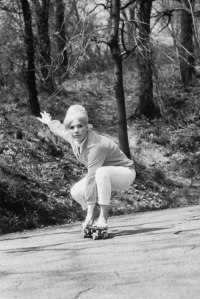 downhill in forbidden cemeteries until dark. It was the 1960s. Skateboards were outlawed, not because they were dangerous but because they were unknown, not a part of the mainstream and somehow subversive. We hid them in car trunks and behind
  a familial attachment to him. When a spiritual crisis befell me, I found him outside, lurking among the Gothic arches of the colonnade. I told him I have something serious to discuss.
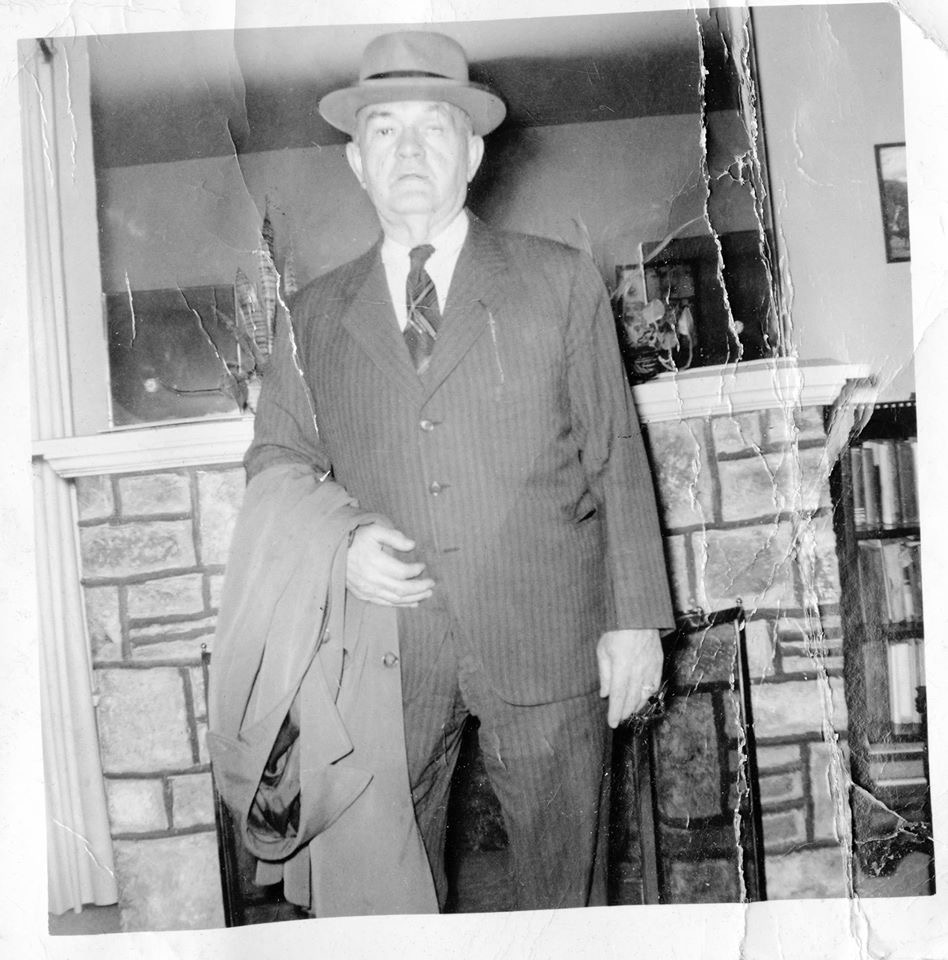

 savior, a requirement for inclusion in the exclusive Fellowship. One of the elders had broken away from a local Plymouth Brethren Church and opened the basement of his family’s large, wooded, colonial home for Bible study and Sunday services for us blue-jeaned recovering addicts and alcoholics. As a newly sobered-up ex-hippie, full of self-loathing, all I wanted was to be accepted in that Fellowship.

 commandments to week-old smiles, cries in the night, a nine-month old sprinter and a child who eats only chicken. My work is to stand my ground in the whirlwind advice from mothers, aunts and grandmothers. To learn to ride a baby on the back of my bicycle. To animate words as I point to clouds, trees and cars as if I’ve never seen these things before in my life.
 Regan Burke