Born Free

Born Free

Most gay anthem playlists include these songs:  I Will Survive by Gloria Gaynor, Freedom! ’90 by George Michael, Vogue by Madonna, I’m Coming Out by Diana Ross, anything by Beyonce, Cher, Donna Summers, Lady Gaga and of course, Billy Porter. But no recognition for the song Born Free.

I recently attended a friend’s bon voyage picnic with my new dog. 99% of the picnickers were men. They adored my fluffy little white Westie with her pink-lined pricked ears. 

“What’s her name?” One guy asked. 

“Elsa,” I answered. 

He and his companion then broke out singing Born Free. Others joined in the serenade. 

Born free, free as the wind blows…

I looked straight at my friend with a questioning side smile and squinty eyes. 

“Gay,” was his answer. 

“Some kind of anthem?” I asked.

“Yep. From the movie.”

“Oh, I get it. Elsa. The lioness. Wanna go with me & Elsa to the Pride parade?” I asked him.

“Absolutely not!” he exclaimed. 

None of my gay friends express interest in Pride hoopla. At least not to me. But in social gatherings, I’ve overheard one or more talking about some cute guy they’d met at the Parade. It’s understandable. The Parade covers a lot of geography and seems to have no time constraints. If you live in Parade neighborhoods, you’re bound to meet a cute guy or two passing by. 

The rejection of Pride celebrations is a bit more puzzling. I’m not particularly drawn to St. Patrick’s Day parties and parades, but neither am I celebrating Irish freedom. After the first official Chicago Pride parade in 1981, I celebrated gay liberation at a raucous party in Lincoln Park . Plenty of our gay friends were invited. But they didn’t show. Perhaps they excluded us from their Pride activities because gay liberation didn’t belong to us? Nor we to it?

Political friends wave the flag, not necessarily to show they’re gay, but, as I do, to support gay rights. Showing the colors this year is especially important because recent laws in other states restrict gay freedom, including drag shows. 

On a stroll down Michigan Avenue the other day, I was overwhelmed by the display of rainbow colors in front of my church. There are ribbons tied to each iron fence post spelling out the iconic colors of gay pride—for the entire block in front of the church. 

“So colorful,” I mentioned to my walking companion.

“Doesn’t it make you feel kinda bad?” She asked.

“Whaddya mean?”

“Well, it’s a celebration for gays. And you’re not.”

Some of the church’s older adults asked to celebrate gay rights by having a drag show for their small group. The church denied the request. I’m excluded from men’s bible study, twenty-somethings and couples church groups. And like those, perhaps celebrating gay freedom with events like drag shows, really is (inadvertently) reserved for gays only. 

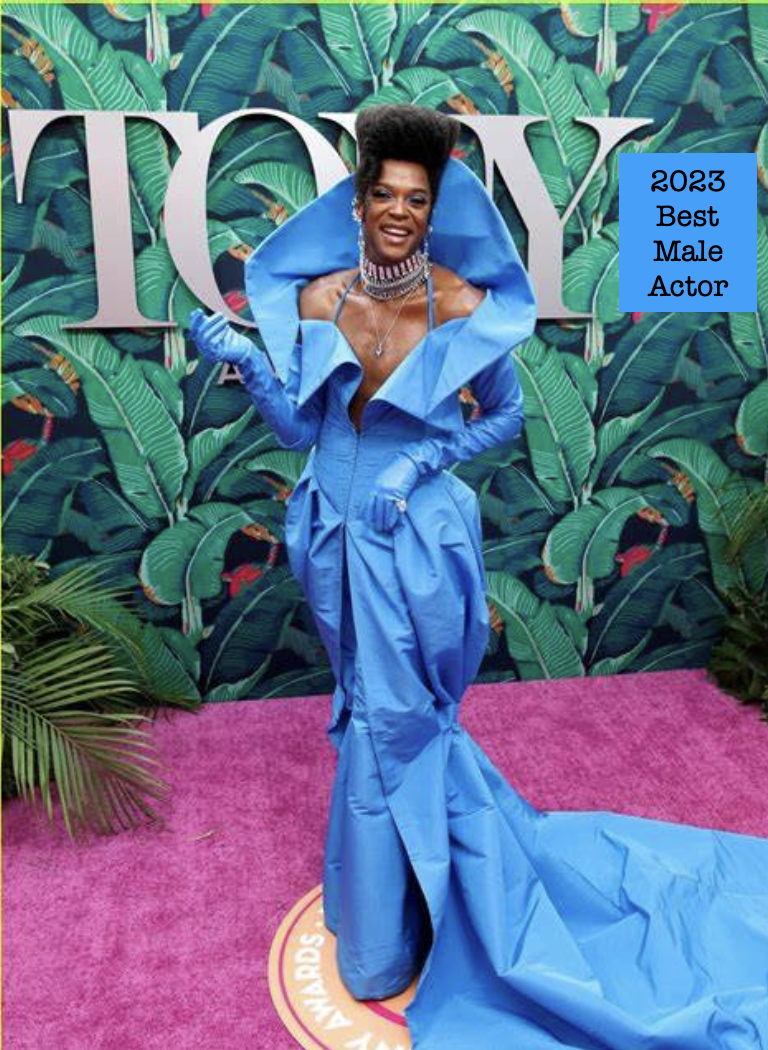
Fortunately, I can honor the entire queer nation by re-watching this year’s Tony Awards. 

Meanwhile, song compilers need to include Born Free in gay anthem song lists. 

Tommy at Woodstock

Tommy at Woodstock

Two neglected shoeboxes of faded and forgotten memories sit on the top shelf of my bedroom closet. They are filled with negatives, a noun I’ve not heard nor used since the Aughts gave us cameras on our mobile phones. I had used all types of cameras in my life from a Kodak Brownie to a 35 millimeter Pentax until photographic film and developing became too expensive in the 2000s. All my cameras had film that I’d drop off at the corner drug store or a camera shop for developing. I’d then mark time for a week or more waiting to hear that my pictures were ready for pick-up. The much anticipated package included the developed photos and their corresponding negatives.

A negative is the reversed image of the picture that can be used to develop another print. They were produced on small strips or sheets of transparent plastic film. Eight or ten miniature negative images appeared on each dark strip. If I wanted to reproduce a photo, I’d hold the plastic film up to the light, protect it from my fingerprints, search for the picture I wanted, cut the tiny square from the strip, and take it to the store for developing.

There’s no logical reason I packed old negatives in archival boxes and stored them on the top shelf of my closet. In order to get to them, I need to unfold the step stool, risk pinching a finger or two, and trust my balance will hold as I climb each step to reach the shelf. I have no intention of ever looking through the negatives in order to develop old photos. Most of the corresponding pictures may be in musty albums in my bookcase. I’m never drawn to those either.  

A few years ago I acquired a photo scanner. I offered to pay my teenage grandson to digitize my photos as a summer job. 

“I don’t know how to do that,” he answered.

“It’s easy. I’ll show you. You can do it at home and upload to your computer.”

“Naaw, I don’t think I’d like that.”

All hope drifted away then, that any of my relations would be interested in the photographic documentation of my life. I can’t blame him. I was never curious about details of my parents’ or grandparents’ lives until recently. How can I tell him that when he nears his sixties or seventies he’s going to find himself wondering what I and his other ancestors did during our lives? More importantly, how will he come to know that factors outside his control, passed down generation after generation may be the source of his own physical or mental hardships?

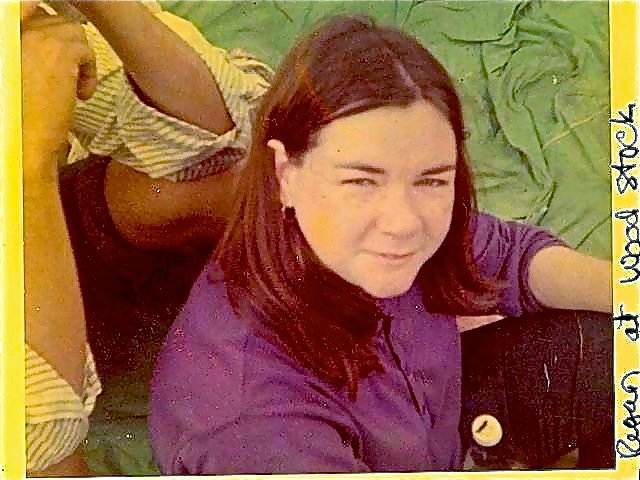
A production of the rock opera Tommy will be onstage this summer at Chicago’s Goodman Theater. 

“Wow! You saw Tommy at Woodstock?” exclaimed a theater-goer when we were in line to purchase tickets. 

Woodstock cachet seems to increase with every passing era. Forget the old photos. My-grandmother-went-to-Woodstock is probably the only legacy my grandchildren will ever need.

Boiled in anger

Boiled in anger

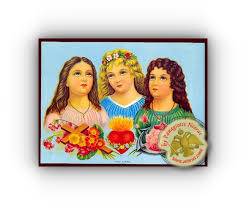
Saints Faith, Hope and Charity Catholic parish in Winnetka, Illinois, is named for three virgins martyred in second century Rome during the reign of Hadrian. The girls, ages twelve, ten and nine were boiled in tar and beheaded for their refusal to denounce Jesus.

My two sisters and I attended Saints Faith, Hope & Charity school in the late fifties at about the same ages as the boiled virgins. I entered the fifth grade after the school year started, having attended the Cathedral School in downtown Chicago for a few weeks while my parents finagled a new home in the northern suburbs. We’d just been run out of St. Louis for failure to pay our bills.

Outwardly I was accustomed to masking the shame and embarrassment of our alcoholic family life. I donned my most congenial personality for the girls at “Faith Hope”. I needn’t have. The girls greeted me like a new puppy. Everyone wanted to call me their friend and invite me to their homes after school. At Kathy White’s house, we all gathered in the basement and played very competitive dodgeball. But the girls themselves weren’t competitive. These girls all seemed like best friends.

The Faith Hope Dominican Sisters, were the kindest of any nuns I’d encountered at the ten or twelve Catholic schools I’d previously attended. Whenever one of the Faith Hope sisters discovered I’d forgotten my lunch, I was treated to a sandwich in the convent dining room. I overheard rumblings at home that the mother superior may have called my parents about the missing lunches but I never heard about it at school.

Faith Hope’s lively playground burst into jump rope, hopscotch, steal-the-bacon and ball games. In the winter girls and boys alike played king of the hill on huge snow piles. 

One day on the playground, Helen Smith gathered some girls to sneak off to the church. She wanted to show us a secret booklet her older brother told her about. We edged into the vestibule as she reached up to a high shelf and pulled down, “Secrets of Marriage”. Helen read aloud descriptions of a man’s penis planting a seed into a woman’s vagina to form a baby.

“Ewww!” we screeched.

“That’s disgusting.”

Some of us ran out, hid in the folds of a giant spruce and giggled ourselves into oblivion. Others stayed inside and learned more details.

Faith Hope’s pastor, Monsignor Thomas Burke, a charming powerhouse of a priest, didn’t evoke fear or condemnation like other priests I’d known. He connected. We weren’t related, but Monsignor Burke, who told me Regan means “queen” in Gaelic,  joked that all the Burkes in the Midwest were cousins.

During my seventh grade year, our evicted family moved away. I felt like one of those martyred sisters from the first century, boiled in anger. I was certain I’d never find as happy a time as I’d had at Faith Hope.

A Faith Hope friend I hadn’t seen in sixty years sent me a note after she’d read my book, In That Number. It simply said, “You belonged to us.”

And the saints came marching in.

Race Restrictions: The Chicago Covenants Project

Race Restrictions: The Chicago Covenants Project

Restrictive covenants, redlining and contract buying were some of the discriminatory housing practices used to segregate Chicago in the first half of the Twentieth Century. Restrictive covenants prevented Black Americans, and sometimes Jewish Americans from buying, renting, or living in houses in white neighborhoods. 

The Chicago Covenants Project, begun in Spring 2021, uncovers deed restrictions officially recorded in Cook County. A team of their researchers and volunteers gather in the Tracts Division in the basement of city hall a few times a month to search land records for racial covenants. 

Finding the Tracts Division of the County Clerk’s Office is the first test of a volunteer’s sleuthing skills. The entrance to the first floor staircase is often obscured by a large easel with a sign listing the prices of birth certificates and marriage licenses—no arrow pointing to “Tracts”. I once worked in the Clerk’s office but I still feel subversive slipping past the sign and the security guard to head downstairs.

The Tracts Division is a football-field sized room organized by rows of old shelves filled with real estate index books. Each book is 2 feet by 4 feet. A Project researcher assigns the books by number. My first assignment was book number 420. I lifted it onto the top of the elbow-high bookshelf and leafed through page by page. Thank God I thought to swallow an allergy pill before I left home.

Every deed recorded in Cook County until 1980 is hand written in an index book. After 1980, the records are digitized. Each page could have deeds recorded from 1910 to 1980. I looked only at deeds recorded up to 1950 since restrictions waned after a 1948 Supreme Court decision declaring racial covenants unconstitutional.

The volunteers in Tracts spread out around the room with their assigned books. Looking for covenants line by line is tedious. There’s a small explosion of joy, “I found one!” when one of us spots a handwritten “rac-restr” notation.

Property ownership has long been the avenue to accumulating family wealth. Restrictive covenants helped deny this possibility to Black Chicago for decades, while walling off the city’s segregated communities and perpetuating generations of racial inequity.

The Chicago Covenants Project has uncovered deed restrictions all over Chicago and the suburbs. Organized neighborhood groups supported by realtor associations once signed up homeowners block by block. Between 1933 and 1937, a mailer was distributed door to door to stoke fears about Blacks moving to Chicago’s North Side, where I’ve always lived. It minced no words: “The Near North Side Property Owners Association proposes to ask every property owner in the district to agree to sell and rent to white people only.” 

Even the renowned Newberry Library has a racial covenant. 

You may be asking, “what’s your point?” 

Well. These buried files prove that racial inequity in Chicago was intentionally created by white people—house by house, block by block, neighborhood by neighborhood. 

A fact that cannot be erased.

Shake it up Baby

Shake it up Baby

I wiggled around so much to the tune of The Twist as a teenager that I’m sure that’s why I developed a waist.

A new state, new school, new friends, and new music greeted me in 1960 as a high school freshman. Uprooted from recreational softball and winter bowling leagues in suburban Chicago to the raucous cigarette-smoking, boy-loving, rock ’n’ roll Jersey Shore, I surfaced as a backbeat cool cat in my new life.

My family had one black and white television tucked into the corner of the living room. After school, if my mother had vacated her usual spot curled up on the couch, my two sisters and I turned up the volume to the teenage dance show American Bandstand. We twisted and shouted and mimicked all the latest moves until my mother returned from the corner tavern with her New York Times.

The Twist and its offspring—Let’s Twist Again, Peppermint Twist, Twisting the Night Away, kicked up in my head constantly. When I got bored in class, I’d conjure the music and imagine myself dancing. My insides jumped and jived as my feet moved my body effortlessly through the school from class to class. Every once in a while friends would break out singing The Twist, and dance in the corner of the cafeteria, like a Hollywood movie.

Five blocks from our house in Sea Girt, New Jersey, the Episcopal Church, St. Uriel the Archangel, opened our own American Bandstand in the parish hall. Every Friday night, a disc jockey played the latest rock ’n’ roll records. We all showed off the dance moves we’d learned from watching the TV show. When The Twist came over the loudspeakers, kids swarmed the dance floor singing “c’mon baby, let’s do the twist…”  Learning together to syncopate our wiggly feet and swiveling hips, we gained confidence for life at St. Uriel’s.  Everyone starred in their own movie.

Twisting the night away. St. Uriel’s canteen, Sea Girt, NJ

Dancing the twist killed the era of partner dances like the foxtrot, cha cha and the jitterbug. How we were able to get away with dancing like Chubby Checker to African-American music in a suburban church hall is a mystery to me. Did the white church elders realize the sexual innuendos and racial taboos in the simple lyrics…round ‘n around ‘n up ‘n down we go again? Did they see our awakening sexuality heat up in the carnal exhibitions of our new moves?

For sixty years The Twist was the most successful single on Billboard’s list of “Greatest Hit 100 Songs of All Time” . The song is on Rolling Stone magazine’s “500 Greatest Songs of All Time”. It’s been added to the National Recording Registry in the Library of Congress for long-term preservation.

With the ever-reckoning racial sensitivity afoot in the land today, I fear white teenagers might be cautious in taking a song like The Twist captive.  Cultural police might shame us into the false confession of “…no fair appropriating black soundtracks as our own”. Maybe in the next cultural shift the bottomless glee of working-it-on-out will bust through racial borders.

Meanwhile, I thank Jesus for the green light to twist the night away in the 1960s.

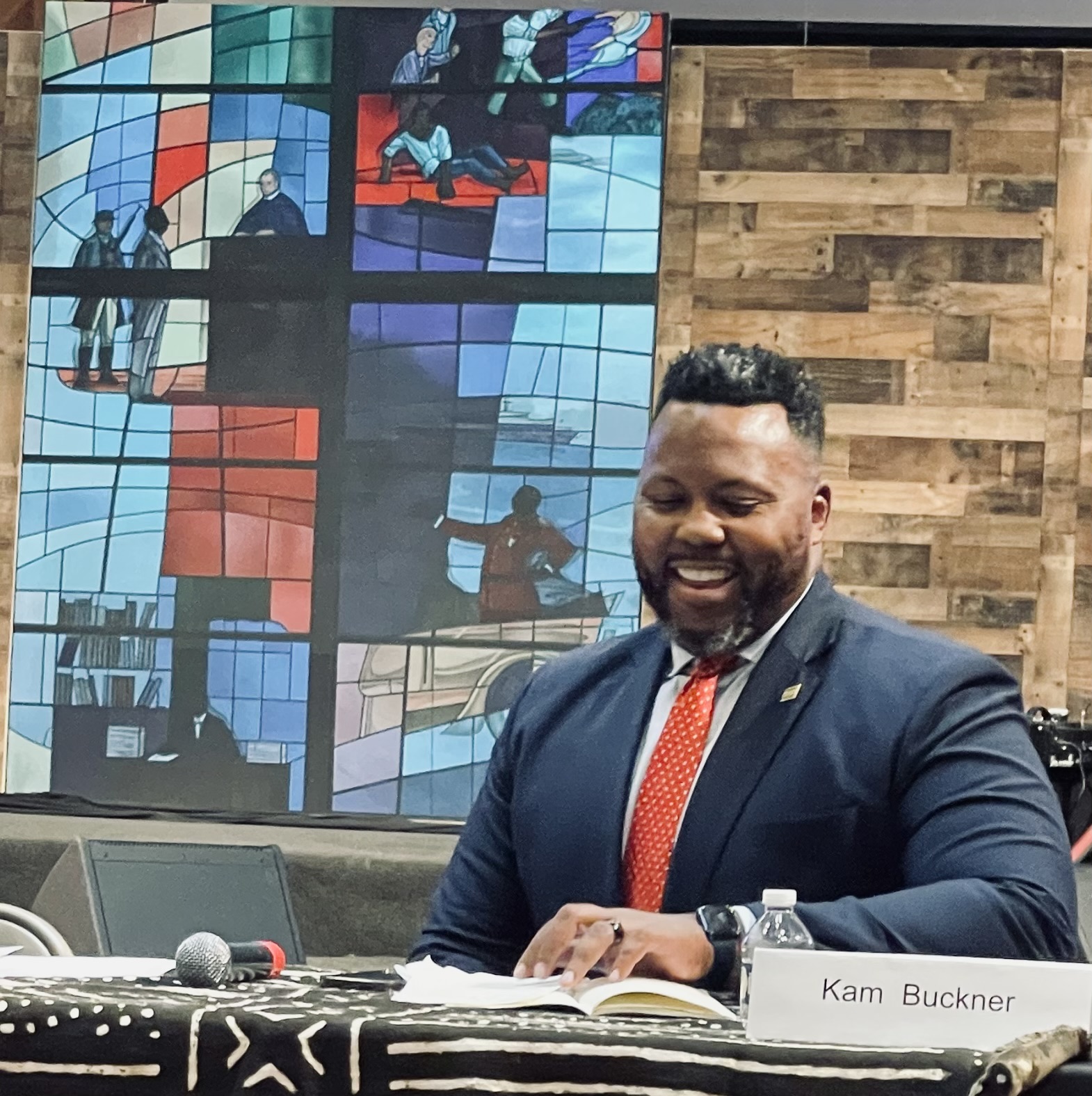
My friend Kam Buckner

My friend Kam Buckner

In early 2019 Skyline Village Chicago invited newly minted state representative Kam Buckner to meet his north side constituents at their monthly luncheon. Buckner blew in twenty minutes late, having raced from the state capitol in downstate Springfield. He flashed an enormous smile, introduced himself, then launched into a captivating and detailed description of budget negotiations with legislative leaders. We felt like we were insiders. 

He’d been in office for two months.

A political impasse had left Illinois with no state budget for most of the three years leading up to 2019. Many services had been cut, and the stalemate adversely affected Illinois’ economy and credit rating. Reports of the multi-faceted budget process sounded politically intricate. A person next to me at the luncheon whispered, “Isn’t he too new to be negotiating the budget?”

That’s my friend, Kam Buckner.

“I’ve wanted to be Mayor of Chicago since I was 12 years old. I’m a son of Chicago, I love this city, and I want to make it the best version of itself.”

He’s the thirty-seven year old lawyer, former big ten footballer running for mayor. He worked for Senator Durbin in Washington and Mayor Mitch Landrieu in New Orleans. 

The Buckner family tree grew its branches out of Mississippi mud and grafted itself onto Chicago’s big shoulders during the Second Great Migration. The blues, born in Mississippi and raised in Chicago came up from the south with them. Chicago’s Staple Singers and Jennifer Hudson are Buckner cousins. At Kam’s inaugural party in Springfield, he hit the stage to belt out a full-throated “Two Dollar Blues” with the band.

The day I met Kam was also the day the Chicago Bears announced they might move the team to Arlington Park. I asked Buckner if the Bears were fishing for state money to stay in Chicago. “Of course,” he answered. “I’ve already spoken to the governor about legislation to prevent that.”

This is a guy who hits the ground running.

In 2019 I’d been part of a group at my church that studied education equity, which is so complicated we disbanded. The next thing I knew Kam Buckner passed a bill to ensure schools receive funding based on the need of the students, rather than evidence of achievement. That’s equity. He’s been in the trenches on criminal justice reform, known as the SAFTE-T Act and negotiated the celebrated energy bill which legislates zero carbon emission by 2045, a boon for climate change.

At the dedication of adult playground equipment in my neighborhood park, a friend mentioned to Kam that cities in China have similar equipment. “I lived in China for six months and saw it everywhere,” he said. “What? You lived in China?’ 

Activists for safe streets and public transportation are Buckner’s biggest supporters. He rides the trains. Takes notes. Talks to  passengers. Has a plan.

At a Sunday afternoon mayoral forum the candidates were peppered with the usual questions on crime, education, housing. Afterwards, a long line waited for selfies and handshakes with Kam Buckner while the other candidates packed up to leave. 

“He’d make a great mayor,” a stranger said, “but I’m not votin’ for him. I’m afraid he’s gonna lose.”

“A cynic is a man who, when he smells flowers, looks around for a coffin.” —H.L. Mencken

Where You From?

Where You From?

Whenever I’m asked where I’m from, I hesitate. It takes a moment to wrangle shame to the ground long enough to scare up the truest truth to tell. The aftereffect of my parents’ inability to halt their rodeo boozing long enough to pay the rent accounts for a long trail of midnight moves.

Annapolis, Maryland; three different homes in Washington DC, two in Terre Haute Indiana, a hotel in Indianapolis, two homes in St.Louis, a hotel in Chicago, homes in Kenilworth, Wilmette, and Lake Forest, Illinois, two cottages in Sea Girt, New Jersey, two New York apartments, a Williamsburg, Virginia boarding school and back to Sea Girt.

At that point, after fourteen or fifteen schools, with a lick and a promise, I barely graduated from Manasquan high school. I spent the last year drinking and smoking in the school parking lot with a posse of flirty no-goods. I dropped out of Monmouth College, married, had a baby, moved to Vermont, divorced, got addicted to loco weed, moved to Point Pleasant, New Jersey, married again, joined a cult, divorced again. When I was twenty-nine years old I moved with my son back to Chicago, where I’ve mostly lived for forty-seven years as a tenderfoot, sober alcoholic. 

What do I say? I like to say I’m from the Midwest, like Bob Dylan, with God on my side. 

            Oh my name it ain’t nothin’

            My age it means less

            The country I come from

            Is called the Midwest

My three sisters say they are from New Jersey as if it has all the romance of Bruce Springsteen’s Jersey Girl.

              So don’t bother me cause I ain’t got no time

            I’m on my way to see that girl of mine

            Nothing else matters in this whole wide world

            When you’re in love with a Jersey girl

There are a lot of cool people at the Jersey Shore. I had a stable of romantic encounters like Springsteen’s Jersey Girl—on the beach, in the backseat of Mustang convertibles, in public bathrooms of raucous bars. Jersey boys drink beer. Morning. Noon. And Night. Not me. I drank gin. They have mononucleosis and venereal diseases. They drive drunk and kill you with sarcasm. And still they seek the girl from the right neighborhood, the right school, and the right family. I’m lucky I made it out of there alive.

In the Midwest of my girlhood, I knocked on neighbors’ doors for a ride to  school when I couldn’t wake up my mother or our car was out of gas. They helped me look for my missing dog, Lefty, in a snowstorm. When that rodeo was dusting up inside my home and danger was afoot, they taught me to hide in trees.

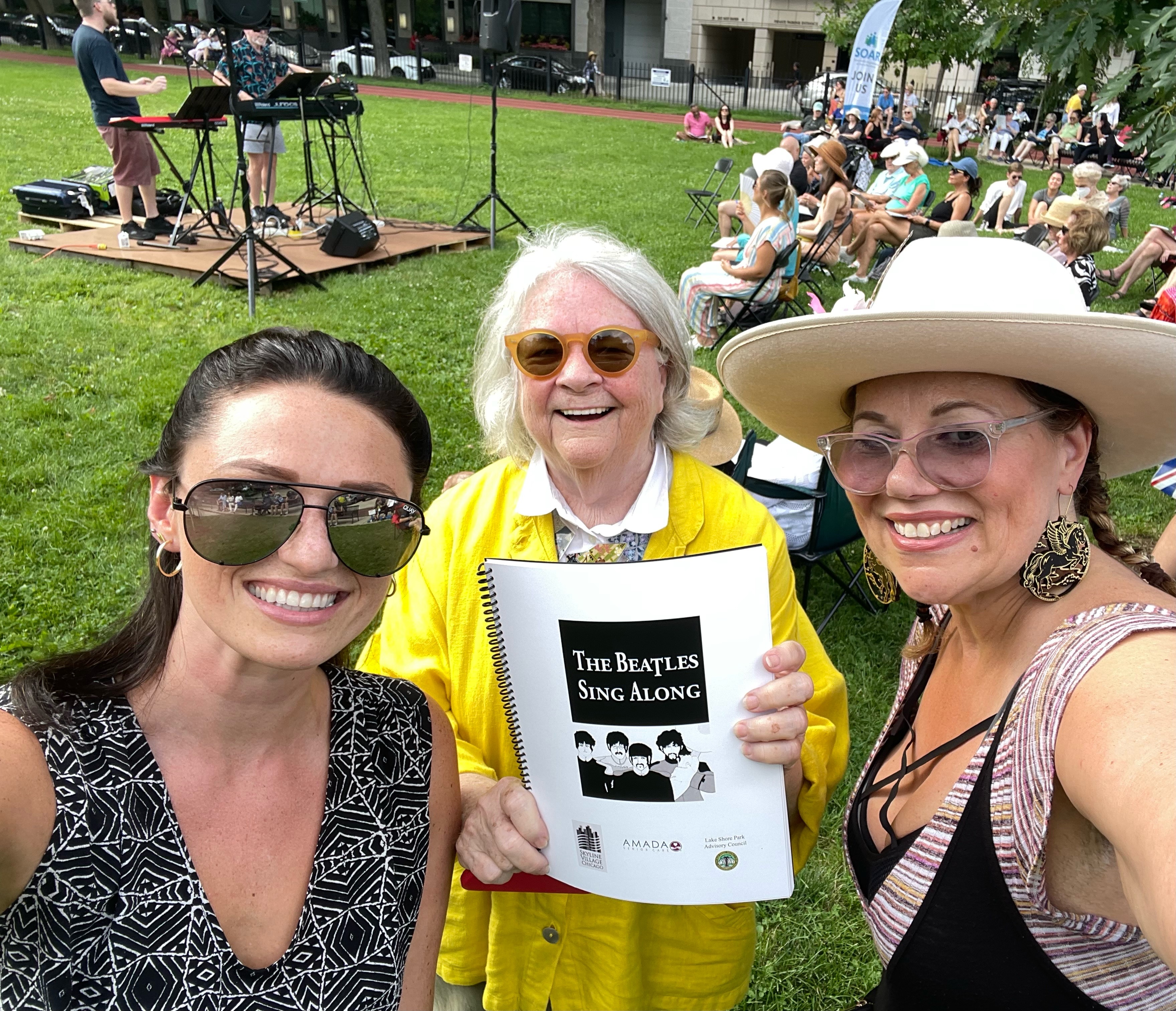
Midwestern fun: Beatles Sing Along

When I arrived back in Chicago to a corral of footloose midwestern strangers in the 1970s, I expected bound-for-glory hellos and found them. A friend from fifth grade I hadn’t seen in sixty-five years read my book recently and sent me a note: “you always belonged to us.”

That’s the Midwest. Where I’m from.

The Day I Turned Old

The Day I Turned Old

My actual (as opposed to official) retirement began the day I walked into Fourth Presbyterian Church in Chicago and asked to volunteer for a few hours each weekday. I’d had a couple of rough years at my final payroller job and I thought volunteering would help lift me into a new way of thinking. Or, more precisely, I wanted a time-filler to keep from obsessing over the aftermath of the soul-crushing previous twenty-four months of my life.

Oh churches! There seem to be so many cries for help, until they try to find a job fit for you. I grabbed the first one offered and plunked myself down in front of a computer in the cubicle next to Vince, a friendly volunteer who was out of work but not yet retired. Our job: clean up the database. 

The database. Every pensioner I’ve met since my stint who looked to the church to help fill the first year’s lonely unproductive hours says the same thing.

“I started with the database.”

Vince knew what he was doing and in fact devised a formula and matrix for our work. I suppose it was simple. If you could pay attention. I couldn’t. At the end of each of my four hour stints, he’d spot-check my work and stay an extra hour or more to correct everything I tried to accomplish. Vince had an advantage—he was good at the game Concentration. He could spot a misspelled name in seconds-flat with his highly industrious mind.

The room next to the dreaded cubicles had been cleared of all furniture. It may have been the size of a football field. For about a year, having been diagnosed with PTSD due to the aforementioned job, my perception of size, space and time was like science fiction, all out of whack. 

One day, I heard an old Frankie Valli tune, “Sherry Baby” seeping under the door from that huge room. Of course I learned all the words—they’re pretty simple—as a teenager and never forgot them. 

“What’s going on in there?” I asked Vince. 

“Sher-er-ree, Sherr-ee, Baby…

“Oh, that’s the old people’s exercise class,” he said.

“Old people?”

“Yeah, ya’ know. CLL. The Center for Life and Learning.”

I didn’t, in fact, know. The church bulletin had notices about CLL but I never thought they were meant for me. Within the next few weeks, each day I grew grumpier and grumpier working on the database.

“Vince,” I said, “No offense, but I’d rather be in that room dancing around to “Sherry Baby” than sitting in front of a computer.” 

“Aw, yes, Regan,” he said, “But would it be as rewarding?”

Rewarding. Now there’s a loaded word. Did I really need to feel rewarded for the hours between sunrise and sunset? How about satisfied? Couldn’t I just feel satisfied?

Or, neutral?

“Vince. I’m logging out today and joining the exercise group tomorrow.”

And that day, that neutral day, is the day I turned old.

Are People Living on the Red Line?

Are People Living on the Red Line?

In the past few years, whenever Ian would visit Chicago, he’d hole up in his hotel for hours working on some project for his job. I’d see him only at our favorite restaurants at mealtime. But this past Labor Day weekend, Ian came to Chicago freed from an old job, celebrating a new.

Our first night at a cherished outdoor restaurant was full of laughs about the ins and outs of “onboarding” the new job and the logistics of moving to Washington, where he hadn’t lived for twenty years. On Saturday afternoon I caught up with him in the lobby of his hotel. We walked a few blocks to the Art Institute for the last of the Bisa Butler exhibit next to the popular Impressionists gallery. 

Early Saturday morning Ian had run a 5k in Chicago’s Beverly neighborhood. To get to the southwest side he’d taken the CTA train to 95th Street, then hopped a bus. Throughout our walk to and within the Art Institute, he reported his experiences on the Red Line.

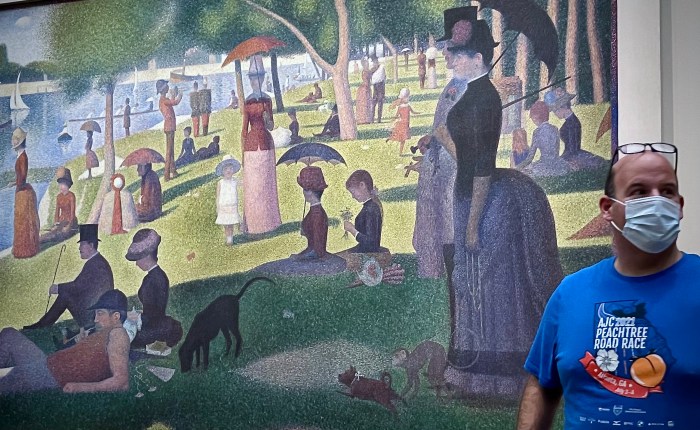
“Are people living on the Red Line?” he asked while studying Georges Seurat’s Sunday in the Park. He’d entered the train under Grand Avenue at 6:00 a.m. and had trouble finding a seat for all the passengers and their belongings. A woman in a work uniform demanded a scofflaw in the corner stop smoking. An argument broke out among all the passengers at that end. “Leave him alone! He deserves to have a smoke whenever he wants,” a burly agitator shouted.

“You have libertarians in Chicago?” Ian asked.

Visiting Paul Gauguin. Art Institute Chicago. Labor Day 2021.

In the Paul Gaughin gallery, Ian elaborated on how, at every stop beginning at Roosevelt Road, a young hustler stood in the doorway with his arms stretched out to keep the doors from closing.

“Gimme money! I’m not letting the doors go til y’all gimme some money,” he yelled to no one in particular until an exasperated hostage would give in. After a few stops Ian fled that car and ran onto another. When he finally disembarked at 95th, a policeman asked him why he was on the Red Line. Like he should know better.

Ambling among Claude Monet’s Water Lilies, I heard why he’d moved from his Michigan Avenue hotel after his return from the morning 5K in Beverly. The hotel was trashy—meaning real trash. There were food containers and empty Starbucks cups all over the lobby. The trash bins were overflowing. No sign of the maintenance crew. Boisterous tourists and children occupied every available lobby seat.

By the time we reached Georgia O’Keefe’s Sky Above Clouds IV,  I looked back at the packed galleries. I hadn’t been in a crowded indoor space since before the pandemic. Suddenly my throat closed and my legs wobbled.

“I gotta get outta here,” I half-whispered to Ian. We darted through the less-crowded Modern Wing, out to late-summer Monroe Street and tender-loving Lake Michigan.

LikeNotLikeMyFather

Every day I look more like my father with one major exception. He was obsessed with his looks, particularly his weight. 

His man at Gucci dressed him in snazzy Italian tweed, buckled loafers and the branded red, green and tan striped garters to hold his cashmere socks in place.

Every time he lost weight he’d preen before the store mirror as the tailor tucked a little in here, a little in there. He delighted in the Gucci salesmen fussing over him like clucking hens admiring their brood. When I accompanied him on these shopping trips, I wished for a fashion shield to surround my rainbow-colored, unstructured and untailored wardrobe. Funds from my part-time receptionist job required me to shop in Marshall Field’s “Last Chance” room.

An avid devotee of the Dr. Atkins’ low-carbohydrate diet, he packed his fifty-seventh-floor fridge with white protein—cottage cheese, plain yogurt, eggs, chicken, tuna salad—plus sugar-free Vernor’s ginger ale. He disdained calorie counting and instead tracked protein grams and carbohydrates.

His favorite topic of conversation was his diet. When I didn’t change the subject fast enough, my food intake brought on unwanted rhetorical questions. “What’s in that bowl?” He’d ask already knowing it was carb-forbidden spaghetti or ice cream.

The Atkins diet was all the rage in Alcoholics Anonymous. My father cornered newcomers and hammered a Dr. Atkins wedge into their soggy brains before jotting down his phone number and saying, “Call me anytime.” Whenever he saw someone at an AA meeting holding a donut, he’d explain that a no-sugar low-carb diet keeps the blood sugar regulated and, in turn, reduces the craving for alcohol. Beginners were known to eat all-protein tuna fish right out of the can, in accordance with his dictates. 

The grocery store on the second floor of his building had a deli counter with a superior version of my favorite food, cole slaw. I once purchased a pint. He caught me at his kitchen counter about to take a forkful.

“You’re not going to eat those carbs here, are you?” 

His kitchen counter was strewn with the maniacal makings of a high protein drink. Next to the bartender-grade electric mixer stood pricey containers from Sherwyn’s Health Foods: powdered desiccated liver, brewer’s yeast, magnesium, Vitamin C, flax seed, liquid amino acids, sunflower oil, and liquid lecithin, a brown goo that could lubricate a car. My kitchen had potato chips hidden in cabinets and Hershey bars squirreled away in the freezer. 

For a few years in the 1980s I spent weekends at the three-acre garden on the third floor of his building, Lake Point Tower. I’d spend time peering through binoculars spotting gulls, hawks and bufflehead ducks at the confluence of the Chicago River and Lake Michigan. My father, clad only in Gucci swimming trunks, would strike a favorite yoga pose—standing on his head—within sight of all the bathers and sun worshipers around the nearby pool. 

As much as he tried, he couldn’t escape hangdog jowls and double chins as he aged. 

Nor can I.