The Exorcist: RIP

The Exorcist: RIP

Truth is Stranger than Fiction
…but it is because Fiction is obliged to stick to possibilities; Truth isn’t.” ― Mark Twain
I was 24 years old and six months out of Marlboro Psychiatric Hospital in Monmouth County NJ, when I read the The Exorcist in 1971. Marlboro was a notorious looney bin where patients attacked one another, food-borne germs killed people, and the criminally insane were constantly getting loose. I landed there after a year-long binge on LSD and Boone’s Farm Apple Wine. My psychiatrist terrified me with photos of headless babies born to LSD-consuming mothers.

After my release, I went to AA meetings, lived with a friend, got a job making terrariums at Julius Roehrs Garden Center in Farmingdale and saved for a home for me and my four-year-old son Joe. He was living with my ex-husband and his parents.

I’d picked up the paperback at Main Street Pharmacy after dropping Joe at his interim home in Belmar. We’d played at our beloved seaside for our weekly visit and parted cheerfully. I drove to the Belmar Diner, ordered a grilled cheese and coke, and opened the book. An hour later I was in my VW van in the diner parking lot, bewitched by the reading.

The book’s demon-possessed 12-year-old girl is called Regan. I’d seen my name printed on report cards, paychecks, my social security card and driver’s license, but I’d never seen the name Regan in any context outside of myself. The author, William Peter Blatty madereference to Regan’s name coming from Shakespeare’s King Lear. My p
arents had told me my name came from King Lear. Exorcist Regan’s mother was an 51evfuyqtdl-_ac_us160_actress whose director, Burke Williams, visited frequently and drank too many martinis. My father’s name was William Burke. He loved martinis. Exorcist Regan lived with her mother in Georgetown. My family had lived in Georgetown after my sisters and I were born.

I finished the book in the parking lot as the sun set on the Shark River Inlet, then serpentined down the road to my mother’s house in my slow-moving van. I was having periodic LSD flashbacks in those days, and the dizzying words of Regan’s possession plundered my healing nervous system.

My mother, Agnes, sat up from her beer-soaked abyss as I blasted through the front door and slammed The Exorcist down on the coffee table. Who is this guy? How do you know him? Why didn’t you warn me about this? How could you let me read this?

Agnes, an avid reader but detached from pop culture or bestsellers hadn’t read the summer blockbuster. I told her about Regan, Burke, martinis, Shakespeare. She joked the author must have been one of those undergraduates who attended parties at our house in Georgetown when I was a baby. I consulted my father in New York, and he had no idea who William Peter Blatty was, though after The Exorcist movie came out he pretended he did.

Years later a friend ran into Blatty and asked him if he had named Regan after me. “Absolutely,” the author replied, “They had the best parties. That name always haunted me. Who would name their little baby after one of Shakespeare’s most craven females?”

RIP William Peter Blatty January 12, 2017. Vaya Con Dios.

My Secret Years

My Secret Years

The Secret Years by Regan Burke

It’s been 40 years since I left the marriage. I had been sober for almost a year, he for three. We met in Alcoholics Anonymous. I was a hippie and he had been in the Army during the Korean War. We told ourselves we’d bridge our generational, cultural and intellectual divide with love. I brought my delightful six-year-old son, Joe, into the marriage.

A small group of spiritual seekers in AA brought us to a cozy bible study that recruited
prospective believers to a Sunday service replete with emotional, old-fashioned hymns. I made deep friendships there. Kind and accepting fellowship was new to me. I’d grown up thinking sarcastic banter and raging all-night arguments with ever-present booze qualified as chit-chat. My addiction got off to an early start as the legal drinking age was not adhered to in my family.

When I got sober, I hungered for a new family with a clear consistent recipe for living. I easily succumbed to the succor of an evangelical Christian cult. This authoritarian, bible-thumping church required women to submit to their husbands – even when the husbands battered the wives. I returned every time to a husband who tried to smack me into the kind of wife he saw in his neighborhood growing up. I craved God’s love through the approval of the church elders but I had a wild, willful, rule-breaking past that was hard to tame, no matter how hard my husband tried. To this day, the congenial backslapping that people use to emphasize the punchline of their stories, can trigger in me a subconscious fight-or-flight response.

th-1The day of the fight, I raged around the house rattling anything in my path when I discovered the husband had walked out with our joint checkbook. He was going to drain the account. I climbed into my 1963 Volkswagen bus and headed to the bank. There he was in the strip mall parking lot slinking into his 1970 Ford Mustang. I floored my van and slammed right into the back of his Mustang. He tore out down the two-lane highway. I pursued him, crashing into him every time he slowed down.

Eventually I was able to get up enough steam to bulldoze him off the road and cram him into a tree. The impact forced all the doors in the van to fly open, but otherwise there wasth-2 no damage to me or my vehicle. I turned around and drove the speed limit home, parked my van, went inside and fell into bed, believing I had killed him. I slipped into a deep sleep relieved from the cares of all the world.

I was awakened by two elders from the church. The husband escaped unharmed.They had spoken to the police, vouched for my good character and vowed to admit me to a mental institution immediately. No charges were filed. I spent three months in the Christian Health Care Center in Wyckoff, NJ. My son Joe stayed with a church family. The marriage lasted another two years.

Ancestral Tree Worship and Carl Jung

Ancestral Tree Worship and Carl Jung
A crow caws in the gingko tree on the corner. The rising sun shines through the outdoor tree branches. Their shadows dapple my bedroom walls.

I wake early to catch the glory of each day’s wall art, to meditate with the trees in their seasons. Outside, Ozzy the dog and I stop long enough under the gingko tree to allow its fanning leaves to breathe a fresh day into our early morning walk.

th-1My favorite place is anywhere there are trees.
I love them for all the usual reasons: pretty, green, shade. The deciding factor on my condo purchase 15 years ago was the swaying branches outside the wall-to-wall windows. My home is on the 3rd floor of a 20-story high-rise overlooking Lake Michigan. When I first saw the place, the three ash trees in the parkway had reached a height equal to the 4th floor.

It was like living in a treehouse.th-3

Last year the City of Chicago’s Forestry crews euthanized my treehouse. The ashes were slowly killing themselves by feeding Emerald Ash Borers, those exotic hungry beetles from Asia. I mourn my ash trees. I thought they were immortal.

My mother, Agnes, taught me the pragmatism of trees. Stacy was born 11 years after me, and Agnes insisted I walk my baby sister around on sunny days. Her constant reminder stays with me, “Be sure you stop under the trees so the baby can see the shadows swaying.”

“Women should always have babies in the beginning of summer,” Agnes often said, “in case they are colicky, they will be soothed by leaves swaying in the trees.” She muttered “idiot” under her breath anytime another mother announced the birth of a baby in any month other than early summer.

And indeed, three of her four babies were born in May, June and July. She pretended she planned it that way.

My one and only baby, Joe, was born in May. His 1st summer was spent on his back under the trees outside in a baby carriage. Inside, he spent his time in a crib under a window of trees, syncopating his first gurgles with the sound of leaves rubbing together in the breeze.

Agnes was right about nature’s tranquilizer for infants, but she never claimed it worked for adults. She wouldn’t have been caught dead contributing such unsophisticated, sappy remedies to adult conversations. Her tranquilizers were beer and scotch and later, valium. She spent some of the last years of her life demented from these potions and gazing at the trees in verdant Vermont.604909-44011-10

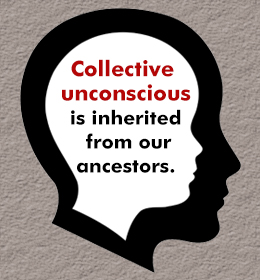
Trees soothe me anywhere, in any season. Joe absorbs tree balm while minding his wooded property. Carl Jung tells us Agnes simply passed on the inheritance – the collective unconscious of Irish tree worship that supposes tree fairies live in high branches watching over us. My mother’s life was rooted in addiction that mimicked a life-sucking aphid. Yet, she uttered words that gave me and my son our love for trees, a priceless, ancient, tranquilizing inheritance.

You read that out loud in class?

bethfinke's avatarSafe & Sound blog

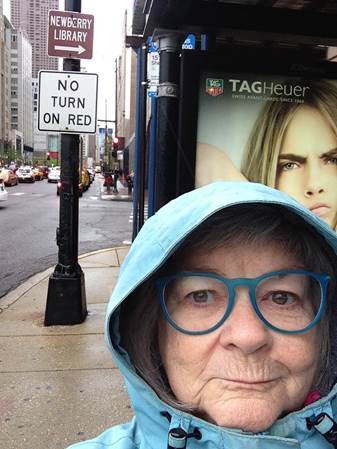
Regan-Burke That’s Regan, today’s guest blogger, peaking out of her hood at a Chicago bus stop.

It was a lucky day for me when Regan Burke turned up for one of my memoir-writing classes. A civil rights activist, Regan was a White House staffer during the Clinton presidency and has colorful – and moving – stories to tell. She files away unusual words she hears and cleverly shoehorns one or two of them into each essay – you’ll find one here in her guest post about the value of honesty in memoir-writing.

There’s a Lacuna in My Story

by Regan Burke

Sometimes I email the essays I write for my memoir classes to a good friend.

She tends to find my work imprudent and irresponsible.

”You read that aloud in class?” she’ll ask. “Yep,” I answer. “I did.”

I have a strong motivation for writing the truth. A book by Dr…

View original post 449 more words