What’s Love Got To Do With It?

What’s Love Got To Do With It?

On February 15, 1976, I drove my red Toyota ten miles west from my Toms River, New Jersey, home to a small church meeting in Whiting.  I’d not had a drink for twenty-four hours. My head was pounding. I shook and shivered and sweated. I sat down but had one foot out the door.

Toms River shoulders the Atlantic Ocean. Most of life there happens near the ocean, its inlets, and brackish rivers. Whiting, known for the now-closed Nature’s Rest Nudist Colony, sits on unceded Leni Lenape land at the northern edge of New Jersey’s Pine Barrens. It’s a defunct railroad town surrounded by scrub pines, that dreary little tree that never grows more than eighteen feet because of the sandy soil. No one goes there.

I drove to Whiting to a meeting of Alcoholics Anonymous because I wanted to be anonymous and not run into anyone I knew. I had an overwhelming urge to announce out loud to strangers that I was going to kill myself with vodka.

An active adult community, Crestwood Village, had risen up near Whiting. The eight men and women at the AA meeting were over fifty years old, which was a turn-off for me at twenty-nine. But I was banging on the bottom and had nothing to lose. I thought I’d spill the beans there and bug out for the liquor store on my way home.

The group of eight centered the AA meeting around me and how I could stay sober. They figured out a schedule of who could follow me home that night and stay with me for the next few days. Each day, a different soul appeared on my doorstep to feed me, talk to me, answer the dreaded phone, and connect me to an AA group in my neighborhood. Their messages were the same: you’re sick, we were sick, too. Drink water. Eat chocolate. Go to AA. They trusted me with shocking truths about their lives before sobriety. 

They traveled well beyond their small community in the Pine Barrens and re-arranged their comfortable lives to help a suffering alcoholic. The obsession to relieve my misery with booze lifted after about seven days. Each of them called every day for a month.

I never drank again. After a few months, I sold my house, gave away the dog, left an estranged husband, packed up my son and houseplants, and drove to Chicago.

I was a dead soul before I met that group of kind and loving saints in New Jersey’s outback. Every minute of every day, I thought only of drinking and not drinking.

In the forty-eight years since, I’ve met many people who have asked for help. I share the same love that was offered to me that first week. In very few cases, people have stayed sober themselves. Most have disappeared, died, or gotten pissed off and moved on. 

Love saved me. That’s all I can wish for others.

Happy Valentine’s Day.

.

Oppenheimer & Jesus

Oppenheimer & Jesus

This is one of many stories I’ve written about the origin of my existential and nameless fears. As much as I try to analyze a deeper reason for the fears, the stories end up all the same, with a few updates. They seem to write themselves.

______________________________________________________________

In 1949, the Soviet Union started the Cold War by detonating its first atomic bomb, blockading Berlin, and pushing its way into Poland and Eastern Europe. The voices I heard swirling above my head at cocktail hour in our Washington, D.C. home implied the Russians were coming for us. 

Poor old Robert Oppenheimer. The father of the atomic bomb wanted nuclear weapons banned after President Truman used A-bombs to murder 180,000 Japanese civilians in 1945. Oppenheimer helped design an air defense of the United States against atomic attacks from the Russians through the National Civil Defense Administration. Common folk wisdom said only cockroaches would survive a nuclear attack. Nevertheless, Oppenheimer’s design required all school teachers to conduct impromptu air raid drills. When teachers shouted an impromptu Drop! us kids jumped out of our seats, crawled under our desks, fell over our knees, and covered our heads. The nuns added the instruction to recite Hail Marys aloud while on the floor. 

Holy Mary, Mother of God, pray for us sinners, now and at the hour of our death. Amen.

At seven years old, I didn’t understand the difference between a drill and the real event. I went to my death every time I huddled under that desk. But, I was not. afraid. to die. 

This is it, I’d pray, “I’m going to be with Jesus.”

I believed Mother Mary would grab me in her arms like she did baby Jesus and take me to heaven. Why did they pray to avoid such ecstasy? What were they so afraid of?

By the time third grade rolled around, I got used to not dying under the desk. Images of children who lived after their exposure to the atomic bombs in Hiroshima and Nagasaki appeared on our small black-and-white television. I feared that there were worse things than death. 

Our Catholic school teachers taught that Communists who ruled Mother Russia prohibited the celebration of the Mass. So we had to pray for Russia while fearing she’d annihilate us at any minute. In those days, at home, my two sisters and I made our own breakfasts and school lunches because my mother’s alcohol intake rendered her unconscious in the mornings. We often gathered around her bed, trying to figure out if she was alive. Holy Mary, Mother of God. One of us would place a finger under her nostrils to feel her breath until, with one exhale, she’d confirm that at least one of our fears was unfounded. 

Those early fears seeded my memory and have inoculated me against the mau-mauing of present-day alarmists, naysayers, and fear-mongers who sermonize about the death of our democracy. Yeah-but’ers and tsk-tsk’ers are relentless in efforts to convince me the country is hopelessly overrun with insurrectionists, sexual predators, corrupt politicians and gun-toting scofflaws.

And what if these are apocalyptic times? So what? So were the 1950s, the 1960s, and 1970s.

Mother Mary may be out of commission these days, but I still dream of being with Jesus.

Killing the January Blues

Killing the January Blues

Early in my sobriety, a therapist told me to volunteer in order to get out of my depression. I almost went for her throat.

“That’s your advice? How can I help anyone when I can hardly get out of bed?”

In Alcoholics Anonymous, we’re told self-centeredness is a common trait that leads to drunkenness; it’s suggested that serving others will help keep us sober. 

“It’s a spiritual principle. Don’t overthink it. Just go help someone.” An AA meeting-goer told me when I was whining about the blues one January.

After years of campaigning by activists, members of Congress, and Coretta Scott King, President Ronald Reagan finally signed a bill creating a  federal holiday in honor of Dr. Martin Luther King, Jr. Observed on the third Monday of January, dear Martin was first celebrated in 1986.

“You don’t have to have a college degree to serve. You don’t have to make your subject and verb agree to serve. You only need a heart full of grace. A soul generated by love.” MLK told us.

Grace is an indulgent gift from the cosmos. A heart full of love sounds too godly for my rebellious nature. For some, it comes naturally. Not for me. I meet many people I don’t want to love or serve. I balk. This is why I must be told to commit to love, commit to serve.  Every day, I’m reminded of the promised rewards: freedom from melancholy and self-pity. The promise is appealing—and attainable.

During the month of January, organizations, politicians, GenXers, and citizen elders all celebrate MLK through service to others. Rush University Medical Center in Chicago offers a few easy opportunities.

  • Celebrate at a hybrid event: “A Lesson from Dr. King: Health Equity is  Everyone’s Business,” on Wednesday, January 17, from 1:00 -2:00 pm. Experts share how to work towards ensuring everyone has access to their highest level of health. Click  here if you’d like more information.
  • Volunteer in person in Chicago distributing 300 meals on Friday, January 19, from 10:30 am to 12:30 pm. Multiple volunteer roles are available (preparers, packers, and drivers). Want to help? Click here for more info.
  • Mentor with the Community Health Mentor Program. Teach first-year graduate students about living with chronic conditions (high blood pressure, diabetes, alcoholism), as well as guide them in becoming patient-centered practitioners. All Community Health Mentor meetings will be on Zoom. Mentors receive up to sixty dollars in gift cards for participating in the training and all three meetings. The meeting dates are Wednesdays, January 24, February 14, and March 20, between 1 pm -6 pm for 60-90 minutes. Click here for more info or email Hannah Weitzman, Program Coordinator, at hannah_weitzman@rush.edu.

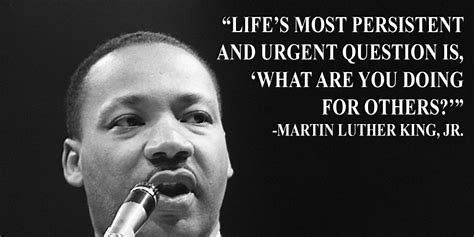
Dispelling my preoccupation with self is a lifelong endeavor. It’s comforting that MLK recognized this is true for many, which is why he gave us all the big quote:

“Life’s most persistent and urgent question is, ‘What are you doing for others?”

Here’s to honoring the legacy. Happy New Year.

Forsaken Christmas

Forsaken Christmas

The first movie I saw on Christmas Day was To Kill A Mockingbird in 1962. Since I suffered from an endless holiday hangover, little of the story stuck in my saturated brain. As a high school freshman, when I was still afraid to fail, I’d read and reported on To Kill A Mockingbird. Until Mockingbird, I hadn’t seen a movie created from a book I’d read. Fortunately, the film is still so popular it’s come and gone enough times on TV for me to watch it again. And again.

A Christmas Day movie-going tradition began, sometimes with friends, sometimes alone. At first December 25th movie releases offered an escape from uncomfortable family time. Before I got sober in 1976, mandatory holiday gatherings handed out one big gift-wrapped box of shame. Movie people count on family escapees, I suppose. Some of the best movies have been released on Christmas Day: The Sting, Catch Me If You Can, Broadcast News, Sherlock Holmes, and Tombstone. 

Every Sunday when my son was a toddler, he’d nap as his father studied, and I’d go to the movies. When he was old enough, we went to the movies together, especially on Christmas Day after the divorces, when it was just the two of us. When he was seventeen, he convinced me to see Talking Heads’ 1984 concert film, “Stop Making Sense.”  

“I don’t like punk rock,” I said.

“It’s not punk. It’s different. You’ll like it,” he convinced me.

He had his own band at the time and knew his music, so I trusted him. He was right. I blasted the “Stop Making Sense” cassette on my car radio until the tape wore thin.

When movie buddy Marca Bristo was alive and in town, we couldn’t wait to get to the first showing of the Christmas Day releases before she returned home to her family dinner. We’d usually discuss the movie over after-theater coffee, but on Christmas Day, coffee shops closed, so we’d sit in the quiet theater afterward, mulling the pros and cons. Marca died in September 2019. The Christmas releases that year included Little Women, 1917, and It’s a Beautiful Day in the Neighborhood. I chose Just Mercy, which tells the true story of defense attorney Bryan Stevenson and his client, a black man falsely accused of murder. A powerful advocate for people with disabilities, Marca would have chosen the same. 

Movie theaters closed for a while at the beginning of the Covid pandemic in 2020. I’m so wary of catching Covid and all manner of infectious diseases that I’ve not been in a movie theater since Christmas 2019. It’s tempting to see the re-make of The Color Purple, which will open this year on December 25. But every time I’m in a coffee shop or at a public event and someone sneezes or blows their nose, low-level panic attacks. Reclining in a multi-plex next to strangers for two or three hours’ worth of entertainment is out of the question. 

I’ll wait for Netflix. 

Day of the Living Dead

The Day of the Dead Mexican holiday, observed on November 1st celebrates the deceased with ofrendas (home altars) and festive gravesite visits. Tombstone gatherings include offerings of the deceased’s favorite food, drink, and music.

When I learned about my sister Mara’s death last spring, I reflected on our estranged relationship in a blog post. Since then, I’ve received a slew of messages from her friends that piece together a life I never knew, stories that give life to the dead.

Borrowing from the Mexican tradition, I offer an ofrenda to my older sister Mara Burke, with a sampling of those messages.

…we double-dated, attended formals at The Peddie School, and listened to music we loved. Her shop, where she helped us look stunning, but never as stunning as she looked, was where she generously gave us all our first credit cards! The slim silver bracelet she gave me many years ago is still my favorite, the many articles she sent knowing I loved cooking and gardening, and the tiny blue and white dish on my nightstand are fond remembrances of her love.

…I met Mara at the Catholic Home for Unwed Mothers.

…I interviewed Mara for a job a few years after her store closed in the early 90s. She was a talented clothier, but she showed up smelling of booze.

…Mara was on my mind,  i Googled her, saddened by the news i now read. I am happy to say that even though Mara and I were not close, we shared plenty of sobriety, laughter, and lots of very good coffee and pastry over the past 33 years.

… I met her in the 90s. We did a lot of meetings and healing through friendship with other recovering folks. She moved from Florida, and we lost touch.

…Mara came to care for me when I lost my mother years ago in a horrific accident. She has been through much with me and was selfless in her caring when my son died suddenly. My pain was her pain, and it was real.

…she always showed up for work even when she couldn’t stand up straight because of that hump on her back. She’s the best salesperson I’ve ever had.

… she was my neighbor for seven years. I set her up on a senior dating site. We laughed about all her dates. She never drank anything but coffee & ice water, attended Mass down the street and knew the priest. She said many times she wanted her ashes spread around her mother’s grave. 

…she had that beautiful speaking voice.

… we had a beautiful day to carry out Mara’s wishes. We buried a small crystal heart dish Mara had given me with her ashes. We planted daffodil bulbs to bloom in the spring, said a prayer, and sprinkled her ashes over her mother’s grave. 

Mara moved from Florida to Virginia for inexplicable reasons. Two weeks passed before her body was found on the floor of her apartment, and another week before I was called. The death certificate says she died of natural causes complicated by dementia and follicular lymphoma. 


RIP, Mara Burke. Born February 14, 1945, died March 13, 2023.

Lessons Learned: God

Lessons Learned: God

First Grade—Third Grade

God is a white man with a white beard and white flowing hair, sometimes holding white stone tablets, later to be revealed as the Ten Commandments. Then He has a son, Jesus, and simultaneously is Jesus. Jesus’ mother, Mary, and God aren’t married. Then God becomes a ghost, the Holy Ghost. Then He’s all three. Three persons in one God.

All people who were ever born are sinners who can never redeem themselves. But God gives Jesus to Catholics for salvation from their sins. Only Catholics have access to Jesus. They go to heaven when they die, thanks to Jesus dying on the cross for their sins. Everyone else goes to hell.

Lesson: Everyone is bad and God only likes Catholics.

Fourth Grade—Sixth Grade

God created Adam and Eve in His likeness and placed them in Paradise, a tropical garden with no predators or stinging bugs, and all the animals, flowers, and fruit in the world. God forbade them to eat apples from the Tree of Knowledge, but they wanted to be like God, to have His knowledge, so they ate the apples. He got mad and threw them out of Paradise. They had to fend for themselves—grow their food, make their clothes, and pay attention to God.

Adam and Eve had two sons, Cain and Abel. God seemed to like Abel better. Cain got jealous and killed Abel. God punished Cain by throwing him out of his hometown into the desert.

Lesson: Avoid God.

Seventh Grade—Eighth Grade

Jews and Romans alike feared Jesus for riling up the citizenry against their oppressive power structures. The Roman king of Jerusalem sentenced Jesus to a brutal crucifixion. Even though He was a Jew, the Jews didn’t come to his defense.

When Jesus’ followers went to the tomb to see His dead body, Jesus was gone. God resurrected Jesus, body, and soul to live forever. This is what happens to Catholics. They live forever. In Paradise.

“Tiger, Tiger, Burning bright, 
In the forests of the night,
What immortal hand or eye
Could frame thy fearful symmetry.”

Lesson: I want to be a nun.

Ninth Grade

Using my leaky Esterbrook fountain pen,  I write “How can God make evil” in the margin of my English literature textbook next to William Blake’s first stanza of “The Tiger”.  

Lesson: God is confusing.

Teenage—Twenties 

I look for the heavenly in alcohol, drugs, and men. I see God. Then I don’t. 

Lesson: There is no God.

Thirties—Sixties

There is a Higher Power. Maybe God. Maybe Jesus. Maybe the Holy Spirit. Maybe Buddha. Not a Catholic. Not even a Christian.

Lesson: Keep looking.

Seventh Decade

Casting off the lifelong mantle of sinner; I’m finally hip to the knowledge no one is born bad. God does not create evil and Jesus didn’t die to save me—God doesn’t need atonement from me or Jesus. There’s no heaven. No hell. Resurrection may be so. At the end, perhaps time and space will simply let go of me and I’ll wander an endless field of puppies, aka, Paradise.

Lesson: I’m OK. 

Holidays Interrupted

Holidays Interrupted


In the Indianapolis Woolworth’s, I bought a Davy Crockett coonskin hat for fifty cents when I was eight. It was the biggest store I’d been in by myself until the Famous-Barr Co. department store in Clayton, Missouri.

In 1956 my family moved to Maryland Avenue in Clayton, directly behind the mid-century modern Famous-Barr store. Old-growth trees, low-lying rhododendron and azaleas filled our property. Burglar-proof chain link fences adorned with honeysuckle prevented all of us on Maryland Avenue from wandering over to the store through the loading dock from our backyards.

The first time I perched on an oak branch and peeked through its leaves at windowless Famous-Barr, I imagined a space ship had landed without anyone telling us. The 1940’s modern has a molded-cement four-story curved front, made to mimic the curve of Forsyth Avenue. My ten year old feet were itching to sneak down the street and around the fence to explore the inside.

As soon as my mother discovered I’d been wandering around Famous-Barr by myself, she sent me on errands to purchase small items like buttons and thread, and birthday cards she’d never send. I spent a lot of time examining the jewelry and when I received money for my tenth birthday I promptly ran to Famous-Barr for a coveted Elvis necklace.

One day before Christmas my mother kept me home from school and sent me to Famous-Barr. I had strict instructions to buy solid red wrapping paper, solid green ribbon and scotch tape.When I arrived home, boxes were piled up on the living room floor stamped with the Famous-Barr logos. She showed me how to wrap one box and told me to do the rest.

“Do not under any circumstances look in any of the boxes,” she instructed, “Just wrap them and put them under the tree.”

Then she went to bed.

It didn’t take long before I deduced she trusted me with keeping the contents secret. Of course she expected me to look inside. Every box had clothes for me and my two sisters. Skirts, blouses, sweaters, socks, underwear, shoes, gloves and hats. My mother thought sameness was elegant. She dressed us alike, as she did the boxes. 

I was used to keeping family secrets and easily kept this one. My sisters would have been angry with me for different reasons if I’d told them. One, because I knew before she did. The other, because she hated dressing in the same clothes, and that was reason enough to resent me.

On Christmas morning there were full ashtrays and dirty glasses throughout the house from the night before. Our parents were impossible to arouse from their drunken stupor so we opened presents without them. We shuffled the garments between us to try on our respective sizes. We loved our clothes and remained dressed all day as if someone might come along and take a picture.

For many holidays since, I’ve decorated boxes and feigned excitement. But true holiday spirit left me forever on the notions floor of Famous-Barr.


Mara Burke RIP

Mara Burke RIP

On Thursday, March 30, a cousin called to say she’d heard my long-forgotten sister Mara had died. We’ve both heard such rumors over the years and have no way of verifying them. So we shrugged and turned our attention to stories about our grandchildren before saying goodbye. A few minutes later she texted me a post from Mara’s Facebook:

The next morning I sipped coffee with one hand as I clicked into voicemails, emails and texts. A voicemail from the previous day said, ”Yes, ma’am. My name is Frank. I’m a captain with Winchester Police. Uh trying to find some possible information about your sister Mara if you can give me a call back. My telephone number is 540xxxxxx. Thanks.”

Captain Frank said they’d responded to a wellness check nearly three weeks ago, on March 13 and was sorry to say Mara had died. The police couldn’t find any information except an emergency contact on Mara’s health records for one of my other sisters. That number was disconnected.

Their investigation drove them to Facebook looking for clues. Eventually they connected to Ellen, an old high school friend who tried staying in touch with Mara. Years ago I’d given Ellen my phone number during a time when people were still trying to help Mara get sober.

“How did she die?” I asked the Captain.

“The death certificate won’t be available for a few weeks. Nothing suspicious though. No reason for us to ask for an autopsy,” he said.

“Oh. Where’s her body?” I asked.

“At the funeral home. They are concerned about the disposition of the remains.”

The Captain felt he ought to talk to the one quasi-official designated family member whom Mara listed as her emergency contact. I said it might take me a few hours to contact her since I didn’t have her number.

“The landlord hasn’t called us yet,” said the Captain, “but we’ll need to give him a contact.”

“I’m sorry,” I said, “I guess it’s obvious we are all estranged.”

I thanked him profusely and told him to feel free to contact me again if need be.

Mara was the oldest of four sisters. I, the second born, became an unwanted character in her life from the dawn of our family story. As adults Mara and I tried here and there to be loving. She once sent me a textbook, England in Literature, from my high school English class. It has my handwritten notes in the margins. She’d salvaged the book from the rubble of our mother’s home. This cherished gift is one of the kindest gestures of my lifetime. 

But our ancestral roots of untreated alcoholism proved too tangled for Mara to weed through. I arose as an easy target for her perennial unruly emotions, especially after I joined Alcoholics Anonymous.

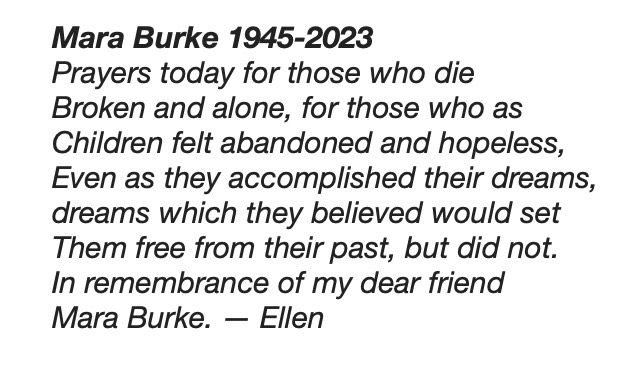
From her Facebook page, I see that many of Mara’s old friends loved her dearly and tried to poke through her isolation for years with little success. Ellen’s brief eulogy tells me Mara confided in her,  and Ellen loved Mara even in Mara’s brokenness.

That is the most comforting condolence of all—knowing Mara was loved.

Mara Burke, b. February 1, 1945, d. March 13, 2023

Where You From?

Where You From?

Whenever I’m asked where I’m from, I hesitate. It takes a moment to wrangle shame to the ground long enough to scare up the truest truth to tell. The aftereffect of my parents’ inability to halt their rodeo boozing long enough to pay the rent accounts for a long trail of midnight moves.

Annapolis, Maryland; three different homes in Washington DC, two in Terre Haute Indiana, a hotel in Indianapolis, two homes in St.Louis, a hotel in Chicago, homes in Kenilworth, Wilmette, and Lake Forest, Illinois, two cottages in Sea Girt, New Jersey, two New York apartments, a Williamsburg, Virginia boarding school and back to Sea Girt.

At that point, after fourteen or fifteen schools, with a lick and a promise, I barely graduated from Manasquan high school. I spent the last year drinking and smoking in the school parking lot with a posse of flirty no-goods. I dropped out of Monmouth College, married, had a baby, moved to Vermont, divorced, got addicted to loco weed, moved to Point Pleasant, New Jersey, married again, joined a cult, divorced again. When I was twenty-nine years old I moved with my son back to Chicago, where I’ve mostly lived for forty-seven years as a tenderfoot, sober alcoholic. 

What do I say? I like to say I’m from the Midwest, like Bob Dylan, with God on my side. 

            Oh my name it ain’t nothin’

            My age it means less

            The country I come from

            Is called the Midwest

My three sisters say they are from New Jersey as if it has all the romance of Bruce Springsteen’s Jersey Girl.

              So don’t bother me cause I ain’t got no time

            I’m on my way to see that girl of mine

            Nothing else matters in this whole wide world

            When you’re in love with a Jersey girl

There are a lot of cool people at the Jersey Shore. I had a stable of romantic encounters like Springsteen’s Jersey Girl—on the beach, in the backseat of Mustang convertibles, in public bathrooms of raucous bars. Jersey boys drink beer. Morning. Noon. And Night. Not me. I drank gin. They have mononucleosis and venereal diseases. They drive drunk and kill you with sarcasm. And still they seek the girl from the right neighborhood, the right school, and the right family. I’m lucky I made it out of there alive.

In the Midwest of my girlhood, I knocked on neighbors’ doors for a ride to  school when I couldn’t wake up my mother or our car was out of gas. They helped me look for my missing dog, Lefty, in a snowstorm. When that rodeo was dusting up inside my home and danger was afoot, they taught me to hide in trees.

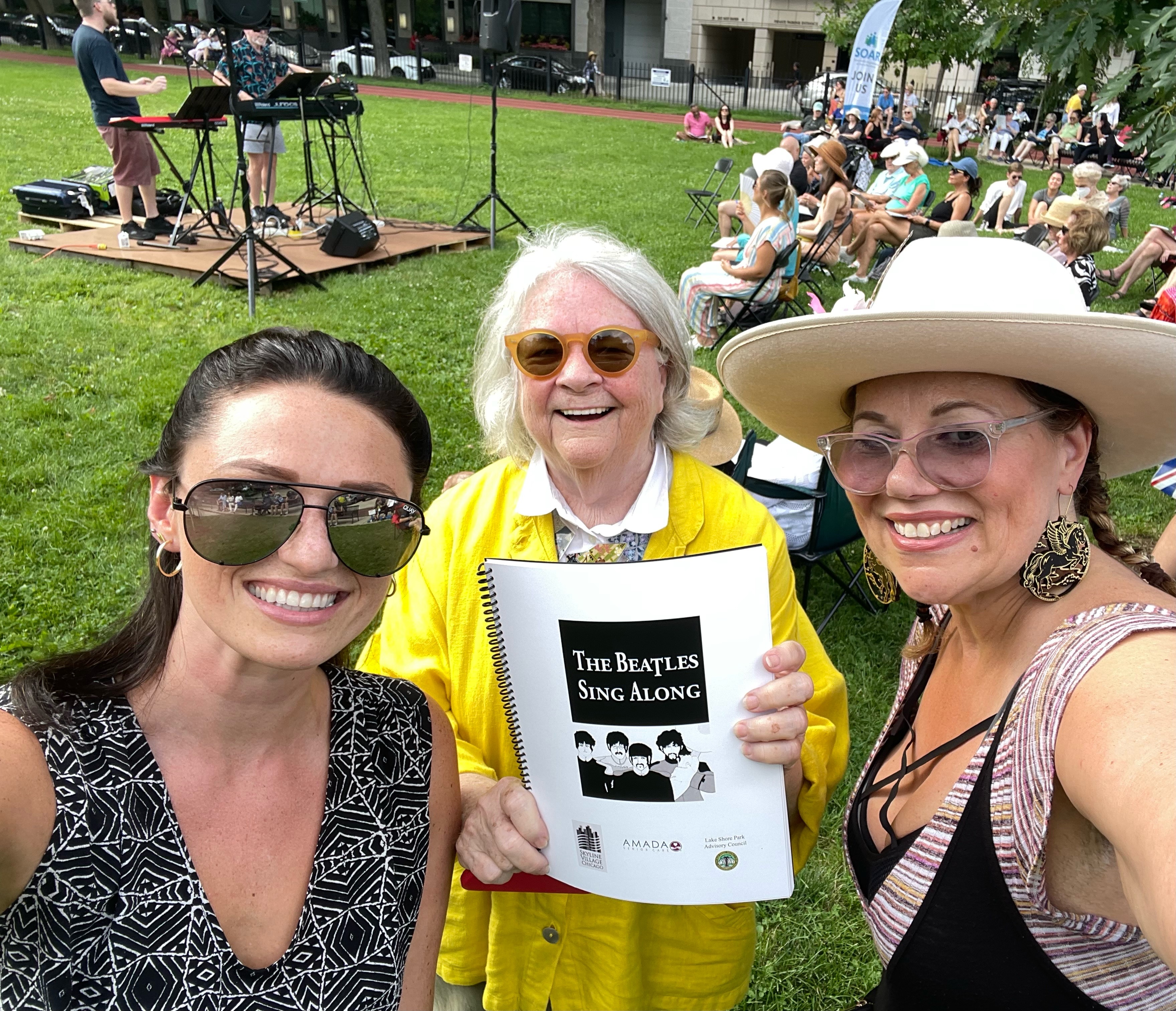
Midwestern fun: Beatles Sing Along

When I arrived back in Chicago to a corral of footloose midwestern strangers in the 1970s, I expected bound-for-glory hellos and found them. A friend from fifth grade I hadn’t seen in sixty-five years read my book recently and sent me a note: “you always belonged to us.”

That’s the Midwest. Where I’m from.

Saved By Eloise

Saved By Eloise

When friends announced their newborn’s name, Eloise, memories of New York’s Plaza Hotel stiffened my spine. I’d erased all memories of the palatial turn-of-the-century landmark after Donald Trump bought her in the late 1980’s. I even dumped my co-memories of Eloise, an early literary heroine who lived in the Plaza without her parents.

In the early 1950’s, my mother took my sisters and me to live for a while in her childhood home in North Jersey. One day, we took a train to Penn Station, then a cab ride to the Plaza at Fifth Avenue and Central Park South. We drank coca-colas, went to the powder room and backtracked home.

The book Eloise was published in 1955, a few years after that memorable first trip to the Plaza. The protagonist is a precocious six-year old, though the book was written for adults. After its publication, my mother gossiped about author Kay Thompson as if she were the next-door neighbor. On the phone with each of her sisters, she’d giggle at Eloise cartoon antics. They all grew up in the shadow of New York, mocking spoiled high society children similar to Thompson’s Eloise.

Kay Thompson lived at the Plaza and wrote the idiosyncrasies of other residents into Eloise stories. Plaza kibitzers tittered about a wealthy widow who had her hair done cheaper in the men’s barber shop rather than the women’s salon. Thompson had Eloise get her haircut in the barbershop too. Eloise picks ribbons from the garbage in the service elevator, mimicking a reclusive countess who was known to pilfer through hotel trash bins. 

Talk of the Plaza Hotel wafted through my childhood. I imagined myself living in the Plaza with my dog and turtle, like Eloise, getting into all sorts of fiendish exploits. My charlatan father often stayed there, or pretended he stayed there. I overheard him arranging to meet other business contacts in the Palm Court or the “coffee shop in the lobby,” as he satirically called it. When I was a teenager I lived with my father for a time in Manhattan. The Plaza was in the vicinity of my walk home and I’d often stop to use the powder room or meet friends in the coffee shop.

Once when I was around nineteen, I came out of an alcoholic blackout at 3:00 a.m. on the powder room floor in the Plaza. I had no purse, no money and was far from my New Jersey home. The bellman allowed me to use a phone in a small back office. I called Bernadette, a high school friend in the Bronx whom I hadn’t contacted in four years. She knew the bellman.

“Ask him for money and take a cab to my place.”

When I arrived, she made up a bed on her couch, gave me homemade chocolate chip cookies and milk. I tried to tell her what happened.

“No explanation necessary. It’s the home of Eloise after all. Anything can happen.”