What’s Love Got To Do With It?

What’s Love Got To Do With It?

On February 15, 1976, I drove my red Toyota ten miles west from my Toms River, New Jersey, home to a small church meeting in Whiting.  I’d not had a drink for twenty-four hours. My head was pounding. I shook and shivered and sweated. I sat down but had one foot out the door.

Toms River shoulders the Atlantic Ocean. Most of life there happens near the ocean, its inlets, and brackish rivers. Whiting, known for the now-closed Nature’s Rest Nudist Colony, sits on unceded Leni Lenape land at the northern edge of New Jersey’s Pine Barrens. It’s a defunct railroad town surrounded by scrub pines, that dreary little tree that never grows more than eighteen feet because of the sandy soil. No one goes there.

I drove to Whiting to a meeting of Alcoholics Anonymous because I wanted to be anonymous and not run into anyone I knew. I had an overwhelming urge to announce out loud to strangers that I was going to kill myself with vodka.

An active adult community, Crestwood Village, had risen up near Whiting. The eight men and women at the AA meeting were over fifty years old, which was a turn-off for me at twenty-nine. But I was banging on the bottom and had nothing to lose. I thought I’d spill the beans there and bug out for the liquor store on my way home.

The group of eight centered the AA meeting around me and how I could stay sober. They figured out a schedule of who could follow me home that night and stay with me for the next few days. Each day, a different soul appeared on my doorstep to feed me, talk to me, answer the dreaded phone, and connect me to an AA group in my neighborhood. Their messages were the same: you’re sick, we were sick, too. Drink water. Eat chocolate. Go to AA. They trusted me with shocking truths about their lives before sobriety. 

They traveled well beyond their small community in the Pine Barrens and re-arranged their comfortable lives to help a suffering alcoholic. The obsession to relieve my misery with booze lifted after about seven days. Each of them called every day for a month.

I never drank again. After a few months, I sold my house, gave away the dog, left an estranged husband, packed up my son and houseplants, and drove to Chicago.

I was a dead soul before I met that group of kind and loving saints in New Jersey’s outback. Every minute of every day, I thought only of drinking and not drinking.

In the forty-eight years since, I’ve met many people who have asked for help. I share the same love that was offered to me that first week. In very few cases, people have stayed sober themselves. Most have disappeared, died, or gotten pissed off and moved on. 

Love saved me. That’s all I can wish for others.

Happy Valentine’s Day.

.
Killing the January Blues

Killing the January Blues

Early in my sobriety, a therapist told me to volunteer in order to get out of my depression. I almost went for her throat.

“That’s your advice? How can I help anyone when I can hardly get out of bed?”

In Alcoholics Anonymous, we’re told self-centeredness is a common trait that leads to drunkenness; it’s suggested that serving others will help keep us sober. 

“It’s a spiritual principle. Don’t overthink it. Just go help someone.” An AA meeting-goer told me when I was whining about the blues one January.

After years of campaigning by activists, members of Congress, and Coretta Scott King, President Ronald Reagan finally signed a bill creating a  federal holiday in honor of Dr. Martin Luther King, Jr. Observed on the third Monday of January, dear Martin was first celebrated in 1986.

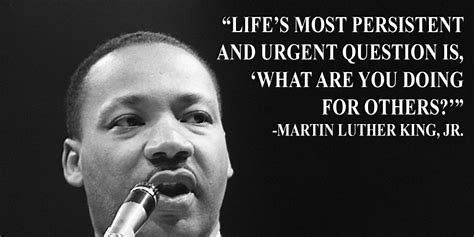
“You don’t have to have a college degree to serve. You don’t have to make your subject and verb agree to serve. You only need a heart full of grace. A soul generated by love.” MLK told us.

Grace is an indulgent gift from the cosmos. A heart full of love sounds too godly for my rebellious nature. For some, it comes naturally. Not for me. I meet many people I don’t want to love or serve. I balk. This is why I must be told to commit to love, commit to serve.  Every day, I’m reminded of the promised rewards: freedom from melancholy and self-pity. The promise is appealing—and attainable.

During the month of January, organizations, politicians, GenXers, and citizen elders all celebrate MLK through service to others. Rush University Medical Center in Chicago offers a few easy opportunities.

  • Celebrate at a hybrid event: “A Lesson from Dr. King: Health Equity is  Everyone’s Business,” on Wednesday, January 17, from 1:00 -2:00 pm. Experts share how to work towards ensuring everyone has access to their highest level of health. Click  here if you’d like more information.
  • Volunteer in person in Chicago distributing 300 meals on Friday, January 19, from 10:30 am to 12:30 pm. Multiple volunteer roles are available (preparers, packers, and drivers). Want to help? Click here for more info.
  • Mentor with the Community Health Mentor Program. Teach first-year graduate students about living with chronic conditions (high blood pressure, diabetes, alcoholism), as well as guide them in becoming patient-centered practitioners. All Community Health Mentor meetings will be on Zoom. Mentors receive up to sixty dollars in gift cards for participating in the training and all three meetings. The meeting dates are Wednesdays, January 24, February 14, and March 20, between 1 pm -6 pm for 60-90 minutes. Click here for more info or email Hannah Weitzman, Program Coordinator, at hannah_weitzman@rush.edu.

Dispelling my preoccupation with self is a lifelong endeavor. It’s comforting that MLK recognized this is true for many, which is why he gave us all the big quote:

“Life’s most persistent and urgent question is, ‘What are you doing for others?”

Here’s to honoring the legacy. Happy New Year.

Joys and Sorrows of a Colonoscopy

Joys and Sorrows of a Colonoscopy

The morning after my last colonoscopy, I stood in line at Starbucks to satisfy a sudden obsession for a flat white, not my usual coffee drink. A familiar tune came through the surround sound subwoofers. My toes began tapping involuntarily until the song’s words remembered my voice from long, long ago and softly fell freely from my lips.

Thunder only happens when it’s raining

Players only love you when they’re playing.

Dreams. Stevie Nicks. I imagined myself wiggling my hips and flailing my arms—an unwise move for a not-so-sure-footed roly-poly 77-year-old.

Feldenkrais teacher Deborah Darr says, “Imagine you’re doing the movements you can’t physically do.” She taught me that imagination can so deeply engage the mind that the body feels like it’s moving when it’s not. So, on my way home from Starbucks, I imagined myself line-dancing down the street humming Dreams.

By the time I got home, I was physically exhausted. I clicked into a meeting of Alcoholics Anonymous on Zoom. I’ve been attending AA meetings for over 50 years and often ho-hum to myself, “I’ve heard this story already…nothing new,” even if I’ve never seen the speaker before in my life. On this day, I zeroed in on the story so wholly that I felt every cheap drink, every disgusting hangover, every regrettable hook-up, and every sickening word of his drunken story. When he talked about getting sober, my stomach balled up, remembering the agony of those early days of sobriety with uncontrollable sweaty shakes and tears. The love he felt from fellow sober alcoholics and for his family sticking with him filled me, too. Love and gratitude seeped into my every pore. 

The growing ball in my stomach erupted at the emotional and physical powerlessness, and I ran to the bathroom and puked. 

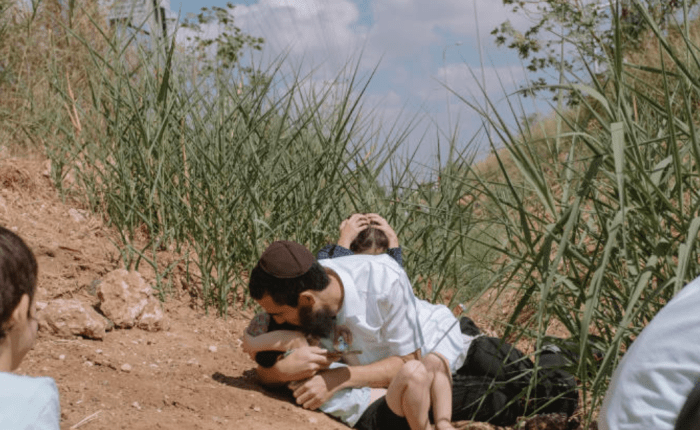
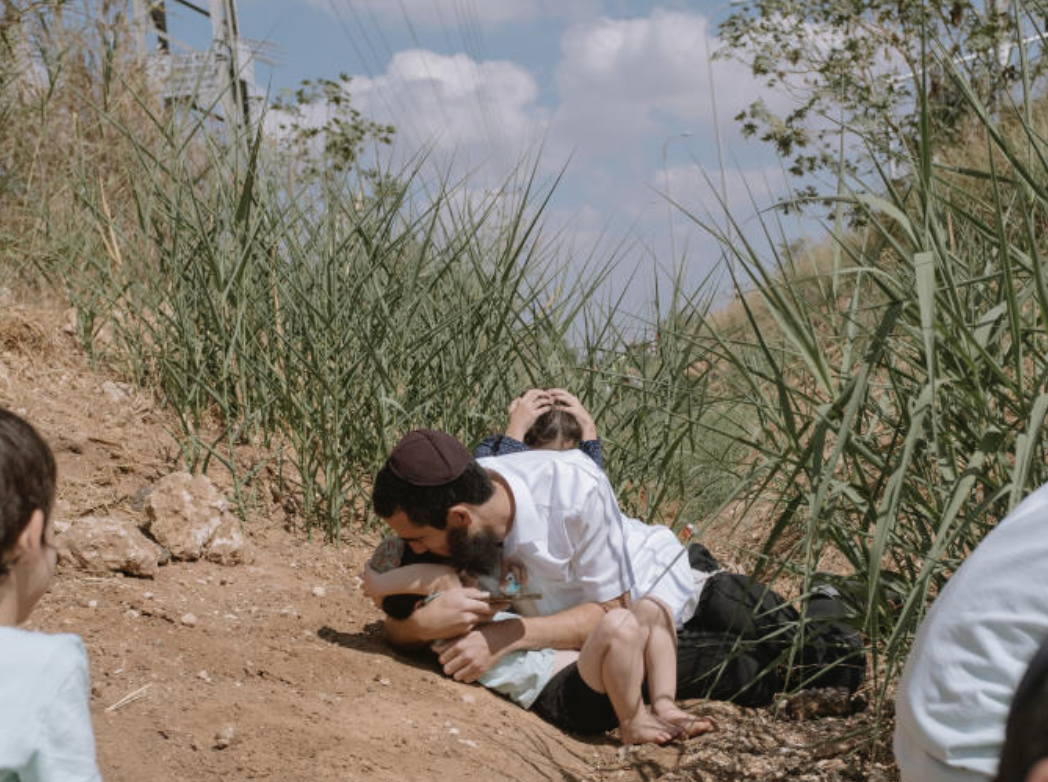
(AP Photo/Dor Kedmi)ASSOCIATED PRESS

Seeking distraction, I turned on the TV. Hamas terrorists had tunneled under the Gaza-Israel border a few days before and riddled Jewish babies with bullets. News outlets had taken a few days to get the images to us. I wept watching the photos and videos, hearing children crying out for their mothers, watching helpless fathers, and reporters describing families on the move. Displaced. Terrified. Confused. Grieving.

I reached in my purse for the forgotten mound of papers handed to me as I left  the “colonoscopy suite.” Was I supposed to read them sooner? I don’t know. But I saw why I was so giddy, twirly, and happy in the morning and so emotionally flattened later. Fentanyl. The doctor shot fentanyl in my arm before snipping a bit of chitterling from my innards. Fentanyl is so powerful that I forgot biopsy results were coming my way.

The doctor sent me a note within a few days. “All clear,” he wrote.

Just one veinful of fentanyl laid down a new neuro path in my brain, allowing the deepest of joys and sorrows. Since then, if I’m tuned in, boundless joy arises from the hope of alcoholic stories—and bottomless sorrow from images of bloodied children being carried to unsafe safety.

Click: Stevie Nicks sings Dreams

Prayers

(excerpted from the November 2022 Grapevine, the International Journal of Alcoholics Anonymous)

My mother’s cousin, Father Long, asked to meet me on the wraparound porch of the1900s-era resort hotel in Spring Lake, New Jersey.

I had recently left my husband and was living at my mother’s house with my two-year-old boy. Assuming Father Long wanted to force feed me unwanted marriage counseling, I hung a defiant roach clip from an anti-establishment leather string around my 22-year-old neck to amplify my hippie ensemble.

He talked about my marijuana use. “Give it up, for your mother’s sake,” he said. I paused. “Are you talking to her about giving up drinking for my sake?”

Father Long started his career as a disciplinarian of an inner-city Catholic boys’ school. Realizing I was no match for him, I scrambled out of the painted wood rocking chair and made a fast exit. I heard him call to me as I walked away, “I’ll pray for you.” 

Father Long spent a few weeks every year near Sea Girt where I lived during adolescence and young adulthood. That summer his vacation on the edge of the Atlantic Ocean was interrupted by my mother’s cry for help. She wanted him to help me. My mother’s lips never parted to pray and I doubt her thoughts ever enter the spiritual realm. On the way home, I wondered how drunk she must have been to ask for help from her cousin, a soldier of God. Had Father Long been summoned to help other wayward children sprung from our very wayward relatives?

A few years later, I made it to Alcoholics Anonymous and, after six months sober, I was asked to speak at a large AA meeting in Montclair. In the meeting, I talked about my inability to stop drinking, stop smoking pot, stop consuming illicit drugs. I welled up speaking of gratitude for my father, who had brought me into the Fellowship.

My father had sobered up at Towns Hospital in Manhattan. He attended meetings on the Upper East Side and had been able to sustain abstinence during the time I was dying way out there in some other dimension of addiction. We hadn’t seen each other for five years. Then he showed up at the public mental institution where I had been sent after I overdosed at 24 years old. He suggested I go to the AA meeting on the grounds of the institution.

After I wrapped up my six-months sober talk at that meeting in Montclair, a petite, pearly lady stood out from a line of well-wishers. She approached and said, “I pray for you every day.” “What?” I asked. “Do I know you?”

“I go to meetings in New York with your father,” she said. “We helped him when he went to see you in the hospital. We told him what to say, to just share his story, what it was like, what happened and what it was like now. Like we do with any other alcoholic—and suggest you go to meetings. A lot of us have been praying for you for a long time.” 

 “And here you are.” 

That was the summer of 1971.

___________________________________________________

NOTE: Father Long was removed from the priesthood in 1995 for sexual abuse. He’s on the Pennsylvania, Maryland and Washington DC, lists of accused priests. He died in 2004.

The Sound of Metal

It’s been twenty-four years since Christopher Reeve, aka Superman, fell off his horse competing at an equestrian event and broke his neck. Why was a good Democrat like him jumping around in such a patrician sport? I love to watch fancy horses and riders ballet through their Olympic paces on TV but come on! Superman?

After an understandably gloomy recovery, wheelchair-bound Superman rose to become an effective advocate for disability rights and a staunch promoter of research for spinal cord injuries. When he appeared at the Rehabilitation Institute of Chicago (RIC) in 2004, I asked my friend, Marca Bristo, herself a world-famous disability rights advocate, if she was going to see him.

Marca broke her neck when she was a twenty-year-old nursing student, spent a year recovering in what was the first year of RIC’s existence, and learned how to live and love in a heavy metal wheelchair. We were avid moviegoers, but she hesitated in honoring Christopher Reeve. Not because he was no longer a movie star, of course, but because she didn’t fully support his work in regenerative research. To Marca life was all about acceptance. Reeve plunged headlong (pardon the pun) into seeking a cure for spinal cord injuries.

He lobbied for embryonic stem cell therapy to heal the spine, took synthetic drugs to heal the spine, exercised to heal the spine. He founded one of the leading spinal cord research centers in the world. Knowing his injury would lead to an early death, he was on the inside track running toward the regenerative finish line.

I understand the frenzy to find a cure. I thought I was going to die before I found a solution for my chronic pain. The search alone turned pain to suffering. And I understand the reluctance in facing an incurable malady. For ten years my outsides announced I’m an alcoholic out loud in AA meetings, while my insides waged war against the world.

I didn’t drink but I didn’t want to be a sober alcoholic, didn’t want to say I was an alcoholic and sure as hell didn’t want to know other sober alcoholics. I looked for relief in self-help books, exercise, talk-therapy, anti-depressants, sex, food and spiritual retreats. I’ve always known there was no cure for alcoholism, but subterranean stubbornness kept me on the prowl for anything other than acceptance of that truth. I banged my head against a steel drum until the sound of metal made me so sick I finally cried uncle. 

Like walk, eat and love,“accept” needs to be put it in motion. Everyday I actively accept what I can’t change. If I let acceptance lie fallow, uneasiness simmers below the surface. Eventually defiance boils over and I find myself throwing tantrums in Walgreen’s because the clerk is too slow or obsessing over a bag of potato chips. 

I accept this. 

It is what it is.

This is what Marca Bristo wished for Christopher Reeve. 

Free at Last: Lima Beans and Love

Free at Last: Lima Beans and Love

Abraham Maslow’s self-actualization movement took root in the 1940s and bloomed thirty years later when seekers started reading books such as The Prophet, I’m Ok-You’re Ok, and Be Here Now. These bestsellers moved me to cultivate a deeper self by rooting out my hatred for lima beans.

I tilled the backyard of my Jersey Shore bungalow and planted seeds of the detested vegetable. After a few weeks, bumps appeared under the thick skin of the seed pod. I diligently hosed away aphids, leafhoppers, and mites, but I was sure my crop was deformed. Consulting Rodale’s Basic Organic Gardening, I learned the bumps were part of the bean apparatus—four lima beans per pod.

The morning of the first harvest, I pulled the bean pods from the vines, broke them open and started eating the sun-drenched crop right there on my knees in the garden. My neighbor flew out of her back door.

“Stop! You can’t eat raw lima beans! They’re poison!”

Uh-oh. Another reason to hate them. 

But I was determined to use lima beans to crack open the hardened interior space between the habitual prison of what was and the freedom of what could be. I brought an apronful of beans inside, cooked, salted, and buttered them. They were good. I’d turned a corner. 

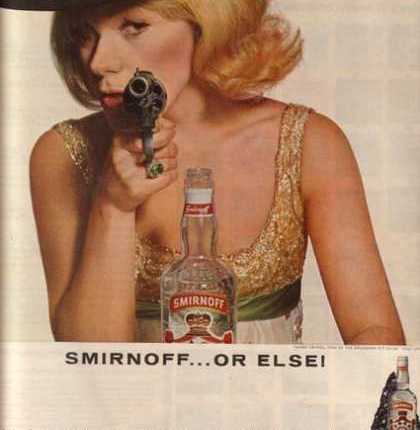
Eating the once-dreaded lima bean aerated my closed mind. It served as a gateway to other new experiences: breaking free from a Christian cult, my bad marriage and dead-end jobs. Shifting my consciousness from hating to loving lima beans gave me courage. I could imagine abandoning my secluded basement with its graveyard of empty Smirnoff bottles. Surrendering to a new job as a single mother, my only task was to organize the best plan for a nine-year-old boy’s future happiness—by getting sober. Again.

I returned to Alcoholics Anonynous unable to stop drinking, but too afraid to ask for help. I’d go to meetings, sit in the back, talk to no one, leave early, and go home. Falling into bed sober, I’d feel victorious. The next day, I’d think about nothing but drinking. Drinking and not drinking. I’d drive around in search of a liquor store where no one  knew me. By the time I got the vodka bottle in my hands, I’d feel relieved just holding it. For a few brief moments my body, mind and soul were free.

But I wasn’t free. Before a previous downfall, I’d never even considered sobriety until I was forced into a mental institution. Now it was clear: my drinking was beyond my control. I was a full-blown alcoholic.

I opened up at an AA meeting miles from home on the edge of the New Jersey Pine Barrens. I said my only option was to drink myself to death. Recovered alcoholics from that group sat with me every day until the obsession to drink lifted. It was February 1976. Forty-five years ago.

 Lima beans and love freed me at last.


Maslow’s self-actualizing characteristics:

  • Efficient perceptions of reality. Self-actualizers are able to judge situations correctly and honestly. They are very sensitive to the superficial and dishonest.
  • Comfortable acceptance of self, others and nature. Self-actualizers accept their own human nature with all its flaws. The shortcomings of others and the contradictions of the human condition are accepted with humor and tolerance.
  • Reliant on own experiences and judgement. Independent, not reliant on culture and environment to form opinions and views.
  • Spontaneous and natural. True to oneself, rather than being how others want.
  • Task centering. Most of Maslow’s subjects had a mission to fulfill in life or some task or problem ‘beyond’ themselves (instead of outside themselves) to pursue. Humanitarians such as Albert Schweitzer are considered to have possessed this quality.
  • Autonomy. Self-actualizers are free from reliance on external authorities or other people. They tend to be resourceful and independent.
  • Continued freshness of appreciation. The self-actualizer seems to constantly renew appreciation of life’s basic goods. A sunset or a flower will be experienced as intensely time after time as it was at first. There is an “innocence of vision”, like that of an artist or child.
  • Profound interpersonal relationships. The interpersonal relationships of self-actualizers are marked by deep loving bonds.
  • Comfort with solitude. Despite their satisfying relationships with others, self-actualizing people value solitude and are comfortable being alone.
  • Non-hostile sense of humor. This refers to the ability to laugh at oneself.
  • Peak experiences. All of Maslow’s subjects reported the frequent occurrence of peak experiences (temporary moments of self-actualization). These occasions were marked by feelings of ecstasy, harmony, and deep meaning. Self-actualizers reported feeling at one with the universe, stronger and calmer than ever before, filled with light, beauty, goodness, and so forth.
  • Socially compassionate. Possessing humanity.
  • Few friends. Few close intimate friends rather than many perfunctory relationships.
  • Gemeinschaftsgefühl. According to Maslow, the self-actualizers possess “Gemeinschaftsgefühl”, which refers to “social interest, community feeling, or a sense of oneness with all humanity.

Taking The Blinders Off

After separating from my mother in the 1960s, my father grifted around Alcoholics Anonymous meetings with a string of girlfriends in swanky neighborhoods—Manhattan, Palm Springs, Brentwood and Palm Beach. A lawyer, he engaged in non-contractual legal work negotiating contracts for labor unions.

He eventually bought a coal field on a railroad spur south of Terre Haute, a semi-legitimate business with headquarters in Chicago. He registered the business as Great Lakes Coal Company. Loan guarantees from the State of Indiana paid for equipment to strip and haul the coal from the land. Once he had the equipment financed, he had leverage to obtain bank loans for mining operations.

The price of coal dropped in the 1980s, and when he could no longer make a profit, he shut down the company and walked away from his financial responsibility to the State of Indiana. With the help of a La Salle Street lawyer, he concocted a scheme to defraud the banks holding his loans, starting with hiding his assets in a trust.

I was named one of the beneficiaries as well as the trustee.

My father directed me, as the trustee, to stash $500,000 in a Canadian bank he’d found for this purpose and subsequently to invest $250,000 of the stash with his broker. I signed a lot of legal documents, blinding myself to what the consequences of my own actions might be. He bragged to me and his closest friends how he was getting away with cheating his creditors, the State of Indiana and the IRS. Breaking laws came easy to him, doubled down with the aid of a high-powered attorney. I trusted that he’d keep me from legal harm. I secretly feared he’d harm me in other ways, however, if I didn’t go along with his scheme—by cutting me off, not from his money, but from his approval. That fatherly approval seems to have been an ancestral deficiency, masked as love. It has caused permanent fissures in my entire family and led to my own fits and starts in psychotherapy.

He flew to Las Vegas, checked into Caesar’s Palace and pretended to gamble away his money to provide an alibi to bank investigators for why he was broke. Florida th-11homestead laws protected his property from creditors, so he moved from Chicago to a get-away home in Palm Beach where he could live with his new girlfriend and her little boy.

“I’m done with Chicago,” he told me, “I can’t stand living in a town where a ‘queer black man’ is the mayor.” He’d repeat that forcefully to friends over the phone adding, “There’s nothing here for me anymore.”

When Harold Washington was running for mayor I never heard my father express prejudice or bigotry of any kind about him. But he was obsessed with saving face, not from family and friends, but from future marks. So after Washington won the 1983 election, my father used sudden hatred for the Mayor to concoct a dramatic reason to get out of town before the creditors closed in and exposed him. He seemed to embrace his manufactured prejudice. He knew his wealthy friends would nod in solidarity. And they did.

Perhaps that is the genesis of  blustering bigotry—the need to hide from a completely unrelated truth.

Like cheating your creditors.

Anonymous Prayers

Father Long asks to meet on the wrap-around porch of the 19th century worn-out resort hotel in Spring Lake, NJ. I just left my husband and live at my mother’s house with my two-year-old boy. Assuming he wants to force feed me unwanted marriage counseling, I hang an emblematic roach clip on an anti-establishment leather string around my 22-year old neck to compound my defiant hippie ensemble. He talks about my marijuana use.

Give it up for your mother’s sake.

Are you talkin’ to her about givin’ up drinking for my sake?

He once had a job as the disciplinarian of an inner-city Catholic boys school. Realizing I’m no match for him, I make a fast exit scrambling out of the painted-wood rocking chair as I hear over my shoulder.

I’ll pray for you.

My mother’s cousin, Jesuit Arthur Long Jr. spends a few weeks every year near Sea Girt where I live during my spiritually-sick adolescence and young adulthood. This summer his vacation on the edge of the Atlantic Ocean is interrupted by my mother’s cry for help—help for me, her addict. Her lips never part for the word pray nor do her thoughts ever enter the prayer realm. How drunk must she have been to ask for help from her cousin, a soldier of God?

I wonder if Father gets dispatched to other wayward children sprung from his very wayward relatives. 

A few years later I make it to Alcoholics Anonymous and after six months sober I’m the speaker at a large meeting in Montclair, one of Manhattan’s bedroom communities. I talk about my inability to stop drinking, stop smoking pot, stop consuming illicit drugs, until I get to AA. I’m happy to be sober and tear up at gratitude for my father who brought me into the Fellowship. My father sobered up five years before me in Town’s Hospital Manhattan and started his sustained abstinence in meetings on the Upper East side during the time I was dying, way out there in some other dimension. We hadn’t seen each other for five years before he arrived at the public mental institution I overdosed into at 24 years old. He suggested I go to the AA meeting on the grounds.

After my six-months-sober talk at the Montclair meeting, a petite pearly lady stands back from a line of well-wishers before approaching me.

I pray for you everyday.

What? Do I know you?

I go to meetings in New York with your father. We helped him when he went to see you unknownin the hospital, told him what to say, to just share his story, what it was like, what happened and what it’s like now, and suggest you go to meetings—like we do with any
other alcoholic. A lot of us have been praying for you for a long time.

And here I am.

Prostitutes and Protein: My Father’s Anti-Social Diet

Prostitutes and Protein: My Father’s Anti-Social Diet

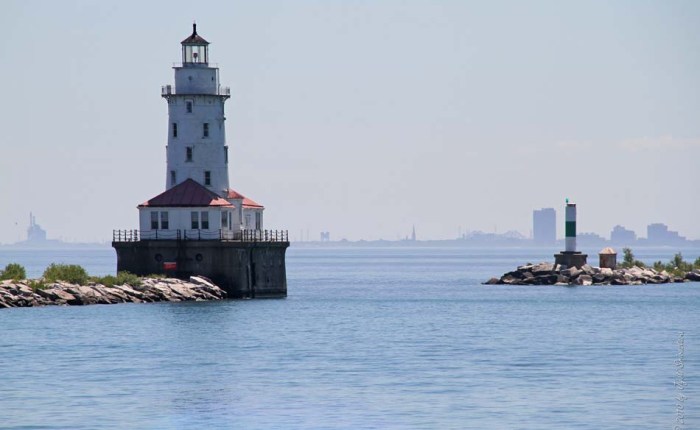
From Lake Point Tower’s third floor 3-acre resident-only garden, I peered through my binoculars out past Navy Pier to the Harbor Lighthouse by the locks at the mouth of the Chicago River. My father’s latest girlfriend pitter-pattered up beside me in her high-heeled sandals and gossamer brown bikini and said, “I fucked someone out there once.” My father, clad in Gucci swimming trunks, was striking a favorite yoga pose—standing th-4on his head within sight of all the bathers and sun worshipers around the pool. I sensed, in that instant, that this, my favorite spot in all Chicago, would be tainted for the rest of my life.
He prided himself on choosing a reformed prostitute matriculating at the University of Chicago to move in with him. We were both around 33 and I was celebrating the yearly anniversary of my last drink at AA meetings. She celebrated her reformation announcing milestones like,“It’s been 90 days since my last trick.” They had a few things in common including their food intake which they discussed constantly. Avid devotees of the Dr. Atkins Diet, they packed their 57th floor fridge with a lot of white protein—cottage cheese, plain yogurt, eggs, chicken and tuna salad and sugar-free Vernor’s ginger ale. They disdained calorie counting (though she kept a chart) and instead tracked protein grams and carbohydrates.

In the early 1980’s Dr. Atkins’ high-protein low-carbohydrate diet bubbled up everywhere in Alcoholics Anonymous. My father cornered newcomers and hammered a Dr. Atkins wedge into their soggy brains as he handed over his phone number and said, “Call me anytime.” Whenever he saw someone at an AA meeting holding a donut he’d explain that a no-sugar low-carb diet keeps the blood sugar regulated and in turn, reduces the craving for alcohol. Beginners were known to eat all-protein tuna fish right out of the can to follow his dictates.

The grocery store on the second floor had a deli counter with a superior version of my favorite food, cole slaw. After the day on the terrace, I purchased a pint each of cole slaw and tuna fish salad, rode up to their apartment and faced the former prostitute in the kitchen.

“Don’t let your father see you eating that cole slaw. It’s loaded with carbs.”

I’m pretty sure I knew cole slaw was not loaded with carbs, but she scared me so much I hid the offensive food in the closet until I left for home.

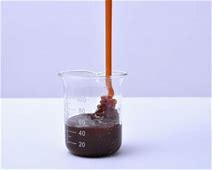
The kitchen counter groaned with the makings for a maniacal high protein drink. The bartender-grade electric mixer stood over pricey containers from Sherwyn’s Health Foods. Powdered desiccated liver, brewer’s yeast, magnesium, Vitamin C and flax seed were carefully measured and poured into the glass jar with liquid amino acids,

th-1
Liquid Lecithin

sunflower oil and liquid lecithin, a brown substance that could lubricate a car. The concoction reached digestive jubilation when blended together with ice cubes and water.

She, like those before and after her, looted the towels when she split, but left the kitchen counter intact. He binged on coffee Haagen-Das for a few days before resuming his sociopathic eating habits.

Christmas Stress Test 2017

I floated out of Northwestern Medicine’s Echo Lab, Stress Bay 3, onto the evening sidewalk four days before Christmas. All Chicago was scampering out of work, race-walking to the bus, flocking into Gino’s East and hurrying over to Michigan Avenue for holiday bargains.

Months earlier I’d run out of breath one block into my morning walk. My mind decided since I’d been overweight my entire adult life at seventy-one years old I probably had a deadly heart problem. The doctor ordered a stress test. Before I made the appointment I tried to heal myself with a no-salt, no-sugar, no-carb diet. The condition persisted. Then I thought God might heal me—if only I could remember to ask Him once in a while. In 110x70_what_causes_heart_palpitations_slideshowStress Bay 3, injections shot my heart rate sky high, my breathing stretched to its outer limits, then it all parachuted back down. The whole test took ten minutes. I figured if I didn’t have a heart attack after that, God had absolved me of my lifelong mashed potatoes intake.
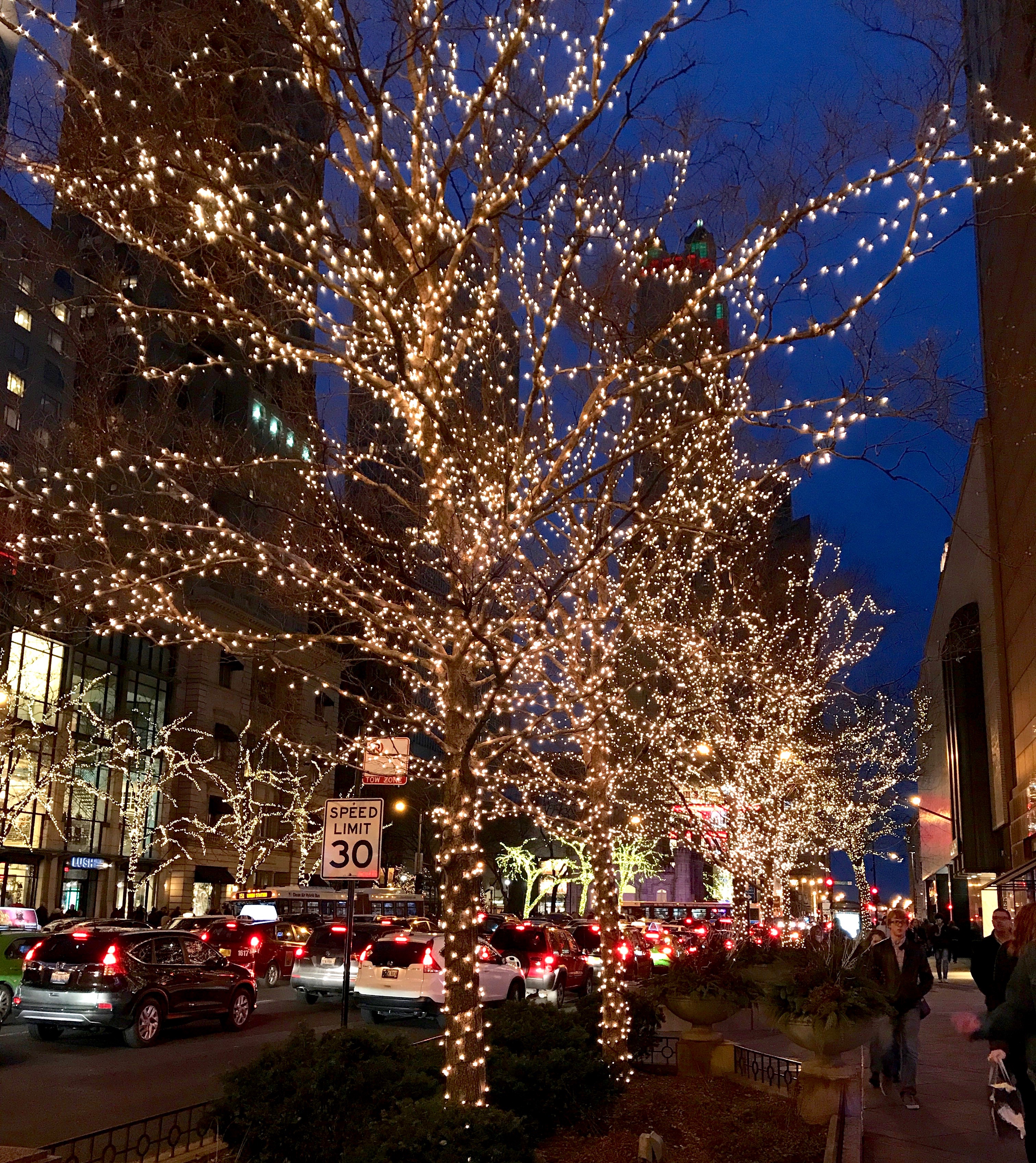
Flying high down Superior Street toward the twinkling Magnificent Mile, I came upon a two-foot long sprig of red eucalyptus looking up from the sidewalk.

“Hmm, this would be good to put in the vase I just bought for Bill.” I scooped up the sprig and poked it down through the tissue paper in my Crate and Barrel shopping bag. Rounding the corner at Nieman Marcus I spotted more red eucalyptus sticking out of the cement urns in front of the store.

“Oh, good, I’ll just lift another bunch.”IMG_0504 (1)

And there it was. Ancestral habits. Within a block I’d turned from a scavenger to a thief.

Ripping down the street toward the Water Tower it occurred to me there may be some more items for Bill’s vase outside the stores on Rush Street. I found perfect branches of red plastic berries in the four planters on Quigley Seminary’s sidewalk. I took one from each pot. Lovely.

As I came up to Oak and Rush, I stopped myself from stealing birch branches from Barney’s pots because Oak Street Bank across the street recorded activity outside. I’ve binged on enough English crime shows on Netflix to know I didn’t want to get caught on the bank’s video.

And so within five blocks of finding out my heart is not going to kill me anytime soon, I became an all-out criminal.

The next day at coffee, I spilled the beans to a normal friend. He diminished the crime saying they throw all those decorations away after Christmas anyway—trying to let me off the hook or perhaps saving himself from admitting his friend is a thief. I shared my thievery at a 12-step meeting. We all laughed as we often do whenever someone is vulnerable enough about their character flaws to tell on themselves—no letting me off the hook in that room, where God allows for admitted imperfections.