Born Free

Born Free

Most gay anthem playlists include these songs:  I Will Survive by Gloria Gaynor, Freedom! ’90 by George Michael, Vogue by Madonna, I’m Coming Out by Diana Ross, anything by Beyonce, Cher, Donna Summers, Lady Gaga and of course, Billy Porter. But no recognition for the song Born Free.

I recently attended a friend’s bon voyage picnic with my new dog. 99% of the picnickers were men. They adored my fluffy little white Westie with her pink-lined pricked ears. 

“What’s her name?” One guy asked. 

“Elsa,” I answered. 

He and his companion then broke out singing Born Free. Others joined in the serenade. 

Born free, free as the wind blows…

I looked straight at my friend with a questioning side smile and squinty eyes. 

“Gay,” was his answer. 

“Some kind of anthem?” I asked.

“Yep. From the movie.”

“Oh, I get it. Elsa. The lioness. Wanna go with me & Elsa to the Pride parade?” I asked him.

“Absolutely not!” he exclaimed. 

None of my gay friends express interest in Pride hoopla. At least not to me. But in social gatherings, I’ve overheard one or more talking about some cute guy they’d met at the Parade. It’s understandable. The Parade covers a lot of geography and seems to have no time constraints. If you live in Parade neighborhoods, you’re bound to meet a cute guy or two passing by. 

The rejection of Pride celebrations is a bit more puzzling. I’m not particularly drawn to St. Patrick’s Day parties and parades, but neither am I celebrating Irish freedom. After the first official Chicago Pride parade in 1981, I celebrated gay liberation at a raucous party in Lincoln Park . Plenty of our gay friends were invited. But they didn’t show. Perhaps they excluded us from their Pride activities because gay liberation didn’t belong to us? Nor we to it?

Political friends wave the flag, not necessarily to show they’re gay, but, as I do, to support gay rights. Showing the colors this year is especially important because recent laws in other states restrict gay freedom, including drag shows. 

On a stroll down Michigan Avenue the other day, I was overwhelmed by the display of rainbow colors in front of my church. There are ribbons tied to each iron fence post spelling out the iconic colors of gay pride—for the entire block in front of the church. 

“So colorful,” I mentioned to my walking companion.

“Doesn’t it make you feel kinda bad?” She asked.

“Whaddya mean?”

“Well, it’s a celebration for gays. And you’re not.”
Some of the church’s older adults asked to celebrate gay rights by having a drag show for their small group. The church denied the request. I’m excluded from men’s bible study, twenty-somethings and couples church groups. And like those, perhaps celebrating gay freedom with events like drag shows, really is (inadvertently) reserved for gays only. 

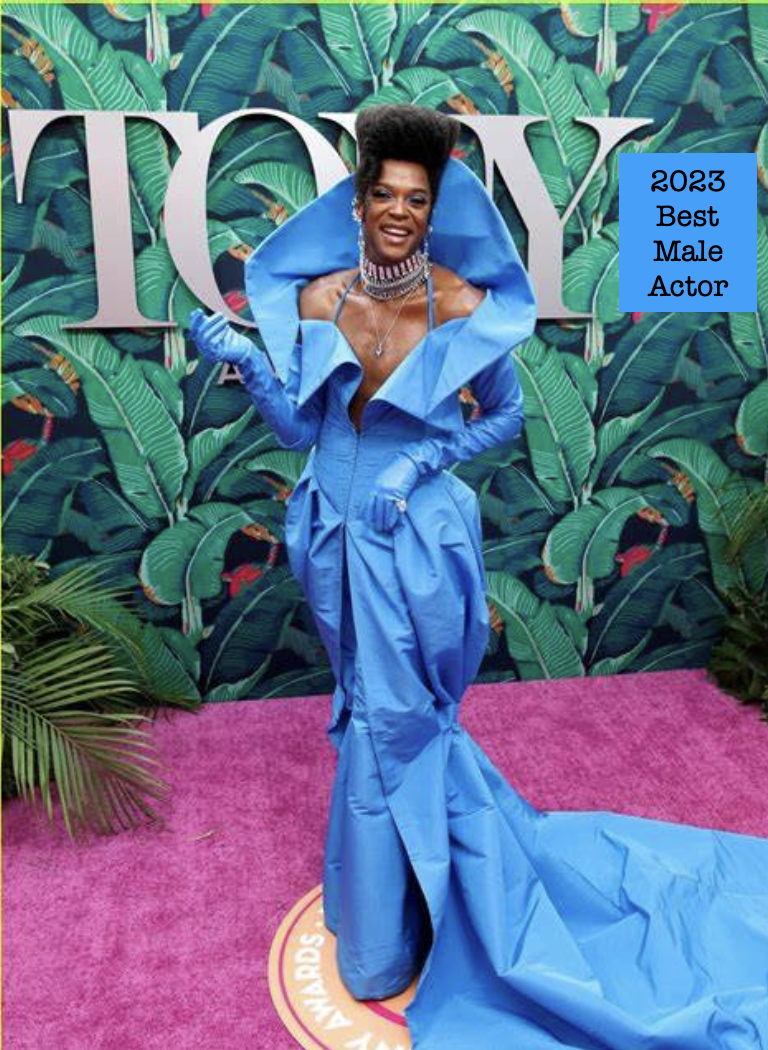
Fortunately, I can honor the entire queer nation by re-watching this year’s Tony Awards. 

Meanwhile, song compilers need to include Born Free in gay anthem song lists. 

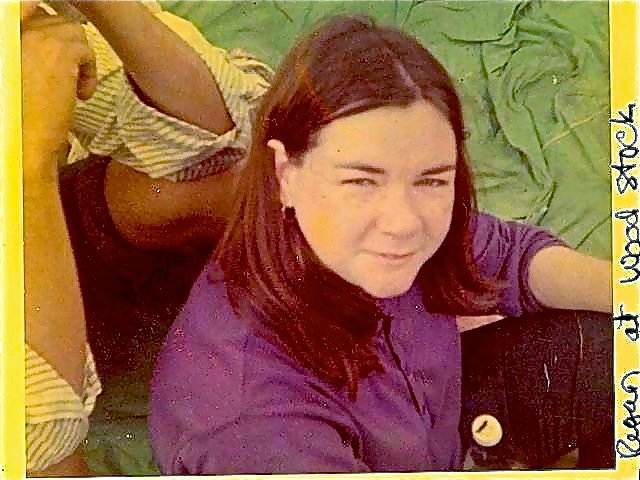
Tommy at Woodstock

Tommy at Woodstock

Two neglected shoeboxes of faded and forgotten memories sit on the top shelf of my bedroom closet. They are filled with negatives, a noun I’ve not heard nor used since the Aughts gave us cameras on our mobile phones. I had used all types of cameras in my life from a Kodak Brownie to a 35 millimeter Pentax until photographic film and developing became too expensive in the 2000s. All my cameras had film that I’d drop off at the corner drug store or a camera shop for developing. I’d then mark time for a week or more waiting to hear that my pictures were ready for pick-up. The much anticipated package included the developed photos and their corresponding negatives.

A negative is the reversed image of the picture that can be used to develop another print. They were produced on small strips or sheets of transparent plastic film. Eight or ten miniature negative images appeared on each dark strip. If I wanted to reproduce a photo, I’d hold the plastic film up to the light, protect it from my fingerprints, search for the picture I wanted, cut the tiny square from the strip, and take it to the store for developing.

There’s no logical reason I packed old negatives in archival boxes and stored them on the top shelf of my closet. In order to get to them, I need to unfold the step stool, risk pinching a finger or two, and trust my balance will hold as I climb each step to reach the shelf. I have no intention of ever looking through the negatives in order to develop old photos. Most of the corresponding pictures may be in musty albums in my bookcase. I’m never drawn to those either.  

A few years ago I acquired a photo scanner. I offered to pay my teenage grandson to digitize my photos as a summer job. 

“I don’t know how to do that,” he answered.

“It’s easy. I’ll show you. You can do it at home and upload to your computer.”

“Naaw, I don’t think I’d like that.”

All hope drifted away then, that any of my relations would be interested in the photographic documentation of my life. I can’t blame him. I was never curious about details of my parents’ or grandparents’ lives until recently. How can I tell him that when he nears his sixties or seventies he’s going to find himself wondering what I and his other ancestors did during our lives? More importantly, how will he come to know that factors outside his control, passed down generation after generation may be the source of his own physical or mental hardships?

A production of the rock opera Tommy will be onstage this summer at Chicago’s Goodman Theater. 

“Wow! You saw Tommy at Woodstock?” exclaimed a theater-goer when we were in line to purchase tickets. 

Woodstock cachet seems to increase with every passing era. Forget the old photos. My-grandmother-went-to-Woodstock is probably the only legacy my grandchildren will ever need.

Listen to the Women

Listen to the Women

Our mythological mother, Eve, plucked our heads from the clouds and planted our feet on the ground when she told Adam, “we need to eat that apple to get insight into human nature so we know what we’re up against.” 

Some people dismiss, even deride women’s intuition. Perhaps this wrongheadedness is a subconscious backlash to colonial times when women were burned alive for their bewitching claims of divine truth-telling.

Three Chicago iconoclasts are standouts in demonstrating their feminine intuition and consequent leadership: Dorothy Day, Ida B. Wells and Emma Tai.

Emma Tai? 

Sagacious Democratic strategist David Axelrod praised Paul Vallas for his “brilliant” single-issue strategy during the 2023 Chicago mayoral campaign. Vallas pounded out one violent crime message after another. But, fortunately for Chicago, that was not the winning strategy.  

As the chief organizer for the progressive Working Families organization, Emma Tai honed her skills over the last ten years in grassroots campaigning, winning seats in Chicago’s city council. Conventional wisdom blinded moribund pundits into believing Vallas’ money and endorsements were a path to victory. They underestimated the tenacious Emma Tai—and never saw Brandon Johnson coming.

The losing Paul Vallas campaign outspent the winning Brandon Johnson campaign two to one. 

“I knew if we won, it would only be because of organizing our ground game.” Tai said. “Our people were on the doors, and the Vallas people weren’t on the doors. We had a door-knocking program across all fifty of Chicago’s wards. On election day, I felt confident that we’d left it all on the field.”

Dorothy Day wrote about and advocated for the poor and oppressed all her life. In the 1930s, Day, a pacifist, established the Catholic Worker Movement, to aid the poor and homeless. She continually  fought patriarchal systems in the workplace, politics, social structures, and the Catholic Church. She wrote uncompromising pacifist articles for the Catholic Worker, bucking the Catholic doctrine of just war theory. In 1951, the exasperated Archdiocese of New York ordered Day to cease publication or remove the word Catholic from her publication’s name. She did neither. 

Then in1983, a pastoral letter issued by the U.S. Conference of Catholic Bishops, noted her role in establishing non-violence as a Catholic principle: “The nonviolent witness of such figures as Dorothy Day and Martin Luther King has had profound impact upon the life of the Church in the United States.”

 In 1892, Ida Bell Wells, born into slavery during the Civil War, published an editorial in the Memphis Free Speech refuting what she called “that old threadbare lie that Negro men rape White women. If Southern men are not careful, a conclusion might be reached which will be very damaging to the moral reputation of their women.”

Violent white backlash drove her away from the south and eventually to Chicago. One of her lifelong pursuits was exposing lynchings of Black men. White suffragettes ridiculed and ostracized Ida because she openly confronted those who ignored lynching. Nevertheless, she continued advocating for women’s right to vote. 

Her passions drove her to found The Chicago Conservator, the first Black newspaper in Chicago; establish Chicago’s first kindergarten for Black children; help found the NAACP; found the National Equal Rights League calling on President Woodrow Wilson to end discrimination in government jobs; organize The Women’s Era Club, a first-of-its-kind civic club for African-American women in Chicago; help organize the National Afro-American Council, serving as the organization’s first secretary; found the Negro Fellowship League, the first Black settlement house in Chicago; organize the Alpha Suffrage Club to further voting rights for all women. 

The U.S. government placed Wells under surveillance, as a dangerous “race agitator”.  She ignored this threat and wrote a series of investigative reports for the Chicago Defender on the East St. Louis Race Riots. She then founded the Third Ward Women’s Political Club to help Black people become involved in Chicago politics.

 At Thalia Hall in Pilsen, reporter Laura Washington asked Mayor-Elect Brandon Johnson who his advisors would be when he sits in the mayor’s office.

He turned to the audience, looked around, paused, smiled, and answered. 

“I’m going to listen to the women.” 

Smart move, Mr. Mayor.

Green-eyed Monster

Green-eyed Monster

During my First Grade year I spent most of my schooldays in bed with all the feverish childhood diseases— measles, mumps, chicken pox—an inauspicious beginning to my school career.

Memories of the year are bereft of detail. My family moved within the boundaries of the District of Columbia that year so my sisters could stay in their school. I think we lived with relatives or friends, then a hotel. Different sick beds float around in my consciousness—or is it subconscious?

Having exhausted all resources in Washington, my father moved us to his hometown, Terre Haute, Indiana. My poor mother was an east coast snob, a New Jersey socialite, if there is such a thing. Drinking was her solution to surviving the dregs of Terre Haute. She enrolled my two sisters and me in the local parochial school, then left it to us to find our way there and back.

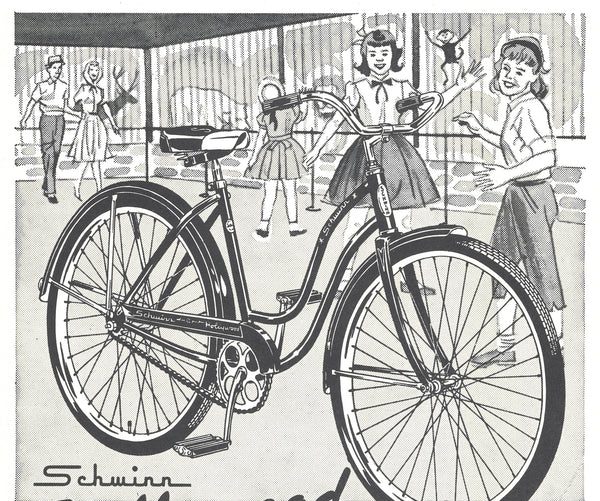
I went directly into to Second Grade because of my age. When the St. Joseph nuns discovered I couldn’t read or write, they sent me back to the First Grade. Fine with me. My sister was there, a comfort blanket. In order to thwart any trauma, my mother took me to the bike shop. 

“What’s your favorite color?” The clerk asked.

“My favorite color?” 

 I didn’t know I could have a favorite color, didn’t know anyone could have a favorite color.

“Do I have a favorite color?” I asked my mother.

“Green,”she said, “Like the trees.”

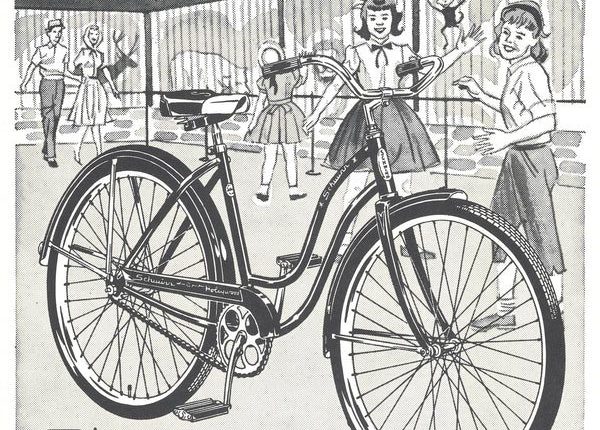
We walked out with my green Schwinn Roadmaster, garnished with a straw basket, chrome horn and a Rocket Ray headlight soldered to the front fender. My mother thought I knew how to ride a bike, like she thought I knew how to read and write. She got in the car, waved and said, “see you at home!” I climbed on and off, balanced and pedaled, fell off, climbed back on and pedaled home. 

From that time on, it was well-established that green was my favorite color. When I was a young wife and mother living in married student housing at Spartan Green Michigan State, my mother sent me a birthday gift—green pleated skirt, green sweater and green beret. 

Within a few weeks of receiving my green bike, bikes mysteriously appeared for my sisters in their favorite colors, blue and red. The favored status I’d held for the humiliation of having to repeat the First Grade perverted into favors for those two. That green-eyed monster laid low in my soul for years until it materialized at the bottom of a vodka bottle. I squashed it forevermore in a Twelve-Step program.

Susan B. Anthony once said, ”Bicycling has done more to emancipate women than anything else in the world. It gives freedom and self-reliance.” I can vouch for that. I freely bicycled all around any town I’ve ever lived, until at last, I put a permanent lock on my bike at age seventy-five. 

Self-reliance, however, is a two-faced virtue, not one for an eight year-old, girl or boy, to have to learn. 

Holidays Interrupted

Holidays Interrupted


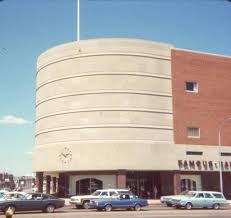
In the Indianapolis Woolworth’s, I bought a Davy Crockett coonskin hat for fifty cents when I was eight. It was the biggest store I’d been in by myself until the Famous-Barr Co. department store in Clayton, Missouri.

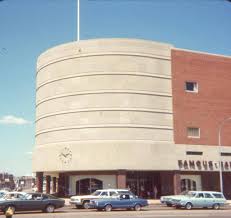
In 1956 my family moved to Maryland Avenue in Clayton, directly behind the mid-century modern Famous-Barr store. Old-growth trees, low-lying rhododendron and azaleas filled our property. Burglar-proof chain link fences adorned with honeysuckle prevented all of us on Maryland Avenue from wandering over to the store through the loading dock from our backyards.

The first time I perched on an oak branch and peeked through its leaves at windowless Famous-Barr, I imagined a space ship had landed without anyone telling us. The 1940’s modern has a molded-cement four-story curved front, made to mimic the curve of Forsyth Avenue. My ten year old feet were itching to sneak down the street and around the fence to explore the inside.

As soon as my mother discovered I’d been wandering around Famous-Barr by myself, she sent me on errands to purchase small items like buttons and thread, and birthday cards she’d never send. I spent a lot of time examining the jewelry and when I received money for my tenth birthday I promptly ran to Famous-Barr for a coveted Elvis necklace.

One day before Christmas my mother kept me home from school and sent me to Famous-Barr. I had strict instructions to buy solid red wrapping paper, solid green ribbon and scotch tape.When I arrived home, boxes were piled up on the living room floor stamped with the Famous-Barr logos. She showed me how to wrap one box and told me to do the rest.

“Do not under any circumstances look in any of the boxes,” she instructed, “Just wrap them and put them under the tree.”

Then she went to bed.

It didn’t take long before I deduced she trusted me with keeping the contents secret. Of course she expected me to look inside. Every box had clothes for me and my two sisters. Skirts, blouses, sweaters, socks, underwear, shoes, gloves and hats. My mother thought sameness was elegant. She dressed us alike, as she did the boxes. 

I was used to keeping family secrets and easily kept this one. My sisters would have been angry with me for different reasons if I’d told them. One, because I knew before she did. The other, because she hated dressing in the same clothes, and that was reason enough to resent me.

On Christmas morning there were full ashtrays and dirty glasses throughout the house from the night before. Our parents were impossible to arouse from their drunken stupor so we opened presents without them. We shuffled the garments between us to try on our respective sizes. We loved our clothes and remained dressed all day as if someone might come along and take a picture.

For many holidays since, I’ve decorated boxes and feigned excitement. But true holiday spirit left me forever on the notions floor of Famous-Barr.


Mara Burke RIP

Mara Burke RIP

On Thursday, March 30, a cousin called to say she’d heard my long-forgotten sister Mara had died. We’ve both heard such rumors over the years and have no way of verifying them. So we shrugged and turned our attention to stories about our grandchildren before saying goodbye. A few minutes later she texted me a post from Mara’s Facebook:

The next morning I sipped coffee with one hand as I clicked into voicemails, emails and texts. A voicemail from the previous day said, ”Yes, ma’am. My name is Frank. I’m a captain with Winchester Police. Uh trying to find some possible information about your sister Mara if you can give me a call back. My telephone number is 540xxxxxx. Thanks.”

Captain Frank said they’d responded to a wellness check nearly three weeks ago, on March 13 and was sorry to say Mara had died. The police couldn’t find any information except an emergency contact on Mara’s health records for one of my other sisters. That number was disconnected.

Their investigation drove them to Facebook looking for clues. Eventually they connected to Ellen, an old high school friend who tried staying in touch with Mara. Years ago I’d given Ellen my phone number during a time when people were still trying to help Mara get sober.

“How did she die?” I asked the Captain.

“The death certificate won’t be available for a few weeks. Nothing suspicious though. No reason for us to ask for an autopsy,” he said.

“Oh. Where’s her body?” I asked.

“At the funeral home. They are concerned about the disposition of the remains.”

The Captain felt he ought to talk to the one quasi-official designated family member whom Mara listed as her emergency contact. I said it might take me a few hours to contact her since I didn’t have her number.

“The landlord hasn’t called us yet,” said the Captain, “but we’ll need to give him a contact.”

“I’m sorry,” I said, “I guess it’s obvious we are all estranged.”

I thanked him profusely and told him to feel free to contact me again if need be.

Mara was the oldest of four sisters. I, the second born, became an unwanted character in her life from the dawn of our family story. As adults Mara and I tried here and there to be loving. She once sent me a textbook, England in Literature, from my high school English class. It has my handwritten notes in the margins. She’d salvaged the book from the rubble of our mother’s home. This cherished gift is one of the kindest gestures of my lifetime. 

But our ancestral roots of untreated alcoholism proved too tangled for Mara to weed through. I arose as an easy target for her perennial unruly emotions, especially after I joined Alcoholics Anonymous.

From her Facebook page, I see that many of Mara’s old friends loved her dearly and tried to poke through her isolation for years with little success. Ellen’s brief eulogy tells me Mara confided in her,  and Ellen loved Mara even in Mara’s brokenness.

That is the most comforting condolence of all—knowing Mara was loved.

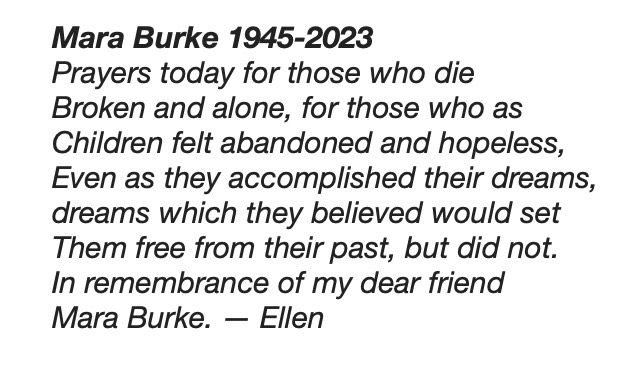
Mara Burke, b. February 1, 1945, d. March 13, 2023

Burning Love

Burning Love

One fall afternoon in 1955, all the kids on the block raked their piles of fallen leaves off the lawns and sidewalks and into the street. Heaps of crinkled oak and maple mounded the curbside. The confluence of those sweet smelling deadfalls and autumn breath propelled us to kick up our feet and whoosh our sneakers through the piles. We’d shape more piles with armfuls of fly-aways, throwing half  in the air and half on the mounds.

In the evening, the whole block came out. Designated parents set fire to the five foot stacks of leaves, one by one. The kids wiggled hot dogs and marshmallows onto twigs and held them over the flames. We ran back inside to our kitchen, stuffed our charred dogs into buns, plopped mustard on them and ran back to stand around the fire and eat with our neighbors.

I went to sleep late that night comforted by communal joy. Early the next morning I woke up with a hacking cough and sneezing fits. By the afternoon I could hardly breathe. My eyes were so watery I lost focus.

My mother, who had two other children and was pregnant, wasn’t a reliable nurse. Two aspirin and bedrest was her usual answer to any ailment. We rarely saw a doctor.

Once, while sitting on the back steps, she witnessed me fall off my bike and scrape my knee in the driveway. She gulped down a bottle of Budweiser and said, “Don’t expect me to feel sorry for you!”

The morning I woke up hacking and sneezing, she moved my limp nine-year-old body into a second-floor room of my own at the front of the house, closed the curtains and set up a humidifier. No one was allowed in, except her. And the doctor. The verdict? I had an allergic reaction to burning leaves that kicked off a bout of bronchitis.

During the next three weeks my mother brought me Campbell’s soup and apple juice on a tray. She took my temperature twice a day and rubbed Vicks Vapo Rub on my chest and back. She never complained about my unrelenting loud cough. I cried myself to sleep in her arms and called for her in the night. She always came. 

My parents had too much to hide to ever become friends with any of our neighbors, wherever we lived. But one day, from my sick room, I heard her ask a neighbor not to burn any more leaves because I was sick.

I’m still allergic to burning leaves. In fact, I’m allergic to leafing out in the spring and falling leaves in autumn. The sheltered memories of kicking up leaves and smelling them burn evokes both sadness and delight of a community that smelt and felt the rush of the season at the same time in the same way.

But my mother ministering to my sickness is more than a memory. That one brief period taught me all I needed to know about healing love.

Boiled in anger

Boiled in anger

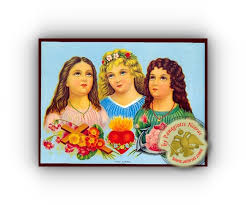
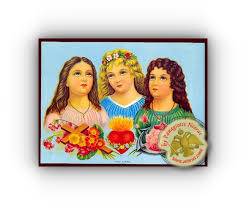
Saints Faith, Hope and Charity Catholic parish in Winnetka, Illinois, is named for three virgins martyred in second century Rome during the reign of Hadrian. The girls, ages twelve, ten and nine were boiled in tar and beheaded for their refusal to denounce Jesus.

My two sisters and I attended Saints Faith, Hope & Charity school in the late fifties at about the same ages as the boiled virgins. I entered the fifth grade after the school year started, having attended the Cathedral School in downtown Chicago for a few weeks while my parents finagled a new home in the northern suburbs. We’d just been run out of St. Louis for failure to pay our bills.

Outwardly I was accustomed to masking the shame and embarrassment of our alcoholic family life. I donned my most congenial personality for the girls at “Faith Hope”. I needn’t have. The girls greeted me like a new puppy. Everyone wanted to call me their friend and invite me to their homes after school. At Kathy White’s house, we all gathered in the basement and played very competitive dodgeball. But the girls themselves weren’t competitive. These girls all seemed like best friends.

The Faith Hope Dominican Sisters, were the kindest of any nuns I’d encountered at the ten or twelve Catholic schools I’d previously attended. Whenever one of the Faith Hope sisters discovered I’d forgotten my lunch, I was treated to a sandwich in the convent dining room. I overheard rumblings at home that the mother superior may have called my parents about the missing lunches but I never heard about it at school.

Faith Hope’s lively playground burst into jump rope, hopscotch, steal-the-bacon and ball games. In the winter girls and boys alike played king of the hill on huge snow piles. 

One day on the playground, Helen Smith gathered some girls to sneak off to the church. She wanted to show us a secret booklet her older brother told her about. We edged into the vestibule as she reached up to a high shelf and pulled down, “Secrets of Marriage”. Helen read aloud descriptions of a man’s penis planting a seed into a woman’s vagina to form a baby.

“Ewww!” we screeched.

“That’s disgusting.”

Some of us ran out, hid in the folds of a giant spruce and giggled ourselves into oblivion. Others stayed inside and learned more details.

Faith Hope’s pastor, Monsignor Thomas Burke, a charming powerhouse of a priest, didn’t evoke fear or condemnation like other priests I’d known. He connected. We weren’t related, but Monsignor Burke, who told me Regan means “queen” in Gaelic,  joked that all the Burkes in the Midwest were cousins.

During my seventh grade year, our evicted family moved away. I felt like one of those martyred sisters from the first century, boiled in anger. I was certain I’d never find as happy a time as I’d had at Faith Hope.

A Faith Hope friend I hadn’t seen in sixty years sent me a note after she’d read my book, In That Number. It simply said, “You belonged to us.”

And the saints came marching in.

Race Restrictions: The Chicago Covenants Project

Race Restrictions: The Chicago Covenants Project

Restrictive covenants, redlining and contract buying were some of the discriminatory housing practices used to segregate Chicago in the first half of the Twentieth Century. Restrictive covenants prevented Black Americans, and sometimes Jewish Americans from buying, renting, or living in houses in white neighborhoods. 

The Chicago Covenants Project, begun in Spring 2021, uncovers deed restrictions officially recorded in Cook County. A team of their researchers and volunteers gather in the Tracts Division in the basement of city hall a few times a month to search land records for racial covenants. 

Finding the Tracts Division of the County Clerk’s Office is the first test of a volunteer’s sleuthing skills. The entrance to the first floor staircase is often obscured by a large easel with a sign listing the prices of birth certificates and marriage licenses—no arrow pointing to “Tracts”. I once worked in the Clerk’s office but I still feel subversive slipping past the sign and the security guard to head downstairs.

The Tracts Division is a football-field sized room organized by rows of old shelves filled with real estate index books. Each book is 2 feet by 4 feet. A Project researcher assigns the books by number. My first assignment was book number 420. I lifted it onto the top of the elbow-high bookshelf and leafed through page by page. Thank God I thought to swallow an allergy pill before I left home.

Every deed recorded in Cook County until 1980 is hand written in an index book. After 1980, the records are digitized. Each page could have deeds recorded from 1910 to 1980. I looked only at deeds recorded up to 1950 since restrictions waned after a 1948 Supreme Court decision declaring racial covenants unconstitutional.

The volunteers in Tracts spread out around the room with their assigned books. Looking for covenants line by line is tedious. There’s a small explosion of joy, “I found one!” when one of us spots a handwritten “rac-restr” notation.

Property ownership has long been the avenue to accumulating family wealth. Restrictive covenants helped deny this possibility to Black Chicago for decades, while walling off the city’s segregated communities and perpetuating generations of racial inequity.

The Chicago Covenants Project has uncovered deed restrictions all over Chicago and the suburbs. Organized neighborhood groups supported by realtor associations once signed up homeowners block by block. Between 1933 and 1937, a mailer was distributed door to door to stoke fears about Blacks moving to Chicago’s North Side, where I’ve always lived. It minced no words: “The Near North Side Property Owners Association proposes to ask every property owner in the district to agree to sell and rent to white people only.” 

Even the renowned Newberry Library has a racial covenant. 

You may be asking, “what’s your point?” 

Well. These buried files prove that racial inequity in Chicago was intentionally created by white people—house by house, block by block, neighborhood by neighborhood. 

A fact that cannot be erased.

How I love Jimmy Carter!

How I love Jimmy Carter!

As an eighth grader I entered segregated St. Mary’s of the Assumption school for two months at the end of the school year. My family had come apart in the Chicago suburbs and one of my sisters and I were sent to live with relatives in Upper Marlboro, Maryland. I’d never been in a school separated by race. The only time whites and Blacks mingled at St.Mary’s happened on the playground where we defiantly integrated ourselves into two mixed-gender baseball teams.  

For as long as I can remember my sisters and I followed our parents into the very last pew of church for Sunday Mass. They timed it so we arrived about twenty minutes late, in time for the Consecration of the Eucharist, the attendance marker at the mandatory once a week Mass.

As we approached our first Sunday at St. Mary’s Church in Upper Marlboro, my sister and I naturally headed for the pews in the back of the church. A white man ushered us out of our seats into a pew toward the front. Only Blacks sat in the back.The Sunday my mother visited us she pushed the white usher aside and insisted on sitting in the back. Her hangovers were far too severe to suffer through the entire hour of a full Mass. She needed a quick exit after the obligatory Communion. 

One day St. Mary’s eighth grade class was bussed twenty minutes down the road to Andrews Air Force Base to greet President Dwight D. Eisenhower. Blacks in the back of the bus. Whites in the front. We’d been given little American flags to wave at the president as he deplaned Air Force One. It was 1959 and my first experience at an event for a President of the United States.

Sixteen years after my St. Mary’s grade school graduation, I read about Jimmy Carter’s campaign for president in Time Magazine. Carter, as governor, in a surprise to fellow Georgians had denounced racism and segregation. I wrote to him in Plains, Georgia, applauding his positions and volunteered for his presidential campaign. He sent me a hand written thank you note with a postscript to contact the local Democrats in my small New Jersey town. 

Around that time, my son’s hockey coach was mounting his own campaign for mayor. Eventually the coach endorsed Carter and opened a local campaign office. To the great consternation of my then-husband, I spent all my spare time campaigning for Jimmy Carter. That husband expressed his silent scorn by laying on the couch drinking cases of beer. I, in turn, after a year of abstinence in Alcoholics Anonymous, slipped into the basement with quarts of vodka to escape what looked like a doomed existence.

We both stayed sober for our last family excursion—waving little American flags outside the U.S. Capitol for Jimmy Carter’s Inauguration in January, 1977.  

A month later I finished my last drink and got a divorce. In years since, I’ve organized events for many Democrats and eventually worked for President Bill Clinton. I’ve never failed to distribute small American flags to the diverse crowds.