After my first few writing sessions in Beth Finke’s Memoir Writing Class, I asked her why there weren’t more stories about alcoholism. It seemed I was the only one reporting on this particular form of family madness in our weekly writing group. Beth assured me that alcoholism has been a common theme in several of her memoir writing classes over the years.
Ok, so that helped, to know that I’m not the only one. As an alcoholic myself who grew up with two alcoholic parents, I always start from a position of feeling like I don’t belong, like I’m too different to belong. The stigma of alcoholism and addiction doesn’t help. I’ve been sober for 42 years and I still feel like it’s a shameful condition, even after years of knowing it’s a medical condition, a mind-body disease.
Last week Beth sent me an essay by author Leslie Schwartz whose latest memoir is about her relapse and jail time. She writes, “In my case, addiction and the mental illness that 
follows has been one source of my creativity for a long time. I was able to use my experience of relapse and its devastating outcomes – I nearly lost my life – as fodder for my memoir The Lost Chapters: Finding Recovery and Renewal One Book at a Time.”
Leslie spent her 37-day jail time immersed in reading the work of fellow writers who suffered from alcoholism/addiction (Raymond Carver, Sylvia Plath, Virginia Wolff). She studied the recent research about the link between mental illness and creativity by Nancy Andreasen and Kay Redfield Jamison. Plenty has been written about expressive writing as a form of release from mood disorders—James Pennebaker, Dr. Howard Schubiner and others. Indeed, the Fourth Step of Alcoholics Anonymous’ 12 steps suggests writing a “searching and fearless moral inventory” as a way to shake the yoke of guilt and shame. It works. After writing a few Fourth Steps, I continue to write memoirs to be free from the chronic pain of fibromyalgia as prescribed by Chicago doctor John Stracks. It works for that too.
I love that Leslie Schwartz uses the words “addiction” and “mental illness” interchangeability in her essay. “When I write, I feel sane,” she writes. “When I don’t write, I am lost.”
We desperately need addiction/alcoholism and mental illness to be thought of in new ways. Senator Ted Kennedy’s son Patrick (the one who very publicly slammed his car into the U. S. Capitol under the influence), founded the Kennedy Forum in an effort to wipe out the stigma of alcoholism and mental health. By promoting the medical evidence verifying that alcoholism/addiction/mental illness are brain disorders, the Kennedy Forum hopes to reduce the shame induced by the stigma that keeps alcoholics/addicts from getting help, keeps teens from telling their parents, keeps employees from using their medical insurance for rehab. I’ve been sober since 1976 and it seems to me that the stigma is worse than it was 40 years ago. How do we break this? One way is for people in recovery programs like AA to stop acting like they are in a secret society and to open their meetings to those who are simply searching for information on how it works. Another way is for writers like Leslie Schwartz, Anne Lamott, Mary Karr and Brene Brown to keep writing their stories so people like me feel free to write ours.

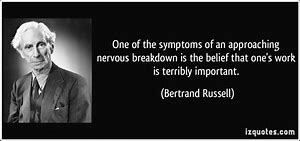
 I’m not exactly sure what a nervous breakdown is. Is it the same as a mental breakdown? Emotional breakdown? Whatever it’s called, I’ve had a few of them. Like in every job I’ve ever had. And with every man I’ve ever loved.

 antique mahogany side table, and the other hand holding the grooved white plastic top, she’d drag the brush along the lip of the bottle to get just the right amount of polish. Pulling the brush from the bottom of the nail to the top in perfect form nail after nail, she’d quietly finish the job, then blow on the tips of her fingers to dry them.
 For a few years after my mother died, I entered into the ritualized glamor of painting my own nails red. I sat before a young manicurist who updated me every week on the intrigue of her affair with a rich married man. When she moved in with him and quit her job, the allure of painting my nails lost its luster.
 father left the Navy, we moved to a red brick colonial on Fox Hall Road in Washington and my father started his first job as a labor lawyer for John L. Lewis, founder of the United Mine Workers. They held the same liberal political views but Lewis, a devout, moralistic Mormon and my father, in the early stage of his alcoholism had battling temperaments.
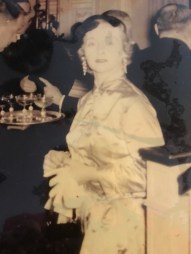 They all called my mother cool behind her back not because she dressed in black turtlenecks like a degenerate beatnik but because with her acid tongue and casual elegance she let them drink beer in her living room and laughed at all their jokes.



 evening garbage, that doubting God strengthens faith. And it did. Until I started doing my own version of God. I built a periodic table of spiritual elements with blocks of God-info such as heaven and hell don’t exist and Jesus’ Resurrection is simply a symbol of renewed life. Trouble is, I silently scorned those who didn’t believe as I did. When I first met my co-workers I held a colonizing view of their beliefs. Over time my religious formulas fell in the trash heap. As slave descendants, they daily transformed their passed-down spiritual trauma into “I believe.”
 Regan Burke