As part of the White House advance team, I traveled to Birmingham, England in April,1998 to help with President Bill Clinton’s schedule during the G-8 Summit, a meeting of the world’s leading economies. At Clinton’s behest Russia became a member of the G-8 the previous year (Russia was removed in 2016 because of their annexation of Crimea). Assigned to make arrangements for Clinton’s one-on-one bilateral meetings with G-8 world leaders, I learned Clinton’s meeting with Russian President Boris Yeltsin was my most important duty. It had to be discreet, secure and comfortable.
For ten consecutive days before the summit began, I tried to meet with my Russian counterpart at the Russian headquarters hotel. The Russians use KGB officers rather than civilians for their advance teams. Our US Secret Service generally didn’t commit resources until these tentatively scheduled meetings were established by the White House advance person. Even though the press speculated Boris Yeltsin was too ill to attend the G-8, the US pressed the Russians hard to accomplish the bilateral meeting as a show of Russia’s support for the latest nuclear non-proliferation agreement.
We got word at the last minute that President Yeltsin would meet President Clinton upon Yeltsin’s arrival at the Russian headquarters hotel, 24 hours after the start of the G-8 summit. That signaled the KGB to admit me to the secure floor of Russian Command. As I exited the elevator and entered an open door at the end of a typical hotel hallway, I faced men and women sitting at long tables stretched the entire length of the hotel. The hotel rooms’ walls had been removed, and tangles of wires dropped from the exposed ceilings to telephones, fax machines, computers, cameras and ominous electronic components. I announced my name and asked for my contact.
The nearest of the twenty-five or more Russians laughed out loud. “We know who you are,” one said.
You do?
Wide-eyed at the cornucopia of visual information, I gawked at the long stretch of KGB agents wearing headsets and staring at video screens. One ferret-looking guy strutted around glancing over the others’ shoulders. My Russian contact approached, and we proceeded to a room on the hotel mezzanine reserved for the off-the-record meeting between the two heads of state. I called my Secret Service counterpart and the three of us performed our obligatory walk-through, agreeing to the safest route for both presidents through the hotel, with enough exposure for the media to observe the two men strolling casually together.
The day Boris Yeltsin arrived in Birmingham, he fell down the stairs getting off the plane and was carried to his car. His KGB detail helped him into the hotel elevator but he lumbered on his own down the exposed hallway to greet Clinton. My job completed, I left for the staff room in the US headquarters hotel where I saw a televised report saying Yeltsin appeared inebriated and the two presidents may have had a less than fruitful conversation.
I met the Russian team once more, a year later in Auckland, New Zealand during the Asian-Pacific Economic Cooperation summit. Though Russia is not a part of APEC, Vladimir Putin flew to Auckland to secretly meet Bill Clinton. I secured a space and told the Russian team when and where to bring Putin. When I briefed President Clinton on the logistics of the clandestine meeting, he told me Putin was a real bad guy. I asked why he was meeting him. Clinton said he was going to be the next President of Russia.
I led Clinton to the undisclosed site and saw Putin for what I thought was the first time. Later, in the staff room, it struck me that Putin had been the KGB puppet master in that room in Birmingham the year before.
Boris Yeltsin had a reputation for public drunkenness and erratic behavior. Foreign service officers gossiped that KGB chief Putin secretly kept Yeltsin plied with vodka and drugs to render him ineffective so Yeltsin would either be forced to resign or drop dead. In August 1999 Yeltsin appointed the little-known KGB chief Putin as Prime Minister. Yeltsin retreated to the presidential dacha outside Moscow to recover from various illnesses and abruptly resigned five months later. He appointed Vladimir Putin as acting president.


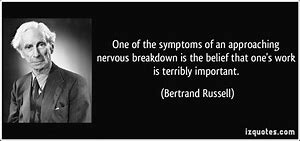
 I’m not exactly sure what a nervous breakdown is. Is it the same as a mental breakdown? Emotional breakdown? Whatever it’s called, I’ve had a few of them. Like in every job I’ve ever had. And with every man I’ve ever loved.

 antique mahogany side table, and the other hand holding the grooved white plastic top, she’d drag the brush along the lip of the bottle to get just the right amount of polish. Pulling the brush from the bottom of the nail to the top in perfect form nail after nail, she’d quietly finish the job, then blow on the tips of her fingers to dry them.
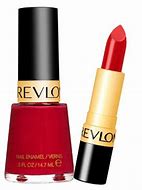 For a few years after my mother died, I entered into the ritualized glamor of painting my own nails red. I sat before a young manicurist who updated me every week on the intrigue of her affair with a rich married man. When she moved in with him and quit her job, the allure of painting my nails lost its luster.

 father left the Navy, we moved to a red brick colonial on Fox Hall Road in Washington and my father started his first job as a labor lawyer for John L. Lewis, founder of the United Mine Workers. They held the same liberal political views but Lewis, a devout, moralistic Mormon and my father, in the early stage of his alcoholism had battling temperaments.
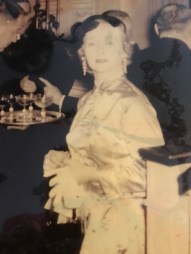 They all called my mother cool behind her back not because she dressed in black turtlenecks like a degenerate beatnik but because with her acid tongue and casual elegance she let them drink beer in her living room and laughed at all their jokes.