Believe in the Devil

Believe in the Devil

In my twenties I accepted Jesus Christ as my personal savior in order to belong to the bible fellowship I had been attending with my friends. I “became” (as if that were possible) a born-again Christian just before Jimmy Carter, also a born-again Christian, announced his candidacy for President. 

I volunteered every spare moment for Carter’s campaign, a Democrat who proclaimed himself a sinner, saved by Jesus, just like me. After he was elected, some men and women in my small community bible fellowship preached that Carter was a tool of the devil, because he promoted sex education and family planning in public schools (today’s purity tests are abortion and gay rights). I had naively become part of a Christian sub-culture that wanted no government interference in family matters. These Christians yoked Carter’s actions to his character and denounced the whole man as the anti-christ. That’s what evangelical Christians did then.

What Evangelical Christians do now is the exact opposite. Those who support Donald Trump have an ends-justify-the-means theology. As long as abortion is outlawed and gay rights are quashed, the means to get there (coercing Ukraine to dig up dirt on his potential political opponent) are not only ok, but justified, even applauded. Donald Trump’s interior life is not considered important or relevant, nor is the outward display of his character. They worship the end product.

In his book, Prayers of the Cosmos, Neil Douglas-Klotz notes that Aramaic, the language of Jesus “…does not draw sharp lines between means and ends, or between inner quality and outer action.”  There are no words in this ancient language for an ends-justify-the means psychology: a person with unrepentant character defects is so unlikely to perform noble deeds that it cannot even be talked about. Logic follows that a person who provides immoral leadership is likely to be of ignoble character.

A guy named Josemaria Escriva de Balaguer established an ultra-conservative, ultra-secret Catholic lay organization in 1928, Opus Dei. Followers learn to abandon their principles, that the ends always justify the means. They believe Trump was chosen by God to protect the unborn fetus and restore Judeo-Christian moral order. Trump’s Attorney General, Bill Barr is Opus Dei (as are other Trump appointees). Doesn’t this explain a lot?

I left that Christian cult years ago. However, I understand, even admire, their members’ rejection of Jimmy Carter because they considered his views on sex education immoral. I disagreed with their opinions but I too measured his character by words and deeds and came to a different conclusion. Perhaps this ancient Aramaic Jesus language trickles into a collective consciousness enabling some to see inner qualities and outer actions as one big squishy blob and accept or reject that whole person.Untitled 2.png

I keep asking myself what’s wrong with those Evangelical Christian (and conservative Catholic) Trump supporters. Don’t they care that his morally corrupt outsides match his morally incontinent insides? Their religious fervor veils their eyes to the hypocrisy Jesus condemned. They justify the deeds of their beloved lawbreaking reprobate. Have their souls separated from their minds? Or as Rev. William Barber has said, “After this year (with Trump) if you don’t believe in the devil there’s somethin wrong with your fuckin mind.” 

Good Memories by Veronica Cook

Good Memories by Veronica Cook

9384D35F-AB47-40E6-B9BE-4ECC850A08F1_1_201_a


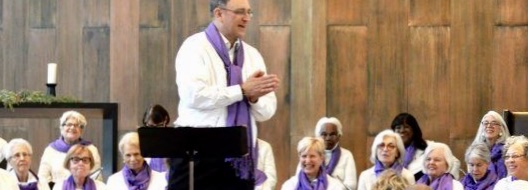
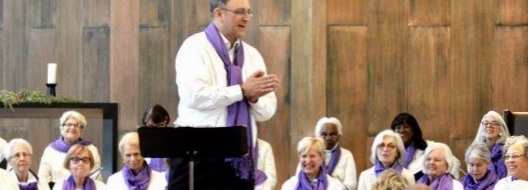
Guest blogger Veronica Cook and I share in the joys and benefits of the Good Memories Choir in Chicago. Veronica reflects here on her musical life.  


When I was a child, we weren’t what you’d call a musical family, but there were always songs. It might have been my big sister boogying around with her finger in the air to Jeepers Creepers, Where’d you Get Those Peepers. Or my mother and I humming along with a light opera song on the radio (O Rosemarie, I  love  you…). All through my life there have been refrains to hum. However in the last few years, while a tune may have played in my head, my voice was having a hard time matching it. Wonderfully enough, it’s coming back little by little because I’ve joined the newly-formed Good Memories Choir.

I now can hear myself carrying the harmony.

At the beginning of each new concert season comes a whole new repertoire of tune fragments to spin around in my brain. At Christmas it was the haunting lyrical tenor of Ose Shalom; the beginning of White Christmas …there’s never been such a day-ay, in Beverly Hills L.A…; and the upbeat conclusion of Go Tell It on the Mountain …that Jesus Christ is born-orn, that Jesus Christ is born-orn.

As I reflect on my choir, a theme emerges that is much more than any one song or one concert. In fact, it’s more than even the music. Founders Jonathan and Sandy Miller have begun a far reaching and profound community. It is heartening to recognize each of us has a hand in shaping this new creation.

The Good Memories website describes the choir as “… a fun, upbeat community where people with early-stage memory loss and their care partners sing together, enjoying familiar music they love.” Yet, there are no one-size-fits-all categories describing the folks in this choir. Unique life circumstances puts everyone at a different way-station along the journey into aging.

I’ve become aware that in the struggle with physical and cognitive decline, we differ only in degree. Likewise, the loneliness and isolation that can so often accompany the onset of memory loss is something that all of us experience in some form. The support, encouragement, the warmth of friendship that we exchange are grace-filled gifts for us all.

Tuesday morning gatherings that get us started seem deceptively simple and down to earth. We are welcomed by the familiar smiles of fellow choir members as we gather in our rehearsal room. We cluster around the coffee pot, savor an array of sweet and savory homemade snacks. There is a collage of expectant faces, the beaming smile of one, the delighted greeting from another, the oohs and aahs over special treats. Compliments are exchanged: earrings, a new coat, a sweater pattern. We catch up with each others’ news. We are at home here, surrounded by new friends. And then it’s time to warm up with Oh What a Beautiful Morning! 

Always front and center is the music. Singing! Having come close to my voice deserting me, I glory in what this means: making a melody emerge from within my being, and even better, to make it harmonize with others. Joining our voices in song is central. This is the precious gift we give and receive from each other.

I stole a look at the Spring 2020 Good Memories repertoire. I invite you to come hear us on May 12th at 12:00 noon, Fourth Presbyterian Church, 126 East Chestnut St, Chicago. You’ll hear Waitin’ for the Light to Shine, Kol Haneshama Tehalel Yah Bonia Shur, Storm is Passing Over, What a Wonderful World, Long Ago and Far Away, Bridge over Troubled Water and the finale that says it allHow Can I Keep from Singing! 


Join a Choir! If you live in the Chicago area, click here.

If you live elsewhere, check out the worldwide Giving Voice Initiative (GVI). If you don’t see a chorus listed near you, start your own!  www.givingvoicechorus.org.

A6B6723F-42BF-4BF9-BCC8-23831959EF4A_4_5005_c

Speaking of God…

Speaking of God…

I’m not sure what day or year or even decade I stopped being ruled by men. Feminist pop psychology (and real shrinks) used to tell me I “allowed” men to rule my life. Of course I was roped into that, having been raised in the patriarchal Catholic Church where women are still not allowed to be priests. God was always a man and because of that men were always in charge. Recovery from those old ideas was precipitated not by strong women helping me see the light, but by some very important men acting badly.

My Amazon Dot is tuned into the impeachment vote of President Trump. He’s the worst example of male dominance I’ve ever known, but he’s an extreme case. I’ve experienced Christian cultist men telling me God wanted me to submit to a physically abusive husband; a married lover who insisted I wait by the phone on Christmas for his call; a father who dragged me into fraudulent schemes; and, bosses (Gary Hart and Bill Clinton) who got caught with women-not-their-wives. To paraphrase Nancy Pelosi, “I don’t hate them. I pray for them.”

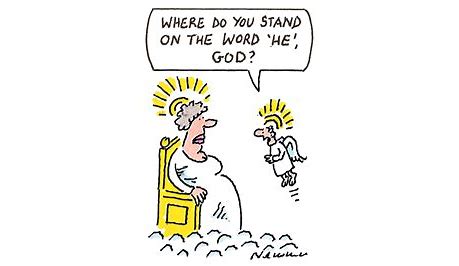
It’s true. I’ve been taught by the Twelve Steps of Alcoholics Anonymous to pray for people I don’t like (or, more likely, who don’t like me). The words I use in prayer for God’s gender are still masculine though. To be modern, I could rant publicly against male-centric words like “Lord,” or mind my manners and quietly substitute the more gender-neutral (or is it gender-inclusive?) “God.” I want to do that because these days I think of God as non-binary, neither male nor female.

I pause to see She-He-It in the yellow leaves of the honey locust fluttering down in front of me when I walk Henry-the-Dog. I hear They-Them when the crows caw. I even smell Her/Him/Them in the spring (what are those fragrant shrubs called?). These delicate manifestations of God are indeed gender-neutral.

But my senses play tug-of-war. The Bible rarely shows these versions of God. Just as I see the streets of Edinburgh when reading Ian Rankin mysteriesOIP.oB0fL0JIYA1IHyc9P5Ik4AHaEK, I see God as a man when reading the Bible. I visualize men—Jehovah, David, the king on his throne, the Father, the Lord. God the man made a covenant with David the man. David’s seed, not his eggs will rule as kings, not queens, from generation to generation. 

The subtler Biblical images of God as a mother caring for her children undergird my faith that God will always be, always live and always love. That female-male God who loves me deeper than I can visualize, who enfolds me at the still point, who sees me as perfect and lets me be. That is the God whose help I seek, whose direction I want, whose words I hear. I sing to that God.

In another world, I will know God as intersex, non-binary, genderqueer, agender, gender fluid, androgynous, bigender, multigender or demigender. In this world, I await David’s seed to change the God-man language to align with my gender neutral spirit.

Violence Against Women

Violence Against Women

He came home from work one day in the mid-1970s, went right to the fridge, opened the door, then slammed it shut and warned, “There’s no milk!”

Fighting words. Nothing grated more than to be accused of neglecting some trivial aspect of my role as a wife. He drank a lot of coffee with a lot of milk. Milk on display in the fridge assured him I thought of him first, had feelings for only him, loved only him. 

“What have you been doing all day that you couldn’t get milk?”

He really knew how to escalate things. I did too.

“I’ve been busy washing your clothes. Go get it yourself.”

“You are a lazy selfish bitch. You never think about anyone but yourself.”

“And you are a fucking spoiled brat. Go home to your mother if you want to be treated like a little kid.”

Kapow!

He grabbed my throat with his left and slugged me with his right. As he ran out the door I screamed, “Don’t ever come back!” 

The dentist asked me why I was icing my lip. I grabbed the box of tissues next to the chair as I cautiously unclenched my fist to reveal two front teeth in the palm of my hand. I didn’t want to part with them. In the short bleary-eyed drive to the dentist, I’d clutched them like a totem, a symbol of an uninterrupted life; a life where men didn’t punch you in the face. I asked the dentist if he could put them back. He couldn’t. He cleaned me up and told me the skin tissue was so damaged above my lip that as I got older it would collapse and wrinkle. He wanted to file a police report. I blew my nose and said, “No. No. I don’t want that.” As I was leaving, he held out my teeth and asked, “May I discard these now?”

And there went my innocence, dumped into the heap of damaged parts. It took another three years before I left.

These days I’m often in ad hoc conversations with friends about a news story describing a violent husband. Inevitably someone tsks, “why does she stay with him?” Or worse, “It’s her own fault. She should have left him the first time.”

Why do we stay? Because we often:

  • Feel the abuse “isn’t that bad”
  • Think we can change the guy
  • Believe it will never happen again
  • Believe that we deserve the abuse
  • Are dependent on him
  • Have no place to go

Many of us think twice because we can’t leave our pets. These and other reasons seem unreasonable to those who have never walked in our shoes. We know this. It’s the reason we keep our secrets.

Tennessee was the first state to outlaw wife beating. In 1850. Until the 1870s, courts in the United States supported the right of husbands to physically “discipline” their wives. In the 20th century, police were intervening in cases of domestic violence but arrests were rare. 

The Violence Against Women Act was signed into law by President Bill Clinton in 1994. It required coordination in domestic violence cases between courts, law enforcement, prosecutors and victim services. It has provided financial support to community-based organizations that help domestic violence victims find temporary shelter, even with their pets. 

Concerned Women for America, a socially conservative, evangelical Christian group opposed the original bill. One senior fellow said it “ends up creating a climate of suspicion where all men are feared or viewed as violent and all women are viewed as victims.” In April 2019, the Democrat-controlled U.S.House of Representatives passed a bill reauthorizing the Violence Against Women Act. Action came to a screeching halt in the Republican-controlled U.S. Senate in November 2019. The bill is dead.

Why do we stay? We’ve been helped and protected for only 25 out of the 240 years of United States history. That’s why.

Irish Alzheimers

Irish Alzheimers

Oh look! Bufflehead ducks. They’re migrating kind of early. On their way south ahead of the freeze. What luck to spot them today; a glistening black and white raft bobbing and dunking near the shoreline. 

th
The only place to find a bufflehead during extremely cold winters in northern Illinois is on Lake Michigan. (Chicago Botanic Garden)

Watch it! There’s water spilling over from the lake.

Why did I agree to see her? I could have said I’m busy, since I AM busy. What’s she doing here anyway? She stopped talking to me at least ten years ago. No explanation. No return calls. Just kaboom! Silent treatment.

Oops. Dear God, the lake is so high. I should have worn boots. I thought climate change was supposed to lower the lake level. Yeah, global warming means less ice holding water in the Great Lakes, more water evaporating off Lake Michigan. So what gives? The polar ice cap melting?

I wonder if she still has her Medicare insurance business. You’d think she’d have called me when I turned sixty-five. It’s not as though she didn’t know my age; would have saved me a short-term nervous breakdown and trips to a social worker. I know so many people who’d pay for her services.

I have to get off the lake path. It’s getting too slippery. Uh-oh. Flashing lights ahead. What’s going on? A runner got washed into the lake and they’re fishing him out? Oh no. I hope he’s ok. It’s a woman? Walking downtown wasn’t such a good idea today. I hoped it would refresh my mood, clear my head, but there’s danger; time to head to the underpass.

I guess we’ll have lunch at the Art Institute. Does she still love art? I’m glad I brought the birthday present I never got around to mailing. I’ll push it across the table as if to say, “See, I’m not as unforgiving as you.” Wish I knew what her grudge is all about.

How did I get on the bridge? I’m not paying attention, need to be more mindful. Pause. Take a breath. Yikes, a flock of Sandhill Cranes in V-formation! Still migrating even though It feels like the middle of January out here. Get off the lake now. Hmm, let’s see. Take the path up the hill off Randolph, pass the Survivors Garden, over the silver bridge through Millennium Park to the new entrance, Art Institute.

I know! She has a terminal illness and wants to make amends before she dies. Naw, I would’ve heard that from another sister or her children. Maybe she simply wants to say she’s sorry and let’s stay in touch.

Guess I’ll take the bus home. What was that all about? She acted as if we saw each other last week. No scores settled. No plans for further contact. Glad I didn’t pursue it. I yearn for sisterly love but her rejection throws knives; it is a pain-filled memory. 

Oh good. Marge is on the bus.

“You have a sister?”

“Yeah, she cut me out of her life years ago.”

“Who needs a sister like that?”

Amen, Sister.

eeb50a317f74aeed7b723ef4b62f5220

Just in Time, I Found You Just in Time

Just in Time, I Found You Just in Time

I used to ignore articles that say cognitive decline slows if I eliminate sugar or play bridge. I found work-arounds instead. When I lost my numbers I set up automatic bill payments with the bank. I can never remember if choir practice is on the fourth or fifth floor; I simply follow my fellow singers. And I rely on my phone or friends to tell me the dates and times of my appointments, events and plans.

Memory loss has been gradual. I’m in good company though—my friends and I laugh Unknownwhen we can’t remember the name of the movie we just saw. But when I started hyperventilating with disabling anxiety in airports and receiving bizarre Chinese packages I’d ordered from ads on Face Book, I called Northwestern Hospital to see a
neurologist.

“Someone will call you back,” the receptionist said.

“Can’t I just make an appointment?”

“No. Someone needs to do an intake over the phone first.”

“I’ll wait.”

“No. Someone will call you.”

I missed the callback. Called again. Missed again. And again.

I felt like I was racing against the clock. Processing the TV news was becoming difficult. It moved too fast and I couldn’t retain information from one sentence to the next. To understand NPR’s Morning Edition, I had to stop getting dressed or making my bed, sit down with a cup of coffee and listen. Reading the news wasn’t impossible, just clunky. Some words on the page faded. Some didn’t. I went to the eye doctor three times within six months. She told me there was nothing wrong with my eyes or my vision.

I consulted Dr. Google. Indiscriminate shopping, getting lost, difficulty with numbers or language as well as forgetting dates, names and places are all a part of the normal aging process called cognitive decline. Researchers say eat right, exercise, socialize and learn something new to keep your brain from slipping past the point of no return. Some say singing actually heals the brain, so I joined the Good Memories Choir.

IMG_1112
Jonathan and Sandy Miller • Founders of Good Memories Choir               Fourth Presbyterian Church • Chicago

On the first day I hesitated accepting my songbook. Would I remember to bring it to weekly rehearsals? Would I even remember the day and time of weekly rehearsals? People asked me what “part” I sang. I had no idea.

“I have to sing the melody,” I said.

Alice sat next to me in the last row of the soprano section. I love to sing along but I know nothing about music. The singing was running ahead of me—I couldn’t catch the words. After singing a few songs, Alice showed me the soprano lines and suggested I highlight the words. She told me to sing the notes with the stems pointing up. I focused. I was learning a new language.

Good Memories is a choir of people with early-stage memory loss, their care partners and volunteers. I met the Google criteria for cognitive decline but I didn’t have an official diagnosis. I joined as a volunteer, unsure where, or even if, I fit. After singing every week for over a year, I never forget my songbook, the lyrics are nailed to the page and I follow the notes.

One of the first songs we sang, The impossible Dream, seemed impossible for me. There were too many words too close together. At the concert I sang every word. And Alice whispered, “You made it.”

Yes, I did. Just in time.


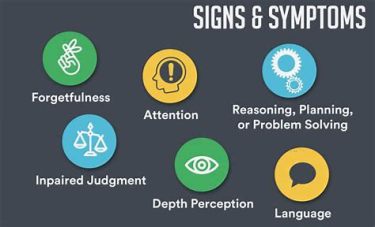
Learn more: Five Symptoms of Cognitive Decline

Join a choir! Jonathan Miller, Artistic Director of Good Memories Choir will help find one in your area. Contact him.


Treat yourself. Watch Judy Garland sing Just In Time

Fear of Dying Without Dignity

Fear of Dying Without Dignity

The facilitator outlined the steps to execute a health care power-of-attorney, letting us know every state is different. I knew we were about to go off the rails when a class member asked about Florida laws. We were in Chicago. But the real turning point came when a woman announced her parents died of Alzheimer’s.

”I just want to know where to get the pills” she said, “and how will I know when to take them?”

She was talking about suicide.

I’ve been schooled on end-of-life living wills, advance directives and “practitioner orders for life-sustaining treatment” (POLST). These documents allow us to describe our wishes POLSTat the end, and to designate someone to decide medical treatment when we can’t speak for ourselves. All my papers are in order. For all the Death Cafes, Journey Care and Compassion & Choice discussion groups I’ve attended, never have I been in a roomful of people who turned the conversation so fast and openly to how and when to commit hari-kari before they couldn’t speak for themselves.

The Conversation Project® is yet another public engagement initiative with a goal to have every person’s wishes for end-of-life care expressed and respected. Representatives from the Project don’t come armed with facts on assisted-suicide, or how to identify that one perfect moment before you lose your marbles completely. They do, however, listen. And in my group, person after person expressed fear of not being able to off themselves in time.

One man told us he holds the health care power-of-attorney for his mother, that her instructions are explicit, but he can’t bring himself to pull the plug.

“I’m afraid my siblings will all get mad at me,” he said.

Everyone gasped. It’s what we all fear the most.

I never thought of the possibility that I’d be kept alive beyond my sell-by date. I’m not afraid to die. I’ve thought about it my entire sentient life. Huddled under my first-grade desk waiting for an atomic bomb to drop, I knew I’d be going to heaven to see Jesus (my best friend at the time). What’s to fear? I even tried it out once. I took eighty sleeping pills when I was twenty-four because I knew there was a better place than Point Pleasant Beach, New Jersey, in the cold grey winter.

The idea of my body curling up to a breathing machine and a feeding tube without my consent or knowledge is new. Each and every daybreak now I wake with fear, unable to face the day. I use Anne LaMotte’s simple prayer, “Help me. Help me. Help me,” just to get out of bed.th

On a recent temperate morning I walked Henry on our tree-lined motionless street. A
gust of wind came along suddenly and blew the fall leaves off an overhead honey locust. We stood in a yellow-leafed shower, swaddled in fluorescent care. And the fear of dying without dignity moved off into the gutter for the day.


Death Cafe

Illinois POLST

Conversation Project

Journey Care


Tracking Changes

Tracking Changes

A few years ago I completed a course on “writing away” chronic pain. The workbook, Unlearn Your Pain, asked me to consider: “if there were any particularly stressful or traumatic events in your childhood.” If I answered yes to that little ditty, my next assignment was to: “Describe any of the following: deaths, moves, bullying, taunting, teasing, emotional or physical abuse, changes in school situations, conflicts with teachers, or changes in family situations.” 

Every time I finished a paragraph, pain slipped away not only from the sciatica ripping th
down my leg but also from the stenosis at the base of my backbone that had been squeezing the life out of the nerves in my spinal canal. The pain relief from these writing exercises accumulated, and when I added a daily dose of meditation and weekly feldenkrais (moving meditation), the pain withdrew completely.

No painkilers. No surgery.

The treatment ran its course and I became addicted to writing the way some chronic pain sufferers become addicted to opioids. That was the beginning.

I found myself in a fifty-five and older memoir writing group scared to death that I didn’t belong. I’d assumed everyone in the group was a published author and they only let me join to fill an empty seat. The first day I came with no writing of my own and listened to stories about the family cat, road trips to the West and baking cookies with Grandma. Was this memoir writing? My stories were about an alcoholic family that turned out alcoholic children. I had no fond memories of family vacations or beloved family pets. I slid down the hall out of the classroom. A class member caught up to me and urged me to come back. 

“I can’t write like that,” I said, “my writing is too dark.”

”You can write any way you want. It’s your story to tell,” she said.

I went back, wrote my own stories and heard my words fall loosely on the table in front of me. Shame kept me from lifting them up and out. Pain relief continued at a more dramatic pace as I wrote and shared stories of my distressed childhood. A year or so in, my words managed to reach across the table to the writing teacher, then to Veronica, then down one side and up the other. I created my own blog and posted my weekly writing for public view. Public! Readers wrote important words in the comments, encouraging, wanting more. More! 

“You should write a book,” friends said.”

 “A book? Never thought of it,” I said.

And then I did.

Writing teacher Beth Finke included one of my stories in her memoir, Writing Out Loud. When I submitted a writing sample to Tortoise Books, the publisher emailed, “I heard you read your story from Beth Finke’s book at the Book Cellar. Send me your manuscript.” Manuscript? I had written 500 words a week for four years but I didn’t have a manuscript. I asked for help. 

From. 

Anyone. 

Willing. 

Beth told me to go to a hotel room and spread all my stories out then pick them up one by one and number them in chronological order. “Then you’ll have a manuscript,” she said.

The hotel compilation worked. Using Jerry-the-Editor’s notes, I revised, deleted and rewrote. He’s tracking his final changes onto my pages now. The end is near.

The Fall

The Fall

Four and a half million autos are registered in Illinois and I swear every one of them poops in my third floor condo during the summer. Sooty tailpipes dump combusted fossil fuel waste into the air, earning them the top prize for the cause of Chicago’s air pollution.images

In season I sit at my open windows, as if I’m on a front porch, surveilling dog walkers, tree trimmers and strolling wayfarers, totally oblivious to airborne black soot drifting up from the street. Until I feel the grit under my bare feet. I dust and mop but I neglect the wide flat wall-to-wall windowsills, since I don’t walk on them or eat off them. By the fall, the accumulated soot requires major housework.

The U.S. Energy Information Administration reports there are more polluting vehicles in American cities now than ever before. Why? Because of Amazon deliveries and Uber riders. Ugh. I’m guilty. People who live near highly traveled roads are at greater risk of death from stroke, lung and heart disease. Still, a force compels me to throw open my windows for as long as Mother Nature allows.

The first week of fall I close the windows and move thirteen oval planters of crimson geraniums and various street-art bird sculptures off the windowsills to vacuum, spray

and wipe up smeary tiny black particles. I toggle back and forth between swearing at the polluting drivers below and feeling superior because I ride my bike.

This year, I frenzied to finish cleaning in time to lunch with friends. As I swung around to pick up the spray bottle, I knocked over a clear hourglass vase filled with my seashell collection. It smashed to pieces on the hard floor. The seashells scattered and I rushed to lock Henry-the-dog away before his compulsive eating disorder kicked in and he devoured the shards. I almost threw the whole mess in the trash. Who needs a bunch of old dead shells?

When I returned from lunch I gingerly sifted through the crash site of remembrances. Collecting and identifying seashells was an obsession when I was young, addicted to pot and living at the Jersey Shore. Later I collected shells on other shores—Pismo Beach, Harbour Island, Sanibel. The scallop, clam, oyster and limpet shells had survived turbulent roiling seas, much worse than the fall. I dusted and massaged the intact heirlooms and settled each on a cleared bookshelf. How old are they? 

My most prized possessions in the smashed vase, the fragile sand dollars, were too brittle to withstand the impact. In the late 1980s my six year-old cousin and I harvested the images-5moribund sea urchins from intertidal shallows of the Atlantic. We had been snorkeling around his family’s cottage in the Bahamas and splish-splashed far along salty Eleuthera Bay to the narrows between two deserted islands. We tucked a few sand dollars in our bathing suits and floated home half-submerged, flapping lazily over sea turtles, starfish and schools of barracuda. The shattered remains of those sand dollars lay now in the burial mound of ever-increasing sacred memories.


First Grade Gun

First Grade Gun

Tyrone bragged that his friend brought a gun to school. In the six months I’d known him he’d told me a few tales, like he and his little brother went to Winter Wonderland at Navy Pier. He didn’t have a little brother, but I often held my confrontational tongue with him in an effort to give him space to be himself. I thought if I earned his trust, eventually he’d stop trying to beguile me with fanciful stories.

He was my seven year-old charge in a weekly volunteer tutoring program. During our first getting-to-know-you session we followed a Q & A script developed by the program administrators. We both had dogs. He had a baby sister. I had grandchildren. He went to a school on Chicago’s west side. I was not sure who mothered him. He mentioned an aunt and a grandmother. He proudly mentioned his father. He wasn’t explicit, and looked away in silence when I pressed for details, what does he do? I eased off to save him from having to think up a story. And really, I didn’t want to know.

The tutoring session consists of helping kids with their homework, creating art projects and playing board games. Tyrone didn’t need help with homework. I guided him while he wrote down answers to math problems and filled in words in sentences. He never got anything wrong, and I praised him for being so smart. I helped him put his homework neatly in his backpack. When I started to reach in and straighten other things in his backpack, he balked at that intrusion. He often hid a football or basketball in there and feared others would see. I surmised he was prohibited from bringing balls to school, and he thought they may be forbidden at tutoring as well. Maybe he was afraid for other reasons.

When I quizzed him about the details of the gun, he said he saw it in his friend’s backpack, that his friend found it in ththe backyard and that it had bullets in it. I asked if he told his teacher. “No! He’s my best friend!”

Research finds youth from risk-filled backgrounds who successfully transition to the adult world of employment and good citizenship have had the consistent presence of a caring adult. Tutoring programs give kids this opportunity. As a first-time tutor, I attended orientation where consistency and trust were emphasized.

I connected with Tyrone in summer camp. Some kids would point to volunteers and brag, “That’s my tutor!” Having no information about what a tutor is, Tyrone asked me to be his tutor. Yes, I committed to years-long care and support of Tyrone beginning that fall.

I doubted Tyrone’s tale about the gun, but gun-in-school carries weight. I couldn’t  bear it alone. I consulted with a supervisor. She knew Tyrone’s caregiver.

“I’ll take care of it,” she said.

The next week he came to tutoring with his sidestep story: his friend brought gum to school. When next I arrived for duty, Tyrone was absent. I knew he’d not return. He dropped out of tutoring and so did I.

Was I right in reporting Tyrone’s story? I doubted myself for months. I switched my volunteering from one-on-one tutoring to leading groups of first graders in meditation. A supervisor caught me in the hall one evening and casually mentioned the gun was no tale.

Tyrone’s friend had walked into first grade with a loaded hand gun in his backpack.