My parents thought the ability to read and write developed naturally, by osmosis. The first kindergarten in the US opened in 1860 but by the 1950s my parents still hadn’t heard about it. I wasn’t one of those three year olds who sat in the corner and taught herself to read and write. Learning letters and getting them into words, words into sentences, out of my brain through my pencil and onto paper developed painfully when I was eight at St. Patrick’s school in Terre Haute. Measles, chicken pox, mumps and parental neglect kept me from the entire first grade year. I was enrolled in second grade because, well, eight-year olds are in the second grade. On the first day, the nun circled the room asking each of us to stand and read a sentence from “Fun with Dick and Jane”. I rose, steadied my feet, stammered and shook. She stood right in front of me.

“Well? Come on. Out with it.”
“I can’t read.” I mumbled.
My parents’ nonchalance over my lack of schooling perplexed the nuns. They treated my inability to read as a federal case.
“I had no idea she couldn’t read,” my four-flushing mother announced to the mother superior, deflecting blame to my father. “He’s the smart one—he was supposed to teach her.”
They sat me in first grade. My new classmates treated my flame-out as the worst thing that could ever happen at school. My older sister broadcasted I’d “flunked” second grade whenever she got the floor. Other parents said offhandedly, as if I couldn’t hear, that I had to repeat first grade because I couldn’t read.
To temper my embarrassment, my mother bought me a green Schwinn two-wheeler. Then she bought my two sisters their own Schwinns, red and blue. In June the nuns decided I had learned reading and writing well enough to skip second grade. They promoted me to third grade. We moved to St. Louis where I thought I’d escaped the school shame. But at Our Lady of Lourdes I faced a new mortifying unfamiliarity: multiplication tables.
Sixty-five years later I’m promoting my first book on email and mulitplying the number sold times my cut. When a resident in my building replied “take me off your email list” to an announcement of the publication of the book, I thought, “What a bitch. Just delete it.” I’d included her in mass emails about community sing alongs for years with no response. Why gut-punch me for my book? If she’d known about the long and painful labor birthing the book, perhaps she’d have hesitated. Perhaps not. I never see her in the building’s communal laundry room where small talk turns strangers into neighbors. I suspect she has an unauthorized washer and dryer in her upgraded condo.
When it comes to my book, my shadowy small self snarls under perceived offenses. I react as a child. It’s binary. Black and white. For me. Or against me. Because I’m published, accidental virtues visit me from time to time. I forgive my hapless parents, and I forgive the incurious, now-deleted emailer, too.

 Albert Einstein once posed a question to a fellow physicist, “Do you really believe that the moon only exists if you look at it?” It’s a common philosophical question, similar to
 There’s not been an event in my life that’s made me feel more like a hot shit than going to Woodstock.
 People often ask why it’s called the Sears Tower since no tools or washing machines are sold inside. I shrug my shoulders. The well-reported troubles of the Sears Tower are too exhausting to recount. Even as the doors opened in 1973, Sears Roebuck & Co., had slipped in its ranking as the largest retailer in the world. Lawsuits beset the half-built tower trying to limit its height so it wouldn’t block television signals. The news has continually reported the building’s bankruptcies, miles of vacancies and its lost status as the world’s tallest building.
 family virtues right forestalled soul-crushing parental recriminations.
 down was the normal way to get a free cone.
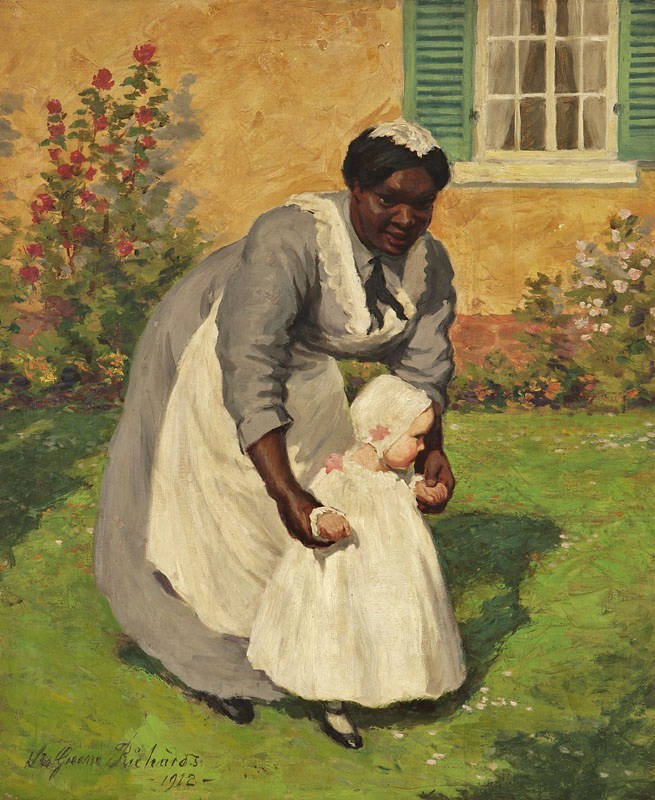 Minnie. She smelled as fresh as her starched dresses and aprons. In contrast, my parents and their friends had an unrelenting stench of cigarettes and beer.
 Regan Burke