When my family finally came apart in the Chicago suburbs, one of my sisters and I were sent to live with relatives in Upper Marlboro, Maryland. Two other sisters and my mother settled in with relatives at the Jersey Shore.
Colonized around 1690 by British Catholic royalists, Upper Marlboro became a Southern Maryland river port for tobacco ships. When I arrived in 1959, there was no sign of the native Algonquin tribes who had inhabited the area for 10,000 years, and the Patuxent River was unnavigable. The town had become an agricultural, social, and political hot spot. A mere ten miles from the Washington, D.C. border, Upper Marlboro’s old tobacco farms served as weekend getaways for the political class with free-flowing gin and Saturday morning rides to the hunt.
My family had moved in and out of towns all over the Midwest, but we never lived in the South. And never had I been in a segregated school. This is Harriet Tubman country. In 1850, tobacco planters around Upper Marlboro owned 2,793 enslaved Black people. One hundred and nine years later, Catholic schools and churches were still separated by race. At thirteen, I had no clue how to speak up for injustice. My aunt and uncle acknowledged segregation was wrong but cautioned me to keep my mouth shut. On my first day at St. Mary’s grade school, I asked my teacher why the Black children were in a different building.
Out on the playground, a baseball game formed every day at noon. A boy in my class chose the teams. Who is he? Did the nuns volunteer him to organize the kids? Everyone called him “Rabbit.” I traipsed up to him and asked if I could play. Without blinking, he asked, “What position?”
“I can play anywhere, but I was a pitcher on my softball team.”
“Where’s your mitt?”
“It got lost when we moved.”
“Here. Take this: It’s extra. You can pitch until someone else wants to.”
Again, I wondered who he was. This coach? This commander of respect? This boy in my class? This leader?
When the Black kids came running from their school, they rushed up to Rabbit, and he divided them into our teams.
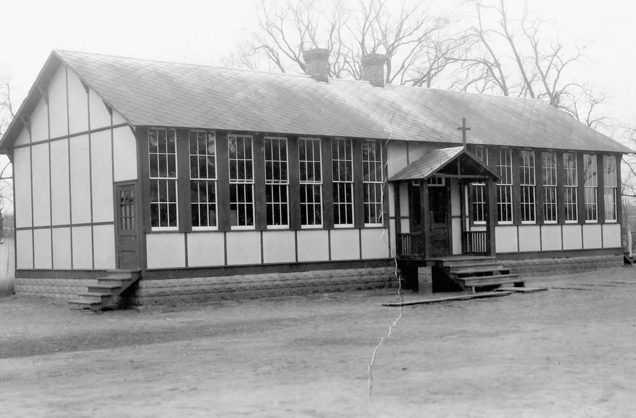
“Henry, you play first base for the B team. Betsy, you be shortstop for the A’s.”
Everyone knew we had only an hour to play; they jumped into action on Rabbit’s direction without hesitation, without whining, antsy to get on that field.
“That’s Regan!” He shouted. “She’s gonna pitch for a while.”
“Play Ball!”
On the way back to our classroom, I asked Rabbit if we were allowed to play with the Black kids.
“Not ‘sposed to,” he said. “But we don’t ask. They know we jus’ wanna play ball.”
Rabbit is the first natural-born leader I remember. In the classroom, he respected others and did his work. He was distant but had friends. I never pitched again because Rabbit rotated others in. He never criticized. He never praised, either.
He just wanted to play ball.

 Regan Burke
Love this story of Rabbit, a true leader with character with a focus “Play Ball” I think in the military and sports we often saw merit was most powerful. As a retired high school counselor I saw merit shine in sports and academics. We all have gifts, we are unique, Let’s let our talents shine.
LikeLiked by 1 person
What a great story! First, you didn’t do as you were told and keep your mouth shut. Then Rabbit was certainly a role model. If kids just don’t get indoctrinated by their parents, and they play as they want, this would be a better world.
LikeLiked by 1 person
Seems like a rip off that the choices were the Jersey Shore and Upper Marlboro and you got Upper Marlboro. Do you ever think how your life would have unfolded differently if the living situations were switched? When I went to college, the kids from the Jersey Shore were far more mature and worldly and confident than anyone else.
LikeLike
Upper Marlboro was short-lived. My mother brought us together in mid-summer in Sea Girt, NJ. And there, I learned to smoke cigarettes, drink beer, and make out with boys under the boardwalk.I returned to Chicago when I was 29, leaving 2 husbands and lots of remorse on the sands of the Jersey Shore.
LikeLiked by 1 person
Ah, my college girlfriend was from sea girt. Visited many times. She did a good bit of smoking cigarettes, drinking beer, and making out with boys under the boardwalk, too.
LikeLike
WHAAAT! was her name? Sea Girt. Great name, eh? It’s such a small place. And you were there! I went to Manasquan High School. Tell her to read my book if you’re in touch with her. Sea Girt’s in there.
LikeLiked by 1 person
The family name is Pessell. She has older siblings you might know—Laura, Susan and Tom. They were actually snowbirds so only in town for the warm weather. I know some people who graduated Manasquan but they would have graduated between 1979 and 1983.
LikeLike
Familiar names but no memory of them. This seems to be more than just small-world territory. It’s eerie. I already love you, so didn’t need a stronger connection. God (I have one) is giving me a real friend.
LikeLike
This country needs more “rabbits”. I miss you Regan.
LikeLike
You are NOT kidding!
LikeLike
this is nice…thanks carol
LikeLike
My Dad worked to integrate Catholic churches on the South Side (Back of the Yards) in the ‘60s.
LikeLike
What a great legacy. Hard work in the 60s!
LikeLike
Regan,
Thanks do mich for sharing you story. Absolutely delightful.
LikeLike
Thanks.
LikeLike
Thank you, Regan: another poignant episode you lived in US history, and a portrait in goal-driven leadership!
LikeLike
AH! How does that happen to such a young boy?
LikeLike