Falsely Accused

Falsely Accused

Fresh off a Zoom webinar titled Midwest Reparations, I rushed to my local coffee shop for a takeaway to sip during my upcoming current events group.

“12-ounce coffee in a 16-ounce cup?” The White barista asked. That’s my usual, with room for cream.

“Yes, please. What are all these new pastries? Chocolate cake? Key lime pie?”

“Yep, they’re new. All from different bakeries” said the barista.

“I’ll be back later with friends. They. Will. Love. These.” I said.

The Blackroots Alliance webinar that morning enlightened me on reparations projects in the Midwest. These are nascent activities reviving the 159-year-old “40 Acres and a Mule” policy for emancipated slaves that was promised and then revoked during Reconstruction. The initial focus of current reparations projects is research to uncover the descendants of enslaved people and how they’ve been impacted. Non-Black allies join at the end of the process when it’s time to distribute funds. Research is conducted by the harmed community, Black Americans, particularly African descendants, who look through the eyes of the tortured generations of chattel slavery. Non-Black Americans cannot be trusted to do this research since they see through a different lens: the eyes of the colonizers, the enslavers, the guardians of the dominant culture.

With this new information,  I was wondering how I, an old White woman, could fit into the reparations movement as I filled my coffee with half and half and rushed over to my current events group.

The group discussed the news of familiar territory: TFG, the former guy, and his latest legal shenanigans, immigration, climate change, gun control, and the ever-evolving White Christian Nationalism. Afterward, a small group sauntered over to the coffee shop where I’d spotted the new pastries. Six of us pulled up around a small table, coats draped over our chairs, rising one by one to fetch our drinks. 

I was the last one to the counter.

“I’m sorry, we can’t serve you.” said the barista.

“What?”

“We can’t serve you. The manager wants to talk to you.”  I joined my friends and announced what happened. The manager appeared and asked to speak to me privately.

“We can’t serve you because there’s been a report of you using a racial slur this morning.”

“What? What racial slur?

“The “N” word.”

“Well, there’s a mistake. I’ve never used that word in my life.’

“You understand we have to investigate when something like this is reported?”

“Wait. Are you accusing me of this?

“We have to investigate. Meanwhile, we cannot serve you.”

“For how long?”

“For the unforeseeable future.”

“You’re kidding. Look at me. I really don’t have an unforeseeable future.”

My friends were incredulous. ‘You? Boy, have they got the wrong person.’ They were ready to mount a protest in front of the building, signs and all.

In the following days, I connected with the company’s Chief Operating Officer. She apologized and emailed me a store voucher for $150. That’s a lot of coffee.

The coffee reparations, however, failed to dispel the lingering notion that I’m not a credible witness to my own story, that I’m not sufficiently worthy to be believed. How can we expect descendants of enslaved Africans to automatically manifest self-worth after enduring generations of false accusations, lynchings, and pressed-down powerlessness? 

We owe them a lot.
Joys and Sorrows of a Colonoscopy

Joys and Sorrows of a Colonoscopy

The morning after my last colonoscopy, I stood in line at Starbucks to satisfy a sudden obsession for a flat white, not my usual coffee drink. A familiar tune came through the surround sound subwoofers. My toes began tapping involuntarily until the song’s words remembered my voice from long, long ago and softly fell freely from my lips.

Thunder only happens when it’s raining

Players only love you when they’re playing.

Dreams. Stevie Nicks. I imagined myself wiggling my hips and flailing my arms—an unwise move for a not-so-sure-footed roly-poly 77-year-old.

Feldenkrais teacher Deborah Darr says, “Imagine you’re doing the movements you can’t physically do.” She taught me that imagination can so deeply engage the mind that the body feels like it’s moving when it’s not. So, on my way home from Starbucks, I imagined myself line-dancing down the street humming Dreams.

By the time I got home, I was physically exhausted. I clicked into a meeting of Alcoholics Anonymous on Zoom. I’ve been attending AA meetings for over 50 years and often ho-hum to myself, “I’ve heard this story already…nothing new,” even if I’ve never seen the speaker before in my life. On this day, I zeroed in on the story so wholly that I felt every cheap drink, every disgusting hangover, every regrettable hook-up, and every sickening word of his drunken story. When he talked about getting sober, my stomach balled up, remembering the agony of those early days of sobriety with uncontrollable sweaty shakes and tears. The love he felt from fellow sober alcoholics and for his family sticking with him filled me, too. Love and gratitude seeped into my every pore. 

The growing ball in my stomach erupted at the emotional and physical powerlessness, and I ran to the bathroom and puked. 

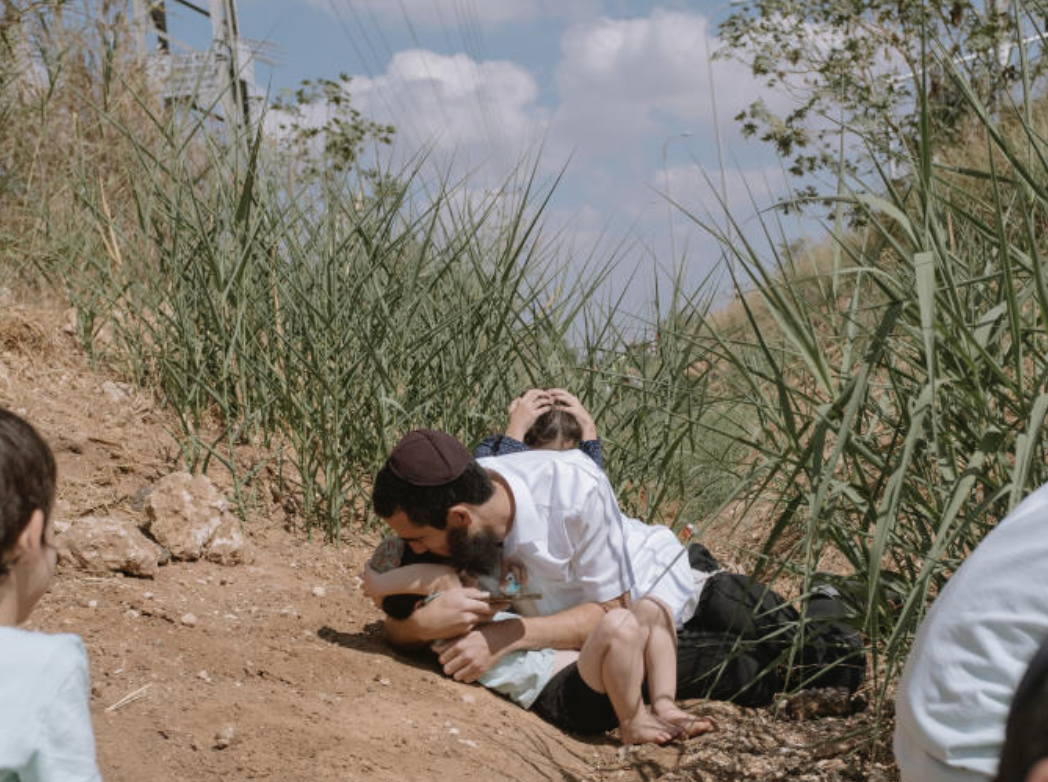
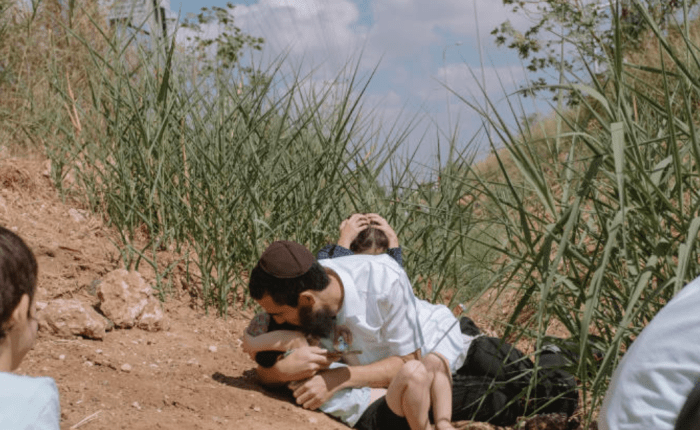
(AP Photo/Dor Kedmi)ASSOCIATED PRESS

Seeking distraction, I turned on the TV. Hamas terrorists had tunneled under the Gaza-Israel border a few days before and riddled Jewish babies with bullets. News outlets had taken a few days to get the images to us. I wept watching the photos and videos, hearing children crying out for their mothers, watching helpless fathers, and reporters describing families on the move. Displaced. Terrified. Confused. Grieving.

I reached in my purse for the forgotten mound of papers handed to me as I left  the “colonoscopy suite.” Was I supposed to read them sooner? I don’t know. But I saw why I was so giddy, twirly, and happy in the morning and so emotionally flattened later. Fentanyl. The doctor shot fentanyl in my arm before snipping a bit of chitterling from my innards. Fentanyl is so powerful that I forgot biopsy results were coming my way.

The doctor sent me a note within a few days. “All clear,” he wrote.

Just one veinful of fentanyl laid down a new neuro path in my brain, allowing the deepest of joys and sorrows. Since then, if I’m tuned in, boundless joy arises from the hope of alcoholic stories—and bottomless sorrow from images of bloodied children being carried to unsafe safety.

Click: Stevie Nicks sings Dreams

the Before Times

the Before Times

Is there life after covid-19? The latest reports say we’ll never be rid of it. Every week In the past two months at least two people I know have come down with the virus. All fully vaccinated.

When a friend recently revealed that she can’t remember what the shutdown was like. I reminded her she’s still working from home. Working remotely could be on the life-after-covid list if your definition of life-after isn’t back-to-normal. I recommended Elly Griffiths latest novel, “The Closed Room.” In that book, the protagonist, Ruth Galloway, receives a voicemail from a prime witness coughing up an urgent message to call her. When the call came in, Ruth was stocking up on toilet paper and cat food at the supermarket. By the time she returned the call, the witness had died of covid.

At the beginning, March 2020, dramatic shutdown rules came on too fast. As I sauntered toward an afternoon celebration at my neighborhood church, I waved to one of the pastors dashing toward the redline.

“Headed home! The church is shutting down,” he shouted.

“What? Everything? Even the exercise classes?”

“Everything. Starting tomorrow.”

I whispered the news to a circle of friends, as if it were a secret.

“All our classes will be on Zoom,” one said.

“What’s Zoom?” I asked.

“I don’t know,” she said.

After covid, conversations are peppered with “before covid” and “before the pandemic.” My favorite, “in the Before Times” sounds like an era. The Before Times. There’s a definite marker.

Before covid I attended church and had spontaneous lunches with friends. During covid and now after covid, Sunday is a day like any other. No church. No ad hoc “let’s grab a bite”. Time, no longer marked by ticking off a schedule of events that includes travel, is measured by brushing my hair before I click on my Zoom square.

Indoor group amusements proliferated for a time until the phrase “super-spreader” caught fire. I felt immune for life after triple vaccinations and a mild case of covid. But these days I read my immunity has waned  and a new variant is out to get me.

At my first indoor group event post-shutdown, a lovely friend aimed her big red pursed lips at my cheek.

“Nooo! I can’t do that!” I said.

Partiers who had bragged incessantly on Zoom chats for the previous two years about mask-wearing, lining up for vaccinations and social distancing, embraced and kissed as if covid had been eradicated. In order to protect myself from this affectionate mob, I sat down. It worked for a while until latecomers greeted me with a drapey hug.

I left the party when I could no longer muster up the necessary social graces to keep friends at arms’ length.

At the Goodman Theater recently I had a slight panic attack when the usher said they no longer require vax cards, only masks. I didn’t fear catching the virus. I feared theater bosses were presuming vaccinations don’t matter. Or, don’t work.

Oh for the simple worries in the era of the Before Times!

MLK: The Drum Major Instinct

MLK: The Drum Major Instinct

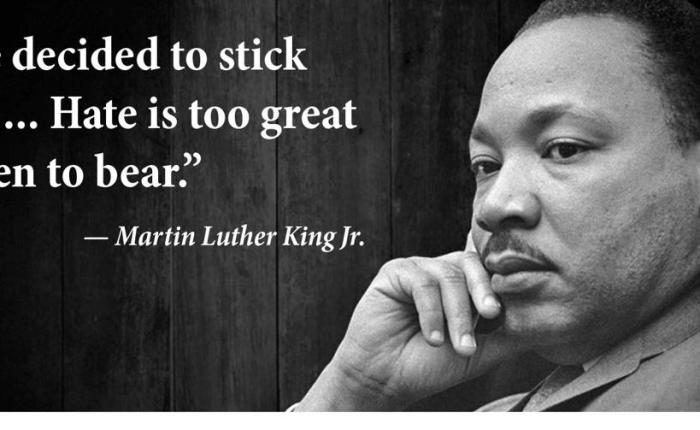
Fifty-four years ago Martin Luther King, Jr. delivered a prophetic sermon he called the The Drum Major Instinct. He riffed off a passage in the New Testament where Jesus’ disciples got mad at him because they wanted to be credentialed leaders, to be praised for their importance, the “drum major instinct”.  In the 1940s the founder of Alcoholics Anonymous, Bill Wilson, wrote in the Twelve Steps that this desire for an important place in society, the “social” instinct, is necessary for community survival. Both men cautioned that this natural god-given instinct, unbridled, can turn on us, become an obsession for power and supremacy and eventually distort our personalities. 

I know a bit about the desire for attention. During these pandemic shutdown months, online Zoom meetings have become the stage and meeting room for events. Last year I was the featured speaker in one square among nearly three hundred muted souls on Zoom. At the end all I heard was thank you from the host. People wrote kindly in the Chat but I still wish I had heard that applause. My book, In That Number, was published in October 2020 and the enthusiasm I needed to promote it waned, due to—you got it—no applause.

Donald Trump heard a lot of applause throughout his entire presidency, even during the months most of us were silent following the stay-at-home orders of Dr. Anthony Fauci, one of Trump’s Coronavirus Task Force leaders. Whew! Trump’s drum-major instinct rampaged so out of control that he still says the Democrats stole the election he lost to Joe Biden.

MLK:  “… the final great tragedy of the distorted personality is that when one fails to harness this instinct, he ends up trying to push others down in order to push himself up…by spreading evil, vicious, lying gossip on people…”

Trump spread evil, vicious lies to his duped white followers continually until they finally exploded into a blood-and-guts frenzy on January 6, 2021. They sacked the US Capitol in an effort to thwart the official declaration of the election results. People died. Martin Luther King, Jr. nailed this aberrant behavior in a prescient accusation: his drum-major instinct makes him think he is somebody big because he is white. 

MLK and Bill Wilson remind us we all have the drum-major instinct. We all want the admiration of others. They caution us to keep it in check, to watch out we don’t let our drum-major emotions go awry, that we don’t act superior to others. I confess I do feel and act superior to the insurrectionists, the white fundamentalists, the angry male mob who sieged the Capitol. I condemn them in conversation, even post condemnations on social media. Experience tells me if I don’t stop, I’ll soon be in a full blown mire of self-loathing, questioning how I got there. King and Wilson both offer an ancient solution to keep my own potential soul-sick personality at bay. Love and service. Be a drum major for love. Help others.

I’m open to it. That’s the best I can do today.

(originally published MLK Jr. Day 2021)

_________________________________________________________________________________________

The Drum Major Instinct,” Sermon Delivered at Ebenezer Baptist Church, Martin Luther King, Jr., February 4, 1968, Atlanta, Ga. Listen Here: http://okra.stanford.edu/media/audio/DrumMajorInstinct.mp3

MLK: The Drum Major Instinct

MLK: The Drum Major Instinct

Fifty-three years ago Martin Luther King, Jr. delivered a prophetic sermon he called the The Drum Major Instinct. He riffed off a passage in the New Testament where Jesus’ disciples got mad at him because they wanted to be credentialed leaders, to be praised for their importance, the “drum major instinct”.  In the 1940s the founder of Alcoholics Anonymous, Bill Wilson, wrote in the Twelve Steps that this desire for an important place in society, the “social” instinct, is necessary for community survival. Both men cautioned that this natural god-given instinct, unbridled, can turn on us, become an obsession for power and supremacy and eventually distort our personalities. 

I know a bit about the desire for attention. During these pandemic shutdown months, online Zoom meetings have become the stage and meeting room for events. Last month I was the featured speaker in one square among nearly five hundred muted souls on Zoom. At the end all I heard was thank you from the host. People wrote kindly in the Chat but I still wish I could hear that applause. My book was published in October 2020 and the enthusiasm I need to promote it has waned, due to—you got it—no applause.

Donald Trump heard a lot of applause throughout his entire presidency, even during the months most of us followed the stay-at-home orders of Dr. Anthony Fauci, one of Trump’s Coronavirus Task Force leaders. Whew! Trump’s drum-major instinct has rampaged so out of control that he still says the Democrats stole the election he lost to Joe Biden.

MLK:  “… the final great tragedy of the distorted personality is that when one fails to harness this instinct, he ends up trying to push others down in order to push himself up…by spreading evil, vicious, lying gossip on people…”

Trump spread evil, vicious lies to his duped white followers continually until they finally exploded into a blood-and-guts frenzy on January 6. They sacked the US Capitol in an effort to thwart the official declaration of the election results. Five people died. King nailed this aberrant behavior in a prescient accusation: his drum-major instinct makes him think he is somebody big because he is white. 

MLK and Bill Wilson remind us we all have the drum-major instinct. We all want the admiration of others. They caution us to keep it in check, to watch out we don’t let our drum-major emotions go awry, that we don’t act superior to others. I confess I do feel and act superior to the insurrectionists, the white fundamentalists, the angry male mob who sieged the Capitol. I condemn them in conversation, even post condemnations on social media. Experience tells me if I don’t stop, I’ll soon be in a full blown mire of self-loathing, questioning how I got there. King and Wilson both offer an ancient solution to keep my own potential soul-sick personality at bay. Love and service. Be a drum major for love. Help others.

I’m open to it. That’s the best I can do today.

_________________________________________________________________________________________________________________

The Drum Major Instinct,” Sermon Delivered at Ebenezer Baptist Church, Martin Luther King, Jr., February 4, 1968, Atlanta, Ga. Listen Here: http://okra.stanford.edu/media/audio/DrumMajorInstinct.mp3

My book, “In That Number” is available at ReganBurke.com, Amazon.com or in your favorite independent bookstore.

Is Zoom a Reliable Alibi?

One of the joys of the Shutdown has been discovering crime dramas on what used to be mysterious and unclicked words on my TV screen. The series of murder mysteries on MHZ, Hulu, Britbox and Acorn are not necessarily formulaic, but they have one major scene in common: the detective always asks if the suspect was elsewhere on the night of; and if there are witnesses to the alibi.

I had an alibi last Sunday. The Shutdown service at my church was livestreamed into an adequate eleven-inch computer screen propped up on the desk in my bedroom. The sermon struck the taut chords in my silent mouth and unclapped hands. I needed a collection of witnesses to shout “Amen!” to Pastor Shannon’s sermon. But I was alone, looking out the elsewhere window weeping over the no-one. No one to join in a standing ovation, no one to see and no one to see me.

After the sermon I sang along with the tinny music emanating from the computer; an old hymn I love:

Live into hope of captives freed

From chains of fear or want or greed.

God now proclaims our full release

To faith and hope and joy and peace.

Halfway through I shuttered with a renewed and deeper knowing that I’d never attend a church service in person again. The pandemic Shutdown will hold me captive in chains of fear until the end of my days. Groups, especially singing groups are out of the question for my old bones in these non-vaccine days. 

I won’t observe Pastor Matt’s infant grow from a toddler to a Sunday schooler. He’ll never again see me ooh and ahh in the delight of his fatherhood. I’ll never sneak into an early morning service in my pajamas (hidden under a long winter coat), to hear Pastor Rocky again. And he’ll never see me admiring him in the way of a proud mother. Gabrielle and I will never again join arms, run up to Pastor Shannon after the service and proclaim our undying gratitude for her ministry. And she will never see the reflected glow of our admiring faces in the pews.

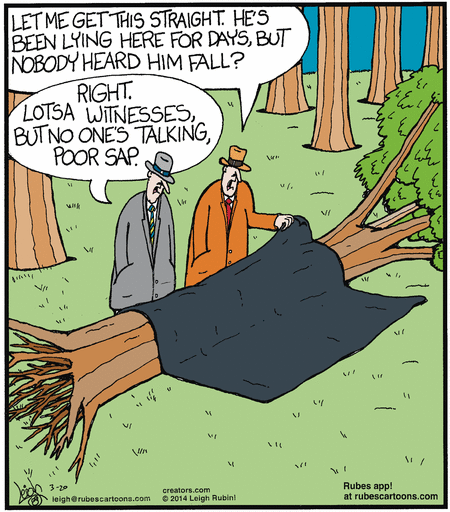
crrub140320Albert Einstein once posed a question to a fellow physicist, “Do you really believe that the moon only exists if you look at it?” It’s a common philosophical question, similar to
the sophomoric, “if a tree falls in the forest and no one hears it, does it make a sound?”. In morning meditation I intentionally ask myself if I’m hearing sound or “thoughts of sound” as a way to go deeper, where there is no sound.

Intentional solitude is not the same however as the feelings of isolation that arise from the existential supposing, “If I’m neither heard nor seen, do I exist?” Responding to covid requires an abrupt “so long” to a group existence I wasn’t ready to leave. In an alternate elsewhere life, witnesses see and hear me on Zoom.

Is this a reliable alibi?


Life in the Shut-Down Lane


Going? Not going? A single day passed and no matter the destination whether Walgreen’s or Mexico, the decision was made for me. I’m not going. No one’s going. No one’s going anywhere. 

The questions alone open an empty space in my head that fills quickly with a laugh, a giant cosmic laugh that says, “You used to have a choice!” Now there’s no dilemma about where to go, who to see, what to do, what time to do it. 

Today, I am my existence. I maintain my essence built over a lifetime; fretful sleep, overeating, wasteful showers, obsessive reading, TV ’til two a.m. And, I build anew. I make tuna salad sandwiches, stir-fry zucchini with onions and go to meetings on Zoom. Henry the dog and I walk to new places like Michigan Avenue where we give six-foot hellos to neighbors we don’t know, will probably never know. In an unfamiliar park I break the law, unleashing him to run the crunchy March earth. We’re lulled into concluding some rules no longer apply. He trees squirrels. I hear a woodpecker

2148C23E-1940-4F0A-8931-D36076E8D4AD
Henry Sheltering in Place

(tomorrow binoculars). T.S. Eliot wrote “Time past and time future what might have been and what has been point to one end, which is always present.” I have time on my hands. It cannot be washed off, nor sanitized away.

Child psychologist Bruno Bettelheim believed fairy tales help children cope with their existential anxieties and dilemmas. I’m grateful for my new-found fairy tales on Acorn and Netflix. They’re satisfying, even intoxicating. “Vera” quenches my thirst for relief from today’s threat of a mad virus loosed on an unprepared society. She always catches the killer, within one episode. And “West Wing”’s President Jed Bartlett reassures me, “There are times when we’re fifty states and there are times when we are one country and have national needs.” Fairly tales are indeed a good shield.

A friend yelled at me on the phone, “I just want to go to a restaurant!” 

Who doesn’t? I live in cafe society— exchanging gossip, ideas, medical records and laughs in half-public coffee shops, restaurants, hotel lobbies, church halls, run-ins at shops and malls. It’s part of my essence, my existential cover, a baby blanket of being. I need it. 

“All of humanity’s problems stem from man’s inability to sit quietly in a room alone,” said Blaise Pascal whose health problems left him no choice but to sit alone in quiet for long periods. He tried to solve some of humanity’s problems. Perhaps if he’d lived longer he’d have given us more than pensées.

To preserve my sanity, I usually sit quietly in a room for thirty minutes every day consciously telling myslef I do not own all of humanity’s problems, nor do they own me. But now that I’ve been sitting in a room alone for days, I’m concocting brilliant and crazy solutions to humanity’s problems. Pascal would be pleased, but I’m afraid I’ll go from here to the psych ward. 

Or run for office.