A few months ago, I wrote about a preaching at church on the parable of the ten virgins, or bridesmaids as they say in modern versions of the New Testament. In the story, told by Jesus in the gospel of Matthew, the ten women are waiting for the arrival ceremony outside the gates of the wedding venue. Five of them, known as the wise bridesmaids, came prepared with full oil lamps, greeted the wedding party, and they all entered the gates to the feast. The other five, known as the foolish bridesmaids, were out buying lamp oil, took too much time in the shop, and got locked out of the party. The preacher says the oil is a metaphor for hope. Always have a little hope stored up because you never know when God will present herself with the next great opportunity.
I really hate parables. They’ve always made me feel bad about myself. Oil as a metaphor for hope seems a stretch, but it still makes me cringe. In this and all Bible stories, I relate to the foolish ones, the worst person in the story. I’m never ready, always late, and a failure at time management.
The question arises: why would Jesus, my earliest-remembered friend, use the parables to traumatize me with such heavy doses of self-blame? No wonder people have stopped attending Christian churches.
At the church I attend, the Sunday bulletin at the end of May included this statement:
This summer, we will take our messages from the stories that Jesus loved to tell: Parables.
Oh Jeez. That gives me about thirteen Sundays’ worth of sermons to learn and absorb some wider spiritual truths that have eluded me thus far. I have hope that the preacher is up to the task. In his kick-off to the summer pulpit, he talked about the parable of the Sower. Do you know that one? The farmer throws seeds around willy-nilly throughout the land, giving no thought to where they settle. Some seeds settle on rocks, some on thorns. I’ve always considered myself the thorny soul who has choked off God’s seeds through my own self-will. Another parable evoking self-blame.
When I was younger, I used to buy cheap packets of wildflower seeds at Walgreens and toss them around Lincoln Park on my morning run in places that needed a bit of sprucing up. I never bothered cultivating them; I simply hoped a few would spring to life. It was a labor of rebellious love.
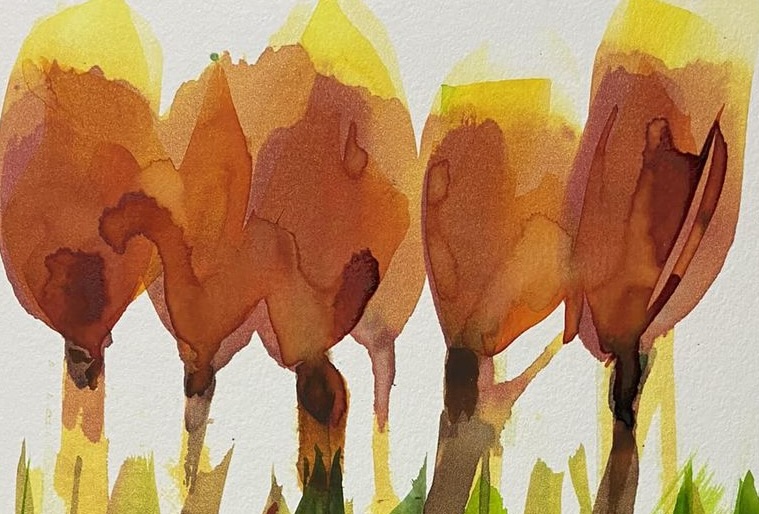
The preacher reminded me of those long-ago spring days. He interprets the seeds as love, God spreading love around. Sometimes, love takes. Sometimes, it doesn’t. But God keeps throwing it out there, just like I kept throwing out seeds of wildflowers. Love is power, says the preacher, tender power, vulnerable but power nonetheless, capable of changing people. The sighting of Spring’s first tulips makes me happy, no matter how anti-happy I may be. That’s powerful love.
Perhaps a summer of parables will be ok.



 Regan Burke