Chicago’s Urban Wildlife: Embracing Pluralism and Nature

Chicago’s Urban Wildlife: Embracing Pluralism and Nature

All over early-morning Chicago, garbage trucks back in and out of alleys using rapid beep-beep-beep signals announcing their hulking presence. Elsa the dog and I are indifferent to this annoyance as we take our morning walk. But in mid-April, we both jumped to attention. We heard what seemed like a hundred garbage trucks backing up. The wildly unfamiliar bellowed from a block down the street.

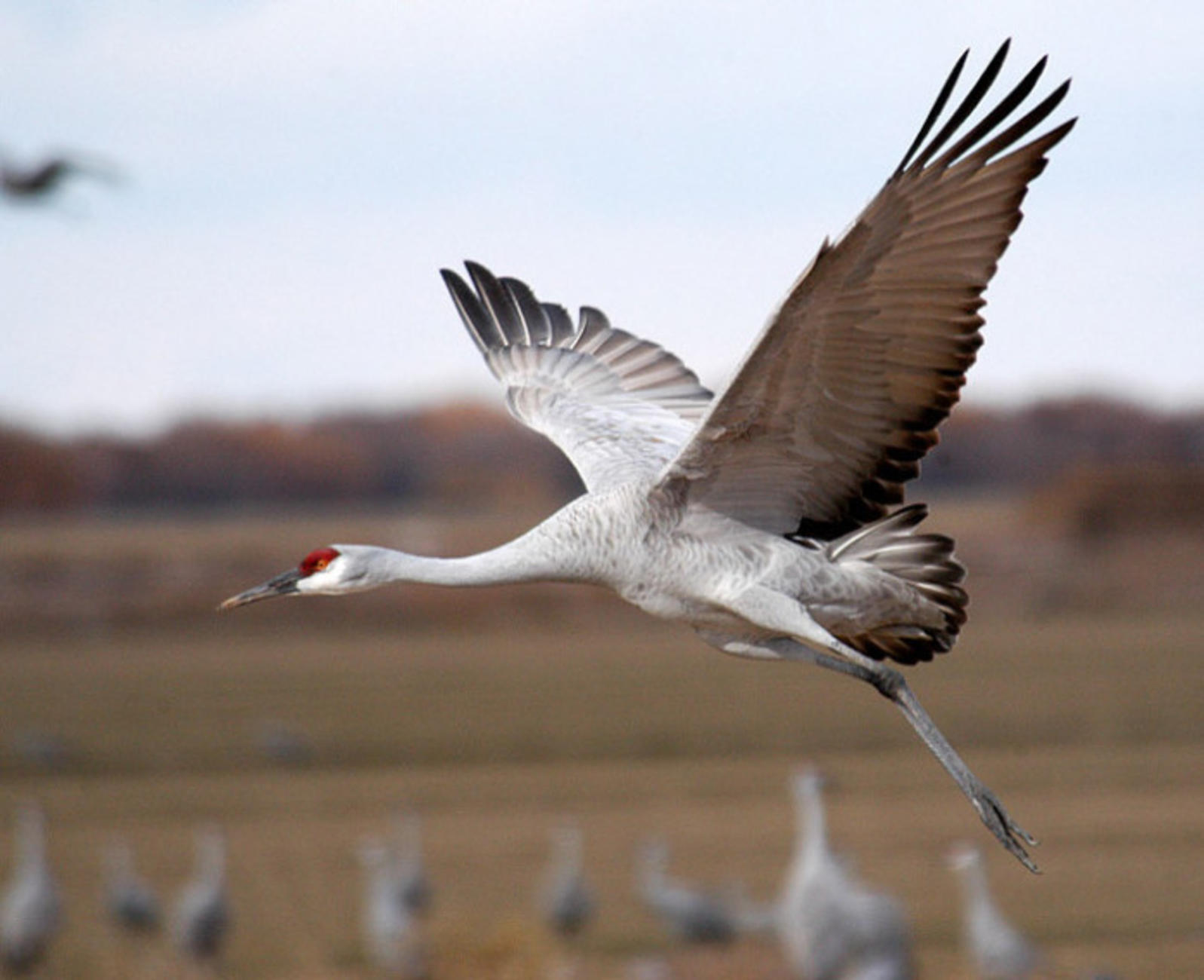
“What’s going on Elsa?” I shouted down to my agitated Westie on the sidewalk. All of a sudden two honking Sandhill Cranes flew through the center of the street below the treetops. Their wingspan swooped past us from sidewalk to sidewalk as they glided and bellowed toward Lake Michigan. 

Elsa flew into a barking rage. I lost my breath. My knees buckled. The Sandhill Crane is an ancient animal whose sole purpose is entertainment.

I love these four-foot high red-headed trumpeting birds. I once traveled to the Platte River on the edge of Nebraska’s Sandhills for their spring migration. My friends and I joined serious birders on the 5:00 am riverbank to view 600,000 roosting Sandhill Cranes. Their summer and winter homes are the northern and southern edges of the Great Plains. They are North Americans, Midwesterners.

Where did this duo come from and where were they going? They were likely in a flock following the Great Lakes Flyway, the migration route to their summer home in the boundary waters between the U.S. and Canada. Perhaps they were lured away by a mischief of rats feasting on the overflowing garbage bins in the alleys of nearby restaurants. Did a garage truck disturb their hunt? Whatever the story, I am deeply grateful they strayed from the flock and flew into my morning fugue.

Fugue? Yes, lately every morning I awake in a seemingly altered state. Oh, I tend a regular household routine, brain-fogged by radio news from the psycho-battleground that is my home country. Any diversion is welcome, particularly wildlife making its way through my city street.

But diversions, like bird spotting, are fleeting. The pluralistic society we’ve known as democracy is under siege. Pluralism, a word as ancient as the Sandhills themselves, one we learned in middle school, has been displaced of late by DEI or Diversity, Equity and Inclusion. DEI was corporate America’s answer to the communal guilt stemming from the sight of George Floyd’s on-air murder. The lofty goal of transforming Human Resource departments into offices of Diversity, Equity and Inclusion crashed and burned on the heels of Donald Trump’s name-calling presidential candidate Kamala Harris a “DEI” hire. Little did we know then, the summer of 2024. The weaponizing of DEI was not a diversion. Instead, it was a tactic in a larger strategy to destroy pluralism and make America White and Christian.

Interfaith America, the nation’s premier interfaith organization, has come to the battlefield now — taking the case for pluralism to the streets. A giant digital billboard in one of the most diverse locations in the country, Times Square, New York City, shows Interfaith America’s devotion to American pluralism. The message: diversity makes our country stronger. I’m in here, proud to represent my cohort, old white ladies with their dogs. Take a look.

The Fresh Coast

The Fresh Coast

When some people speak of the Midwest

They talk as if she’s the jilted cinderella 

Whose prince neglected, and I must defend her,

Not always cold, no oceans or mountains, sister,

But 600,000 sandhill cranes wade in her water.

The east coast comes to play sport, play act, pay 

To play, play around, play the innocent, put in play.

The west coast comes to run by, run. 

They say nothing eventful happens to her.

Then they blame her for Trump.


Something Fishy at the Spring Migration on the Platte River

Something Fishy at the Spring Migration on the Platte River

Something’s fishy. Is it fate? Chance? God?

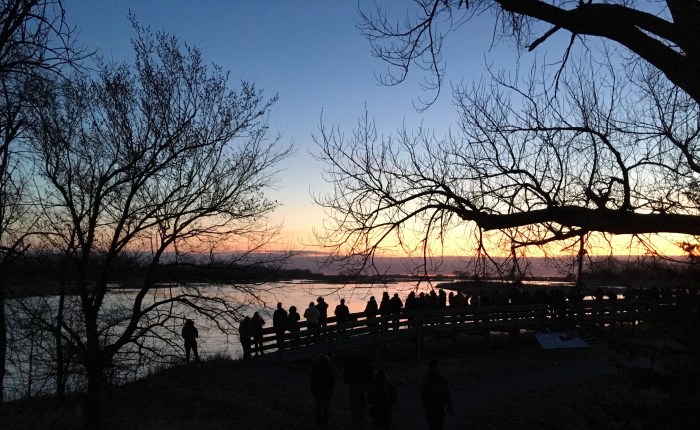
On the Platte River in central Nebraska I gather with friends from Chicago for the spring migration of the Sandhill Cranes. We arrive at our rented cabin just in time for the dusk fly-in ¼ mile down the road at the Audubon Rowe Viewing Stand on Elm Island Road. On the boardwalk-like stands we parrot the 100-plus birdwatchers as they steer their binoculars toward the goose-like honking in the sky. The bugling cries grow louder as the cranes start to

appear. Thousands of birds swirl in the overhead vortex down into the shallow river with their spindly feet splayed like landing gear on an airplane. It takes about two hours for the birds to land in their overnight roosts on the sandy Platte. We press our binoculars into our eye sockets until the very last bird nudges itself into place, snuggling alongside its friends in the water for the night.

sandhill_crane_usfws
Sandhill Crane

The long-beaked crimson-headed North American Sandhill Crane coexisted with dinosaurs, making it one of the world’s oldest bird species. For six weeks every spring, 600,000 of these five-foot tall grey beauties stop in Central Nebraska.

At dawn, Peter, Amy, Anne, Laurie and I make our way back to the riverbank for the lift-off. The cranes yak each other awake in one of nature’s most melodic cacophonies. They fly off in waves after socializing for a long stretch extending their time on the river to mid-morning. During the day they forage in the corn fields adjacent to our cabin, packing in calories for their long trip north.

Murmuring overtakes the viewing stand. The nature-loving brood from Illinois, California, New Jersey and  Florida grow collectively quiet to hear the cranes’ every cackle, trill and honk. Conversations spring up, “I was in New Jersey once. Drove out route 80 to 70 to 35 to the Atlantic Ocean.” Why do men always talk in numbered roads?

I overhear an Audubon tour guide whisper on down the line to her group, “right there, below that white roof at the river’s bend, there’s a whooping crane.” I focus my binoculars. There it is.

th-2
Whooping Crane

There are 500 whooping cranes in the wild in North America. And I just saw one.

I run to my pals at water’s edge repressing a squeal, “There’s a whooping crane!” We are silenced by the stark white ladle-shaped body of the whooper shuffling among the blue-grey hoards of Sandhills over a mile upriver. We report the news to strangers around us, lending our binoculars to latecomers, cooing when the big white bird stretches its wings in view of our naked eyes. I whisper to Peter and Amy, “if I see a river otter before we head for home you can throw me from the plane because my life will be complete.”

th
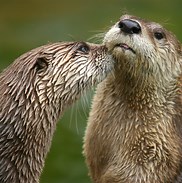
River Otters

An hour later Peter nudges me. “there’s an otter.” And so it is. Fishing around in the water, diving down and popping up, nature’s graceful pet latches onto a tangle of twigs and leaves, twirling around and around as it floats downstream under the bridge away from sight.

Yes, something happened on the Platte. Was it you, God? You, who are both fishy and honorable? You, the everlasting instant.


Inspired by the hymn “You, Lord, Are Both Lamb and Shepherd” (“Christus Paradox”) by Sylvia Dunstan (1955-1993) who drafted these words on a commuter bus “after a particularly bad day at the jail” where she was serving as chaplain:
“You, Lord, are both Lamb and Shepherd.
You, Lord, are both prince and slave.
You, peace-maker and sword-bringer
of the way you took and gave.
You, the everlasting instant;
you, whom we both scorn and crave.*