The Big Freak Out

The Big Freak Out

Metaphors have frittered away from me. To be fair, they hadn’t much choice. In conveying messages to contemporaries over the past few years, whether speaking, emailing, texting or DM’ing, I’ve developed a necessary plain spokenness, lest the meaning be misconstrued, misunderstood or confusing. Fallout from this mind-bending prosaic language is living at a level of plain thinking, another aspect of old age (I’m 78) that I wish I’d been warned about.

While watching Joe Biden perform at the now-famous CNN debate in June, I came unstrung in the grip of knowing that Biden’s plain-thinking, plain-speaking style was killing any chance of beating Trump in the November election. 

“Oh. my. god. He’s like my neighbor Ray,” I thought. Ray, who used to converse like a college professor and remember your name like you were his student, but now he talks only sports and weather. Ray, who cannot grasp metaphors unless they’re baseball sayings he’s used all his life, like “on the ball” or “step up to the plate” when he motions for you to exit the elevator before him.

On an unsually quiet afternoon, that is to say, no sirens, no gas-powered lawn mowers, no garbage trucks beep, beep, beeping as they backed out of the alley, I was studying David Montero’s new book, The Stolen Wealth of Slavery: A Case for Reparations. My book group decided to read two chapters at a time in order to absorb a history none of us had ever known. The premise that the intellect is stimulated through awe and wonder has proven true in this group, with this book. Montero’s research thoroughly tracks how the free labor of Black people in the South became the basis of the entire US economy and her dominance over world markets. His writing is loaded with similes and metaphors.

“The energies of three million enslaved people were organized into an industry, industrial enterprises were increasingly fertilized by slavery, and the output of the system was shipped across the world.”

(All of a sudden, a swift “click-clum” in the room interrupted my reading. I turned and saw a ragged chunk of dried-up old paint on the floor, fallen from the ceiling. Surely there’s a metaphor here. Chip off the old block? Chip on your shoulder? Paint the town red? Naw. Nothing. I got nothing.)

In the chapter, “The Union Must Perish,” Montero included a white abolitionist’s account of his travels to the slave market of Virginia. Published in the New York Daily Tribune in 1850, part of it reads:

“…this was the most heart-sickening sight I ever saw. I involuntarily exclaimed, “Is it possible that this is permited in my own native country—the country I have loved so well, and whose institutions I have exultingly pointed to as an example for the world. If this is Christianity, don’t call me a Christian.”

The emotons expressed are precisely what I feel now that the Trump-appointed United States Supreme Court ruled that the President is unbound from the rule of law and can freely engage in criminal activity. Our Christian Nationalist Supreme Court looks forward to the next president closing the borders to anyone but White Christian Europeans, slashing gay rights, civil rights, and women’s rights, and requiring biblical education in public schools. Echoing the 1850 abolitionist, if this is Christianity, don’t call me a Christian.

There ain’t no metaphor for that.
Falsely Accused

Falsely Accused

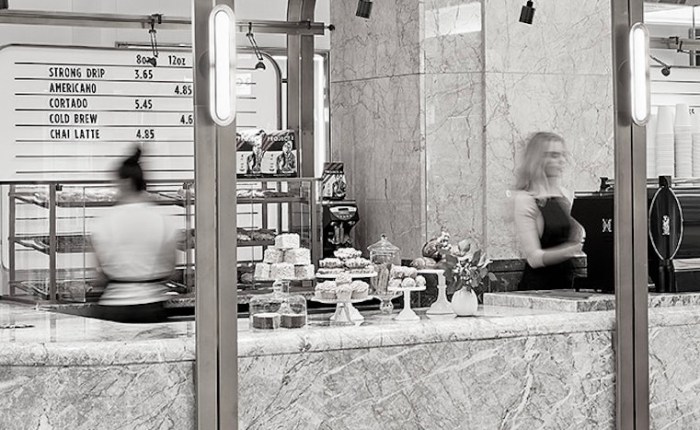
Fresh off a Zoom webinar titled Midwest Reparations, I rushed to my local coffee shop for a takeaway to sip during my upcoming current events group.

“12-ounce coffee in a 16-ounce cup?” The White barista asked. That’s my usual, with room for cream.

“Yes, please. What are all these new pastries? Chocolate cake? Key lime pie?”

“Yep, they’re new. All from different bakeries” said the barista.

“I’ll be back later with friends. They. Will. Love. These.” I said.

The Blackroots Alliance webinar that morning enlightened me on reparations projects in the Midwest. These are nascent activities reviving the 159-year-old “40 Acres and a Mule” policy for emancipated slaves that was promised and then revoked during Reconstruction. The initial focus of current reparations projects is research to uncover the descendants of enslaved people and how they’ve been impacted. Non-Black allies join at the end of the process when it’s time to distribute funds. Research is conducted by the harmed community, Black Americans, particularly African descendants, who look through the eyes of the tortured generations of chattel slavery. Non-Black Americans cannot be trusted to do this research since they see through a different lens: the eyes of the colonizers, the enslavers, the guardians of the dominant culture.

With this new information,  I was wondering how I, an old White woman, could fit into the reparations movement as I filled my coffee with half and half and rushed over to my current events group.

The group discussed the news of familiar territory: TFG, the former guy, and his latest legal shenanigans, immigration, climate change, gun control, and the ever-evolving White Christian Nationalism. Afterward, a small group sauntered over to the coffee shop where I’d spotted the new pastries. Six of us pulled up around a small table, coats draped over our chairs, rising one by one to fetch our drinks. 

I was the last one to the counter.

“I’m sorry, we can’t serve you.” said the barista.

“What?”

“We can’t serve you. The manager wants to talk to you.”  I joined my friends and announced what happened. The manager appeared and asked to speak to me privately.

“We can’t serve you because there’s been a report of you using a racial slur this morning.”

“What? What racial slur?

“The “N” word.”

“Well, there’s a mistake. I’ve never used that word in my life.’

“You understand we have to investigate when something like this is reported?”

“Wait. Are you accusing me of this?

“We have to investigate. Meanwhile, we cannot serve you.”

“For how long?”

“For the unforeseeable future.”

“You’re kidding. Look at me. I really don’t have an unforeseeable future.”

My friends were incredulous. ‘You? Boy, have they got the wrong person.’ They were ready to mount a protest in front of the building, signs and all.

In the following days, I connected with the company’s Chief Operating Officer. She apologized and emailed me a store voucher for $150. That’s a lot of coffee.

The coffee reparations, however, failed to dispel the lingering notion that I’m not a credible witness to my own story, that I’m not sufficiently worthy to be believed. How can we expect descendants of enslaved Africans to automatically manifest self-worth after enduring generations of false accusations, lynchings, and pressed-down powerlessness? 

We owe them a lot.

Lunch Money Reparations

Lunch Money Reparations

At the Goodman Theater Chicago’s Storytelling class, teaching artist Julie Ganey prompted us to write a “story of changed perspective” based on Goodman’s production of Margaret Atwood’s Penelopiad. 

I had a story in the can, Lunch Money, about a changed perspective, and decided to revise it for the storytelling assignment before I saw the Penelopiad performance. When I finally saw Peneliopiad, I couldn’t see the change in perspective theme—still can’t. Did Penelope change her perspective? Did Odysseus? Who? What? 

Had I seen Peneiopiad first (one of the best productions I’ve ever seen in any theater anywhere), I would have written about an experience in honest storytelling.  I have lots of those. But, alas, it’s best I don’t sermonize on truthtelling. The following is my change-in-perspective story, which I’ll soon be reciting in person at the Goodman Theater’s “Lobby Stories.” If you’re a regular blog reader, thank you; you’ll understand why retelling this story is important.

Lunch Money Reparations

Reparations are a program of acknowledgment, redress, and closure for a grievous injustice. — From Here to Equality, Reparations for Black Americans in the 21st Century, by William A. Darity, Jr. and A. Kirsten Mullen 

When I started working as a part-time receptionist in downtown Chicago, I lived with my nine-year-old son in a high-rise apartment and periodically spent more money than I had. Glitzy earrings or a new red lipstick often called to me as I passed through Marshall Field and Company on State Street. I once had my entire purse stolen off the counter as I adjusted my scarf in the mirror. 

Over the years, I’ve faced down quite a few street scams and purse snatchings. The worst was the time three teenage boys trapped me in a revolving door at the old Carson, Pirie Scott building. One had yanked on my purse as I entered, but I grabbed the shoulder straps while the accomplice pushed the door in the section in front of me. The accomplice stopped abruptly and held his hands on both glass doors. This left each of us stuck in a different section of the revolving door, awkwardly staring at each other through the glass. They all ran off when a security guard came to my rescue.

I added this grievance story to others like it. Joining the ranks of privileged pseudo-traumatized victims, I loudly condemned an exaggerated version of the bands of criminals marauding downtown Chicago. 

As a pensioner, I’ve inoculated myself against criminal assault by carrying nothing but my iPhone and a pocket-size purse where my bus pass, credit cards, and a small amount of cash are stored. Costume jewelry and cosmetics are no longer a retail draw. But I cannot resist accepting Dutch treat lunch invitations from friends, paying no attention to my budget or bank balance. 

One day, I sat waiting for a fellow retiree, Peter McLennon, in the lobby of a busy hotel where we’d planned to have lunch. I delved into my ever-present iPhone with heightened curiosity to see if anything big had happened between the time I had gotten off the bus, walked the two blocks to the hotel lobby, and plopped down in the overstuffed chair. 

I was so engrossed in the breaking news of a car accident on a distant highway that my senses were dulled to a body stirring in the chair next to me. When the body started in on her story, I momentarily jolted to attention. 

“My husband beat me for the last time. I been hidin’ in a women’s shelter but he found me, and now I need to move.”

“What?” I said as much to her as to myself since I was not quite tuned into her voice, my mind drifting in and out of her story while half-wondering what happened to the people in the car crash that was reporting out of my phone behind the now blank screen. 

“My social worker found a place in Cincinnati. They gonna hold a room 24 hours. I need $19 for the bus. Can you lend it to me?”

“What?” I looked around to see if Peter was nearby to rescue me. 

She repeated her story, adding some details about injuries inflicted by the husband. 

“As soon as I get situated in Cincinnati with a place to stay and a job, I’ll pay you back.” 

I tested her by asking if she was taking the mega-bus since $19 didn’t seem like enough money for a bus to Cincinnati. That stumped her, but she recovered nicely by describing where the bus station was. 

And for one shimmering split second, we caught each other’s eyes and I sensed she knew I was on to her. But she kept up the hustle. I admired that. She was working hard for her money.

I unzipped my little red purse and happily handed her my $20 lunch money. Before I zipped up, she was gone. The scam worked. Relief washed over me as I exhaled the stress of her desperation. Even if I doubted her, she deserved all the money I had for all the years I’d spent harboring both silent and noisy racial bias.

When Peter arrived, he commented on how serene I looked. As we walked toward the restaurant, I asked if he could pick up the tab for lunch. 

“Yes, of course.” He said.

And I didn’t even have to tell the story. 


Race Restrictions: The Chicago Covenants Project

Race Restrictions: The Chicago Covenants Project

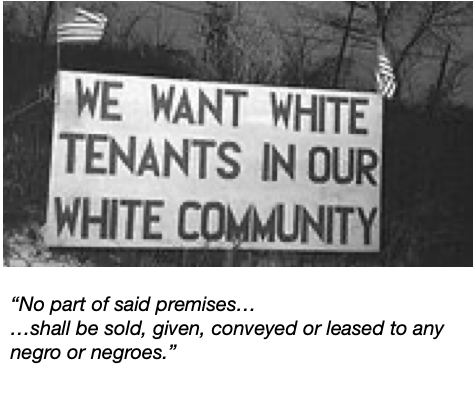
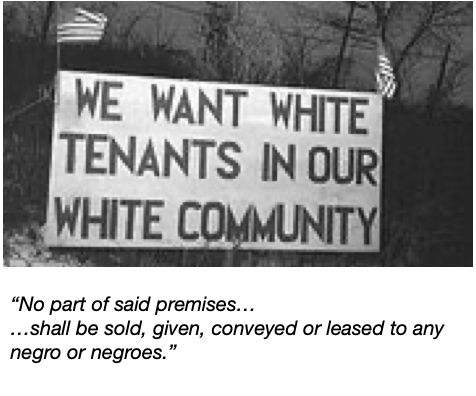
Restrictive covenants, redlining and contract buying were some of the discriminatory housing practices used to segregate Chicago in the first half of the Twentieth Century. Restrictive covenants prevented Black Americans, and sometimes Jewish Americans from buying, renting, or living in houses in white neighborhoods. 

The Chicago Covenants Project, begun in Spring 2021, uncovers deed restrictions officially recorded in Cook County. A team of their researchers and volunteers gather in the Tracts Division in the basement of city hall a few times a month to search land records for racial covenants. 

Finding the Tracts Division of the County Clerk’s Office is the first test of a volunteer’s sleuthing skills. The entrance to the first floor staircase is often obscured by a large easel with a sign listing the prices of birth certificates and marriage licenses—no arrow pointing to “Tracts”. I once worked in the Clerk’s office but I still feel subversive slipping past the sign and the security guard to head downstairs.

The Tracts Division is a football-field sized room organized by rows of old shelves filled with real estate index books. Each book is 2 feet by 4 feet. A Project researcher assigns the books by number. My first assignment was book number 420. I lifted it onto the top of the elbow-high bookshelf and leafed through page by page. Thank God I thought to swallow an allergy pill before I left home.

Every deed recorded in Cook County until 1980 is hand written in an index book. After 1980, the records are digitized. Each page could have deeds recorded from 1910 to 1980. I looked only at deeds recorded up to 1950 since restrictions waned after a 1948 Supreme Court decision declaring racial covenants unconstitutional.

The volunteers in Tracts spread out around the room with their assigned books. Looking for covenants line by line is tedious. There’s a small explosion of joy, “I found one!” when one of us spots a handwritten “rac-restr” notation.

Property ownership has long been the avenue to accumulating family wealth. Restrictive covenants helped deny this possibility to Black Chicago for decades, while walling off the city’s segregated communities and perpetuating generations of racial inequity.

The Chicago Covenants Project has uncovered deed restrictions all over Chicago and the suburbs. Organized neighborhood groups supported by realtor associations once signed up homeowners block by block. Between 1933 and 1937, a mailer was distributed door to door to stoke fears about Blacks moving to Chicago’s North Side, where I’ve always lived. It minced no words: “The Near North Side Property Owners Association proposes to ask every property owner in the district to agree to sell and rent to white people only.” 

Even the renowned Newberry Library has a racial covenant. 

You may be asking, “what’s your point?” 

Well. These buried files prove that racial inequity in Chicago was intentionally created by white people—house by house, block by block, neighborhood by neighborhood. 

A fact that cannot be erased.

Reparation Ghosts

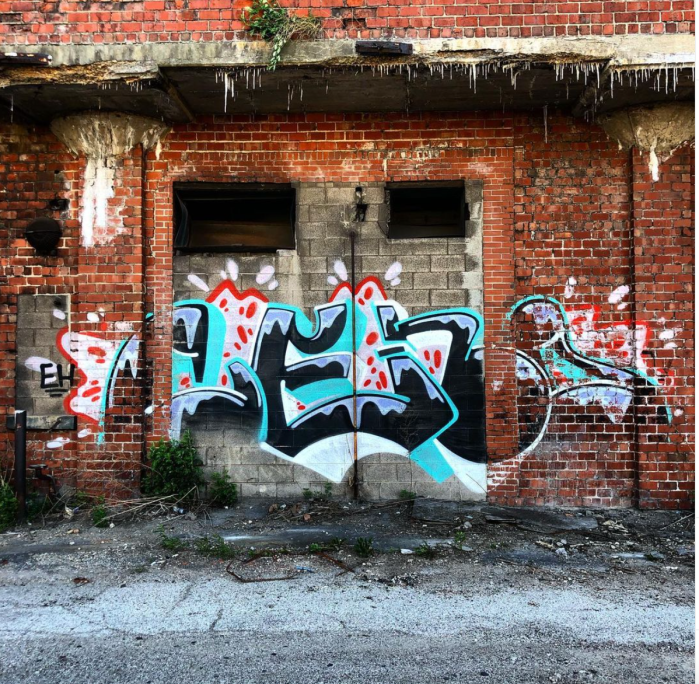
America’s greatest living poet, Kevin Coval, posted a photo on Instagram of spray-painted artwork on an abandoned building. His caption read: “there’s some ghosts in this house”.

Yes, indeed there are ghosts. And they’re whispering at my door.

For the past fifteen months I’ve shut the door on quite a few ghosts. I hear dead friends whisper “it’s ok to let me in now. to miss me. to mourn me”. There are the terrifying ghosts I’d boxed up and shoved into the southwest corner of my noggin. They’ve gotten loose. They’ve inched their way from the outer part of my field of vision to standing right in front of me. 

“Go out,” they command. “Talk to people. Meet friends. Make mistakes. Fail. Be brave.”

Then there are the ghosts of abandoned homes in Chicago. As the shutdown got rolling, anti-racist Zooms flew out of virtual networks and landed on my computer screen. I heard the voices and faces of Black families who were systematically denied family wealth in mid-century Chicago. Black and white activists explained contract-buying and redlining. Poets spoke of the mental wreckage caused by whites colonizing their neighborhoods.

I’m haunted by the stories in Beryl Satter’s 2009 book, “Family Properties: How the Struggle Over Race and Real Estate Transformed Chicago and Urban America.” Unscrupulous brokers sold homes by contract and convinced Blacks they were making monthly mortgage payments. But there weren’t mortgages. They didn’t own their homes, didn’t build equity, couldn’t sell, and couldn’t pass the deeds on to their offspring. The massive housing scheme drained as much as $500 million from the Black community.

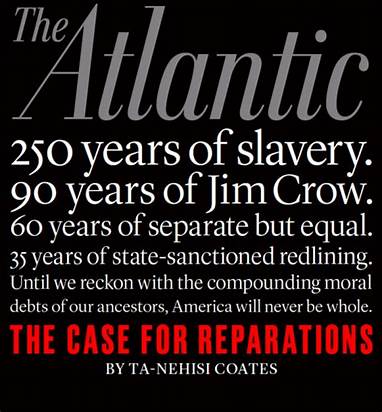
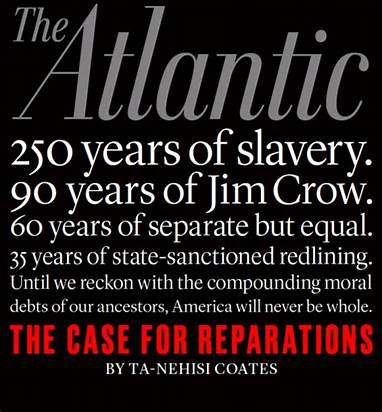
In 2014, Ta-Nehisi Coates wrote about North Lawndale’s contract buyers in The Atlantic article The Case for Reparations.  He made the case. Denying Black families access to generational wealth through home ownership and other racist practices has caused the poverty, social ills and violence in the Black neighborhoods of the nation’s cities.

Coates had a solution. Reparations.  A word that makes a lot of people shiver came out of the Congressional closet where it had been languishing in a bill first introduced in 1989. About 12.5 million slaves were abducted from Africa. Reparations for their 35 million African-American descendants today would be approximately $1.5 to $2 trillion. 

White powerhouse hustlers say, ”The people to whom reparations are owed are long dead.” 

Oh those ghosts. They’re falling from the sky like rain and irrigating seeds of change. Evanston Illinois is the first place in the country to make housing reparations for Black families victimized by redlining, a practice that defined clear racial boundaries. The Evanston program is funded by (get this), marijuana sales. Illinois is expected to receive $1 billion in marijuana revenue in 2021. Uh. Oh. Someone may get the idea to use half of that for housing reparations for descendants of the swindled families in Chicago’s North Lawndale. 

That might satisfy the Chicago ghosts. Might not. I have a feeling it won’t satisfy the poets.