Is Scott Galloway out of Touch?

FeaturedIs Scott Galloway out of Touch?

For the first time in my life, I attended a Sunday service at a Unitarian Universalist Church, to see Chicago’s mayor, Brandon Johnson, in dialog with the pastor. I was curious to hear what this progressive Black mayor had to say to a progressive Northside (White) church.

The pastor began the service with an announcement.

“The Unitarian Universalist Church was established by and for people who do not believe in hell.”

“Whaat?” I was so startled I hardly heard the rest of the preamble. I don’t believe in hell. No one I know believes in hell. But I’ve never heard nor would I ever expect to hear such good news from any church pulpit. 

But wait, there’s more good news! The “UU’s” reject original sin, believe in a God who loves and redeems all human beings, and trains congregants in social justice work. These are my beliefs too.

The bias I’ve had against the Unitarian Universalist Church stems from old thinking that Unitarianism is a heretical religion because they don’t display a cross. Where did I get that crap? Since I’ve been attending a Presbyterian Church for over 45 years, it must have slipped into my head when I was half asleep some Sunday morning. 

Speaking of old ideas, on Friday, December 5, podcaster Scott Galloway responded to a young man who asked:

“How do I get more involved in politics?”

Galloway said “… because young people don’t vote, old people keep voting themselves more money, right? $40 billion child tax credit gets ripped out of the infrastructure bill, but the $120 billion cost of living adjustment for Social Security flies right through.

…our old people have figured out a way to vote themselves more money, and the fact that people under the age of 18 don’t vote, the budget reflects values, and our values are that we don’t really love our children.”*

This is a typical Scott Galloway motivator: money. He will happily reveal how much he’s worth and how he manipulated the modern system to get there. But his statement pitting the young against the old using the antiquated idea that we old citizens are sapping federal dollars from the young shows a decided lack of sophistication and reality. 

First of all, we want young people to succeed. We were young Pete Buttigieg’s biggest voting bloc, long before he announced his Gray New Deal in Iowa 2020. We vote for SNAP and child tax credits. We volunteer at food kitchens, tutor at public schools, babysit our grandchildren and are worried about ours, yours and future generations.

Secondly, we pay. We will pay the government $202.90 a month in 2026 for Medicare Part B, which covers doctor’s visits. That’s a 9.7 percent increase from 2025. We count on the Social Security Cost of Living Adjustment (COLA) to offset that Medicare increase. But in 2026, the Social Security COLA is only a 2.8 percent increase, posing a hardship for Social Security recipients who live check to check in this era of (non) affordability.

Third, don’t we all know that the way young people get involved in politics is to volunteer? What? Is that just a Chicago thing?

After 40 years, curiosity brought me, 79 years old, to an unexpected new idea about the Unitarian Universalist Church. 

Let’s hope Scott Galloway, 61years old, becomes curious enough to come to a new idea about how the real world works.

______________

You can find Scott Galloway’s email address here:

*The Prof G Pod with Scott Galloway: How to Get Involved in Politics, How Scott Galloway Writes, and How He Follows the News, Dec 5, 2025https://podcasts.apple.com/us/podcast/how-to-get-involved-in-politics-how-scott-galloway/id1498802610?i=1000739823645&r=196.38 This material may be protected by copyright.

Chicagoans: People of the Water

FeaturedChicagoans: People of the Water

Chicago is a water town. Lake Michigan and the sky above are our watermarks, the invisible identifier embedded in the soul of anyone who lives here for more than a year, or so. We are built around the lakeshore, the river banks, the canals, the bridges. Oh those bridges! For the next two to three years, three downtown bridges over the Chicago River are closed for repair. I know the river. I know those bridges. Whenever I’m a passenger in a car headed toward the Chicago River, I, a non-driver, turn into a navigational virtuoso.

“Turn left on La Salle Street! Now! Go to Jackson and make a right. Yes, Jackson.”

I’m insufferable. And always right.

Once you’ve lived anywhere in Chicago with even the thinnest view of the lake or the river, you can never go back, never not have water in your sights. Magical is an inadequate adjective. It’s cellular. What must it have been like for those who settled this land we call Chicago? Did a wild black and blue sky moving over Lake Michigan shout danger to our native ancestors? On windy days, did the lake and river together kick up such a fuss that the confluence was unnavigable? Were their beliefs tied to a cellular connection between the water, the land, the ancestors? Dare we imagine that those first peoples inseminated future generations, yes us, with a cellular connection to the water? 

My favorite visitors are those whose excitement about the Chicago Harbor Lock exceeds mine. The Lock is at the confluence of the Chicago River and Lake Michigan. It is part of multiple locks and dams that allow water from Lake Michigan to flow inland, toward the mighty Mississippi. Chicago devised reversing the flow of the river in the 1900s to send our sewage downstream, away from our beloved lake. Lucky for us. Unlucky for St. Louis. 

Boats and cargo ships moving from the river to the lake first enter the lock and tie up. Like a water elevator, the water raises or lowers to meet the level of the lake. I’ve been on tourist boats waiting in line on either side for tankers and cargo boats to get through the Lock. Thousands of Chicagoans live in high-rises with floor to ceiling windows where they can pull up their work desk and chair and watch the Lock all day long as they work from home. What a great city. This water town.

In mid-September, Customs and Border Patrol (CBP) agents were dispatched to Chicago as part of the Trump Administration’s ICE operation to arrest illegal immigrants with criminal records. They announced themselves by cruising up and down our cherished Chicago River, in and out of tour boats and kayaks. Some were masked. All were uniformed. All were armed with semi-automatic long guns. How did such an invasion get through the Lock?

Since that absurd melodramatic entrance into our city, the CBP has cruised into neighborhoods in military vehicles, springing into action to terrorize Chicagoans, citizens and non-citizens. 

Chicago responded with multiple layers of volunteer rapid response teams covering every scenario of civic and private life. New and old activists carry whistles to alert neighbors of CPD/ICE presence on our streets. Neighborhood school patrols walk children to school.

The Customs and Border Patrol floated into Chicago with 250 agents. There’s reason to believe that number is reduced to 100 for the winter. One of their most horrific tools, tear gas, doesn’t work in cold weather. They’ve gone off to warmer climes for training — to figure out how to deal with the likes of Chicagoans. Reportedly they will be back a thousand fold in the spring.

Oh these blue-minded Chicagoans.

These people of the water.

Will be ready.
______________

“Yet once you’ve come to be part of this particular patch, you’ll never love another. Like loving a woman with a broken nose, you may well find lovelier lovelies. But never a lovely so real.”― Nelson Algren

Black Hole Jesus

Black Hole Jesus

First Holy Communion is a right-of-passage ceremony in the Roman Catholic Church where a seven-year-old is initiated into eating the body of Jesus Christ. I learned the elements of the Catholic service, the Mass, with my classmates in the second grade. The priest transforms the bread into Jesus’ body and the wine into Jesus’ blood. The wine, the blood of Jesus, is reserved for the priest. We the people eat paper-thin white tasteless wafers, the body of Jesus. Catholic children all learn that after we make First Communion, it’s expected we’ll eat the body of Christ every week for the rest of our lives.

“Let it dissolve in your mouth,” the nuns instructed, “It’s a sin to chew the body of Christ. And don’t touch it!”

The pomp and ceremony of my First Holy Communion overshadowed any eww!-ness related to eating Jesus’ flesh. Prim little girls wore white crinolined lace dresses, white shoes and socks, white cotton gloves and angelic white veils. Like brides. Squirmy spit-polished boys wore ill-fitting white suits and ties. Children sang a Gregorian chant, Tantum Ergo, in Latin. The ceremony shined as if the light of heaven broke through the ceiling and blessed us with all good things forevermore.

In the early grades, if anyone questioned how Jesus’ body and blood changed from bread and wine, there was only one answer.

“It’s a mystery,” they said. 

I fell hook line and sinker into this ethereal mystical world of Jesus-eating. He was inside me, outside me, all around me, all the time. Jesus, my imaginary friend, was under the bed with me when my parents’ raging drunkenness woke me in the night. And when long-fingered nightmares reached their talons in through the screens, Jesus saved me.

At Jesus’ Last Supper (and his First Communion) before he was tortured and murdered, he broke bread, sipped wine and said, “The is my body. This is my blood. Do this in remembrance of me.” Surely Jesus and his father knew what a theological shit storm this would cause for all time. There is no earthly world where anyone could possibly digest all that’s been interpreted by those simple words. 

In the upper grades, Catholic clergy gave fuller answers for Holy Communion, the Eucharist, they called it. Explanations always ended with, “It surpasses understanding.” When I joined a non-Catholic Christian church in my twenties, I learned that Protestant Communion is a public display of piety, not a mystery at all, a non-binding sacramental tradition.

Jesus, like the simple chassis of a computer, hides his infinitely more complex workings from the young in faith. It’s good he came as a baby. People love babies. I would have settled for a dog since I love dogs. This human Jesus soothed me as a child. In the second half of life I’m soothed by and troubled by the man or the myth at the same time. Jesus, a synonym for love, is comforting. His hidden complexities are troubling. Questions arise, starting, but never ending with, “Are you real?”

In Christopher Nolan’s movie Interstellar, a concrete love story moves in and out of a celestial black hole. A black hole forms when a star collapses in on itself, eventually creating a singular point of irresistible gravity. All matter, light, space and time are sucked into it and all instances of time become the present moment. 

These days, at my Presbyterian church, I sit motionless at traditional Communion, the Eucharist. When I hear the minister say Jesus’ words ‘do this in remembrance of me’, if I’m aware, I contemplate the past as present, as if in a black hole. The story of the Last Supper reminds me to honor the original Twelve, and others, who were in the room where it happened. They come through a black hole to my pew, in the hope that I see that the whole of the story is swallowed up and Jesus is the present moment. 

The veneer of the Communion tradition, like the computer chassis, hides the paradox of a simple complexity. Non-traditional Jesus, that black hole of pure love, that present moment, issues the most complex inhuman commandment, ‘love your enemies.’

Seeing Jesus

In 1949 the Soviet Union started the Cold War by detonating its first atomic bomb, blockading Berlin, and pushing its way into Poland and Eastern Europe. The voices I heard swirling above my head at cocktail hour in our Washington home implied the Russians were coming for us. Everyone acted like this was the worst thing that could ever happen. 

Air raid drills were concocted by the federal government through the National Civil Defense Administration to protect people from incoming A-bombs. Common folk-wisdom said only cockroaches would survive a nuclear attack. Nevertheless teachers were required to conduct impromptu air raid drills. They shouted, Drop!—a signal for us to jump out of our seats, crawl under our desks, fall over our knees and cover our heads. The nuns added the instruction to recite Hail Marys aloud while on the floor. 

Holy Mary, Mother of God, pray for us sinners, now and at the hour of our death. Amen.

At seven, I didn’t understand the difference between a drill and the real event. I went to my death every time I huddled under that desk. I feared the A-Bomb was the worst thing that could ever happen. But, I was not. afraid. to die. 

This is it, I’d pray. This is the day I’m going to see Jesus.

I believed Mother Mary would grab me in her arms like she did baby Jesus and take me to heaven. Why did we practice to avoid such ecstasy? 

By the time third grade rolled around, I got used to not dying under the desk. Images of children who lived after their exposure to the atomic bombs in Hiroshima and Nagasaki appeared on our small black and white television. I saw that there were worse things than death. 

Our Catholic school teachers taught that Communists who ruled Mother Russia prohibited the celebration of  the Mass. The clergy declared this was the worst thing that could ever happen. We prayed for Catholic Russia.

At home, my two sisters and I made our own breakfasts and school lunches because my mother’s alcohol intake rendered her unconscious in the mornings. We often gathered around her bed trying to figure out if she was alive. Holy Mary, Mother of God. One of us would place a finger under her nostrils to feel her breath until, with one exhale, she’d confirm that the worst that could’ve happen, hadn’t—and we’d be off to knock on neighbors’ doors scrounging rides to school. 

Those early almost-worst-that-could-happen memories have inoculated me against the mau-mauing of present-day alarmists, naysayers and fear-mongers who sermonize about the death of our democracy. Yeah-but’ers and tsk-tsk’ers want us to heed their cynical creed that our country is hopelessly overrun with insurrectionists, sexual predators, corrupt politicians and gun-toting scofflaws.

And what if these are apocalyptic times? So what? So were the 1950’s. I’ve been here before. 

Mother Mary may be out of commission these days, but I still dream of seeing Jesus.

Shutdown Week 5: Masks Unseen

Shutdown Week 5: Masks Unseen

Until the beginning of April, the Center for Disease Control, health departments, doctors, scientists and pundits advised us to wear a mask only if we had symptoms. Then the message changed. We learned there were people with coronavirus who have no symptoms. A cloth face covering is recommended for everyone now to prevent us from giving it to and getting it from each other.

All of a sudden everyone wore a mask. For about ten days. 

On a mid-April Saturday, Henry studied the sudden arrival of daffodils, marking his spot. IMG_1713We’d walked less than a half a block before I breathlessly yanked my homemade mask off. The lightweight cotton had turned into a heat chamber about to asphyxiate me. I wasn’t the only one. Everyone’s mask was askew or nonexistent in the warmer weather. And that was the end of widespread mask use in the neighborhood.

The inconvenience of non-essential work has come upon the privileged. A neighbor can’t get her dishwasher fixed because our building management has deemed it a non-essential repair. I tried to replace a light bulb in the lamp by my reading chair and it broke off, leaving the guts screwed in place and me holding the glass bulb. The maintenance man said “no”.  Even though I played the old lady card, it’s not essential that my aging eyes have light to read. “Watch TV,” he said.

We’re not exactly on Cormac McCarthy’s Road, or settling into deprivation. But ordering groceries online has taken a turn. There are no delivery times available for the old stand-bys. I’m told to “check back later.” The store with the only coffee beans I like isn’t accepting online orders “at this time”. “Check back later” has taken up residence on my computer screen.

My computer screen is where I go to church. It’s livestreamed. Only it’s not exactly live because the preacher last Sunday admitted to recording the sermon. When the artificial worship service came into view the livestream accentuated all the elements of church I despise–the dead symbols, rituals, robes. And then the preacher delivered a walloping good sermon about “thriving in belief”. 

“For now, caring for our neighbor by sheltering in place is believing in the unseen.” he said. 

That’s me. You’re staying home for me. And I you. I believe this unseen selflessness will protect me, and you.

Do I like this virtue being forced on me? Not one bit. I’d rather make my own choice. I know what those protesters are up to. This is America. The government can’t tell us to stay home. It’s the Screwtape Letters in action. The master devil is telling his student to tempt us into saying God is on our side while tricking us into believing only in ourselves. If Granny gets sick and dies, it’s not because we gathered together in church, at a barbecue or a cocktail party. It’s God’s will. 

That’s me, too. Belief in the unseen reveals my secret selfishness and depravity. And it allows me to self-correct, sight unseen, to receive the virtue. I don’t know how that works. I simply thrive in the belief. 

O Vanished Bethlehem

O Vanished Bethlehem

In the 1950s nuns and priests filled the air with Jesus stories. As soon as we stepped on the threshold of our first grade classroom, we were required to memorize lessons from the Baltimore Catechism, the defunct and now-discredited school text of the Catholic religion.

Baltimore Catechism Lesson 75: Q. On what day was Jesus born?  A. Jesus was born on Christmas day in a stable at Bethlehem.

The first town I’d ever heard about other than where I lived and where my relatives lived was Bethlehem. As a child, I dreamed of living in the inn next to that stable where Jesus was born. I longed to be with the donkeys and the sheep and the three kings on their camels. I really wanted to ride those camels. When we sang O Little Town of Bethlehem I pictured a serene knob of a place full of kind and loving people ready to temper my fears and fortify my hopes.

A classmate once showed us a tiny glass vial of soil her grandmother had brought back from Bethlehem. She said it was blessed by the Pope, adding gold-plated authenticity to its importance. This was my first inkling that Jesus’ birthplace still existed and that I might be able to go there myself someday. 

Nearby Jerusalem?  It was never on my wish list. Memorization of passages about Jesus’ suffering there left me repulsed by any thoughts of visiting Jerusalem.

Baltimore Catechism Lesson 371:  Q. When did Our Lord suffer the “bloody sweat”?  A. Our Lord suffered the “bloody sweat” while drops of blood came forth from every pore of His body, during His agony in the Garden of Olives, near Jerusalem.

Bethlehem was the object of my affection. The Church of the Nativity in Manger Square sits on top of a grotto, the Holy Crypt, where Jesus lay swaddled. This birthplace is disputed from time to time, but as a child my enthusiasm never waned. I wanted to see Bethlehem.

Two Palestinian refugee camps arose in Bethlehem in 1949 after the Palestine PartitionDheisheh-a-Palestinian-refugee-camp-685x1024 drove Arab families from their homes. Six generations later they’ve not been allowed to return. Armed Israeli forces frequently raid the camps on the pretext of searching for “wanted” Palestinians. Young Palestinians exact revenge and risk their lives with the most ancient of weapons—rocks. 
When Israel took Bethlehem from the Arabs after the Six-Day War in 1967, I thought Bethlehem would be destroyed forever. But all the wars, terrorist bombings, intifadas and violent protests didn’t stop grandmothers from visiting the Little Lord Jesus’ birthplace and bringing home souvenir vials of sacred dirt. I had high hopes I’d visit someday.

Israel relinquished Bethlehem to the Palestinians in 1995, promptly erecting a wall cutting Bethlehem off from Jerusalem. Palestinians are restricted from entering Jerusalem. Israelis are barred from entering Bethlehem.

Baltimore Catechism Lesson 259:  Q. What other effects followed from the sin of our first parents? A. Our nature was corrupted by the sin of our first parents, which darkened our understanding, weakened our will, and left in us a strong inclination to evil.

A few weeks ago, on January 21, Russian President Vladimir Putin visited Palestinian Authority President Mahmoud Abbas in Bethlehem. Abbas informed Putin the U.S. can no longer play a role in the Middle East peace process. Seven days later Donald Trump announced his anti-Palestinian “Deal of the Century” for the Middle East. Bethlehem erupted in a “day of rage”.

Baltimore Catechism Lesson 1155:  Q. What are dreams and why is it forbidden to believe in them? A. Dreams are the thoughts we have in sleep, when our will is unable to guide them. It is forbidden to believe in them, because they are often ridiculous, unreasonable, or wicked, and are not governed by either reason or faith.

They say tourists get into and out of Bethlehem safely. But fear invades my deep and dreamless sleep. Thoughts of seeing Bethlehem have matured into my childhood imaginings.

And my dreams have gone the way of the Baltimore Catechism. 

Vanished. 

Out of the Closet: I Am A Christian

Out of the Closet: I Am A Christian

“We have this totally warped idea of what Christianity should be like when it comes to the public sphere, and it’s mostly about exclusion….no matter where you are politically, the gospel is so much about inclusion and decency and humility and care for the least among us. (How does ) a wealthy, powerful, chest-thumping, self-oriented, philandering figure like (Donald Trump) have any credibility at all among religious people.” – Pete Buttigieg

The Moral Majority, established in 1979, was predominately a Southern-oriented organization of the Republican Party’s Christian Right, but its national influence grew throughout the 1980s to the point where I was embarrassed to call myself a Christian. It was already hard, since I grew up in the Catholic church where only Protestants called themselves Christian. Catholics never did. Because of Democratic Presidential candidate Pete Buttigieg’s reclaiming Christianity for the Democratic Party, I can finally come out of the closet. I am a Christian.

When I marched into a church confessional and announced to the priest I no longer believed salvation was available to Catholics only, he said, “then you are no longer a Catholic.” I expected more of an argument, but at age 18, I felt I’d been set free. And adrift.

Until that moment, through all the alcoholic parental rages, multiple midnight moves, changes in schools and churches, only one place made me feel at home—the pew on Sunday morning where I heard Jesus loved me. 

Daniel and Philip Berrigan were my heroes then. The brothers were Catholic priests who’d been convicted of destroying military draft records in protest to the Vietnam war. I searched for a pew in their radical faith, but stumbled instead into the despair of drug and alcohol addiction. Another patriarchal Christian (but non-Catholic) church found me and delivered the familial message, Jesus loves you. Desperate to belong, I swallowed their conservative biblical fundamentalism for four years before I fled that oppressive pew. 

I tried to be a non-churchgoer. It was impossible. I’m at home in a pew on Sunday morning. I sought a simple pew in a simple church. They are easy to find, those simple churches. I hopped from one to the other long enough to know people by their names, feeling satisfied but longing for a more high-octane Jesus message. A lot of post-Watergate Christian pulpits were delivering bromides—safe words and a kindly gospel. Where was the social gospel of the Berrigans, Thomas Merton, Martin Luther King? Where were the Christian anarchists?

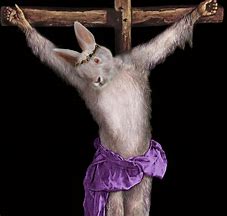
I lamented to a friend who suggested Fourth Presbyterian Church. For the first few years FourthPresbyterianChurchChicagoat Chicago’s Gold Coast Gothic Revival landmark, I arrived late and left early. I sat in the last pew, never opened the pew Bible, the songbook or recited the prayers. I didn’t belong there. I didn’t have the right clothes, right politics or right job. Indeed, I had no right to sit in well-ordered Presbyterianism.

Gradually I moved closer to the pulpit. I wanted to catch every word of Reverend Elam Davies’ sermons. Davies was slight of build, but a mighty orator. His spoken words came from deep inside his heritage, as if the whole of his native Wales was belting them out.

The first ten minutes of every sermon had me in sorrow. Sorrow for my selfishness, sorrow for my recklessness, sorrow for my sins. The next ten minutes had me laughing. Laughing for joy that Jesus knew all those sorrows and loved me anyway. The last ten minutes moved me to action. Action to protest policies that deprived people of basic human rights, action to help relieve indignities suffered by the victims of such policies.

When Elam Davies retired in 1984, I thought I’d be on the prowl for another pew. But each of the succeeding preachers have delivered similar bedrock messages that tell me every week: Jesus loves you. It’s been almost forty years since I first hid in that pew on North Michigan Avenue. I may not belong there still, but I no longer hide and the preaching makes me feel at home.

Deut. T-Deut. T-Deut. Deut. Deuteronomy

Deut. T-Deut. T-Deut. Deut. Deuteronomy

Reflection on Deuteronomy?

Every couple of years my church asks me to write something for their Daily Devotions. When the request appeared in my inbox this year, it included the assignment list for the Advent writers. I sent a note to Pastor Rocky, “You get Mark and I get Deuteronomy?”

I’m not sure I have a favorite book in the Old Testament, but I am sure I have a least favorite—Deuteronomy. It has always seemed to me that this book is reserved for scholars; we lay people aren’t supposed to know its secrets.

Deuteronomy 18:15-18: The Lord your God will raise up a prophet like me from your community, from our fellow Israelites. He’s the one you must listen to. That’s exactly what you requested from the Lord your God at Horeb, on the day of the assembly, when you said, “I can’t listen to the Lord my God’s voice any more or look at this great fire any longer. I don’t want to die!” The Lord said to me: What they’ve said is right. I’ll raise up a prophet for them from among their fellow Israelites—one just like you. I’ll put my words in his mouth, and he will tell them everything I command him.

Reflection. There’s no secret in this passage. Moses tells us we are getting what we asked for, someone we can talk to, who knows what it is to love and suffer and be happy and sad. He’ll be human, a Jew and a Prophet, like Moses. And when He comes, we can trust His words because He’ll be speaking for God.

Watch out if you see a prophet coming your way. They’re not foretellers of the future. They are truthtellers of the present, who expose hidden gracelessness. Jesus is God’s Truthteller. He digs into my dry bones and pulls out the person He wants me to be. I want to be that person too. Sometimes. I often hide from the truth—fearing ridicule and silent scorn because my greatest obsession is to be normal and to fit in.

God’s Truthteller came in the form of a sassy teenager recently: “you think you’re so privileged.” she said when my wrinkled old mouth asked for her seat on the bus. God’s Truthteller told me to love her, to be a Christian, to trust Him with her words.

Prayer. Thank you God, for sending me your Truthteller, a baby I can cherish, a man I can believe, and a friend I can trust. Expose the flimflam thoughts I tell myself and give me courage to have a life of truth and grace.

advent-devotions-banner-for-website

See more Daily Devotions from Fourth Presbyterian Church Chicago here.

How I Do Without Hate

As a reward for living through every day since November 8, 2016, I look to Haagen Dazs Dulce de Leche. Each day I try to do without hate. But I judge each day’s news as the worst thing I ever heard. Every. Single. Day. A bit of solace comes briefly through a pint of ice cream.

Doing without ice cream when the emotional alarms clang requires me to Hold myself tight for fear my limbs, my tongue, my head will whirly-gig out of control and irreparably damage my spirit-mind, not to mention my friendships. The Hold relaxes briefly with one simple pint. And then I do without until the wind gusts the whirly-gig back into motion.

Holding myself together generates an inward turn I take without looking both ways. I involuntarily drive straight to the core where I look for Jesus. From 2003-2011 I worked in Cook County government with a lively crew where the listening was easy. I belonged there, with cultures other than mine. God manifested himself through black and brown christs who spoke of Him: Have a Blest Day, Stay Prayerful, Jesus Loves You. Whenever the bosses above dumped demons into my serenity, Big Jim appeared and quietly laid a copy of a page from the Bible on my desk with a comforting Jesus quote circled in red. John 8:10 I am the light of the world. Whoever follows me won’t walk in darkness but will have the light of life.

The Catholic nuns gave me Jesus in grade school. He walked beside me like an imaginary floppy-eared bunny. As a newly-formed adult I moved from certainty about God and his Son to doubt. Preachers told me to welcome doubt, to throw certainty out with the th-6evening garbage, that doubting God strengthens faith. And it did. Until I started doing my own version of God. I built a periodic table of spiritual elements with blocks of God-info such as heaven and hell don’t exist and Jesus’ Resurrection is simply a symbol of renewed life. Trouble is, I silently scorned those who didn’t believe as I did. When I first met my co-workers I held a colonizing view of their beliefs. Over time my religious formulas fell in the trash heap. As slave descendants, they daily transformed their passed-down spiritual trauma into “I believe.”

Now in my own spiritual trauma I yearn for the comforting words of Big Jim and Shunice, for them to assure me Jesus loves us, all of us, including the remnants of the November 8, 2016 tragedy. I look for faith in my post-work world but Jesus is subtly tucked in for the night. My white-only community seems embarrassed, even ashamed to mention His name.

Well, I miss Him, miss talking about Him, miss Him talking to me through the kindness
and courage of my old work friends. A pint of ice cream doesn’t fill the void but it will do to keep the whirly-gig still until the Floppy-Eared Bunny wakes me in the morning.