Love and Hate

Love and Hate

A member of my writing group recited the following essay the other day. I asked permission to post it here because I was moved by how two different Chicagoans address the current influx of migrants.

Conversation on the Bus

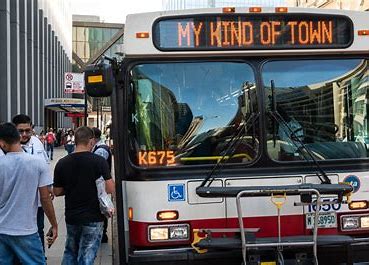
Last week I rode the bus and noticed a migrant family near me.  The mom was pregnant, her youngest son was fussing, and her other son, maybe three years old,  was playing with the window. The father was looking out the window, and the daughter, about ten years old, was sitting next to me. I don’t usually start a conversation on the bus, but she was asking her parents about a bus and their destination. So I said, “Hi, I’m Annette, do you speak English?”  
“A little,” she said. 

“Where are you going? Could I be of help?”

She looked down and said, “I’m not sure.”  

We were quiet, and then I said, “I’m going to my church to a class. Do you go to school?”

She shook her head and said, “We’re new to Chicago.” 

“Oh, welcome. Where are you from?”

“We are from Venezuela.”  

“I hear your country is beautiful. Nice and warm.” 

“Yes, but I miss my grandmother.” 

“Of course,” I said.  “Your English is quite good.”

“Thank you,” she said. “My dad helps me.” I smiled at him. He smiled back. 

Looking at him, I added, “My church supplies clothing and food to immigrants. It opens at nine on Tuesdays and Wednesdays. I’m going there now. “

 As we neared my stop I said, “I wish you the very best. I’m getting off at this stop.”

I bundled up and walked along thinking these were gentle people who needed help and hadn’t done anything wrong.  I wish everyone had a better understanding of their plight. 

People’s problems need a “face” because the mindset changes once you become engaged in conversation with them. I believe most people would want to help, but the housing issue is so severe. I don’t know how to begin to solve the not-in-my-neighborhood problem.

I went to morning prayers and mentioned this encounter to the group and one of them said. “We need to help our homeless first; after all, they are Americans.”

I bit my tongue and simply asked the group to pray for the migrant situation.

Afterward, I talked with my friend Carol. She said, “It’s a complex problem. We desperately need more workers and they’re hard workers.”

“This is a classic social work problem,” I said. “The people on the lowest rung of Maslov’s triangle are fighting for limited resources, and the “scarcity” principle is at work.

The United States has great abundance.  Congress has done nothing about immigration for twenty-five years. The situation in South America, with no democracy and lawlessness, makes this a five times bigger problem than it was. People want to escape.  I certainly would leave my country if my life and my family’s lives were in danger.

A. Baco 1/18/2024


Prayers

(excerpted from the November 2022 Grapevine, the International Journal of Alcoholics Anonymous)

My mother’s cousin, Father Long, asked to meet me on the wraparound porch of the1900s-era resort hotel in Spring Lake, New Jersey.

I had recently left my husband and was living at my mother’s house with my two-year-old boy. Assuming Father Long wanted to force feed me unwanted marriage counseling, I hung a defiant roach clip from an anti-establishment leather string around my 22-year-old neck to amplify my hippie ensemble.

He talked about my marijuana use. “Give it up, for your mother’s sake,” he said. I paused. “Are you talking to her about giving up drinking for my sake?”

Father Long started his career as a disciplinarian of an inner-city Catholic boys’ school. Realizing I was no match for him, I scrambled out of the painted wood rocking chair and made a fast exit. I heard him call to me as I walked away, “I’ll pray for you.” 

Father Long spent a few weeks every year near Sea Girt where I lived during adolescence and young adulthood. That summer his vacation on the edge of the Atlantic Ocean was interrupted by my mother’s cry for help. She wanted him to help me. My mother’s lips never parted to pray and I doubt her thoughts ever enter the spiritual realm. On the way home, I wondered how drunk she must have been to ask for help from her cousin, a soldier of God. Had Father Long been summoned to help other wayward children sprung from our very wayward relatives?

A few years later, I made it to Alcoholics Anonymous and, after six months sober, I was asked to speak at a large AA meeting in Montclair. In the meeting, I talked about my inability to stop drinking, stop smoking pot, stop consuming illicit drugs. I welled up speaking of gratitude for my father, who had brought me into the Fellowship.

My father had sobered up at Towns Hospital in Manhattan. He attended meetings on the Upper East Side and had been able to sustain abstinence during the time I was dying way out there in some other dimension of addiction. We hadn’t seen each other for five years. Then he showed up at the public mental institution where I had been sent after I overdosed at 24 years old. He suggested I go to the AA meeting on the grounds of the institution.

After I wrapped up my six-months sober talk at that meeting in Montclair, a petite, pearly lady stood out from a line of well-wishers. She approached and said, “I pray for you every day.” “What?” I asked. “Do I know you?”

“I go to meetings in New York with your father,” she said. “We helped him when he went to see you in the hospital. We told him what to say, to just share his story, what it was like, what happened and what it was like now. Like we do with any other alcoholic—and suggest you go to meetings. A lot of us have been praying for you for a long time.” 

 “And here you are.” 

That was the summer of 1971.

___________________________________________________

NOTE: Father Long was removed from the priesthood in 1995 for sexual abuse. He’s on the Pennsylvania, Maryland and Washington DC, lists of accused priests. He died in 2004.

Anonymous Prayers

Father Long asks to meet on the wrap-around porch of the 19th century worn-out resort hotel in Spring Lake, NJ. I just left my husband and live at my mother’s house with my two-year-old boy. Assuming he wants to force feed me unwanted marriage counseling, I hang an emblematic roach clip on an anti-establishment leather string around my 22-year old neck to compound my defiant hippie ensemble. He talks about my marijuana use.

Give it up for your mother’s sake.

Are you talkin’ to her about givin’ up drinking for my sake?

He once had a job as the disciplinarian of an inner-city Catholic boys school. Realizing I’m no match for him, I make a fast exit scrambling out of the painted-wood rocking chair as I hear over my shoulder.

I’ll pray for you.

My mother’s cousin, Jesuit Arthur Long Jr. spends a few weeks every year near Sea Girt where I live during my spiritually-sick adolescence and young adulthood. This summer his vacation on the edge of the Atlantic Ocean is interrupted by my mother’s cry for help—help for me, her addict. Her lips never part for the word pray nor do her thoughts ever enter the prayer realm. How drunk must she have been to ask for help from her cousin, a soldier of God?

I wonder if Father gets dispatched to other wayward children sprung from his very wayward relatives. 

A few years later I make it to Alcoholics Anonymous and after six months sober I’m the speaker at a large meeting in Montclair, one of Manhattan’s bedroom communities. I talk about my inability to stop drinking, stop smoking pot, stop consuming illicit drugs, until I get to AA. I’m happy to be sober and tear up at gratitude for my father who brought me into the Fellowship. My father sobered up five years before me in Town’s Hospital Manhattan and started his sustained abstinence in meetings on the Upper East side during the time I was dying, way out there in some other dimension. We hadn’t seen each other for five years before he arrived at the public mental institution I overdosed into at 24 years old. He suggested I go to the AA meeting on the grounds.

After my six-months-sober talk at the Montclair meeting, a petite pearly lady stands back from a line of well-wishers before approaching me.

I pray for you everyday.

What? Do I know you?

I go to meetings in New York with your father. We helped him when he went to see you unknownin the hospital, told him what to say, to just share his story, what it was like, what happened and what it’s like now, and suggest you go to meetings—like we do with any
other alcoholic. A lot of us have been praying for you for a long time.

And here I am.