Surviving Amnesia

God! How I love WebMD! This online ingenious, comprehensive, and reliable health and medical source has saved me from many time-gnawing trips to the Emergency Room.

Last week I found myself at the bus stop on State Street near the Hilton Hotel with a “Netroots Nation” Convention credential swinging from my neck. I have no memory of the previous four hours. Zilch. I’d planned to attend the Netroots Nation Convention at the Hilton; the swinging credential assured me I’d at least registered.

Are you thinking I may have experienced an alcoholic blackout? Nope. Those days are long gone. I haven’t had a drink in forty-five years. Arriving home around 9:30 pm, I dove right into my laptop and searched for “lost memories”, which returned a description of something I’d hoped hadn’t happened to me: 

“Losing time, or having large blocks of time for which one has no memory is a symptom of Dissociative Identity Disorder. Sometimes a person will lose so much time that they “wake up” in an unfamiliar town or place. This is called Dissociative Fugue.

Uh-oh. That sounds like the multiple personalities portrayed by Sally Field in the horror movie, “Sybil”. I’d hoped I didn’t murder anyone, or go to some stranger’s hotel room whilst in a fugue state. I searched further—typed “sudden memory loss”:

“Transient global amnesia, TGA, is a sudden loss of memory. It’s an alarming but harmless condition. Symptoms usually last for hours and then memory returns. It has no lasting consequences. Doctors aren’t sure what causes it. It’s more common in people over 50 and with a history of migraines.

Whoa! That’s me! Thank you WebMD and for the good news:

“TGA …is not caused by a neurological condition like epilepsy or stroke. With TGA, you remember who you are and recognize the people you know well.

Netroots Nation’s mission is “to bring together online citizens across America, inject progressive voices into the national conversation, and advance the values of justice, equality, and community in our nation’s politics.” Their annual convention in my hometown came at the right time for my aging activism. Chicago had just elected a progressive, smart, kind-hearted new mayor, Brandon Johnson. I believe with my whole heart that within a few years, Chicago will be a role model of common solutions for all American cities. At the convention, I’d hoped to replenish my quiver’s rah-rah-cis-boom-bah that had fizzled since Mayor Johnson’s inauguration. 

In the late afternoon of the TGA incident, I planned to attend an event in the Waldorf Room, “Solidarity Across Differences: Organizing When We Disagree.” There’s no evidence I was there. But I was somewhere. My little black-and-white pocket notebook has three new quotes in my handwriting:

“There’s a collective out there that wants to shrink the hope of the possible.” Emma Tai, Director United Working Families—the grassroots organization that helped elect Brandon Johnson

“Chicago is a town that’s gonna show the world what the future looks like.”  Randi Weingarten, President American Federation of Teachers

“Safety is not blue lights.”  Brandon Johnson, Chicago Mayor
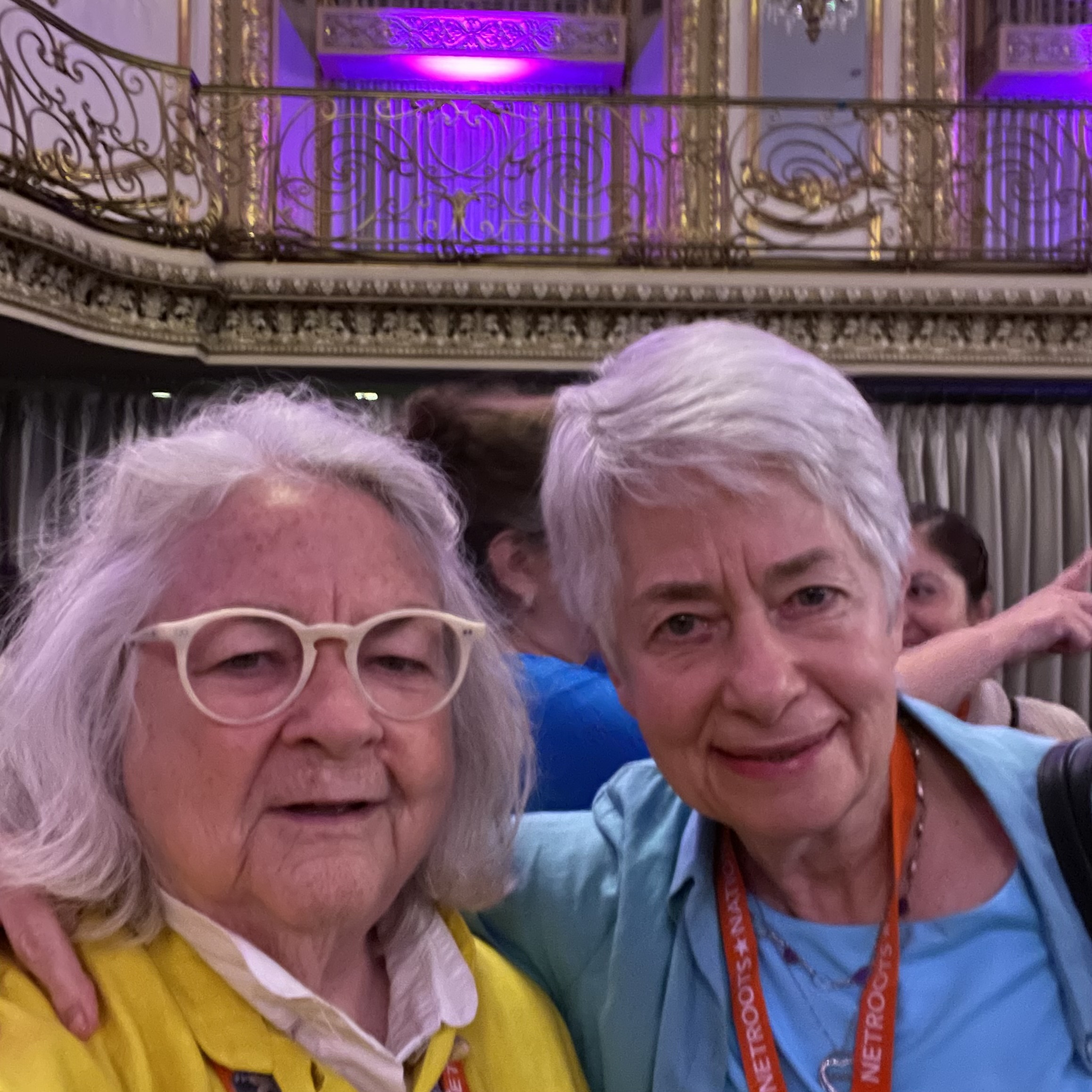
My iPhone displays several close-up photos of Mayor Johnson giving a speech, two selfies at the food table, and one selfie with Heather Booth a long-time political activist from Washington, DC. With the exception of the food table, these are exactly what I would have photographed, had I been in my right mind, proving once again how competent my online doctor, WebMD, is. 

“…in TGA the patient cannot acquire new memories but otherwise can function normally; personal identity is retained…”

Whew! What a relief; between the notebook inscriptions and my photos, I have proof I acted my best self, and confirmation I had all the symptoms of an episode of  TGA, Transient Global Amnesia.

Do I feel safe? Absolutely. Dr. WebMD tells me there’s rarely more than one occurrence. And no one has come forward to tell me I acted like Sybil.

At least not yet.
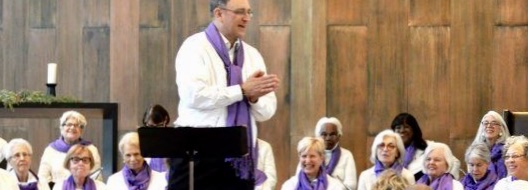
Good Memories by Veronica Cook

Good Memories by Veronica Cook

9384D35F-AB47-40E6-B9BE-4ECC850A08F1_1_201_a


Guest blogger Veronica Cook and I share in the joys and benefits of the Good Memories Choir in Chicago. Veronica reflects here on her musical life.  


When I was a child, we weren’t what you’d call a musical family, but there were always songs. It might have been my big sister boogying around with her finger in the air to Jeepers Creepers, Where’d you Get Those Peepers. Or my mother and I humming along with a light opera song on the radio (O Rosemarie, I  love  you…). All through my life there have been refrains to hum. However in the last few years, while a tune may have played in my head, my voice was having a hard time matching it. Wonderfully enough, it’s coming back little by little because I’ve joined the newly-formed Good Memories Choir.

I now can hear myself carrying the harmony.

At the beginning of each new concert season comes a whole new repertoire of tune fragments to spin around in my brain. At Christmas it was the haunting lyrical tenor of Ose Shalom; the beginning of White Christmas …there’s never been such a day-ay, in Beverly Hills L.A…; and the upbeat conclusion of Go Tell It on the Mountain …that Jesus Christ is born-orn, that Jesus Christ is born-orn.

As I reflect on my choir, a theme emerges that is much more than any one song or one concert. In fact, it’s more than even the music. Founders Jonathan and Sandy Miller have begun a far reaching and profound community. It is heartening to recognize each of us has a hand in shaping this new creation.

The Good Memories website describes the choir as “… a fun, upbeat community where people with early-stage memory loss and their care partners sing together, enjoying familiar music they love.” Yet, there are no one-size-fits-all categories describing the folks in this choir. Unique life circumstances puts everyone at a different way-station along the journey into aging.

I’ve become aware that in the struggle with physical and cognitive decline, we differ only in degree. Likewise, the loneliness and isolation that can so often accompany the onset of memory loss is something that all of us experience in some form. The support, encouragement, the warmth of friendship that we exchange are grace-filled gifts for us all.

Tuesday morning gatherings that get us started seem deceptively simple and down to earth. We are welcomed by the familiar smiles of fellow choir members as we gather in our rehearsal room. We cluster around the coffee pot, savor an array of sweet and savory homemade snacks. There is a collage of expectant faces, the beaming smile of one, the delighted greeting from another, the oohs and aahs over special treats. Compliments are exchanged: earrings, a new coat, a sweater pattern. We catch up with each others’ news. We are at home here, surrounded by new friends. And then it’s time to warm up with Oh What a Beautiful Morning! 

Always front and center is the music. Singing! Having come close to my voice deserting me, I glory in what this means: making a melody emerge from within my being, and even better, to make it harmonize with others. Joining our voices in song is central. This is the precious gift we give and receive from each other.

I stole a look at the Spring 2020 Good Memories repertoire. I invite you to come hear us on May 12th at 12:00 noon, Fourth Presbyterian Church, 126 East Chestnut St, Chicago. You’ll hear Waitin’ for the Light to Shine, Kol Haneshama Tehalel Yah Bonia Shur, Storm is Passing Over, What a Wonderful World, Long Ago and Far Away, Bridge over Troubled Water and the finale that says it allHow Can I Keep from Singing! 


Join a Choir! If you live in the Chicago area, click here.

If you live elsewhere, check out the worldwide Giving Voice Initiative (GVI). If you don’t see a chorus listed near you, start your own!  www.givingvoicechorus.org.

A6B6723F-42BF-4BF9-BCC8-23831959EF4A_4_5005_c

Shallow, I’m Into The Sha-la-la-low Now

When the attendant told me I was at the wrong gate, I froze. I’d been at Midway Airport for two hours waiting to fly to Salt Lake City for my granddaughter’s 2018 graduate school graduation. My vision blurred, my legs shook and I gaped at him without speaking. I actually couldn’t hear him. Someone grabbed my arm and raced me over to the correct gate just before the jetway closed. Inside the plane, I was escorted to Row A
where they keep an eye on people. th-4

I traveled twice more that summer. Once I was in the wrong TSA line, so confused that a stranger brought me to where I needed to go, again. I’ve since developed a phobia, thanks to nightmarish remembrances of Tom Hanks in the movie Terminal—about a man who lives in the airport after he is denied entry into the US.

A friend who works for O’Hare tells me airport workers regularly experience confused old people wandering around lost and panicked. I’ve traveled a lot in my life but familiarity with airport commotion holds no weight now.

When I first retired, I was unsympathetic to people with cognitive disorders. I joined the morning exercise classes at church but not to make friends. I told myself I wasn’t like those old people. Well, those old people have subsequently shown me how to be old, have compassion for those who talk slower than I do, who will never remember my name nor I theirs, nor the title of the book we just read or the movie we all saw. Our get-th-7togethers are often hilarious games of 20 Questions where we all guess what someone is trying to remember.

There’s just not enough room for all the bits lodged in my aging brain. A mysterious natural phenomena controls the shedding and changing of my grey matter, like menstruation and menopause in my body. Trouble is, the shedding seems to be more active these days. Oh sure, curiosity fills my brain with new information but its cells refuse to let those memories form and what I learned yesterday is soon forgotten.

One technique I use to block braincell destroyers is to ignore anxiety-producing articles that say cognitive decline slows if I eliminate sugar or learn chess. Perhaps the content is correct, but I’m possessed of my own version of old age, not a researcher’s cookie-cutter version. Similarly, I cast off brain-shrinking agitations delivered by younger friends who tsk me for walking too slow or for asking them to speak up. 

However, I love music so I responded to an article about choir singing strengthening the memory and joined the Good Memories Choir. Singing won’t get me back in airports, but learning music keeps me attached to the real world. In Bradley Cooper’s remake of A Star Is Born, Lady Gaga sings about the love of the two main characters as “far from the shallow now,” as if the brain has no choice but to deepen the couple’s experience. In my case, like the reversed flow of the Chicago River, I have no choice but to spill out of the deep and into the shallow now.

___________________________________________________________

For those who don’t understand my title, I give you, with love, Shallow