Broadview: Silent Resistance

FeaturedBroadview: Silent Resistance

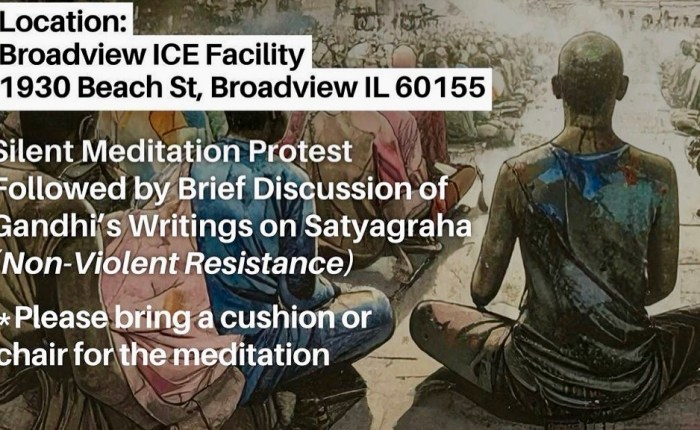
The announcement of a “Peace is our Protest” silent meditation hit my incoming a few weeks ago. I asked my Zoom meditation group to join me at The Broadview ICE Detention Center outside Chicago.

“I thought you were joking!” Rita said afterwards. 

And why wouldn’t she think it was a joke? Since the start of the Trump Administration’s Operation Midway Blitz in late 2025, Broadview has been newsworthy. Masked men in military costumes with automatic weapons shoot protesters in the head with pepper balls that explode into disabling chemicals. Demonstrators have been wrestled to the ground, zip-tied and arrested. Who in our group of graying meditators with varying degrees of mobility and vitality would be going someplace like that?

Well, Abigail and I did go. It was an easy drive. We arrived early. There were a few people already settled on their meditation mats, facing west. We set our lawn chairs down behind them. All was quiet. Two noisy protesters yelled out from time to time but experienced meditators treat ambient noise as neutral thoughts, not sound. We followed their piety and remained unstirred. Silent. Eyes closed. Forty-five minutes passed. A gong sounded. We stretched. 

“Look behind us,” Abigail whispered.

Over my shoulder I caught sight of about two hundred people. Sitting. Quietly. These valorous contemplatives came in behind us and squatted so softly we had no idea they were even there.

“I tried silent protesting and it never works!” A noisy bystander on a bike screamed at us. 

No one responded. No one felt compelled to yell back, argue, persuade. We remained silent. 

An unnamed man read a passage from Gandhi on non-violent resistance. We then folded our chairs and walked softheartedly to the car. As I passed by an Illinois State Trooper, he locked eyes with mine and said, “Thank you for coming.”

Broadview, an immigration processing center constructed in the 1970s, is a spit from the interstate highway leading to downtown Chicago. For thirteen years, a vigil at Broadview has been organized by the Interfaith Community for Detained Immigrants. Every Friday morning, Sisters of Mercy Pat Murphy and JoAnn Persch have led peacekeepers in prayer for detainees, some of whom are in transit to other facilities or are awaiting deportation.

“We are brothers and sisters, and it doesn’t make any difference the color of our skin or our religion or the country we come from,” Sister Murphy says, “we believe in one human being to another, a theology of presence.”

At the silent meditation protest we neither asked for nor received answers. No conclusions. No changes. No one needed to be there. We came to be present. A living theology of presence. I call this God. Others call it something else — the universe, spiritual essence, nature, mindfulness, other God names.
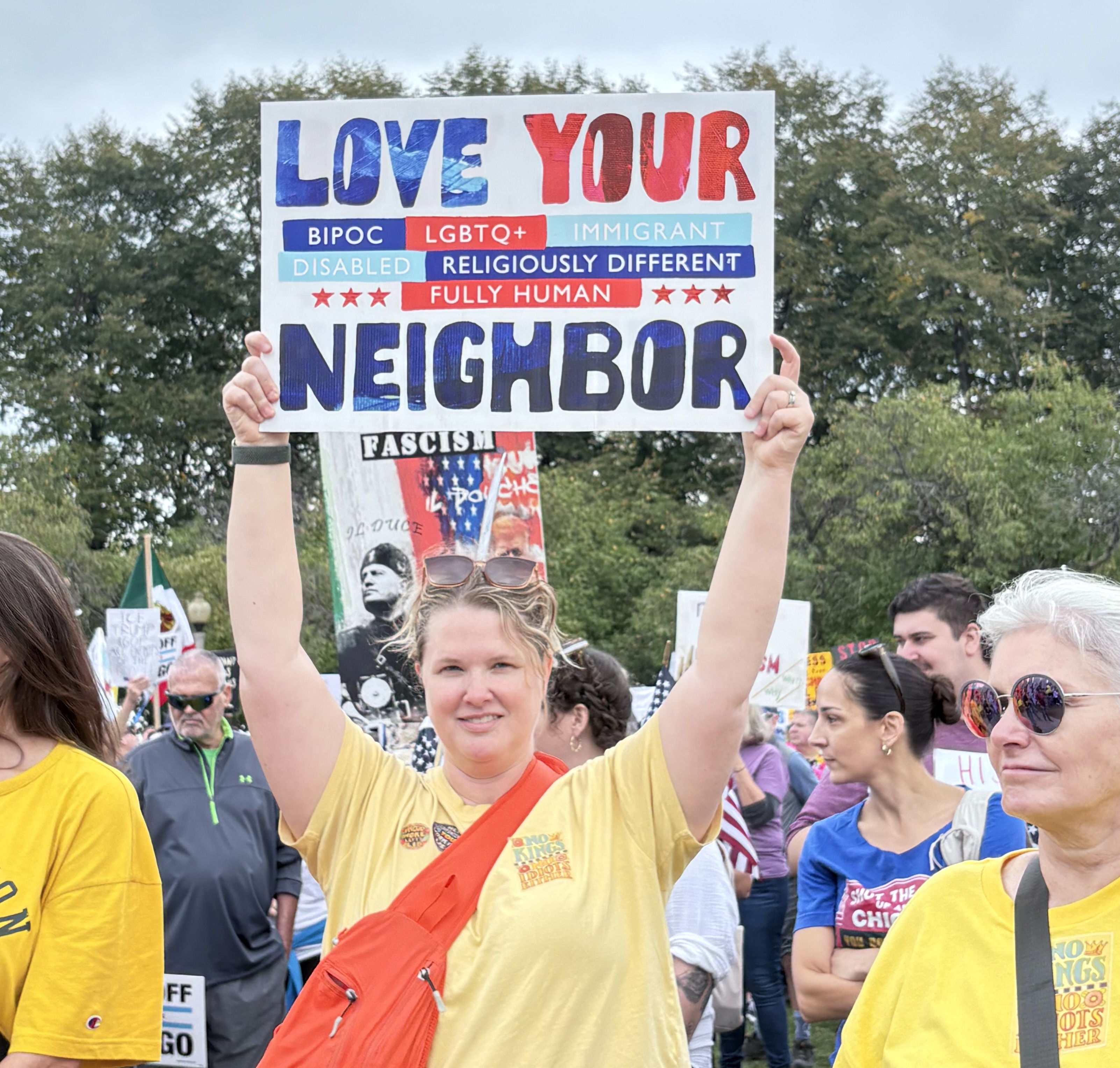
A week later the whole world watched millions peacefully protest at No Kings’ rallies. In Chicago, I walked all around the Butler Field rally in Grant Park and saw very few hateful slogans on signs. I’ve never seen such a noble protest. We marched up Michigan Avenue converging with streams of others walking from the south and west carrying woke messages.

Love not hate.

Faith Over Fear. 

Love Your Neighbor.

The Woodstock Nation. Long may it last.

___________________________________________________

Satyāgraha, from Sanskrit: “holding firmly to truth”, is a particular form of nonviolent resistance or civil resistance. The term was coined and developed by Mahatma Gandhi (1869–1948). Gandhi proposed a series of rules to follow in a resistance campaign:

  1. Harbor no anger.
  2. Suffer the anger of the opponent.
  3. Never retaliate to assaults or punishment, but do not submit, out of fear of punishment or assault, to an order given in anger.
  4. Voluntarily submit to arrest or confiscation of your own property.
  5. If you are a trustee of property, defend that property (non-violently) from confiscation with your life.
  6. Do not curse or swear.
  7. Do not insult the opponent.
  8. Neither salute nor insult the flag of your opponent or your opponent’s leaders.
  9. If anyone attempts to insult or assault your opponent, defend your opponent (non-violently) with your life.
  10. As a prisoner, behave courteously and obey prison regulations (except any that are contrary to self-respect).
  11. As a prisoner, do not ask for special favorable treatment.
  12. As a prisoner, do not fast in an attempt to gain conveniences whose deprivation does not involve any injury to your self-respect.
  13. Joyfully obey the orders of the leaders of the civil disobedience action. 

Sensemaking: The Eclipse

Sensemaking: The Eclipse

From my window, I can see Lake Shore Drive’s curve at Oak Street, an “S” curve fraught with danger. Some days, as many as five separate car crashes occur from unsuspecting or inexperienced drivers speeding toward the curve and sliding off the road. Heavy gauge ribbed steel barriers prevent errant vehicles from jumping the curb, flying off across a small park, and crashing into the Drake Hotel and vintage apartment buildings on East Lake Shore Drive.

On eclipse day, April 8, 2024, an East Lake Shore Drive building was an arrival point for President Joe Biden’s visit to Chicago. To augment the threat of car bombs speeding down Lake Shore Drive and intentionally barreling off into the building, city salt trucks lined up bumper to bumper on a half-mile stretch of the S curve that hugs the small park on one side and Lake Michigan on the other.

At 2:07 pm, the moon blocked the sun by 94% as I waited in the park with my dog Elsa. A few other dogs tethered to humans stood nearby. 

“Is the eclipse happening soon?” I called out to one.

“Yes, right now,” a neighbor announced.

“Here!” He rushed over and handed me his solar glasses so I could see the shadow of the moon crossing the sun. 

“Oh, there it is,” I whispered, “I thought the sky would be dark.”

At 94% sunshine, the sky doesn’t turn dark. Even a tiny sliver of the sun is so bright it can light up the sky. I hadn’t been paying much attention to the details of the solar cycle or lunar eclipses. I knew light from that 6% sunshine is so intense it can fry your eyeballs, but I didn’t know that 6% sunshine gives off an intense, vibrant light capable of eliminating shadows.

As I handed the solar glasses back to my neighbor, I looked down at Elsa, standing in the projection of overhead tree limbs. April brought out buds, but still no shady foliage. The images of the boughs, branches, and twigs on the ground were as clear as they were on the trees, like a photo. A perfect mirror image of the deep brown arbor architecture above. Nothing in my memory compared to this. I sensed, though, a deep knowing, as if ancient benevolent familiars had brought me the seeing of a thousand ancestors.


Elsa in the eclipse

“The sun is about a million times brighter than the full moon,” explains Angela Speck, an astronomer at the University of Texas at San Antonio, “So if 99.9% of the sun is obscured,” she says, “there will still be a thousand times more light than the full moon.

I read that in the days before the eclipse, but it held no meaning and slipped my memory. I still had a preconceived notion that the sky would turn black. Experiencing the solar light on the ground, mine and Elsa’s ground, in the valley between the salt trucks and the highrises, revved up my consciousness. 

Now it makes sense.

Spirits, Good & Bad

Spirits, Good & Bad

Halloween was brought to the New World by my ancestors, refugees from the Irish Potato  Famine of 1845-1849. My amateurish genealogical sleuthing has churned up relatives in the Irish diaspora of rural Kentucky. Burkes, Flynns and Kilroys first appear during the Famine years. Place of birth on their official census records simply say: Ireland. Lineage dead ends there since the British, who ruled Ireland at the time, destroyed native records. Of eight million people, one million died and 2.1 million poverty-stricken souls emigrated during the four years of the Famine.

In 1844, English politician Benjamin Disraeli explained the “Irish problem”: “a starving population, an absentee aristocracy, an alien-established Protestant church, and in addition, the weakest executive in the world.” 

England left the Irish to die.

No wonder the Irish brought their dead ancestors, their heritage, their superstitions to the United States. When the harvest season ended on the night of October 31, Irish immigrants welcomed the spirits to walk among them. It was a celebration, a comfortable reunion between the world of the living and the familiarity of their dead. Little Patricks and Deirdres traipsed door-to-door on that one hallowed night seeking food for the incoming family spirits.

In short order Halloween in America became scary. Demons and witches took over, leaving me with nightmares, still. I cannot, will not watch fright movies. I get the heebie jeebies just looking at trailers for the entire Halloween franchise with Jamie Lee Curtis (though I love her).

The only reason I ever watched the movie, The Exorcist, is that the writer knew my parents and named the demon-possessed girl, Regan, after me. It chills me now even writing about her.

I’ve never been visited from beyond-the-veil by the devil, dead relatives or friends. Poets say spirit ancestors are flying around in the bodies of birds, particularly cardinals. Ethnologists have discovered that every culture honors spirits. From Christian angels to Buddhist arhats, depictions of creatures trapped between the living and the dead grace every ancient wall.

New research suggests people who experience the presence of ethereal beings, immerse themselves in practices that make the brain more porous, more receptive. I do that. I call it meditation. I don’t have the same experiences as indigenous peoples, but my twenty-minute practice of imagining my thoughts passing by on clouds, brings one nanosecond of pure joy. I choose to call this God, bypassing all the intermediaries. 

Author and mystical scholar Rev. Dr. Barbara Holmes had a visit from a dead aunt as a child. She shared the experience with the multiple generations of relatives sitting on the porch of their Gullah home in South Carolina. “Let us know if she comes to you again,” said one of the aunts. Their Africana heritage incudes a shared belief that the dead come back and talk to you.

My Irish-American parents buried their heirloom traditions, including the dead visiting the living, in order to assimilate into conventional white America. Halloween was a peasant holiday to be avoided. As was St.Patrick’s Day. 

Yes, the notion of the presence of the supernatural still scares me.

But I do love birds.

Is Zoom a Reliable Alibi?

One of the joys of the Shutdown has been discovering crime dramas on what used to be mysterious and unclicked words on my TV screen. The series of murder mysteries on MHZ, Hulu, Britbox and Acorn are not necessarily formulaic, but they have one major scene in common: the detective always asks if the suspect was elsewhere on the night of; and if there are witnesses to the alibi.

I had an alibi last Sunday. The Shutdown service at my church was livestreamed into an adequate eleven-inch computer screen propped up on the desk in my bedroom. The sermon struck the taut chords in my silent mouth and unclapped hands. I needed a collection of witnesses to shout “Amen!” to Pastor Shannon’s sermon. But I was alone, looking out the elsewhere window weeping over the no-one. No one to join in a standing ovation, no one to see and no one to see me.

After the sermon I sang along with the tinny music emanating from the computer; an old hymn I love:

Live into hope of captives freed

From chains of fear or want or greed.

God now proclaims our full release

To faith and hope and joy and peace.

Halfway through I shuttered with a renewed and deeper knowing that I’d never attend a church service in person again. The pandemic Shutdown will hold me captive in chains of fear until the end of my days. Groups, especially singing groups are out of the question for my old bones in these non-vaccine days. 

I won’t observe Pastor Matt’s infant grow from a toddler to a Sunday schooler. He’ll never again see me ooh and ahh in the delight of his fatherhood. I’ll never sneak into an early morning service in my pajamas (hidden under a long winter coat), to hear Pastor Rocky again. And he’ll never see me admiring him in the way of a proud mother. Gabrielle and I will never again join arms, run up to Pastor Shannon after the service and proclaim our undying gratitude for her ministry. And she will never see the reflected glow of our admiring faces in the pews.

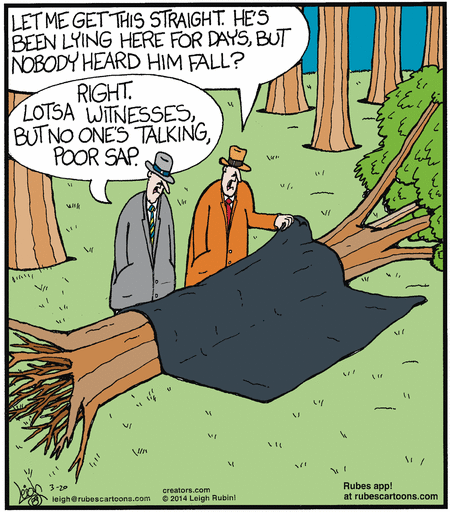
crrub140320Albert Einstein once posed a question to a fellow physicist, “Do you really believe that the moon only exists if you look at it?” It’s a common philosophical question, similar to
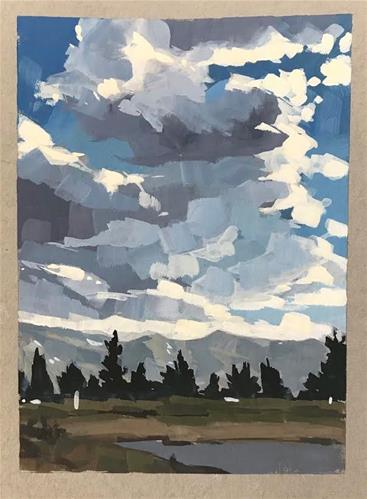
the sophomoric, “if a tree falls in the forest and no one hears it, does it make a sound?”. In morning meditation I intentionally ask myself if I’m hearing sound or “thoughts of sound” as a way to go deeper, where there is no sound.

Intentional solitude is not the same however as the feelings of isolation that arise from the existential supposing, “If I’m neither heard nor seen, do I exist?” Responding to covid requires an abrupt “so long” to a group existence I wasn’t ready to leave. In an alternate elsewhere life, witnesses see and hear me on Zoom.

Is this a reliable alibi?


Shutdown Week 7: Unknowing

Shutdown Week 7: Unknowing

The first change I faced for the Covid 19 shutdown was the suspension of classes and groups for older adults at the Center for Life and Learning (CLL) in my neighborhood church. The cancellation announcement infuriated me. For an entire day, I thought it was the only shutdown announcement, the only group activity suspended.

The media had been continually reporting that people over sixty were more vulnerable to coronovirus than the rest of the population. Shutting us down was our best protection. My wounded ego jumped to the conclusion that we, as a group, would be thought of as weak, defeated and sick, putting a frame around the ageism I struggle to define in myself

a75f6596-2b75-494a-8c9f-14cde7f7646e
Mammoth Mountain Sky by Sharon Schock Sharonschock.com


and in the public square. I stuck myself in a cloud of unknowing.

It was mid-March. I bundled up to walk a long way around to the church for the last event before the shutdown, the CLL yearly Art Show.

How to express my agitation?  Old people were being singled out. Excluded.

That’s when I ran into one of the pastors on his way down the street to the Red Line.

“We’re cancelling services.” He said.

“Huh? How long?”

“Unknown. It’s all going to be livestream. We have to figure out Zoom for other gatherings.”

His worried expression hit me like a ton of bricks. He didn’t crack his normal smile, nor did he put a jokey spin on the situation.

“It’s serious.” He said.

“So, It’s not just old people?”

At the Art Show I gathered with friends and reported the news .

No Sunday services. 

I eavesdropped on other conversations. Eavesdropping has become one of the social distancing casualties I miss the most.

“They say we might have classes on Zoom.”

“What’s Zoom?”

“Some kind of computer conferenceing.”

“I’m not doing that. I’m sick of technology.”

“Me too. I don’t want to learn anything new.”

“Well, it won’t be for long. Maybe a week. Maybe two.”

We’re in the seventh week now.

I fell victim to the fear of the unknown and refused to learn Zoom for about six days. But I longed for the energy of the collective silence in my meditation group. Others did too and meditation became the first Zoom hosted by CLL.

About fifteen of us spend twenty minutes each Monday and Friday sitting in silence in our Hollywood Squares with our eyes closed. Afterwards we each say a few brief words. We know a smattering of particulars about each other.

What could I possibly miss that I can’t do on my own?

In The Cloud of Unknowing, a fourteenth century monk teaches when we know enough and we don’t need to know more, an opening through the clouds to the sun or the moon brings us to an endless, wordless, deeper knowing. Contemplatives call this love.

This is why I yearn to sit in silence with fellow meditators. We know each other through the clouds of our own wordless unknowing. I call this love.

Shutdown Week 6: Solitude

Shutdown Week 6: Solitude

The coronavirus shutdown forces me to sit in silent contemplation, doing my best to control the one thing I think I can—my thoughts.

American buddhists say people in the West are afraid of solitude, of being alone.              That’s not my fear.                                                                                                                                  I fear the future.                                                                                                                               When the threat of coronavirus is over, will I ever leave home again?                                  Will I ever chance gathering with friends or strangers in a group for a common purpose, a protest march, choir practice, church, AA meetings?                                                            Lunch even?                                                                                                                                        How would I fit into the world with no connection outside of myself and Henry the dog? What would be my purpose?                                                                                                             No wonder loneliness shortens life.                                                                                                     It will kill you, this lack of purpose.                                                                                          

Hmm. Two fast-walkers below my window dressed head to toe in black spandex, masked like bandits.                                                                                                                                        What are they talking about?                                                                                                           Are they planning to rob the bank on the corner?                                                                        Do they know the polar ice cap is melting and will soon spill over into Michigan Avenue? Perhaps they’re headed to Northwestern to get tested for coronavirus.                                      I hope they bow to the angels fluttering around the Emergency Room.

Down the street gardeners dig up winter to plant spring by the goldfish pond.                    Those goldfish swam around that manmade pond the entire winter. 


9866AA95-DEAF-4A8A-98C7-2CC99531B87A_1_201_a
Out with winter. In with spring

Blackbirds jump from branch to branch on the budding leafless tress awaiting the gardeners’ departure.                                                                                                                       They swoop in for a scratch-around in the fresh mulch, but ignore the goldfish.           They’re not fishers.

The backup whistle on the garbage truck that normally blends in with early morning noise?                                                                                                                                                         It now pierces the street from the otherwise empty alley.                                                         Cars are so infrequent these days that instead of tires rolling over the road with a steady hum, their sound breaks the air with a hiss. hiss. hiss.                                                          Where are they going?                                                                                                                              If I had a car I’d be driving around too.                                                                                            I’d drive up and down the Drive to be close to my own wild lake.                                                The mayor closed the lake path and parks for good reason.                                                 Chicago loves to be out.                                                                                                                       We’d gather there, on the lakefront, congregate.                                                                     Spread the virus.

Those words are my thoughts from five minutes of meditation. This is how I talk to myself. How embarrassing. My interior life is a tragic waste of imagination—that grammar, those articles, prepositions and pronouns. The mundane. Oh, to be a poet.

On Being’s Krista Tippett hosted Stephen Batchelor, a Tibetan Buddhist on Sunday morning. His new book, The Art of Solitude, made a fitting subject for the Shutdown era. He said indulging in myself leads to inward wisdom and outward compassion. The integration of the two make me fully human. I’m game to be fully human, to be wise and compassionate.

But for now, I must get control of my thoughts.

9ADC9E1E-E14E-4D2B-9E83-93233BB76096_1_201_a
Alone on Oak Street Chicago 11:00 am April 27, 2020

_________________________________________________________________________

Before Coronavirus We Were Dying of Loneliness 

On Being: Stephen Batchelor: Finding Ease  in Aloneness


Shut Down Week 2

Nothing’s changed in my one-bedroom condo.

I wake up frozen in fear. My old Ikea down comforter shrouds my body. Before peeking out at the same world I fell asleep in, I breathe in and say, “The troubles of the world don’t own me.” I breathe out and say, “I don’t own the troubles of the world.” After twenty or thirty minutes forcing my mind back to this cushioning mantra, I go to my computer for the latest messages and news about friends impacted by the coronovirus.

At the hospital, a friend is off a ventilator and in for a long recovery, thanking those around him for saving his life. The Panama Canal Authoirty finally approved passage of a cruise ship that had been stranded off the coast of Chile, shunned at every port. Four people died onboard, and my friend, healthy but worried is locked down in a cabin with no windows and scant information. 

IMG_4785Henry jumps around to say he’s ready to go out and read his drizzled mail on the low hanging boxwood branches. There’s a shift on the sidewalk; less people than the day before, fewer parked cars, more birds. And Henry makes less and less whiffer stops. His friends must be on a later schedule, sleeping in. It’s the second week after all.

We pause at a neglected sidewalk garden, elevated in a bas-relief concrete trough. In there a crow pecks at dead twigs and tendrils from last year’s plantings. We’re not more than ten feet from her. She drops a brittle stick on the cement ledge, plunks a claw down on one end, grabs the other end and pulls up, breaking off a piece of nesting material. Gathering a few more right-sized pieces she jumps down and walks across the empty street with a full beak. Henry is nonchalant, as if she were just another member of the family. Dogs have a way of knowing. They read souls.

Around the corner, we stop to watch workmen covering another couture clothing shop with sheets of plywood. Pretty soon the whole street will look like a war zone of boarded up storefronts. Crows caw overhead. It’s our mother and her kin squawking about the lack of garbage pickings in the alleys behind the shut-down restaurants.

Back home you’d never know Chicago is on STAY-AT-HOME orders from the mayor unless you open the freezer and see 25 frozen Mac ’n’ Cheeses from Trader Joe’s. Other than that, nothing’s changed inside. I spend the whole day in hysterics laughing at jokes, memes and cartoons that people send me and post online. At first there were all dog jokes, like two dogs looking at a couch full of papers and a computer. One says to the other, “Do you think we’ll ever get our couch back?” The other says, “I think it’s going to
be a couple of weeks.”

After that, there were husband and wife jokes, like the photo of a woman knitting aIMG_5462 noose for her husband. And one of a woman digging a grave in the garden. Now I’m getting a lot of jokes with swear words:


Today the devil whispered in my ear, “You’re not strong enough to withstand the storm.”

And I whispered back, “Six feet, motherfucker.”

That’s another way of saying the troubles of the world don’t own me. I don’t own the troubles of the world.

Hard Truth: 50% of the People You Meet Don’t Like You.

50% of the people you meet don’t like you.

Huh?

Yeah, that’s right. And guess what? 50% of the people you meet you don’t like.

But I like everybody and everybody likes me.

Nope. They don’t. You don’t.

The lady at church in St. John’s knit, pearls and Ferragamo flats? Does she ever say hello? How about the guy who leads the meditation group? He preaches mindfulnesss but stops short when it’s time to tune in to you.

And you? Do you really like the lady in the lunch group with her pinched red lips that never stop moving?

Ok. Ok. But 50%? I think I like 75% and 75% like me.

No. They. Don’t.

The truth of it? The guy in the park who stands up and gives you his seat? He hugs you just so he can feel your boobs. You hate that but you’re nice to him ‘cause you think he likes you.

Get it?

Ancestral Tree Worship and Carl Jung

Ancestral Tree Worship and Carl Jung
A crow caws in the gingko tree on the corner. The rising sun shines through the outdoor tree branches. Their shadows dapple my bedroom walls.

I wake early to catch the glory of each day’s wall art, to meditate with the trees in their seasons. Outside, Ozzy the dog and I stop long enough under the gingko tree to allow its fanning leaves to breathe a fresh day into our early morning walk.

th-1My favorite place is anywhere there are trees.
I love them for all the usual reasons: pretty, green, shade. The deciding factor on my condo purchase 15 years ago was the swaying branches outside the wall-to-wall windows. My home is on the 3rd floor of a 20-story high-rise overlooking Lake Michigan. When I first saw the place, the three ash trees in the parkway had reached a height equal to the 4th floor.

It was like living in a treehouse.th-3

Last year the City of Chicago’s Forestry crews euthanized my treehouse. The ashes were slowly killing themselves by feeding Emerald Ash Borers, those exotic hungry beetles from Asia. I mourn my ash trees. I thought they were immortal.

My mother, Agnes, taught me the pragmatism of trees. Stacy was born 11 years after me, and Agnes insisted I walk my baby sister around on sunny days. Her constant reminder stays with me, “Be sure you stop under the trees so the baby can see the shadows swaying.”

“Women should always have babies in the beginning of summer,” Agnes often said, “in case they are colicky, they will be soothed by leaves swaying in the trees.” She muttered “idiot” under her breath anytime another mother announced the birth of a baby in any month other than early summer.

And indeed, three of her four babies were born in May, June and July. She pretended she planned it that way.

My one and only baby, Joe, was born in May. His 1st summer was spent on his back under the trees outside in a baby carriage. Inside, he spent his time in a crib under a window of trees, syncopating his first gurgles with the sound of leaves rubbing together in the breeze.

Agnes was right about nature’s tranquilizer for infants, but she never claimed it worked for adults. She wouldn’t have been caught dead contributing such unsophisticated, sappy remedies to adult conversations. Her tranquilizers were beer and scotch and later, valium. She spent some of the last years of her life demented from these potions and gazing at the trees in verdant Vermont.604909-44011-10

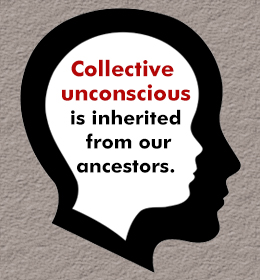
Trees soothe me anywhere, in any season. Joe absorbs tree balm while minding his wooded property. Carl Jung tells us Agnes simply passed on the inheritance – the collective unconscious of Irish tree worship that supposes tree fairies live in high branches watching over us. My mother’s life was rooted in addiction that mimicked a life-sucking aphid. Yet, she uttered words that gave me and my son our love for trees, a priceless, ancient, tranquilizing inheritance.

The Big Lie: Catholic Hell

The Big Lie: Catholic Hell

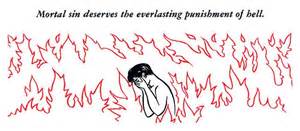
In every one of the thirteen grade schools I attended in the 1950’s, Catholic nuns taught me about Heaven and Hell, including the nugget that Heaven was only for Catholics, but there was no guarantee I’d go there. From the age of six I knew if I, as a Catholic, died with a “mortal” sin on my soul, I’d go to Hell, or perhaps Purgatory, the halfway house to Heaven.

This teaching dwelled in the official Catholic textbook for American children used from 1885 to the late 1960s, the Baltimore Catechism. Theth-2 Catholic Church denied that physical Heaven, Hell and Purgatory are part of Church doctrine, long before the Pope declared in 1999 that heaven and hell were “primarily eternal states of consciousness more than geographical places of later reward and punishment”. But that turnaround came after these medieval lies were grafted onto sapling children like me.

The only non-Catholics I knew as a child were our babysitters. I always felt sorry for them because they were headed straight to Hell when they died. In 1957 when I saw a TV ad for Old Orchard Shopping Center, I asked my mother, “where’s Skokie?” “That’s where all the Jews live,” she answered. At 11 years old, I didn’t know there were Jews alive in the world. I thought they were all burning in Hell.

I’ve come to believe that my own personal heaven and hell do exist. I visit hell whenever I relive the last time I got sober forty years ago, or when I regret insensitive words I spoke five minutes ago. And heaven appears when my 10-year-old grandson texts me photos of his lizard.

At the suggestion of my fellow seeker Terry, I crammed into the O’Hare Hilton with 1,000 other souls one weekend in 2012 for a retreat, “Transforming the World through Meditation” with Franciscan Richard Rohr and Benedictine Laurence Freeman, two men I’d never heard of. I had started meditating a few months prior in a Buddhist group and asked Terry if she knew any Christian meditation groups.

In addressing heaven and hell, Rohr said the ego prefers winners and losers. He offhandedly mused that if Jesus descended into hell, as it says in Church doctrine, than there is no more hell because, ”Hell cannot exist in the light of God.” I lost my breath, sprung out of my seat and staggered to the door for air.  A volunteer brought me a chair and water. “Raised Catholic?” I nodded yes. “Yeah, this happens a lot.”

If my subterranean soul had known all my life that I wouldn’t go to Hell for attempting suicide or stealing pens from the office, if I had known all non-Catholics were not doomed to go to Hell; I would have been a better friend to Jesus. I didn’t know my nature was adolescent, fertilized with dead ideas about Hell, sprouting false judgements on myself and everyone I knew.

Uncovering the lie is heaven indeed.