Cold Inaugurations

As an eighth grader I entered segregated St. Mary’s of the Assumption for two months at the end of the school year. My family had come apart in the Chicago suburbs and one of my sisters and I were sent to live with relatives in Upper Marlboro, Maryland. Whites and Blacks mingled at St.Mary’s only on the playground where I pitched in the integrated baseball games.  

On our first Sunday at St. Mary’s Church, my sister and I headed for the back pews. A white man ushered us out of our seats toward the front. Only Blacks sat in the back. The Sunday my mother visited from her temporary home in New Jersey, she pushed the usher aside and sat us all in the back. Her hangovers would not allow suffering through the entire hour of the Mass. She needed a quick exit after the obligatory Eucharist and delighted in integrating the back pew. 

One day St. Mary’s eighth grade class was bussed down the way to Andrews Air Force Base to greet President Dwight D. Eisenhower. Blacks in the back of the bus. Whites in the front. Having so little experience with segregation, I was sure it was wrong but had no idea how to take a stand. I wished my mother had come along to integrate the bus. We waved little American flags at President Eisenhower as he deplaned Air Force One, Blacks lined up on one side, whites on the other. It was 1959.  

Sixteen years later in a sleepy Jersey Shore borough, I read about Jimmy Carter’s campaign for president in Time Magazine. What caught my attention was Carter, as governor, in a surprise to fellow Georgians had denounced racism and segregation. I sent a note to Jimmy Carter, applauded his positions on race and volunteered on his campaign. He sent me a hand written thank you note. 

When we received an invitation to Carter’s Inauguration, there was no question that my then-husband and nine-year old son would head to Washington DC for the January 1977 swearing-in. Sitting high up on bleachers on the shady side of the Capitol, it was as cold as any day I can remember. Twenty-eight degrees with a wind chill to equal fourteen.  


My grandchildren, C.J. and Kirby, were 10 and 12, when we flew from Chicago to brave twenty degrees with 1.8 million others for Barack Obama’s 2009 inauguration. We stood for hours on the frozen ground by the Native American Museum on the Mall. Every once in a while I’d ask my shivering grandchildren if they wanted to go inside. No they didn’t! The clutch of strangers that formed in our section treated us like family—retrieving packs of hand warmers from a far-away tent for the inside of our mittens and boots.

It was sunny. Cold. And glorious.

Obama quoted Founding Father Thomas Paine in his in Inaugural address. 

”Let it be told to the future world … that in the depth of winter,  when nothing but hope and virtue could survive … that the city and the country, alarmed at one common danger, came forth to meet.”


What’s Love Got To Do With It?

What’s Love Got To Do With It?

On February 15, 1976, I drove my red Toyota ten miles west from my Toms River, New Jersey, home to a small church meeting in Whiting.  I’d not had a drink for twenty-four hours. My head was pounding. I shook and shivered and sweated. I sat down but had one foot out the door.

Toms River shoulders the Atlantic Ocean. Most of life there happens near the ocean, its inlets, and brackish rivers. Whiting, known for the now-closed Nature’s Rest Nudist Colony, sits on unceded Leni Lenape land at the northern edge of New Jersey’s Pine Barrens. It’s a defunct railroad town surrounded by scrub pines, that dreary little tree that never grows more than eighteen feet because of the sandy soil. No one goes there.

I drove to Whiting to a meeting of Alcoholics Anonymous because I wanted to be anonymous and not run into anyone I knew. I had an overwhelming urge to announce out loud to strangers that I was going to kill myself with vodka.

An active adult community, Crestwood Village, had risen up near Whiting. The eight men and women at the AA meeting were over fifty years old, which was a turn-off for me at twenty-nine. But I was banging on the bottom and had nothing to lose. I thought I’d spill the beans there and bug out for the liquor store on my way home.

The group of eight centered the AA meeting around me and how I could stay sober. They figured out a schedule of who could follow me home that night and stay with me for the next few days. Each day, a different soul appeared on my doorstep to feed me, talk to me, answer the dreaded phone, and connect me to an AA group in my neighborhood. Their messages were the same: you’re sick, we were sick, too. Drink water. Eat chocolate. Go to AA. They trusted me with shocking truths about their lives before sobriety. 

They traveled well beyond their small community in the Pine Barrens and re-arranged their comfortable lives to help a suffering alcoholic. The obsession to relieve my misery with booze lifted after about seven days. Each of them called every day for a month.

I never drank again. After a few months, I sold my house, gave away the dog, left an estranged husband, packed up my son and houseplants, and drove to Chicago.

I was a dead soul before I met that group of kind and loving saints in New Jersey’s outback. Every minute of every day, I thought only of drinking and not drinking.

In the forty-eight years since, I’ve met many people who have asked for help. I share the same love that was offered to me that first week. In very few cases, people have stayed sober themselves. Most have disappeared, died, or gotten pissed off and moved on. 

Love saved me. That’s all I can wish for others.

Happy Valentine’s Day.

.

Sharks and Snakes At the Movies

Sharks and Snakes At the Movies

One summer in the early 1960s, my mother walked the beach near our Sea Girt, New Jersey home. A shark came into the calm shallow of the Atlantic and chomped off the leg of a man wading right in front of her. 

Another that week. And another. Grisly accounts and sightings of man-eating “great whites” all along the central Jersey coast appeared daily in the Asbury Park Press. Lifeguards stood high on their stands and whistled us out of the surf repeatedly at any sign of a dorsal fin. The summer was terrifying. 

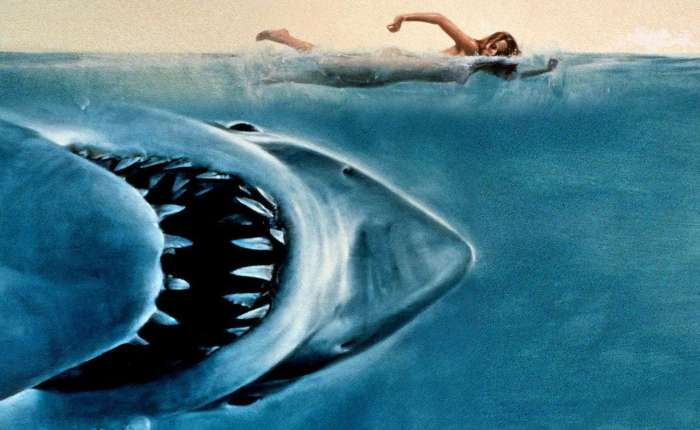
When Peter Benchley’s 1974 novel, Jaws, appeared on the paperback rack, my mother snatched it up, read it, and passed it on. She and everyone else at the Jersey Shore convinced themselves that Benchley, who lived in New Jersey, based the book on our summer shark attacks. 

What a book. After eyeing that famous book cover, my seven-year-old son, Joe, became interested in and eventually obsessed with sharks. Having read in Dr. Spock that I shouldn’t tell my child frightening stories, like the crucifixion of Jesus, I kept the Jaws story from him. 

The movie Jaws was released the following year. I refused to watch it, much less expose it to my eight-year-old. His sleep was already interrupted by nightmares after getting hit with a pitched baseball at Little League. 

At age nine,Joe announced that Jaws was at the neighborhood theater on Dollar Day and begged me to take him. The near-empty theater was spooky. I held both hands over my eyes for most of the show .

“You can open your eyes now,” Joe said.

I did, just as the shark was ripping apart a girl on her raft.

“Oh my god! I’m going to puke! I thought you said it was ok!”

We laughed so hard we could hardly hear the movie. Thus began those funny years when boys learn there’s a big payoff in pranking their parents.

When Raiders of the Lost Ark came out in 1981, we lived in Chicago. 

“Is it about Noah’s Ark?” I asked Joe.

“No. The Ark of the Covenant. You know, where the Ten Commandments are.”

Dragging him to Sunday school all those years had paid off.

We ran to the 1,400-seat Esquire Theater on Oak Street. The only tickets left were upfront. Right there, on the front row, the entire wall before me slithered and hissed as Harrison Ford was lowered into a hypnotic pit of 10,000 snakes. 

I shut my eyes. 

“OK to look now,” Joe whispered.

And again, I got fooled into watching the creepiest part of the movie, where Indiana Jones is staring down a hooded cobra.

Raiders is set in 1936 and follows Indiana Jones vying with Nazi Germans to recover the invaluable long-lost Ark of the Covenant. Some have interpreted it as Steven Spielberg’s creation to slam the Nazis for the Holocaust. But to me, it’s a hilarious, breathless adventure, made memorably funnier by the prank of my fourteen-year-old movie companion.

And a memorable relief from how I view Nazis today. 

Mara Burke RIP

Mara Burke RIP

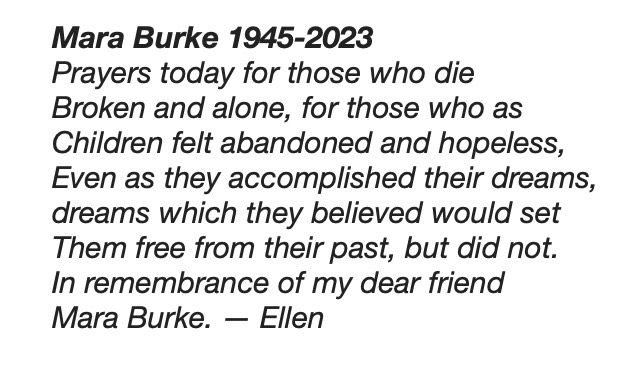
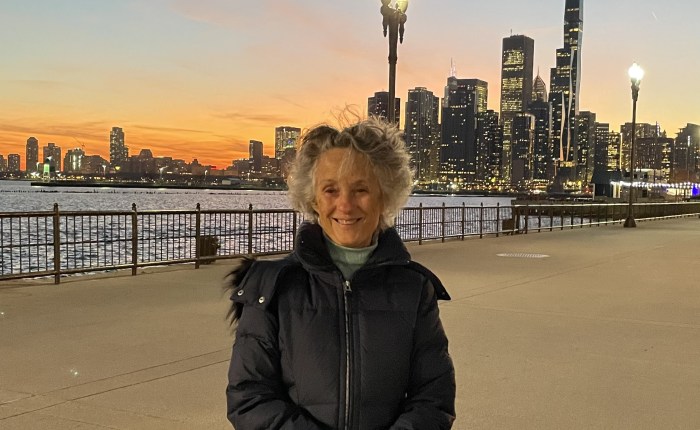
On Thursday, March 30, a cousin called to say she’d heard my long-forgotten sister Mara had died. We’ve both heard such rumors over the years and have no way of verifying them. So we shrugged and turned our attention to stories about our grandchildren before saying goodbye. A few minutes later she texted me a post from Mara’s Facebook:

The next morning I sipped coffee with one hand as I clicked into voicemails, emails and texts. A voicemail from the previous day said, ”Yes, ma’am. My name is Frank. I’m a captain with Winchester Police. Uh trying to find some possible information about your sister Mara if you can give me a call back. My telephone number is 540xxxxxx. Thanks.”

Captain Frank said they’d responded to a wellness check nearly three weeks ago, on March 13 and was sorry to say Mara had died. The police couldn’t find any information except an emergency contact on Mara’s health records for one of my other sisters. That number was disconnected.

Their investigation drove them to Facebook looking for clues. Eventually they connected to Ellen, an old high school friend who tried staying in touch with Mara. Years ago I’d given Ellen my phone number during a time when people were still trying to help Mara get sober.

“How did she die?” I asked the Captain.

“The death certificate won’t be available for a few weeks. Nothing suspicious though. No reason for us to ask for an autopsy,” he said.

“Oh. Where’s her body?” I asked.

“At the funeral home. They are concerned about the disposition of the remains.”

The Captain felt he ought to talk to the one quasi-official designated family member whom Mara listed as her emergency contact. I said it might take me a few hours to contact her since I didn’t have her number.

“The landlord hasn’t called us yet,” said the Captain, “but we’ll need to give him a contact.”

“I’m sorry,” I said, “I guess it’s obvious we are all estranged.”

I thanked him profusely and told him to feel free to contact me again if need be.

Mara was the oldest of four sisters. I, the second born, became an unwanted character in her life from the dawn of our family story. As adults Mara and I tried here and there to be loving. She once sent me a textbook, England in Literature, from my high school English class. It has my handwritten notes in the margins. She’d salvaged the book from the rubble of our mother’s home. This cherished gift is one of the kindest gestures of my lifetime. 

But our ancestral roots of untreated alcoholism proved too tangled for Mara to weed through. I arose as an easy target for her perennial unruly emotions, especially after I joined Alcoholics Anonymous.

From her Facebook page, I see that many of Mara’s old friends loved her dearly and tried to poke through her isolation for years with little success. Ellen’s brief eulogy tells me Mara confided in her,  and Ellen loved Mara even in Mara’s brokenness.

That is the most comforting condolence of all—knowing Mara was loved.

Mara Burke, b. February 1, 1945, d. March 13, 2023

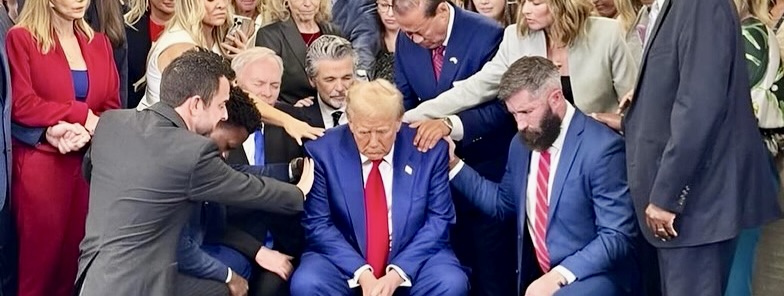
How I love Jimmy Carter!

How I love Jimmy Carter!

As an eighth grader I entered segregated St. Mary’s of the Assumption school for two months at the end of the school year. My family had come apart in the Chicago suburbs and one of my sisters and I were sent to live with relatives in Upper Marlboro, Maryland. I’d never been in a school separated by race. The only time whites and Blacks mingled at St.Mary’s happened on the playground where we defiantly integrated ourselves into two mixed-gender baseball teams.  

For as long as I can remember my sisters and I followed our parents into the very last pew of church for Sunday Mass. They timed it so we arrived about twenty minutes late, in time for the Consecration of the Eucharist, the attendance marker at the mandatory once a week Mass.

As we approached our first Sunday at St. Mary’s Church in Upper Marlboro, my sister and I naturally headed for the pews in the back of the church. A white man ushered us out of our seats into a pew toward the front. Only Blacks sat in the back.The Sunday my mother visited us she pushed the white usher aside and insisted on sitting in the back. Her hangovers were far too severe to suffer through the entire hour of a full Mass. She needed a quick exit after the obligatory Communion. 

One day St. Mary’s eighth grade class was bussed twenty minutes down the road to Andrews Air Force Base to greet President Dwight D. Eisenhower. Blacks in the back of the bus. Whites in the front. We’d been given little American flags to wave at the president as he deplaned Air Force One. It was 1959 and my first experience at an event for a President of the United States.

Sixteen years after my St. Mary’s grade school graduation, I read about Jimmy Carter’s campaign for president in Time Magazine. Carter, as governor, in a surprise to fellow Georgians had denounced racism and segregation. I wrote to him in Plains, Georgia, applauding his positions and volunteered for his presidential campaign. He sent me a hand written thank you note with a postscript to contact the local Democrats in my small New Jersey town. 

Around that time, my son’s hockey coach was mounting his own campaign for mayor. Eventually the coach endorsed Carter and opened a local campaign office. To the great consternation of my then-husband, I spent all my spare time campaigning for Jimmy Carter. That husband expressed his silent scorn by laying on the couch drinking cases of beer. I, in turn, after a year of abstinence in Alcoholics Anonymous, slipped into the basement with quarts of vodka to escape what looked like a doomed existence.

We both stayed sober for our last family excursion—waving little American flags outside the U.S. Capitol for Jimmy Carter’s Inauguration in January, 1977.  

A month later I finished my last drink and got a divorce. In years since, I’ve organized events for many Democrats and eventually worked for President Bill Clinton. I’ve never failed to distribute small American flags to the diverse crowds. 

Shake it up Baby

Shake it up Baby

I wiggled around so much to the tune of The Twist as a teenager that I’m sure that’s why I developed a waist.

A new state, new school, new friends, and new music greeted me in 1960 as a high school freshman. Uprooted from recreational softball and winter bowling leagues in suburban Chicago to the raucous cigarette-smoking, boy-loving, rock ’n’ roll Jersey Shore, I surfaced as a backbeat cool cat in my new life.

My family had one black and white television tucked into the corner of the living room. After school, if my mother had vacated her usual spot curled up on the couch, my two sisters and I turned up the volume to the teenage dance show American Bandstand. We twisted and shouted and mimicked all the latest moves until my mother returned from the corner tavern with her New York Times.

The Twist and its offspring—Let’s Twist Again, Peppermint Twist, Twisting the Night Away, kicked up in my head constantly. When I got bored in class, I’d conjure the music and imagine myself dancing. My insides jumped and jived as my feet moved my body effortlessly through the school from class to class. Every once in a while friends would break out singing The Twist, and dance in the corner of the cafeteria, like a Hollywood movie.

Five blocks from our house in Sea Girt, New Jersey, the Episcopal Church, St. Uriel the Archangel, opened our own American Bandstand in the parish hall. Every Friday night, a disc jockey played the latest rock ’n’ roll records. We all showed off the dance moves we’d learned from watching the TV show. When The Twist came over the loudspeakers, kids swarmed the dance floor singing “c’mon baby, let’s do the twist…”  Learning together to syncopate our wiggly feet and swiveling hips, we gained confidence for life at St. Uriel’s.  Everyone starred in their own movie.

Twisting the night away. St. Uriel’s canteen, Sea Girt, NJ

Dancing the twist killed the era of partner dances like the foxtrot, cha cha and the jitterbug. How we were able to get away with dancing like Chubby Checker to African-American music in a suburban church hall is a mystery to me. Did the white church elders realize the sexual innuendos and racial taboos in the simple lyrics…round ‘n around ‘n up ‘n down we go again? Did they see our awakening sexuality heat up in the carnal exhibitions of our new moves?

For sixty years The Twist was the most successful single on Billboard’s list of “Greatest Hit 100 Songs of All Time” . The song is on Rolling Stone magazine’s “500 Greatest Songs of All Time”. It’s been added to the National Recording Registry in the Library of Congress for long-term preservation.

With the ever-reckoning racial sensitivity afoot in the land today, I fear white teenagers might be cautious in taking a song like The Twist captive.  Cultural police might shame us into the false confession of “…no fair appropriating black soundtracks as our own”. Maybe in the next cultural shift the bottomless glee of working-it-on-out will bust through racial borders.

Meanwhile, I thank Jesus for the green light to twist the night away in the 1960s.

Where You From?

Where You From?

Whenever I’m asked where I’m from, I hesitate. It takes a moment to wrangle shame to the ground long enough to scare up the truest truth to tell. The aftereffect of my parents’ inability to halt their rodeo boozing long enough to pay the rent accounts for a long trail of midnight moves.

Annapolis, Maryland; three different homes in Washington DC, two in Terre Haute Indiana, a hotel in Indianapolis, two homes in St.Louis, a hotel in Chicago, homes in Kenilworth, Wilmette, and Lake Forest, Illinois, two cottages in Sea Girt, New Jersey, two New York apartments, a Williamsburg, Virginia boarding school and back to Sea Girt.

At that point, after fourteen or fifteen schools, with a lick and a promise, I barely graduated from Manasquan high school. I spent the last year drinking and smoking in the school parking lot with a posse of flirty no-goods. I dropped out of Monmouth College, married, had a baby, moved to Vermont, divorced, got addicted to loco weed, moved to Point Pleasant, New Jersey, married again, joined a cult, divorced again. When I was twenty-nine years old I moved with my son back to Chicago, where I’ve mostly lived for forty-seven years as a tenderfoot, sober alcoholic. 

What do I say? I like to say I’m from the Midwest, like Bob Dylan, with God on my side. 

            Oh my name it ain’t nothin’

            My age it means less

            The country I come from

            Is called the Midwest

My three sisters say they are from New Jersey as if it has all the romance of Bruce Springsteen’s Jersey Girl.

              So don’t bother me cause I ain’t got no time

            I’m on my way to see that girl of mine

            Nothing else matters in this whole wide world

            When you’re in love with a Jersey girl

There are a lot of cool people at the Jersey Shore. I had a stable of romantic encounters like Springsteen’s Jersey Girl—on the beach, in the backseat of Mustang convertibles, in public bathrooms of raucous bars. Jersey boys drink beer. Morning. Noon. And Night. Not me. I drank gin. They have mononucleosis and venereal diseases. They drive drunk and kill you with sarcasm. And still they seek the girl from the right neighborhood, the right school, and the right family. I’m lucky I made it out of there alive.

In the Midwest of my girlhood, I knocked on neighbors’ doors for a ride to  school when I couldn’t wake up my mother or our car was out of gas. They helped me look for my missing dog, Lefty, in a snowstorm. When that rodeo was dusting up inside my home and danger was afoot, they taught me to hide in trees.

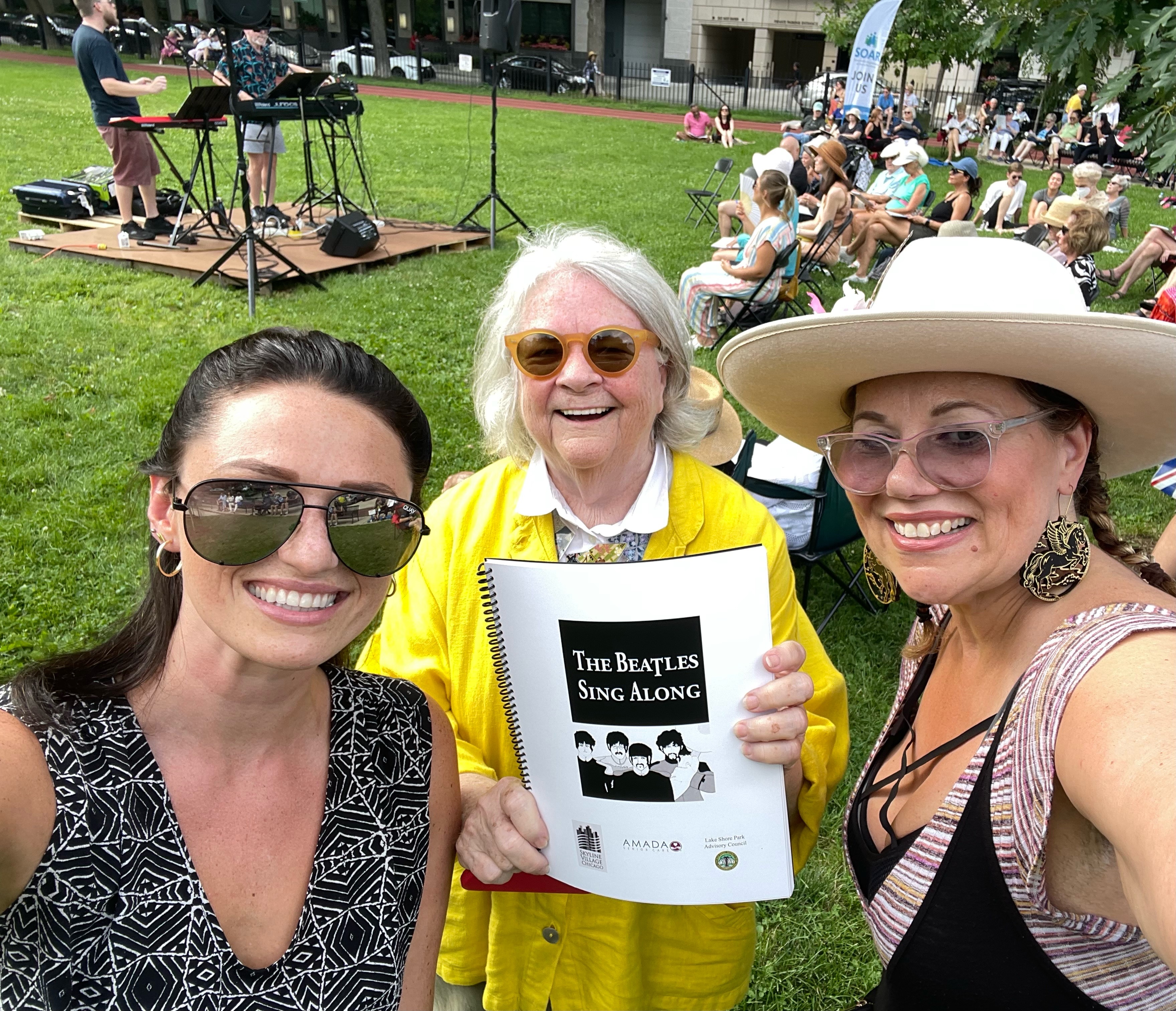
Midwestern fun: Beatles Sing Along

When I arrived back in Chicago to a corral of footloose midwestern strangers in the 1970s, I expected bound-for-glory hellos and found them. A friend from fifth grade I hadn’t seen in sixty-five years read my book recently and sent me a note: “you always belonged to us.”

That’s the Midwest. Where I’m from.

Prayers

(excerpted from the November 2022 Grapevine, the International Journal of Alcoholics Anonymous)

My mother’s cousin, Father Long, asked to meet me on the wraparound porch of the1900s-era resort hotel in Spring Lake, New Jersey.

I had recently left my husband and was living at my mother’s house with my two-year-old boy. Assuming Father Long wanted to force feed me unwanted marriage counseling, I hung a defiant roach clip from an anti-establishment leather string around my 22-year-old neck to amplify my hippie ensemble.

He talked about my marijuana use. “Give it up, for your mother’s sake,” he said. I paused. “Are you talking to her about giving up drinking for my sake?”

Father Long started his career as a disciplinarian of an inner-city Catholic boys’ school. Realizing I was no match for him, I scrambled out of the painted wood rocking chair and made a fast exit. I heard him call to me as I walked away, “I’ll pray for you.” 

Father Long spent a few weeks every year near Sea Girt where I lived during adolescence and young adulthood. That summer his vacation on the edge of the Atlantic Ocean was interrupted by my mother’s cry for help. She wanted him to help me. My mother’s lips never parted to pray and I doubt her thoughts ever enter the spiritual realm. On the way home, I wondered how drunk she must have been to ask for help from her cousin, a soldier of God. Had Father Long been summoned to help other wayward children sprung from our very wayward relatives?

A few years later, I made it to Alcoholics Anonymous and, after six months sober, I was asked to speak at a large AA meeting in Montclair. In the meeting, I talked about my inability to stop drinking, stop smoking pot, stop consuming illicit drugs. I welled up speaking of gratitude for my father, who had brought me into the Fellowship.

My father had sobered up at Towns Hospital in Manhattan. He attended meetings on the Upper East Side and had been able to sustain abstinence during the time I was dying way out there in some other dimension of addiction. We hadn’t seen each other for five years. Then he showed up at the public mental institution where I had been sent after I overdosed at 24 years old. He suggested I go to the AA meeting on the grounds of the institution.

After I wrapped up my six-months sober talk at that meeting in Montclair, a petite, pearly lady stood out from a line of well-wishers. She approached and said, “I pray for you every day.” “What?” I asked. “Do I know you?”

“I go to meetings in New York with your father,” she said. “We helped him when he went to see you in the hospital. We told him what to say, to just share his story, what it was like, what happened and what it was like now. Like we do with any other alcoholic—and suggest you go to meetings. A lot of us have been praying for you for a long time.” 

 “And here you are.” 

That was the summer of 1971.

___________________________________________________

NOTE: Father Long was removed from the priesthood in 1995 for sexual abuse. He’s on the Pennsylvania, Maryland and Washington DC, lists of accused priests. He died in 2004.

Letter to the Boyfriend

Letter to the Boyfriend

I found your book from the early ’90’s the other day. It’s the mystery about martial arts, ritual tattooing, sumo wrestling and a murderous Japanese crime syndicate. Mysteries are my favorite genre and I’ve read my share of torture and ritual killings, but no book ever frightened me more than yours.

Remember when you came to see me in Washington on your book tour? You phoned to ask if you could come over to my place. How did you know I wasn’t married? When I said no, you insisted on meeting me in the lobby of your hotel. Why were you staying so close to where I lived?

“Ok, but I’m not going to your room.” I said.

We sat in the hotel bar revealing certain truths of our lives from the past twenty-five years. Neither of us drank. You, of course, insisted I come to your room for a copy of the book. I relented, armed with my pocketed cell phone. You said I broke your heart when we were together one teenage summer. A high school teacher suggested you pour out your dejection on paper, which started your writing career. I was surprised, even flattered, to hear you’d written hundreds of pages about me, including detailed sex scenes some of which you duplicated in your novels.

I remember hiding naked with you in the basement of your parent’s Jersey Shore bungalow, listening to the undulating Atlantic Ocean, giggling at talk of marrying, concocting funny names for our children. Once, on the boardwalk, your mother’s eyes locked me down. “Don’t get pregnant,” she smiled. You returned to Philadelphia for senior year. I stayed, and went to someone else. You drove back to the Shore periodically that year, ambushed me at school and home, and tried to snare me into embracing you. You, the oversexed, body-building wrestler. You, the alpha male cornering me with your power. Did you have any sense of how frightening you were?

In your Washington hotel room I tried to avoid answering your demand, but you insisted over and over asking, “You really did love me, didn’t you?” 

“No. I just wanted the experience to write about.” I said.

“But you didn’t write. I did.” You said.

My head burned so hot I stepped outside of my body to cool off. Unaware, you gave a walking monologue on how successful you were, how physically fit you were and how you were taking female hormones to reduce whatever estrogen was active in your body. 

I scrambled out of there without the book.

A few days later multiple copies were stacked up in my neighborhood book store. Isn’t that what you’ve always wanted? For your old girlfriends to see your fruit on display? I bought it. In a straight-back chair at my dining room table I made it through a few nightmarish chapters, then hid the book in a cardboard box.

The book, your book, is now headed to a landfill.

May Day! Mothering Rough Seas

For a few years, my son and I lived at the Jersey Shore with his stepfather, Jack, on the confluence of a fresh water river and a saltwater bay. The east-west Toms River begins in the swamps of the Pine Barrens, widens and swells its way east, eventually slamming into the Barnegat Bay. Sailors love the Toms River, especially during the summer’s prevailing southerlies.

I am not a sailor. 

In our family, swimming, passed down from one generation to the next, was a right of passage for a three-year old.  Water is in our blood. Our sandy backyard, bulkheaded rich brine that nourished vibrant sea creatures and, in turn, fed migratory bird colonies. Life on the water with my inquisitive six-year old was pure joy.

Jack arrived home one day with a used polystyrene Sunfish trailing his ’65 Mustang. For fifty dollars, the previous owner threw in a booklet on ‘how to sail’. A 1971 ad in Boating magazine called the thirty pound Sunfish the “Volkswagen of sailboats. A perfect learner’s boat” 

I called it a styrofoam bathtub.

Joe and I practiced our new book-learned sailing skills, 100 feet offshore, moored to the bulkhead. On our first untethered day at sea, Joe rigged the sails. We lulled away the dead calm until Joe spotted our German Shepherd swimming our way. As she approached the boat, I stood up, pointed toward shore and shouted “go home!” Which of course she did. She was, after all, a German Shepherd.

The next time Joe and I unmoored, we sailed expertly into the middle of the widest part of the river. We took turns at the tiller, successfully jibing and tacking as the wind took us west. But then we tacked to come back downriver. The sweet southerlies that had funneled us upriver suddenly turned on us like a mad dog turning on its master. The rogue wind bared its teeth. Thunderclouds whipped up the tide. And the sail luffed out of control. We. Were. Trapped.

The boat, too light for wind-churned waters, threw us around like a sea monster. I reassured Joe we were safe since we were both good swimmers. 

“We can’t leave the boat,” pleaded Joe.

“We won’t!” I assured him. But truth is, he’d seen the thought to abandon the boat cross my brow. I could swim to shore with one arm around Joe’s chest but I couldn’t pull the Sunfish with the other. 

Private docks, woods and marinas dotted the riverfront. I spotted a sliver of sand and rowed furiously. We pulled the boat up, tied it to a tree and ran to the door of a stranger who drove us home. The next day the Coast Guard towed our Sunfish home. 

“No markings on this thing,” the officer said. 

“You should name her ‘May Day.’”

At twenty-seven years old, I had no reason to believe motherhood would come naturally. All my choices to that point had been daring, radical, reckless.  Only four years before, I’d taken LSD, left toddler Joe with his father and trekked to Woodstock in a station wagon full of Rolling Rock chugging hippies. I was separated from them on the first night while swooning over Richie Havens’ performance of “Freedom”. During the muddy aftermath, I smoked opium with a stranger and hitched a ride home with him to New Jersey.

Ancestral maternal instincts swelled up out of nowhere that first day battering around in the Sunfish on the roiling Toms River. No matter how afraid I was, I had to show no fear, lest my six year old become traumatized and frightened by open water for the rest of his life. 

“Let’s try again,” I announced one day and we eagerly sailed into the prevailing southerlies on a sunny calm morning. Upriver, nature turned against us again.

“We need help,” Joe shouted in the sea spray. And we beached the boat once more.

Our sailing adventures made for wild-eyed good stories with our friends and family, but I feared my recklessness may have given Joe a subconscious dread of the sea  into adulthood.

I needn’t have given it a second thought. In his fifties now, Joe and his family leave their midwestern flatlands to vacation on tropical seas—snorkeling, bodysurfing and scuba diving. 

But.

No sailing.