Is Scott Galloway out of Touch?

FeaturedIs Scott Galloway out of Touch?

For the first time in my life, I attended a Sunday service at a Unitarian Universalist Church, to see Chicago’s mayor, Brandon Johnson, in dialog with the pastor. I was curious to hear what this progressive Black mayor had to say to a progressive Northside (White) church.

The pastor began the service with an announcement.

“The Unitarian Universalist Church was established by and for people who do not believe in hell.”

“Whaat?” I was so startled I hardly heard the rest of the preamble. I don’t believe in hell. No one I know believes in hell. But I’ve never heard nor would I ever expect to hear such good news from any church pulpit. 

But wait, there’s more good news! The “UU’s” reject original sin, believe in a God who loves and redeems all human beings, and trains congregants in social justice work. These are my beliefs too.

The bias I’ve had against the Unitarian Universalist Church stems from old thinking that Unitarianism is a heretical religion because they don’t display a cross. Where did I get that crap? Since I’ve been attending a Presbyterian Church for over 45 years, it must have slipped into my head when I was half asleep some Sunday morning. 

Speaking of old ideas, on Friday, December 5, podcaster Scott Galloway responded to a young man who asked:

“How do I get more involved in politics?”

Galloway said “… because young people don’t vote, old people keep voting themselves more money, right? $40 billion child tax credit gets ripped out of the infrastructure bill, but the $120 billion cost of living adjustment for Social Security flies right through.

…our old people have figured out a way to vote themselves more money, and the fact that people under the age of 18 don’t vote, the budget reflects values, and our values are that we don’t really love our children.”*

This is a typical Scott Galloway motivator: money. He will happily reveal how much he’s worth and how he manipulated the modern system to get there. But his statement pitting the young against the old using the antiquated idea that we old citizens are sapping federal dollars from the young shows a decided lack of sophistication and reality. 

First of all, we want young people to succeed. We were young Pete Buttigieg’s biggest voting bloc, long before he announced his Gray New Deal in Iowa 2020. We vote for SNAP and child tax credits. We volunteer at food kitchens, tutor at public schools, babysit our grandchildren and are worried about ours, yours and future generations.

Secondly, we pay. We will pay the government $202.90 a month in 2026 for Medicare Part B, which covers doctor’s visits. That’s a 9.7 percent increase from 2025. We count on the Social Security Cost of Living Adjustment (COLA) to offset that Medicare increase. But in 2026, the Social Security COLA is only a 2.8 percent increase, posing a hardship for Social Security recipients who live check to check in this era of (non) affordability.

Third, don’t we all know that the way young people get involved in politics is to volunteer? What? Is that just a Chicago thing?

After 40 years, curiosity brought me, 79 years old, to an unexpected new idea about the Unitarian Universalist Church. 

Let’s hope Scott Galloway, 61years old, becomes curious enough to come to a new idea about how the real world works.

______________

You can find Scott Galloway’s email address here:

*The Prof G Pod with Scott Galloway: How to Get Involved in Politics, How Scott Galloway Writes, and How He Follows the News, Dec 5, 2025https://podcasts.apple.com/us/podcast/how-to-get-involved-in-politics-how-scott-galloway/id1498802610?i=1000739823645&r=196.38 This material may be protected by copyright.

Texas Goodness

Texas Goodness

Something fluttered around me, as if I’d stepped into a web of butterflies. But I hadn’t. Butterflies were off in the distance. On the Nature Boardwalk surrounding the marshy South Pond in Lincoln Park I was soaking in the August-blooming bubblegum-colored big-flowered swamp mallows. And there on a daisy branch sat a goldfinch. And another, on a farther branch. Hidden in the yellow coneflowers were a few more, pecking at seeds. Goldfinches had entered my airspace as they headed for the wild prairie flowers at the swamp’s edge. Goodness nurturing goodness.  

My held-breath whispered, “You know, Regan, God did not have to give us the goldfinch.” At that moment, as others before it, I believed in God. The previous morning, fearing all goodness had vanished from the earth, I assumed God, like the butterflies, had flittered off in the distance, out of sight, out of the picture.

I lost my faith in goodness for the umpteenth time the day President Trump told Texas Governor Greg Abbott to redistrict Texas in order to gain five more gerrymandered Republican Congressional seats. Americans, who vote with their pockets, are realizing everything they buy to survive in this world since Trump became President has skyrocketed. Because of that, commentators suggest Trump is afraid we’ll all vote against his MAGA party in the 2026 mid-term elections yielding more Democrats in Congress. Cynics say Trump needs more Republicans in Congress in case he declares an “election emergency” and tells Congress to appoint him for another term. 

No one need explain redistricting to me. In the 1980s I worked in the Illinois legislature where computerized gerrymandering was invented in the basement. Drawing legislative lines to benefit Democratic incumbents was de riguer, not just acceptable, but expected. No one uttered the word gerrymander then. Today, Illinoisans are surprised to hear Republicans scoffing that their state takes the cake on gerrymandering. The secret is out.

Republican Governor Abbott yielded to Trump’s demand. He introduced a newly drawn map with the five added Republican Congressional seats to the Texas legislature. The Democratic Texas lawmakers promptly left the state. The Texas legislature needs those Democrats in the Austin capital to make up the necessary quorum to vote on that map. 

And those Texas Freedom Fighters, as they’re described at Jesse Jackson’s Rainbow PUSH Coalition, are housed in a high-security hotel outside of Chicago. They’ve had bomb scares and death threats. They cannot move around without security. I can’t think of a lower hell than being far from home stowed away in an exurb hotel with no end in sight.

One of the exiled Texans, James Talarico from Austin, attends a Christian seminary to ground himself in the fight against White Christian Nationalism that’s roiling the Texas legislature. A nurturing goodness, he speaks of hope and love and responsibility to the United States.

These Texans, these democracy heroes, are saving us from the worst of gut-wrenching trumpism. When the day comes to proclaim their victory, let’s stroll around the Nature Boardwalk among the goldfinches, daisies and butterflies, nurturing goodness. 

Maybe then God will come back into the picture.

More about James Talarico

Contribute to the Texas Democrats

Cold Inaugurations

As an eighth grader I entered segregated St. Mary’s of the Assumption for two months at the end of the school year. My family had come apart in the Chicago suburbs and one of my sisters and I were sent to live with relatives in Upper Marlboro, Maryland. Whites and Blacks mingled at St.Mary’s only on the playground where I pitched in the integrated baseball games.  

On our first Sunday at St. Mary’s Church, my sister and I headed for the back pews. A white man ushered us out of our seats toward the front. Only Blacks sat in the back. The Sunday my mother visited from her temporary home in New Jersey, she pushed the usher aside and sat us all in the back. Her hangovers would not allow suffering through the entire hour of the Mass. She needed a quick exit after the obligatory Eucharist and delighted in integrating the back pew. 

One day St. Mary’s eighth grade class was bussed down the way to Andrews Air Force Base to greet President Dwight D. Eisenhower. Blacks in the back of the bus. Whites in the front. Having so little experience with segregation, I was sure it was wrong but had no idea how to take a stand. I wished my mother had come along to integrate the bus. We waved little American flags at President Eisenhower as he deplaned Air Force One, Blacks lined up on one side, whites on the other. It was 1959.  

Sixteen years later in a sleepy Jersey Shore borough, I read about Jimmy Carter’s campaign for president in Time Magazine. What caught my attention was Carter, as governor, in a surprise to fellow Georgians had denounced racism and segregation. I sent a note to Jimmy Carter, applauded his positions on race and volunteered on his campaign. He sent me a hand written thank you note. 

When we received an invitation to Carter’s Inauguration, there was no question that my then-husband and nine-year old son would head to Washington DC for the January 1977 swearing-in. Sitting high up on bleachers on the shady side of the Capitol, it was as cold as any day I can remember. Twenty-eight degrees with a wind chill to equal fourteen.  


My grandchildren, C.J. and Kirby, were 10 and 12, when we flew from Chicago to brave twenty degrees with 1.8 million others for Barack Obama’s 2009 inauguration. We stood for hours on the frozen ground by the Native American Museum on the Mall. Every once in a while I’d ask my shivering grandchildren if they wanted to go inside. No they didn’t! The clutch of strangers that formed in our section treated us like family—retrieving packs of hand warmers from a far-away tent for the inside of our mittens and boots.

It was sunny. Cold. And glorious.

Obama quoted Founding Father Thomas Paine in his in Inaugural address. 

”Let it be told to the future world … that in the depth of winter,  when nothing but hope and virtue could survive … that the city and the country, alarmed at one common danger, came forth to meet.”


The DOGE and Aging

The DOGE and Aging

Adlai Stevenson III (1930 – 2021) entered the 1982 race for Illinois governor just as I had become unemployed. My only memory of that forsaken job, like all the others, is my shameful obsequiousness to the forgettable male boss. 
 
A journalist friend, Paul Galloway (1934-2009) interceded on my behalf to the Stevenson campaign for a volunteer position. Yes, that was necessary. And still. The sublime expression, “We don’t want nobody nobody sent,” originated in a Chicago ward campaign office. Campaigns still scrutinize volunteers with more than an eye roll. Because of my juice through the local newspaper, people were cautious about what was said around me.

I floundered around the office of Adlai Stevenson’s wife, Nancy, who was usually out campaigning. One day, I had the great fortune to be tagged to drive her to Oak Park for an event. That fluke set off a campaign-long assignment as Nancy’s driver.

Nancy and I regularly stepped into community rooms where older adults were having lunch through the federal Meals on Wheels program. Older women would clasp Nancy’s wrist, pull her ear close to their lips and whisper messages for her to take back to her husband. The Meals on Wheels crowd assumed Adlai III was his father, Adlai II, the governor when most of them were young. Nancy, who had a gentle and keen understanding of aging, let most of them hold this holy untruth. She displayed genuine kindness in her friendly interactions with old people who were in obvious cognitive decline. This helped me admit my own subconscious bias toward the aging. My ageism has changed overtime, especially now that I’m old and experience age discrimination against myself and my friends.

Meals on Wheels is funded through the Older Americans Act Nutrition Program which was permanently authorized by Congress in 1972. The purpose is three-fold: 1) reduce hunger, food insecurity, and malnutrition; 2) promote socialization; 3) promote health and well-being by preventing health-related diseases. The Program is available to adults age 60 years and older. Priority is given to low-income individuals, racial or ethnic minorities, rural communities, those with limited English proficiency, and/or those at risk of institutionalization.

One of our campaign stops was a community space in the neighborhood of Hegewich. It is located on the far south side of Chicago, known as the perfect workingman’s neighborhood. When Chicago’s steel mills shut down in the 1980s, the Polish immigrants who’d settled in Hegewich lost their jobs. They also lost their pensions. People survived on government subsistence and odd jobs.

As Nancy began her round of shaking hands, bobbing up and down to lean over to hear the messages of the elderly, she announced, “You know, my husband, Ad, voted for Meals-on-Wheels when he was a senator in Washington.”

Before she could get out another word, a large woman in the corner who looked like a George Booth cartoon yelled: 

“Yeah? Well, he oughta be here now for the corned beef! ‘Cause it stinks!”

“Well, I’ll be sure to tell Adlai!” Nancy shouted back.

Funding runs out on December 31, 2024 for the Older Americans Act and the Meals on Wheels Program. If Congress doesn’t vote to reauthorize the Act, the Nutrition Program will be at the mercy of Elon Musk and Vivek Ramaswamy’s Department of Government Efficiency (DOGE). And they have vowed to eliminate all programs that have not been reauthorized by Congress.

My guess is neither of them have come to terms with ageism.

Falsely Accused

Falsely Accused

Fresh off a Zoom webinar titled Midwest Reparations, I rushed to my local coffee shop for a takeaway to sip during my upcoming current events group.

“12-ounce coffee in a 16-ounce cup?” The White barista asked. That’s my usual, with room for cream.

“Yes, please. What are all these new pastries? Chocolate cake? Key lime pie?”

“Yep, they’re new. All from different bakeries” said the barista.

“I’ll be back later with friends. They. Will. Love. These.” I said.

The Blackroots Alliance webinar that morning enlightened me on reparations projects in the Midwest. These are nascent activities reviving the 159-year-old “40 Acres and a Mule” policy for emancipated slaves that was promised and then revoked during Reconstruction. The initial focus of current reparations projects is research to uncover the descendants of enslaved people and how they’ve been impacted. Non-Black allies join at the end of the process when it’s time to distribute funds. Research is conducted by the harmed community, Black Americans, particularly African descendants, who look through the eyes of the tortured generations of chattel slavery. Non-Black Americans cannot be trusted to do this research since they see through a different lens: the eyes of the colonizers, the enslavers, the guardians of the dominant culture.

With this new information,  I was wondering how I, an old White woman, could fit into the reparations movement as I filled my coffee with half and half and rushed over to my current events group.

The group discussed the news of familiar territory: TFG, the former guy, and his latest legal shenanigans, immigration, climate change, gun control, and the ever-evolving White Christian Nationalism. Afterward, a small group sauntered over to the coffee shop where I’d spotted the new pastries. Six of us pulled up around a small table, coats draped over our chairs, rising one by one to fetch our drinks. 

I was the last one to the counter.

“I’m sorry, we can’t serve you.” said the barista.

“What?”

“We can’t serve you. The manager wants to talk to you.”  I joined my friends and announced what happened. The manager appeared and asked to speak to me privately.

“We can’t serve you because there’s been a report of you using a racial slur this morning.”

“What? What racial slur?

“The “N” word.”

“Well, there’s a mistake. I’ve never used that word in my life.’

“You understand we have to investigate when something like this is reported?”

“Wait. Are you accusing me of this?

“We have to investigate. Meanwhile, we cannot serve you.”

“For how long?”

“For the unforeseeable future.”

“You’re kidding. Look at me. I really don’t have an unforeseeable future.”

My friends were incredulous. ‘You? Boy, have they got the wrong person.’ They were ready to mount a protest in front of the building, signs and all.

In the following days, I connected with the company’s Chief Operating Officer. She apologized and emailed me a store voucher for $150. That’s a lot of coffee.

The coffee reparations, however, failed to dispel the lingering notion that I’m not a credible witness to my own story, that I’m not sufficiently worthy to be believed. How can we expect descendants of enslaved Africans to automatically manifest self-worth after enduring generations of false accusations, lynchings, and pressed-down powerlessness? 

We owe them a lot.

Oppenheimer & Jesus

Oppenheimer & Jesus

This is one of many stories I’ve written about the origin of my existential and nameless fears. As much as I try to analyze a deeper reason for the fears, the stories end up all the same, with a few updates. They seem to write themselves.

______________________________________________________________

In 1949, the Soviet Union started the Cold War by detonating its first atomic bomb, blockading Berlin, and pushing its way into Poland and Eastern Europe. The voices I heard swirling above my head at cocktail hour in our Washington, D.C. home implied the Russians were coming for us. 

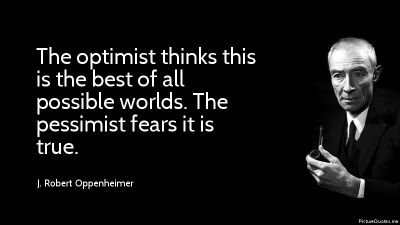
Poor old Robert Oppenheimer. The father of the atomic bomb wanted nuclear weapons banned after President Truman used A-bombs to murder 180,000 Japanese civilians in 1945. Oppenheimer helped design an air defense of the United States against atomic attacks from the Russians through the National Civil Defense Administration. Common folk wisdom said only cockroaches would survive a nuclear attack. Nevertheless, Oppenheimer’s design required all school teachers to conduct impromptu air raid drills. When teachers shouted an impromptu Drop! us kids jumped out of our seats, crawled under our desks, fell over our knees, and covered our heads. The nuns added the instruction to recite Hail Marys aloud while on the floor. 

Holy Mary, Mother of God, pray for us sinners, now and at the hour of our death. Amen.

At seven years old, I didn’t understand the difference between a drill and the real event. I went to my death every time I huddled under that desk. But, I was not. afraid. to die. 

This is it, I’d pray, “I’m going to be with Jesus.”

I believed Mother Mary would grab me in her arms like she did baby Jesus and take me to heaven. Why did they pray to avoid such ecstasy? What were they so afraid of?

By the time third grade rolled around, I got used to not dying under the desk. Images of children who lived after their exposure to the atomic bombs in Hiroshima and Nagasaki appeared on our small black-and-white television. I feared that there were worse things than death. 

Our Catholic school teachers taught that Communists who ruled Mother Russia prohibited the celebration of the Mass. So we had to pray for Russia while fearing she’d annihilate us at any minute. In those days, at home, my two sisters and I made our own breakfasts and school lunches because my mother’s alcohol intake rendered her unconscious in the mornings. We often gathered around her bed, trying to figure out if she was alive. Holy Mary, Mother of God. One of us would place a finger under her nostrils to feel her breath until, with one exhale, she’d confirm that at least one of our fears was unfounded. 

Those early fears seeded my memory and have inoculated me against the mau-mauing of present-day alarmists, naysayers, and fear-mongers who sermonize about the death of our democracy. Yeah-but’ers and tsk-tsk’ers are relentless in efforts to convince me the country is hopelessly overrun with insurrectionists, sexual predators, corrupt politicians and gun-toting scofflaws.

And what if these are apocalyptic times? So what? So were the 1950s, the 1960s, and 1970s.

Mother Mary may be out of commission these days, but I still dream of being with Jesus.