The Gift of Wisdom

The Gift of Wisdom

When my dog died of liver cancer, I thought it was my fault. Why, you ask? Because I didn’t keep him from eating sidewalk nasties. What the hell? Did I think I was that God I no longer believe in? You know, the God who causes pain and suffering?

Victim-blaming runs deep with me. I’m good at it. Whether I blame myself for dead dogs, misfortune, and health problems or I blame others for theirs, the first thought upon hearing bad news is, what did I do wrong? What did they do wrong? When a friend told me she was hospitalized for an irregular heartbeat, my reaction was, “How does that happen?” Implying she did something to cause it.

Before the pandemic, in my downtown Chicago neighborhood, thugs drove around casing out pedestrians, jumping out of cars, knocking vulnerable people to the ground, and stealing their belongings. My neighbor reported getting mugged in broad daylight while walking her dog. My reaction? 

“Why weren’t you wearing that whistle I gave you?” As if she could have done anything to stop three teenage boys from shoving her up against a brick wall and ripping into her clothes to find her iPhone. 

At community meetings, police officers gave primers on how to protect yourself. Among the suggestions was to attach a colorful whistle to your coat, not necessarily to use, but as a deterrent. I had a few bright red whistles from RAINN.org, the national anti-sexual assault advocacy group, so I called and asked for more. 

“We don’t have those anymore. Our survivors thought they were a sign of victim-blaming.”

Whoa, I didn’t see that coming. I get it, though. Victims of sexual assault are hyper-aware of all the ways society, either by word or by thought, says, “That’s what you get for wearing those clothes or walking on that street at 3:00 a.m. or not wearing a whistle visible to your attacker.“

Over twenty-five years ago, I became a victim of fibromyalgia, a mysterious inflammation of the tissues connecting the muscles to the bones. That’s not the exact definition. I use that description because it’s easy for me to visualize. Contrary to all medical knowledge, I have a notion that if I can visualize it, I can heal it. I get relief with meditation, movement, and writing, but there’s no cure, no healing. I think I can fix it because I blame myself for causing it.

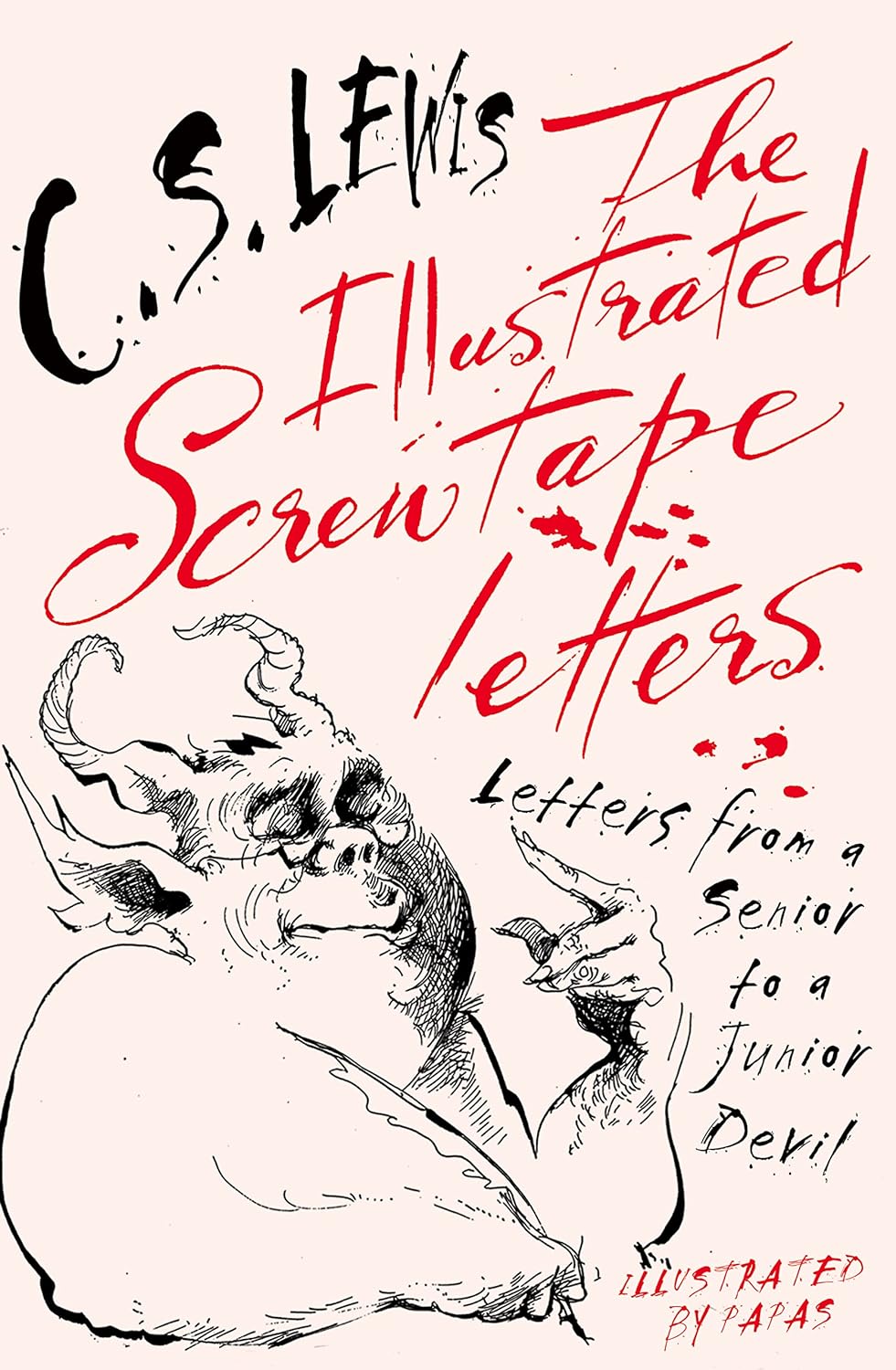
Deep down, or really just below the surface, I cannot accept the randomness of bad things happening to good people. I want reasons and meanings—some way to help me control the fear that I’m next. This psychology is my Screwtape, the Tempter leading me into madness. Dr. Google tells me it’s a natural phenomenon. I’m committed to seeking a way forward through virtuous self-care. But that, too, is Screwtape tempting me into believing I alone can fix it.
Living untethered to reasons and meanings is like George Clooney detaching himself in the movie “Gravity” to save Sandra Bullock. It requires courage received only through grace.

Bibliotherapy Transition Team

A few years ago I finally transitioned away from chronic pain through bibliotherapy. Dr. John Stracks, the CEO of my Bibliotherapy Transition Team, introduced me to the writing-for-healing workbook, Unlearn Your Pain. 

One of the book’s first lessons asked me if I had any particularly stressful or traumatic events in my childhood. If I answered yes to that little ditty, my next assignment was to describe any of the following: deaths, moves, taunting, teasing, emotional or physical abuse, changes in schools, or changes in family situations. 

Every time I completed a paragraph, pain slipped away not only from the sciatica ripping down my leg but also from the stenosis at the base of my backbone that had been squeezing the life out of the nerves in my spinal canal. The mysterious agony of fibromyalgia began to subside as well. 

I was writing away my pain.  

The next part of my transition team came with a memoir writing group. On my first day I came with no writing of my own and listened to stories about the family cat, road trips to the West and baking cookies with Grandma. My stories were about an alcoholic family that turned out alcoholic children. I had no fond memories of family vacations or beloved family pets. I slid out of that classroom into the endless dark corridor. A class member caught up to me and urged me to come back the following week. 

“I can’t write like that,” I said, “my writing is too dark.”

“Everyone has their own story to tell. Come back and tell yours.”

And so I did. My classmates read their written stories out loud. I heard my words fall loosely on the table in front of me. Shame kept me from lifting them up and out. Pain relief continued at a more dramatic pace as I wrote and shared stories of my distressed childhood. A year or so in, my words managed to reach across the table to the writing teacher, then to Veronica, then down one side of the table and up the other. I created my own blog and posted my weekly writing for public view. Public! Readers nurtured me with their comments, wanting more. More! 

“You should write a book,” friends said.

 “A book? Never thought of it,” I said.

And then I did.

Writing teacher Beth Finke included one of my stories in her memoir, Writing Out Loud. When I submitted a writing sample to Tortoise Books, publisher Jerry Brennan emailed, “I heard you read your story from Beth Finke’s book at the Book Cellar. Send me your manuscript.” 

Manuscript? I had written 500 words a week for four years but I didn’t have a manuscript. Beth told me to find a big room, spread all my stories out, then pick them up one by one in chronological order and number them. 

“Then you’ll have a manuscript,” she said.

From Jerry Brennan’s edits, I revised, revised, revised. Each sentence brought its own ache. This twenty-five-year old physical torment transitioned to an end with the final chapter of In That Number.

I have enormous gratitude for all those beautiful and gracious souls in my transition team.

You read that out loud in class?

bethfinke's avatarSafe & Sound blog

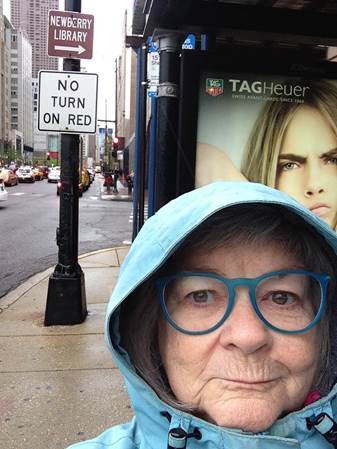
Regan-Burke That’s Regan, today’s guest blogger, peaking out of her hood at a Chicago bus stop.

It was a lucky day for me when Regan Burke turned up for one of my memoir-writing classes. A civil rights activist, Regan was a White House staffer during the Clinton presidency and has colorful – and moving – stories to tell. She files away unusual words she hears and cleverly shoehorns one or two of them into each essay – you’ll find one here in her guest post about the value of honesty in memoir-writing.

There’s a Lacuna in My Story

by Regan Burke

Sometimes I email the essays I write for my memoir classes to a good friend.

She tends to find my work imprudent and irresponsible.

”You read that aloud in class?” she’ll ask. “Yep,” I answer. “I did.”

I have a strong motivation for writing the truth. A book by Dr…

View original post 449 more words

Biking Around the Bomb

 Bicycle Grace by Regan Burke

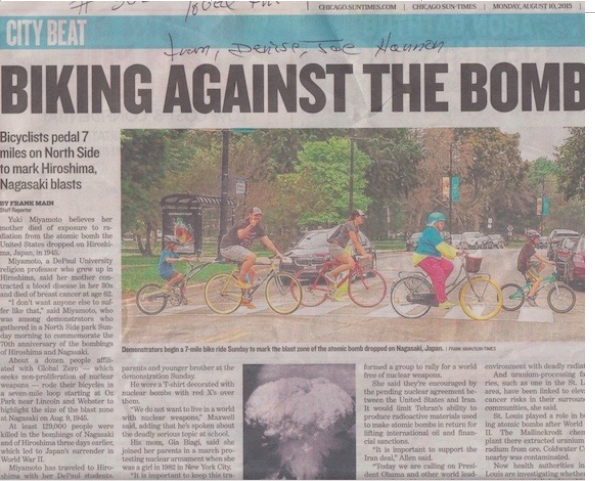
The photo shows 2 athletic young men, 2 children and me, a plump old lady, pedaling east across Stockton Drive, a tree-lined street that sidewinds Chicago’s Lincoln Park Zoo.

The photo appeared in the City Beat section of the Chicago Tribune August 10, 2015 with the headline, “Biking Against the Bomb.” The caption reads “Demonstrators begin a 7-mile bike ride Sunday to mark the blast zone of the atomic bomb dropped on Nagasaki, Japan.”  My bike has a big yellow front tire, a black whitewall rear tire and red basket. I’m sporting neon pink ankle-length trousers, lime-green sneakers, and a “Bike Around the Bomb” extra-large short-sleeve turquoise t-shirt snugly over my long-sleeve lemon shirt. The t-shirt just happens to be the same color as my helmet and eyeglasses. My bike posture befits a 69-year old short grandmother with bulging thighs and donut midriff.

I stand out in the photo.

You see my hands gripping the handlebars of my beloved town bike. What you don’t see is God caressing those hands with high-fives. The day this photo was taken, that bicycle grace relieved me of the physical pain of moral certitude.

When I was in my 50’s, I worked in downtown Chicago overlooking the Daley Center. Every month a group of bicyclists, Critical Mass, gather in the plaza before their raucous ride through city streets. How I longed to join them! But I’d been derailed from lifelong bike-riding by fibromyalgia. After I retired I downshifted into wheelchair-bound despondency.

Suicidal thoughts took me to the velodrome of alternative therapies. Round and round I went to anyone, anything that might relieve my suffering mind-body. Eventually meditation led to feldenkrais, writing therapy, pain relief, and a bicycle.

I’ve marched in peace demonstrations since the 1960’s so “Biking Against the Bomb” was the perfect foray into group cycling since I regained mobility. Educated by nuns, I learned about peace huddled under my 1st-grade desk hiding from a possible atomic bomb. Pray for peace. God required peace by every means possible.

President Truman had written his own moral code a year before I was born. In August, 1945 he murdered 180,000 Japanese civilians with atomic bombs. An unnamed fear took root in my fetal shroud and sprouted in the dappled shade of A-bomb-talk throughout my youth. This genetic consequence chained me to the spokes of peace activism.

At my meditation group I tried to describe my day of bicycle grace but spiritual gobbledegook fell out of my mouth and I self-consciously coasted to the end of my sharing with, ”I think I could ride with Critical Mass now.”

Group-think chattered: “Oh no. Not them. Scofflaws. Sail through stop signs. Wheel around pedestrians. Weave in and out of traffic. Lawless.”

I said, “But they have a police escort.”

“Yeah. Unruly fringe group. Take over the street and piss off drivers.”

I went home, opened my computer, defaulted to moral certitude and clicked “going” on the next Critical Mass event listed on FaceBook.Biking