Something fluttered around me, as if I’d stepped into a web of butterflies. But I hadn’t. Butterflies were off in the distance. On the Nature Boardwalk surrounding the marshy South Pond in Lincoln Park I was soaking in the August-blooming bubblegum-colored big-flowered swamp mallows. And there on a daisy branch sat a goldfinch. And another, on a farther branch. Hidden in the yellow coneflowers were a few more, pecking at seeds. Goldfinches had entered my airspace as they headed for the wild prairie flowers at the swamp’s edge. Goodness nurturing goodness.
My held-breath whispered, “You know, Regan, God did not have to give us the goldfinch.” At that moment, as others before it, I believed in God. The previous morning, fearing all goodness had vanished from the earth, I assumed God, like the butterflies, had flittered off in the distance, out of sight, out of the picture.
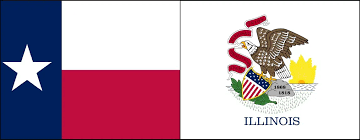
I lost my faith in goodness for the umpteenth time the day President Trump told Texas Governor Greg Abbott to redistrict Texas in order to gain five more gerrymandered Republican Congressional seats. Americans, who vote with their pockets, are realizing everything they buy to survive in this world since Trump became President has skyrocketed. Because of that, commentators suggest Trump is afraid we’ll all vote against his MAGA party in the 2026 mid-term elections yielding more Democrats in Congress. Cynics say Trump needs more Republicans in Congress in case he declares an “election emergency” and tells Congress to appoint him for another term.
No one need explain redistricting to me. In the 1980s I worked in the Illinois legislature where computerized gerrymandering was invented in the basement. Drawing legislative lines to benefit Democratic incumbents was de riguer, not just acceptable, but expected. No one uttered the word gerrymander then. Today, Illinoisans are surprised to hear Republicans scoffing that their state takes the cake on gerrymandering. The secret is out.
Republican Governor Abbott yielded to Trump’s demand. He introduced a newly drawn map with the five added Republican Congressional seats to the Texas legislature. The Democratic Texas lawmakers promptly left the state. The Texas legislature needs those Democrats in the Austin capital to make up the necessary quorum to vote on that map.
And those Texas Freedom Fighters, as they’re described at Jesse Jackson’s Rainbow PUSH Coalition, are housed in a high-security hotel outside of Chicago. They’ve had bomb scares and death threats. They cannot move around without security. I can’t think of a lower hell than being far from home stowed away in an exurb hotel with no end in sight.
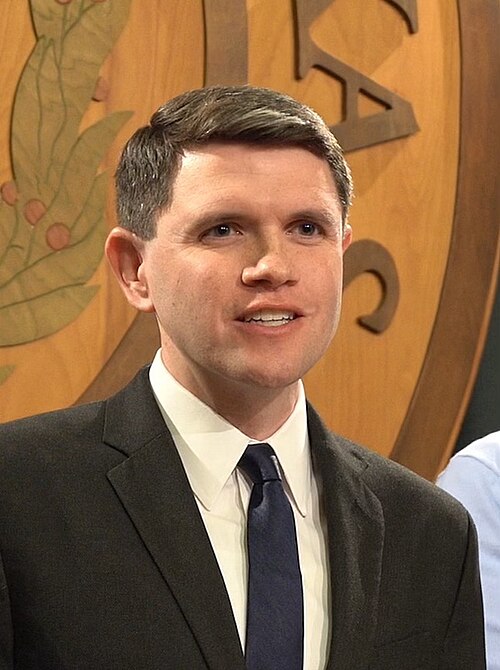
One of the exiled Texans, James Talarico from Austin, attends a Christian seminary to ground himself in the fight against White Christian Nationalism that’s roiling the Texas legislature. A nurturing goodness, he speaks of hope and love and responsibility to the United States.
These Texans, these democracy heroes, are saving us from the worst of gut-wrenching trumpism. When the day comes to proclaim their victory, let’s stroll around the Nature Boardwalk among the goldfinches, daisies and butterflies, nurturing goodness.
Adlai Stevenson III (1930 – 2021) entered the 1982 race for Illinois governor just as I had become unemployed. My only memory of that forsaken job, like all the others, is my shameful obsequiousness to the forgettable male boss.
A journalist friend, Paul Galloway (1934-2009) interceded on my behalf to the Stevenson campaign for a volunteer position. Yes, that was necessary. And still. The sublime expression, “We don’t want nobody nobody sent,” originated in a Chicago ward campaign office. Campaigns still scrutinize volunteers with more than an eye roll. Because of my juice through the local newspaper, people were cautious about what was said around me.
I floundered around the office of Adlai Stevenson’s wife, Nancy, who was usually out campaigning. One day, I had the great fortune to be tagged to drive her to Oak Park for an event. That fluke set off a campaign-long assignment as Nancy’s driver.
Nancy and I regularly stepped into community rooms where older adults were having lunch through the federal Meals on Wheels program. Older women would clasp Nancy’s wrist, pull her ear close to their lips and whisper messages for her to take back to her husband. The Meals on Wheels crowd assumed Adlai III was his father, Adlai II, the governor when most of them were young. Nancy, who had a gentle and keen understanding of aging, let most of them hold this holy untruth. She displayed genuine kindness in her friendly interactions with old people who were in obvious cognitive decline. This helped me admit my own subconscious bias toward the aging. My ageism has changed overtime, especially now that I’m old and experience age discrimination against myself and my friends.
Meals on Wheels is funded through the Older Americans Act Nutrition Program which was permanently authorized by Congress in 1972. The purpose is three-fold: 1) reduce hunger, food insecurity, and malnutrition; 2) promote socialization; 3) promote health and well-being by preventing health-related diseases. The Program is available to adults age 60 years and older. Priority is given to low-income individuals, racial or ethnic minorities, rural communities, those with limited English proficiency, and/or those at risk of institutionalization.
One of our campaign stops was a community space in the neighborhood of Hegewich. It is located on the far south side of Chicago, known as the perfect workingman’s neighborhood. When Chicago’s steel mills shut down in the 1980s, the Polish immigrants who’d settled in Hegewich lost their jobs. They also lost their pensions. People survived on government subsistence and odd jobs.
As Nancy began her round of shaking hands, bobbing up and down to lean over to hear the messages of the elderly, she announced, “You know, my husband, Ad, voted for Meals-on-Wheels when he was a senator in Washington.”
Before she could get out another word, a large woman in the corner who looked like a George Booth cartoon yelled:
“Yeah? Well, he oughta be here now for the corned beef! ‘Cause it stinks!”
“Well, I’ll be sure to tell Adlai!” Nancy shouted back.
Funding runs out on December 31, 2024 for the Older Americans Act and the Meals on Wheels Program. If Congress doesn’t vote to reauthorize the Act, the Nutrition Program will be at the mercy of Elon Musk and Vivek Ramaswamy’s Department of Government Efficiency (DOGE). And they have vowed to eliminate all programs that have not been reauthorized by Congress.
My guess is neither of them have come to terms with ageism.
Hal Lindsey’s doomsday prophecies in “The Late Great Planet Earth,” stoked the born-again Christian fundamentalists in the cult I surrendered to in the early 1970s. One hundred disparate spiritual seekers in Toms River, New Jersey, accepted Jesus Christ as a personal savior, a necessity for inclusion in the Fellowship.
Churchmen directed every aspect of the lives of their blue-jeaned outcasts. Husbands were the heads of the household, women didn’t work. We lived in separate homes but were discouraged from socializing outside the Fellowship, lest we be influenced by 1970s secular humanist ideas — like having credit cards. The proliferation of credit cards, one of Satan’s tools to create a global economy, was a sign of the end times. We boycotted the Bank of America because the bank sought to legalize interstate branch banking, thereby centralizing all the country’s money into a single entity, another Satanic plan, a.k.a. globalism.
Based on his interpretations of the Book of Revelations in the Christian Bible, Hal Lindsey in “The Late Great Planet Earth” sensationalized end-of-the-world Biblical prophecies. He connected them to current events as proof of the coming Rapture where Christians would be plucked from the earth and taken right to heaven, thus avoiding Armageddon. Satan’s plans to form a one-world government and religion, as prophesied, were triggered by the establishment of the state of Israel and the World Council of Churches — both in 1948. Everywhere I looked in the 1970s, I saw signs of the end times: an increase in the divorce rate, recreational drugs, new technology, the gasoline shortage, religious ecumenism, and the birth of the European Union.
When my son joined Little League in the first grade, I sat away from the other parents in the bleachers. I feared the wrath of God if I talked to anyone outside the Fellowship. Church members accepted my volunteering for Jimmy Carter for President in 1976 only because my husband supported Carter. They doubted his born-again bona fides because of his family policy.
After four years, I extricated myself from the Fellowship, left my abusive husband, and drove my nine-year-old son 800 miles west to a new life in Chicago. A group of Christians at La Salle Street Church who had experienced similar religious cults nursed me back to spiritual and emotional health. The ideas of Hal Lindsey dissipated into the ether of bad dreams. After a few years, I no longer looked for signs of the end times.
Until now.
Donald Trump, in a 2017 speech to the Joint Congress, announced he was not the President of the world. Instead, he stated he was the President of America. These words and those of Trump apologist Steve Bannon announcing a nationalistic government free from links to other countries sent a signal to anti-globalists around the world. Alexander Dugin, a friend of Russian President Vladimir Putin, commented on Trump’s 2024 presidential victory, proclaiming that traditionalism won and globalism lost. Alex Jones uses globalism interchangeably with the New World Order and the Deep State. Are these guys aware they’re heeding Hal Lindsey’s warning to resist Satan’s plans for a global economy and one-world government?
In Kenosha, at the door of a new white house in a new white neighborhood with curvy streets, low trees, and developer-landscaped gardens, I knocked on the storm door, bang, ba-bang, bang. A huge white Old English Bulldog slid around the corner from the kitchen. He ran to the front door and barked as loudly as his docile voice would allow. His owner barely held him back.
I shouted through the door, “I love dogs. It’s ok. Can I pet him?” We all smiled, including the dog. He came out to greet me and gently pushed his massive stubby body against my legs.
‘Hi, I’m with the Kenosha Democrats. Have you voted yet?”
“No, we’re voting tomorrow.”
“What’s his name?”
“Arnold.”
“Arnold? Like Schwarzenegger?”
“Yes.” We both cracked up as Arnold dutifully looked one to the other, pleased to hear his name.
“You know, Schwarzenegger just endorsed Kamala Harris.”
Thus, I established my purpose in knocking on her door on a bright white Saturday afternoon.
“I know!” she said. Then she mouthed the words, “I’m voting for her.”
“Oh great,” I whispered, “Thank you.”
As I crossed the street to my next house, a white SUV suddenly sped out of Arnold’s driveway. It stopped in front of me. She rolled down the window and shouted, “I’m for Kamala! Going to vote right now!”
I thought back to her open door and realized someone else had been rattling around in the kitchen. A husband? She couldn’t let her husband know she was voting for Kamala Harris? Is this a sign of renewed influence of Christian fundamentalism?
Anthropologists say that authoritarianism, old-age anxiety, border disputes, memory disorder, pandemic uncertainty, virtual reality, environmental issues, and gender trouble put society in a self-protective liminal state. We now stand in the doorway between the Biden and Trump administrations. The entire Trump presidency may turn into a self-protective liminal state.
Liminal, from the Latin, “threshold,” puts time and space betwixt and between. On liminal days, we often wander aimlessly, unsure where to go, what to do, stare out the window, quiet down. Hush. The past and the future dangle off the edge of time. Do you feel it?
“Why did God dump Trump on us again?” a friend asked, squirming in her liminal state.
“God didn’t do this,” I said. “We did it.”
It began long ago. The anti-globalist cult surrounding Trump follows bunny trails through the woods of end-times literature, movies and evangelists that we have derided, failed to understand, take seriously, refute or diffuse.
Pastor Tom Are of Fourth Presbyterian Church Chicago says, “The church is not always lost in wonder, love, and praise; sometimes, it’s just lost.”
When we step over the threshold, away from our involuntary liminality, into the perfect, friendly, and loving world created for us, we’ll find the wisdom we need to activate our role in the future. Some will join the opposition party. Some will move to Costa Rica. Some will run for office. Some will hide immigrants. Some will help women. Some will march with the saints. And some will find a no-news thin space to wait it out.
While we wait, we can practice letting go of the obsessive hope that the built world of institutions will save us. It won’t. Let it go. Instead, lean on the unseen, the un-built, and the natural world. Eat and sleep.
In the Hebrew Bible, God said to a self-pitying Elijah, “Get up! Eat something!” And after Elijah spent forty days indulging in self-care, God came back and said, “Why are you still here? Get back to it. You’ve got work to do!”
And so we do.
______________________
Reprinted from Interfaith America Magazine, November 14, 2024
In Kenosha, at the door of a new white house in a new white neighborhood with curvy streets, low trees and developer-landscaped gardens, I knocked on the storm door, bang, ba-bang, bang. A huge white old English bulldog slid around the corner from the kitchen to me, the stranger, barking as hard as his docile voice would allow. His owner appeared looking as if she could barely hold him back.
I shouted through the door, “I love dogs! It’s ok. Can I pet him?” We all smiled, dog included, and he came out to greet me with a gentle push of his massive short body against my legs.
“Hi, I’m with the Kenosha Democrats. Have you voted yet?”
“No, we’re voting tomorrow.”
“What’s his name?”
“Arnold.”
“Arnold? Like Schwarzenegger?”
“Yes.” We both cracked up as Arnold dutifully looked one to the other, pleased to hear his name.
“You know, Schwarzenegger just endorsed Kamala Harris.”
Thus, I established my purpose in knocking on her door on a bright white Saturday afternoon.
“I know!” she said. Then she mouthed the words, “I’m voting for her.”
“Oh great,” I said, “”Thank you.”
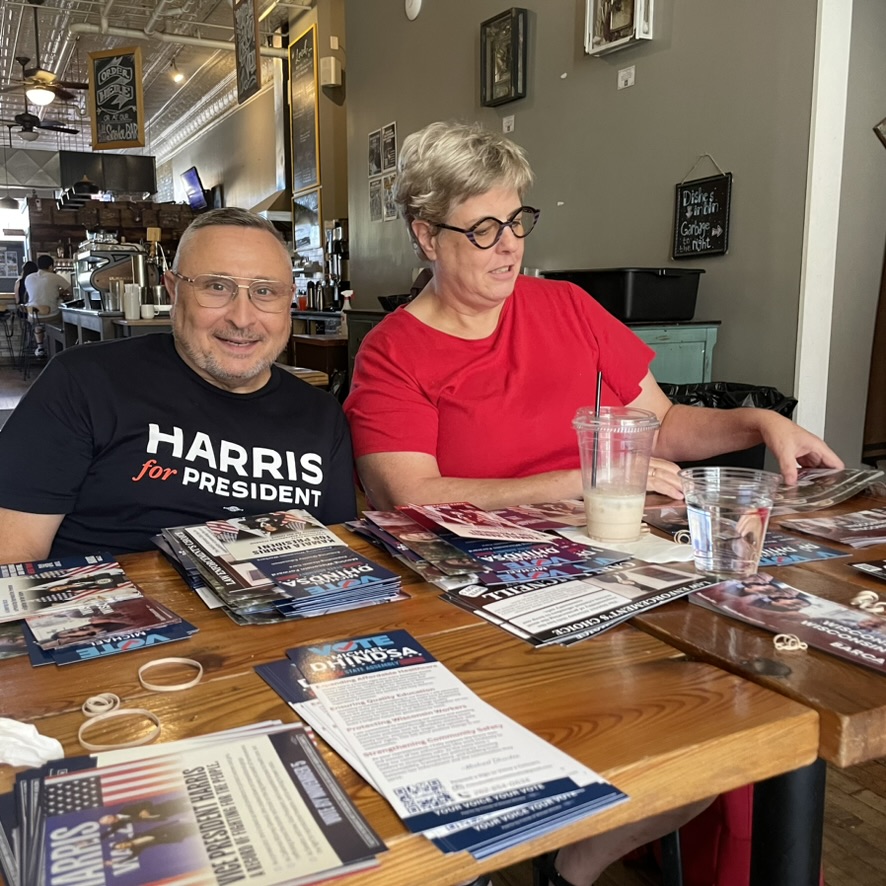
Canvassers use a handy cell phone app, Minivan, to record voters’ responses. The drop down menu lists Strong Democrat, Lean Democrat, Undecided, Lean Republican and Strong Republican. Since my voter didn’t give it her all, I decided she was a Lean Democrat, punched it in and moved on to the house across the street.
As I came back to the sidewalk, all of a sudden a white SUV sped out of Arnold’s driveway and stopped in front of me. She rolled down the window and shouted, “I’m for Kamala! Going to vote right now! Good luck!”
I thought back to her open door and realized someone else had been rattling around in the kitchen. A husband? She couldn’t let her husband know she was voting for Kamala Harris?
This gave me hope. I changed her in Minivan to Strong Democrat. Voting Harris.
Perhaps she represented a political ad where Julia Roberts voiced, “in the one place in America where women still have a right to choose, you can vote any way you want, and no one will ever know,” suggesting women can lie to their husbands about their vote. Apparently Fox News went berserk over this ad, as if spouses never lie to each other.
Today, the day before election day, it hit me how different life will soon be. No matter who wins, I’ll have no more reason to hope — for the vote, for my candidates, that the country will be at peace, or that democracy survives. It-is-what-it-is acceptance will necessarily move in to care for me.
Saturday afternoon trips from Chicago to Kenosha, stopping in the bustling Democratic headquarters then out to canvass voters will halt. My calves will never forget the two-step entrances to every house in Kenosha County. But memories of coffee and sandwiches at The Buzz Cafe on Sixth Avenue will fade.
The Buzz Cafe Kenosha Wisconsin
I do have something to hope for.
Incoming texts and emails will be reduced to a trickle.
Transistor radios first appeared on the shelf behind the cashier at Walgreen’s, alongside the cigarettes, in the 1950s. The purchase price was cheap enough for my mother. I can’t imagine what my life would have been had it not been for the radio.
In our teens, we lay on the floor, smoking pot and singing to the Beatles on the radio. A friend once mused, “our lives would be more manageable if it weren’t for the radio.” Every half hour DJs stopped spinning records and announced the news. Radio news. It stirred me up for life.
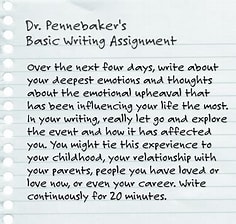
The radio these days is an Amazon Echo. It is set to turn on NPR at 7:00 am in my house these days. On Sundays, I usually ignore a 7:00 am show called Hidden Brain. A neuroscientist interviews interesting enough people, but I just want to hear the news at 8. Recently I put off walking the dog and making coffee when I heard the voice of Dr. James Pennebaker on Hidden Brain. He talked about how people’s language, written and vocal, signals what’s happening inside their heads.
James Pennebaker is a social psychologist at the University of Texas-Austin. He taught me that chronic pain can be healed through expressive writing. His recipe, grounded in scientific research, consists of writing it down. Just write it down. It’s cheap, easy. And it works. My writing teacher Beth Finke and I used to call it bibliotherapy. Pennebaker’s books are sweet old friends. The same goes for Jon Kabat-Zinn’s Full Catastrophe Living, John Sarno’s Healing Back Pain, and Howard Schubiner’s Unlearn Your Pain. Thinking of these now butters my memory with gratitude. I write because these authors taught me words can heal. And, for the most part, they have.
I’m not particularly interested in interpreting the language of my friends. I don’t want to know what’s happening in their noggins as Pennebaker does with his research subjects. No, what’s tasty lately about Pennebaker is what he says about Donald Trump.
He examined Trump interviews from 2015 to 2024 and found a whopping 44% increase in words plated in the past. What’s that mean? Well, usually presidential candidates dish out rhetoric about the future. Pennebaker says Trump whips up such simple words and sentences that he can only be described as “an incredibly simplistic thinker.”
“I can’t tell you how staggering this is,” he told Stat News. “He does not think in a complex way at all.”
I loved hearing this. And there I was again, glomming on to any tidbit that humiliates and demeans Trump. It’s called schadenfreude. I love that word but ashamed how I delight in its meaning: the experience of pleasure, joy, or self-satisfaction that comes from learning of or witnessing the troubles, failures, pain, suffering, or humiliation of another.”
Schadenfreude is one of the delicious habits I metabolized, after using Pennebaker’s and others’ writing exercises to relieve chronic pain. Obviously this is not a vice easily kept at bay. Availing myself of some form of spirituality, like meditation, helps. And the writing, of course.
Never have I felt so valued at church as I did last Sunday. Presbyterians I hardly knew tugged at my sleeve or grabbed my elbow or those less buttoned-up screeched in my face — all congratulating me on getting to meet Pete Buttigieg. I’d posted a photo of Pete and me on FaceBook that week. A well-heeled Democratic couple in Chicago’s Lakeview neighborhood scrambled a party together that raised $700,000 for the Presidential campaign of candidate Kamala Harris six days after she chose Governor Tim Walz as her Vice Presidential running mate. A friend bought two tickets he couldn’t use and asked if I’d like to have them.
Gulp. Yes. Yes. Yes. I said. Pete Buttigieg is the most poplar Democrat in the United States. He’s the youngest person ever to serve as US Secretary of Transportation, was the mayor of South Bend, ran for president in 2020, is married with two children and oh, he’s gay. When he kicked off his campaign for President in 2019, I traveled to South Bend with Amy, Peter and Mark in the pouring rain to be at his announcement in the leaky old Studebaker factory. Pete was on Kamala’s short list for Veep, but, well, he’s gay. The US electorate can stretch its collective imagination to accept only one major cultural shift at a time. I guess. Democrats like me are giddy over the historic candidacy of Vice President Kamala Harris, a black woman, running at the top of the ticket. We would have been rapturous if she’d chosen Pete, but honestly, we’re not far from that in her choice of Tim Walz, a funny smart former high school football coach who loves state fairs, teaching, sitting on Congressional committees, governing Minnesota, serving in the National Guard and traveling to China.
I just love campaigns. I love candidates, campaign organizers, campaign volunteers, campaign consultants, campaign buttons, campaign events and campaign offices. My high school held a student-led Democrat-Republican combined mock convention in 1964. I was assigned to be Republican candidate Nelson Rockefeller’s campaign manager. I wrote to Rockefeller’s campaign office in New York requesting his platform in order to write my nominating speech for the mock convention. The campaign responded by sending me free stuff: crates full of campaign buttons, posters, leaflets, scarves, ties, cufflinks, bracelets, position papers, and even a suggested stump speech. I plastered the school with Rockefeller posters and made sure every student had some sort of paraphernalia with “Nelson” on it. The students chanted “Nelson! Nelson!”, I delivered my nominating speech and Rockefeller won the student endorsement by a wide margin.
I had already been steeped in soda-shop debates rebutting a freshman classmate’s anti-government racist diatribes. I read the boy’s constant companion, the 1958 publication The Blue Book of the John Birch Society ( a precursor to Trumpism and Project 2025) in order to prove him wrong point by point.
In the eighth grade my class was bussed to the airport and given hand-held American flags to wave and cheer as President Dwight Eisenhower deplaned from Air Force One.
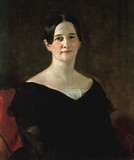
Oh, my dear Rachel Jackson — 188 years after the brutal campaign between your husband Andrew and John Quincy Adams, the citizens fear the republic will not survive the brutal campaign of 2016 for the 45th President of the United States.
The two candidates are Republican Donald Trump, a known philanderer, tax cheat and a liar; and Hillary Clinton, the first woman nominated by the Democratic Party, the same party formed by your husband in 1824.
2016 voters mistrust Hillary Clinton. Statisticians show she distorts the truth 28% of the time, compared to Trump’s lying 70% of the time. However, the public fixates on Republican propaganda that pounces on her daily for mishandling classified material when she was Secretary of State. Yes, Rachel, we have had three women Secretaries of State since women won the right to vote in 1919.
This lack of voter confidence is not the hallmark of the 2016 campaign, however.
Throughout his campaign, Trump has proclaimed Hillary and other women incompetent, liars, corrupt, pigs, fat and flawed. Trump runs beauty pageants and builds hotels. He’s been plagued by women publicly accusing him of unlawful touching. He calls them liars and shifts the conversation to stories of our 42nd President’s sex scandals. Our 42nd President, Bill Clinton, is Hillary’s husband. Trump excoriates Hillary for enabling her husband’s extramarital affairs, then he turns around and calls for Hillary’s aide de camp to be dismissed because the aide’s husband exposed himself to a series of women. Trump says the aide’s marriage to a “major sleaze” makes her a security risk.
America in 2016 is collectively depressed by the deluge of vulgarity. Voters clamor for more issues yet soak up the scurrilous, all the while exclaiming the United States will never regain her honor.
You know how this feels, my dear Rachel. The Hermitage, your beloved Nashville plantation, restored for visitors, serves up details of your death. When you married Andrew Jackson, your violently jealous first husband published a news article that you were never divorced, knowing that he lied to you about filing your divorce papers. He accused you of adultery and bigamy. Your new husband Andrew, a lawyer, rectified the situation and you remarried him legally. All this humiliation was heaped upon you before you were twenty-three years old.
Andrew Jackson fought wars and politicked around the country for the next forty years leaving you at home to manage the 1000-acre family farm. Your work kept you from the day-long carriage ride to town until the day you had to shop for your Inaugural Ball gown. It was only then, in your Nashville hotel lobby, after Andrew Jackson won the election, that you came across a campaign pamphlet accusing Andrew of adultery and running off with you, another man’s wife. And you accused of bigamy.
Weakened by stress, depression and shame, you returned to the Hermitage and died, buried in your Inaugural ball gown. Our 7th President began his term in profound grief without you at his side.
Well, Rachel, I want you to know the government peacefully transferred power from John Quincy Adams to Andrew Jackson and Old Hickory scripted your tombstone, “A being so gentle and so virtuous – slander might wound but could not dishonor.”
On the eve of the election, our country’s history is small comfort to the downtrodden, but they will soon hope again because slander might wound the United States but it will not dishonor her.










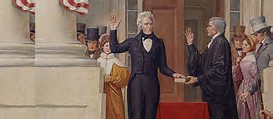 Well, Rachel, I want you to know the government peacefully transferred power from John Quincy Adams to Andrew Jackson and Old Hickory scripted your tombstone, “A being so gentle and so virtuous – slander might wound but could not dishonor.”
 Regan Burke