Cold Wars

Cold Wars

The 2019 Polar Vortex slid down from the North Pole, threatening to lock Chicago into subzero stillness. I prepared for the warring cold by teeing up the entire 18-hour series of The Marvelous Mrs. Mazel. Then I threw stale bread crumbs onto my balcony to nourish the house sparrows, finches, and chickadees before they huddled together in eaves and cracked soffits to wait it out. I shuttered in and Dapped all the little crevices around the balcony door that were spritzing air into my not-so-insulated living room. That was the extent of my preparation for the coldest two days ever recorded in Chicago.

Day one brought minus 23 degrees. I woke to a thick film of silver ice covering all the windows. The ice curtain obscured the humanity moving around behind the windows across the street and any fool pedestrian walking in the feels-like-minus 40.
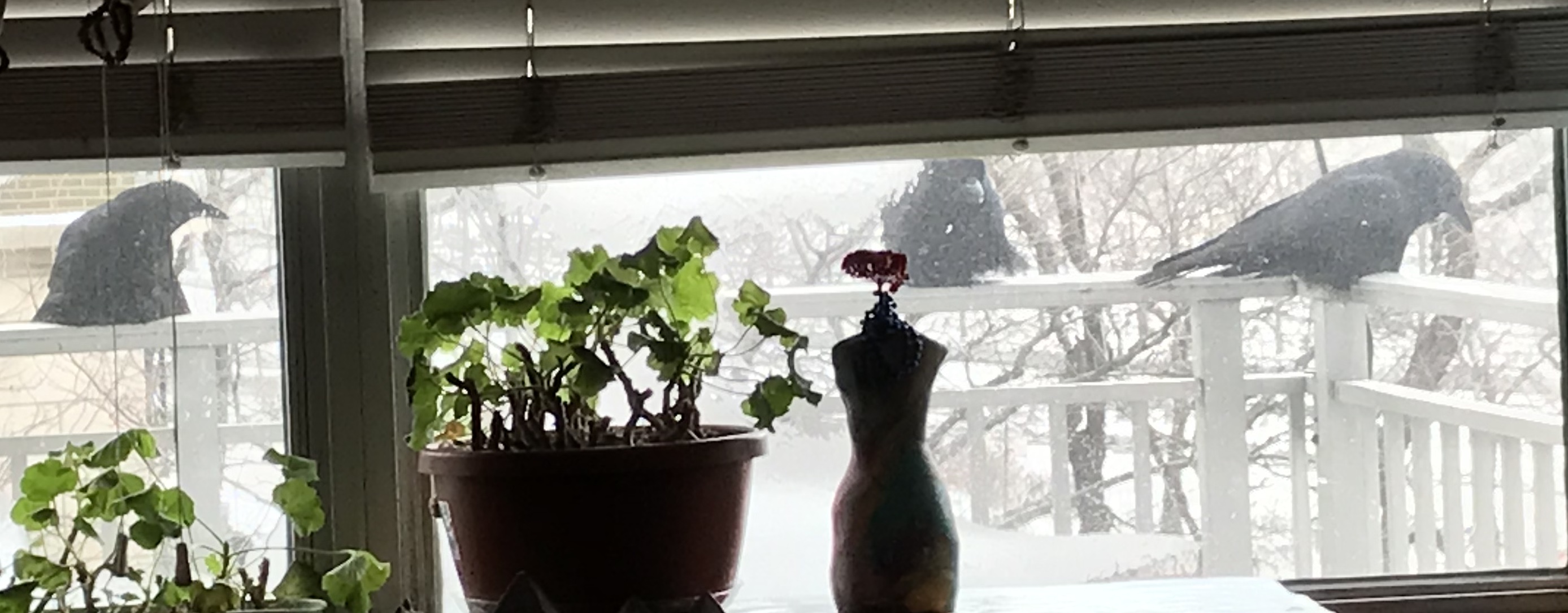
My binge-watching was interrupted mid-morning by a thrashing whomp, whomp whomp on the concealed balcony. I inched toward a clearing in the frosty glass.

A murder of crows had come to forage.

The much-studied American Black Crow might be the most intelligent animal other than primates. They hide their food and come back for it. If a crow looks you in the eye, she will remember you, follow you down the street, and caw at you for attention like a wild pet. 

On day two, the temperature was 21 degrees below. The ice wall on my windows melted enough for a small lookout. I abandoned Mrs. Mazel and placed a chair well away from the clearing to observe the crows without startling them. They first landed in late morning. A mighty set of black wings fluttered a plumped-up body onto the balcony railing, and the rest followed—a family of five dipping to the balcony floor for leftovers. They flew off and came back. Again. And again. And again. I remained still throughout, trying to lock eyes with the birds. In the afternoon, the weather broke and allowed the dog and me to walk outside—under the watchful eyes of noisy new friends.

The first cold days of 2023 were predicted for the weekend after Thanksgiving. Though nowhere near the 2019 plunge, 30-degree temperatures heightened awareness of asylum-seeking families living on cardboard slabs outside police stations. I sought diversion through another favorite TV series, Julia.

The TV automatically tuned in CNN, though, where there was live coverage of the hostages being released from Gaza. A mysterious and curious need for every scrap of information gripped me. Who are they? What are their stories? Where are they going? I saw six women over the age of 70. One 85-year-old was helped onto a bus. I winced, feeling my own arthritic pain. Four children appeared—ages 2, 4, 5, and 9. I squinted to see if they were clutching teddy bears.

After watching for two tearful days, unrelenting shivers overcame me. And when I took the dog for a walk, that murder of crows cawed to us from the barren trees.
The Gift of Wisdom

The Gift of Wisdom

When my dog died of liver cancer, I thought it was my fault. Why, you ask? Because I didn’t keep him from eating sidewalk nasties. What the hell? Did I think I was that God I no longer believe in? You know, the God who causes pain and suffering?

Victim-blaming runs deep with me. I’m good at it. Whether I blame myself for dead dogs, misfortune, and health problems or I blame others for theirs, the first thought upon hearing bad news is, what did I do wrong? What did they do wrong? When a friend told me she was hospitalized for an irregular heartbeat, my reaction was, “How does that happen?” Implying she did something to cause it.

Before the pandemic, in my downtown Chicago neighborhood, thugs drove around casing out pedestrians, jumping out of cars, knocking vulnerable people to the ground, and stealing their belongings. My neighbor reported getting mugged in broad daylight while walking her dog. My reaction? 

“Why weren’t you wearing that whistle I gave you?” As if she could have done anything to stop three teenage boys from shoving her up against a brick wall and ripping into her clothes to find her iPhone. 

At community meetings, police officers gave primers on how to protect yourself. Among the suggestions was to attach a colorful whistle to your coat, not necessarily to use, but as a deterrent. I had a few bright red whistles from RAINN.org, the national anti-sexual assault advocacy group, so I called and asked for more. 

“We don’t have those anymore. Our survivors thought they were a sign of victim-blaming.”

Whoa, I didn’t see that coming. I get it, though. Victims of sexual assault are hyper-aware of all the ways society, either by word or by thought, says, “That’s what you get for wearing those clothes or walking on that street at 3:00 a.m. or not wearing a whistle visible to your attacker.“

Over twenty-five years ago, I became a victim of fibromyalgia, a mysterious inflammation of the tissues connecting the muscles to the bones. That’s not the exact definition. I use that description because it’s easy for me to visualize. Contrary to all medical knowledge, I have a notion that if I can visualize it, I can heal it. I get relief with meditation, movement, and writing, but there’s no cure, no healing. I think I can fix it because I blame myself for causing it.

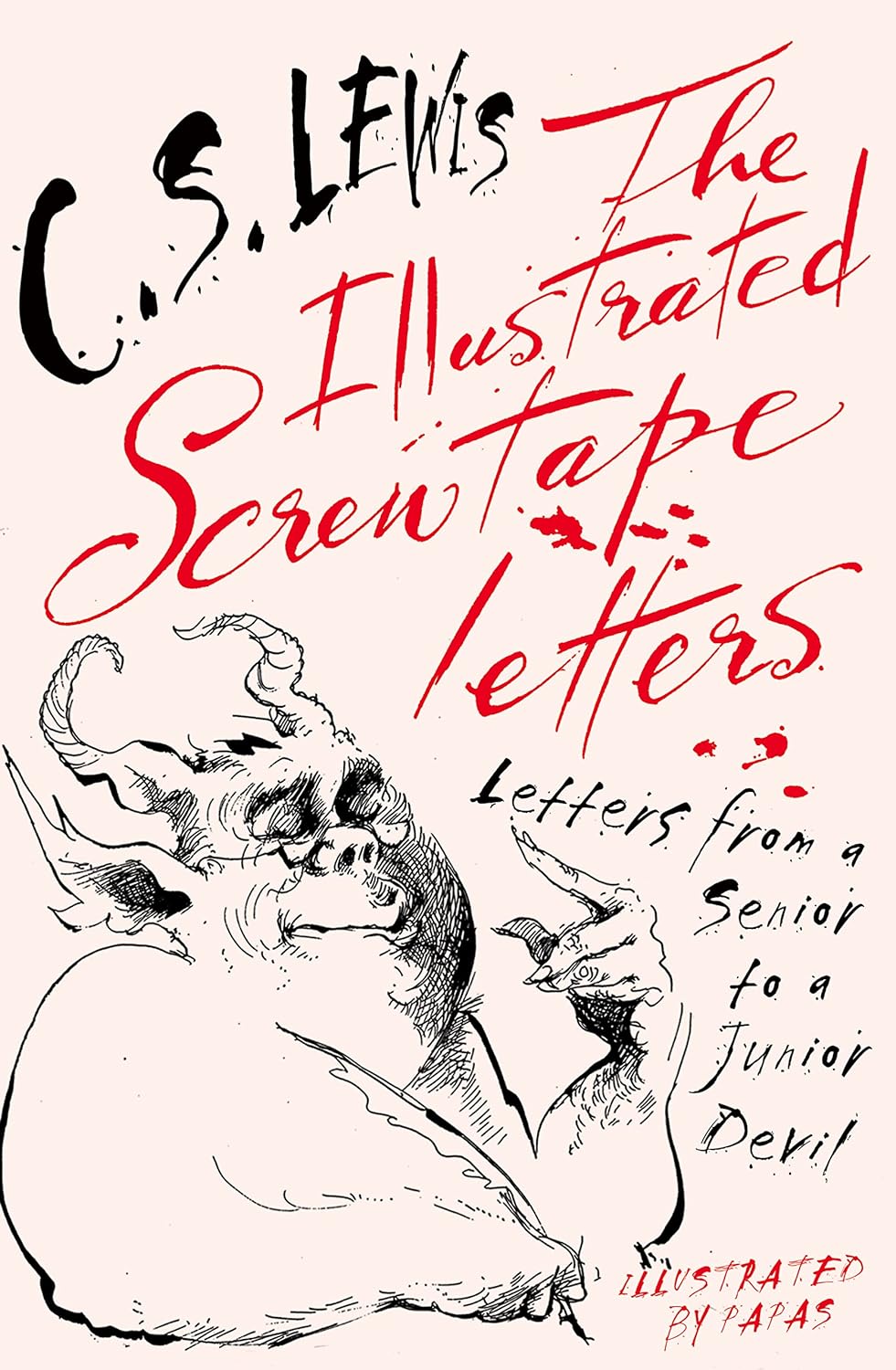
Deep down, or really just below the surface, I cannot accept the randomness of bad things happening to good people. I want reasons and meanings—some way to help me control the fear that I’m next. This psychology is my Screwtape, the Tempter leading me into madness. Dr. Google tells me it’s a natural phenomenon. I’m committed to seeking a way forward through virtuous self-care. But that, too, is Screwtape tempting me into believing I alone can fix it.

Living untethered to reasons and meanings is like George Clooney detaching himself in the movie “Gravity” to save Sandra Bullock. It requires courage received only through grace.

Lessons Learned: God

Lessons Learned: God

First Grade—Third Grade

God is a white man with a white beard and white flowing hair, sometimes holding white stone tablets, later to be revealed as the Ten Commandments. Then He has a son, Jesus, and simultaneously is Jesus. Jesus’ mother, Mary, and God aren’t married. Then God becomes a ghost, the Holy Ghost. Then He’s all three. Three persons in one God.

All people who were ever born are sinners who can never redeem themselves. But God gives Jesus to Catholics for salvation from their sins. Only Catholics have access to Jesus. They go to heaven when they die, thanks to Jesus dying on the cross for their sins. Everyone else goes to hell.

Lesson: Everyone is bad and God only likes Catholics.

Fourth Grade—Sixth Grade

God created Adam and Eve in His likeness and placed them in Paradise, a tropical garden with no predators or stinging bugs, and all the animals, flowers, and fruit in the world. God forbade them to eat apples from the Tree of Knowledge, but they wanted to be like God, to have His knowledge, so they ate the apples. He got mad and threw them out of Paradise. They had to fend for themselves—grow their food, make their clothes, and pay attention to God.

Adam and Eve had two sons, Cain and Abel. God seemed to like Abel better. Cain got jealous and killed Abel. God punished Cain by throwing him out of his hometown into the desert.

Lesson: Avoid God.

Seventh Grade—Eighth Grade

Jews and Romans alike feared Jesus for riling up the citizenry against their oppressive power structures. The Roman king of Jerusalem sentenced Jesus to a brutal crucifixion. Even though He was a Jew, the Jews didn’t come to his defense.

When Jesus’ followers went to the tomb to see His dead body, Jesus was gone. God resurrected Jesus, body, and soul to live forever. This is what happens to Catholics. They live forever. In Paradise.

“Tiger, Tiger, Burning bright, 
In the forests of the night,
What immortal hand or eye
Could frame thy fearful symmetry.”

Lesson: I want to be a nun.

Ninth Grade

Using my leaky Esterbrook fountain pen,  I write “How can God make evil” in the margin of my English literature textbook next to William Blake’s first stanza of “The Tiger”.  

Lesson: God is confusing.

Teenage—Twenties 

I look for the heavenly in alcohol, drugs, and men. I see God. Then I don’t. 

Lesson: There is no God.

Thirties—Sixties

There is a Higher Power. Maybe God. Maybe Jesus. Maybe the Holy Spirit. Maybe Buddha. Not a Catholic. Not even a Christian.

Lesson: Keep looking.

Seventh Decade

Casting off the lifelong mantle of sinner; I’m finally hip to the knowledge no one is born bad. God does not create evil and Jesus didn’t die to save me—God doesn’t need atonement from me or Jesus. There’s no heaven. No hell. Resurrection may be so. At the end, perhaps time and space will simply let go of me and I’ll wander an endless field of puppies, aka, Paradise.

Lesson: I’m OK. 

Is This Funny?

Is This Funny?

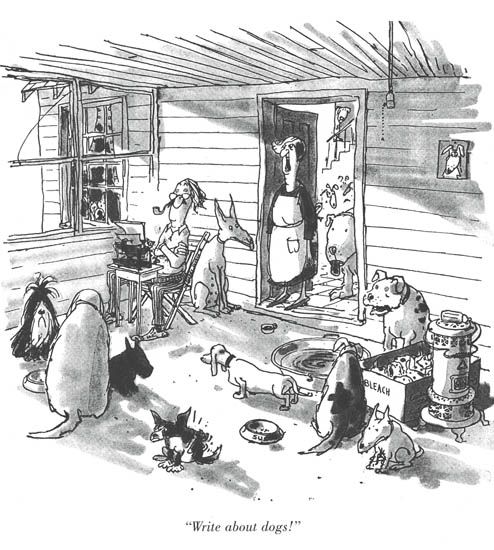
George Booth, the New Yorker cartoonist who died in November 2022, once created the funniest cartoon in memory. First of all, Booth’s silly line drawings were and remain funny enough–they don’t need captions. But the one I so love is a man sitting at his typewriter on a dilapidated porch wistfully smoking a pipe. Nine or ten dogs of different sizes and shapes laze around. There’s a bulbless socket hanging from the ceiling. His wife stands in the doorway. Caption: “Write about dogs!”

Ok. Ok. It’s not the funniest cartoon to you. But for me, a dog owner and a writer, it’s hilarious.

Obviously, the cartoon man has shouted, ‘What should I write about?’  ‘Write about dogs’ is a funny way of saying ‘write what you know’, writing’s first principle. Even fiction holds truths. Funny conversations and tales of goofy adventures are all around, like the dogs in Booth’s cartoon. I hesitate to write them because I don’t want my blog-reading friends to know how amusing their lives are to me. And what if the writing isn’t funny?

This summer I attended a free Comedy Writing Workshop taught by a professional, very intuitive, improv comedian. We didn’t have to pretend to be a tree or a bologna sandwich, though that would’ve been a kick; we simply pretended we were at job interviews and went back & forth with questions and answers. We could have answered any old way, and indeed creativity was encouraged, but everyone in this group seemed to answer like their jobs were on the line for real. And they. were not. funny.

Me? I said I was fired from my last job because I attempted to kill my husband with a stapler when he came to the office for a surprise lunch. Funny? I thought so, but no one laughed. Perhaps I actually look or sound like a murderer.

The comedy teacher smartened up to this over-55 group right away. She tailored the two-hour class to the cognition level of the twelve students she had before her. And still, no one was funny.

A friend of mine who’d recently been examined for dementia gave permission to the memory doctor to ask me how my friend had changed. Without hesitation, I answered, “She’s really funny but it’s taking her longer to get the punch line.”

Is this part of it? Aging, I mean.

Most researchers I skimmed agree that age-related cognitive decline contributes to difficulty with “humor comprehension”. The list of symptoms includes:

  • An inability to understand satire
  • A childlike sense of humor or enjoyment of slapstick comedy
  • Laughing at things that are not particularly funny, such as a dog barking
  • Taking jokes literally
  • Making inappropriate comments about strangers in public

George Booth created his last New Yorker cartoon ten months before he died from complications of dementia at 96. The cartoon cover is a goofy white dog glancing at a clock. Is that funny? A dog checking the time? 

If not, George and I share the same demented symptom of chuckling at things that aren’t particularly funny

.

Inching Toward Dying

Inching Toward Dying

A friend announced that she’s ridding her home of once treasured belongings, little by little.

“Oh yeah, you’re in the process of dying.” I said.

“What?”

She’s past middle age, but not yet old enough to be drawn to articles about purging in AARP magazine under headlines like, “Common Old People Habits.”

“I’m just clearing out so my children aren’t left with all my junk.” She said.

“I rest my case.” I said.

I started purging suits and dresses when I was around sixty. I no longer wore them at work and when I retired, well, I no longer wore them period. During the pandemic I bundled up five plastic bags full of old garments that I loved, and sent them off to a resale shop. I then fell for the ubiquitous internet ads luring me into purchasing “casual clothes”. The empty space in my closet gradually filled in with comfortable pants, also known as pajamas, and colorful tops, also known as sweatshirts. These are the inching-toward-dying clothes.

Purging includes all the old letters, not because I’ll be embarrassed if the uninvited read them, but because the invited won’t. I’m counteracting this indifference by writing memoirs. There are other signs of moving toward dying. My friends, like me, have less tolerance for personal dramas. Oh, we may express understanding to our offspring’s tears and fears about bad bosses or broken relationships. But really, we know just when to slip out of the room or off the phone to avoid the theatrics. We’ve been there. We survived. We moved on.

Obsession with the weather is a keystone of my old age. When I acquired a three-wheel electric scooter, I downloaded all the weather apps on my iPhone-five of them. Instant updates, including pollen forecasts, determine if I scoot or take the bus. Happily there’s no shortage of old people chewing over the weather.

Except for doctor appointments, I have no responsibilities to manage in the early morning. And yet, the older I’ve gotten, the earlier I wake up. I listen to the radio, drink coffee, read the news. Audio books and podcasts are a great comfort to sleepy eyes at 5:00 am. A young friend once asked why old people get up so early.

“Because we’re all afraid we’re gonna die.” I said

Henry the dog social distancing

I used to walk Henry, the best dog on the planet, in the early morning. His process of dying was short-lived. He turned his tail under, dug in the closet, slept standing up, clung to me. At the last, he cried to be put out of his misery. One might say he purged himself from my life. But he was supposed to last longer—maybe longer than me.  The actuarial tables on my life expectancy indicate it would be imprudent for me to have another pet. 

Submitting to the idea of growing too old to have another dog is a new item in the burgeoning process-of-dying tote bag. 

I suspect the resulting sorrow will follow me to the grave.

Shut Down Week 3. Tagging

Shut Down Week 3. Tagging

One of the boarded up stores I walk Henry past everyday is Hermes, a Parisian couture import. You can buy a Hermes over-the-shoulder mini bag just big enough for your cell phone, keys and plastic poop bags (if you’re walking Henry) for $1,875.00. On the very first board-up day, a tagger spray-painted one of Hermes’ dark grey boards with a

IMG_1675
Shut Down Hermes Chicago

tasteful lavender scribble. The contrasting colors were delightful really, very French. And the next day, the street art was gone, painted over in Hermes signature dark grey.

Like the Buddhist arhat, Irish banshee and today’s death doula, the mythical greek Hermes is a psychopomp, or soul guide. Powered by his winged sandals and helmet, he guides the soul into death, to the other side. Crows are also psychopomps often depicted waiting in murders outside the home of the dying to herald the soul’s journey or perched inside the chamber as in Edgar Allen Poe’s “The Raven”.

Crows are sparse these days on downtown Chicago streets. There’s no discarded food to forage in the alleys behind the restaurants. Oh, sure, the restaurants are providing take-out, but all that trash goes home to another neighborhood’s compost. The heralding crow has taken her business elsewhere. No one is bothering to die a natural death here. We are all in a state of shutdown limbo. Indeed I never hear the usually frequent ambulance sirens headed to the hospital a quarter of a mile away. The covid-infected dying are taking cabs to the Emergency Room, hoping they won’t be turned away or sent to the field hospital at the McCormick Place convention center.

Hermes is known as Mercury in Roman mythology, from a Latin derivative meaning merchandise. I love the window displays but I have no reason to step across the Hermes threshold and finger the merchandise. These days I think of its namesake as a hallmark to protect the life of commerce in the city. I hope Hermes/Mercury doesn’t let the city die.

I have to grab hope wherever I can. It was Hermes’ sister Pandora who opened the box that unleashed plagues, diseases, and illnesses on the world. Our current Pandora, President Trump, has unleashed the coronavirus on us in opening wide his box of ignorance, inaction and mismanagement. The myth says Pandora closed that box before the healing spirit Hope escaped. President Trump spews false hope to us everyday with lies, inaccuracies and ego-driven platitudes. 

Hope seeps out on its own power though, just like the spray-painting tagger letting us know the street is still alive.

Shut Down Week 2

Nothing’s changed in my one-bedroom condo.

I wake up frozen in fear. My old Ikea down comforter shrouds my body. Before peeking out at the same world I fell asleep in, I breathe in and say, “The troubles of the world don’t own me.” I breathe out and say, “I don’t own the troubles of the world.” After twenty or thirty minutes forcing my mind back to this cushioning mantra, I go to my computer for the latest messages and news about friends impacted by the coronovirus.

At the hospital, a friend is off a ventilator and in for a long recovery, thanking those around him for saving his life. The Panama Canal Authoirty finally approved passage of a cruise ship that had been stranded off the coast of Chile, shunned at every port. Four people died onboard, and my friend, healthy but worried is locked down in a cabin with no windows and scant information. 

IMG_4785Henry jumps around to say he’s ready to go out and read his drizzled mail on the low hanging boxwood branches. There’s a shift on the sidewalk; less people than the day before, fewer parked cars, more birds. And Henry makes less and less whiffer stops. His friends must be on a later schedule, sleeping in. It’s the second week after all.

We pause at a neglected sidewalk garden, elevated in a bas-relief concrete trough. In there a crow pecks at dead twigs and tendrils from last year’s plantings. We’re not more than ten feet from her. She drops a brittle stick on the cement ledge, plunks a claw down on one end, grabs the other end and pulls up, breaking off a piece of nesting material. Gathering a few more right-sized pieces she jumps down and walks across the empty street with a full beak. Henry is nonchalant, as if she were just another member of the family. Dogs have a way of knowing. They read souls.

Around the corner, we stop to watch workmen covering another couture clothing shop with sheets of plywood. Pretty soon the whole street will look like a war zone of boarded up storefronts. Crows caw overhead. It’s our mother and her kin squawking about the lack of garbage pickings in the alleys behind the shut-down restaurants.

Back home you’d never know Chicago is on STAY-AT-HOME orders from the mayor unless you open the freezer and see 25 frozen Mac ’n’ Cheeses from Trader Joe’s. Other than that, nothing’s changed inside. I spend the whole day in hysterics laughing at jokes, memes and cartoons that people send me and post online. At first there were all dog jokes, like two dogs looking at a couch full of papers and a computer. One says to the other, “Do you think we’ll ever get our couch back?” The other says, “I think it’s going to
be a couple of weeks.”

After that, there were husband and wife jokes, like the photo of a woman knitting aIMG_5462 noose for her husband. And one of a woman digging a grave in the garden. Now I’m getting a lot of jokes with swear words:
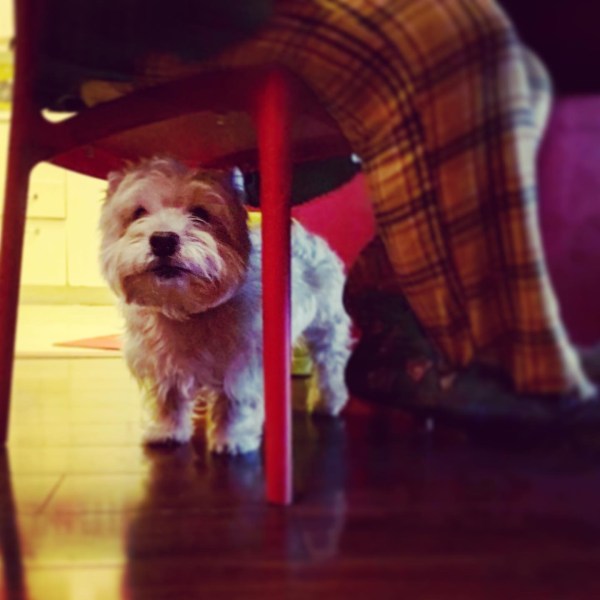

Today the devil whispered in my ear, “You’re not strong enough to withstand the storm.”

And I whispered back, “Six feet, motherfucker.”

That’s another way of saying the troubles of the world don’t own me. I don’t own the troubles of the world.

Life in the Shut-Down Lane


Going? Not going? A single day passed and no matter the destination whether Walgreen’s or Mexico, the decision was made for me. I’m not going. No one’s going. No one’s going anywhere. 

The questions alone open an empty space in my head that fills quickly with a laugh, a giant cosmic laugh that says, “You used to have a choice!” Now there’s no dilemma about where to go, who to see, what to do, what time to do it. 

Today, I am my existence. I maintain my essence built over a lifetime; fretful sleep, overeating, wasteful showers, obsessive reading, TV ’til two a.m. And, I build anew. I make tuna salad sandwiches, stir-fry zucchini with onions and go to meetings on Zoom. Henry the dog and I walk to new places like Michigan Avenue where we give six-foot hellos to neighbors we don’t know, will probably never know. In an unfamiliar park I break the law, unleashing him to run the crunchy March earth. We’re lulled into concluding some rules no longer apply. He trees squirrels. I hear a woodpecker

2148C23E-1940-4F0A-8931-D36076E8D4AD
Henry Sheltering in Place

(tomorrow binoculars). T.S. Eliot wrote “Time past and time future what might have been and what has been point to one end, which is always present.” I have time on my hands. It cannot be washed off, nor sanitized away.

Child psychologist Bruno Bettelheim believed fairy tales help children cope with their existential anxieties and dilemmas. I’m grateful for my new-found fairy tales on Acorn and Netflix. They’re satisfying, even intoxicating. “Vera” quenches my thirst for relief from today’s threat of a mad virus loosed on an unprepared society. She always catches the killer, within one episode. And “West Wing”’s President Jed Bartlett reassures me, “There are times when we’re fifty states and there are times when we are one country and have national needs.” Fairly tales are indeed a good shield.

A friend yelled at me on the phone, “I just want to go to a restaurant!” 

Who doesn’t? I live in cafe society— exchanging gossip, ideas, medical records and laughs in half-public coffee shops, restaurants, hotel lobbies, church halls, run-ins at shops and malls. It’s part of my essence, my existential cover, a baby blanket of being. I need it. 

“All of humanity’s problems stem from man’s inability to sit quietly in a room alone,” said Blaise Pascal whose health problems left him no choice but to sit alone in quiet for long periods. He tried to solve some of humanity’s problems. Perhaps if he’d lived longer he’d have given us more than pensées.

To preserve my sanity, I usually sit quietly in a room for thirty minutes every day consciously telling myslef I do not own all of humanity’s problems, nor do they own me. But now that I’ve been sitting in a room alone for days, I’m concocting brilliant and crazy solutions to humanity’s problems. Pascal would be pleased, but I’m afraid I’ll go from here to the psych ward. 

Or run for office.

Get A Grip

Over the years, I’ve acquired one untrained dog after another. I dismissed the American Kennel Club admonition, “Scottish Terriers are hard to train” as if it didn’t apply to me, Scottiesbecause I simply love them. The AKC is right, of course. Scotties are hard to train in all
areas particularly in their nasty habit of “marking” any old spot they please including inside, on the carpet. My last Scottie yanked so hard on his end of the leash to protect me from sidewalk dogs that I’d lose my grip as he went on the attack. I’d been to court twice for his biting dogs and their owners. He was finally sentenced to permanent muzzling but before I could carry out his punishment, five-year old Ozzy inexplicably and suddenly died.

After Ozzy’s death, bottomless-pit grief drove me to vow to be forever dog free. This made the decision to rip up the stinky carpet an easy one. I replaced the old stained wall-to-wall with Home Depot’s TrafficMASTER Luxury Vinyl Plank Flooring. No more dogs with their curious canine mating rituals. No more carpet cleaning. And no more vacuuming, which I hated even more than the dentist’s three-hour procedure to extract my ankylosed tooth. I didn’t need to worry about traumatizing the dog with such a drastic change. Ozzy was dead. I’d never have another. I didn’t know I’d parked the idea of a dog in a sub region where ideas slow cook before the boil.

The first week of the new cherry colored hard floor, one of my favorite CB2 glasses slipped from my grasp and smashed to pieces. The next week another fell out of my hand to the floor.

The Marta glass collection from CB2 has a cult-like following. The glass itself is micro-thin. Your lips close in on the minimalist rim with ease. Liquid doesn’t sneak out of the edges between the glass and your cheeks, dribbling down your neck onto your new pink velvet blouse. The sides are smooth and straight; no prismatic mystery of what’s inside. They are a joy to embrace, these perfect affordable glasses. I loved to open the kitchen cabinet and see my whole Marta collection lined up like gossamer terra cotta warriors. 

The hard floor brought a hard reality. With carpet, when my hold weakened on breakables, and they dropped, they didn’t break. With the hard floor underfoot many treasures have slipped out of my grasp and smashed to the ground before I remembered to get a grip. Glass slivers embedded in my feet led me to question what was wrong with my hands. 

Hand grip strength is a test the doctor performs on the aging. Greater grip strength equals greater mortality. There it is. That old mortality jumpin’ up trying to scare the bejesus out of me, tempting me to obsess over how long I have to live.OIP.G7cFtu7ChS0N98F2VAjjqAHaFj

Only one of my treasured glasses have survived. All is not lost though. I have a new well-trained non-Scottie dog who doesn’t test my impotent grip on his leash. And I’ve softened  my grasp on mortality, leaving the fear of dying for another day.


Funny Old Valentines

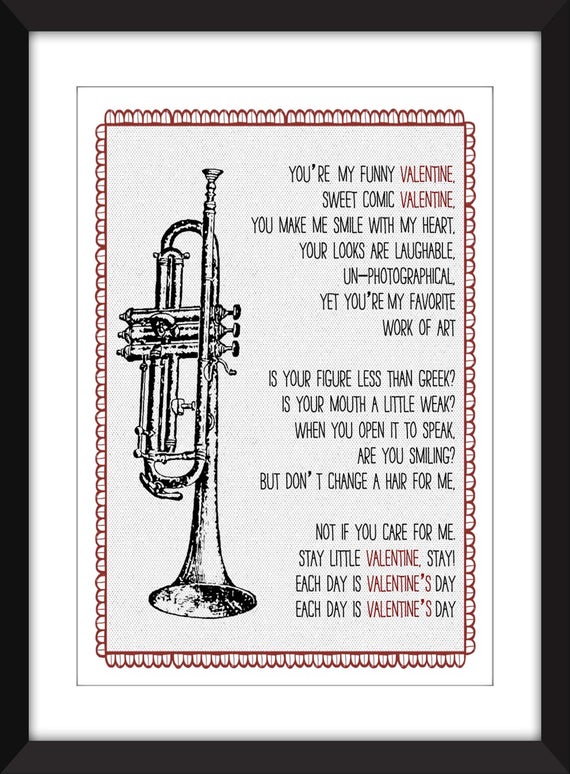
Whenever I’m reminded of My Funny Valentine I sing it to my dog. Sometimes he sings back. I’ve always had funny dogs, especially when I forget to take them to the dog parlor il_570xN.1179210609_jgjt
and they can’t see through their neglected haircuts.

The truth is, My Funny Valentine is comforting, not just for singing to dogs. The lyrics make me feel lovable. According to the song writers, the more time goes on, the more lovable I might be getting. I’m less photographable, my figure is less and less Greek, my mouth is getting weaker and what comes out of it is less smart. Perhaps Richard Rodgers and Lorenz Hart actually wrote the song with their grandmothers in mind. After all, haven’t most of us laughed at our quirky old grandmothers? Like the time she put the turkey in the oven upside down? Or bought a dry-clean-only shirt on sale at Bloomingdales for a 10-year-old boy?

Those laughs may be in short supply if Michael Bloomberg becomes president. He says that healthcare will bankrupt us unless we deny care to the elderly.

“If you show up with cancer and you’re ninety-five years old, we should say, ‘there’s no cure, we can’t do anything’. A young person? We should do something. Society’s not willing to do that, yet.” Bloomberg said.

Yet? Society’s not willing to pull the plug on its grandparents? Yet?

Why can’t policy changes allow me more time in the cost-effective doctor’s office, instead of withholding costly medical treatment as I get older? Words from my weakening lips have become slower and less smart. Because office visits are limited to twenty minutes, the doctor may not hear that this grandmother requires nothing more than a prescription drug change. Inattention to my symptoms in the doctor’s office could lead to a later trip to the costly emergency room, admittance to the costly hospital and visitations by costly specialists who in the end announce a diagnosis of nothing more than easy-to-treat high blood pressure.

There’s nothing new about politicians proclaiming the elderly are not worth the medical expense or care we give them. In 1984, Governor Dick Lamm of Colorado said, ”We’ve got a duty to die and…let the other society, our kids, build a reasonable life.” The duty-to-die statement ruined his opportunity to run for president. When Obama officials tried to add simple advance-care consultations to the Affordable Care Act, Sarah Palin denounced it as the creation of “death panels.” How do you think Bloomberg’s statement will be used?

We’ve gotten the same messages from the right-to-die movement for years—as if our right to die must be supported by cost effectiveness rather than a policy of choice. Don’t get me wrong. I have no intention of living past my expiration date. I’ve made my own choice in my end-of-life papers.

Bloomberg’s “yet” is a bothersome dated idea—killing off our funny old valentines to save the country from healthcare bankruptcy. 

Surely we’ve progressed farther than this.