Day of the Living Dead

The Day of the Dead Mexican holiday, observed on November 1st celebrates the deceased with ofrendas (home altars) and festive gravesite visits. Tombstone gatherings include offerings of the deceased’s favorite food, drink, and music.

When I learned about my sister Mara’s death last spring, I reflected on our estranged relationship in a blog post. Since then, I’ve received a slew of messages from her friends that piece together a life I never knew, stories that give life to the dead.

Borrowing from the Mexican tradition, I offer an ofrenda to my older sister Mara Burke, with a sampling of those messages.

…we double-dated, attended formals at The Peddie School, and listened to music we loved. Her shop, where she helped us look stunning, but never as stunning as she looked, was where she generously gave us all our first credit cards! The slim silver bracelet she gave me many years ago is still my favorite, the many articles she sent knowing I loved cooking and gardening, and the tiny blue and white dish on my nightstand are fond remembrances of her love.

…I met Mara at the Catholic Home for Unwed Mothers.

…I interviewed Mara for a job a few years after her store closed in the early 90s. She was a talented clothier, but she showed up smelling of booze.

…Mara was on my mind,  i Googled her, saddened by the news i now read. I am happy to say that even though Mara and I were not close, we shared plenty of sobriety, laughter, and lots of very good coffee and pastry over the past 33 years.

… I met her in the 90s. We did a lot of meetings and healing through friendship with other recovering folks. She moved from Florida, and we lost touch.

…Mara came to care for me when I lost my mother years ago in a horrific accident. She has been through much with me and was selfless in her caring when my son died suddenly. My pain was her pain, and it was real.

…she always showed up for work even when she couldn’t stand up straight because of that hump on her back. She’s the best salesperson I’ve ever had.

… she was my neighbor for seven years. I set her up on a senior dating site. We laughed about all her dates. She never drank anything but coffee & ice water, attended Mass down the street and knew the priest. She said many times she wanted her ashes spread around her mother’s grave. 

…she had that beautiful speaking voice.

… we had a beautiful day to carry out Mara’s wishes. We buried a small crystal heart dish Mara had given me with her ashes. We planted daffodil bulbs to bloom in the spring, said a prayer, and sprinkled her ashes over her mother’s grave. 

Mara moved from Florida to Virginia for inexplicable reasons. Two weeks passed before her body was found on the floor of her apartment, and another week before I was called. The death certificate says she died of natural causes complicated by dementia and follicular lymphoma. 

 

RIP, Mara Burke. Born February 14, 1945, died March 13, 2023.
Jobs I Could Never Do

Jobs I Could Never Do

Every spring at Walsingham Academy, Sister Walter Mary selected a few students to prepare Catholic children for their First Holy Communion. The children were patients at the local mental institution, Eastern State Hospital in Williamsburg, Virginia. I have no idea why there were young children locked up in an insane asylum. We were trained to teach these pre-Ritalin six-, seven-, and eight-year-olds to memorize answers to preposterous questions such as “Why did God make me?” from the Baltimore Catechism. 

Eastern State Mental Hospital, Williamsburg, Virginia

It was pre-HIPPA 1963. We received basic training in mental illness. A hospital attendant walked us teenage tutors through the children’s wards, pointing out caged paranoid schizophrenics, psychopaths, and catatonics in their soiled grey tunics. Some children sprang at the chain-link fences, grabbing us and screaming obscenities. We didn’t teach this group. Our students lived in cozy dormitories and wore regular clothes. 

Eastern State—the oldest psychiatric facility in the country—had been founded on the forward-thinking concept that insanity was an emotional disorder, not an aberrant behavioral condition. Treatment included exercise and social activities. Catholic parents treasured the outside instruction their little ones received. I’m not sure how much my first-grader learned because all she wanted to do was sit next to me and play with my hair. I helped her into her white veil and gloves and took her to nearby St. Bede’s, where she made her First Holy Communion with the local children. I met her parents at the church. I never saw them again, never learned her diagnosis, or if she ever left the institution.

A few years later, I worked an overnight shift at the Point Pleasant Nursing Home in New Jersey.  My job was to straighten up—put games like Monopoly, bingo, and chess in their boxes and wiggle them into overstuffed cabinets. I wrote down missing pieces of each game so the next shift could look for them in patients’ hiding spots—pockets, drawers, purses.

A completed jigsaw puzzle of an Impressionist painting lay on its box cover under a window. I put the pieces back in the box and stuffed them into the cabinet with art supplies, books, and magazines. Before my shift ended, a patient wandered into the day room. She stopped at the space where the completed jigsaw had been and looked at me, panic-stricken. She grabbed my hair in a flash, shrieked I stole her art, and smacked me in the face. By the time the nurse reached us, we were both screaming. 

In dementia, my mother, Agnes, carried an ever-present small clutch purse. At that same nursing home, the nurses gave her their old lipsticks because the click-clacking sound as she rifled in her bag calmed her down. 

The day she died, I visited the nursing home and thanked the staff for giving my mother what I couldn’t: a proper confinement of love and respect to keep her from wandering around and terrifying her fellow creatures. Only then did I ache for the parents of the Eastern State girl I’d met twenty-five years earlier.

Across the Universe with Agnes

 In May 1990 Agnes collapsed and was taken to the hospital. I was in Chicago and flew to New Jersey immediately. Therese fetched me at Newark Airport and drove straight to Point Pleasant. My mother was unconscious and attached to a breathing machine. When I caressed her hand, I noticed her freshly painted nails.

“We went for a manicure a few days ago.” Cousin Therese whispered.

Agnes had dementia the last five years of her life. Whenever I visited her, we’d have dinner, go to a movie, shop. Her lifelong carping and criticism must have died with the missing brain cells. She was softer, easier to love, without the booze. More than a few times I caught her walking out of a shop with unpaid goods. I thought she just forgot how to pay.

The official cause of death states, “Alzheimer symptoms due to alcoholic brain syndrome.” A few years earlier, alcohol and cigarettes had been removed from her life. But she didn’t know it. Her dementia had progressed to the point that she involuntarily mimicked both lighting up an imaginary Marlboro and sipping an imaginary scotch-on-the-rocks. Wet brain (formally known as Korsakoff syndrome) is caused by alcohol robbing the brain of vitamin B1. The deficiency slowly destroyed her brain cells. The damage progressed beyond the point of no return until she died. She was seventy.

When I was a young wife and mother living in married student housing at Michigan State, my mother would occasionally send me exquisite sweaters, blouses, shoes and boots. My husband was a graduate student. We had a baby. Our only expendable income came from my babysitting jobs. My mother’s part-time job selling shoes supplemented whatever she could beg, borrow or steal from relatives. I gladly accepted her gifts, never questioning how she could afford them.

Agnes taught me to shoplift when I was twelve. At the time I thought we were learning together. She was, in retrospect, more experienced than she should have been for a beginner. I became a successful petty thief until I found God in my mid-twenties and changed my ways. 

In dementia Agnes carried a small red leather clutch purse. She incessantly opened it and fingered through its only contents—lipsticks. The nursing home crew gave her their old lipsticks because the sound of them click-clacking as she rifled in her bag calmed her down. Besides, if her purse was filled with lipsticks, she was less likely to lift them from the other residents.

The day she died, Therese suggested we visit the nursing home to thank the staff. Agnes’ nondescript empty bed sat in a room with five others. Her closet and dresser overflowed with garments I’d never seen before.

“Is all this my mother’s?” I asked a nurse.

“No. We couldn’t stop her from taking other people’s clothes so we gave up and let her keep them.”

I thanked her for letting my mother make her own way across the universe.

White Room Valentine

White Room Valentine

The all-white ceiling, walls, sheets and blankets, sealed the room in purity. My pain-free body, surrounded by downy pillows, laid on a pressure-sensitive mattress. A wall of windows showed off the unobstructed Chicago skyline three miles away. 

I had a new knee. 

“Ceramic,” said the surgeon, “like Corning Ware.” 

The nurse floated in, smiled, said my name and schooled me on the morphine drip. She set graham crackers and apple juice ever so carefully on my shiny spic-and-span tray, showed me how to operate the TV, and placed my phone within reach.

“Did my doctor put me on the VIP floor?” I asked.

“Oh no,” she laughed. “This is the floor for all the orthopedic patients. You just lucked out with the view.”

 The midday sun laid itself down on the city, my city, silhouetting the Sears Tower and the John Hancock Building. I drifted in and out as Lake Michigan peeked into the downtown streets and into my outstretched heart. Such joy. Comfort. Bliss. The phone vibrated at my fingertips, jiggling me awake.

“Hello? Regan? This is Joe.” 

Ah, my son. He’s calling to ask how I’m doing. 

“I hate bothering you like this. I’m in the hospital with my Dad. I don’t think he’s gonna make it.” 

I’d been divorced from Jim, the only man I ever loved, for about 45 years. We’d met in a Jersey Shore bar in the 1960’s. I lived and breathed politics. He was on scholarship at Princeton and was the first boy I knew who read the same books I did. He proudly proclaimed himself a Democrat when the rest of us were simply anti-war.

th

Lifeguarding in the summer, he loved the ocean, birds, rock-and-roll and beer. We were born for each other, but drinking and drugs destroyed our marriage. We divorced and I got help. Jim became helplessly addicted to marijuana. By the time he got help, his brain was fried. Between the irreversible brain damage and advanced diabetes, he could not survive on his own. Rather than house his father in a full-time care facility, Joe brought him to live with Joe and his family in a Chicago suburb.

I saw Jim once in a while—at Christmas, the grandchildren’s high school graduations, birthdays. He always recognized me and engaged in conversations about politics. Watching local news on TV all day left him thinking he lived and voted in Chicago.

“About the mayor’s race. Who should I vote for?” He asked. “I don’t like that guy Rahm.”

One last time Jim tried to shake off his dementia. He scheduled a cruise, making all the arrangements himself. Joe gave the ship’s nurse a detailed description of his father’s condition. She guaranteed his safety. But barely off the coast of Florida, Jim slipped into a coma and was airlifted to a Ft. Lauderdale hospital. He never recovered.

Joe and I talked until my painkillers wore off. Dusk overpowered the room. I banged the morphine pump, screamed for the nurse and wept for my long-ago lost love.

Remembering Revlon

Remembering Revlon

Whenever my mother dressed for a special occasion, the last thing she’d do is color her nails and lips. She’d sit in a living room chair with high heels dangling from her crossed leg and expertly paint her fingernails with a little bottle of toxic red enamel. She never smudged them, never blotched her cuticles, never spilled the polish, never needed to mop up after herself. 

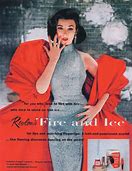
First, she’d soak a Kleenex in an upended bottle of Cutex nail polish remover and wipe all her nails clean. The vapors would tickle all the hairs in my nose and give me a headache but I never turned away. I’d watch her unscrew the top of Revlon’s Fire and Ice and pull out the dark bristles dripping in red liquid. With one hand flattened on the th-2antique mahogany side table, and the other hand holding the grooved white plastic top, she’d drag the brush along the lip of the bottle to get just the right amount of polish. Pulling the brush from the bottom of the nail to the top in perfect form nail after nail, she’d quietly finish the job, then blow on the tips of her fingers to dry them. 
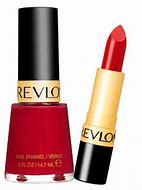
I’ve watched artists do this same thing with their paintbrushes. I wonder now if my mother could have been an artist since she seemed to be a natural in manipulating the brush. Where did she learn that? Like me, she was not the kind of person who would have practiced such a thing as a teenager. Unlike her, I’ve never managed to lay polish or lipstick on myself with such aplomb.

At the mirror, she’d further glamorize her ensemble with matching lipstick. Gripping a short, thin-handled lip brush in her right hand, she’d cradle the unopened lipstick in her left hand, slide the top up with her left fingers and let it drop into the crook where the palm meets the thumb. Holding both parts steady, she’d flick the lipstick brush back and forth on the creamy substance with her right fingers. Then she’d outline the edges of her top and bottom lips with the curved tapered brush. Next she’d brush the bare flesh inside the lip lines with vertical strokes. With fresh lipstick her beguiling red lips seemed larger than usual but not unnatural. She kept her lipstick and brush in a small leather pouch. Sometimes she left the house with only her Marlboros and her lipstick pouch.

In her dementia my mother always carried a small clutch purse. She incessantly opened it and fingered through its only contents—lipsticks. The nurses gave her their old lipsticks for her purse because the sound of the click-clacking as she rifled through it calmed her down.

Unknown-1For a few years after my mother died, I entered into the ritualized glamor of painting my own nails red. I sat before a young manicurist who updated me every week on the intrigue of her affair with a rich married man. When she moved in with him and quit her job, the allure of painting my nails lost its luster. 
Ancestral Tree Worship and Carl Jung

Ancestral Tree Worship and Carl Jung
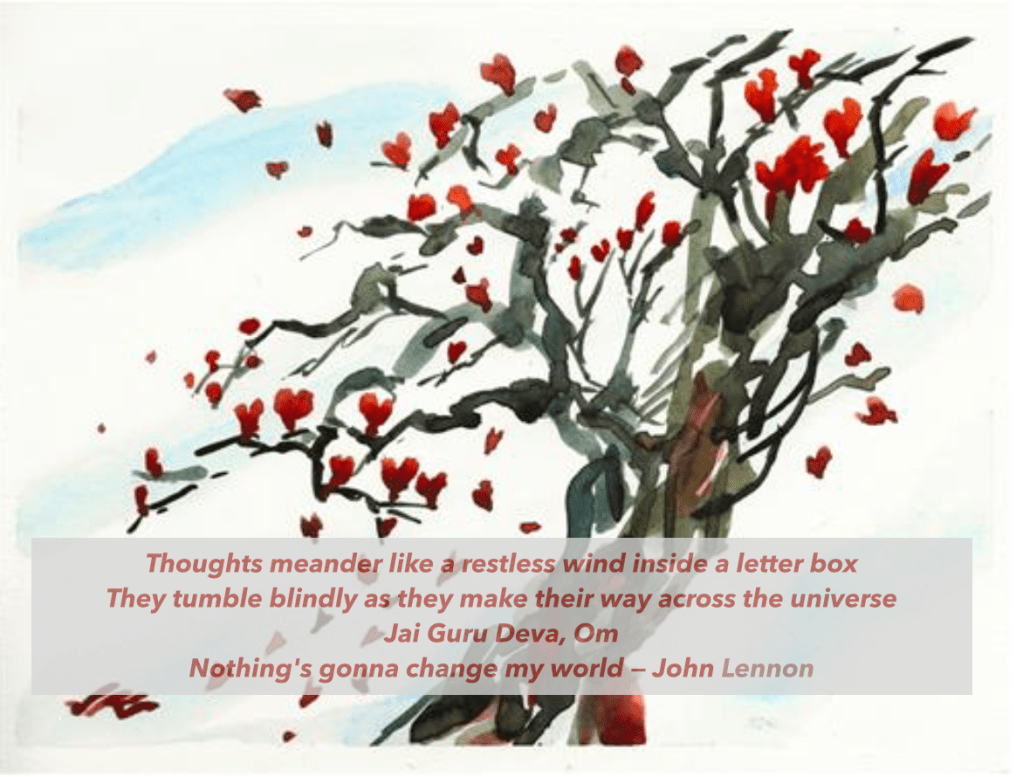
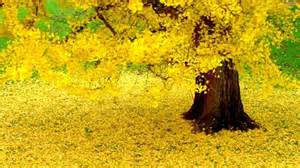
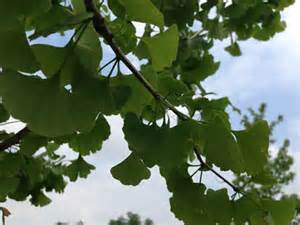
A crow caws in the gingko tree on the corner. The rising sun shines through the outdoor tree branches. Their shadows dapple my bedroom walls.

I wake early to catch the glory of each day’s wall art, to meditate with the trees in their seasons. Outside, Ozzy the dog and I stop long enough under the gingko tree to allow its fanning leaves to breathe a fresh day into our early morning walk.

th-1My favorite place is anywhere there are trees.
I love them for all the usual reasons: pretty, green, shade. The deciding factor on my condo purchase 15 years ago was the swaying branches outside the wall-to-wall windows. My home is on the 3rd floor of a 20-story high-rise overlooking Lake Michigan. When I first saw the place, the three ash trees in the parkway had reached a height equal to the 4th floor.

It was like living in a treehouse.th-3

Last year the City of Chicago’s Forestry crews euthanized my treehouse. The ashes were slowly killing themselves by feeding Emerald Ash Borers, those exotic hungry beetles from Asia. I mourn my ash trees. I thought they were immortal.

My mother, Agnes, taught me the pragmatism of trees. Stacy was born 11 years after me, and Agnes insisted I walk my baby sister around on sunny days. Her constant reminder stays with me, “Be sure you stop under the trees so the baby can see the shadows swaying.”

“Women should always have babies in the beginning of summer,” Agnes often said, “in case they are colicky, they will be soothed by leaves swaying in the trees.” She muttered “idiot” under her breath anytime another mother announced the birth of a baby in any month other than early summer.

And indeed, three of her four babies were born in May, June and July. She pretended she planned it that way.

My one and only baby, Joe, was born in May. His 1st summer was spent on his back under the trees outside in a baby carriage. Inside, he spent his time in a crib under a window of trees, syncopating his first gurgles with the sound of leaves rubbing together in the breeze.

Agnes was right about nature’s tranquilizer for infants, but she never claimed it worked for adults. She wouldn’t have been caught dead contributing such unsophisticated, sappy remedies to adult conversations. Her tranquilizers were beer and scotch and later, valium. She spent some of the last years of her life demented from these potions and gazing at the trees in verdant Vermont.604909-44011-10

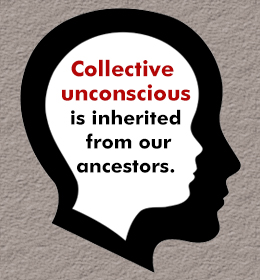
Trees soothe me anywhere, in any season. Joe absorbs tree balm while minding his wooded property. Carl Jung tells us Agnes simply passed on the inheritance – the collective unconscious of Irish tree worship that supposes tree fairies live in high branches watching over us. My mother’s life was rooted in addiction that mimicked a life-sucking aphid. Yet, she uttered words that gave me and my son our love for trees, a priceless, ancient, tranquilizing inheritance.