Arnold the Bulldog: Politics at the Doorstep

Arnold the Bulldog: Politics at the Doorstep

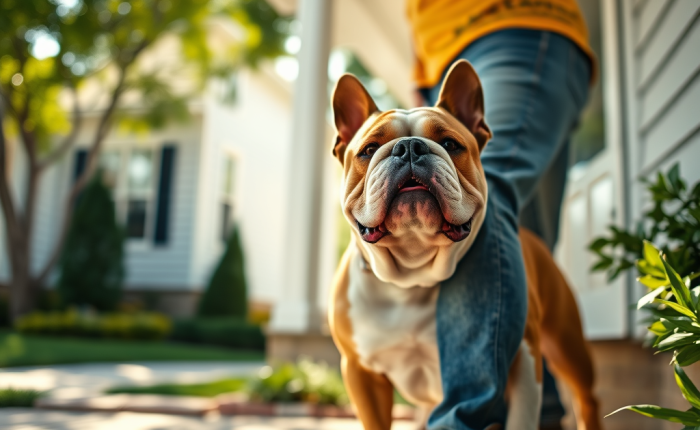
In Kenosha, at the door of a new white house in a new white neighborhood with curvy streets, low trees and developer-landscaped gardens, I knocked on the storm door, bang, ba-bang, bang. A huge white old English bulldog slid around  the corner from the kitchen to me, the stranger, barking as hard as his docile voice would allow. His owner appeared looking as if she could barely hold him back. 

I shouted through the door, “I love dogs! It’s ok. Can I pet him?”  We all smiled, dog included, and he came out to greet me with a gentle push of his massive short body against my legs.

“Hi, I’m with the Kenosha Democrats. Have you voted yet?”

“No, we’re voting tomorrow.”

“What’s his name?” 

“Arnold.”

“Arnold? Like Schwarzenegger?”

“Yes.” We both cracked up as Arnold dutifully looked one to the other, pleased to hear his name.

“You know, Schwarzenegger just endorsed Kamala Harris.”

Thus, I established my purpose in knocking on her door on a bright white Saturday afternoon.

“I know!” she said. Then she mouthed the words, “I’m voting for her.”

“Oh great,” I said, “”Thank you.”

Canvassers use a handy cell phone app, Minivan, to record voters’ responses. The drop down menu lists Strong Democrat, Lean Democrat, Undecided, Lean Republican and Strong Republican. Since my voter didn’t give it her all, I decided she was a Lean Democrat, punched it in and moved on to the house across the street.

As I came back to the sidewalk,  all of a sudden a white SUV sped out of Arnold’s driveway and stopped in front of me. She rolled down the window and shouted, “I’m for Kamala! Going to vote right now! Good luck!”

I thought back to her open door and realized someone else had been rattling around in the kitchen. A husband? She couldn’t let her husband know she was voting for Kamala Harris?

This gave me hope. I changed her in Minivan to Strong Democrat. Voting Harris.

Perhaps she represented a political ad where Julia Roberts voiced, “in the one place in America where women still have a right to choose, you can vote any way you want, and no one will ever know,” suggesting women can lie to their husbands about their vote. Apparently Fox News went berserk over this ad, as if spouses never lie to each other. 

Today, the day before election day, it hit me how different life will soon be. No matter who wins,  I’ll have no more reason to hope — for the vote, for my candidates, that the country will be at peace, or that democracy survives. It-is-what-it-is acceptance will necessarily move in to care for me.

Saturday afternoon trips from Chicago to Kenosha, stopping in the bustling Democratic headquarters then out to canvass voters will halt. My calves will never forget the two-step entrances to every house in Kenosha County. But memories of coffee and sandwiches at The Buzz Cafe on Sixth Avenue will fade.
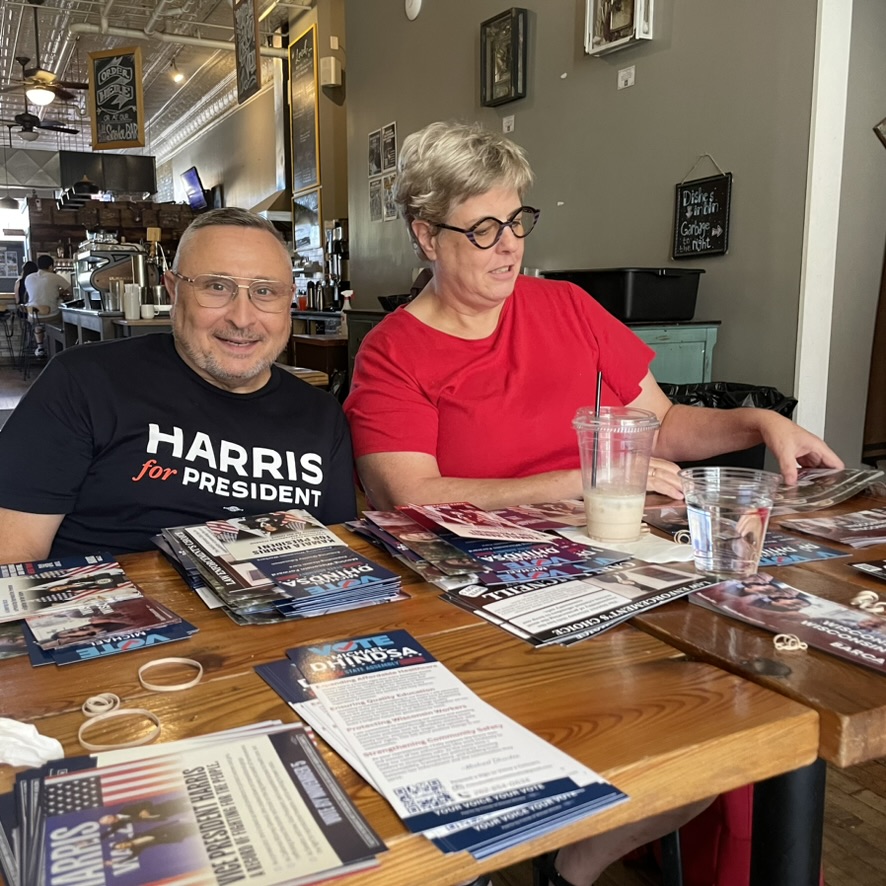
The Buzz Cafe Kenosha Wisconsin


I do have something to hope for.

Incoming texts and emails will be reduced to a trickle. 
Falsely Accused

Falsely Accused

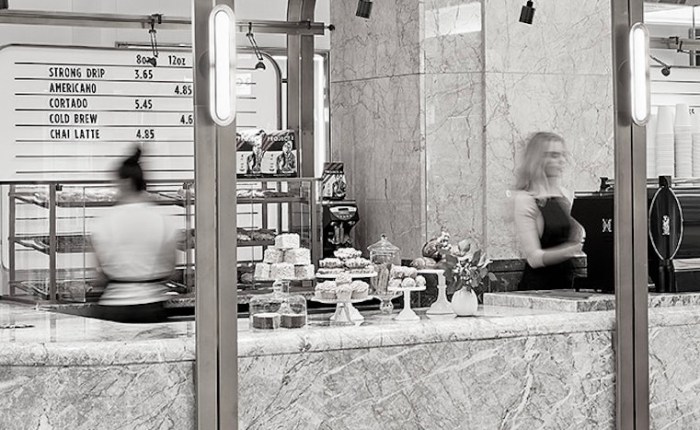
Fresh off a Zoom webinar titled Midwest Reparations, I rushed to my local coffee shop for a takeaway to sip during my upcoming current events group.

“12-ounce coffee in a 16-ounce cup?” The White barista asked. That’s my usual, with room for cream.

“Yes, please. What are all these new pastries? Chocolate cake? Key lime pie?”

“Yep, they’re new. All from different bakeries” said the barista.

“I’ll be back later with friends. They. Will. Love. These.” I said.

The Blackroots Alliance webinar that morning enlightened me on reparations projects in the Midwest. These are nascent activities reviving the 159-year-old “40 Acres and a Mule” policy for emancipated slaves that was promised and then revoked during Reconstruction. The initial focus of current reparations projects is research to uncover the descendants of enslaved people and how they’ve been impacted. Non-Black allies join at the end of the process when it’s time to distribute funds. Research is conducted by the harmed community, Black Americans, particularly African descendants, who look through the eyes of the tortured generations of chattel slavery. Non-Black Americans cannot be trusted to do this research since they see through a different lens: the eyes of the colonizers, the enslavers, the guardians of the dominant culture.

With this new information,  I was wondering how I, an old White woman, could fit into the reparations movement as I filled my coffee with half and half and rushed over to my current events group.

The group discussed the news of familiar territory: TFG, the former guy, and his latest legal shenanigans, immigration, climate change, gun control, and the ever-evolving White Christian Nationalism. Afterward, a small group sauntered over to the coffee shop where I’d spotted the new pastries. Six of us pulled up around a small table, coats draped over our chairs, rising one by one to fetch our drinks. 

I was the last one to the counter.

“I’m sorry, we can’t serve you.” said the barista.

“What?”

“We can’t serve you. The manager wants to talk to you.”  I joined my friends and announced what happened. The manager appeared and asked to speak to me privately.

“We can’t serve you because there’s been a report of you using a racial slur this morning.”

“What? What racial slur?

“The “N” word.”

“Well, there’s a mistake. I’ve never used that word in my life.’

“You understand we have to investigate when something like this is reported?”

“Wait. Are you accusing me of this?

“We have to investigate. Meanwhile, we cannot serve you.”

“For how long?”

“For the unforeseeable future.”

“You’re kidding. Look at me. I really don’t have an unforeseeable future.”

My friends were incredulous. ‘You? Boy, have they got the wrong person.’ They were ready to mount a protest in front of the building, signs and all.

In the following days, I connected with the company’s Chief Operating Officer. She apologized and emailed me a store voucher for $150. That’s a lot of coffee.

The coffee reparations, however, failed to dispel the lingering notion that I’m not a credible witness to my own story, that I’m not sufficiently worthy to be believed. How can we expect descendants of enslaved Africans to automatically manifest self-worth after enduring generations of false accusations, lynchings, and pressed-down powerlessness? 

We owe them a lot.

Ode to Coffee

Ode to Coffee

Ernie’s voicemail says, you’re gonna love this…buy it ‘fore they go outta biness. Look atch yer email.

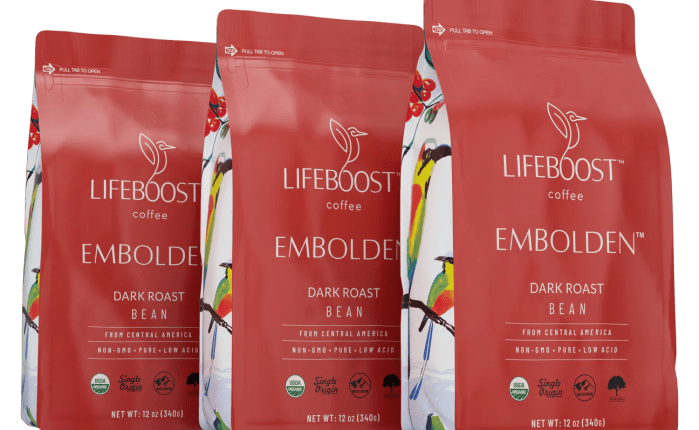
…each batch of coffee roasted on order. Shade grown. Bird friendly. Pesticide free. Vacuum packed. Ground. Arrives in seven days.

The payment plan for my $3,000 hospital bill is a hundred dollars a month. This month I click on Ernie’s suggestion and spend the hundred on coffee.

Dark roast. Single origin. Guatemala. The three most important criteria for a good cup. Makes no difference how you cook it after that. I do French press. Cold brewed French press. Spray cold water over six scoops to fill a plastic carafe at night and plunge the slurry mash in the morning. A lifetime ago I acquired a porcelain cup at the farmer’s market on the River Ilen, Skibbereen, West Cork. Nothing wrong with microwave coffee and a dollop of cream in that porcelain cup. 

The goofy fidgets move out as I sip my morning coffee. Am I a cliche? An old woman watching crows on the ledge, drinking coffee from her favorite souvenir cup? No screens. No radio. No TV. Henry the dog snuggling beside. The worries and the fears, in their moments, flitting away.

Oh coffee. 

You wake me up.

You settle me down. 

You take me to the cleaners.