The cat jumped from the cabinet behind the Christmas tree onto the back of the couch and slinked over to perch behind the woman sitting across from me.
“Watch out! The cat’s behind you,” a nearby party-goer warned.
“Oh that’s ok. I like cats,” said the guest in proper guise.
Staring down the resident pet, I drifted off to a time long ago when I was in the same position as the proper guest. When I turned to greet the host’s cat (a stupid-human gesture), she swatted me in the face, claws out.
The Christmas party conversation turned to pets.
“Do you have any pets?” I was asked.
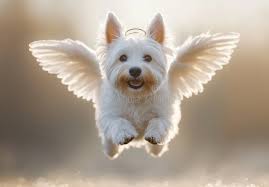
“Oh yes, I have a Westie.”
I love my dog and I talk to her a lot, but I don’t talk about her much. My mother, Agnes, hated people who anthropomorphized their pets. Really hated them. My feelings aren’t as strong but I have the genes—an aversion to pet talk.
It turns out Agnes was onto something. As long ago as the 1870s Charles Darwin criticized the natural tendency to ascribe humanlike attributes to non-human animals. His pitch was for humans to show as much interest to the natural world of insects and plants as we do to our pets. In doing so, he opened the forbidden subject of anthropomorphism. Darwin’s England was ground zero for the upper classes treating their pets like children or stand-ins for friends. Since then, many scientific abstracts and PhD theses have tried to punctuate the negative consequences of anthropomorphism: over-spending on human-like clothes, feeding pets non-compatible human food, beautifying dogs with toxic cologne, nail polish, breath freshener and worst of all, expecting non-human animals to have human emotions.
I suspect Agnes was more drawn to anthropomorphism than her sophistication would allow. Her sobering suggestion that trees are worth adoration are probably my earliest spiritual experience of our life together. Another was her reverence in quietly revealing the nesting robin’s eggs outside the bathroom window. But she’d never stand for conversations about them. In her world, if you didn’t present a funny story based on serious articles from the New York Times or Time Magazine, you were an out and out bore. Her ghost leads me to the Never-Trumper’s Bulwark podcasts, whose tagline reads “a few laughs to wash down the crazy.”
There’s a trail of dead dogs nipping at my aging heels. I threw this into the mix at the Christmas party in order to join the pet talk.
“Do you dream about dogs from your past?” Someone asked of no one in particular.
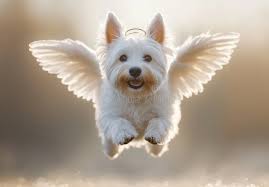 “All my dead dogs are present,” I blurted out.
It’s a goofy thing to say, like I’m a Buddhist or Spiritualist or the crazy white-hair in the corner with her Diet Coke. Other than my dog Henry, who talked to me during the Covid shutdown, I’ve always thought of my pets as nothing more than animals (forgetting that I, too, am an animal). No fancy garments, doggy day care or prepared meals. But as dead pals, they are sentient. Here. They may be the beings between the here and the hereafter, waiting to guide me to wherever that is. I hope so.
I’ll need protection to escape the cruel and the crazy running my country.

 tomcat prompting my mother to kick the cats and scream, “You queers! Cut it out!”
 Regan Burke