Jews

Jews

Jesus, my lifelong friend, accompanied me through chicken pox, mumps, and measles when quarantine isolated me from my sisters, parents, and friends. No, I didn’t have Mother Theresa-like visions. He was more of an imaginary friend for my waxing brain, like an animated Pooh Bear.  Clergy at St. Mary’s school in Terre Haute, Indiana, taught that Jesus was born in Bethlehem and died in Jerusalem. Due to those back-to-back pre-vaccine childhood illnesses, I heard these Jesus facts my second time around in the first grade. The teaching doubled down in my malleable brain, which had grown to ninety-five percent of its total capacity, normal for a six-year-old.

There was never any question that Jesus was born of Jewish parents. Israel, presented as a holy place, not a political state, was sacred ground because that’s where Jesus lived. There was always the implication that we, as Catholics, were in Jesus’s family, that somehow we had Jewish roots. If Jews believed in Jesus, they got to go to heaven, like us Catholics. But no other religion. Such was my Roman Catholic schooling.

Our single black-and-white family television transmitted few programs into our living room in the 1950s. Roy Rogers and I Love Lucy were allowed, but my parents insisted we watch the nightly news. My sisters and I didn’t dare whine for fear of verbal reprisals like, “Shut up and listen—maybe you’ll learn something.” 

They’d let us watch “This is Your Life,” a forerunner to PBS’ “Finding Your Roots’. In 1953, This is Your Life broadcasted the story of 32-year-old Hanna Bloch-Kohner, a Holocaust survivor. I wasn’t much interested in the not-so-famous Hanna, but I did wonder about the Holocaust.

When I was ten years old, as my brain power peaked, local TV stations advertised the opening of Old Orchard Shopping Center in Skokie, Illinois. We lived in Wilmette, on the border of Skokie.

“Where’s Skokie?” I asked my mother.

“That’s where all the Jews live.” She answered.

All my thoughts screeched to a halt. I’d never seen a Jew. I assumed that whatever Jews were leftover from the time of Jesus surely had died in that mysterious “Holocaust,” a word adults uttered in a hush. Of course, I couldn’t ask my mother what Jews were doing in Skokie. She expected me to know what she knew, no matter the subject. She would have ridiculed me with a sarcastic, “You’re kidding me. Don’t you watch the news?”

From that moment on, I looked for Jews in supermarkets, at the beach, in the record store, and even at school. It’s possible I looked for men who resembled Jesus. In high school, I met a Jewish brother and sister. I stared them into my spiritual family. I wondered how they got to New Jersey from Bethlehem or Jerusalem or Israel, those holy places whose ancient remnants had settled in my bones, with Jesus. 

My brain, now waning, has reformed itself through evidence, facts, and logic into knowing and loving the Jewish story. There may be evidence, and there may be facts, but there’s no logic to knowing Jesus. 

That’s still a belief. 
Oppenheimer & Jesus

Oppenheimer & Jesus

This is one of many stories I’ve written about the origin of my existential and nameless fears. As much as I try to analyze a deeper reason for the fears, the stories end up all the same, with a few updates. They seem to write themselves.

______________________________________________________________

In 1949, the Soviet Union started the Cold War by detonating its first atomic bomb, blockading Berlin, and pushing its way into Poland and Eastern Europe. The voices I heard swirling above my head at cocktail hour in our Washington, D.C. home implied the Russians were coming for us. 

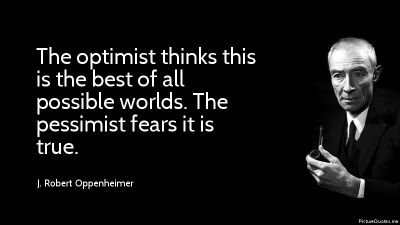
Poor old Robert Oppenheimer. The father of the atomic bomb wanted nuclear weapons banned after President Truman used A-bombs to murder 180,000 Japanese civilians in 1945. Oppenheimer helped design an air defense of the United States against atomic attacks from the Russians through the National Civil Defense Administration. Common folk wisdom said only cockroaches would survive a nuclear attack. Nevertheless, Oppenheimer’s design required all school teachers to conduct impromptu air raid drills. When teachers shouted an impromptu Drop! us kids jumped out of our seats, crawled under our desks, fell over our knees, and covered our heads. The nuns added the instruction to recite Hail Marys aloud while on the floor. 

Holy Mary, Mother of God, pray for us sinners, now and at the hour of our death. Amen.

At seven years old, I didn’t understand the difference between a drill and the real event. I went to my death every time I huddled under that desk. But, I was not. afraid. to die. 

This is it, I’d pray, “I’m going to be with Jesus.”

I believed Mother Mary would grab me in her arms like she did baby Jesus and take me to heaven. Why did they pray to avoid such ecstasy? What were they so afraid of?

By the time third grade rolled around, I got used to not dying under the desk. Images of children who lived after their exposure to the atomic bombs in Hiroshima and Nagasaki appeared on our small black-and-white television. I feared that there were worse things than death. 

Our Catholic school teachers taught that Communists who ruled Mother Russia prohibited the celebration of the Mass. So we had to pray for Russia while fearing she’d annihilate us at any minute. In those days, at home, my two sisters and I made our own breakfasts and school lunches because my mother’s alcohol intake rendered her unconscious in the mornings. We often gathered around her bed, trying to figure out if she was alive. Holy Mary, Mother of God. One of us would place a finger under her nostrils to feel her breath until, with one exhale, she’d confirm that at least one of our fears was unfounded. 

Those early fears seeded my memory and have inoculated me against the mau-mauing of present-day alarmists, naysayers, and fear-mongers who sermonize about the death of our democracy. Yeah-but’ers and tsk-tsk’ers are relentless in efforts to convince me the country is hopelessly overrun with insurrectionists, sexual predators, corrupt politicians and gun-toting scofflaws.

And what if these are apocalyptic times? So what? So were the 1950s, the 1960s, and 1970s.

Mother Mary may be out of commission these days, but I still dream of being with Jesus.

Jobs I Could Never Do

Jobs I Could Never Do

Every spring at Walsingham Academy, Sister Walter Mary selected a few students to prepare Catholic children for their First Holy Communion. The children were patients at the local mental institution, Eastern State Hospital in Williamsburg, Virginia. I have no idea why there were young children locked up in an insane asylum. We were trained to teach these pre-Ritalin six-, seven-, and eight-year-olds to memorize answers to preposterous questions such as “Why did God make me?” from the Baltimore Catechism. 

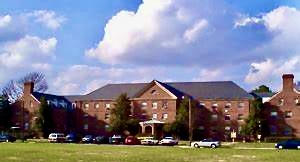
Eastern State Mental Hospital, Williamsburg, Virginia

It was pre-HIPPA 1963. We received basic training in mental illness. A hospital attendant walked us teenage tutors through the children’s wards, pointing out caged paranoid schizophrenics, psychopaths, and catatonics in their soiled grey tunics. Some children sprang at the chain-link fences, grabbing us and screaming obscenities. We didn’t teach this group. Our students lived in cozy dormitories and wore regular clothes. 

Eastern State—the oldest psychiatric facility in the country—had been founded on the forward-thinking concept that insanity was an emotional disorder, not an aberrant behavioral condition. Treatment included exercise and social activities. Catholic parents treasured the outside instruction their little ones received. I’m not sure how much my first-grader learned because all she wanted to do was sit next to me and play with my hair. I helped her into her white veil and gloves and took her to nearby St. Bede’s, where she made her First Holy Communion with the local children. I met her parents at the church. I never saw them again, never learned her diagnosis, or if she ever left the institution.

A few years later, I worked an overnight shift at the Point Pleasant Nursing Home in New Jersey.  My job was to straighten up—put games like Monopoly, bingo, and chess in their boxes and wiggle them into overstuffed cabinets. I wrote down missing pieces of each game so the next shift could look for them in patients’ hiding spots—pockets, drawers, purses.

A completed jigsaw puzzle of an Impressionist painting lay on its box cover under a window. I put the pieces back in the box and stuffed them into the cabinet with art supplies, books, and magazines. Before my shift ended, a patient wandered into the day room. She stopped at the space where the completed jigsaw had been and looked at me, panic-stricken. She grabbed my hair in a flash, shrieked I stole her art, and smacked me in the face. By the time the nurse reached us, we were both screaming. 

In dementia, my mother, Agnes, carried an ever-present small clutch purse. At that same nursing home, the nurses gave her their old lipsticks because the click-clacking sound as she rifled in her bag calmed her down. 

The day she died, I visited the nursing home and thanked the staff for giving my mother what I couldn’t: a proper confinement of love and respect to keep her from wandering around and terrifying her fellow creatures. Only then did I ache for the parents of the Eastern State girl I’d met twenty-five years earlier.

Death by Choice

Death by Choice

What’s a crucifix doing on the wall?

The nurse told me I was in a Catholic hospital. I could have figured that out. I checked into Amita Health Saint Joseph, after all. I assumed Amita appropriated the name for brand continuity. Ok, it’s Catholic, but do they have to display a crucifix on my wall?

A friend came by and said there’s a cross on the wall. 

“That’s a crucifix, not a cross, “ I said.

She shrugged as if it makes no difference. But maybe she just didn’t know the difference. 

“It’s a Catholic hospital,” I said, “only Catholics hang crucifixes. Protestants hang crosses.”

“What’s the difference?” she asked. 

In the late afternoon, the overhead fluorescent from the hallway shed enough light on the crucifix for me to see it from my bed. I said a few words.

Thank you god for replacing my decaying hip with a shiny new titanium rod and ball and clean ceramic joint. 

He didn’t answer. That’s ok. He never does. Specificity was key in my gratitude. I needed to state out loud exactly what just happened to me, to visualize the medical miracle of supplanting the largest joint in my body. 

Jesus’ body hanging there with nails through his wrists and in his crossed feet started to take on a living drama. The nerve block and painkillers from my surgery were wearing off. We were in agony together. I fumbled through the sheets for the control button and banged on it to call a nurse. 

She came. Later than I’d hoped.

“I’m in a lotta pain,” I cried out.

“I have your painkiller. Oh look, your ice pack slipped to the floor. I’ll refill it. Be right back.”

I looked at Jesus.

How could you bear this? I can’t stand it.

I later opened my eyes to Sister Leticia peering down at me. After introductions and medical pleasantries, she fumbled through a sheaf of papers until she pulled out the Do Not Resuscitate form. 

“I’m here to talk to you about your papers. Do you have one of these?” 

“Oh yeah, I have a POLST.”

“You do?”

She thumbed through her pile and pulled out a blank POLST, “Does it look like this?”

“Yes, I’ve got a copy here in my purse.”

We spread my papers out on the bed—what I’d brought and those accumulated a few hours earlier when I checked into the hospital. 

“There it is!” exclaimed Sister Leticia. She found the holy POLST among Amita brochures and post-op instructions.

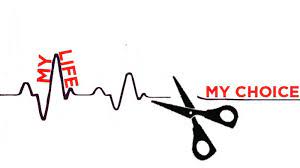
POLST stands for PRACTITIONER ORDER FOR LIFE-SUSTAINING TREATMENT. It’s a DNR signed by a doctor and witnessed by a third party. Some say it’s too final, a death warrant. Sister clucked with excitement at the sight of my POLST. She could then forego the talk on the tender subject of medical interventions to save my life if I stopped breathing or slipped into unconsciousness. 

Sister Leticia ducked out of sight before I could ask if she, as a Catholic, approves of my choice about my body.

I looked at Jesus. 

He seemed ok with it.

Does Anyone Really Like to Read This Stuff?

Does Anyone Really Like                                 to Read This Stuff?

From the backseat of my earliest memories I hear, “Why did God make me? God made me to know Him and to serve Him in this world and the next.” It’s the first lesson I memorized in Catholic grade school, before I could even read. Sometime in my early life I heard about the Bible but our religious lessons were taught from the Baltimore Catechism with no mention of the Bible. Nuns told me Jesus was my friend, but never cited Scripture to back up the claim. Some have said the Church of Rome never wanted the Flock to read the Bible lest they start thinking for themselves, rather than having their theology managed by priests.

UnknownAt Sacred Heart Academy the high schoolers were graded on their verbatim delivery of the 1700-word Passion of Christ from the Gospel of John. Seventh graders were required to sit through a recitation of the Passion as part of Religion class. I never listened at Sunday Mass, so my first hearing of Bible passages was the torture and execution of my friend Jesus. These bloodcurdling passages sparked a morbid curiosity about the rest of the Bible, but I didn’t have a Bible to read on my own. My parents, indwelled with a long lineage of Irish-Catholic hatred for non-Catholics, refused to have a Bible in the house “like those Protestants.”

I borrowed a Bible when I enrolled in a Bible course, part of the initiation rites of the born-again cult I belonged to in the 1970’s. The elders used Scriptural passages to confront me and my live-in, abusive boyfriend with an ultimatum to either marry or separate. We chose marriage because neither of us could face life without sex. For a wedding gift, we received a gilt-edged Harper’s Study Bible, inscribed in gold, with my name misspelled (Reagen). Owning the Bible exalted me into the fellowship I craved, and I feverishly used that Bible for the next three years, marking the margins with exclamatory words, folding over pages and bookmarking meaningful passages.

I didn’t reject the Bible when I left the cult, rather I never liked the Bible and was even repulsed by it. Aside from my own bad experiences with it, the Bible’s first book, Genesis, talks of God creating Paradise and throwing out the first humans because they wanted toth be gods themselves (who wouldn’t?). Then, that couple had two boys and one of them killed the other. Most of the rest of the Old Testament describes violent gangs warring over territory, an angry God, and thousands of flawed people wandering in the desert.

In February 2013, I heard Catholic contemplative Richard Rohr say to 1,500 retreat-goers that Bible stories are myths to provide insight into human nature. The simple transformative act of spiritual hearing jolted me into a surprising love for reading the Bible—the same Bible that has been there all along.