Black Hole Jesus

Black Hole Jesus

First Holy Communion is a right-of-passage ceremony in the Roman Catholic Church where a seven-year-old is initiated into eating the body of Jesus Christ. I learned the elements of the Catholic service, the Mass, with my classmates in the second grade. The priest transforms the bread into Jesus’ body and the wine into Jesus’ blood. The wine, the blood of Jesus, is reserved for the priest. We the people eat paper-thin white tasteless wafers, the body of Jesus. Catholic children all learn that after we make First Communion, it’s expected we’ll eat the body of Christ every week for the rest of our lives.

“Let it dissolve in your mouth,” the nuns instructed, “It’s a sin to chew the body of Christ. And don’t touch it!”

The pomp and ceremony of my First Holy Communion overshadowed any eww!-ness related to eating Jesus’ flesh. Prim little girls wore white crinolined lace dresses, white shoes and socks, white cotton gloves and angelic white veils. Like brides. Squirmy spit-polished boys wore ill-fitting white suits and ties. Children sang a Gregorian chant, Tantum Ergo, in Latin. The ceremony shined as if the light of heaven broke through the ceiling and blessed us with all good things forevermore.

In the early grades, if anyone questioned how Jesus’ body and blood changed from bread and wine, there was only one answer.

“It’s a mystery,” they said. 

I fell hook line and sinker into this ethereal mystical world of Jesus-eating. He was inside me, outside me, all around me, all the time. Jesus, my imaginary friend, was under the bed with me when my parents’ raging drunkenness woke me in the night. And when long-fingered nightmares reached their talons in through the screens, Jesus saved me.

At Jesus’ Last Supper (and his First Communion) before he was tortured and murdered, he broke bread, sipped wine and said, “The is my body. This is my blood. Do this in remembrance of me.” Surely Jesus and his father knew what a theological shit storm this would cause for all time. There is no earthly world where anyone could possibly digest all that’s been interpreted by those simple words. 

In the upper grades, Catholic clergy gave fuller answers for Holy Communion, the Eucharist, they called it. Explanations always ended with, “It surpasses understanding.” When I joined a non-Catholic Christian church in my twenties, I learned that Protestant Communion is a public display of piety, not a mystery at all, a non-binding sacramental tradition.

Jesus, like the simple chassis of a computer, hides his infinitely more complex workings from the young in faith. It’s good he came as a baby. People love babies. I would have settled for a dog since I love dogs. This human Jesus soothed me as a child. In the second half of life I’m soothed by and troubled by the man or the myth at the same time. Jesus, a synonym for love, is comforting. His hidden complexities are troubling. Questions arise, starting, but never ending with, “Are you real?”

In Christopher Nolan’s movie Interstellar, a concrete love story moves in and out of a celestial black hole. A black hole forms when a star collapses in on itself, eventually creating a singular point of irresistible gravity. All matter, light, space and time are sucked into it and all instances of time become the present moment. 

These days, at my Presbyterian church, I sit motionless at traditional Communion, the Eucharist. When I hear the minister say Jesus’ words ‘do this in remembrance of me’, if I’m aware, I contemplate the past as present, as if in a black hole. The story of the Last Supper reminds me to honor the original Twelve, and others, who were in the room where it happened. They come through a black hole to my pew, in the hope that I see that the whole of the story is swallowed up and Jesus is the present moment. 

The veneer of the Communion tradition, like the computer chassis, hides the paradox of a simple complexity. Non-traditional Jesus, that black hole of pure love, that present moment, issues the most complex inhuman commandment, ‘love your enemies.’


Day of the Living Dead

The Day of the Dead Mexican holiday, observed on November 1st celebrates the deceased with ofrendas (home altars) and festive gravesite visits. Tombstone gatherings include offerings of the deceased’s favorite food, drink, and music.

When I learned about my sister Mara’s death last spring, I reflected on our estranged relationship in a blog post. Since then, I’ve received a slew of messages from her friends that piece together a life I never knew, stories that give life to the dead.

Borrowing from the Mexican tradition, I offer an ofrenda to my older sister Mara Burke, with a sampling of those messages.

…we double-dated, attended formals at The Peddie School, and listened to music we loved. Her shop, where she helped us look stunning, but never as stunning as she looked, was where she generously gave us all our first credit cards! The slim silver bracelet she gave me many years ago is still my favorite, the many articles she sent knowing I loved cooking and gardening, and the tiny blue and white dish on my nightstand are fond remembrances of her love.

…I met Mara at the Catholic Home for Unwed Mothers.

…I interviewed Mara for a job a few years after her store closed in the early 90s. She was a talented clothier, but she showed up smelling of booze.

…Mara was on my mind,  i Googled her, saddened by the news i now read. I am happy to say that even though Mara and I were not close, we shared plenty of sobriety, laughter, and lots of very good coffee and pastry over the past 33 years.

… I met her in the 90s. We did a lot of meetings and healing through friendship with other recovering folks. She moved from Florida, and we lost touch.

…Mara came to care for me when I lost my mother years ago in a horrific accident. She has been through much with me and was selfless in her caring when my son died suddenly. My pain was her pain, and it was real.

…she always showed up for work even when she couldn’t stand up straight because of that hump on her back. She’s the best salesperson I’ve ever had.

… she was my neighbor for seven years. I set her up on a senior dating site. We laughed about all her dates. She never drank anything but coffee & ice water, attended Mass down the street and knew the priest. She said many times she wanted her ashes spread around her mother’s grave. 

…she had that beautiful speaking voice.

… we had a beautiful day to carry out Mara’s wishes. We buried a small crystal heart dish Mara had given me with her ashes. We planted daffodil bulbs to bloom in the spring, said a prayer, and sprinkled her ashes over her mother’s grave. 

Mara moved from Florida to Virginia for inexplicable reasons. Two weeks passed before her body was found on the floor of her apartment, and another week before I was called. The death certificate says she died of natural causes complicated by dementia and follicular lymphoma. 


RIP, Mara Burke. Born February 14, 1945, died March 13, 2023.

Lessons Learned: God

Lessons Learned: God

First Grade—Third Grade

God is a white man with a white beard and white flowing hair, sometimes holding white stone tablets, later to be revealed as the Ten Commandments. Then He has a son, Jesus, and simultaneously is Jesus. Jesus’ mother, Mary, and God aren’t married. Then God becomes a ghost, the Holy Ghost. Then He’s all three. Three persons in one God.

All people who were ever born are sinners who can never redeem themselves. But God gives Jesus to Catholics for salvation from their sins. Only Catholics have access to Jesus. They go to heaven when they die, thanks to Jesus dying on the cross for their sins. Everyone else goes to hell.

Lesson: Everyone is bad and God only likes Catholics.

Fourth Grade—Sixth Grade

God created Adam and Eve in His likeness and placed them in Paradise, a tropical garden with no predators or stinging bugs, and all the animals, flowers, and fruit in the world. God forbade them to eat apples from the Tree of Knowledge, but they wanted to be like God, to have His knowledge, so they ate the apples. He got mad and threw them out of Paradise. They had to fend for themselves—grow their food, make their clothes, and pay attention to God.

Adam and Eve had two sons, Cain and Abel. God seemed to like Abel better. Cain got jealous and killed Abel. God punished Cain by throwing him out of his hometown into the desert.

Lesson: Avoid God.

Seventh Grade—Eighth Grade

Jews and Romans alike feared Jesus for riling up the citizenry against their oppressive power structures. The Roman king of Jerusalem sentenced Jesus to a brutal crucifixion. Even though He was a Jew, the Jews didn’t come to his defense.

When Jesus’ followers went to the tomb to see His dead body, Jesus was gone. God resurrected Jesus, body, and soul to live forever. This is what happens to Catholics. They live forever. In Paradise.

“Tiger, Tiger, Burning bright, 
In the forests of the night,
What immortal hand or eye
Could frame thy fearful symmetry.”

Lesson: I want to be a nun.

Ninth Grade

Using my leaky Esterbrook fountain pen,  I write “How can God make evil” in the margin of my English literature textbook next to William Blake’s first stanza of “The Tiger”.  

Lesson: God is confusing.

Teenage—Twenties 

I look for the heavenly in alcohol, drugs, and men. I see God. Then I don’t. 

Lesson: There is no God.

Thirties—Sixties

There is a Higher Power. Maybe God. Maybe Jesus. Maybe the Holy Spirit. Maybe Buddha. Not a Catholic. Not even a Christian.

Lesson: Keep looking.

Seventh Decade

Casting off the lifelong mantle of sinner; I’m finally hip to the knowledge no one is born bad. God does not create evil and Jesus didn’t die to save me—God doesn’t need atonement from me or Jesus. There’s no heaven. No hell. Resurrection may be so. At the end, perhaps time and space will simply let go of me and I’ll wander an endless field of puppies, aka, Paradise.

Lesson: I’m OK. 

The Trouble with Harry

The Trouble with Harry

“The Trouble with Harry”,  a 1955 Alfred Hitchcock black comedy about a dead body, tickled my mother’s macabre sense of humor for years. In the movie, a group of five small-town oddballs try to keep Harry’s dead body hidden. After they bury Harry, they dig him up and re-bury him five separate times to try to solve the mystery of his death. Each has a story about why they think they killed Harry. In the end, a kooky doctor pronounces that Harry died of a heart attack.

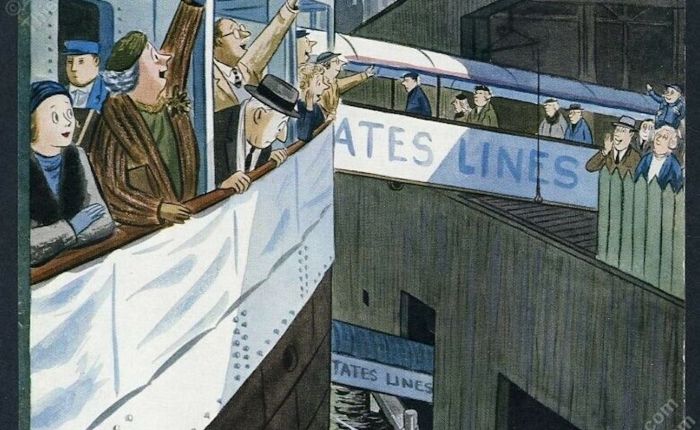
I don’t recall my mother ever going to the movies, but she joked around about “The Trouble with Harry” and loved watching Alfred Hitchcock films on TV. The movie isn’t funny by anyone’s standards, except my mother’s. She couldn’t wait to crack open the new issue of the New Yorker every week and show us the latest Charles Addams cartoon. Charles Addams, creator of the Addams Family franchise, concocted neither violent nor diabolical characters. They were goulish goofs, like their dark-humored animator. And, like my mother.

The New Yorker Jan. 25, 1958. Charles Addams

About the time I became aware of my mother laughing about dead people, the nuns were teaching my sisters and me the Latin Requiem Mass to sing at Cathedral funerals in downtown Indianapolis. The quaint practice of using children to sing at Catholic funerals developed in the Middle Ages with boy choirs. Females were not allowed to participate publicly in sacred music until the mid-19th century. I attended thirteen Catholic grade schools and the nuns in every single one managed to squeeze rehearsing the Requiem into the girls’ weekly schedule.

At the funeral of the father of triplet girls who were in my third grade class, the eight year-old daughters processed up the aisle behind their father’s casket. White veils shadowed our bewildered choir faces as we peered over the pews and chanted the Requiem in Latin, Eternal rest grant him, O Lord”.

It’s as if we wished the dead father a deep dark sleep.

Leading up to the day of the funeral, the shock of a young father’s death did not escape nervous chatter. I sensed my parents had questions about how he died. Perhaps that’s the case with every death. Like Harry, isn’t the first thing we ask, “how did they die”? And don’t we always wonder if there was something suspicious about the end of a person’s life? All closed-door gossip was put to rest with the triplet’s father in the clearing at the Requiem Mass.

In the 1970’s the Catholic Church decided to celebrate the living dead, shining in God’s light forever, as well as lament the finality of the deceased’s eternal rest. My mother had a low opinion of her Catholic Church, but approved of celebrating souls living forever, perhaps floating around in the light of the cosmos, like Charles Addams’ characters.

I’m no longer Catholic. However, influenced forever by the nuns and my mother, I accept the mystery of the two seemingly contradictory notions in the Requiem.

Requiem aeternam dona eis: eternal rest grant them. 

And,

Lux æterna luceat eis: let eternal light shine upon them.

O Vanished Bethlehem

O Vanished Bethlehem

In the 1950s nuns and priests filled the air with Jesus stories. As soon as we stepped on the threshold of our first grade classroom, we were required to memorize lessons from the Baltimore Catechism, the defunct and now-discredited school text of the Catholic religion.

Baltimore Catechism Lesson 75: Q. On what day was Jesus born?  A. Jesus was born on Christmas day in a stable at Bethlehem.

The first town I’d ever heard about other than where I lived and where my relatives lived was Bethlehem. As a child, I dreamed of living in the inn next to that stable where Jesus was born. I longed to be with the donkeys and the sheep and the three kings on their camels. I really wanted to ride those camels. When we sang O Little Town of Bethlehem I pictured a serene knob of a place full of kind and loving people ready to temper my fears and fortify my hopes.

A classmate once showed us a tiny glass vial of soil her grandmother had brought back from Bethlehem. She said it was blessed by the Pope, adding gold-plated authenticity to its importance. This was my first inkling that Jesus’ birthplace still existed and that I might be able to go there myself someday. 

Nearby Jerusalem?  It was never on my wish list. Memorization of passages about Jesus’ suffering there left me repulsed by any thoughts of visiting Jerusalem.

Baltimore Catechism Lesson 371:  Q. When did Our Lord suffer the “bloody sweat”?  A. Our Lord suffered the “bloody sweat” while drops of blood came forth from every pore of His body, during His agony in the Garden of Olives, near Jerusalem.

Bethlehem was the object of my affection. The Church of the Nativity in Manger Square sits on top of a grotto, the Holy Crypt, where Jesus lay swaddled. This birthplace is disputed from time to time, but as a child my enthusiasm never waned. I wanted to see Bethlehem.

Two Palestinian refugee camps arose in Bethlehem in 1949 after the Palestine PartitionDheisheh-a-Palestinian-refugee-camp-685x1024 drove Arab families from their homes. Six generations later they’ve not been allowed to return. Armed Israeli forces frequently raid the camps on the pretext of searching for “wanted” Palestinians. Young Palestinians exact revenge and risk their lives with the most ancient of weapons—rocks. 

When Israel took Bethlehem from the Arabs after the Six-Day War in 1967, I thought Bethlehem would be destroyed forever. But all the wars, terrorist bombings, intifadas and violent protests didn’t stop grandmothers from visiting the Little Lord Jesus’ birthplace and bringing home souvenir vials of sacred dirt. I had high hopes I’d visit someday.

Israel relinquished Bethlehem to the Palestinians in 1995, promptly erecting a wall cutting Bethlehem off from Jerusalem. Palestinians are restricted from entering Jerusalem. Israelis are barred from entering Bethlehem.

Baltimore Catechism Lesson 259:  Q. What other effects followed from the sin of our first parents? A. Our nature was corrupted by the sin of our first parents, which darkened our understanding, weakened our will, and left in us a strong inclination to evil.

A few weeks ago, on January 21, Russian President Vladimir Putin visited Palestinian Authority President Mahmoud Abbas in Bethlehem. Abbas informed Putin the U.S. can no longer play a role in the Middle East peace process. Seven days later Donald Trump announced his anti-Palestinian “Deal of the Century” for the Middle East. Bethlehem erupted in a “day of rage”.

Baltimore Catechism Lesson 1155:  Q. What are dreams and why is it forbidden to believe in them? A. Dreams are the thoughts we have in sleep, when our will is unable to guide them. It is forbidden to believe in them, because they are often ridiculous, unreasonable, or wicked, and are not governed by either reason or faith.

They say tourists get into and out of Bethlehem safely. But fear invades my deep and dreamless sleep. Thoughts of seeing Bethlehem have matured into my childhood imaginings.

And my dreams have gone the way of the Baltimore Catechism. 

Vanished. 

People Say They Did the Best They Could

What My Parents Believed

No One Ever Said We Were Democrats. Neither of my parents campaigned nor wore political buttons nor wrote thoughtful letters to politicians. They were Catholics, went to Catholic schools, Catholic colleges, married in the Catholic church. They took on the mantle of Irish Catholicism as if it were a physical birthmark, a once-a-Catholic-always-a-Catholic mental tattoo unaccompanied by belief in God or Jesus. They took advantage of the culture of the sacraments— Holy Communion, Marriage, Baptism—to display how beautiful we all were in our expensive clothes, polished shoes, fashionable hair styles.

They argued. About money mostly. And other women, other men. They agreed on important things. Pope Pius XII was a backwater imbecile for invoking papal infallibility in 1950 when he proclaimed all Catholics must believe Mary didn’t suffer physical death and was assumed into heaven. This new doctrine, along with the Pope’s insisting the Church of Rome stay neutral during the Holocaust, put a stake in their religiousity.

They hated right-wing bullies like Senator Joseph McCarthy and J. Edgar Hoover. McCarthy was a reckless demagogue who ruined lives with public witch hunts and unsubstantiated accusations against communist sympathizers. FBI Director Hoover amassed power by steering favorable press and policy his way using his secret files to blackmail Congress and Presidents alike. Throughout their lives my parents derided the Red Cross for raising money for war-time troops then charging soldiers and sailors for their so-called giveaways like toothpaste, coffee and donuts. My mother eagerly showed how smart she was in these matters. After all, my parents attended college in the nation’s capitol in the years leading up to World War II. She gossiped about under-informed conversationalists, “What do you expect, they don’t even read the New York Times.”

During the war, they lived in housing provided by the Navy in Key West. With no children to mind, they spent evenings in the Officer’s Club chattering about the day’s news, forming opinions and cooling off with rum smuggled in from Cuba. The men were Navy pilots and Naval intelligence officers. Some worked in the newly-formed CIA. Anyone who didn’t drink was not to be trusted. They never went to a restaurant, nor any gathering, party, picnic, or church function unless they knew alcohol would be served.

Any friend or relative who stopped drinking was derided as a reformed drinker, as if that were a dirty word. My father eventually stopped drinking and went to Alcoholics Anonymous, but he still steered clear of social events and restaurants where there was no alcohol. With all their strong opinions about religion and politics, the foundational belief of my parents was that life without alcohol was as unsophisticated and tasteless as a Greek diner.

My father, divorced from my mother, helped me get sober in 1979. When I told my family I was in AA, my older sister, glass of wine in hand, said, “Well. Just because you’re an alcoholic, doesn’t mean everyone is.”


The Russians: What’s the Worst That Could Happen?

The Russians: What’s the Worst That Could Happen?

I was three years old in 1949 when the Soviet Union started the Cold War by detonating their first atomic bomb, blockading Berlin and pushing their way into Poland and Eastern Europe. The voices I heard swirling above my toddler head at cocktail hour told me the Russians wanted to rule the world and they were coming for us.

By the time I entered the first grade in 1952, the US government had created the National Civil Defense Administration and devised a plan to protect people from incoming A-bombs. Teachers were required to conduct air raid drills, shouting, “Drop!” and school children dropped under their desks, fell over their knees and covered their heads. The nuns at my schools added the instruction to recite Hail Marys aloud while on the floor. Holy Mary, Mother of God, pray for us sinners, now and at the hour of our death. Amen. 

As first, second and third graders, my two sisters and I made our own breakfasts and school lunches because my mother’s alcohol intake rendered her unconscious in the mornings. We often gathered around her bed trying to figure out if she was alive. Holy Mary, Mother of God… One of us would place a finger under her nostrils to feel her breath until, with one exhale, she confirmed the worst that could happen hadn’t—and we’d be off to knock on neighbors’ doors scrounging rides to school.

At seven, I didn’t understand the difference between a drill and the real event so I went to my death every time I huddled under that desk. “This is it,” I’d pray, “this is the day I’m going to see Jesus.” I believed Mary would grab me in her arms like she did baby Jesus and take me to heaven. Why did we practice so desperately to avoid such ecstasy?

By the time third grade rolled around, I got used to not dying under the desk. Images of children who lived after their exposure to the atomic bombs in Hiroshima and Nagasaki appeared on our small black and white television and I began to realize why those air raid drills were so ominous — there were worse things than death.

Our parochial school teachers taught us Communists were going to hell because they prevented Catholics from going to Mass, which was one of the worst things that could ever happen. Words from the TV news — Stalin, USSR, Iron Curtain, the Red Army, the Berlin Airlift, NATO, the CIA — put worry on my parents’ faces and terrified me.

Throughout my childhood, I had reasons to think the worst was going to happen every day. But the worst never happened and over time these early worst-that-could-happen fears immunized me against pessimistic eruptions the way a bout of the measles inoculates against future outbreaks of inflamed skin . For instance, my mother’s alcoholic dementia killed her at 70, but it was not the worst thing to happen, rather relief to her and to those around her.

Today’s words —Trump, FBI, emoluments, North Korea, hacking, Putin, charter schools and my old friend Russia — needle me with foreboding, but history is on my side. After all, what’s the worst that could happen?